
Reviewed · WALKING TOURS
Old Town Tokyo: Shinagawa-Juku Walking Tour
Tokyo’s old road still has stories to tell. This three-hour walk through Shinagawa-Juku follows back streets, temples, shrines, and the former Tokaido route that once linked Tokyo and Kyoto. I like the small maximum of eight people, which should make it easier to hear the guide, and I like that the route reaches places you could easily miss on your own.
The main thing to consider is the price: $94.88 per person is a serious sum for a walking tour with no lunch or transport included. Still, the fee feels more reasonable if you want historical context, help with orientation, and a carefully planned route rather than a simple stroll through the neighborhood.
In This Review
- Key points before you book
- Why Shinagawa-Juku gives you a different Tokyo
- Starting at Kitashinagawa Station
- Shinagawa-Ura Park and the vanished fishing shore
- One hour along Kyu-Tokaido Street
- Hozenji Temple and the quiet side streets
- Shotokuji Temple on Shinbaba Street
- Ebara Jinja and the dragon god by the Meguro River
- Shinagawa Shrine and its small Mount Fuji
- What the guide adds to the walk
- Is $94.88 a fair price?
- Weather, cancellations, and practical planning
- Who should book this Shinagawa walk?
- Should you book it?
- FAQ
- How long is the Shinagawa-Juku Walking Tour?
- How many people can join the tour?
- Where does the tour start?
- Where does the tour end?
- Is the tour close to major Shinagawa Station?
- Is an English-speaking guide included?
- Are coffee or tea included?
- Is lunch included?
- Can I cancel for a full refund?
Key points before you book
- Shinagawa-Juku follows the old Tokaido Road, once the first stop for people traveling between Tokyo and Kyoto.
- The group is limited to eight people, a useful size for hearing explanations in narrow lanes.
- Six historic stops fit into about three hours, including a fishing village park, two temples, two shrines, and the old road.
- Shinagawa Shrine includes a fujizuka, a small artificial Mount Fuji built for people unable to climb the real mountain.
- Charlotte is a particularly strong guide choice, with praise for her friendly help with Tokyo, Japanese culture, history, and the subway system.
- Coffee or tea is included, but lunch, local transport, and hotel pickup cost extra or are not included.
Why Shinagawa-Juku gives you a different Tokyo
Many first visits to Tokyo focus on neon streets, department stores, major temples, and huge stations. Shinagawa-Juku offers a quieter look at the city, with the past appearing in small pieces rather than grand monuments.
The area was once a post town on the Old Tokaido Road. This route connected Edo, now Tokyo, with Kyoto, and Shinagawa was the first stop for people leaving the capital. Inns, shops, services, and religious sites grew around the road to support that traffic.
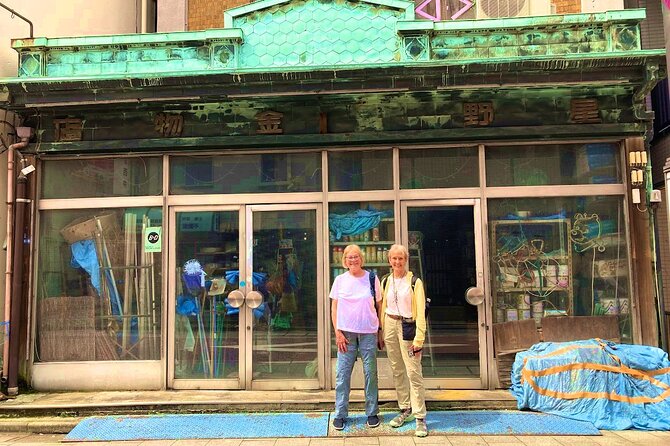
That context matters because the old route is not presented as a museum exhibit. It runs through a living part of Tokyo. You walk along streets and alleys where modern homes and local shops sit beside temples, shrines, old wells, and traces of the former post town.
I like tours that explain why an ordinary-looking street matters. Without a guide, Kyu-Tokaido Street could simply seem like another neighborhood road. With the right explanation, you can picture travelers arriving from Edo, stopping at an inn, buying supplies, and continuing west toward Kyoto.
You should also keep your expectations in check. This is not a preserved medieval town with a long row of untouched buildings. Tokyo has changed dramatically, and some historic details are easy to overlook. The pleasure comes from spotting what remains and understanding its place in the city.
More Walking Tours in Tokyo
- Tokyo Tsukiji Fish Market Food and Culture Walking Tour
★ 5.0 · 3,184 reviews - Tokyo: Imperial Palace and Shogun Historical Walking Tour
★ 5.0 · 2,251 reviews - Tokyo: Shinjuku Local Bar and Izakaya Guided Walking Tour
★ 4.9 · 1,794 reviews
Starting at Kitashinagawa Station
The walk begins at Kitashinagawa Station, at 1 Chome-1 Kitashinagawa in Shinagawa City. The starting point is practical for visitors staying in or near central Tokyo because the station area is one stop from major Shinagawa Station.
You will need to arrange your own transport to the meeting point. Hotel pickup and drop-off are not part of the standard experience, though pickup can be arranged for an extra fee. Transport costs are also separate, so include those expenses when comparing the total price.
The tour lasts about three hours. That is long enough to cover several historical sites without turning into an exhausting all-day outing. The route includes regular walking through streets and alleys, so comfortable shoes are sensible even though the supplied information does not specify a fitness requirement.
A small group can make a real difference here. Some stops are compact, and old residential lanes are not ideal places for a large crowd. With a maximum of eight people, you have a better chance of staying close to the guide and asking questions without shouting across the street.
Shinagawa-Ura Park and the vanished fishing shore
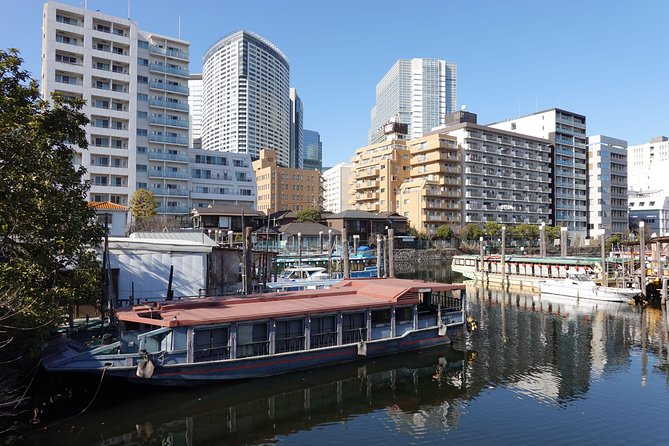
The first stop, Shinagawa-Ura Park, introduces the area through its connection to the water. During the Edo period, the shore near Shinagawa supported a small but prosperous fishing village.
Commercial fishing no longer operates here, but the site still offers a link to the waterfront past. I find this a smart opening stop because it gives you a useful frame for everything that follows. Shinagawa was not only a road stop. It also had a working shoreline and a local economy tied to fishing.
The visit lasts about 15 minutes, with no admission charge. That is enough time for an introduction rather than a long park visit. You should not expect a major sightseeing attraction or a long waterfront walk. The value comes from the historical explanation and the way it changes how you see the district.
This is also where the tour begins to show its main strength. The route is not built only around famous landmarks. It connects modest places to the story of Edo-era life.
One hour along Kyu-Tokaido Street
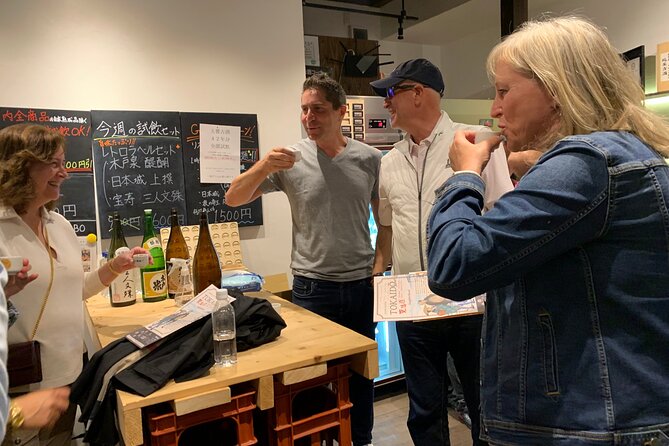
Kyu-Tokaido Street is the longest stop, at about one hour. That length makes sense because this is the central historical thread of the walk.
The old Tokaido Road was one of Japan’s major routes between Tokyo and Kyoto. Shinagawa served as the first stop for people heading out of Edo. Inns housed them, and shops supplied food and other needs. The street was once a busy service center for people on the move.
Today, the road is part of a modern neighborhood, so you will need to use your imagination. The guide’s role is important here. A walk without context might leave you seeing only pavement, storefronts, and houses. A good explanation can help you understand how the road shaped the district.
The route also uses back alleys branching away from the main street. This is one of the better reasons to book a guided walk rather than follow a standard Tokyo map. You reduce the chance of getting lost, and you may notice buildings, shops, and small details that are not obvious from the main road.
The drawback is that the historic character may arrive in fragments. If you want grand architecture or large-scale displays, this stop may feel understated. If you enjoy urban archaeology, it should be much more rewarding.
A completely different kind of day out:
- Tokyo Disney Resort – Tokyo Disneyland & Tokyo DisneySea Park Tickets
★ 4.8 · 99,488 reviews - SHIBUYA SKY Ticket
★ 4.7 · 46,509 reviews - JR Whole Japan Rail Pass
★ 4.8 · 29,150 reviews - Mt Fuji and Hakone 1-Day Bus Tour Return by Bullet Train
★ 5.0 · 26,383 reviews
Hozenji Temple and the quiet side streets

After the main road, the walk turns toward Hozenji Temple. The stop lasts about 10 minutes and is free to enter.
The temple is reached through smaller streets and alleys, where local religious sites and older houses covered with greenery add a quieter mood. A water well in the middle of a residential area is one of the details connected with this part of the route.
That well is exactly the kind of feature that can disappear into the background if you are walking alone. It is not a headline attraction, but it helps you picture how people once obtained water and organized daily life before modern city services.
Hozenji is a short visit, so do not expect an extended temple tour. Think of it as a brief pause that shows how the old road connected with side streets and neighborhood temples. The contrast with the more public route is useful: one side served passing traffic, while the other supported local residents and religious life.
Shotokuji Temple on Shinbaba Street
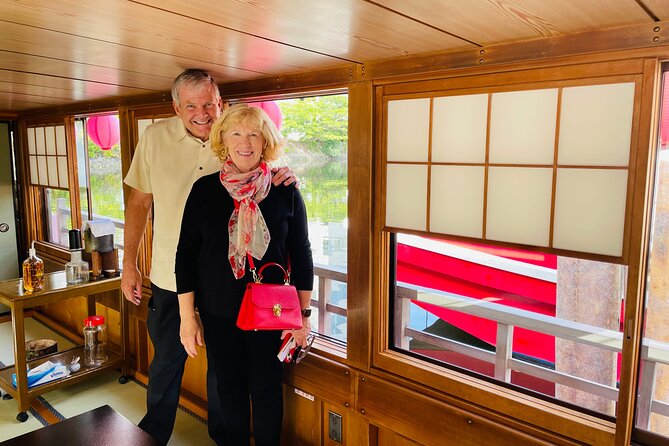
The next stop is Shotokuji Temple, reached along Shinbaba Street. The visit lasts about five minutes, making it a quick look rather than a major temple examination.
The temple is especially attractive in autumn because maple trees surround it. If you visit during that season, the trees may add color to the stop, though the experience naturally depends on timing and weather.
Shotokuji also has an unusual fence, which gives the guide a specific feature to point out. Small architectural details like this are often more interesting when someone explains what you are looking at. Without that help, you might walk past the fence without giving it a second glance.
The short duration may disappoint anyone hoping to linger. On the other hand, it keeps the tour moving and prevents one minor site from taking over the schedule. This is a stop for observation and context, not a long quiet temple visit.
Ebara Jinja and the dragon god by the Meguro River
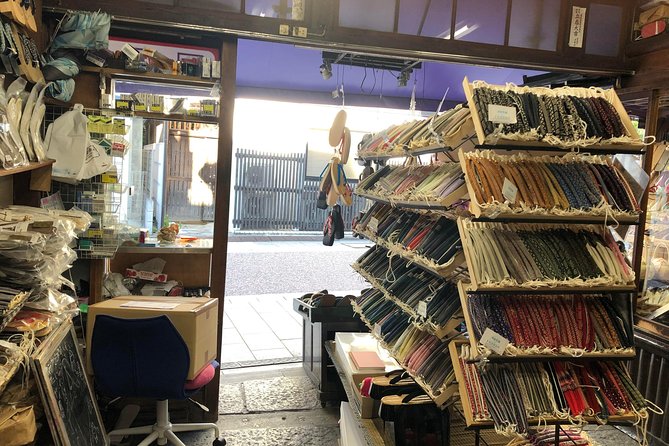
Ebara Jinja Shrine brings a different set of beliefs into the walk. Founded in 709, the shrine is associated with a dragon god and prayers for rain.
Its location beside the Meguro River adds to the story. Local tradition says that in 1062, water was taken from the nearby river for a religious purpose connected with the shrine. The exact details are best heard from the guide during the visit, but the basic point is clear: water, weather, farming, and spiritual practice were closely linked.
The stop lasts around 10 minutes and is free. Like the smaller temple visits, it is brief, but it adds variety to the route. You move from a road shaped by trade to religious places shaped by local hopes and fears.
I appreciate this kind of historical range. The tour is not only about famous rulers or major buildings. It also addresses the practical concerns of ordinary communities, including rain and access to water.
Shinagawa Shrine and its small Mount Fuji
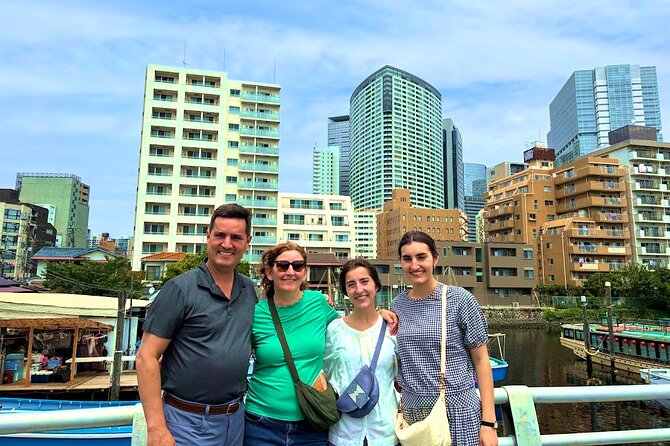
The final major stop is Shinagawa Shrine, where the tour spends about 50 minutes. This is the longest individual site visit and includes admission.
The shrine was founded in 1187 as a guardian of the nearby post town. That connection brings the route back to Shinagawa-Juku itself. The shrine was not an isolated religious site. It served the community and the people passing through this important road town.
The feature most likely to stay with you is the fujizuka, or mini-Fuji. This small artificial mountain was built for worshippers who lacked the money or physical strength to climb Mount Fuji itself. You can take part in the idea of a pilgrimage without making the difficult journey to the real mountain.
That detail gives the shrine a human scale. Mount Fuji has long carried great religious and cultural meaning, but not everyone could make the trip. A fujizuka offered a local alternative, bringing the mountain closer to everyday people.
The 50-minute visit also gives the guide more time to explain the site than the earlier five- or ten-minute stops. Since admission is included here, this is one of the clearest places where the tour provides access and interpretation together.
What the guide adds to the walk
The guide is central to the value of this experience. The route includes places that can be hard to interpret from appearance alone, so clear explanations matter more than polished sightseeing commentary.
Charlotte received especially warm praise for being friendly and well informed about Tokyo, Japanese culture, the subway system, history, and the surrounding district. That combination is useful. You are not only getting historical facts. You can also ask practical questions about moving around Tokyo and understanding the local area.
The group size supports that kind of exchange. A maximum of eight people should make it easier to hear and ask questions, especially at temples, shrines, and narrow lanes.
The tour includes coffee or tea to keep you refreshed. It does not include lunch, so plan to eat before or after the walk. Since the experience is only about three hours, a separate meal is not a major problem, but you should not expect refreshments to replace lunch.
Is $94.88 a fair price?
At $94.88 per person, this is not a budget walking tour. You are paying for a small group, an English-speaking guide, a planned route, local historical interpretation, and admission to Shinagawa Shrine. Coffee or tea is also included.
The price makes the most sense if you value time and context. You could walk through the neighborhood independently for free, but you would need to research the Old Tokaido Road, identify the correct streets, locate the temples and shrines, and understand why each one matters.
The cost is harder to justify if you prefer wandering alone, do not care much about history, or plan to spend only a short time in Shinagawa. Lunch, transport, and hotel pickup are not included, so the total cost is higher than the headline figure if you add those services.
The tour is booked an average of 37 days ahead, which suggests planning early is wise. It is recommended by all listed participants and has a rating of 5 from 33 reviews, but the sample is still small. I would treat those figures as encouraging rather than proof that every guide and every departure will feel identical.
Weather, cancellations, and practical planning
The experience requires good weather. If poor weather causes cancellation, you can choose another date or receive a full refund.
You can cancel for a full refund up to 24 hours before the start time. Changes or cancellations made inside that 24-hour window are not accepted for a refund, so keep the local cutoff time in mind.
Service animals are allowed, and the tour operates near public transportation. Most people can participate, according to the supplied information, but the route does involve about three hours of walking through streets and alleys. If you have specific mobility concerns, confirm the route details before booking.
The start and end points are different. You begin at Kitashinagawa Station and finish at Shimbamba Station, at 2-chōme-18-1 Kitashinagawa. Since the end station is also in the area, this is useful for continuing your day, but you should not expect to return to the exact starting point.
Who should book this Shinagawa walk?
I would choose this tour if you have already seen Tokyo’s biggest sights and want a more local historical angle. It also suits first-time visitors who prefer a guide to explain what they are seeing instead of trying to piece together the neighborhood alone.
History and culture enthusiasts should get the most from the route. The old Tokaido Road, Edo-era fishing village, temples, shrines, water traditions, and mini-Fuji create a clear theme across the three hours.
The tour is also a good match for people who like small groups. Eight is a manageable maximum, and the narrow lanes make a large tour less appealing.
I would hesitate if your Tokyo schedule is very tight, if you dislike walking, or if you want major landmarks that photograph themselves. This is a detail-focused outing. Its appeal lies in the stories behind ordinary streets, not in a long list of headline attractions.
Should you book it?
Book the Shinagawa-Juku Walking Tour if you want to understand how an old road, a fishing village, local faith, and modern Tokyo fit together. The strongest reasons are the small group, the carefully connected route, and the chance to visit places such as the fujizuka at Shinagawa Shrine.
Skip it if $94.88 feels too high for a guided walk or if you would rather explore freely. For the right audience, though, the tour offers something a standard Tokyo sightseeing circuit often misses: a patient look at the city’s past in the streets where everyday life still continues.
FAQ
How long is the Shinagawa-Juku Walking Tour?
The tour lasts approximately three hours.
How many people can join the tour?
The maximum group size is eight travelers.
Where does the tour start?
The meeting point is Kitashinagawa Station, at 1 Chome-1 Kitashinagawa, Shinagawa City, Tokyo 140-0001, Japan.
Where does the tour end?
The walk ends at Shimbamba Station, at 2-chōme-18-1 Kitashinagawa, Shinagawa City, Tokyo 140-0001, Japan.
Is the tour close to major Shinagawa Station?
Yes. The meeting point is one stop from major Shinagawa Station.
Is an English-speaking guide included?
Yes. An English-speaking guide is included.
Are coffee or tea included?
Yes. Coffee and/or tea are included in the tour.
Is lunch included?
No. Lunch is not included.
Can I cancel for a full refund?
Yes. You can cancel at least 24 hours before the experience starts for a full refund. If poor weather causes the tour to be canceled, you will be offered another date or a full refund.
Just added in Tokyo
- Very popular in Harajuku♡Animal petting zoo★ 4.6 · 39 reviews
- Yokohama Port: Private Customizable Tour with Transfer★ 5.0 · 19 reviews
- Wagyu & Sake 8 Course Tasting Dinner in Shinjuku★ 4.9 · 20 reviews
- Warner Bros. Studio Tour Tokyo – The Making of Harry Potter★ 4.8 · 181 reviews
- Yanaka District: Historical Walking Tour in Tokyo’s Old Town★ 4.8 · 117 reviews
- Tokyo: Classic Tsukiji Food Tour★ 4.9 · 78 reviews
- Tokyo: Tsukiji Fish Market Tour with 6 Stops & Seafood Lunch★ 4.5 · 165 reviews
- Tokyo Wagyu & Sake Pairing Tasting Experience with Local Flavors★ 5.0 · 108 reviews
Walking Tours, compared.
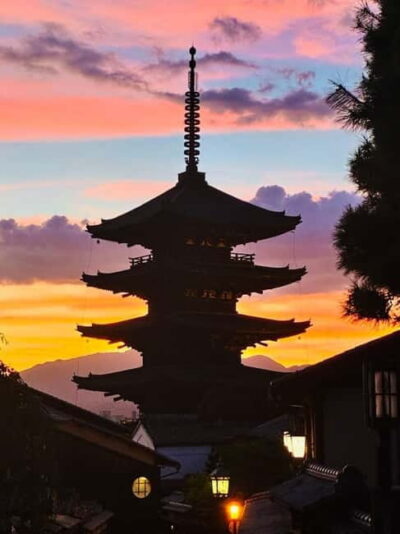
Kyoto Geisha Walking Tour: Gion District & Hidden Gems
Read our review →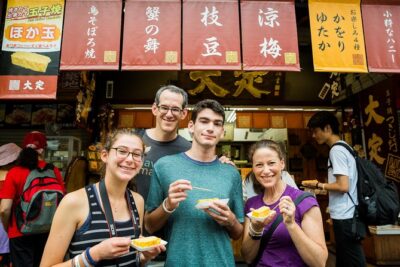
Tokyo Tsukiji Fish Market Food and Culture Walking Tour
Read our review →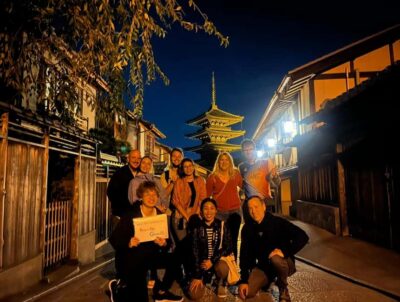
Gion Magical Night Walking Tour with Geisha Trivia
Read our review →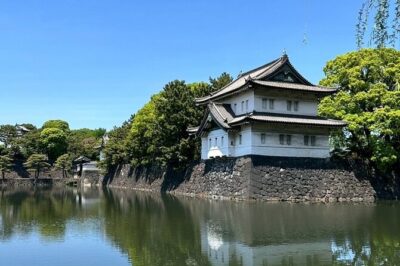
Imperial Palace and Shogun Historical Walking Tour
Read our review →
Gion Geisha District Walking Tour – Stories of Geisha
Read our review →
Shinjuku Local Bar and Izakaya Guided Walking Tour
Read our review →
Browse the lists this tour appears in