
Reviewed · COOKING CLASSES
Osaka: Cooking Class Ramen & Gyoza Course in Nanba
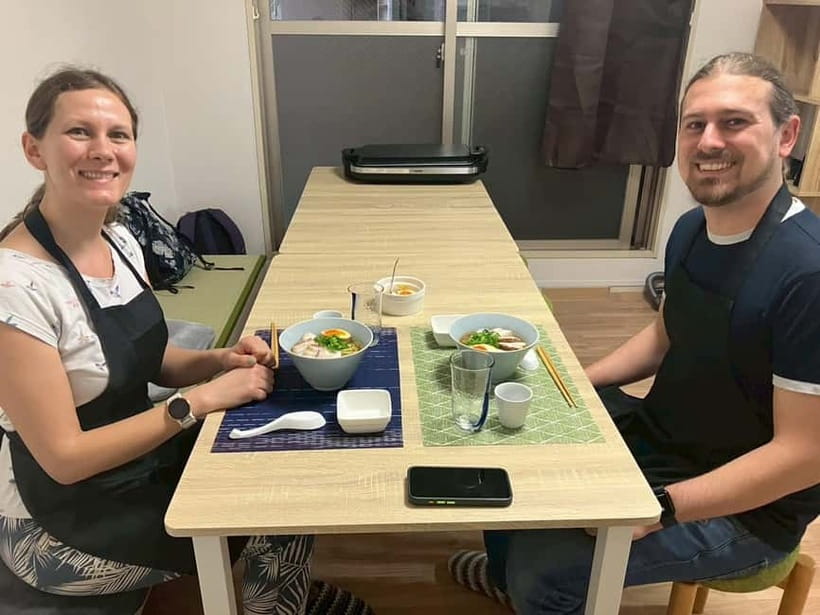
Ramen starts with flour, not a packet. This small-group class in Osaka gives you hands-on practice making noodles from scratch, folding gyoza, and cooking two Japanese favorites with help from English-speaking Washoku instructors. I like that you do the real preparation yourself, rather than watching a chef perform while you stand back. I also like the relaxed meal at the end, with sake, beer, and soft drinks included.
The class has earned a 4.9 rating from 86 bookings, and the praise is easy to understand. Instructors including Nana, Yuriko, Ryota, Mimi, Keiichi, Kiho, Saya, and Yuma are repeatedly described as warm, patient, and clear. The main point to check is the timing: the activity is advertised as two hours, but the detailed schedule adds up to three hours, with 30 minutes of preparation, 1.5 hours of cooking, and a one-hour tasting session.
In This Review
- What makes this Osaka class worth your time
- Making ramen from flour in Osaka
- Gyoza folding is the small skill you remember
- The 30-minute preparation period
- Ninety minutes of active cooking
- Sitting down to eat what you made
- Vegetarian and vegan needs
- Meeting point at Dear Court Semba 303
- Is $70 a fair price?
- Who should book this experience?
- Practical details before you reserve
- Final verdict: should you book it?
- FAQ
- How long does the Osaka ramen and gyoza class last?
- What dishes will I make?
- Are the ingredients and cooking tools included?
- Are drinks included?
- Is the class taught in English?
- How many people can join the class?
- Is the class suitable for beginners?
- Can vegetarian or vegan participants join?
- Where does the class meet?
- How do I enter the building?
- Can I cancel for a refund?
What makes this Osaka class worth your time
- You make ramen noodles from scratch, including preparing the dough rather than simply assembling a finished bowl.
- Gyoza folding gets proper attention, with patient guidance on the small folds that can be tricky for beginners.
- The group is limited to eight people, giving you room to ask questions and get help at the counter.
- English and Japanese instruction is available, making the cooking steps easy to follow.
- Your meal comes with drinks, including sake, beer, and soft drinks during the tasting session.
- Recipes go home with you, so the class has value after your Japan trip ends.
Making ramen from flour in Osaka
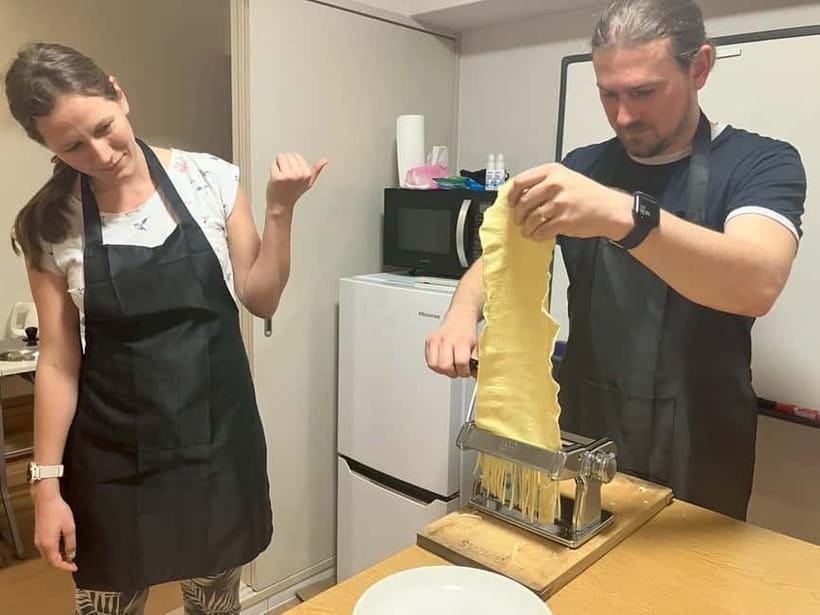
The heart of the experience is the ramen. You are not just stirring broth or sprinkling toppings over prepared noodles. The class includes making the ramen flour mixture and working with the dough, giving you a better sense of why fresh noodles have a different texture from dried or instant ones.
That hands-on work matters. Ramen can look simple in a bowl, but the noodles carry much of the dish’s character. You get to see the stages from basic ingredients to something you can cook and eat. The instructors explain the steps and the reasons behind them, so you are learning a method rather than copying movements without context.
You should arrive ready to participate. This is a group cooking class, not a private chef demonstration. You may chop vegetables, prepare ingredients, work with the noodle dough, and help bring the finished dishes together. That shared work is part of the fun, especially if you are visiting Osaka with friends or family.
The class suits beginners. You do not need previous cooking experience, and the instructors are there to guide you through each stage. One participant even left surprised by how well the finished meal turned out, which is a useful sign for anyone who normally feels unsure in the kitchen.
More Cooking Classes in Osaka
- Sushi Making Osaka Roll and Authentic Japanese Sushi Class
★ 5.0 · 1,220 reviews - Matcha Making Class in Osaka with Authentic Japanese Sweets Set
★ 5.0 · 509 reviews - Osaka Sushi Making Experience
★ 5.0 · 400 reviews
Gyoza folding is the small skill you remember
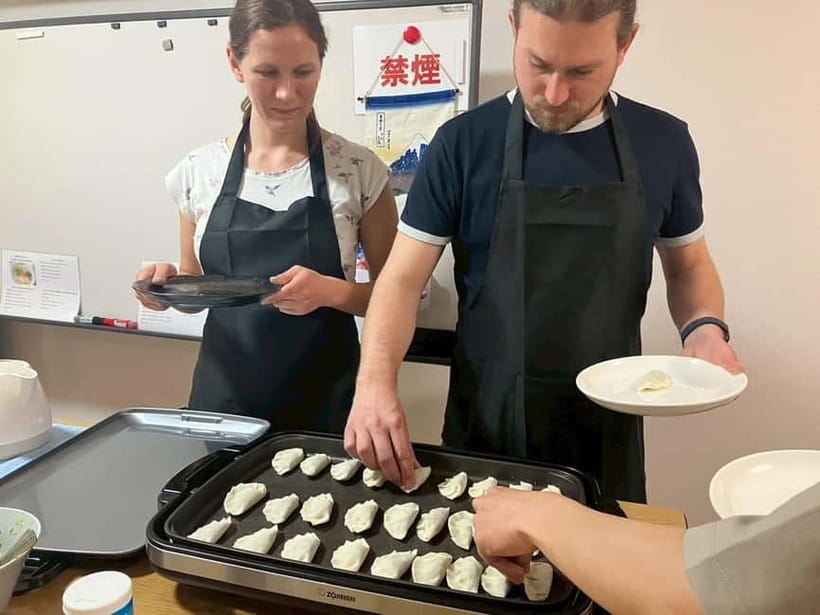
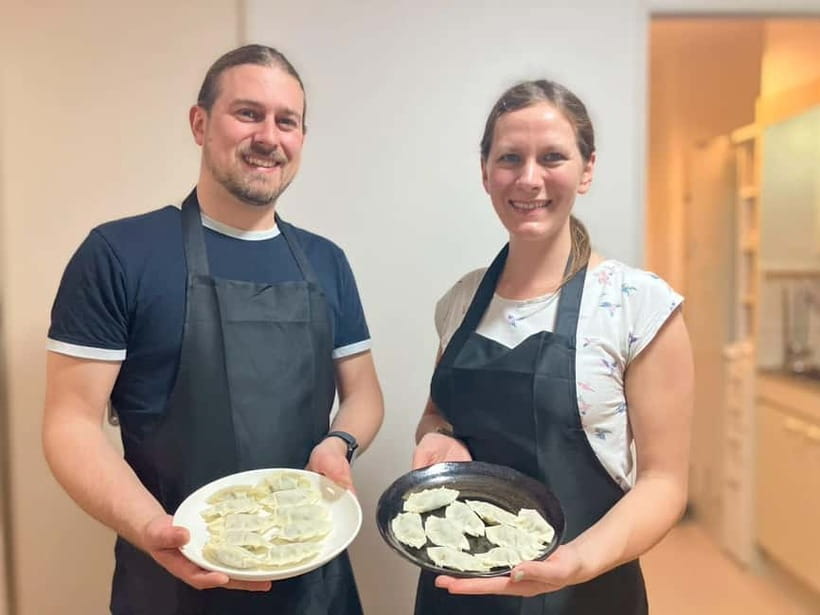
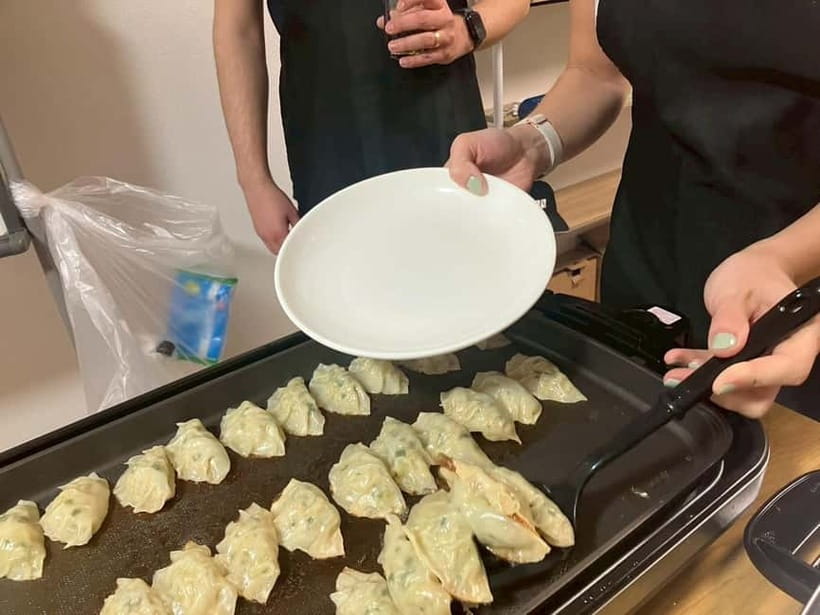
The gyoza section adds a different kind of challenge. These Japanese dumplings use vegetables and pork, and the folding requires a little care. The wrappers must be filled without overloading them, then shaped and sealed neatly enough to hold together during cooking.
The instructors give close attention to this part. Keiichi, Mimi, and Yuma were praised for their folding skill and for being patient with teenagers in a family group. That is useful to know if you are booking with children or older teens who may need a little extra help at the start.
You do not need to produce perfect pleats. The point is to learn the technique, enjoy the process, and eat what you make. Still, the folding creates a satisfying sense of progress. Your first dumpling may look modest, while the last few usually show that your hands have caught up with the instructions.
Gyoza also works well as a social dish. Everyone can compare shapes, laugh at the uneven ones, and improve together. The class has a friendly tone, and several participants described it as feeling more like cooking with friends than sitting in a formal lesson.
The 30-minute preparation period
The session begins with a 30-minute orientation and preparation period. This gives the instructors time to explain the class and organize the ingredients and tools before the main cooking begins.
That opening should help you get comfortable with the kitchen and the order of work. It is especially helpful if you have never made ramen noodles or gyoza before. Instead of being thrown directly into a complicated recipe, you get a little time to understand what you will be doing.
The class provides all ingredients and cooking tools, so you only need to bring yourself. You should still book at least one day ahead because advance booking is required. Last-minute arrival without a reservation is not a practical option here.
Ninety minutes of active cooking
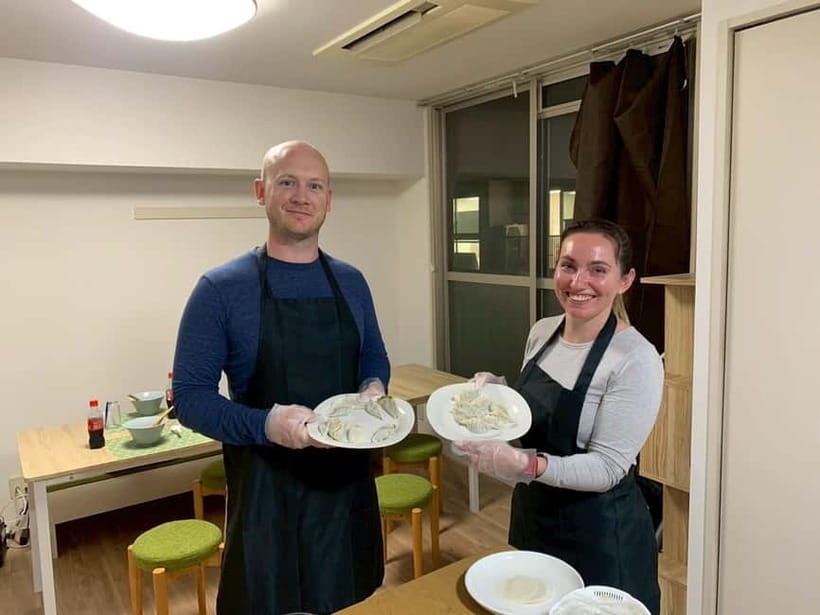
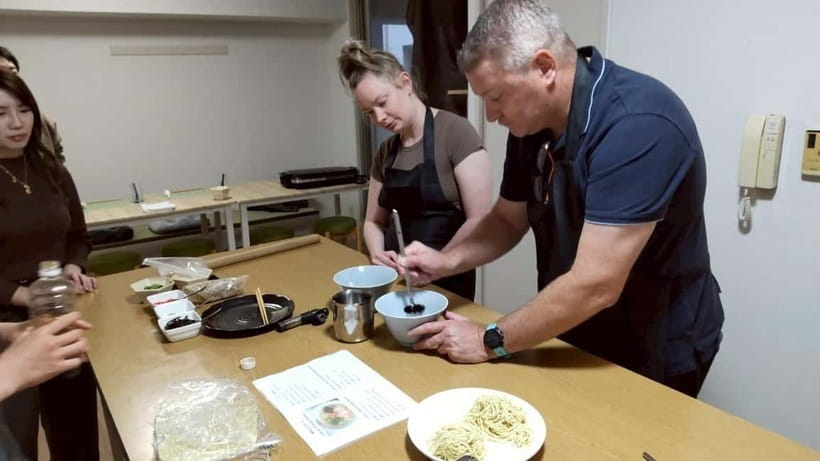
The main cooking period lasts 1.5 hours according to the detailed schedule. You work with the instructors and the other participants to prepare the ramen and gyoza, with English or Japanese guidance available.
The small group size is one of the best features. With a maximum of eight people, the instructors can help when dough becomes difficult or a gyoza refuses to seal. A much larger class could turn this into a quick demonstration, but the smaller setup gives you a better chance to handle each stage yourself.
The atmosphere also depends on the people in your session. You may be cooking with a family, a couple, solo participants, or a mixture of people from different countries. That can make the class more social than a standard restaurant meal, but it also means you will be sharing the workspace and following the group pace.
English instruction has been praised as easy to follow. The hosts are described as clear, patient, and welcoming, with participants able to ask questions along the way. If you want a quiet private lesson, this is not the right format. If you enjoy learning beside other people, the group arrangement is a plus.
More Cooking Classes in Japan:
- Sushi Making Tokyo Roll and Authentic Japanese Sushi Class
★ 5.0 · 3,971 reviews - Tokyo: Roll and Authentic Sushi Making Class in Asakusa
★ 4.9 · 1,957 reviews - Ramen Cooking Class at Ramen Factory in Kyoto
★ 5.0 · 1,937 reviews - Tokyo Shinjuku Chopsticks Making Class
★ 5.0 · 1,763 reviews
Sitting down to eat what you made
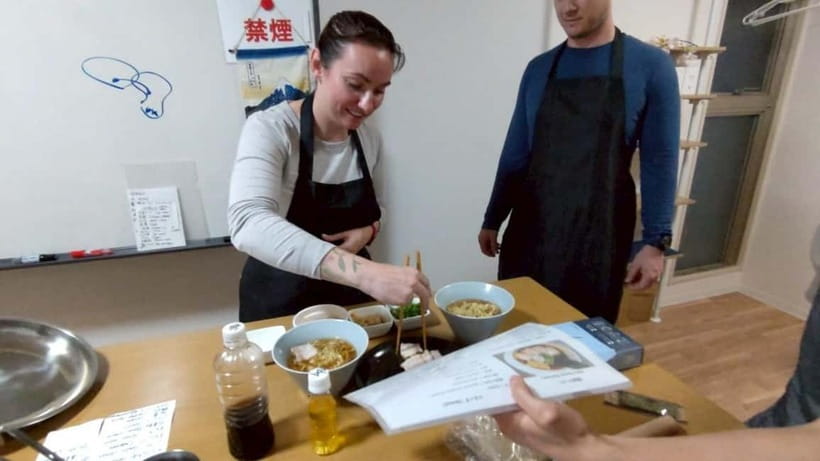
After the cooking, you sit down for a tasting session with the ramen and gyoza prepared during the class. The detailed schedule lists this as one hour, giving you time to enjoy the meal rather than rushing through a few bites.
This is where the activity earns much of its appeal. You are eating food connected to the work you just completed. The ramen tastes better as a lesson in technique, and the gyoza becomes more interesting when you remember filling and folding each piece.
Drinks included in the tasting session are sake, beer, and soft drinks. That gives you a choice for a celebratory toast or a nonalcoholic option. Additional food and drinks are not included, so you should not treat the class as an unlimited dinner.
One participant would have preferred to eat together with the staff. That is a fair point to keep in mind. The meal is a tasting and social finish, but the available information does not promise that instructors will sit and dine with you. The focus remains on enjoying the dishes you prepared with the group.
Vegetarian and vegan needs
The standard gyoza recipe includes pork and vegetables, but the instructors have accommodated vegetarian and vegan requirements in past sessions. Participants specifically appreciated having those needs handled without making the experience difficult.
You should still communicate your dietary requirements when booking. The class information confirms that vegetarian and vegan adjustments can be accommodated, but it does not provide a complete list of substitute ingredients or guarantee that every allergy can be managed.
If you have a serious allergy, ask before confirming your place. For ordinary vegetarian or vegan preferences, the available experience suggests the staff are willing to adapt.
Meeting point at Dear Court Semba 303
The class meets at Dear Court Semba 303, at 4-chōme-3-1 Bakurōmachi, Chuo Ward, Osaka 541-0059. The cooking space is in an apartment building, which may feel less obvious than meeting at a restaurant or a large commercial kitchen.
Look for the doorbell panel at the entrance. Press 303, then press the button marked Call 呼. Once the door opens, take the stairs or elevator to Room 303 on the third floor.
This is the sort of arrival detail worth saving in your phone. One family had trouble locating the building and found it tucked a block behind a Ferrari dealership, just past a large stairway leading to a gym and an outdoor lounge area with couches. That landmark advice could save you a few minutes of wandering.
The meeting point is in Chuo Ward and is described as being in the Nanba area listing, but the address itself is Bakurōmachi. Check your map carefully before setting out, and allow enough time to find the entrance rather than arriving at the last minute.
Is $70 a fair price?
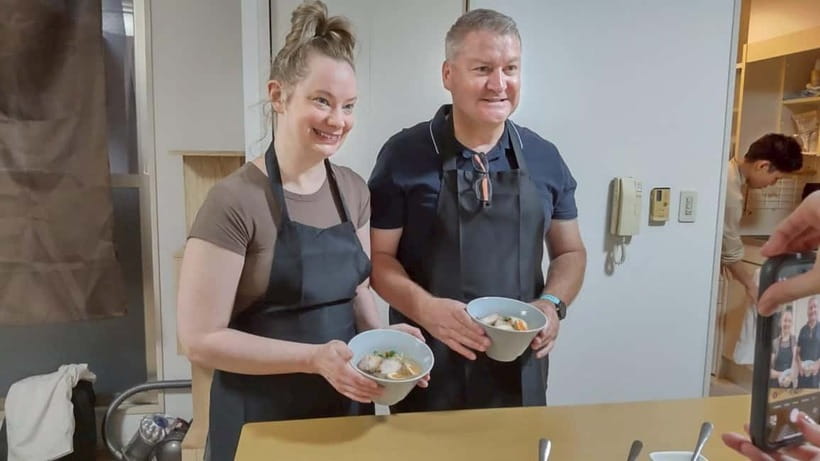
At $70 per person, this is not the cheapest meal you can order in Osaka. You can eat ramen for far less, and gyoza is widely available at casual restaurants. The value here comes from the instruction, ingredients, equipment, drinks, and the chance to repeat the recipes at home.
You also get more than a short cooking demonstration. The stated schedule includes a 30-minute orientation, 1.5 hours of hands-on cooking, and a one-hour tasting session. If the full schedule applies, that is roughly three hours of food-focused activity, although the headline duration says two hours.
That timing mismatch is the main issue I would resolve before booking. Ask the provider to confirm the actual start-to-finish length for your date. If it really runs close to three hours, $70 is reasonable for a small group class with a full meal and drinks. If it is limited to two hours, expect a faster cooking pace and less time at the table.
The recipes add lasting value. You are not only paying for one meal in Osaka. You also take home instructions for ramen and gyoza, which can help you recreate the dishes for family and friends. Some ingredients may be difficult to find outside Japan, but the method still gives you a useful starting point.
Who should book this experience?
I would recommend the class to you if you want an active food experience rather than another restaurant reservation. It is especially suitable for:
- First-time cooks who want close instruction
- Families with older children or teenagers
- Couples and friends looking for a shared activity
- Solo visitors who enjoy meeting people in a small group
- Ramen fans curious about fresh noodle preparation
- Anyone who wants recipes to use after returning home
The format also works well on an evening when you want a break from sightseeing. You spend the session indoors, work at a manageable pace, then eat a warm meal you helped prepare.
You may want to skip it if you dislike group activities, have very limited time, or want a private cooking lesson. The experience is social by design, and the schedule may be longer than the two-hour headline suggests.
Practical details before you reserve
The class is wheelchair accessible, according to the activity information. The building has stairs and an elevator, but you should contact the provider if you need specific access arrangements for the kitchen itself.
Instruction is offered in English and Japanese. You should have no need to bring ingredients, knives, or other cooking equipment. Come ready to cook and wear something suitable for hands-on food preparation.
The group is capped at eight participants. That limit is important because it keeps the class personal enough for questions and individual help. It also means popular dates may fill, so booking at least one day ahead is required.
You can cancel up to 24 hours before the activity for a full refund. A reserve-now, pay-later option is also available, which helps if your Osaka schedule is still shifting. Confirm the exact starting time when you check availability, particularly because the stated duration and detailed schedule do not match.
Final verdict: should you book it?
Yes, if you want to learn by doing. The strongest reasons are the from-scratch ramen noodles, careful gyoza instruction, small group size, friendly English-speaking hosts, and the meal at the end. The recipes make the experience useful beyond your time in Osaka.
Before paying, confirm the real duration and mention any vegetarian, vegan, or allergy requirements. If you are comfortable cooking with other people and want a meal with a story behind it, this is a good-value Osaka activity at $70. If you only want to eat ramen, spend that money at a restaurant and keep your evening free.
FAQ
How long does the Osaka ramen and gyoza class last?
The activity is advertised as two hours, but the detailed schedule lists 30 minutes of orientation and preparation, 1.5 hours of cooking, and one hour of tasting. Confirm the exact timing with the provider before booking.
What dishes will I make?
You will make ramen, including noodles prepared from scratch, and gyoza filled with vegetables and pork.
Are the ingredients and cooking tools included?
Yes. All ingredients and tools needed for the class are provided.
Are drinks included?
Yes. The tasting session includes sake, beer, and soft drinks. Additional food and drinks are not included.
Is the class taught in English?
Yes. Instruction is available in English and Japanese.
How many people can join the class?
The class is limited to eight participants, making it a small-group activity.
Is the class suitable for beginners?
Yes. It is suitable for beginners and food enthusiasts, with guidance from professional Washoku instructors.
Can vegetarian or vegan participants join?
Vegetarian and vegan adjustments have been accommodated. Tell the provider about your dietary needs when booking.
Where does the class meet?
The meeting point is Dear Court Semba 303, 4-chōme-3-1 Bakurōmachi, Chuo Ward, Osaka 541-0059, Japan.
How do I enter the building?
Use the entrance doorbell panel, press 303, then press the Call 呼 button. After the door opens, go to Room 303 on the third floor by stairs or elevator.
Can I cancel for a refund?
You can cancel up to 24 hours in advance for a full refund. A reserve-now, pay-later option is also available.
Just added in Japan
- A One-of-a-Kind Sushi Experience in a Special Place of Japan★ 5.0 · 15 reviews
- Tokyo Cute Bento Cooking Class – Make a Kawaii Character Lunchbox★ 5.0 · 126 reviews
- Japanese Home Cooking Class & Walk in Todoroki Temple Tokyo★ 5.0 · 88 reviews
- Catch a Baseball Game in Tokyo with a Local – Tickets Included★ 5.0 · 24 reviews
- Japan Tokyo Tower Observatory Deck E-Ticket★ 4.0 · 34 reviews
- JDM Experience with Fast&Furious RX-7 (English speaking Driver)★ 5.0 · 57 reviews
- Tokyo Private Day Tour by Car with English speaking Driver Guide★ 4.0 · 29 reviews
- Japan Classic 10 Day – One Life Adventures★ 5.0 · 129 reviews
Cooking Classes, compared.
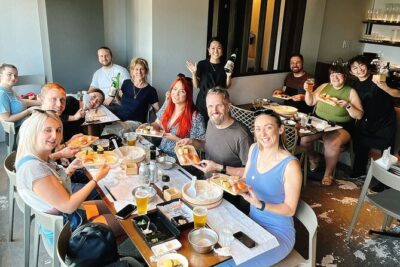
Sushi Making Tokyo Roll and Authentic Japanese Sushi Class
Read our review →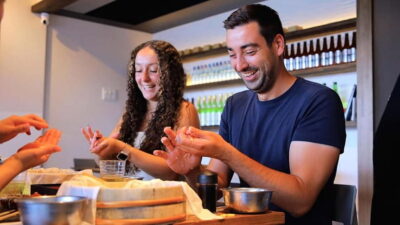
Roll and Authentic Sushi Making Class in Asakusa
Read our review →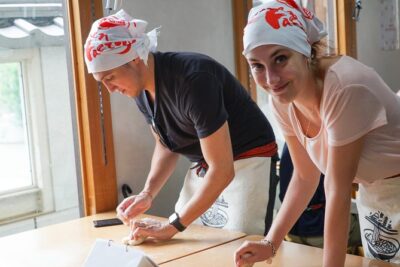
Ramen Cooking Class at Ramen Factory in Kyoto
Read our review →
Sushi Making Class in a Happi Coat near a Famous Spot
Read our review →
Sushi Making Osaka Roll and Authentic Japanese Sushi Class
Read our review →
Tokyo Sushi Making Class in Tsukiji with Professional Chef
Read our review →
Ramen & Gyoza Cooking Class in Tokyo with Local Supermarket Visit
Read our review →Browse the lists this tour appears in