
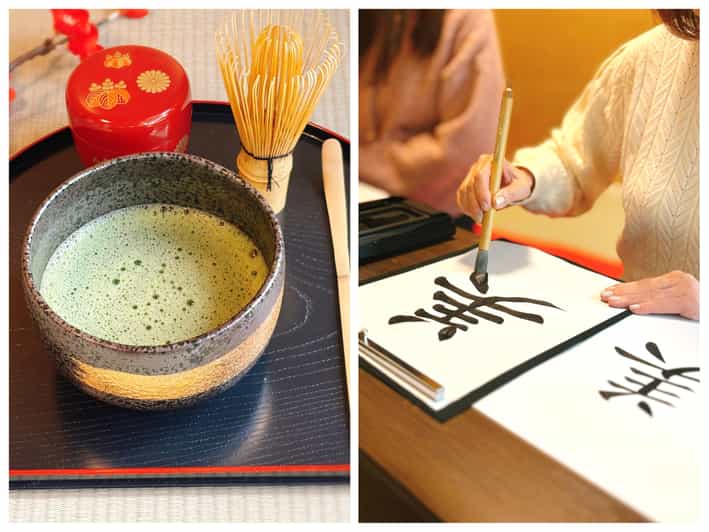
Reviewed · TEA CEREMONIES
Osaka: Private Tea Ceremony and Calligraphy Experience
Slow down in the heart of Osaka. This private class pairs the quiet focus of a tea ceremony with hands-on Japanese calligraphy, making it a thoughtful break from shopping and sightseeing in Namba. I like the one-group format, which lets the instructor adjust the pace, answer questions, and take photos without rushing. I also like that you leave with your own finished artwork, not just a few pictures. The main consideration is that the experience is not suitable for wheelchair users, and sitting through a traditional tea lesson may not suit everyone.
The class is led in English or Japanese by an instructor from Japanese Culture Experience WA NO MA. Wanoma is repeatedly praised for being warm, patient, funny, and clear, especially with children and beginners. At $64 per person for 135 minutes, this is not the cheapest way to drink matcha in Osaka, but it offers far more than a cup of tea: instruction, sweets, a private setting, calligraphy materials, and a handmade souvenir.
In This Review
- Key points to know before booking
- A calm cultural pause in busy Namba
- Learning the meaning behind the tea ceremony
- Two servings of Japanese sweets
- Turning your name into Japanese calligraphy
- Why the private format is worth paying for
- A good activity for children, with one useful option
- English guidance and a welcoming teaching style
- Location, timing, and practical limits
- Who should book this Osaka experience?
- Should you book the WA NO MA tea and calligraphy class?
- FAQ
- How long does the private tea ceremony and calligraphy experience last?
- How much does the experience cost?
- Is the activity private?
- Which languages are available?
- Can I make my own matcha?
- Are Japanese sweets included?
- Can I take home my calligraphy?
- Can the instructor write my name in kanji?
- What should I bring, and is the activity wheelchair accessible?
Key points to know before booking
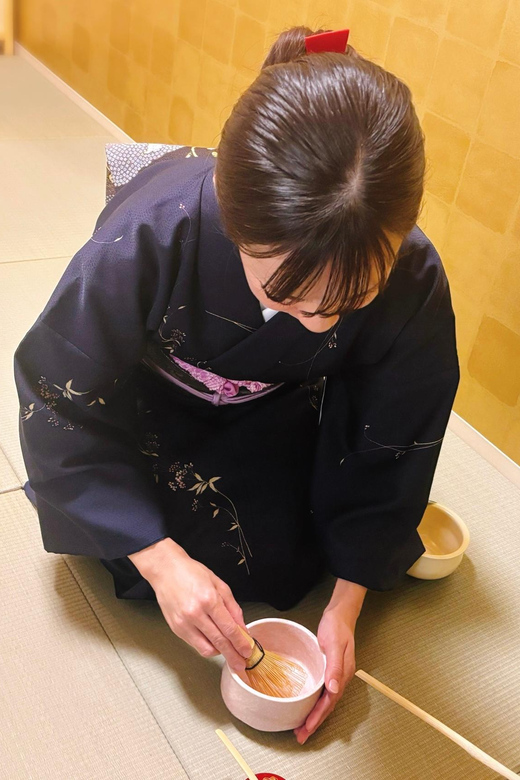
- Your name becomes a personal kanji project: The instructor can suggest Japanese characters that fit your personality, interests, or chosen theme.
- You make your own matcha: After learning the proper steps, you whisk tea yourself and choose a tea bowl that suits your mood.
- Sweets are served twice: Different Japanese confections accompany the tea portion, with seasonal meaning explained along the way.
- The class is fully private: You can request a slower pace, extra photos, or adjustments for children.
- Your calligraphy goes home with you: You select colored paper, write your kanji, add your name and stamp, and keep the finished piece.
- The studio is easy to reach in Namba: It is about 30 seconds west of the New Osaka Hotel Shinsaibashi entrance, near a blue vending machine.
A calm cultural pause in busy Namba
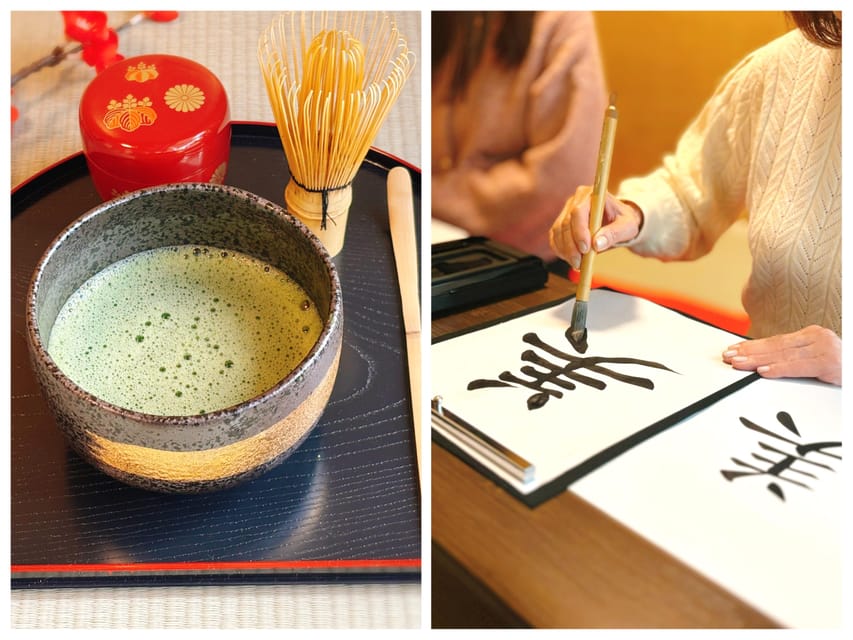
Namba is one of Osaka’s main visitor areas, packed with restaurants, department stores, arcades, and shopping streets. The WA NO MA studio offers a different kind of afternoon. Instead of hurrying from one sight to another, you spend more than two hours seated, listening, practicing, asking questions, and paying attention to small movements.
That change of pace is a large part of the appeal. The tea ceremony asks you to notice the bowl, the sweets, the preparation, and the way the tea is served. Calligraphy then gives you another form of concentration, this time through brush strokes and ink.
The private format matters here. In a large class, you might simply copy instructions and move on. With only your own group, you can ask why a gesture is performed, repeat a brush stroke, or pause while a child catches up. The instructor can also take photos when you want them, rather than leaving you to manage a phone during the lesson.
You meet outside the main entrance of the New Osaka Hotel Shinsaibashi five minutes before your scheduled start. Walk west for about 30 seconds and look for the blue vending machine near the entrance. The instructors wear kimonos, so they should be easy to recognize.
More Tea Ceremonies in Osaka
- Osaka: Tea Ceremony Experience
★ 4.9 · 1,426 reviews - Tea Ceremony Experience in Osaka Doutonbori
★ 5.0 · 754 reviews - Matcha Making Class in Osaka with Authentic Japanese Sweets Set
★ 5.0 · 509 reviews
Learning the meaning behind the tea ceremony
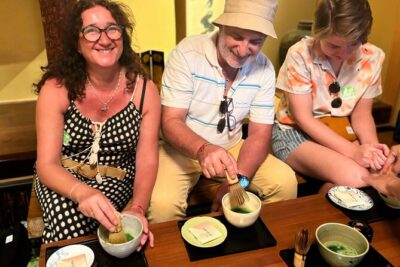
The tea portion is not just a demonstration. You first learn about the customs and purpose of the ceremony, then watch the preparation before trying it yourself. The instructor explains how to enjoy the tea properly and answers questions about matcha and its place in Japanese culture.
This introduction gives the movements some meaning. Without explanation, whisking powder into water can look like a simple craft activity. With context, the careful handling of the bowl, the order of service, and the attention given to the guest become easier to understand.
You also choose a tea bowl from several attractive options. This small decision adds a personal touch to the lesson. You are not simply handed a cup and told what to do. You select the bowl that best expresses how you feel that day, then use it during the matcha-making practice.
The instructor guides you through the process and then gives you a chance to prepare your own tea. If you have never made matcha before, that is no problem. The lesson is designed for beginners, and the private setting means you can try again without feeling watched by a room full of strangers.
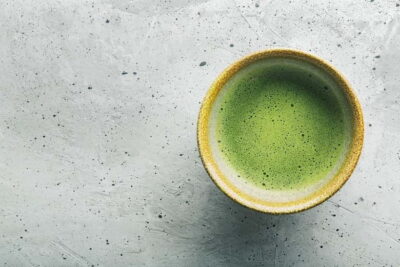
Matcha has a distinct flavor that can be grassy, bitter, or pleasantly earthy, depending on your taste. The lesson gives you a better chance to appreciate it than a quick café stop does. You learn how it is prepared and how the ceremony encourages you to pay attention to the drink instead of rushing through it.
Two servings of Japanese sweets
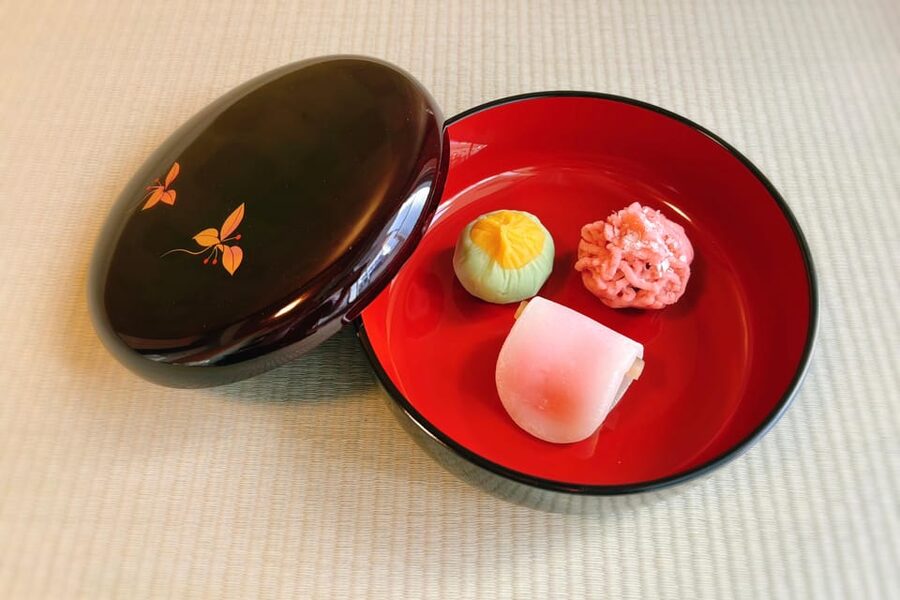
Japanese sweets are served with the tea, and the experience includes different sweets twice during the ceremony. The instructor explains that the choice of sweets changes with the seasons, which helps connect the food to the time of year.
This is one of the more useful cultural details in the class. Japanese confectionery is often designed to be enjoyed with the tea, not treated as a separate dessert. Shape, color, and season can all carry meaning, and the explanation gives you something to look for when you encounter wagashi elsewhere in Japan.
The sweets are also practical. Matcha can taste strong on its own, while a sweet provides a contrast that makes the tea easier to enjoy. One participant specifically noted that the sweets were lactose-free, though you should still tell the instructor about any dietary needs before the class if possible.
The activity includes matcha and various Japanese sweets in the price. You do not need to arrange a separate tea stop afterward, and the serving of sweets helps make the 135-minute lesson feel like a complete cultural experience rather than two unrelated demonstrations.
Turning your name into Japanese calligraphy
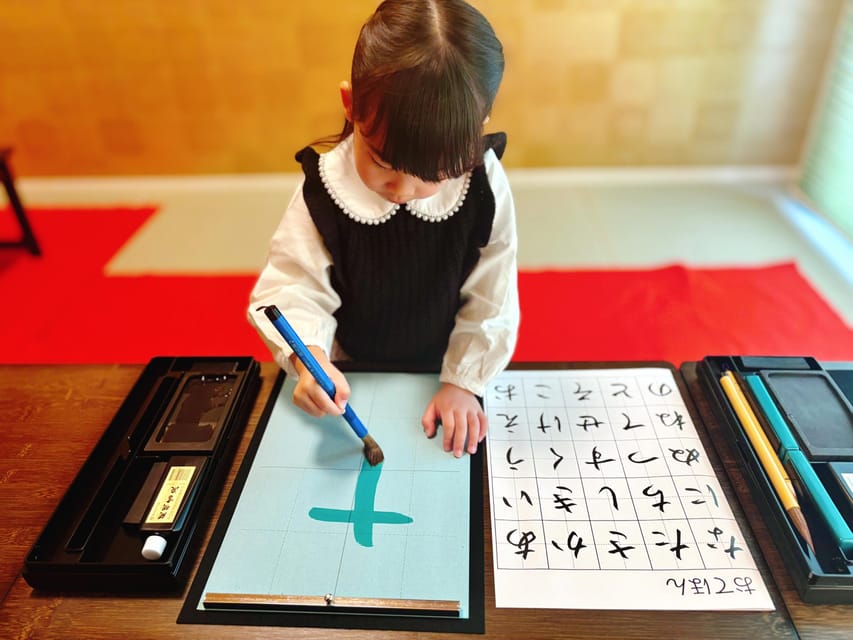
The calligraphy lesson begins with a choice. You can select a theme, favorite word, or letter, and the instructor can suggest kanji that express your personality. This is more engaging than copying a random character whose meaning you do not know.
English names do not always translate directly into Japanese kanji. Instead, the instructor helps create a meaningful version using characters connected to qualities, sounds, or ideas. Several participants appreciated having their names written in Japanese, including Craig, whose name was converted into kanji during the class.
You then receive instruction in basic brush technique. The instructor explains the different strokes and demonstrates how to form the character. Practice comes before the final piece, so you have a chance to get used to the brush, ink, and movement.
Calligraphy is less about drawing a pretty symbol and more about controlling pressure, direction, and rhythm. You may find that the first few attempts look uneven. That is part of the fun. The teacher’s role is to help you understand the strokes rather than expect museum-quality work from a first-time student.
After practice, you choose a piece of colored paper from several options. You write your selected kanji, add your name in Japanese characters, and apply a stamp with your initials. The finished work becomes a light, personal souvenir that fits easily into luggage.
I like this part because the souvenir has a story. You can explain what the character means, why you chose it, and how you made it. That makes it more memorable than a shop-bought item picked up in a hurry.
More Tea Ceremonies in Japan:
- Kyoto: Tea Ceremony in a Traditional Tea House in Kiyomizu
★ 4.9 · 3,519 reviews - Kyoto: Tea Ceremony Ju-An at Jotokuji Temple
★ 4.9 · 3,207 reviews - Kyoto: 45-Minute Tea Ceremony Lesson Experience
★ 4.3 · 2,378 reviews - World Heritage Kyoto & Nara Uji Authentic Matcha Experience
★ 5.0 · 1,573 reviews
Why the private format is worth paying for
The $64 price includes all fees and taxes, calligraphy paper, matcha, sweets, instruction, and the matcha-making activity. At first glance, you might compare it with a cheaper tea tasting. That would miss the main value.
You are paying for 135 minutes of personal instruction and for the freedom to shape the session around your group. The instructor can spend more time on a difficult calligraphy stroke, slow the tea lesson for a child, or take extra photos. You can also ask questions without worrying that a larger class is waiting.
The private setup has been especially useful for families. One family with a 10-year-old and a teenager, both with ADHD, found that the instructor kept them engaged throughout the class. That does not guarantee the same result for every child, but it suggests that the patient, adjustable teaching style can work well for young participants.
It also suits couples and solo visitors who want something quieter than a group tour. If you are traveling with friends, you can share the activity while still receiving close attention. The class feels more like a private cultural lesson than a scheduled performance.
Still, value depends on your interests. If you only want to taste matcha and take a quick photo in a kimono, this may be more instruction than you need. If you want a souvenir, an explanation of Japanese customs, and a chance to make something yourself, the price is fair.
A good activity for children, with one useful option
The instructor can adjust the timing to match a child’s pace. Young children can also use water calligraphy, which avoids getting ink on their hands and clothes. This is a sensible option for families who want the cultural activity without worrying about spills.
The private setting helps here again. A child can ask basic questions, take a short pause, or repeat a step without disrupting other groups. The calligraphy section offers a clear goal, while choosing a bowl and making matcha add variety to the tea lesson.
Parents should remember that the experience involves sitting and following a series of traditional steps. It is not an active sightseeing tour. Children who enjoy crafts, stories, food, or making things may find it rewarding, while children who need constant movement may have a harder time.
Bring socks. This is specifically required, and traditional Japanese activities often involve removing shoes or sitting in a studio setting. Smoking is not allowed.
English guidance and a welcoming teaching style
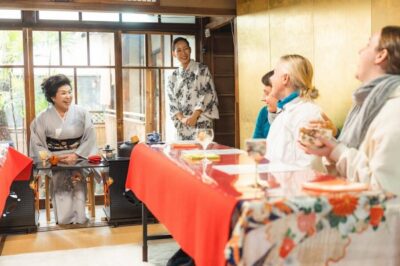
Instruction is available in English and Japanese. The strongest praise for the class focuses on the teaching itself. Wanoma is described as friendly, polite, encouraging, and easy to understand, with a good sense of humor when beginners make mistakes.
That tone makes a difference. Tea ceremony and calligraphy can feel intimidating because both have formal rules. A relaxed teacher helps you treat the rules with respect without becoming nervous about every movement.
The class also leaves room for questions. You can ask about the history of tea, the meaning of a kanji, the reason for a particular gesture, or the role of seasonal sweets. The instructor’s explanations connect the activity to daily Japanese culture rather than presenting it as a set of mysterious rituals.
Photography is welcome, and you can request photos during the session. Since the experience is private, you do not have to choose between participating and documenting the moment. Ask for more photos if that matters to you, or request a slower pace if you want to focus on the lesson.
Location, timing, and practical limits
The studio is in Namba, close to Shinsaibashi-suji shopping street. That makes it easy to pair with shopping or a meal in central Osaka. Plan to arrive at the meeting point five minutes before your booking time, since the instructor waits outside the building.
The total duration is 135 minutes. That is long enough to cover both tea and calligraphy without squeezing either into a short demonstration. Allow extra time around the class if you have a restaurant reservation or a train to catch.
The activity is not suitable for wheelchair users. The provided information does not specify other accessibility arrangements, so contact the provider before booking if you have mobility concerns or need a particular seating setup.
Free cancellation is available up to 24 hours before the activity for a full refund. You can also reserve now and pay later, which helps if you are still arranging your Osaka schedule.
Who should book this Osaka experience?
I would recommend it to you if you want a cultural activity with real participation rather than a staged photo opportunity. It is a strong choice for first-time visitors who want an introduction to matcha, families looking for a calm indoor activity, and couples who prefer a private lesson.
It is also a good fit if you collect meaningful souvenirs. Your kanji artwork is linked to your name, your chosen theme, and the time you spent learning the strokes. That gives it more personal value than a standard souvenir from a shop.
You may want to skip it if you dislike sitting still, have no interest in tea or calligraphy, or are looking for a large social group activity. The experience is deliberately quiet and focused. Its appeal comes from attention, not speed.
Should you book the WA NO MA tea and calligraphy class?
Yes, if you want a gentle, well-guided introduction to two Japanese traditions in one private session. The combination works well: tea teaches patience and ceremony, while calligraphy gives you a creative task and a finished keepsake.
At $64 per person, the class offers good value because it includes materials, food, instruction, personal attention, and a 135-minute schedule. Book it when you want to slow your Osaka itinerary down and leave with something you made yourself. Just remember to bring socks and confirm accessibility needs before reserving.
FAQ
How long does the private tea ceremony and calligraphy experience last?
The experience lasts 135 minutes.
How much does the experience cost?
The listed price is $64 per person.
Is the activity private?
Yes. It is arranged as a private group experience, with the instructor attending only your group.
Which languages are available?
The instructor can provide the experience in English or Japanese.
Can I make my own matcha?
Yes. You first learn how to prepare the tea and then make your own matcha.
Are Japanese sweets included?
Yes. Matcha and various Japanese sweets are included, and different sweets are served twice during the tea ceremony.
Can I take home my calligraphy?
Yes. You select colored paper and create your own calligraphy artwork to take home.
Can the instructor write my name in kanji?
Yes. You can request a Japanese version of your name, and the instructor can suggest kanji based on your personality, favorite words, or chosen theme.
What should I bring, and is the activity wheelchair accessible?
You should bring socks. Smoking is not allowed, and the experience is not suitable for wheelchair users.
Just added in Japan
- A One-of-a-Kind Sushi Experience in a Special Place of Japan★ 5.0 · 15 reviews
- Tokyo Cute Bento Cooking Class – Make a Kawaii Character Lunchbox★ 5.0 · 126 reviews
- Japanese Home Cooking Class & Walk in Todoroki Temple Tokyo★ 5.0 · 88 reviews
- Japan Tokyo Tower Observatory Deck E-Ticket★ 4.0 · 34 reviews
- Catch a Baseball Game in Tokyo with a Local – Tickets Included★ 5.0 · 24 reviews
- Tokyo Private Day Tour by Car with English speaking Driver Guide★ 4.0 · 29 reviews
- Japan Classic 10 Day – One Life Adventures★ 5.0 · 129 reviews
- JDM Experience with Fast&Furious RX-7 (English speaking Driver)★ 5.0 · 57 reviews
Tea Ceremonies, compared.
Tea Ceremony in a Traditional Tea House in Kiyomizu
Read our review →
World Heritage Kyoto & Nara Uji Authentic Matcha Experience
Read our review →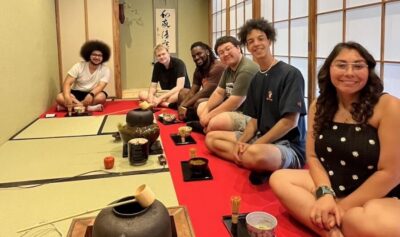
Browse the lists this tour appears in