
Reviewed · COOKING CLASSES
Osaka: Roll and Authentic Sushi Making Class in Dotonbori
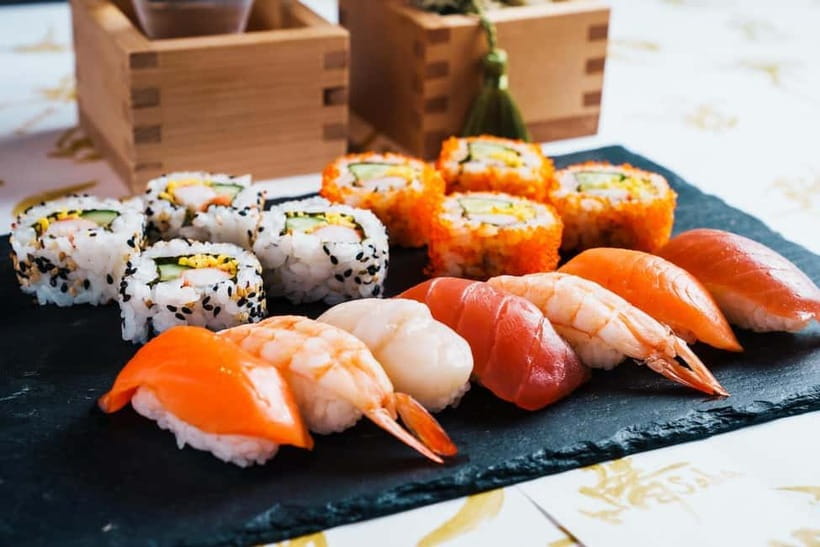
Sushi is better when you make it. This 100-minute class puts you at a worktable in central Osaka, close to Dotonbori and Shinsaibashi, where English-speaking instructors teach you to make both maki rolls and nigiri sushi. I like the mix of hands-on cooking and a light quiz about sushi history. I also like that you eat what you prepare, rather than watching a demonstration and leaving hungry.
The instructors get especially high marks for warmth, humor, and clear teaching. Names such as Shoki, Yui, Takara, Fujiko, Reika, and Rika come up often in the feedback, though your instructor will depend on the session. The main caution is time: some people find the final eating period a little rushed, especially when the ingredients are collected before everyone has finished shaping and plating.
In This Review
- The five things worth knowing first
- Starting near Shinsaibashi, not in a distant kitchen
- A quiz that gives the meal some context
- Making maki rolls with prepared ingredients
- Shaping nigiri, the more traditional challenge
- Eating what you make, with one timing concern
- The instructors make the difference
- Dietary choices need three days of planning
- What $45 gets you in Osaka
- Who will enjoy this class most
- Practical tips for a smoother session
- Should you book the Osaka sushi making class?
- FAQ
- Where does the sushi making class meet?
- How long does the class last?
- Is the class taught in English?
- What kinds of sushi do you make?
- Can the class accommodate dietary restrictions?
- Is hotel pickup included?
The five things worth knowing first
- You make two sushi styles: Prepare maki rolls and nigiri, the hand-shaped sushi often described as authentic Japanese sushi.
- The class sits five minutes from Shinsaibashi Station: The meeting point is on the third floor of the Galleria Acca Building, near Dotonbori.
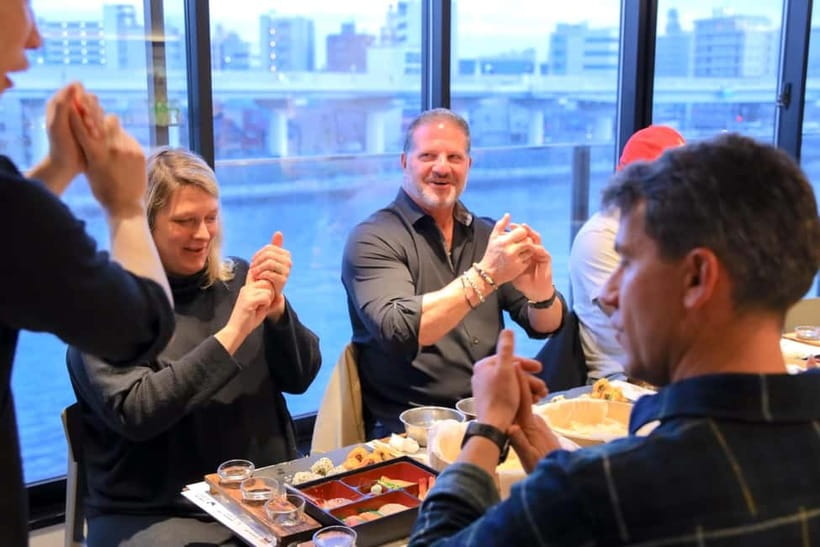
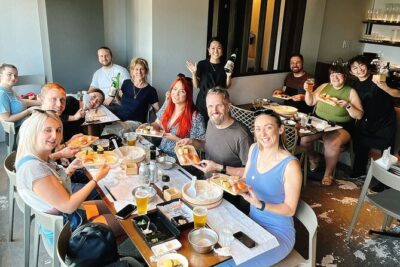
- The mood is social and playful: Expect jokes, local food talk, city tips, and the cheerful Hoi Hoi Hoi call during the sushi making.
- The instructors teach in English: No cooking background is needed, and the demonstrations are designed to be easy to follow.
- Dietary requests need advance notice: Vegan, vegetarian, gluten-free, halal, and allergy-friendly menus are available when arranged at least three days ahead.
- The $45 price covers the full activity: Ingredients, instruction, and the sushi you make are included, with no hotel transportation.
Starting near Shinsaibashi, not in a distant kitchen
The class meets on the third floor of the Galleria Acca Building, about five minutes on foot from Shinsaibashi Station. That central address matters. You can pair the class with an afternoon around Dotonbori, a shopping walk through Shinsaibashi, or an evening meal nearby without giving up a large part of your day to transport.
Finding the entrance may take a little attention. The building entrance is described as somewhat hidden within a concrete structure, which some people enjoy as a piece of local architecture but which can be easy to miss when you are watching the street signs. Give yourself time to locate the building rather than arriving at the last minute.
The space itself receives praise for being clean and well organized. One useful accessibility note: the building has an elevator, but it does not reach the workshop floor. Since the activity is listed as wheelchair accessible, you should still confirm the exact arrangements before booking if you need step-free access.
There is no hotel pickup or drop-off. That is not a serious drawback in this part of Osaka, where the class is close to public transportation and major food districts, but it is worth remembering if you are planning a packed day.
More Cooking Classes in Osaka
- Sushi Making Osaka Roll and Authentic Japanese Sushi Class
★ 5.0 · 1,220 reviews - Matcha Making Class in Osaka with Authentic Japanese Sweets Set
★ 5.0 · 509 reviews - Osaka Sushi Making Experience
★ 5.0 · 400 reviews
A quiz that gives the meal some context
The class begins with an interactive, lighthearted quiz about sushi history. This is a smart opening. You are not simply handed rice and seaweed with a quick instruction to copy the teacher. The quiz gives you a little context about how sushi developed and helps explain why different forms of sushi are made in different ways.
The history portion is brief, not a lecture. That suits the format. You come away with enough background to understand the difference between maki and nigiri, while still having most of the session available for cooking.
The instructors use humor and conversation to get the group involved. They ask where you are from, talk about food and travel, and offer local recommendations. Shoki is praised for turning the history section into something fun, while Yui is singled out for clear instruction and an encouraging manner. Reika is described as both funny and well informed, and Takara is praised for helping participants finish with attractive pieces.
This social approach works especially well for solo participants. You are not left sitting quietly beside strangers, trying to keep up with a complicated recipe. You get a shared activity and an easy reason to talk.
Making maki rolls with prepared ingredients
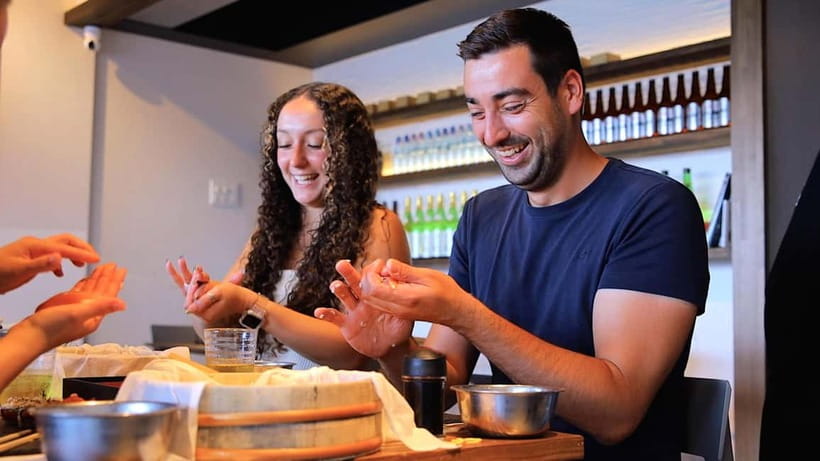
The first practical section focuses on maki, or rolled sushi. The ingredients are prepared before class, so you are learning the important assembly skills rather than spending the session washing rice, slicing every ingredient, or managing a full kitchen.
That is both a strength and a limitation. It keeps the lesson within 100 minutes and makes it suitable for beginners. You can focus on spreading rice, arranging fillings, rolling with care, and cutting the finished sushi into pieces. You do not get a full professional kitchen apprenticeship, but you do learn the part you can realistically repeat at home.
The demonstrations are supported by visual presentations and real-life examples. Several people found the instructions easy to follow, even without much cooking experience. That matters because sushi can look simple until your rice sticks to everything and your roll starts to lose its shape.
The class aims for a relaxed result rather than restaurant-level perfection. You will probably make pieces that look better after a few attempts than they did at the start. The teachers encourage you through the process, and the humor helps prevent the activity from becoming a test of manual skill.
Shaping nigiri, the more traditional challenge
Next comes nigiri, the hand-shaped style in which seasoned rice is formed and topped with fish or another prepared ingredient. This is where the activity feels most distinct from an ordinary cooking class. You are not just rolling a sheet of food. You are learning how to handle the rice gently and form it into a compact shape.
The instructors demonstrate the movements slowly, then let you copy them. Their repeated advice to be kind to the sushi gives the class its playful personality. It also carries a practical lesson: pressing too hard can compact the rice and spoil the texture.
The exact number of pieces can depend on the session and menu, but one account describes making six maki pieces and six nigiri pieces. That is a useful guide to the amount of food involved. The portions are generally enough to function as lunch, though one person wished for a little more time to eat at the end.
The class does not promise that you will become a sushi chef in the professional sense. What it does offer is a set of basic techniques you can take home. Afterward, you should feel more confident trying maki or nigiri again, especially because you have watched a teacher demonstrate each step and then practiced it yourself.
More Cooking Classes in Japan:
- Sushi Making Tokyo Roll and Authentic Japanese Sushi Class
★ 5.0 · 3,971 reviews - Tokyo: Roll and Authentic Sushi Making Class in Asakusa
★ 4.9 · 1,957 reviews - Ramen Cooking Class at Ramen Factory in Kyoto
★ 5.0 · 1,937 reviews - Tokyo Shinjuku Chopsticks Making Class
★ 5.0 · 1,763 reviews
Eating what you make, with one timing concern
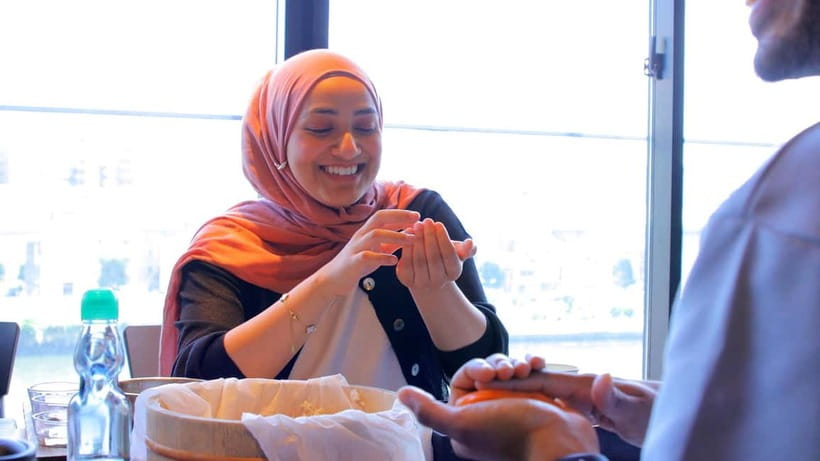
The best part is the meal at the end. You prepare the food, then sit down to eat it. That gives the activity a satisfying finish and makes the $45 price easier to judge. You are paying for instruction, ingredients, a cultural introduction, and a meal you helped create.
The food itself is repeatedly described as tasty, with good ingredient quality and a solid selection. The ingredients are presented in trays or boxes, and the staff checks dietary needs in advance so the appropriate set can be prepared.
The main weakness is pacing. Some participants feel pressure to finish their sushi and start eating before the ingredients are cleared away. One detailed account says the tray was collected too early, taking condiments such as ginger and wasabi along with it if they had not already been moved to the plate.
This is easy to manage if you know it ahead of time. Keep the items you still need on your work area, and ask before a tray is removed. You can also begin shaping promptly after each demonstration instead of waiting until the entire group is ready.
The class lasts 100 minutes, and that sounds generous until you include the welcome, quiz, demonstrations, preparation, and meal. I would treat the eating time as part of the schedule rather than as a long relaxed lunch. If you want a slow meal, plan a separate restaurant stop afterward.
The instructors make the difference
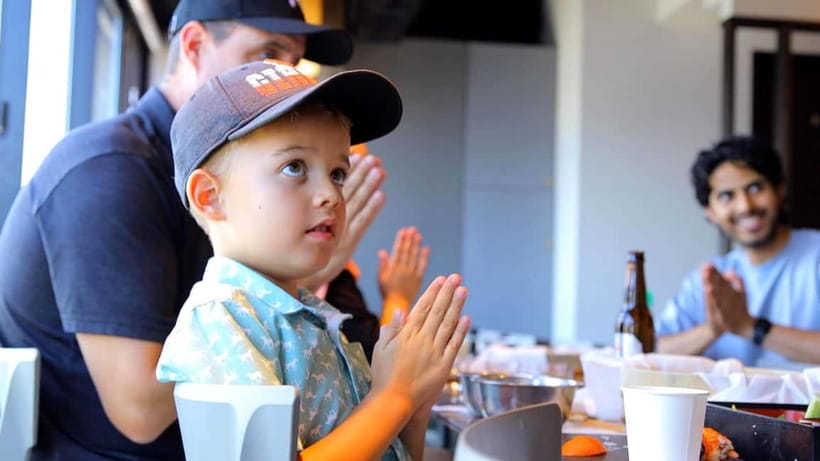
The strongest feature here is not a particular recipe. It is the teaching style. Again and again, the instructors are praised for patience, high energy, clear English, and an ability to make beginners comfortable.
That matters for families and mixed groups. A confident home cook can follow the demonstrations, while a first-time cook gets help without feeling embarrassed. One person who described not being comfortable in the kitchen still found the class easy and enjoyable.
The instructors also adjust their approach to the group. They tell jokes, explain techniques, answer questions, and keep conversation moving. The tone is lively, but it is not presented as a serious chef-training course. If you want quiet, technical instruction with no group interaction, this may feel a little loud or theatrical.
The Hoi Hoi Hoi call is part of the class atmosphere. Some people find it hilarious and memorable. Others may prefer a calmer cooking lesson. I see it as part of the experience’s identity, especially for families, couples, and groups of friends who want photographs and a shared story from Osaka.
Dietary choices need three days of planning
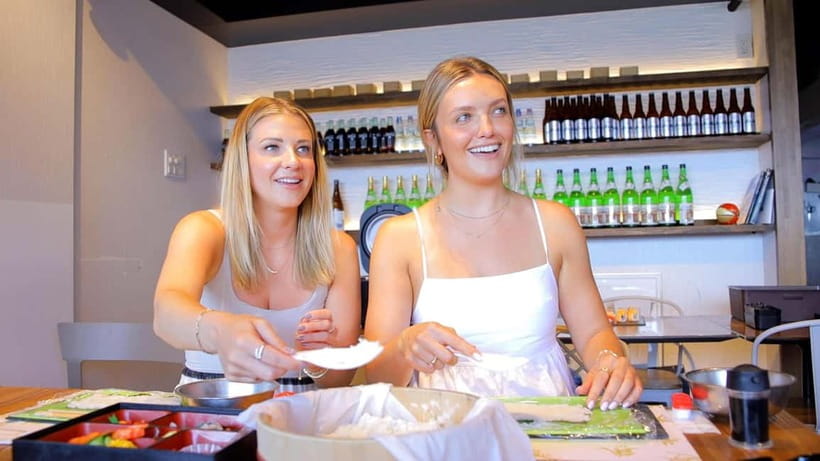
The class can accommodate vegan, vegetarian, gluten-free, halal, and allergy-related menu changes. Meat, nuts, fruits, and dairy are not used in the standard allergy information provided for the activity.
You must contact the provider when making the reservation if you need a different menu. The stated deadline is three days in advance, and same-day changes cannot be handled. The provider also does not accept individual ingredient specifications, so you should explain your dietary need clearly and early, then confirm that the offered menu suits you.
This is a strong option for people who often struggle to find suitable cooking activities. A halal request was handled successfully for one participant, and the staff checked food needs before preparing the ingredient box. Still, do not wait until the day of the class and expect a replacement plate.
What $45 gets you in Osaka
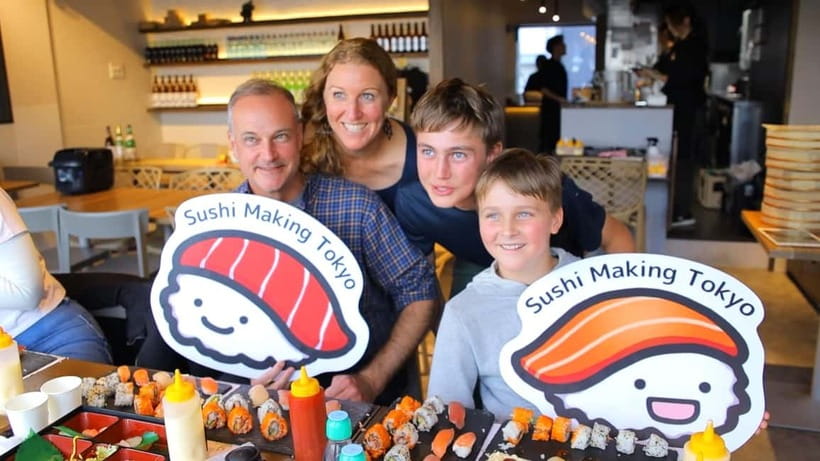
At $45 per person, the class sits in a reasonable range for a central Osaka food activity. You receive 100 minutes of instruction, all ingredients, an English-speaking instructor, and a meal made during the session. You also get a practical skill that can continue to pay off when you try sushi at home.
The value is strongest if you want more than a restaurant meal. At a sushi counter, you can taste better-executed pieces, but you do not learn how the rice is shaped or how the roll is assembled. Here, the meal has a personal connection because you made it yourself.
The price is less attractive if you are already planning a large sushi lunch or if your main goal is advanced technique. The rice and ingredients are prepared for you, and the session covers two approachable styles rather than knife work, rice preparation, or professional fish handling.
For most visitors, the central location adds value. You can make this a compact part of a Dotonbori day instead of traveling across Osaka. The reserve-now, pay-later option also helps if your schedule is still shifting, and free cancellation is available up to 24 hours before the activity for a full refund.
Who will enjoy this class most
I would recommend it first to beginners, couples, families, and solo participants who like a social setting. You do not need cooking experience, and the staff keeps the instructions accessible.
It is also a good fit for someone who wants a food activity with a clear cultural element. The sushi history quiz, the explanation of maki and nigiri, and the chance to speak with local instructors make it more meaningful than simply buying prepared sushi.
People with dietary restrictions can consider it, provided they arrange the menu at least three days ahead. The class is also useful for anyone looking for an indoor activity near Shinsaibashi that does not require a full day.
I would be more cautious if you want a quiet, highly technical lesson or a long meal. The upbeat style includes jokes, group participation, and the Hoi Hoi Hoi cheer. The final eating period may feel short, so do not schedule an important appointment immediately afterward.
Practical tips for a smoother session
- Arrive early enough to find the third-floor entrance in the Galleria Acca Building.
- Keep your schedule open for the full 100 minutes, with extra time afterward if you want another meal.
- Tell the provider about vegan, vegetarian, gluten-free, halal, or allergy needs at least three days in advance.
- Listen closely during the demonstrations, especially when shaping nigiri and rolling maki.
- Move ginger and wasabi to your plate before staff begin clearing the ingredient tray.
- Bring your appetite, since you eat the sushi you prepare.
- Expect an energetic class rather than a silent demonstration.
Should you book the Osaka sushi making class?
I would book this class if you want an easy, social way to connect food with Osaka. The location is convenient, the price includes both instruction and a meal, and the teachers earn strong praise for patience, humor, and clear English. You leave with a better sense of sushi technique and a recipe idea you can repeat at home.
The drawbacks are narrow but real. The session can feel rushed near the end, dietary changes must be arranged early, and the lively group style will not suit everyone. For most first-time sushi makers, though, the combination of maki, nigiri, local instructors, and food you prepare yourself makes this a worthwhile 100 minutes in the heart of Osaka.
FAQ
Where does the sushi making class meet?
The meeting point is on the third floor of the Galleria Acca Building, about five minutes on foot from Shinsaibashi Station. It is near Dotonbori and Shinsaibashi.
How long does the class last?
The activity lasts 100 minutes. This includes the sushi history quiz, demonstrations, hands-on preparation, and eating the sushi you make.
Is the class taught in English?
Yes. The instructor language is English, and the local staff guide participants through the class in English.
What kinds of sushi do you make?
You make two types: maki sushi rolls and nigiri, the hand-shaped style of sushi topped with an ingredient.
Can the class accommodate dietary restrictions?
Yes. Vegan, vegetarian, gluten-free, halal, and allergy-related menu changes are available when requested at least three days before the class. Same-day changes cannot be handled, and individual ingredient specifications are not accepted.
Is hotel pickup included?
No. Hotel pickup and drop-off are not included. You make your own way to the meeting point near Shinsaibashi Station.
Just added in Japan
- A One-of-a-Kind Sushi Experience in a Special Place of Japan★ 5.0 · 15 reviews
- Tokyo Cute Bento Cooking Class – Make a Kawaii Character Lunchbox★ 5.0 · 126 reviews
- Japanese Home Cooking Class & Walk in Todoroki Temple Tokyo★ 5.0 · 88 reviews
- Japan Tokyo Tower Observatory Deck E-Ticket★ 4.0 · 34 reviews
- Catch a Baseball Game in Tokyo with a Local – Tickets Included★ 5.0 · 24 reviews
- JDM Experience with Fast&Furious RX-7 (English speaking Driver)★ 5.0 · 57 reviews
- Tokyo Private Day Tour by Car with English speaking Driver Guide★ 4.0 · 29 reviews
- Japan Classic 10 Day – One Life Adventures★ 5.0 · 129 reviews
Cooking Classes, compared.
Sushi Making Tokyo Roll and Authentic Japanese Sushi Class
Read our review →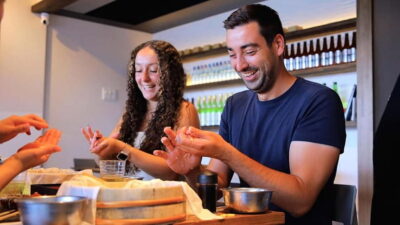
Roll and Authentic Sushi Making Class in Asakusa
Read our review →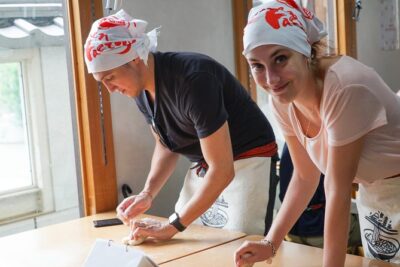
Ramen Cooking Class at Ramen Factory in Kyoto
Read our review →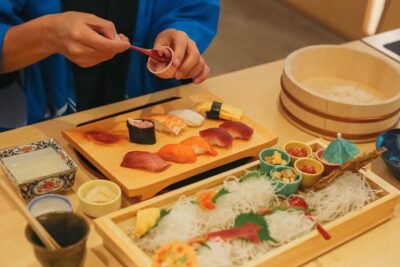
Sushi Making Class in a Happi Coat near a Famous Spot
Read our review →
Sushi Making Osaka Roll and Authentic Japanese Sushi Class
Read our review →
Tokyo Sushi Making Class in Tsukiji with Professional Chef
Read our review →
Ramen & Gyoza Cooking Class in Tokyo with Local Supermarket Visit
Read our review →Browse the lists this tour appears in