
Reviewed · COOKING CLASSES
Osaka: Sushi Making in Spacious Studio (SAME-DAY OK!)
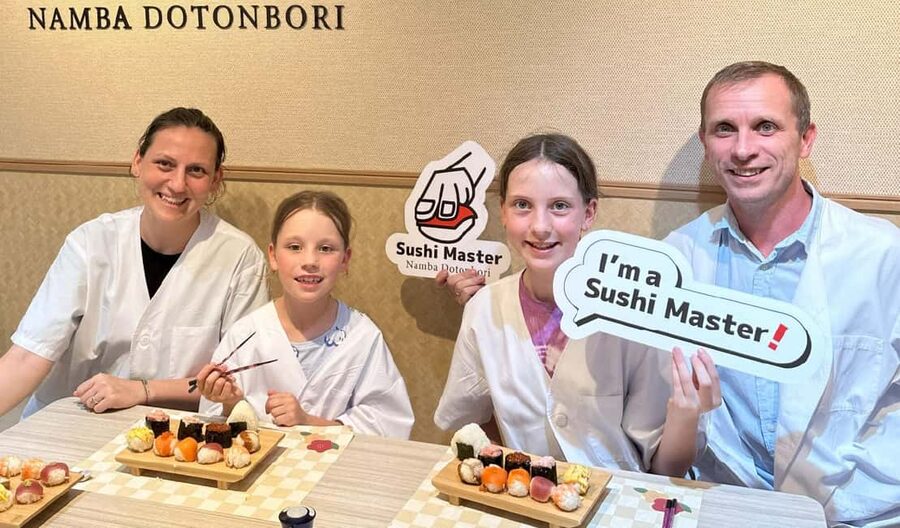
Sushi is better when you make it yourself. This 90-minute class near Namba gives you a friendly English-speaking instructor, a hands-on lesson, and a full meal of your own sushi. I especially like the small class feel and the chance to ask questions as you work. I also like that you leave with both a Sushi Master Certificate and a cute Japanese souvenir. The main consideration is that drinks cost extra, and vegetarians need to contact the organizer before arrival.
The setting is simple and practical rather than fancy. You meet on the second floor of a narrow orange building, only about three minutes from Namba Station. Instructors such as Naho, Aki, Seina, Tsuki, and Matsuri have earned strong praise for clear English, patience, and a warm manner. If you want a fun food activity instead of another look at a restaurant menu, this is a very good-value choice at about $25 per person.
In This Review
- Key points at a glance
- Why this Namba class works so well
- Finding the studio near Namba Station
- The opening welcome and sushi culture lesson
- Learning the rice before shaping the sushi
- Preparing fish, egg, seaweed, and vegetables
- Making nigiri, gunkan, rolls, and temari sushi
- Eating your own sushi at the studio
- The certificate and souvenir
- What the instructors do best
- Who should book this experience
- Timing, price, and practical planning
- Should you book the Osaka sushi class?
- FAQ
- How long does the sushi-making class last?
- How much does the experience cost?
- How many pieces of sushi will I make?
- Is the class taught in English?
- Are vegetarian options available?
- Where does the class meet?
Key points at a glance
- Make 8 or 10 pieces of sushi: Choose the Standard course with 8 pieces or the Premium course with 10.
- Learn from English-speaking instructors: The class is taught in English and Japanese, with patient guidance for beginners.
- Work with the basics: You can learn sushi rice preparation and make styles such as nigiri, gunkan, rolls, or temari sushi, depending on the class format.
- Eat what you prepare: The sushi becomes your meal, so the activity offers more than a quick demonstration.
- Take home two keepsakes: You receive a Sushi Master Certificate and a small Japanese souvenir.
- Vegetarian arrangements are possible: Send a direct message in advance so fish toppings can be replaced with vegetable ingredients.
Why this Namba class works so well
I like food classes that give you something to do with your hands. This one avoids the common problem of watching a chef work while you stand at the edge of the room. You handle the rice, assemble the pieces, and see the sushi take shape in front of you.
That matters in Osaka, a city with plenty of excellent food but also plenty of crowded restaurant counters. A class lets you slow down and understand a few of the small details behind the meal. You learn how sushi is put together, how the rice is handled, and how different ingredients are arranged.
The price is another strong point. At $25, you get the lesson, the ingredients, 8 or 10 pieces of sushi, the certificate, and a souvenir. Drinks are not included, but you can order soft drinks or alcohol during the class. Even without a drink, the food alone makes the cost reasonable, especially compared with a sit-down sushi meal in central Osaka.
The class also suits different types of groups. Solo participants have reported feeling comfortable, while couples and families can work together and take photos. Children and first-time cooks should find the process approachable because the instructor demonstrates each part before you try it.
The drawback is that you should not expect a full professional sushi-chef apprenticeship. In 90 minutes, the focus is on basic preparation and assembly. You will gain useful skills and a better sense of sushi, but this is a friendly introduction rather than advanced knife training or a visit to a working sushi counter.
More Cooking Classes in Osaka
- Sushi Making Osaka Roll and Authentic Japanese Sushi Class
★ 5.0 · 1,220 reviews - Matcha Making Class in Osaka with Authentic Japanese Sweets Set
★ 5.0 · 509 reviews - Osaka Sushi Making Experience
★ 5.0 · 400 reviews
Finding the studio near Namba Station
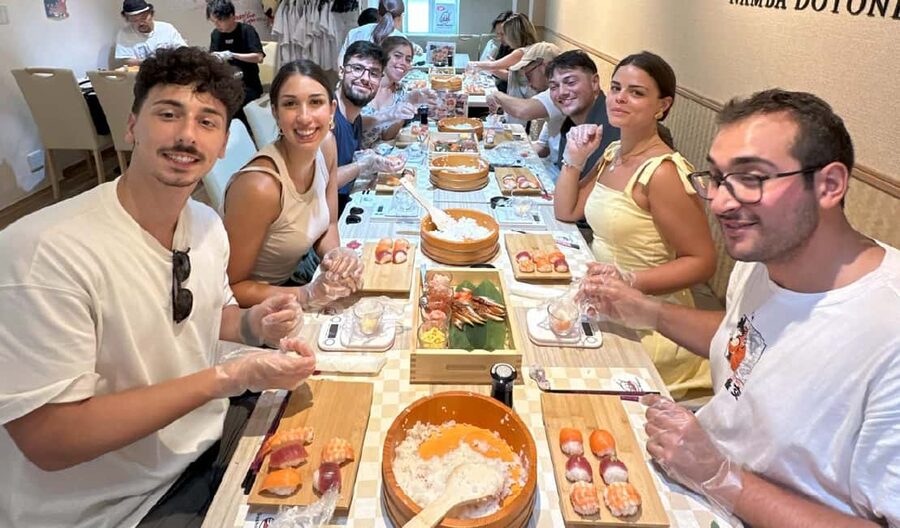
The studio is about three minutes from Namba Station, which makes it easy to add to a day in southern Osaka. You can fit the class between shopping, sightseeing, or an evening meal around Dotonbori and the Namba area.
The meeting instructions deserve attention. Search for Sushi Master Namba on Google Maps, but the map may be slightly misaligned. Look for the narrow orange-colored building and go to the second floor. That visual clue is more useful than relying only on the map pin.
If you have trouble locating the entrance, call 0664848070. I would save the number before leaving your hotel, particularly if you are arriving close to the class start time. This is not a hotel pickup experience, so you make your own way to the studio.
Once inside, expect a welcoming classroom with enough space for hands-on work. The setting is described as spacious, which is useful when several people are shaping rice and handling ingredients at the same time. Smoking is not allowed, and outside food or drinks should stay behind.
The opening welcome and sushi culture lesson
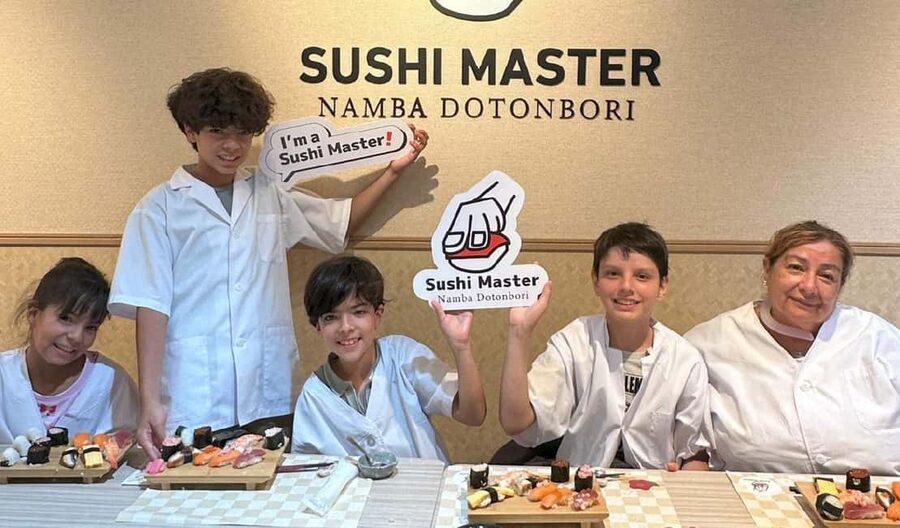
The class begins with a welcome and an introduction to Japanese food culture. This opening gives the activity some context instead of jumping straight into assembly.
You may also watch an informative video before the practical work begins. The introduction can cover sushi history and basic ideas about the food. That is valuable for first-time visitors because sushi is not simply raw fish placed on rice. Rice seasoning, shape, texture, and presentation all matter.
The English support is one of the class’s strongest features. Instructors are fluent enough to explain the steps clearly and answer questions. Names praised for their friendly teaching include Naho, Aki, Seina, Tsuki, and Matsuri. Their teaching styles may differ, but the consistent point is that you are not left guessing what to do next.
I would use this opening to ask questions. You can ask about the ingredients, the different sushi styles, or how the preparation relates to Japanese food culture. The class is personal enough for questions, rather than treating you as part of a silent audience.
Learning the rice before shaping the sushi
The rice is the heart of the lesson. The instructors show you how to make or handle proper sushi rice, then guide you through cooling and preparing it for assembly.
In practice, much of the rice is already cooked before the class begins. That is sensible. Cooking and seasoning rice from scratch would take too much of the 90-minute session, leaving little time to make sushi. Instead, you get to focus on the part that visitors can realistically repeat at home: cooling, handling, shaping, and portioning the rice.
This stage can be messier than it looks. Rice sticks to your hands, and getting the right amount takes a little practice. That is part of the fun. You are not expected to produce perfect pieces immediately, and the instructor can correct your technique as you go.
The emphasis on rice is important because it gives you a skill that applies beyond this one class. If the rice is too loose, too compact, too warm, or poorly portioned, the finished sushi will not hold together properly. Learning to handle it gives you a better understanding of why restaurant sushi feels so different from a hurried homemade version.
More Cooking Classes in Japan:
- Sushi Making Tokyo Roll and Authentic Japanese Sushi Class
★ 5.0 · 3,971 reviews - Tokyo: Roll and Authentic Sushi Making Class in Asakusa
★ 4.9 · 1,957 reviews - Ramen Cooking Class at Ramen Factory in Kyoto
★ 5.0 · 1,937 reviews - Tokyo Shinjuku Chopsticks Making Class
★ 5.0 · 1,763 reviews
Preparing fish, egg, seaweed, and vegetables
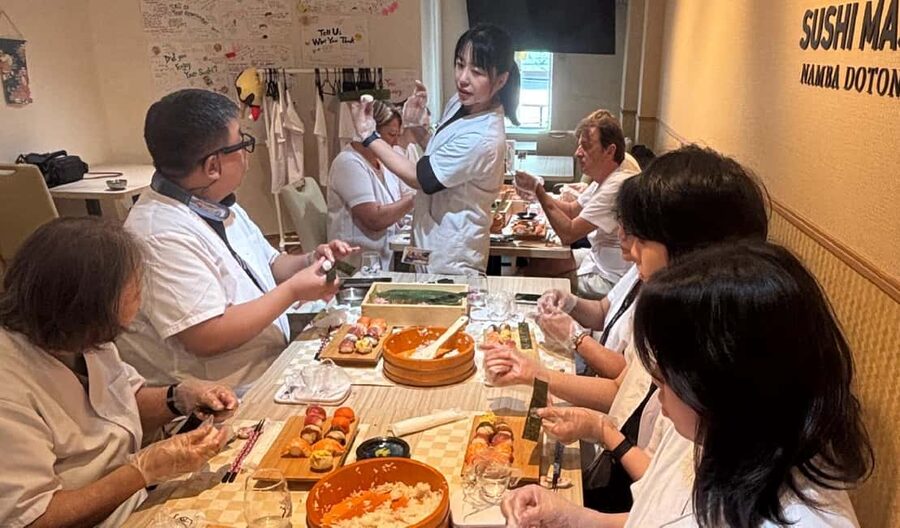
The ingredients are prepared for the practical session, so you can spend your time assembling rather than doing extensive kitchen preparation. Fish, egg, and seaweed may be ready for you to use, along with other sushi ingredients.
This arrangement keeps the class moving and makes it suitable for people with no cooking experience. You do not need to know how to cut fish or prepare a professional kitchen station. Instead, the instructor can focus on explaining how each ingredient works with the rice.
Vegetarians should contact the organizer in advance. The fish toppings can be replaced with vegetable-based ingredients, but this needs to be arranged directly. Do not assume that you can simply request a change after arriving.
You should also report allergies ahead of time. The class asks participants to provide that information in advance, which gives the staff a chance to prepare safely. The supplied information does not promise that every allergy can be accommodated, so clear communication matters.
Making nigiri, gunkan, rolls, and temari sushi
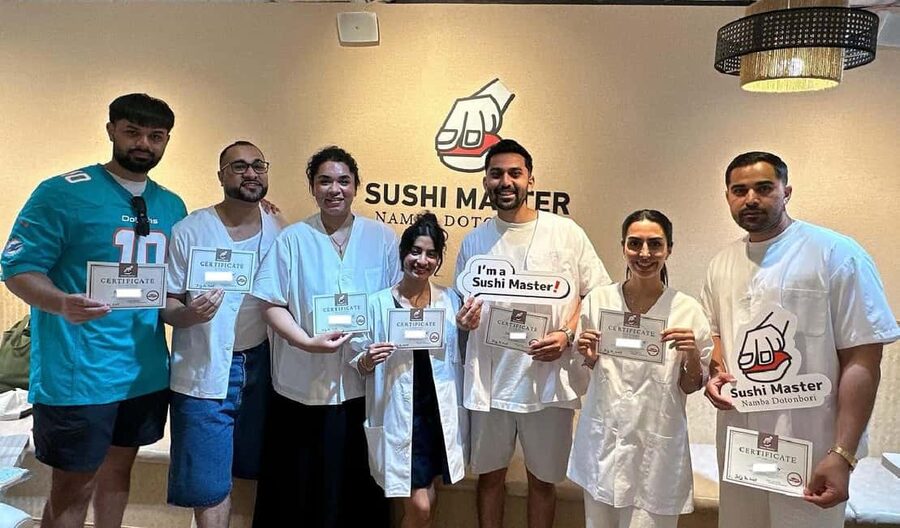
The class covers basic sushi forms. Depending on the course or session, you might make nigiri, gunkan, rolls, or temari sushi.
Nigiri is the familiar finger-shaped piece of rice topped with fish or another ingredient. It looks simple, but shaping the rice with the right pressure takes a little care. The goal is not to squeeze it into a hard block. You want a piece that holds together while remaining pleasant to eat.
Gunkan sushi has a seaweed band around the rice, creating a small cup for the topping. It gives you a different lesson in structure and presentation. Rolls introduce another way to combine rice and fillings, while temari sushi is shaped into small rounded pieces.
The exact selection can vary, so I would treat the class as an introduction to several basics rather than a guaranteed masterclass in one particular style. The activity description lists premium and standard quantities, with 10 pieces in the Premium Sushi Making Course and 8 in the Standard course.
The number is enough for a proper light meal. Several participants have found the portions generous enough to leave satisfied. You should still arrive ready to eat, especially if this is replacing lunch.
Eating your own sushi at the studio
The best part comes at the end, when you eat what you made. This turns the lesson into a meal and gives the class a clear reward.
Handmade sushi often tastes better simply because you understand the work behind it. You notice the texture of the rice, the balance of toppings, and the difference between a neatly shaped piece and one that needed another attempt. The instructors can help you finish pieces that are not quite perfect, so the final plate should be both edible and enjoyable.
You can order drinks at the studio, including soft drinks and alcohol. Carefully selected sake is available, but it is not included in the $25 price. If you want to keep the activity inexpensive, skip the drink. If you enjoy pairing Japanese food with sake, the option adds a pleasant extra touch.
The meal is also a good moment for photos. Instructors have been happy to take pictures, which is useful for solo participants or groups who want a record of the finished plates. Do not bring outside food or drinks, though.
The certificate and souvenir
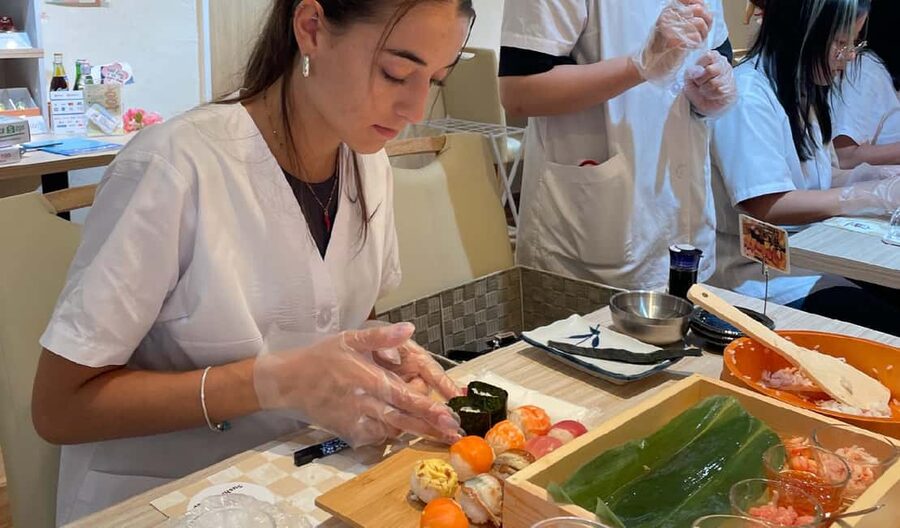
At the end, you receive a Sushi Master Certificate. The title is playful, of course, but it makes a good travel memento and gives children an extra reason to take part.
You also receive a small Japanese souvenir. It is not a major gift, but the gesture adds warmth to the ending. After spending the class learning, shaping, and eating, you leave with something physical besides photos.
I like these small touches because they help the experience feel complete. You are not simply paying for a meal that disappears in ten minutes. You take away a memory, a basic sushi skill, and a certificate that can make a fun addition to a family travel scrapbook.
What the instructors do best
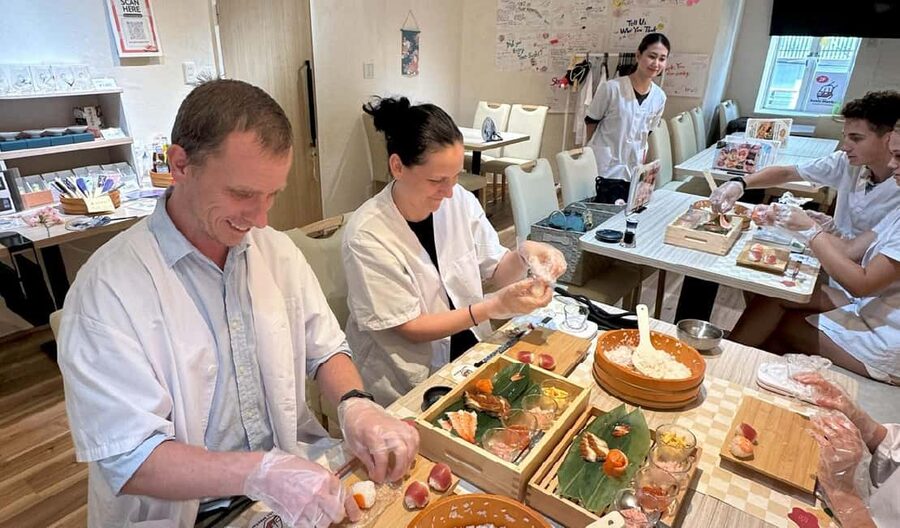
The staff receive especially strong praise for their patience and personal attention. Naho is described as kind and dedicated, with clear explanations that help participants understand each part of the process. Aki is praised for friendly communication and strong English, while Seina and Tsuki are also noted for being patient and helpful.
That matters more than fancy equipment. Sushi assembly can feel awkward the first time, especially when rice sticks to your fingers or a topping slides out of place. A calm instructor keeps the class light and makes it easy to try again.
The teaching also appears flexible. Staff have helped with questions, taken photos, and accommodated a schedule change after a participant’s daughter broke her foot. You should not assume every change is possible, but the staff’s willingness to help is encouraging.
The personal approach makes the class suitable for solo visitors. You do not need to arrive with a partner or a group. You can ask questions, work at your own pace, and meet other people through the shared meal.
Who should book this experience
I would recommend this class to first-time visitors who want a simple introduction to Japanese food culture. It gives you more context than eating sushi alone and requires less time than a full cooking school.
Families should find it especially appealing. The steps are easy to follow, the final food is familiar, and the certificate gives children a clear souvenir. Couples can treat it as a relaxed daytime activity, while solo visitors get a structured experience without committing to a long group tour.
Food lovers will enjoy the chance to understand sushi from the inside. You will not learn every professional technique, but you will leave with a better sense of why rice, shape, and fresh toppings matter.
It is less suitable if you want to prepare every ingredient from scratch, practice advanced knife work, or spend several hours studying sushi craft. It may also be inconvenient for anyone who has not arranged vegetarian substitutions or allergy information ahead of time.
Timing, price, and practical planning
The class lasts 90 minutes, a useful length for a busy Osaka schedule. It is long enough to cover the basics, make your sushi, eat, and receive the certificate without taking up an entire half-day.
At $25 per person, the value is strong. You are paying for instruction, ingredients, a meal, and two keepsakes. Drinks cost extra, but you can control that part of the bill.
The booking terms are flexible. You can cancel up to 24 hours ahead for a full refund, and you can reserve now and pay later. Starting times vary, so check availability for your preferred date.
Try to arrive with allergies already reported and with no outside food or drinks. Vegetarian participants should send a direct message before booking or attending. These are small steps, but they make the class easier for both you and the staff.
Should you book the Osaka sushi class?
Book it if you want a friendly, affordable, hands-on activity near Namba. The strongest reasons are the clear English instruction, patient teachers, generous food portions, and the fact that you eat your own work at the end.
I would choose the Standard course for a lighter schedule or the Premium course if you want the fuller meal. Families, solo visitors, couples, and sushi beginners should all find something worthwhile here.
Skip it only if you want advanced professional training or a completely from-scratch cooking lesson. For everyone else, this is a practical way to spend 90 minutes in Osaka, learn a few real sushi basics, and leave with a full stomach and a small story to take home.
FAQ
How long does the sushi-making class last?
The class lasts 90 minutes. Check the available starting times when you choose your date.
How much does the experience cost?
The listed price is $25 per person. Drinks are not included, but soft drinks and alcohol can be ordered during the class.
How many pieces of sushi will I make?
The Standard Sushi Making Course includes 8 pieces. The Premium Sushi Making Course includes 10 pieces.
Is the class taught in English?
Yes. The instructors teach in English and Japanese. English-speaking instructors provide guidance throughout the activity.
Are vegetarian options available?
Yes. Fish toppings can be replaced with vegetable-based ingredients, but vegetarian participants need to send a direct message in advance.
Where does the class meet?
The studio is about three minutes from Namba Station. Search for Sushi Master Namba on Google Maps, then look for the second floor of the narrow orange-colored building. The map may be slightly misaligned.
Just added in Japan
- Manga Lesson with a Professional Japanese Manga Artist in Nakano★ 5.0 · 77 reviews
- Making a bento box with cute character look in Japan★ 5.0 · 15 reviews
- Tokyo/Ikebukuro Manga drawing workshop by pro-Manga artists★ 5.0 · 65 reviews
- Luxury Tokyo Sake, Cocktail, Whisky and Pairing Tour★ 5.0 · 18 reviews
- Tokyo Ueno Food & Nature & Localtown Tour: 10Dishes+ Drinks★ 5.0 · 34 reviews
- Make Your Own Bonsai with a Professional Bonsai Artist in Tokyo★ 4.5 · 18 reviews
- Make Traditional Nerikiri Sweets & Matcha experience in Shibuya★ 5.0 · 130 reviews
- Daikoku Parking Tokyo Drift & APIT Car Meet JDM Culture Tour★ 5.0 · 79 reviews
Cooking Classes, compared.
Sushi Making Tokyo Roll and Authentic Japanese Sushi Class
Read our review →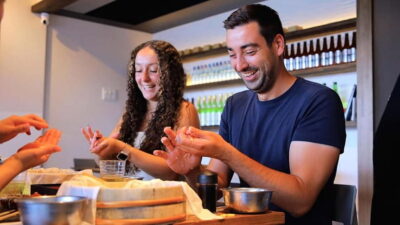
Roll and Authentic Sushi Making Class in Asakusa
Read our review →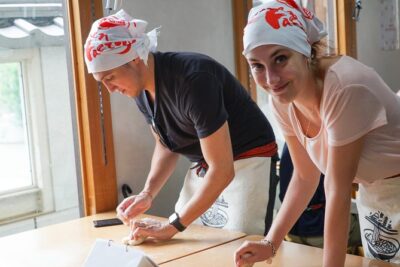
Ramen Cooking Class at Ramen Factory in Kyoto
Read our review →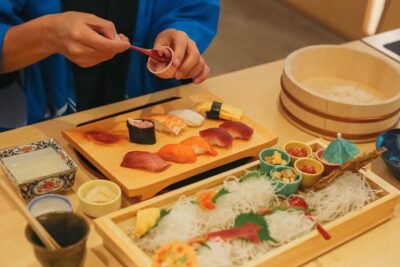
Sushi Making Class in a Happi Coat near a Famous Spot
Read our review →
Sushi Making Osaka Roll and Authentic Japanese Sushi Class
Read our review →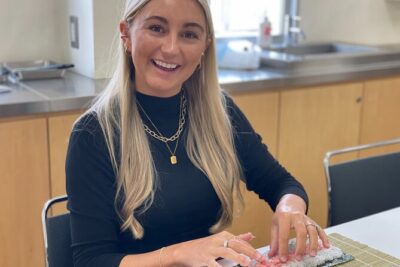
Tokyo Sushi Making Class in Tsukiji with Professional Chef
Read our review →
Ramen & Gyoza Cooking Class in Tokyo with Local Supermarket Visit
Read our review →Browse the lists this tour appears in