
Reviewed · WALKING TOURS
Private Akihabara anime Tour(walking Tour with photography)
Akihabara rewards a little local help. This private walking tour gives you a personal guide for anime shops, retro games, arcades, and one surprisingly quiet shrine. I like that the guide takes and edits photos, and I like the flexibility for families whose interests range from Pokemon to Japanese culture. The main drawback is that two and a half to three hours can pass quickly, especially if you want time to shop and play.
Guide Nao receives especially strong praise for his friendly manner, clear English, and ability to adjust the route. He can help you find obscure figures, gaming cards, cosplay goods, and arcade prizes, but this is not a simple shopping trip. You also get taiyaki, lunch, souvenirs, and a look at Akihabara beyond its famous signs.
In This Review
- Key points before you book
- Why a private Akihabara tour can be worth the price
- Meeting near Akihabara Station
- Yanagimori Shrine gives Akihabara a quieter opening
- Lashinbang is the place for secondhand otaku goods
- Gee Store focuses on wearable anime souvenirs
- Kotobukiya combines anime shelves with model tools
- Super Potato brings back classic Nintendo-era games
- Akihabara GiGO shows Japan’s arcade culture
- Taito Station is best for figures and prize machines
- A local warehouse adds an unexpected personal touch
- Food and photos make the outing feel complete
- The guide’s flexibility is the tour’s strongest feature
- Timing, group size, and practical limits
- Who should book this Akihabara experience
- Should you book it?
- FAQ
- How much does the private Akihabara anime tour cost?
- How long does the tour last?
- Is this a private activity?
- Where does the tour start?
- Where does the tour end?
- What food is included?
- Are photographs included?
- Are arcade games included in the price?
- Are maid café costs included?
- Is transportation included?
- Can I cancel for a full refund?
Key points before you book
- A private guide for up to two people: The $197.06 price is per group, not per person, so it makes the most sense for a couple or a small family arrangement.
- A practical introduction to Electric Town: You visit anime shops, a retro game store, two arcades, and a shrine without having to plan the route yourself.
- Nao is praised for personal attention: He adjusts the outing for children, teens, gaming fans, manga readers, and people who are simply curious about Akihabara.
- Photos are part of the experience: Your guide takes and edits photos, giving you a record of the outing rather than just a list of shops.
- Food is included: You receive Japanese taiyaki, a sweet filled pancake, plus lunch at either a ramen or katsu-don restaurant.
- Extra spending is up to you: Maid café charges, arcade play, and your purchases are not included.
Why a private Akihabara tour can be worth the price
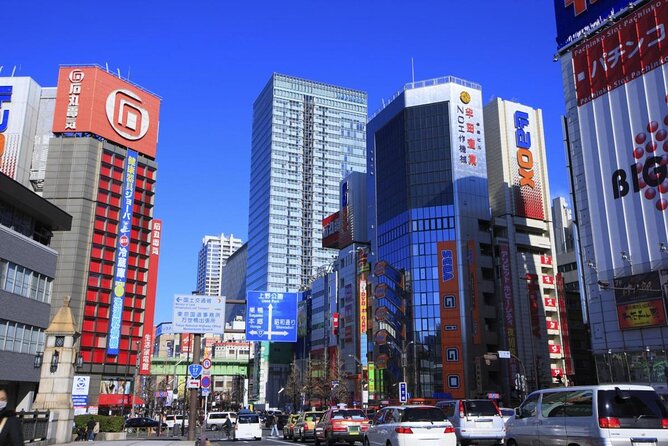
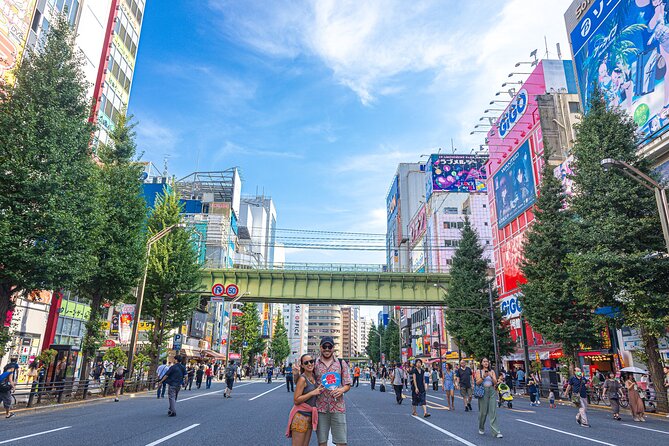
Akihabara is easy to recognize and surprisingly hard to read. The main streets are packed with signs, multi-floor shops, capsule machines, arcades, and displays aimed at very specific interests. You can have a fine time wandering alone, but it is also easy to spend an hour in a store that does not match your taste.
This tour solves that problem with a private format. You and your companion receive the guide’s attention, rather than following a large group through crowded shopping streets. That matters if you want to stop for a particular manga series, ask about Japanese gaming culture, or change direction when your child spots something interesting.
The price is $197.06 per group of up to two people. Split between two people, it is about $98.53 each. That is not a cheap walking tour, but the value improves when you use the included photos, snacks, lunch, souvenirs, and personal shopping advice. A guide who helps you locate hard-to-find figures or shows you how to approach arcade prize machines may save both time and disappointing purchases.
I would not book this simply to see Akihabara’s main street. You can do that for free. I would book it if you want help making sense of the district, have a focused anime or game interest, or are visiting with children and teens who need a route built around their attention span.
More Walking Tours in Tokyo
- Tokyo Tsukiji Fish Market Food and Culture Walking Tour
★ 5.0 · 3,184 reviews - Tokyo: Imperial Palace and Shogun Historical Walking Tour
★ 5.0 · 2,251 reviews - Tokyo: Shinjuku Local Bar and Izakaya Guided Walking Tour
★ 4.9 · 1,794 reviews
Meeting near Akihabara Station
The stated starting point is Jonathan’s Akihabara, at 1-17-4 Sotokanda, Chiyoda City. The meeting instructions also describe exiting through the Akihabara Electric Town entrance and meeting outside the Starbucks on the first floor, with an indoor meeting option in cold or rainy weather.
Because those directions describe two nearby reference points, check the final confirmation carefully before setting out. The tour ends back at the meeting point, and no private transportation is included. You should expect to walk between stops and allow some of the three-hour window for moving through the district.
The experience is offered with a mobile ticket and is near public transportation. Most people can take part, but you should be ready for a walking route through shops and arcades rather than a seated sightseeing excursion.
Yanagimori Shrine gives Akihabara a quieter opening
The first stop is Yanagimori Shrine, where you spend about 10 minutes. It provides a useful change of pace before the shops and game centers take over.
The shrine is connected with the anime Steins;Gate, which gives fans a reason to recognize it immediately. The guide also explains the shrine’s rare tanuki connection. In Japanese, tanuki is linked to a word associated with overtaking others, which gives the site a playful cultural detail that is easy to miss when you pass by on your own.
I like this early stop because it broadens the outing. You are not being rushed straight from one merchandise shelf to another. If your group includes parents or children who are interested in Japanese culture as well as anime, the shrine helps create a more rounded visit.
There is no admission charge. Ten minutes is enough for an introduction, but not enough for a long shrine visit, so people seeking a slow spiritual experience may find this portion brief.
Lashinbang is the place for secondhand otaku goods
The tour then spends about 30 minutes at Lashinbang Akihabara New Store. This is one of the most useful stops if you want anime goods without paying the price of brand-new merchandise.
Japan is already often cheaper than buying the same goods abroad, but secondhand shops add another layer of choice. You might find figures, collectibles, and other items that are no longer easy to locate. The exact stock changes, so the guide’s value comes from helping you understand what you are seeing and where to look.
This is also where a private guide can save time. Akihabara’s specialist shops may be aimed at different corners of anime and manga culture, and the best choice depends on your interests. Tell Nao what series, characters, cards, or figures you want to find, and he can focus your time more effectively.
Thirty minutes gives you room to browse, but serious collectors may want longer. If you spot something rare, you may have to choose between continuing with the group and spending extra time shopping on your own.
A completely different kind of day out:
- Tokyo Disney Resort – Tokyo Disneyland & Tokyo DisneySea Park Tickets
★ 4.8 · 99,488 reviews - SHIBUYA SKY Ticket
★ 4.7 · 46,509 reviews - JR Whole Japan Rail Pass
★ 4.8 · 29,150 reviews - Mt Fuji and Hakone 1-Day Bus Tour Return by Bullet Train
★ 5.0 · 26,383 reviews
Gee Store focuses on wearable anime souvenirs
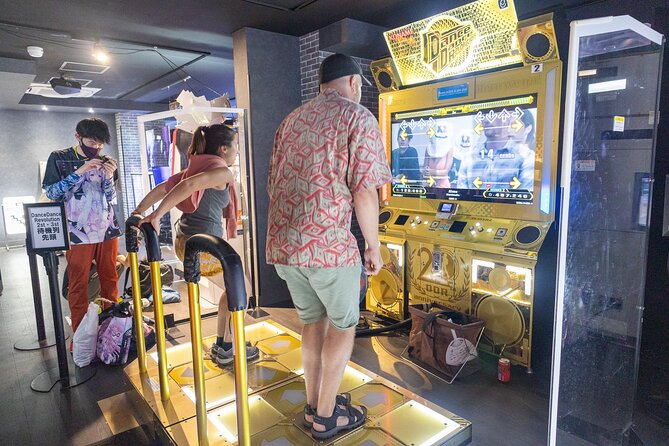
The next 30-minute stop is gee store, a good choice if you want something practical to wear rather than another small figure. The shop carries a strong range of anime T-shirts, an item that can be surprisingly hard to find in a district full of collectibles.
Cosplay goods are also available. That makes this stop useful for visitors who want to browse clothing and accessories, even if they are not planning a full costume. I would especially appreciate this stop if I wanted a souvenir that I could use after returning home.
Your guide can help you compare choices and point out items connected with your interests. Still, prices and stock are not specified, so treat the shop as a chance to browse rather than a guarantee that a particular shirt or costume item will be available.
Kotobukiya combines anime shelves with model tools
Kotobukiya Akihabara takes about 15 minutes. The first and second floors carry anime goods, while the third floor focuses on plastic-model tools.
The store includes recognizable names such as Final Fantasy, Pokemon, and Street Fighter. That mix gives you a useful snapshot of how Japanese character merchandise reaches beyond one anime series or one age group.
The short stop works well as an orientation. You can see what appeals to you, ask questions, and decide if you want to return later with more time. If model building is your main interest, 15 minutes may feel too short, particularly because the tool floor deserves careful browsing.
Super Potato brings back classic Nintendo-era games
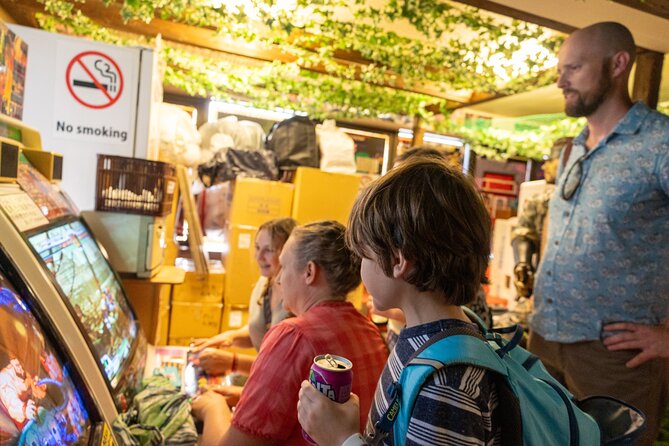
Super Potato is the retro gaming stop, with about 15 minutes set aside. Its shelves focus on older games that are no longer in production, including titles for systems such as the NES and SNES.
This is one of the most memorable parts for anyone who grew up with cartridge-based games. Even if you do not buy anything, the store offers a look at the collecting side of Japanese game culture. You can see how a specialist shop differs from a modern electronics retailer.
The limitation is time. Retro game collectors may need longer to inspect prices, condition, and language versions. I would treat this visit as a first look, then return later if you find a title worth serious consideration.
Akihabara GiGO shows Japan’s arcade culture
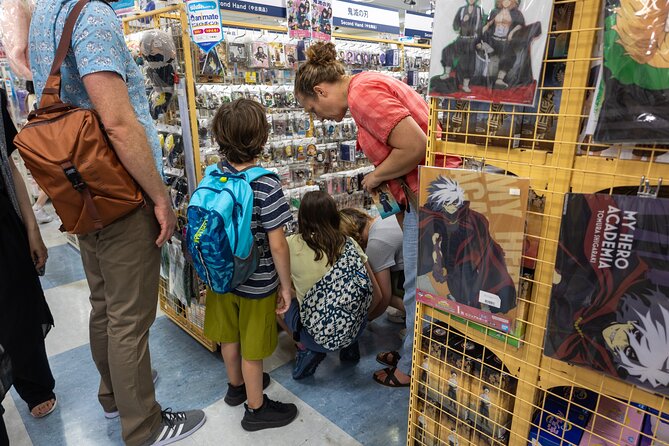
You receive about 30 minutes at Akihabara GiGO. This is where the tour shifts from browsing to play.
Japanese arcades include UFO catchers, fighting games, music games, quiz games, and purikura photo booths that turn pictures into decorated stickers. The range is broader than many Western arcades, and the guide can explain how the different machines work.
Arcade costs are not included, so bring a separate budget if you want to play. Thirty minutes is enough to try a machine or get a feel for the floor, but it is not a full arcade session. Families with children should decide in advance how much extra play money they want to spend.
This stop also helps if you feel unsure about arcade etiquette or machine operation. You can ask questions without having to work everything out alone.
Taito Station is best for figures and prize machines
Another 30-minute stop is Taito Station Akihabara. It is recommended for figures, stuffed animals, and other prizes, especially if you want to try your hand at a claw machine.
Nao is said to acquire more than 1,000 anime goods a year, and his practical advice about winning prizes is one of the tour’s more distinctive benefits. Claw machines can look simple while quietly eating coins, so a few pointers may make the experience more enjoyable.
Again, play costs are extra. You should not assume that the guide can guarantee a prize, but you can expect advice on how to approach the machines. If your main aim is to win a specific plush toy, consider the time and money limit before you begin.
A local warehouse adds an unexpected personal touch
The final listed stop is 明神下ハイス永眞, where the guide has a warehouse and gives you a souvenir. You can choose what you like from the available gifts.
This is a more personal ending than another retail chain. The details of the souvenirs are not specified, so the selection may vary. Still, the chance to choose a small gift gives the tour a friendly, informal finish.
The stop is allocated about 20 minutes. It also reinforces the difference between this tour and a standard sightseeing walk. You are not only being taken to famous commercial addresses. You are getting access to the guide’s own local connections and recommendations.
Food and photos make the outing feel complete
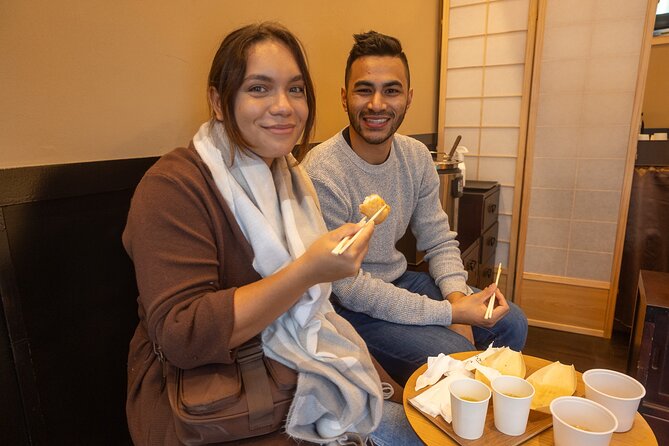
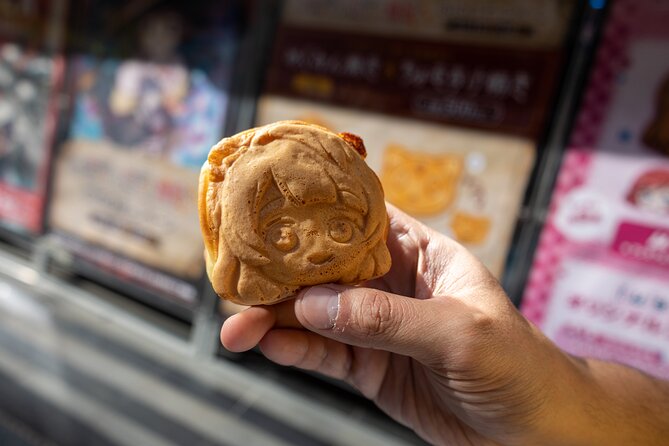
The tour includes Japanese taiyaki, a sweet filled pancake, as well as lunch at either a ramen or katsu-don restaurant. These inclusions help break up the shopping and give you a proper pause during a busy walking route.
The exact restaurant and menu choice are not specified. If you have dietary restrictions, ask before booking or at the start, since the supplied details do not explain substitutions.
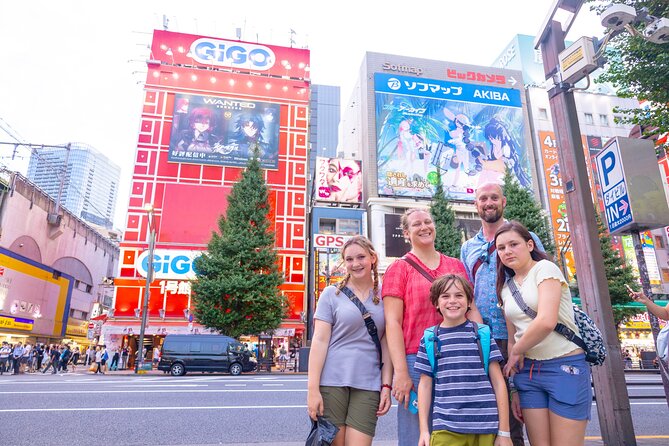
Photography is another major benefit. Nao takes photos during the tour and edits them afterward. That is useful for families who want a shared record but do not want one person constantly left out of the pictures.
The photos also give the tour a stronger sense of occasion. You are not just collecting shopping bags. You leave with edited images, a souvenir, and memories tied to specific parts of Akihabara.
The guide’s flexibility is the tour’s strongest feature
Nao receives repeated praise for being friendly, patient, organized, and flexible. His strongest skill appears to be adapting the route to the people in front of him.
He has worked with anime fans seeking obscure figures, families with pre-teen and teenage children, and groups that wanted more history and culture alongside manga and games. One family with a nine-year-old anime fan appreciated his patience, while another group said he adjusted the plan when its children were not fully focused on anime.
That flexibility matters. A fixed route can be frustrating when one person wants gaming cards, another wants cosplay items, and a parent wants a shrine or cultural explanation. Here, you can make personalized requests and ask the guide to place more emphasis on the subjects your group actually cares about.
The tour is also suitable for newcomers. You do not need to know the difference between every anime shop, game system, or arcade machine before you arrive. The guide can help you get oriented and then let your interests set the pace.
Timing, group size, and practical limits
The experience is advertised as lasting roughly two and a half to three hours, while the included details describe three hours with a local guide. The listed stops add up to more than that if you spend every stated minute at each location, so the remaining time is allocated to walking and the route may be adjusted.
That is normal for a private shopping tour, but it means you should not expect a long, leisurely visit at every address. The more specific your shopping goals, the more important it is to tell Nao in advance.
The price covers up to two people per group. If you are a family of three or more, confirm how your group will be handled before booking, since the stated price limit is two participants.
The tour requires good weather. If poor weather cancels it, you are offered another date or a full refund. Free cancellation is available until 24 hours before the start time, but changes or cancellations inside that window are not accepted.
Who should book this Akihabara experience
I would recommend this tour most strongly to:
- First-time visitors who find Akihabara confusing
- Anime, manga, and gaming fans with specific shopping goals
- Parents traveling with children or teenagers
- Couples who want private guidance and photos
- People curious about Japanese arcade and retro game culture
- Visitors who want food and souvenirs included
I would be more cautious if you prefer to wander alone, dislike shopping, or want to spend several hours playing arcade games. The tour gives you an introduction and expert direction, not unlimited time at each store.
Should you book it?
Book it if you want a friendly local guide to turn Akihabara’s many choices into a focused, personal outing. Nao’s flexibility, shopping knowledge, photos, included food, and patience with families give this experience more value than a basic walk through Electric Town.
Skip it if your plans already include detailed research, long shopping sessions, or a large arcade budget. For everyone else, especially a couple or parent and child sharing the cost, this is a practical way to see anime stores, retro games, arcades, and a cultural site without wasting your limited Tokyo time.
FAQ
How much does the private Akihabara anime tour cost?
The price is $197.06 per group of up to two people.
How long does the tour last?
The tour lasts approximately two and a half to three hours. The included details describe three hours with a local guide.
Is this a private activity?
Yes. Only your group participates.
Where does the tour start?
The stated starting point is Jonathan’s Akihabara, at 1-17-4 Sotokanda, Chiyoda City, Tokyo 101-0021, Japan. Meeting instructions also refer to the Akihabara Electric Town entrance and the Starbucks on the first floor, so check the final meeting details.
Where does the tour end?
The activity ends back at the meeting point.
What food is included?
The tour includes Japanese taiyaki and lunch at either a ramen or katsu-don restaurant.
Are photographs included?
Yes. The guide takes photos during the experience and edits them.
Are arcade games included in the price?
No. The cost of playing in the arcades is not included.
Are maid café costs included?
No. Any cost at a maid café is not included.
Is transportation included?
No private transportation is included. The tour is a walking experience, and some of the available time is used for travel between stops.
Can I cancel for a full refund?
You can cancel at least 24 hours before the experience start time for a full refund. Cancellations or changes made less than 24 hours before the start time are not accepted.
Just added in Tokyo
- Toyosu Market Morning Tuna Auction and Tsukiji Food Tour with Licensed Guide★ 4.5 · 146 reviews
- Tsukiji Food and Toyosu Market with Government-Licensed Guide★ 5.0 · 158 reviews
- JDM Itasha trip to famous car meet up spot Daikoku Parking★ 4.5 · 175 reviews
- Tokyo Spectacular View Day-Cruise in 90 Minutes★ 5.0 · 25 reviews
- From Tokyo to Kyoto and Nara: A Captivating Full-Day Private Tour★ 5.0 · 17 reviews
- Master the art of Sushi : Toyosu Market Tour & Tuna Cutting★ 5.0 · 60 reviews
- Private Tour: Tokyo’s Oldest Sake Brewery and Riverside Walk★ 5.0 · 25 reviews
- Tokyo’s Scariest Shitamachi Ghost Tour★ 4.0 · 30 reviews
Walking Tours, compared.
Kyoto Geisha Walking Tour: Gion District & Hidden Gems
Read our review →
Tokyo Tsukiji Fish Market Food and Culture Walking Tour
Read our review →
Gion Magical Night Walking Tour with Geisha Trivia
Read our review →
Imperial Palace and Shogun Historical Walking Tour
Read our review →
Gion Geisha District Walking Tour – Stories of Geisha
Read our review →
Shinjuku Local Bar and Izakaya Guided Walking Tour
Read our review →
Browse the lists this tour appears in