
Reviewed · MUSEUMS AND GALLERIES
Private Edo-Tokyo Open Air Architectural Museum Tour
Tokyo’s old houses tell the city’s story. This five-hour private tour at the Edo-Tokyo Open Air Architectural Museum brings together traditional homes, modern design, and a wonderfully odd old bathhouse in one leafy setting. I especially like the personal English guide and the way the tour connects Japanese rooms with European ideas. I also like that you travel by train and bus, giving you a small lesson in getting around Tokyo along the way. The main drawback is the price, $193 per person, plus about ¥700 each way for transportation.
I’d choose this outing if architecture, design, or Tokyo’s social history interests you more than checking off famous sights. Guide Yuichi has tailored visits around tea rooms and gardens, while guide Yuki helped explain the wider city as she led a group through the subway and buses. Wear shoes that slip off easily, since several buildings require you to remove them.
In This Review
- Key Things to Know Before You Go
- Why This Open-Air Museum Is Worth Five Hours
- Meeting at Tokyo Station and Riding Out to Tatemono-en
- Kunio Maekawa’s House and Japan’s Modern Turn
- Sutemi Horiguchi’s 1925 Blend of East and West
- The Mitsui Residence Shows Wealth on a Grand Scale
- Shitamachi Streets With a Touch of Ghibli
- What the Guide Adds to the Buildings
- Is $193 Per Person a Fair Price?
- Practical Tips for a More Comfortable Visit
- Who Should Book This Private Museum Tour?
- Final Verdict: A Strong Choice for Architecture-Minded Visitors
- FAQ
- Where does the tour meet?
- Can I meet the guide at Shinjuku Station?
- Is transportation included?
- Is the Ghibli Museum included?
- How long does the tour last?
- Is the tour private?
- What language is the tour conducted in?
- Should I wear special shoes?
- What architectural periods and styles will I see?
- What is included in the price?
Key Things to Know Before You Go
- Kunio Maekawa’s wartime house shows how a Japanese architect shaped modern design after working with Le Corbusier and Antonin Raymond.
- Sutemi Horiguchi’s 1925 residence blends Dutch influence, Art Deco, De Stijl, and traditional Japanese rooms.
- The Mitsui family home gives you a look at the polished interiors of one of Japan’s wealthiest families.
- The Shitamachi section has old buildings, a traditional bathhouse, and a train that recall the atmosphere of a Studio Ghibli film.
- This is not a Ghibli Museum visit. The tour explores the Edo-Tokyo Open Air Architectural Museum instead.
- Private guiding changes the experience. You can ask for more detail on architecture, gardens, tea rooms, or Tokyo’s past.
Why This Open-Air Museum Is Worth Five Hours
The Edo-Tokyo Open Air Architectural Museum is not a single grand building. It is a collection of relocated structures from different periods of Japanese life, arranged so you can walk between them and see how homes, shops, public buildings, and city neighborhoods changed over time.
That makes the museum useful for understanding Tokyo beyond temples and neon signs. You move from the end of the samurai era through the Meiji period and into the Showa era, seeing how foreign ideas entered Japan while older customs remained firmly in place.
I like this format because the buildings do the talking. A Japanese room with tatami mats, a Western-style dining space, a wealthy family’s formal interior, and a humble downtown bathhouse each reveal a different part of the city. Your guide adds the links between them, explaining not only what you are looking at but why it matters.
The private format is important here. An English-speaking licensed guide can adjust the pace and answer questions as they come up. If you care about tea rooms and gardens, say so early. If modern architecture is your main interest, ask for more time with Maekawa’s work. The strongest guide experiences described here came from Yuichi and Yuki, both praised for explaining the buildings clearly and helping with the train and bus journey.
More Museums and Galleries in Tokyo
- teamLab Borderless Tickets: MORI Building DIGITAL ART MUSEUM
★ 4.7 · 24,126 reviews - teamLab Planets TOKYO Ticket
★ 4.7 · 21,663 reviews - Tokyo: teamLab Planets TOKYO Digital Art Museum Entry Ticket
★ 4.6 · 9,779 reviews
Meeting at Tokyo Station and Riding Out to Tatemono-en
The stated meeting point is the Marunouchi Front Plaza at Tokyo Station. After leaving through the JR Tokyo Station Marunouchi Central Gates, head toward the center of the station building. Look for the carriage porch used by VIP guests, marked by a Japanese national flag on each side. The guide waits there with a bag showing an illustration of the Nakagin Capsule Tower.
That last detail is useful in a crowded station. Tokyo Station has many exits and meeting areas, so do not simply wait outside the first doorway you see. Allow time to find the Marunouchi Central Gates and the carriage porch.
The tour includes admission and the guide, but not the transportation to and from Tatemono-en. The trip uses trains and buses, costing about ¥700 one way. This is not a chauffeur-driven excursion, and that matters when you compare the $193 price with other private tours.
I see the public transportation as both a cost and a benefit. The cost is modest, but the route takes part of your five-hour schedule. The benefit is practical: your guide helps you handle a journey that can feel confusing if you are new to Tokyo. One guide, Yuki, was praised for explaining the subway and bus rides while also placing the museum in the context of the city.
The supplied details identify Tokyo Station as the meeting point, while one account describes a guide escorting the group from a hotel. If hotel pickup matters to you, confirm the arrangement before booking rather than assuming it is included. The official meeting information also refers to pickup at either JR Shinjuku Station or JR Tokyo Station, so verify your exact starting point with the operator.
Kunio Maekawa’s House and Japan’s Modern Turn
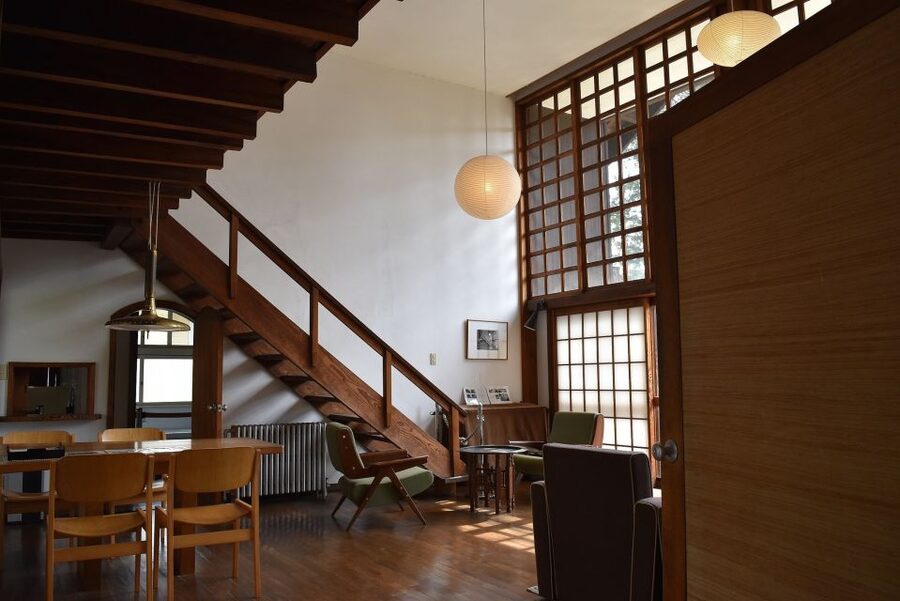
The first major stop is a house designed by Kunio Maekawa. Maekawa worked under Le Corbusier and Antonin Raymond, two figures who helped shape modern architecture in Japan. His experience with international modernism is visible in a house built during the Second World War, when materials and conditions were hardly ideal for elegant design.
That tension makes the building worth your attention. It is not simply an old home preserved behind glass. It shows how a Japanese architect used sophisticated design ideas during a difficult period, adapting international influence to local conditions.
Ask your guide to point out how the house balances modern planning with Japanese habits of living. The attraction is not only the appearance of the structure, but the story of how modern architecture developed in Japan. You get a direct link between European architectural thinking and the later shape of Japanese cities.
This stop will suit you best if you enjoy design details and architectural history. If you mainly want picturesque traditional houses, Maekawa’s home may feel less immediately charming than the older residences. Give it time. Its value comes from the change it represents.
Sutemi Horiguchi’s 1925 Blend of East and West
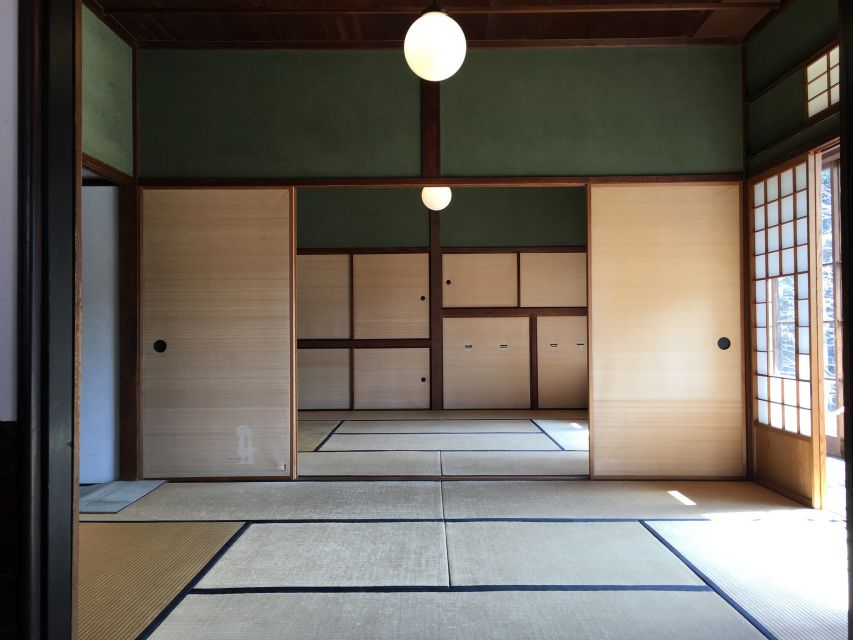
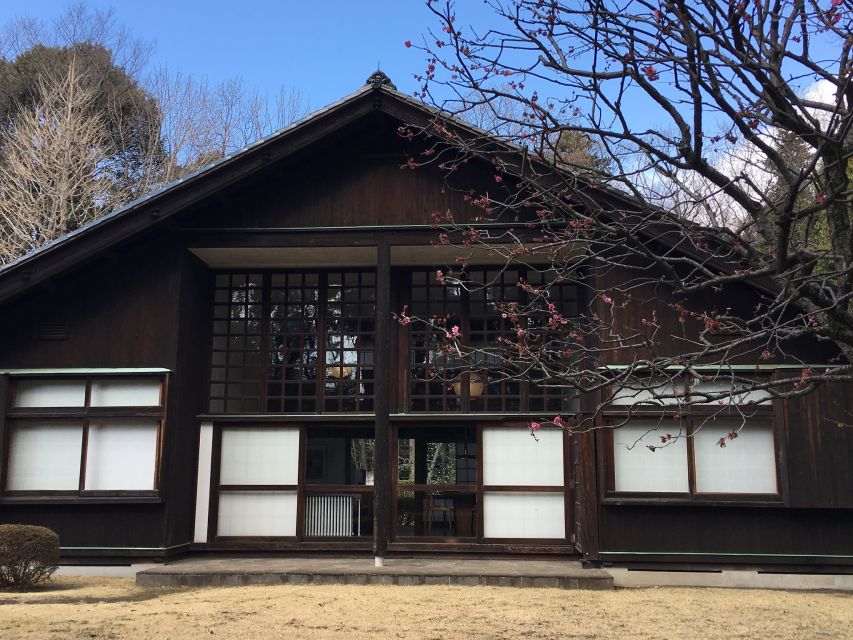
Sutemi Horiguchi’s residence offers a different lesson. Horiguchi introduced Dutch architecture to Japan, and this house was built in 1925 after he returned from Europe. Here, Art Deco and De Stijl compositions appear alongside traditional Japanese rooms.
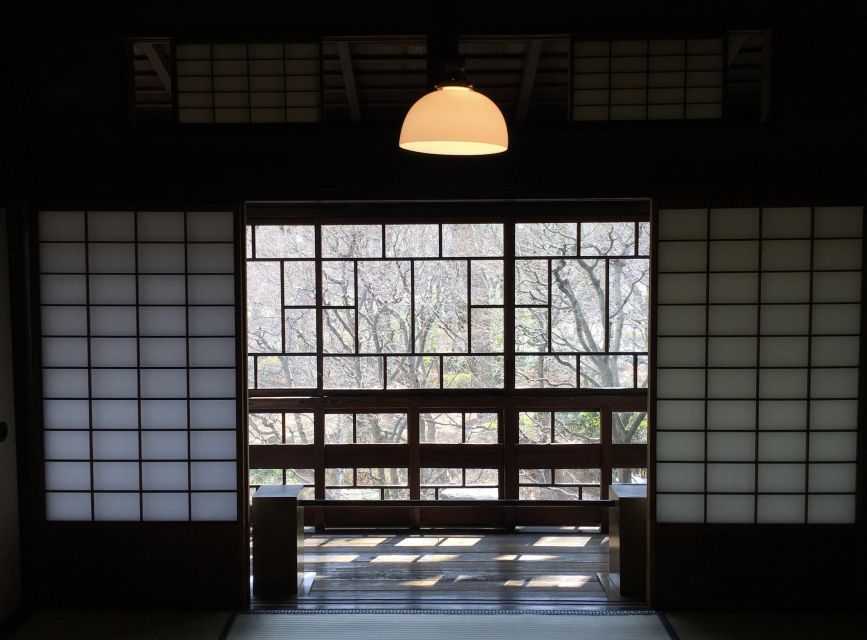
That combination is one of the tour’s most interesting contrasts. You may find strong geometric forms and European-inspired decoration in one part of the house, then enter a room shaped by tatami, sliding doors, and Japanese proportions. The point is not that one style replaced another. Japan adopted foreign design while continuing to use familiar ways of organizing domestic life.
A guide can help you notice details that are easy to miss on your own. The building’s story also gives you a clearer view of the 1920s, when Japanese architects were looking outward and experimenting with new forms.
I would place this stop high on the list for anyone interested in Art Deco, modernism, or the meeting of Japanese and European design. It is also a good stop for visitors who want more than a standard explanation of traditional architecture. Japan’s architectural story did not stop with wooden houses and tiled roofs.
A completely different kind of day out:
- Tokyo Disney Resort – Tokyo Disneyland & Tokyo DisneySea Park Tickets
★ 4.8 · 99,488 reviews - SHIBUYA SKY Ticket
★ 4.7 · 46,509 reviews - JR Whole Japan Rail Pass
★ 4.8 · 29,150 reviews - Mt Fuji and Hakone 1-Day Bus Tour Return by Bullet Train
★ 5.0 · 26,383 reviews
The Mitsui Residence Shows Wealth on a Grand Scale
The Mitsui family residence shifts the mood again. The Mitsui family was said to be among the richest in Japan, and the house presents a more luxurious side of domestic life.
Here, look at the finish and decoration rather than only the floor plan. The home helps you understand how money affected space, furnishings, and ceremony. It also provides a useful counterpoint to more modest homes elsewhere in the museum.
The visit does not reduce Japanese domestic life to one simple image. A formal residence for a powerful family sits within the same museum as working-class streets and public buildings. That range is one of the strongest reasons to visit with a guide. You can ask how the different buildings relate to class, period, and changing ideas of comfort.
If you enjoy fine interiors, the Mitsui residence may be one of your favorite stops. If your interest is strictly modern architecture, you may prefer Maekawa and Horiguchi. The private format lets you signal that preference instead of following a fixed group script.
Shitamachi Streets With a Touch of Ghibli
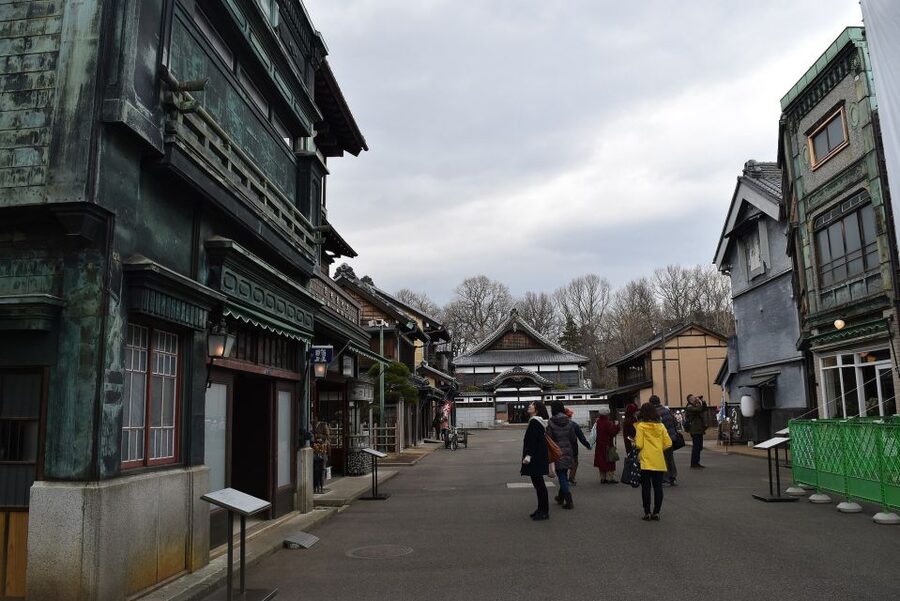
The latter half of the visit moves into the Shitamachi section, representing the old downtown districts of eastern Tokyo. This is where the museum’s atmosphere becomes especially appealing to Studio Ghibli fans.
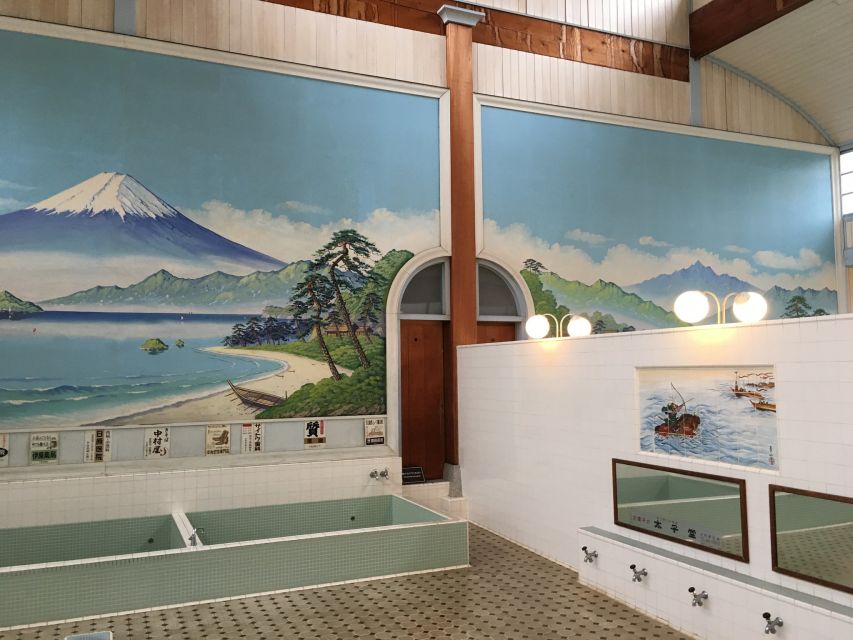
The buildings have the look of places that could appear in an animated film: everyday structures, narrow streets, familiar signs, and a sense of a vanished neighborhood. The charm comes from ordinary urban life rather than monumental architecture.
You will see a traditional bathhouse and an old train that once ran through Tokyo. These details make the area feel lived in, even though the buildings have been preserved in a museum. The bathhouse is especially evocative, with the kind of setting that can bring animated scenes to mind without trying to copy them.
Keep the distinction clear: this tour does not visit the Ghibli Museum. It visits the Edo-Tokyo Open Air Architectural Museum, and the Ghibli connection is about mood and appearance. If your main goal is official Studio Ghibli artwork or film exhibits, this is the wrong ticket. If you want the old Tokyo atmosphere that may have influenced that kind of storytelling, it is a fine substitute for a few hours.
I like this part because it gives the tour an emotional finish. The earlier homes explain design and social change. Shitamachi lets you feel the scale of daily life, from bathing to transport to walking through a neighborhood.
What the Guide Adds to the Buildings
A museum of relocated buildings can be rewarding on its own, but the guide is the reason to pay for a private visit. Yuichi, in particular, has been praised for excellent English, kindness, and a strong interest in architecture. He also adjusted the discussion to focus on traditional Japanese architecture, tea rooms, and gardens.
That kind of matching is valuable. You do not need to spend the whole visit listening to details that do not interest you. Tell the guide if you want to focus on structural design, social history, Japanese interiors, or the arrival of European ideas.
The guides also help with the route. Tokyo transit can be challenging during a first visit, and having someone lead you through the train and bus connections removes much of the guesswork. This is especially useful if you are nervous about navigating from central Tokyo.
One important point is the level of personal care a private guide can provide. When one participant became ill and had to stop early, Yuichi helped with getting to a hospital. That is not something you should expect as a formal tour feature, but it shows the practical value of having a real person beside you rather than relying only on an audio guide.
Is $193 Per Person a Fair Price?
At $193 per person, this is not a budget museum outing. You also pay about ¥700 each way for transportation, and the museum visit takes five hours including the journey. For one or two people who want expert attention, the price can make sense. For a larger family or a group with only casual interest in architecture, it may feel steep.
The value rests mainly in the private guide. Admission is included, and you receive an English-speaking licensed guide who can explain the buildings, handle the route, and shape the discussion around your interests. A self-guided visit costs less, but it will not give you the same help with architectural context or transit.
I would pay for this tour if you want to understand why the buildings matter. I would skip it if you simply want a quick walk through old houses or if your schedule is too tight for five hours.
The rating is 4.8 from 15 reviews, with repeated praise for the guides’ English, care, reliability, and ability to connect individual homes to Tokyo’s wider story. The strongest value appears when you actively ask questions and share your interests.
Practical Tips for a More Comfortable Visit
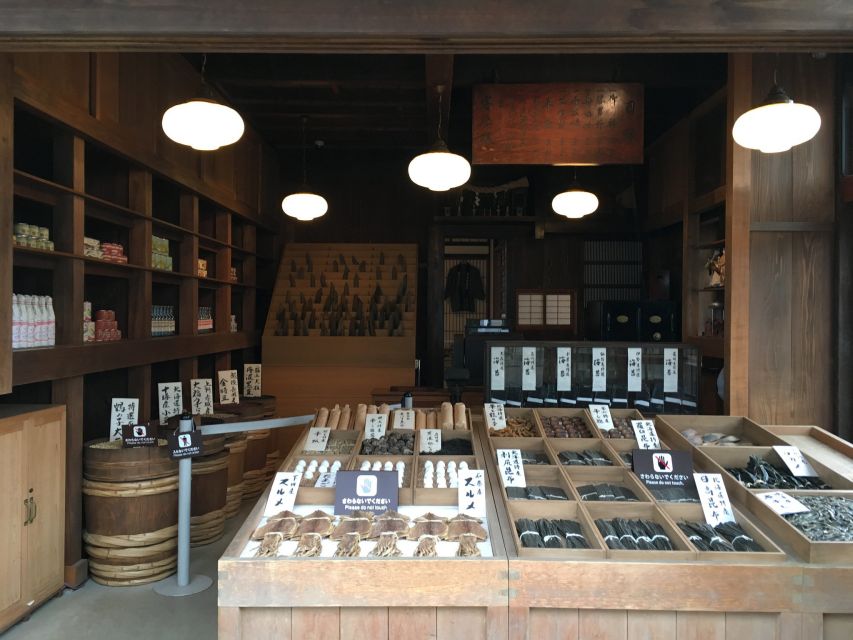
Wear shoes that are easy to remove and put back on. Several historic buildings require you to go barefoot or use the provided indoor arrangement, and repeated lacing will slow you down.
Give yourself extra time to reach Tokyo Station. The meeting instructions are precise, but the station is large. Find the correct JR gates first, then locate the Marunouchi Front Plaza and the carriage porch.
Bring your architectural questions. You might ask how Dutch design differs from the modernism seen in Maekawa’s house, or how traditional rooms were used in a wealthy residence. A private tour rewards curiosity.
Be realistic about the Ghibli reference. You will not enter the Ghibli Museum, and no Ghibli admission is included. You will instead walk through an old Tokyo setting with a similar storybook atmosphere.
Consider your energy level. The visit includes transit, walking, and repeated shoe removal. A five-hour private outing is easier when you are prepared to move at a steady pace.
Who Should Book This Private Museum Tour?
I recommend it most strongly for people interested in architecture, Japanese interiors, urban history, or the way Japan adopted foreign design. It also suits first-time visitors who want help with Tokyo trains and buses.
Studio Ghibli fans may enjoy the Shitamachi section, especially the bathhouse and old train, but they should book only if they understand that this is not a Ghibli Museum tour. Families and couples who like to ask questions will get more from the private format than people who prefer to explore silently.
I would not make this a priority for a first trip focused only on Tokyo’s famous landmarks. The museum is outside the central sightseeing core, and the journey takes time. Its rewards are quieter: design comparisons, old neighborhoods, and a clearer sense of how Tokyo changed.
Final Verdict: A Strong Choice for Architecture-Minded Visitors
Book this tour if you want a thoughtful look at Japanese architecture with a guide who can connect buildings, designers, and periods. Maekawa’s wartime modernism, Horiguchi’s European influence, the Mitsui residence, and the Shitamachi streets give the five hours a satisfying range.
Skip it if $193 feels too high for a private museum visit, if you expect car transport, or if your real goal is the Ghibli Museum. For everyone else, the combination of personal guiding, unusual buildings, and practical transit help makes this one of the better ways to understand Tokyo’s built past.
FAQ
Where does the tour meet?
The detailed meeting point is Tokyo Station’s Marunouchi Front Plaza. After exiting through the JR Tokyo Station Marunouchi Central Gates, head toward the center of the station building and look for the carriage porch with a Japanese national flag on each side.
Can I meet the guide at Shinjuku Station?
The tour information lists pickup at either JR Shinjuku Station or JR Tokyo Station. Confirm your assigned meeting point before the tour.
Is transportation included?
Transportation to and from the Edo-Tokyo Open Air Architectural Museum is not included. The tour uses trains and buses, and the estimated cost is about ¥700 each way.
Is the Ghibli Museum included?
No. The tour does not visit the Ghibli Museum. The Ghibli connection refers to the atmosphere of the Shitamachi area, its old buildings, bathhouse, and train.
How long does the tour last?
The tour lasts five hours.
Is the tour private?
Yes. It is offered as a private group experience with an English-speaking licensed guide.
What language is the tour conducted in?
The tour is conducted in English.
Should I wear special shoes?
You should wear comfortable shoes that are easy to slip on and off. Several historic buildings require you to remove your shoes before entering.
What architectural periods and styles will I see?
You will see traditional Japanese residences, Kunio Maekawa’s modern design, Sutemi Horiguchi’s Dutch influence, Art Deco and De Stijl elements, and interiors connected with the wealthy Mitsui family.
What is included in the price?
Admission to the museum and an English-speaking licensed guide are included. Transportation to and from Tatemono-en is not included.
Just added in Tokyo
- Japanese Home Cooking Class & Walk in Todoroki Temple Tokyo★ 5.0 · 88 reviews
- A One-of-a-Kind Sushi Experience in a Special Place of Japan★ 5.0 · 15 reviews
- Tokyo Cute Bento Cooking Class – Make a Kawaii Character Lunchbox★ 5.0 · 126 reviews
- Japan Tokyo Tower Observatory Deck E-Ticket★ 4.0 · 34 reviews
- Catch a Baseball Game in Tokyo with a Local – Tickets Included★ 5.0 · 24 reviews
- JDM Experience with Fast&Furious RX-7 (English speaking Driver)★ 5.0 · 57 reviews
- Tokyo Private Day Tour by Car with English speaking Driver Guide★ 4.0 · 29 reviews
- Japan Classic 10 Day – One Life Adventures★ 5.0 · 129 reviews
Museums and Galleries, compared.

teamLab Borderless Tickets: MORI Building DIGITAL ART MUSEUM
Read our review →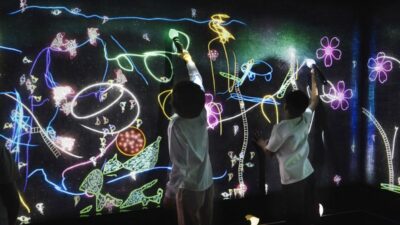
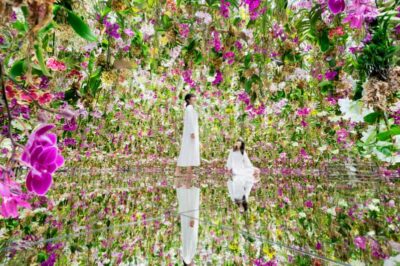
teamLab Planets TOKYO Digital Art Museum Entry Ticket
Read our review →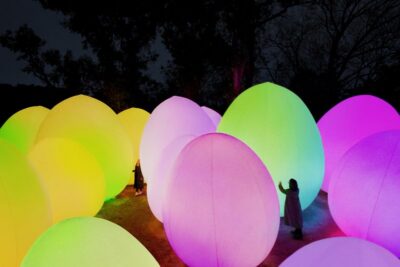

Browse the lists this tour appears in