Reviewed · GUIDED
Private Tokyo Tour with Local Guide
Tokyo gets easier with a guide. This private tour gives you a practical introduction to the city while visiting major districts such as Tsukiji, Asakusa, Ueno, and Akihabara. I like the freedom to choose your start time, and I like that your guide helps you use Tokyo’s public transportation instead of keeping you inside a private vehicle.
The personal format is another strong point. Guides such as Maruf, Abu, Amir, Erica, and Nami have been praised for adjusting plans to match interests, taking photos, and explaining local customs. The main caution is that the tour is largely a walking and subway experience, not a drive-by sightseeing tour. You should also confirm what can realistically fit into four or five hours.
In This Review
- Key Things To Know Before You Book
- A Useful First Look at Tokyo
- Tsukiji Before the Day Gets Going
- Asakusa, From Kaminarimon to Senso-ji
- A Pause Along the Sumida River
- Ueno’s Market Streets and Open Space
- Akihabara, Tokyo’s Electric and Anime Center
- Learning Tokyo’s Subway System
- The Guides Make the Biggest Difference
- Is $130 Per Person a Fair Price?
- Who Will Enjoy This Tour Most?
- Should You Book It?
- FAQ
- How long does the private Tokyo tour last?
- What places can I visit during the tour?
- Is transportation included?
- Are attraction tickets included?
- Is lunch included?
- Can I cancel for a full refund?
Key Things To Know Before You Book
- Four major Tokyo districts in one morning or afternoon: The route can connect Tsukiji, Asakusa, Ueno, and Akihabara, giving you a useful first look at very different sides of the city.
- Public transportation is part of the lesson: Your guide helps you navigate Tokyo’s subway system, a skill that can save time and money for the rest of your trip.
- You choose the start time: This is handy for jet-lagged arrivals, families, and anyone who wants an early visit to Tsukiji.
- A private guide can reshape the day: The strongest experiences came from guides who adjusted the plan for food, shopping, photos, culture, or family needs.
- Expect plenty of walking: One visit covered about five miles, and another reached roughly 20,000 steps.
- The price includes guidance, not every attraction: Lunch, private transportation, Tokyo Skytree, and TeamLab admission cost extra.
A Useful First Look at Tokyo
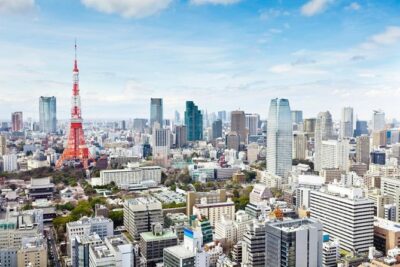
Tokyo is not one city in the usual sightseeing sense. It is a collection of districts, each with its own mood and purpose. A morning near Tsukiji feels very different from an afternoon in Akihabara, and both differ again from the temple streets of Asakusa.
That makes this private tour useful early in your visit. You are not simply checking off sights. You are learning how the city connects, how to move between districts, and what each area is known for. I especially like this approach for a first visit, when Tokyo’s train maps and enormous stations can feel like a puzzle designed by someone who dislikes tourists.
The tour lasts about four to five hours. That is enough time for a broad introduction, but not enough for a slow, detailed visit to every stop. Your guide may need to keep the pace moving, especially if you want to include Tsukiji, Asakusa, Ueno, and Akihabara in one outing.
The private setup helps. Your group alone takes part, so you can ask questions without worrying about holding up strangers. A family with two adults and two children enjoyed having the route adjusted to their needs, while groups of six and seven also found the format flexible enough for different interests.
A few more options to weigh up in Tokyo
- Tokyo Disney Resort – Tokyo Disneyland & Tokyo DisneySea Park Tickets
★ 4.8 · 99,488 reviews - SHIBUYA SKY Ticket
★ 4.7 · 46,509 reviews - JR Whole Japan Rail Pass
★ 4.8 · 29,150 reviews
Tsukiji Before the Day Gets Going
Tsukiji is the most time-sensitive part of the tour. If you choose an early start, the market area gives you a look at Tokyo’s food culture before the rest of the city fully wakes up. The focus is on the morning activity, the market atmosphere, and the connection between food, trade, and daily life.
The original wholesale fish market moved to Toyosu, so you should not book this expecting the old inner-market auction scene exactly as it once appeared in guidebooks. Tsukiji still has a famous outer-market area with food shops and stalls, and the experience here is more about the district’s culinary character than a guaranteed auction viewing.
A guide adds useful context. It is easy to walk through market streets, see seafood displays, and move on without understanding how the area developed. A good guide can explain what you are seeing and help you decide what deserves your attention.
Do not assume lunch is included. It is specifically excluded, so any food purchases are your responsibility. That is not necessarily bad. It gives you control over what you eat, though the short tour time may limit how long you can sit down for a full meal.
If Tsukiji matters most to you, request it clearly when arranging the tour and choose an early start. If you prefer temples, anime, or shopping, a later beginning may make better sense.
Asakusa, From Kaminarimon to Senso-ji
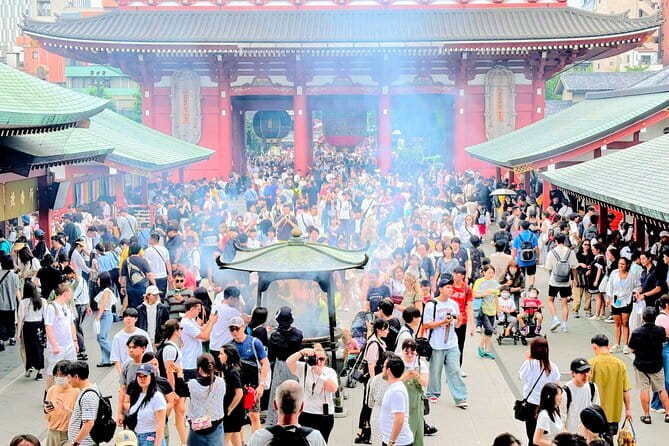
Asakusa gives the tour its clearest dose of old Tokyo. You begin at Kaminarimon Gate, marked by its huge red lantern. This is one of the city’s most recognizable entrances, and it leads directly toward Senso-ji Temple along Nakamise Shopping Street.
The short stop at Kaminarimon is mainly for orientation and photos. Your guide can explain the gate’s role as the entrance to the temple grounds and help you understand the basic layout before you walk farther into the complex.
Nakamise Shopping Street takes about 20 minutes in the planned route. The street runs from Kaminarimon toward Senso-ji and is lined with traditional-style shops and food sellers. It can be crowded, especially around the central approach, so stay close to your guide and keep an eye on your belongings.
This is not the place to spend an hour browsing if you also want to see Ueno and Akihabara. Still, the short walk gives you a strong sense of Asakusa’s character. You can look for small snacks or souvenirs, but do not let the shop displays distract you from the larger setting.
Senso-ji itself receives about 20 minutes. Admission is free, and the temple is a good place to learn basic points about Japanese Buddhist practice and temple etiquette. You may have time to observe the gate, approach, incense area, and main hall, but this is a quick introduction rather than a full temple visit.
I would give Asakusa extra weight if you want culture and traditional architecture. If your priority is modern Tokyo, your guide may shorten the stop and give more time to Akihabara or another district.
A Pause Along the Sumida River
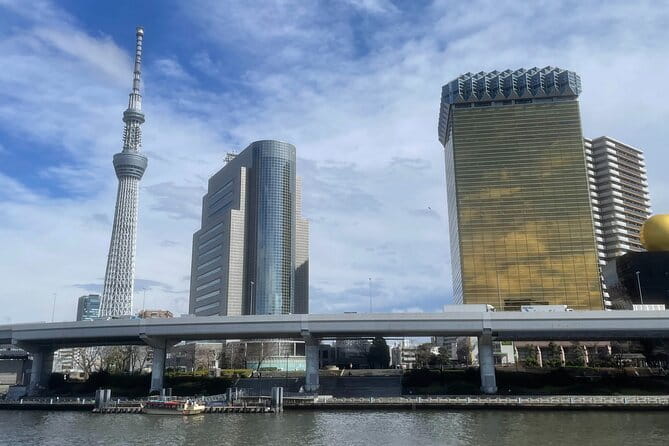
Sumida River Side Park offers a change of pace after the temple crowds. The riverside setting gives you open views and a chance to see Tokyo Skytree from outside rather than paying to visit the observation decks.
This stop is valuable because Tokyo can feel dense and enclosed. A river view lets you pause, orient yourself, and see how the city spreads around its waterways. It also gives you a different angle on Skytree, one of Tokyo’s most familiar landmarks.
Tickets for Tokyo Skytree are not included. That makes sense for a short orientation tour, since going up the tower would take a large part of the available time. If you want the observation deck, plan it separately and tell your guide so expectations remain clear.
The riverside park may be brief depending on the rest of your route. Think of it as a scenic break, not a long park visit.
A completely different kind of day out:
- Mt Fuji and Hakone 1-Day Bus Tour Return by Bullet Train
★ 5.0 · 26,383 reviews - TOKYO SKYTREE® Ticket
★ 4.7 · 25,136 reviews - teamLab Borderless Tickets: MORI Building DIGITAL ART MUSEUM
★ 4.7 · 24,126 reviews - teamLab Planets TOKYO Ticket
★ 4.7 · 21,663 reviews
Ueno’s Market Streets and Open Space
Ueno brings together two contrasting sides of Tokyo. Ameyoko Shopping Street has a rougher, more commercial feel, with stalls and small shops packed along the route. Its postwar beginnings as a black market help explain why the area feels more like a working marketplace than a polished shopping district.
I like Ameyoko because it gives you a look at everyday commerce. You may find food, clothing, and assorted goods rather than the carefully arranged department-store experience found elsewhere in Tokyo. It is a good place to ask your guide what local shoppers buy and how the area changed over time.
The street can be crowded, and it is not a calm place for a leisurely stroll. If you have mobility concerns or dislike tight spaces, tell your guide before the route begins. The tour is private, so the guide can adjust the pace, but the area itself remains busy.
Nearby Ueno Park provides a welcome contrast. The park covers more than 130 acres and includes museums, temples, gardens, and broad walking areas. A four-to-five-hour tour cannot cover all of it, so your visit will likely focus on a small section or a particular point of interest.
Ueno works well for visitors who want culture without spending the entire day inside museums. It also gives families and older travelers a chance to slow down briefly, though the total route may still involve substantial walking.
Akihabara, Tokyo’s Electric and Anime Center
Akihabara is the modern counterpoint to Asakusa. The district is known for electronics, anime, gaming, and otaku culture. Shop signs, specialty stores, and themed businesses give the area a look unlike any other stop on this route.
A guide can make Akihabara less confusing. The district has many stores, but not every shop will interest you. Tell your guide if you care most about electronics, anime, games, character goods, or unusual shopping. The private format works best when you give clear direction rather than waiting for the guide to guess.
The stop is also useful for understanding how Tokyo’s popular culture became part of the city’s identity. You may see only a few streets during the tour, but a guide can explain what you are looking at and point you toward areas worth returning to on your own.
Akihabara is not ideal for everyone. If you have no interest in shopping or pop culture, it may feel less rewarding than Asakusa or Ueno. On the other hand, fans of anime and gaming may wish for far more time than this tour allows. Ask for a route that puts your priorities first.
Learning Tokyo’s Subway System
The public transportation element may be the tour’s greatest practical benefit. Tokyo’s rail network is efficient, but the major stations can be large, crowded, and difficult to understand during your first few days. A guide can show you how to move between districts and how the system fits together.
This does not mean you are riding around in a private car. Private transportation is not included. Pickup is offered using public transportation, and the tour itself includes public transportation support.
That distinction matters. One disappointed customer expected to be driven around the city and found that the tour involved meeting up and walking between places. If you want a vehicle-based sightseeing trip, this is the wrong product. If you want to learn how to get around independently, it is a much better match.
The exact transit arrangements will depend on your meeting point and chosen route. Ask about the starting location, expected walking distance, and any transportation costs or requirements before the day begins.
The Guides Make the Biggest Difference
The guide is the key variable here. Several guide names received especially warm praise, including Maruf, Abu, Amir, Erica, and Nami. The strongest accounts describe guides who listened carefully, adjusted the plan, explained cultural meaning, and helped with photos, food choices, or shopping.
Maruf was praised for helping first-time visitors understand the subway system and for showing lesser-known local areas. Abu received strong praise for tailoring walks to personal interests and helping visitors find places connected to their shopping and food plans. Amir was valued for listening and changing the program to fit the group.
Erica worked especially well with a family group that included children. Nami led a long walking route of about five miles, while another outing reached around 20,000 steps. These details give you a clear warning: the tour can be physically active.
The guide quality is not perfectly consistent. One low-rated experience described a guide who moved the customer from place to place without offering useful explanations. Another account raised communication problems and a late arrival. The operator apologized and noted that last-minute bookings can be harder to arrange.
To improve your odds, communicate your interests before the tour. Tell the guide if you want history, food, shopping, photography, anime, temples, or subway practice. Also say if you need a slower pace or shorter walking distances.
Is $130 Per Person a Fair Price?
At $130 per person, this is not a cheap way to see Tokyo. The value depends heavily on your group size and how much help you need.
For one or two people, the cost may feel high for a four-to-five-hour outing, especially since lunch and major attraction tickets are not included. For a larger private group, the cost becomes easier to justify, particularly if a group discount applies. The tour can also save you time during your first days, when figuring out transportation and district layouts may otherwise eat up valuable sightseeing hours.
You are paying for personal attention, route flexibility, and local guidance rather than admission tickets. If the guide gives you a useful understanding of Tokyo’s neighborhoods and trains, you may benefit long after the tour ends.
I would compare the price with the cost of a standard group tour, but do not judge it only by the number of sights. The private format is most valuable when your group has mixed interests or when you want an efficient introduction without following a fixed schedule.
Who Will Enjoy This Tour Most?
This tour suits first-time visitors who want to get oriented quickly. It is also a good choice for families, private groups, and people who feel nervous about Tokyo’s train network.
You will get the most from it if you are willing to walk, use public transportation, and speak up about what interests you. It is less suitable if you want a luxury vehicle, a slow-paced museum day, or guaranteed time at every attraction.
I would be careful booking this for anyone with limited stamina unless you discuss the pace in advance. The tour can cover a lot of ground, and the guide may connect several districts in a short time.
Free cancellation is available if you cancel at least 24 hours before the start time. Changes or cancellations inside that window are not refunded, so avoid making a last-minute booking unless your schedule is firm.
Should You Book It?
Book this private Tokyo tour if you want a flexible introduction, practical subway help, and a guide who can shape the day around your interests. It is especially useful on your first full day, when a little orientation can make the rest of Tokyo much easier.
I would choose an early start for Tsukiji, or a later start if Asakusa, Ueno, and Akihabara matter more. Confirm that you want a walking and public transportation tour, not a car tour, and ask about the expected number of steps.
The experience can be excellent with a strong guide such as Maruf, Abu, Amir, Erica, or Nami. It can also feel thin if the guide gives little explanation. Your best protection is to state your priorities clearly before meeting. For visitors who value personal attention and real city skills over a checklist of paid attractions, the $130 price can be worthwhile.
FAQ
How long does the private Tokyo tour last?
The tour lasts approximately four to five hours. The exact amount of time spent at each district can change based on your interests, pace, and chosen route.
What places can I visit during the tour?
Possible stops include Tsukiji Fish Market, Nakamise Shopping Street, Kaminarimon Gate, Senso-ji Temple, Sumida River Side Park, Ameyoko Shopping Street, Ueno Park, and Akihabara.
Is transportation included?
Public transportation is included, and pickup is offered using public transportation. Private transportation is not included.
Are attraction tickets included?
Admission is included at Nakamise Shopping Street and Kaminarimon Gate, while Senso-ji Temple is free. Tickets for Tokyo Skytree and TeamLab Planet or TeamLab Borderless are not included.
Is lunch included?
No. Lunch is not included in the tour price.
Can I cancel for a full refund?
Yes, if you cancel at least 24 hours before the experience start time. Cancellations or changes made less than 24 hours before the start time are not refunded.
Just added in Tokyo
- A One-of-a-Kind Sushi Experience in a Special Place of Japan★ 5.0 · 15 reviews
- Tokyo Cute Bento Cooking Class – Make a Kawaii Character Lunchbox★ 5.0 · 126 reviews
- Japanese Home Cooking Class & Walk in Todoroki Temple Tokyo★ 5.0 · 88 reviews
- Japan Tokyo Tower Observatory Deck E-Ticket★ 4.0 · 34 reviews
- Catch a Baseball Game in Tokyo with a Local – Tickets Included★ 5.0 · 24 reviews
- JDM Experience with Fast&Furious RX-7 (English speaking Driver)★ 5.0 · 57 reviews
- Tokyo Private Day Tour by Car with English speaking Driver Guide★ 4.0 · 29 reviews
- Japan Classic 10 Day – One Life Adventures★ 5.0 · 129 reviews
Guided, compared.
Tokyo 6hr Private Tour with Government-Licensed Guide
Read our review →
Shiraito Falls & Forest Cafe & Handmade Flower Salt Pudding & Grilled Seafood & Totoro Forest & Sakurai Futamigaura & Angel’s Wings & Coconut Tree Swing Day Tour (Departing from Hakata Station, with Mandarin, English, and Cantonese speaking guide)
Read our review →
Shinjuku Local Bar and Izakaya Guided Walking Tour
Read our review →
Private City Highlights Tour with Local Guide
Read our review →
Kyoto Early Morning Tour with English-Speaking Guide
Read our review →