
Reviewed · DINING EXPERIENCES
Professional Ramen & Gyoza with Ramen Chef in a restaurant!
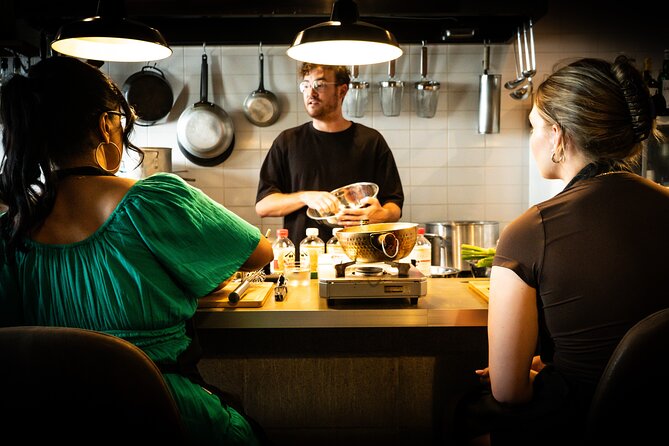
Ramen gets serious in this Tokyo kitchen. At Baba Ramen, you do not simply watch a chef toss noodles into a bowl. You make the noodles, help prepare the broth, shape gyoza, work with professional equipment, and eat the results at the same restaurant.
I like the small maximum group of six, since it gives you a better chance to get personal help with rolling, folding, chopping, and cooking. I also like that this is a true hands-on class, not a quick demonstration followed by lunch. The main drawback is the price, $159.18 per person, which is a lot for a four-hour food activity, even though the amount of instruction and food helps explain the cost.
You should also arrive ready to work. This is not a gentle sightseeing stop with a little noodle shaping on the side. You may handle hot pans and oil, break down chicken bones, roll dough, and stay busy for much of the morning. The reward is a full ramen and gyoza meal, plus an e-book of recipes for your kitchen at home.
In This Review
- What makes this ramen class worth considering
- Starting at 9:00 a.m. in Meguro
- Making the noodles from flour and dough
- Building the broth and the five layers
- Folding gyoza and staying busy
- Eating the ramen and gyoza you made
- Why the professional kitchen matters
- The teaching style and group atmosphere
- What you take home after four hours
- Is $159.18 a fair price?
- Dietary needs, timing, and cancellation details
- Who should book Baba Ramen?
- Should you book this Tokyo ramen class?
- FAQ
- Where does the ramen and gyoza class take place?
- What time does the experience begin?
- How long does the cooking class last?
- How many people can join the class?
- Are dietary options available?
- Can I cancel for a refund?
What makes this ramen class worth considering
- You make noodles from scratch: Learn the basic process behind ramen noodles instead of using ready-made packets.
- The class takes place in a restaurant: Work with kitchen-grade equipment in a professional setting.
- Gyoza is part of the meal: Your morning includes folding and preparing Japanese dumplings as well as ramen.
- Two broth choices are available: You can choose the broth that better suits your taste.
- The chefs keep the class active: The cooking is practical, with instruction, cultural context, etiquette, and plenty of chances to participate.
- Dietary requests can be accommodated: Vegetarian, vegan, gluten-free, and pork-free options may be available if you request them in advance.
Starting at 9:00 a.m. in Meguro
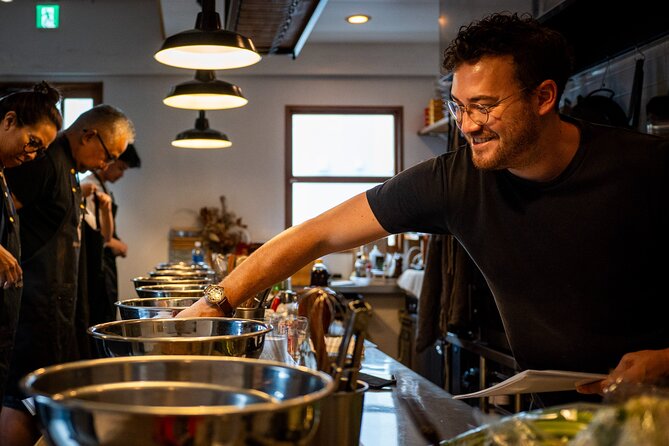
The class begins at Baba Ramen Cooking Meguro, at 3-chōme-7-32 Shimomeguro, Meguro City, Tokyo 153-0064. It is near public transportation, and the activity both starts and finishes at this same location.
A 9:00 a.m. start makes this a useful way to spend a morning in Tokyo, though you will want to plan your route carefully. A four-hour class ending around early afternoon can shape the rest of your day, so avoid booking another timed activity immediately afterward.
The restaurant setting gives the class a different feel from a home-based cooking lesson. You work in a small restaurant that is also used as an Italian restaurant at night, according to the class details. That gives the space a working-kitchen character rather than the polished feel of a purpose-built tourist studio.
The group limit is six people. That matters here because ramen has several moving parts. You may need help with dough, broth, fillings, heat, or timing, and a small class makes it easier for the chefs to keep an eye on each person.
A few more options to weigh up in Tokyo
- Tokyo Bar Hopping Tour in Shinjuku (All-You-Can-Drink + Dinner)
★ 5.0 · 3,587 reviews - Tokyo: Sumo Show and Dining Experience
★ 4.8 · 2,742 reviews - Sumida River: Japanese Traditional Yakatabune Dinner Cruise
★ 4.6 · 779 reviews
Making the noodles from flour and dough
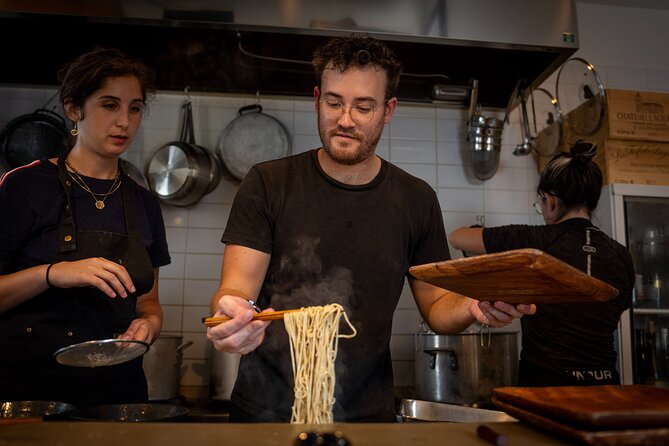
The noodle portion is one of the best reasons to book this class. Ramen can look simple in a bowl, but the noodles are not an afterthought. You learn how the dough is handled and rolled, then see how fresh noodles change the finished meal.
The class keeps you involved rather than handing you a prepared bundle of dough. You should expect to roll out noodles and work through the process with guidance from the chefs. This is especially useful if you have eaten plenty of ramen but never considered how much effort goes into the noodles themselves.
The instruction also appears designed for home cooking. The chefs share ways to reduce preparation time while keeping the result satisfying. One important lesson is that there is no magic shortcut that replaces fresh ingredients and time, but practical methods can make the work more manageable.
I like this approach because you leave with more than a single recipe. You gain a better sense of how texture, broth, seasoning, and toppings need to work together. That makes it easier to adjust the recipe at home instead of trying to copy every step exactly.
Building the broth and the five layers
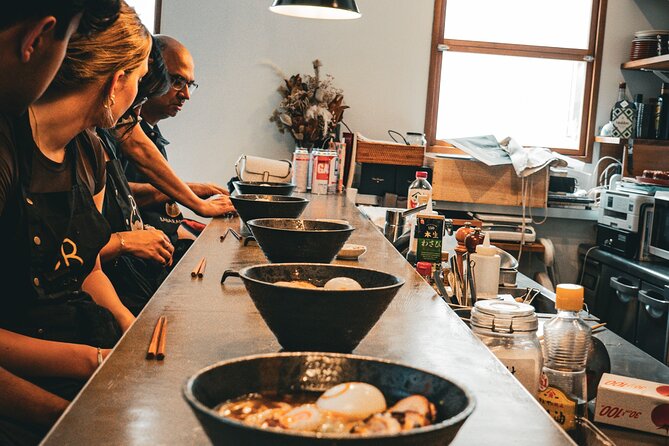
The cooking covers the five main layers that make up a bowl of ramen, including the noodles and broth. The class gives you two broth options, so you have some choice rather than being locked into one flavor profile.
You may also work with ingredients and preparation steps that are not usually part of a casual home meal. One family described handling hot pans and oils and breaking chicken bones during the class. That detail tells you what kind of activity this is: practical, physical, and closer to kitchen work than a craft workshop.
The chefs explain the purpose of each part of the bowl. You learn about ramen varieties, seasoning, preparation methods, and the etiquette of eating it. Cultural context adds value because it connects the cooking process to the dish you will later eat.
The class is taught in English and Japanese by local chefs. Andrew is associated with the experience, and several class reports also praise the teaching team, including Eric, Jae, and Leo. The repeated theme is that the chefs keep the mood friendly while still giving clear instruction.
That balance matters. A chef can know a great deal about ramen and still make a poor teacher. Here, the teaching is described as patient, organized, and easy to follow, with plenty of conversation along the way.
Folding gyoza and staying busy
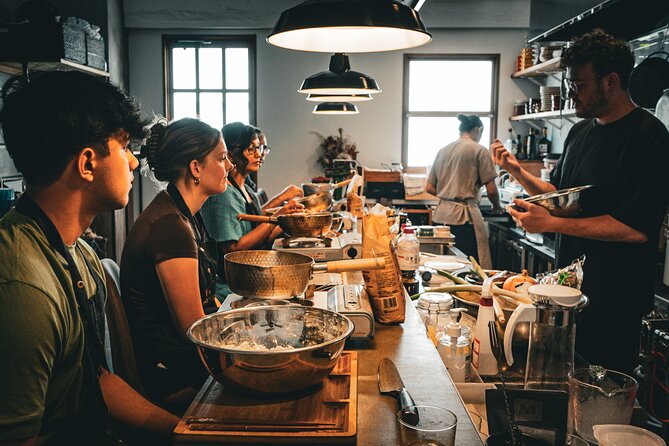
The gyoza portion gives the morning a welcome change of pace. After working on ramen, you prepare and fold Japanese dumplings, adding another basic skill you can repeat at home.
You should not expect to sit back while someone else handles the cooking. The class is designed so that each person helps with many stages of the meal. That active format is one of its strongest points, but it also explains why you need to be comfortable working for several hours.
Some cooking classes offer a few minutes of participation before the staff takes over. Baba Ramen takes the opposite approach. You may be chopping, rolling, folding, stirring, or helping with cooking throughout the session. If you want a calm morning with minimal effort, this may feel demanding.
If you enjoy learning by doing, the work is part of the fun. You can make mistakes, ask questions, and correct your technique while the chefs are nearby. The small group makes that feedback more useful than a large class where the instructor has to address everyone at once.
A completely different kind of day out:
- Tokyo Disney Resort – Tokyo Disneyland & Tokyo DisneySea Park Tickets
★ 4.8 · 99,488 reviews - SHIBUYA SKY Ticket
★ 4.7 · 46,509 reviews - JR Whole Japan Rail Pass
★ 4.8 · 29,150 reviews - Mt Fuji and Hakone 1-Day Bus Tour Return by Bullet Train
★ 5.0 · 26,383 reviews
Eating the ramen and gyoza you made
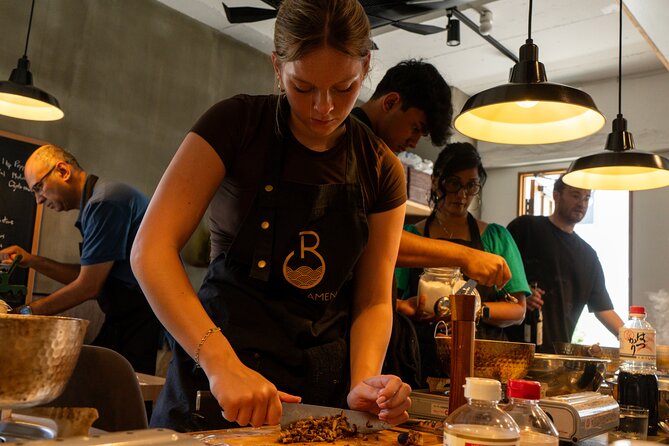
The meal at the end is not just a reward. It gives you a chance to judge the effect of each step. Fresh noodles, broth, seasoning, and toppings come together in a bowl that you helped prepare from the start.
The food receives some of the strongest praise connected with this experience. The ramen is repeatedly described as delicious, and some people consider it the best ramen they ate during their time in Japan. The gyoza also earns high marks.
There is a practical lesson in eating your own finished bowl. You can compare the texture of the noodles with what you normally order, notice how the broth develops, and understand why ramen takes so much preparation. It also makes the class feel like a full meal rather than a cooking lecture.
The portions appear generous. One class description specifically notes lots of food, and another says the group ate ramen and gyoza until they were very full. If you have a light appetite, you may find the meal substantial.
Why the professional kitchen matters
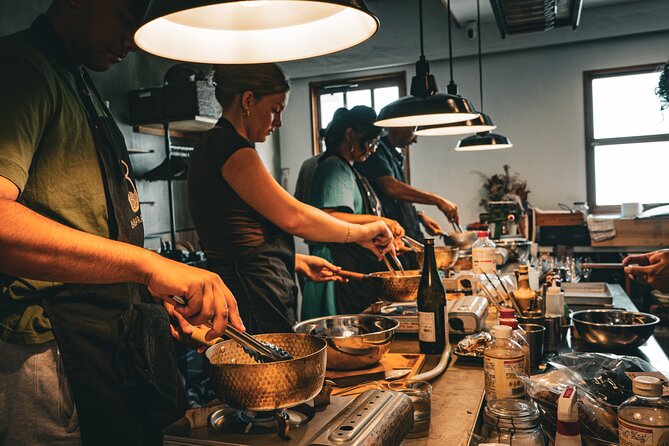
The restaurant setting is more than a change of scenery. Professional kitchen equipment lets you focus on the actual methods instead of adapting everything to a home stove or a simplified classroom setup.
You also get a closer look at the pace and organization needed to produce restaurant-quality ramen. The chefs keep the work moving, and you can see how several tasks need to be coordinated before the bowl is ready.
I find this especially useful for people who already cook at home. You may appreciate the chance to use equipment and methods that are difficult to replicate in a small apartment kitchen. At the same time, the class explains ways to adapt the recipes later, so the experience is not limited to what you can do in the restaurant.
The setting is not luxurious. It is a small working restaurant, and that is part of the appeal. Expect a practical kitchen environment rather than a formal dining room or a staged cultural show.
The teaching style and group atmosphere
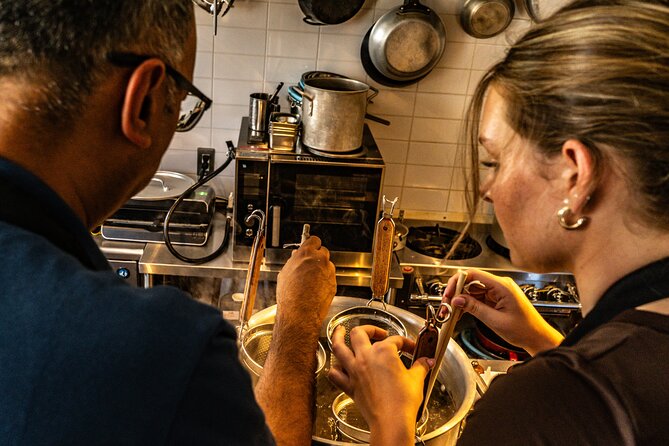
The class has a strong social element. You cook beside other people, share a meal, and have plenty of opportunities for conversation. The experience can work well for families, couples, solo participants, and small groups who enjoy meeting people through food.
A family of five described the class as especially suitable for families, and a separate account praised the chefs for accommodating a 1.5-year-old. That does not mean every young child will enjoy four hours in a working kitchen, but it suggests the staff can be flexible with family needs.
Solo visitors with food allergies have also found the staff communicative about alternative ingredients. Still, you should make dietary requests when booking and understand that vegetarian, vegan, gluten-free, and pork-free choices are subject to availability.
The class can be social, but the size helps prevent it from becoming chaotic. With no more than six participants, you have a reasonable chance to ask questions and receive direct help. The experience may be less appealing if you prefer to cook privately or avoid group conversation.
The teaching team also includes cultural information, ramen etiquette, and explanations of different ramen styles. That gives the class more depth than a recipe-only lesson. You learn why the steps matter, not just what to do next.
What you take home after four hours
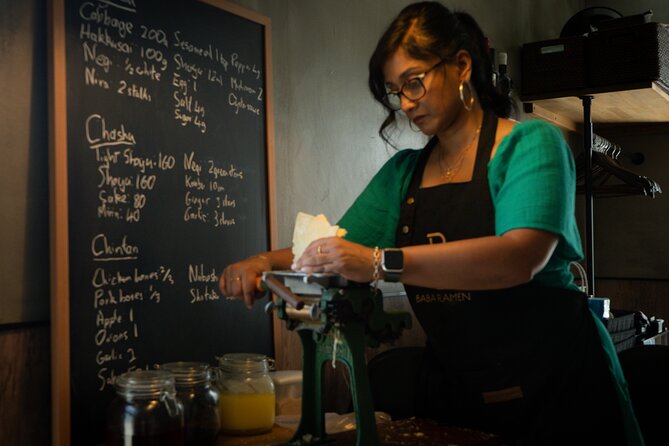
The recipes are sent to you in an e-book, giving you a useful reference after the class. This is an important part of the value because the techniques can be easy to forget once you return to your normal kitchen.
The recipes may also encourage you to experiment. One solo participant had already started making shoyu tare at home after the class. That is a good sign for anyone who wants an ongoing cooking project rather than a one-time activity.
You should keep your expectations realistic. Making restaurant-quality ramen at home still takes time and effort. The class itself makes clear that fresh ingredients and hard work are central to the result. The e-book gives you the method, but it cannot remove every labor-intensive step.
Still, the combination of instruction and written recipes is stronger than simply eating a bowl of ramen in Tokyo. You can carry the skill into your own kitchen and share it with family or friends later.
Is $159.18 a fair price?
At $159.18 per person, this is an expensive cooking class. You are paying much more than you would for a regular bowl of ramen, and the price may be hard to justify if your only goal is lunch.
The value improves if you count the full package: approximately four hours of instruction, a small group, hands-on use of a professional kitchen, ramen noodles made from scratch, gyoza, two broth choices, cultural explanations, and a recipe e-book.
You also receive a full meal at the end. That does not make the class cheap, but it reduces the gap between the price and what you receive. The experience is best viewed as a food-focused cultural activity with lunch included, not as a restaurant meal with a short demonstration.
The ratings are strong, with a 4.9 score from 223 reviews and a 96 percent recommendation rate. Those figures suggest the class delivers consistently for most people, though the price remains the clearest concern.
I would book it if ramen is one of your main interests in Japan, if you enjoy serious cooking, or if you want a memorable activity that continues after your trip. I would skip it if you are looking for a low-cost meal, a short activity, or a quiet morning.
Dietary needs, timing, and cancellation details
Vegetarian and vegan options may be available, along with gluten-free and pork-free versions. You need to note your request in advance, and availability is not guaranteed, so do not wait until the morning of the class.
Service animals are allowed, and the location is near public transportation. The activity begins at 9:00 a.m. and ends back at the meeting point after roughly four hours.
You can cancel for a full refund up to 24 hours before the local start time. Changes or cancellations made inside that 24-hour window are not accepted for a refund.
The experience may be canceled if poor weather affects the activity or if the minimum number of participants is not reached. In those cases, you are offered another date or experience, or a full refund.
Who should book Baba Ramen?
I would recommend this class to food lovers, home cooks, families with older children, and anyone who prefers a working experience to a passive tour. It is also a good choice for people who want to learn enough to recreate ramen and gyoza after returning home.
You should be ready to work with heat, oil, dough, and raw ingredients. The class is friendly and fun, but it is not effortless. Four hours can pass quickly when the kitchen stays active, yet you may feel tired by the end.
The experience suits an English-speaking audience particularly well because the chefs teach in English and Japanese. A small group, direct guidance, and a written e-book make it easier to follow the process and remember it later.
Should you book this Tokyo ramen class?
Book it if you want to make the meal, not just eat it. Baba Ramen offers a rare chance to work through the full process in a real restaurant kitchen, from handmade noodles to broth and gyoza.
The price is the main hurdle, and the class demands more effort than a casual cooking activity. But if you value practical instruction, a full meal, personal feedback, and recipes you can use at home, the four hours offer solid value. For ramen fans, this is one of the stronger food activities to add to a Tokyo itinerary.
FAQ
Where does the ramen and gyoza class take place?
The class takes place at Baba Ramen Cooking Meguro, 3-chōme-7-32 Shimomeguro, Meguro City, Tokyo 153-0064, Japan.
What time does the experience begin?
The class starts at 9:00 a.m.
How long does the cooking class last?
The experience lasts approximately four hours and ends back at the meeting point.
How many people can join the class?
The maximum group size is six participants.
Are dietary options available?
Vegetarian, vegan, gluten-free, and pork-free options may be available. You must request them in advance, and they are subject to availability.
Can I cancel for a refund?
Yes. You can cancel at least 24 hours before the local start time for a full refund. Cancellations or changes made less than 24 hours before the start time are not accepted.
Just added in Tokyo
- A One-of-a-Kind Sushi Experience in a Special Place of Japan★ 5.0 · 15 reviews
- Tokyo Cute Bento Cooking Class – Make a Kawaii Character Lunchbox★ 5.0 · 126 reviews
- Japanese Home Cooking Class & Walk in Todoroki Temple Tokyo★ 5.0 · 88 reviews
- Japan Tokyo Tower Observatory Deck E-Ticket★ 4.0 · 34 reviews
- Catch a Baseball Game in Tokyo with a Local – Tickets Included★ 5.0 · 24 reviews
- JDM Experience with Fast&Furious RX-7 (English speaking Driver)★ 5.0 · 57 reviews
- Tokyo Private Day Tour by Car with English speaking Driver Guide★ 4.0 · 29 reviews
- Japan Classic 10 Day – One Life Adventures★ 5.0 · 129 reviews
Dining Experiences, compared.
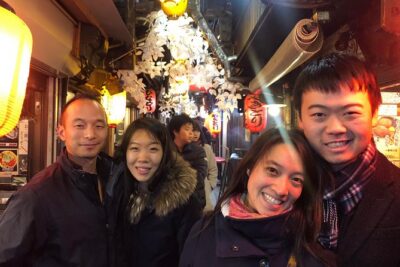
Tokyo Bar Hopping Tour in Shinjuku (All-You-Can-Drink + Dinner)
Read our review →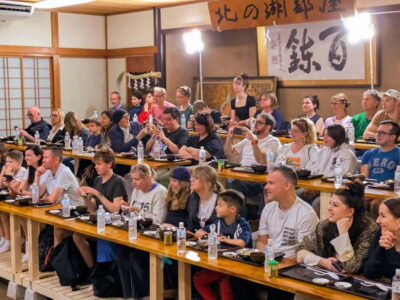


Deep Backstreet Osaka Tours (Option to add Dinner)
Read our review →
Deep Backstreets Walking Tour with Dinner Option
Read our review →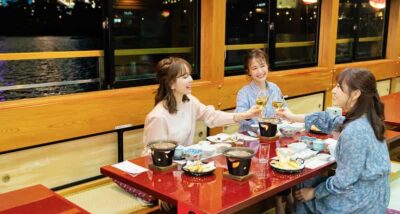
Sumida River: Japanese Traditional Yakatabune Dinner Cruise
Read our review →
Kyoto Gion Cultural Walk & Geisha Show with Dining Options
Read our review →Kyoto Gion Cultural Walk & Geisha Show with Dining Options
Read our review →Browse the lists this tour appears in