
Reviewed · TEMPLES AND SHRINES
Shinto Shrine Tour: Explore Japanese Culture in Tokyo
Shinto makes Tokyo feel newly familiar. This three-hour private tour links Meiji Jingu, Kanda Shrine, and Tokyo Daijingu with an English-speaking guide who explains the customs, symbols, and stories behind each stop. I like the personal format, and I like that public transport and entrance fees are included. The main drawback is the pace: three shrines in three hours means plenty of walking and limited time at each one.
This is a useful first look at Shinto for anyone who feels unsure about shrine etiquette. Guides such as Ami, Hitomi, Shunsun, Atsuko Kobayashi, Katsunori Fujiwara, Asami, and Ken have been praised for making the subject clear and friendly. Just wear comfortable shoes, and remember that a knee problem or other injury could make the long walk harder.
In This Review
- Key points to know before booking
- Why this private Shinto tour is useful in Tokyo
- Meiji Jingu: a quiet start beside Harajuku
- Kanda Shrine: an old shrine in modern Tokyo
- Tokyo Daijingu: a shrine associated with marriage
- What the guide adds to the experience
- Walking, transport, and the three-hour schedule
- Etiquette, clothing, and weather
- Who should book this tour?
- Should you book the three-shrine experience?
- FAQ
- Where does the tour begin?
- What time does the tour start?
- Which shrines are visited?
- Is the tour private?
- What is included in the price?
- Are food, drinks, and hotel transfers included?
- What happens if you arrive late?
Key points to know before booking
- Three very different shrines in one morning: You move from Meiji Jingu’s forest to Kanda’s urban setting, then to Tokyo Daijingu, known for marriage blessings.
- Private for your group: You are not placed with strangers, so the guide can adjust explanations and walking breaks to your party.
- A lesson in proper shrine behavior: You learn how to purify yourself, pray, and behave respectfully rather than simply taking photographs.
- Public transport is part of the experience: The guide handles the route between shrines, which saves you from sorting out Tokyo’s rail system on your own.
- Meiji Jingu is the visual highlight: Its broad approach and tree-filled grounds offer a sharp change from the streets of Harajuku.
- The tour is active, not passive: One guide described it as a very long walk, so good shoes matter more than smart clothes.
Why this private Shinto tour is useful in Tokyo
Tokyo has shrines everywhere, but many visitors walk through a torii gate, copy what others are doing, and leave without knowing why. This tour gives you the basic framework for understanding Shinto, Japan’s traditional religion, and the place of shrines in daily life.
The emphasis is not only on religious doctrine. The tour presents Shinto as a way of life tied to customs, mythology, history, family hopes, seasonal events, and respect for nature. That approach is helpful because Shinto does not always fit neatly into the Western idea of a church service or a formal belief system.
You meet your guide at Harajuku Station at 9:00 a.m. From there, the route uses public transportation between the shrines. Since the tour is private, only your group takes part. That matters if you want to ask basic questions without feeling rushed by a larger party, or if your group needs a short rest.
The price is $206.26 per person. That is a serious cost for three hours, especially if you are traveling alone or as a couple. The value improves for a small private group because the price includes an English-speaking guide, public transportation between the shrines, and entrance fees. You are also paying for route planning and cultural interpretation, not just admission to places that are generally easy to find.
I would not book this simply as a shrine-hopping photo outing. You can visit shrines independently for much less. I would book it if you want the meaning explained, especially during your first days in Japan.
More Temples and Shrines in Tokyo
- Tokyo: Meiji Shrine, Asakusa, Skytree Bus Tour and Cruise
★ 4.7 · 1,986 reviews - Tokyo: Asakusa Walking Tour with Sensoji Temple Visit
★ 4.8 · 1,583 reviews - Nikko: Kegon Falls, Lake Chuzenji & Toshogu Temple
★ 4.6 · 1,577 reviews
Meiji Jingu: a quiet start beside Harajuku
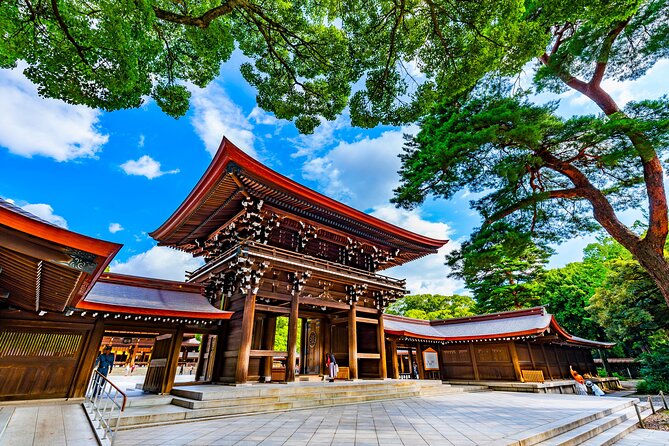
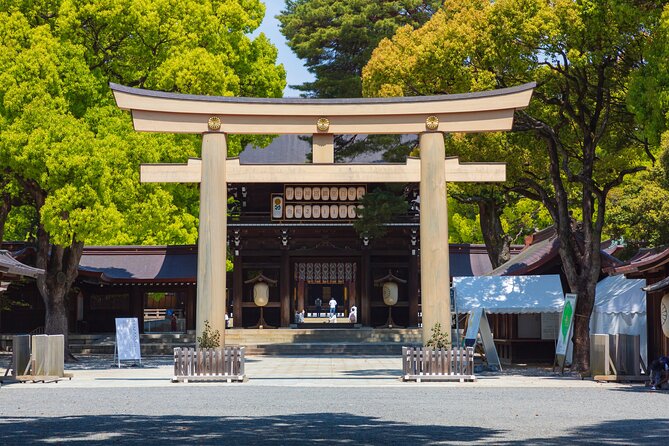
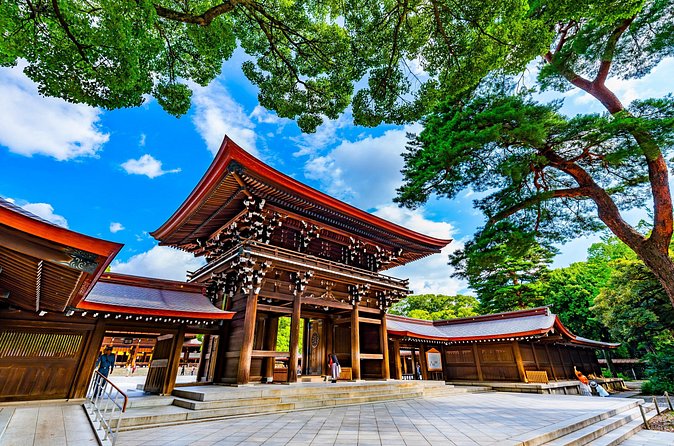
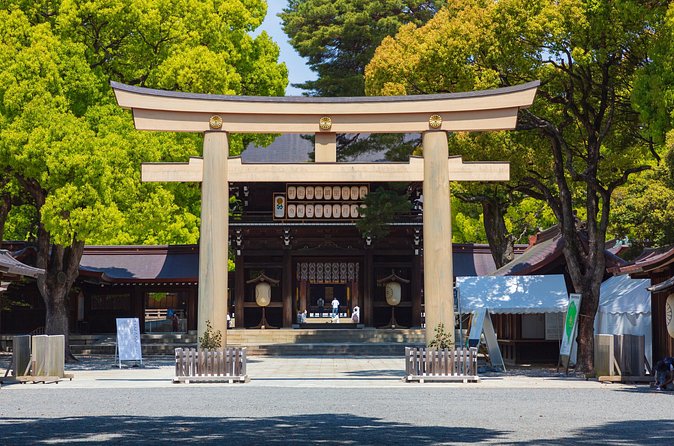
Meiji Jingu is the natural opening stop. It sits close to Harajuku but feels far removed from the station area once you enter its tree-filled grounds. The shrine honors Emperor Meiji and Empress Shoken, and its forest contains trees donated from different parts of Japan.
That detail gives the setting a national character. You are not just seeing a local neighborhood shrine. You are entering a major Shinto site linked to Japan’s modern imperial history and to the Meiji period, a subject that guides have singled out as especially interesting.
Plan on about an hour here. The guide can show you the practical steps for a respectful visit, including purification and prayer. For a first-time visitor, this is one of the strongest reasons to take the tour. You get more than a demonstration of where to walk or what to do. You learn why those actions matter.
The forest is also the tour’s strongest visual break. The contrast between Harajuku’s commercial streets and the calm approach to the shrine makes Meiji Jingu feel like a change of world. I would allow yourself a moment to notice that change instead of rushing straight toward the main shrine buildings.
There is one practical catch. The grounds require walking, and the route can feel long if you have a knee problem or another injury. One guide, Ami, was praised for allowing extra rest after a guest hurt a knee, but patience from a guide cannot remove the physical demands of the site. Tell your guide early if you need a slower pace.
Kanda Shrine: an old shrine in modern Tokyo
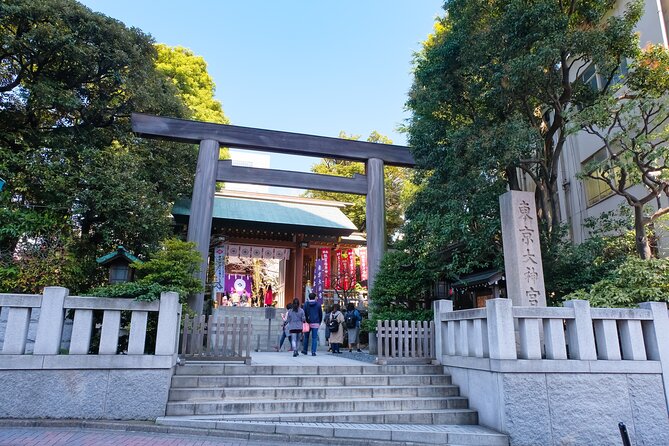
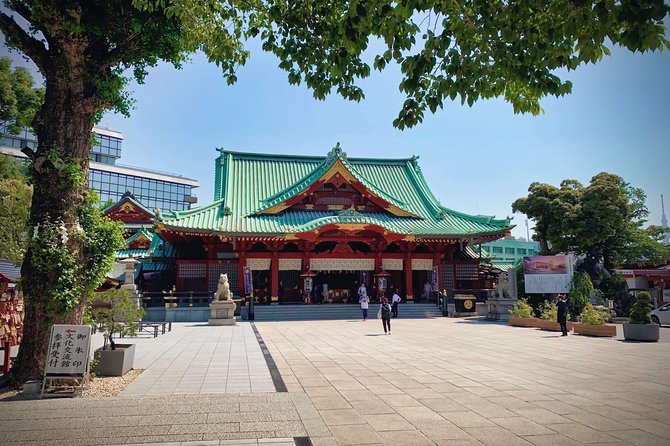
Kanda Shrine brings you into a very different part of the city. Located in Chiyoda, it dates back about 1,270 years, though fire and earthquakes have led to repeated rebuilding of its present structure.
This stop is useful for understanding how old religious sites continue to function in a modern capital. Meiji Jingu gives you forest and imperial history. Kanda gives you a more urban setting and a story shaped by disaster, rebuilding, and continuity.
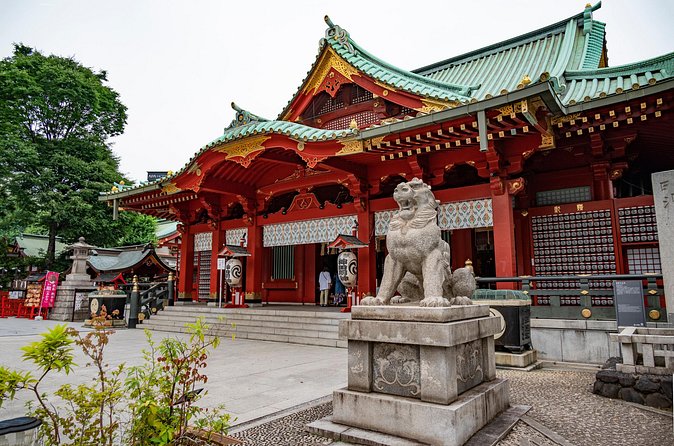
The one-hour visit should give you time to look at the shrine, ask about its deities and traditions, and connect what you learned at Meiji Jingu with a different setting. A guide can also explain details you might otherwise miss, such as the meaning of statues or the purpose of shrine features. One guide was specifically praised for explaining what the statues represented, which is the kind of small detail that can turn a quick stop into a useful lesson.
Kanda Shrine may appeal most if you want the tour to address modern Japanese life, not only old stories. The supplied description presents Shinto as part of a Japanese way of life, and this stop helps make that point. The shrine’s long past does not sit apart from Tokyo. It has been altered, repaired, and carried forward as the city changed around it.
The schedule is still tight. You should expect the guide to keep the group moving because Tokyo transport and the third shrine must fit into the same three-hour window.
Tokyo Daijingu: a shrine associated with marriage
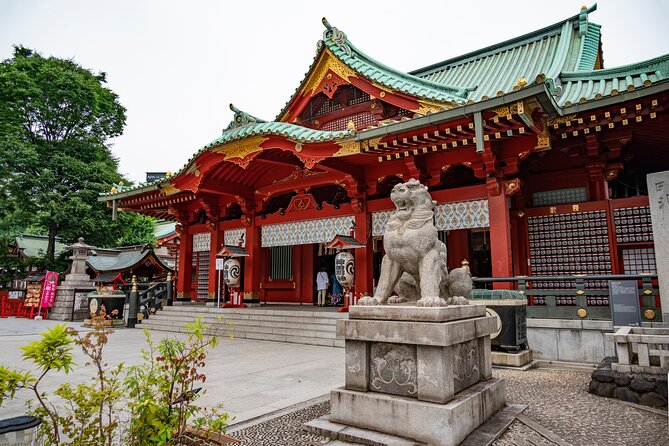
The final stop is Tokyo Daijingu, often called O-Ise-sama in Tokyo because of the deities enshrined there. It is especially known for the god of marriage and is popular among young women seeking help with relationships.
This gives the tour a different tone from the first two stops. Instead of focusing mainly on imperial history, forests, or rebuilding after disaster, Tokyo Daijingu connects shrine practice with personal hopes and good fortune. The guide can explain how people pray for success and how specific shrines become associated with particular wishes.
You spend about an hour here. That is enough time to complete the visit with a better sense of how Shinto shrines can serve different purposes. Some are linked to national history. Others are connected with local protection, business, relationships, or individual prayer.
The marriage connection also makes this stop especially relevant if you are interested in the customs surrounding relationships in Japan. Still, you should not expect a matchmaking activity or a special ceremony. The experience is a guided cultural visit, with time for observation, prayer, and photographs.
Because the tour ends at a different location from the meeting point, check the final arrangements before setting out for your next activity. The supplied details do not give a specific end point, so avoid scheduling something that requires an exact arrival time immediately afterward.
A completely different kind of day out:
- Tokyo Disney Resort – Tokyo Disneyland & Tokyo DisneySea Park Tickets
★ 4.8 · 99,488 reviews - SHIBUYA SKY Ticket
★ 4.7 · 46,509 reviews - JR Whole Japan Rail Pass
★ 4.8 · 29,150 reviews - Mt Fuji and Hakone 1-Day Bus Tour Return by Bullet Train
★ 5.0 · 26,383 reviews
What the guide adds to the experience
The guide is the main reason to choose this tour instead of visiting the shrines independently. The strongest praise has gone to the guides’ warmth, clarity, and ability to explain Japanese culture without making the subject feel stiff.
Ami was patient with a guest dealing with a knee injury. Hitomi was praised for explaining the history of all three shrines. Shunsun helped make shrine etiquette clear, while Atsuko Kobayashi connected Shinto and the history of modern Japan. Katsunori Fujiwara was described as informative, and Asami gave one group detailed explanations about Japanese culture and its relationship to Shinto.
Ken added an unexpected practical touch by finding a fugu restaurant for a guest. That is not a guaranteed part of the tour, and food is not included, but it suggests the guide may be able to offer useful local suggestions when time allows.
The tour is conducted in English. You should feel free to ask simple questions about purification, prayer, shrine symbols, mythology, and the difference between a shrine and other religious sites. The private format makes this easier than it would be in a large group.
The quality of the experience will still depend on the individual guide assigned to your date. The consistently high rating and full recommendation record are encouraging, but no listing can promise that every guide will explain the subject in exactly the same way.
Walking, transport, and the three-hour schedule
The public transportation included between shrines is a real convenience. Tokyo’s rail network is efficient, but it can be tiring when you are also trying to understand station layouts, transfers, and the correct exit. Here, your guide leads the way.
Do not mistake included transport for a low-effort tour. You still walk through shrine grounds, between significant points, and around stations. One account called it a very long walk, so I would treat comfortable footwear as essential.
The three-hour schedule is best for a focused introduction. You see three famous shrines, learn the basic customs, and get a useful cultural overview in one morning. You do not get a slow, meditative visit at each site.
That tradeoff will suit you if your Tokyo schedule is short. It may frustrate you if you want long photography stops, quiet personal prayer, or time to browse every shrine area. Ask your guide for a short pause if you need one, but expect the route to remain organized around the fixed timing.
The tour starts at Harajuku Station, not at your hotel. Hotel pickup and drop-off are not included, and you are responsible for reaching the meeting point and getting home afterward.
Etiquette, clothing, and weather
Smart casual clothing is requested. You do not need formal wear, but respectful, tidy clothing is appropriate for religious sites. Comfortable shoes are the more important choice.
You will learn how to purify yourself and how to pray at a shrine. This is valuable because copying another person without understanding the steps can feel awkward. A guide gives you the confidence to take part respectfully without treating the shrine as a stage set.
Photography opportunities are included, but this is still an active religious environment. Listen to your guide about where and when photographs are suitable. The purpose of the visit is not only to collect images. It is to understand what you are seeing.
The experience depends on favorable weather. If a typhoon or other extreme weather makes the tour unsafe, you are offered an alternative date or a full refund. For ordinary rain, the supplied information does not promise cancellation, so check conditions and dress accordingly.
Children must be accompanied by an adult. Most people can take part, but anyone with limited mobility should think carefully about the walking and shrine grounds before booking.
Who should book this tour?
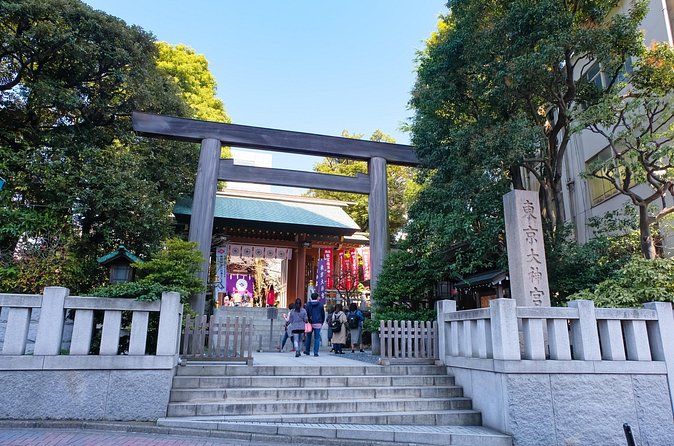
I would recommend it for first-time visitors to Tokyo who want cultural context quickly. It is also a good choice if you are curious about Shinto but do not know how to begin, or if you want a private guide who can answer questions at your own level.
It suits couples, families with older children, and small groups who value a personal guide. The private arrangement is particularly useful if your group has different levels of interest. One person can ask about mythology, another about etiquette, and another about Japanese history without holding up a larger party.
It is less suitable if you dislike walking, need a fully accessible route, or prefer to spend half a day at one shrine. It is also poor value if you only want quick photographs, since you can visit these sites without paying for a guide.
The cancellation terms are strict. The stated policy includes fees of 25 percent for cancellations within 20 days, 50 percent within 14 days, and 100 percent within seven days. The experience is also described as non-refundable and unchangeable, so read the exact terms at booking and avoid reserving it until your Tokyo plans are firm.
Should you book the three-shrine experience?
Book this tour if you want a clear, friendly introduction to Shinto and prefer someone else to handle the route. The best parts are the private guide, the practical etiquette lesson, and the sharp contrast between Meiji Jingu, Kanda Shrine, and Tokyo Daijingu.
At $206.26 per person, it is not a budget attraction. Its value rests on the guide’s explanations and the time saved, not on the shrine admissions alone. If you are willing to walk at a steady pace and want more than surface-level sightseeing, it can be a strong use of one Tokyo morning.
Skip it if you are comfortable navigating public transportation, prefer independent visits, or have mobility concerns. For everyone else, this is a compact way to understand how Shinto connects Tokyo’s history, customs, personal prayers, and daily life.
FAQ
Where does the tour begin?
The tour begins at Harajuku Station, at 1 Chome-18 Jingumae, Shibuya, Tokyo 150-0001, Japan.
What time does the tour start?
The scheduled start time is 9:00 a.m.
Which shrines are visited?
The tour visits Meiji Jingu Shrine, Kanda Shrine, and Tokyo Daijingu Shrine.
Is the tour private?
Yes. Only your group participates in the activity.
What is included in the price?
The price includes an English-speaking professional guide, public transportation between the shrines, entrance fees, and photo opportunities.
Are food, drinks, and hotel transfers included?
No. Food and drinks are not included. Hotel pickup and drop-off are also not included, and you must arrange transportation to the meeting point and from the ending location.
What happens if you arrive late?
The guide waits up to 30 minutes after the scheduled start time. If you do not arrive within that period, the tour is considered cancelled.
Just added in Tokyo
- Very popular in Harajuku♡Animal petting zoo★ 4.6 · 39 reviews
- Yokohama Port: Private Customizable Tour with Transfer★ 5.0 · 19 reviews
- Wagyu & Sake 8 Course Tasting Dinner in Shinjuku★ 4.9 · 20 reviews
- Warner Bros. Studio Tour Tokyo – The Making of Harry Potter★ 4.8 · 181 reviews
- Yanaka District: Historical Walking Tour in Tokyo’s Old Town★ 4.8 · 117 reviews
- Tokyo: Classic Tsukiji Food Tour★ 4.9 · 78 reviews
- Tokyo: Tsukiji Fish Market Tour with 6 Stops & Seafood Lunch★ 4.5 · 165 reviews
- Tokyo Wagyu & Sake Pairing Tasting Experience with Local Flavors★ 5.0 · 108 reviews
Temples and Shrines, compared.
Kyushu One-Day Tour: Yufuin no Mori Train & Yufuin Town & Nyoirin-ji Temple & Dazaifu & Hell Hot Springs (Departing from Fukuoka)
Read our review →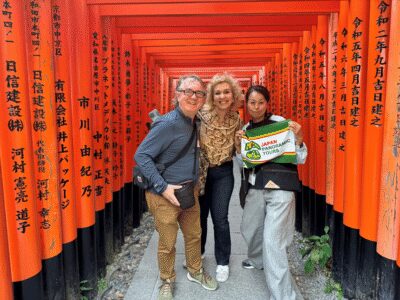
Fushimi Inari, Kinkakuji, Bamboo Grove 1 Day Bus Tour
Read our review →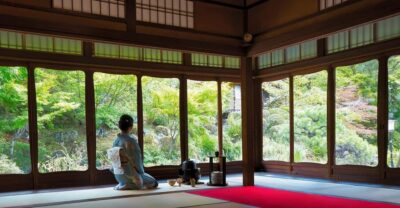
Tea Ceremony in a Traditional Tea House in Kiyomizu
Read our review →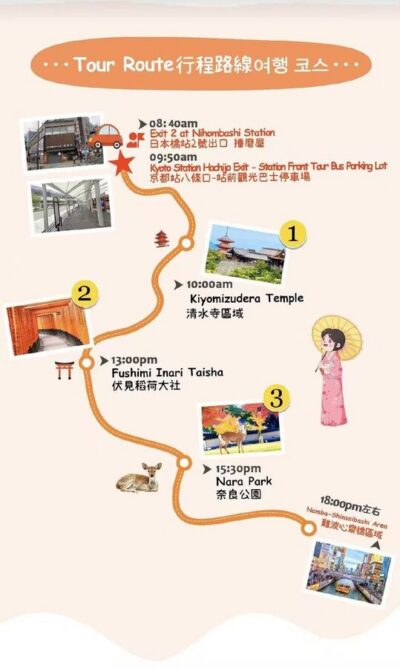
Kyoto Nara Day Trip │ Kiyomizu-dera Temple + Fushimi Inari-taisha Shrine + Nara Park (Departing from Osaka/Kyoto)
Read our review →
Browse the lists this tour appears in