
Reviewed · CASTLES AND HISTORIC SITES
Tokyo 2-Hour Genuine Samurai Experience: Kendo in Japan
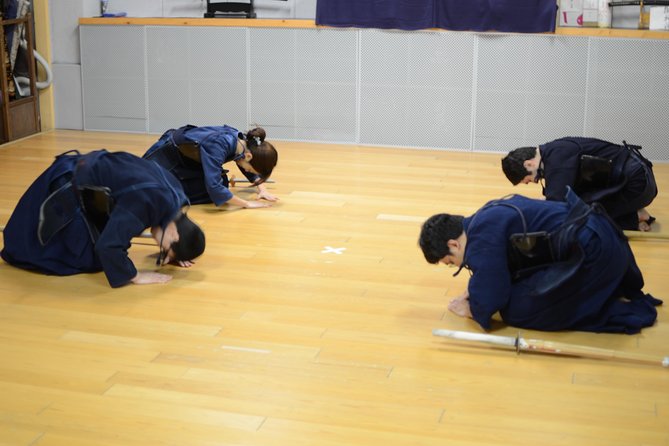
Put on armor and meet the sword. This two-hour Tokyo session gives you a real introduction to kendo, not a staged sword show. You learn basic forms, etiquette, shouting, striking, and tournament-style sparring under an English-speaking instructor. I especially like the full rental gear and the chance to practice with actual dojo students. The patient teaching also makes this a strong choice for families and first-timers.
The main drawback is that this is a real, active martial arts class. The heavy fabric armor gets hot, the movements can tire you, and kneeling may bother anyone with bad knees. You also make your own way to the dojo in northern Tokyo, and the experience requires a minimum of two people per booking.
In This Review
- Key points before you book
- What this Tokyo kendo class really offers
- Arriving at the Higashinippori dojo
- Changing into keikogi, hakama, and bogu
- Learning etiquette before the first strike
- Practicing basic strikes and footwork
- The tournament-style combat game
- How authentic is the experience?
- Is the $118.92 price fair?
- Who should book this experience?
- Booking, timing, and cancellation advice
- Should you book the Tokyo kendo experience?
- FAQ
- Where does the kendo experience take place?
- How long does the experience last?
- What time does the morning session start?
- Is hotel pickup included?
- Is kendo equipment provided?
- What is included besides the instruction and equipment?
- Can children join the experience?
Key points before you book
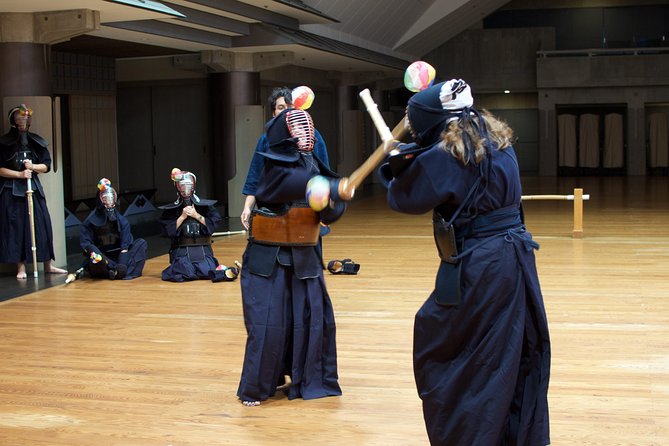
- Full kendo equipment is included: You wear the keikogi, hakama, and protective bogu armor, then use a bamboo sword during training.
- The lesson is practical: Expect demonstrations, basic striking techniques, form practice, loud kendo calls, and a tournament-style combat game.
- English instruction is available: The instructor explains the movements and customs in clear English, with patient guidance for beginners.
- You train in a working dojo: Local students may be practicing alongside you, giving the session a more genuine feel than a simple tourist demonstration.
- The class is active and warm: Wear athletic clothing underneath, hydrate beforehand, and tell the instructor about knee trouble.
- The setting is northern Tokyo: The meeting point is at 誠道館ビル, 4 Chome-7 Higashinippori, Arakawa City.
What this Tokyo kendo class really offers
Kendo is often described as the way of the sword. It grew from Japanese samurai swordsmanship, but this experience is not a chance to swing a metal blade or play at being a movie warrior. You work with a bamboo sword, follow formal etiquette, and learn controlled movements used in a traditional martial art.
That difference matters. The class has a playful side, especially during the final match, but the training is not just entertainment. You are expected to listen, copy the correct posture, make the proper calls, and strike with control. The result feels closer to a beginner lesson at a dojo than a quick photo opportunity.
The activity lasts about two hours. You can choose a morning or afternoon session, although the supplied meeting details list a 10:00 am start for the morning option. The group can include up to 15 people, so you receive more structure than you would in a large sightseeing tour, but the amount of individual attention may depend on the group size.
The experience is rated 4.8 out of 5, with 97 percent of participants recommending it. That fits the strongest pattern in the feedback: people praise the instructors, the sense of authenticity, and the fun of putting the techniques into action.
More Castles and Historic Sites in Tokyo
- Tokyo: Imperial Palace and Shogun Historical Walking Tour
★ 5.0 · 2,251 reviews - Tokyo Castle & Imperial PalaceーShogun Walking Tour
★ 4.7 · 1,068 reviews - Tokyo: Samurai Ninja Museum Guided tour and Experience
★ 4.6 · 1,010 reviews
Arriving at the Higashinippori dojo
You make your own way to the meeting point at 誠道館ビル, 4 Chome-7 Higashinippori, Arakawa City, Tokyo 116-0014. The location is near public transportation, which helps, but hotel pickup and drop-off are not included. The price also does not cover transport between activities, so allow extra time and money for getting there and returning to your next stop.
This part of the plan is simple, but do not treat it casually. A martial arts class begins on time, and you do not want to arrive flustered after crossing Tokyo. Check your route before leaving and allow a little extra time to find the building.
The activity ends back at the same meeting point. That makes it easy to pair with nearby plans in the Arakawa area, though the class itself may leave you warm and tired. One useful suggestion from the experience feedback is to combine the visit with nearby shrines or food stalls, turning the dojo stop into part of a longer northern Tokyo outing.
The published information says pickup is offered, but the meeting instructions also say to make your own way to the dojo and exclude hotel transfers. I would treat the dojo as the firm meeting point and confirm any station assistance when you book.
Changing into keikogi, hakama, and bogu
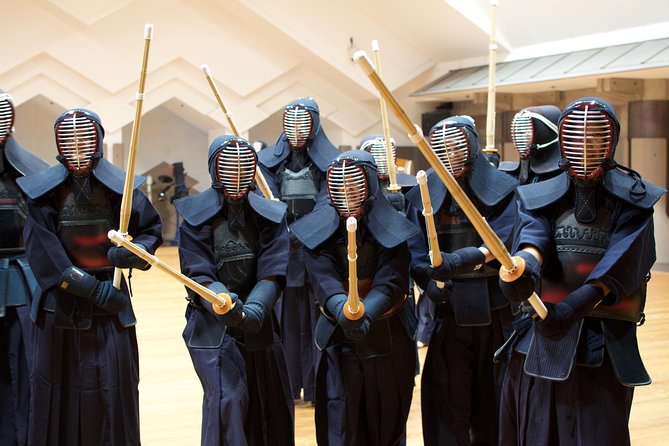
The first memorable stage is getting dressed. Your rental equipment includes the traditional keikogi, a jacket-like top, and hakama, the wide, skirt-like trousers associated with Japanese martial arts. You then put on bogu, the protective armor used for kendo practice.
This clothing does more than create a samurai photo. The layers change how you move. The armor adds weight, the fabric holds heat, and simple actions require more focus than they do in ordinary clothes. That is why athletic wear underneath is sensible. You will also want to drink water before the class begins.
A bottled mineral water is included, along with a Japanese hand towel. Those small extras are useful once the class gets moving. The towel is also a practical souvenir, rather than another decorative item that gets packed away and forgotten.
The class welcomes beginners, and the instructor helps you with the basic process. Still, do not expect a relaxed costume fitting followed by a short demonstration. The equipment is part of an active lesson. If kneeling hurts your knees, tell the sensei before that movement begins. One participant specifically noted that the instructor allowed adjustments for knee trouble.
Learning etiquette before the first strike
Kendo has rules of conduct as well as striking techniques. You learn how to behave in the dojo, how to handle the equipment, and how to show respect before focusing on the mock combat.
This cultural instruction is one of the best reasons to choose this activity over a generic sword lesson. You begin to understand that kendo is not simply about hitting an opponent. Posture, timing, discipline, and respect matter just as much as speed.
The English-speaking instructor explains the ideas in clear language and demonstrates the movements. Several participants praised the patient teaching, especially for children and people who had never seen kendo before. One family used the class as an activity for two boys, while another parent and child treated it as one of the strongest memories of their Japan trip.
You may also see local dojo students training during the session. That adds useful context. Instead of watching only a guide perform polished moves, you can observe how regular students practice, move, and respond to instruction. Their presence helps show that this is a working martial arts setting.
A completely different kind of day out:
- Tokyo Disney Resort – Tokyo Disneyland & Tokyo DisneySea Park Tickets
★ 4.8 · 99,488 reviews - SHIBUYA SKY Ticket
★ 4.7 · 46,509 reviews - JR Whole Japan Rail Pass
★ 4.8 · 29,150 reviews - Mt Fuji and Hakone 1-Day Bus Tour Return by Bullet Train
★ 5.0 · 26,383 reviews
Practicing basic strikes and footwork
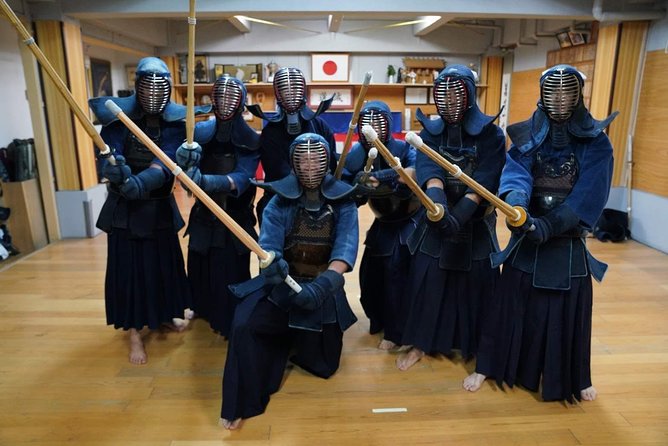
The teaching moves from explanation to practice. You learn practical kendo movements under the instructor’s direction, then repeat them until the form begins to feel more natural.
The exact lesson order may vary, but the experience includes a guide demonstration and practical instruction in hitting techniques. Expect to work on the basic actions needed to strike safely and correctly, rather than rushing straight into a match.
The voice is part of the lesson. Kendo uses loud calls during attacks, and you will likely find yourself shouting as you strike. That can feel awkward for a minute, especially if you are shy, but the class makes it easier. The sound and movement help turn a collection of instructions into a physical activity.
The feedback is direct. One participant described hearing approval when a strike landed in the right place with proper form, and a quick correction when an opening was missed during sparring. That immediate response is useful for beginners. You do not have to guess if your posture or timing is working.
I also like that the class seems to reward correct form rather than raw strength. You are not simply whacking at a target. You are learning why a strike counts and how the body should work with the sword.
The tournament-style combat game
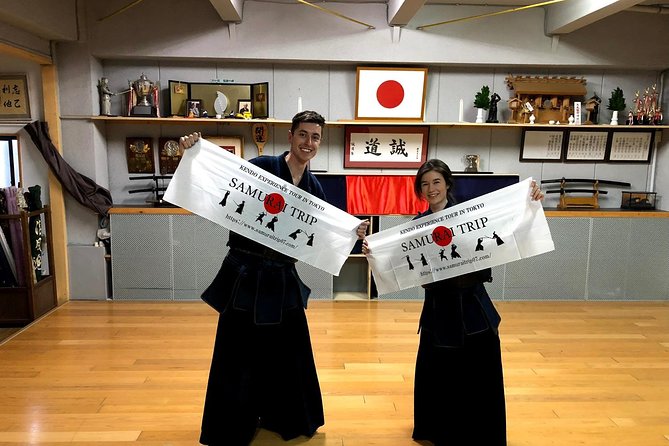
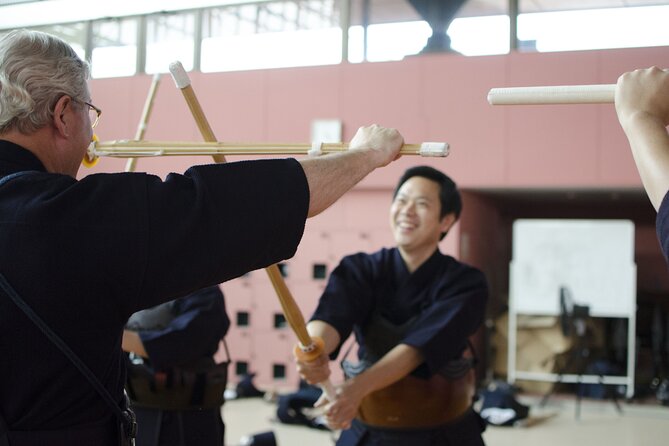
The final combat game gives the lesson its payoff. After practicing the basic movements, you face opponents in a mock tournament format.
This is not presented as a full competitive kendo match for experienced athletes. It is a structured way to use what you have just learned. You get a taste of distance, timing, nerves, and the challenge of choosing when to attack.
The sparring is one of the most praised parts of the class, but it is also where the physical demands become clearest. You are wearing warm armor, moving repeatedly, shouting, and trying to remember the correct technique. The class includes a water break, and you should arrive hydrated rather than relying only on the supplied bottle.
The mood appears to stay friendly. The instructors make the activity fun while keeping the training serious enough to feel legitimate. Families can enjoy the contest without needing prior martial arts experience, and adults can appreciate the chance to test their focus after the slower technique work.
Do not expect Hollywood swordplay. The bamboo sword, formal movement, and rules give the match a very different feel from a stage fight. That is exactly the point. You experience a small part of kendo practice, not a fantasy version of samurai combat.
How authentic is the experience?
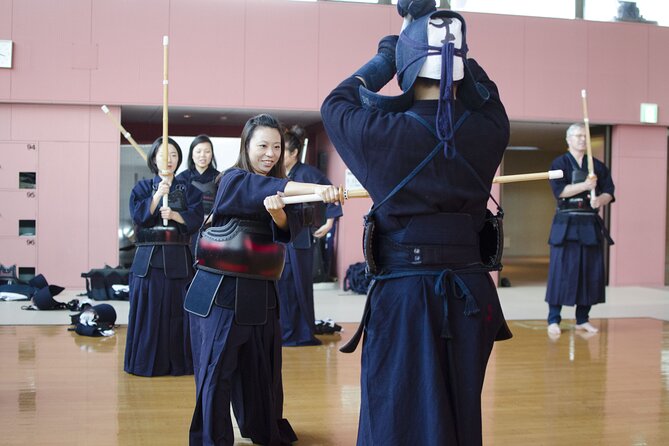
For a short activity aimed at visitors, this has a strong claim to authenticity. You train in a dojo, wear proper kendo clothing and armor, learn etiquette, and practice with instructors who have spent many years in the art.
One sensei is described as having trained for 60 years. Another participant recognized the instructor from a kendo YouTube channel and was surprised to meet the same teacher in the dojo. Those details suggest that the session is connected to serious kendo practice, rather than built only for sightseeing.
The presence of local trainees is another positive sign. You are not just shown a ceremonial routine. You may share the space with people who train regularly, which gives you a better feel for the discipline and repetition behind kendo.
At the same time, keep your expectations sensible. Two hours cannot make you proficient in Japanese swordsmanship. You will learn foundations and get a memorable taste of the sport. If you want advanced training, this session is a beginning, not a substitute for regular practice.
Is the $118.92 price fair?
At $118.92 per person, this is not a cheap Tokyo activity. You are paying more than you would for a casual cultural demonstration, and transport to and from the dojo is extra.
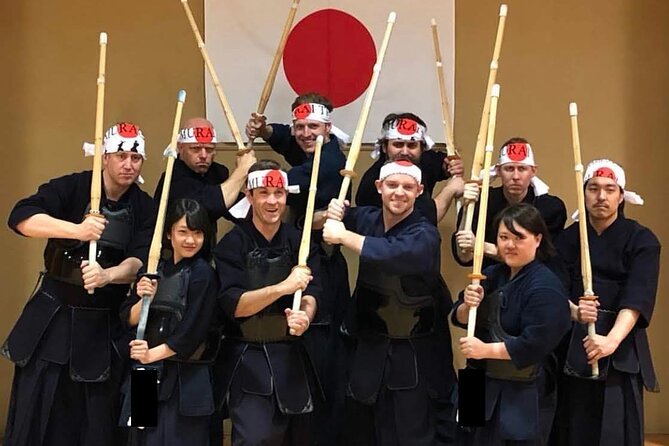
The value comes from the amount packed into the two hours. Your fee includes a professional instructor, a guided lesson, full kendo armor and equipment, bottled water, and a Japanese hand towel. You also receive direct instruction and a chance to spar, which makes the experience more active than a simple performance.
I think the price is easiest to justify if you want one special hands-on activity in Tokyo. The full equipment alone would be difficult to arrange independently, and finding an English-speaking instructor in a working dojo would take effort. For a family, a parent and child, or two friends, the minimum two-person booking works well.
The value is less convincing if you dislike exercise, heat, or structured instruction. You may get more from a museum or a sword demonstration if you mainly want historical background. This class is best for people who want to do something, sweat a little, and leave with a better sense of how kendo feels.
Who should book this experience?
I would recommend it to first-timers who want a clear introduction to kendo. The instructor’s patient style, English explanations, and demonstrations make the class approachable even if you know nothing about the sport.
Families can also make good use of it. The minimum age is 9, and the feedback includes positive experiences for children and grandchildren. The mock tournament gives younger participants a goal, while the cultural instruction adds more substance than a standard family attraction.
It suits adults, too. One parent and adult son enjoyed learning the fundamentals and sparring together, while another participant described the experience as a memorable way to exercise. You do not need to be a martial artist, but you should have a strong level of physical fitness according to the tour information.
I would hesitate if you have serious mobility limits, especially involving the knees. The class includes kneeling and active movement, though you can tell the sensei if a particular action hurts. The safest approach is to discuss physical concerns before the lesson starts.
Wear athletic clothing beneath the uniform, drink water before arrival, and avoid scheduling a demanding activity immediately afterward. The two-hour length looks modest on paper, but the armor and repeated movements can make it feel like a proper workout.
Booking, timing, and cancellation advice
You need at least two people per booking, and the maximum group size is 15. Confirmation arrives at booking, and a mobile ticket is available, so keep the booking details easy to access on your phone.
Morning and afternoon sessions are offered, giving you some control over the day. The listed morning start is 10:00 am. Check your selected time carefully, then plan your route to Higashinippori with room for delays.
Free cancellation is available up to 24 hours before the local start time. Cancellations or changes made less than 24 hours before the experience are not accepted for a refund, so make your plans before that cutoff.
Should you book the Tokyo kendo experience?
Book it if you want a genuine, physical cultural activity and like the idea of learning by doing. The full armor, dojo etiquette, English instruction, local trainees, and final sparring session give you much more than a quick samurai costume photo.
I would especially choose it for two or more people who want a shared memory in Tokyo. It works for families with children aged 9 and older, adult pairs, and curious beginners who do not mind getting warm and tired.
Skip it if you want a quiet lesson, have difficulty with active exercise, or hope for a long historical lecture. For everyone else, $118.92 buys a focused introduction to kendo with real instruction and a satisfying chance to put the basics into practice.
FAQ
Where does the kendo experience take place?
The meeting point is 誠道館ビル, 4 Chome-7 Higashinippori, Arakawa City, Tokyo 116-0014, Japan.
How long does the experience last?
The kendo experience lasts approximately two hours.
What time does the morning session start?
The listed morning start time is 10:00 am. Morning and afternoon sessions are available.
Is hotel pickup included?
No. Hotel pickup and drop-off are not included. You make your own way to the dojo, and transportation expenses between activities are also not included.
Is kendo equipment provided?
Yes. Rental kendo armor and equipment are included, including the protective bogu armor used during the lesson.
What is included besides the instruction and equipment?
The experience includes a professional guide or instructor, bottled mineral water, and a Japanese hand towel.
Can children join the experience?
Yes. The minimum age is 9 years. A minimum of two people per booking is required.
Just added in Tokyo
- Fish Market & Tokyo Skyline Private Walking Tour★ 5.0 · 14 reviews
- Mt. Fuji & Hakone Cherry Blossom private One Day Tour★ 4.5 · 35 reviews
- 25-Min Downtown Helicopter Tour : Tokyo Skytree and Tokyo Tower★ 5.0 · 19 reviews
- Private Tour with a Local Guide – Learn about daily life in Japan★ 5.0 · 22 reviews
- Tokyo: 3-Hour Bike/E-Bike Tour of the City’s Highlights★ 5.0 · 209 reviews
- Official Japan Go-Kart Through Tokyo Bay / Ginza (IDP Required)★ 4.5 · 71 reviews
- 30-Min Tokyo Central Private Heli Tour– Asakusa, Skytree, Shibuya★ 5.0 · 13 reviews
- Tokyo Private SightSeeing Day Tour With Guide★ 5.0 · 16 reviews
Castles and Historic Sites, compared.
Imperial Palace and Shogun Historical Walking Tour
Read our review →
Tokyo Castle & Imperial PalaceーShogun Walking Tour
Read our review →
Nijo-jo Castle and Ninomaru Palace Guided Tour
Read our review →
Samurai Ninja Museum Guided tour and Experience
Read our review →Browse the lists this tour appears in