
Reviewed · TEMPLES AND SHRINES
Tokyo: Asakusa and Tokyo’s Oldest Temple Senso-ji Tour
Asakusa tells Tokyo’s story one gate at a time. This two-hour walk brings you from the red Kaminarimon Gate to Senso-ji, Nakamise Street, and Asakusa Shrine, with an English-speaking guide adding context that is easy to miss on your own. I especially like the small groups of up to 10 and the chance to learn local customs, food tips, and neighborhood stories from guides such as Shino, Embla, Nicolas, and Aska.
The price is another strong point: $14 per person is modest for a guided introduction to one of Tokyo’s most important areas. The main consideration is the crowd. Nakamise Street and the temple route can be packed, so you need to stay close to your guide, and one two-hour visit cannot cover all of Asakusa.
In This Review
- Key points to know before you book
- Why this short Asakusa walk works
- Meeting near Asakusa Station
- Kaminarimon Gate: the grand entrance
- Nakamise Street: snacks, souvenirs, and a living approach
- Senso-ji Temple: the main cultural lesson
- Asakusa Shrine: a different religious tradition
- The guide makes the difference
- What the $14 price really gets you
- Who should take this tour?
- My final call on the Asakusa experience
- FAQ
- How long does the Asakusa and Senso-ji tour last?
- Where does the tour meet?
- What language is the tour conducted in?
- How many people can join the group?
- Is admission included?
- Can I cancel for a full refund?
Key points to know before you book
- A compact route with four major stops: Kaminarimon, Nakamise Shopping Street, Senso-ji Temple, and Asakusa Shrine.
- Small groups capped at 10 people: Easier to hear the guide and keep together in crowded streets.
- Guides add local detail: Shino, Embla, Nicolas, Aska, Joe, and others have been praised for clear English, cultural explanations, and useful food and shopping advice.
- Good value at $14: The fee covers the walking tour and admission connected with Asakusa, Senso-ji, and Nakamise Street.
- A practical first look at traditional Tokyo: Best for first-time visitors, solo visitors, and anyone who wants a short cultural orientation.
- Meet at a specific Starbucks near Asakusa Station: Download WhatsApp in advance so the guide can contact you and help the group meet smoothly.
Why this short Asakusa walk works
Tokyo can feel enormous on a first visit. The city moves quickly, its train stations can be confusing, and major sights often come with layers of custom and etiquette that are not obvious at first glance. Asakusa gives you a calmer, more traditional starting point, even though its most famous streets can be very busy.
This tour focuses on the area’s Buddhist temple, nearby Shinto shrine, old shopping street, and surviving Edo-era character. The guide does more than point out buildings. You learn how to approach a temple, what certain rituals mean, and how Asakusa changed from samurai-era Tokyo through wartime destruction and post-war rebuilding.
I find the two-hour length sensible. You get a clear introduction without giving up an entire day, and you can continue exploring afterward. The tour finishes back at Starbucks near Asakusa Station, leaving you in a useful position to find lunch, shop, or spend more time around the temple grounds.
The format also suits solo visitors. One booking became a group of just two solo participants, while another had seven people. With a maximum of 10, the guide can usually answer questions and keep an eye on the group more easily than on a large coach tour.
More Temples and Shrines in Tokyo
- Tokyo: Meiji Shrine, Asakusa, Skytree Bus Tour and Cruise
★ 4.7 · 1,986 reviews - Tokyo: Asakusa Walking Tour with Sensoji Temple Visit
★ 4.8 · 1,583 reviews - Nikko: Kegon Falls, Lake Chuzenji & Toshogu Temple
★ 4.6 · 1,577 reviews
Meeting near Asakusa Station
The meeting point is in front of the Starbucks closest to Asakusa Station. The listed coordinates are 35.7119461, 139.7979446. This detail matters because Asakusa has several station exits and a web of nearby streets, so do not rely on a vague plan to meet somewhere near the temple.
You are asked to download WhatsApp before meeting. That allows the guide to send updates, share a location, or help you catch up if you are delayed. One guide, Nicolas, used WhatsApp to help a late-arriving participant find the group, though you should still arrive on time rather than count on catching up.
The exact start time depends on availability when you book. Since the route is outdoors and includes a lot of walking, wear comfortable shoes and check the weather before setting out. In hot conditions, bring water. A participant specifically noted that Aska paid attention to comfort during a very hot day.
Kaminarimon Gate: the grand entrance
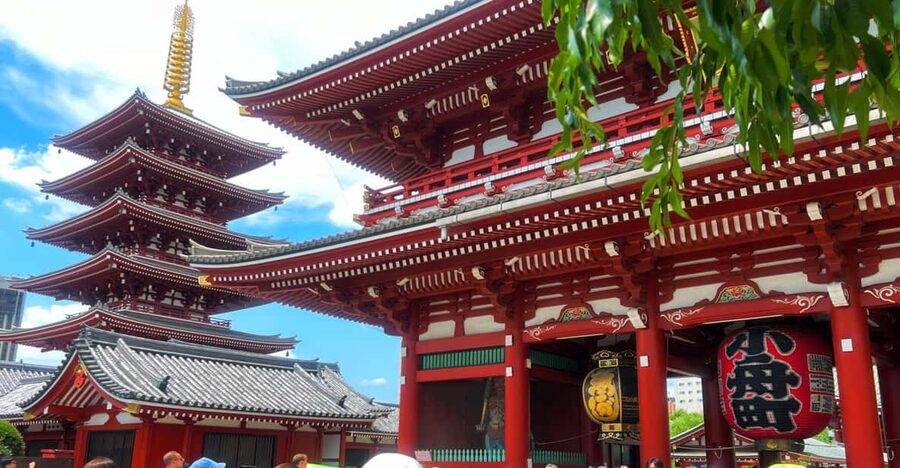
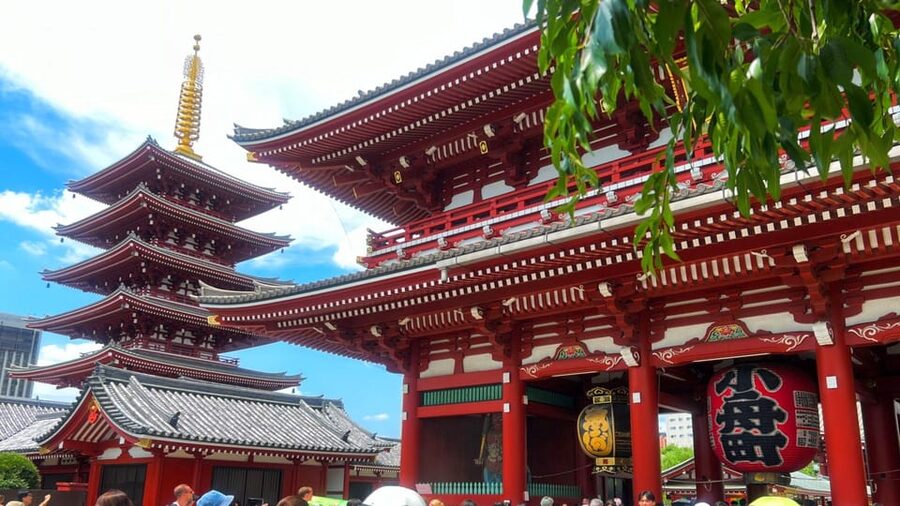
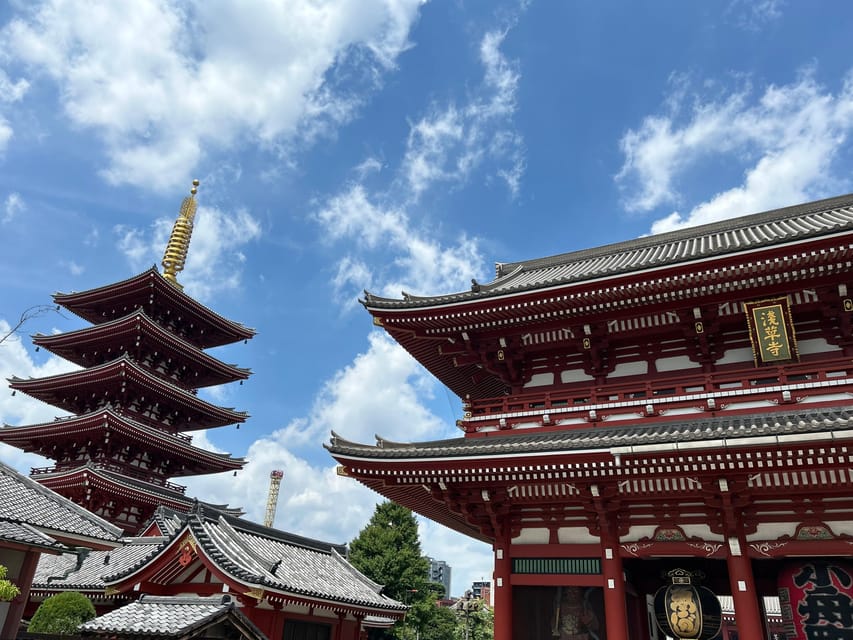
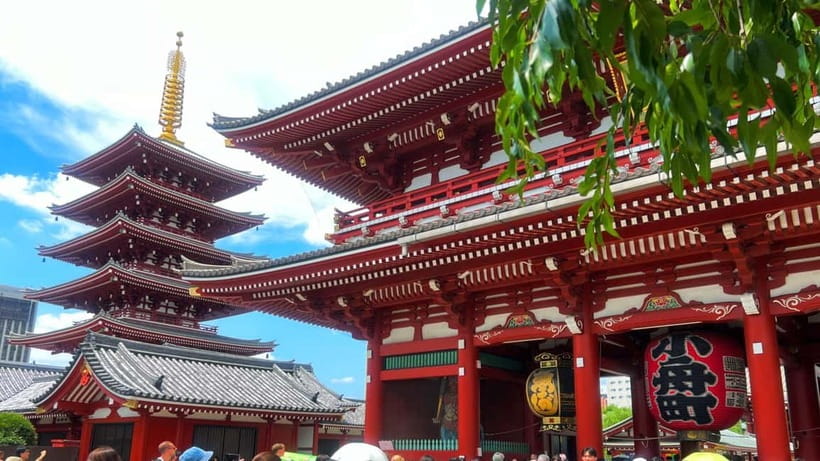
The first major stop is Kaminarimon, or the Thunder Gate. Its huge lantern and dramatic red structure provide the classic opening view of Asakusa. This is the place where many people stop for their first photographs, but a guide helps turn the photo stop into a useful orientation.
Expect roughly 30 minutes here for visiting, photographs, and explanation. Your guide can set the scene for Senso-ji and explain why this gate matters as the formal entrance to the temple district. It is also a good moment to learn how the area developed around religious visits, shops, entertainment, and everyday local life.
The drawback is clear: Kaminarimon is rarely quiet. Large groups pause beneath the lantern, people move in several directions, and photographs take patience. Guides such as Connie have been praised for making sure nobody is left behind, which is especially helpful at this first crowded point.
Stay close, listen for your guide’s instructions, and do not wander off for a better photograph without telling the group. The route is easy to follow once you understand it, but the crowd can quickly separate you from a small group.
Nakamise Street: snacks, souvenirs, and a living approach
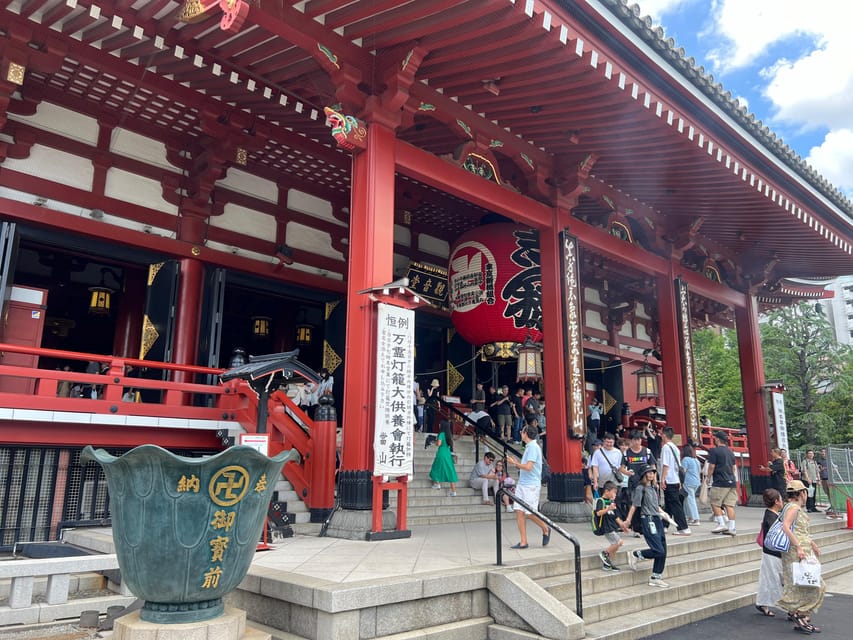
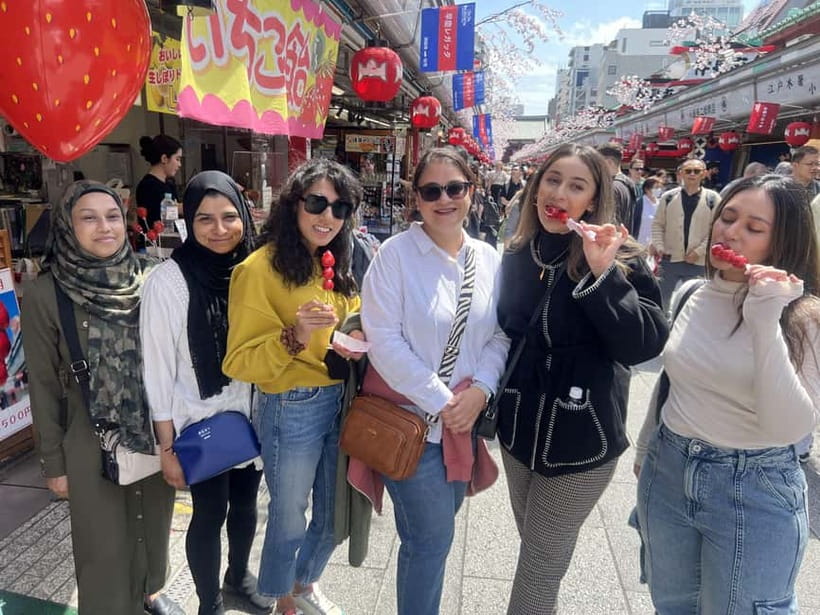
From Kaminarimon, you continue along Nakamise Shopping Street for about 20 minutes. This straight approach to Senso-ji is lined with traditional shops, colorful displays, local sweets, and small souvenirs. It is one of the most popular shopping stretches in Asakusa, so the visit is as much about atmosphere as it is about buying something.
This is where local recommendations become especially useful. Guides have pointed out specialty foods, favorite snacks, and souvenirs with genuine meaning rather than simply directing people toward the most obvious merchandise. Several participants singled out advice about where to eat and what to take home.
One food detail that came up was ningyo-yaki, a small traditional red bean-filled snack. You may have a chance to spot or try local sweets along the route, depending on the guide and the day, but food purchases are not listed as included. Bring extra yen if you want to sample something or shop.
Nakamise is also where the tour’s pace can become less predictable. It takes time to move through a packed shopping street, and there may be little room for everyone to walk side by side. The 20-minute stop gives you a taste rather than a full shopping session. If you want a careful look at every shop, plan to return after the tour.
A completely different kind of day out:
- Tokyo Disney Resort – Tokyo Disneyland & Tokyo DisneySea Park Tickets
★ 4.8 · 99,488 reviews - SHIBUYA SKY Ticket
★ 4.7 · 46,509 reviews - JR Whole Japan Rail Pass
★ 4.8 · 29,150 reviews - Mt Fuji and Hakone 1-Day Bus Tour Return by Bullet Train
★ 5.0 · 26,383 reviews
Senso-ji Temple: the main cultural lesson
Senso-ji is the heart of the experience. Founded in the 7th century, it is one of Tokyo’s oldest temples and the defining sight of Asakusa. The route allows about 30 minutes for a guided walk, photographs, and discussion.
A good guide makes this visit much more than a quick look at a famous building. You learn about the temple’s Buddhist role, its place in Tokyo’s story, and the customs connected with entering and praying. Nicolas was praised for explaining Buddhism and for giving a careful introduction to how to approach the temple. Aska also taught the proper way to pray at a temple.
That practical instruction is one of the tour’s best features. You are not simply told that a ritual exists. You get help understanding what to do and why it matters, which makes the visit feel more respectful and less like a set of tourist motions.
You may also encounter fortune slips at the temple. One participant particularly enjoyed getting a fortune, and the guide can explain the basic meaning and custom behind the practice. The tour does not list a fortune slip as an included item, so treat it as an optional personal purchase if you want to try it.
Thirty minutes is enough for an introduction, but not for every corner of Senso-ji. You will have time to hear the main explanations, take photographs, and observe the temple area. You will not have unlimited time for quiet reflection, detailed architecture study, or a long shopping stop.
Asakusa Shrine: a different religious tradition
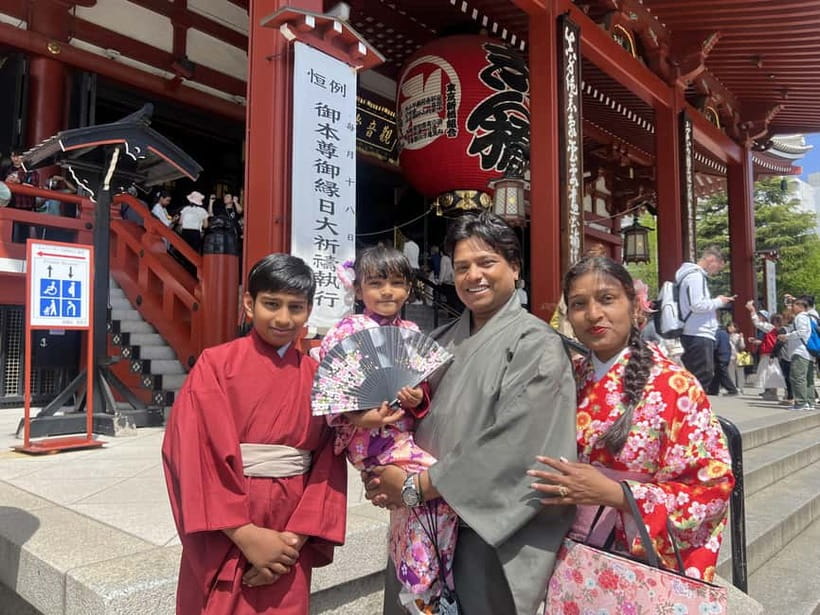
The final major stop is Asakusa Shrine, with about 30 minutes for a visit, photographs, and guided explanation. Its inclusion is important because it lets you compare a Shinto shrine with the nearby Buddhist temple.
That contrast gives the walk more substance. Instead of treating Asakusa as one large historic attraction, the guide shows you how different religious traditions sit alongside each other in Japanese life. You can ask about shrine customs, prayers, and the difference between what you have just seen at Senso-ji and what happens at Asakusa Shrine.
Several guides were praised for explaining shrine traditions and teaching visitors how to pray. That is particularly helpful if this is your first visit to Japan. Small actions, such as how you approach a place of worship, can feel uncertain when you are unfamiliar with local practice. Clear instruction lets you take part with more confidence.
The shrine stop also helps slow the tour down after the crowded shopping street and temple entrance. Still, do not expect a long, private visit. The tour follows a set two-hour route, and the group needs to finish on time.
The guide makes the difference
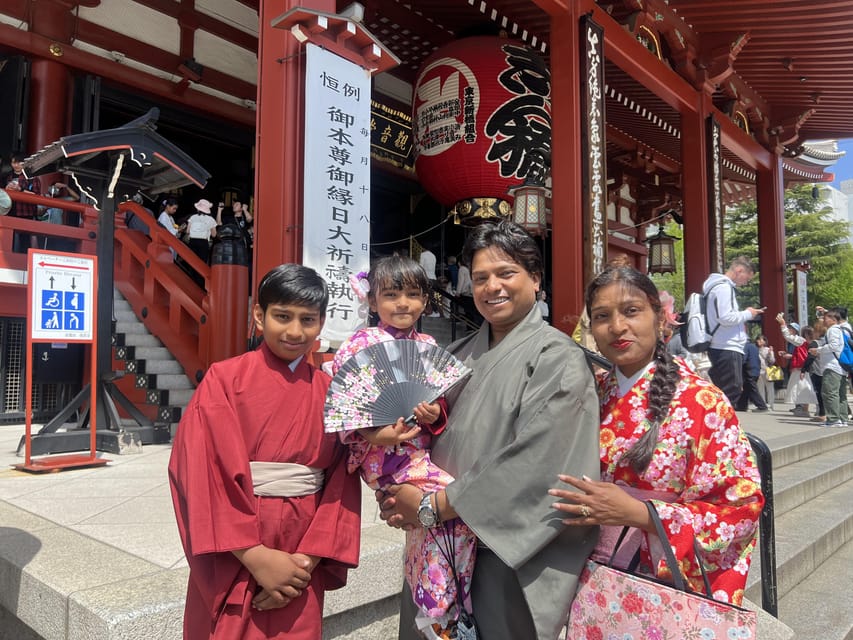
The strongest part of this experience is the guiding. The same route could feel like a fast walk past famous sites without a good explanation. Here, the guide is expected to supply the history, customs, legends, and local suggestions that give the buildings meaning.
Shino has received repeated praise for her local knowledge, fluent English, energy, and ability to recommend good places to eat and worthwhile souvenirs. She was also praised by someone who had visited Asakusa before but still learned new things.
Embla has been described as organized, funny, patient, and well informed. She sent useful information before one tour and handled a seven-person group in a way that made it easy to stay together. Nicolas has been appreciated for clear storytelling, patience, and careful explanations of Tokyo, Buddhism, and the temples.
Other guides named in the feedback include Connie, Joe, Aska, Yota, Ryota, Naoya, Haydn, Jae, Ahn, and Shona. The repeated pattern is clear: guides are valued for friendly conversation, good English, cultural explanations, and the ability to answer questions.
There can still be variation from one guide to another. Some explain more formally, while others make the walk feel like an outing with a local friend. If you want a highly specialized academic lecture, this is probably not the right format. If you want history you can understand, practical customs, and a few useful local tips, it fits well.
What the $14 price really gets you
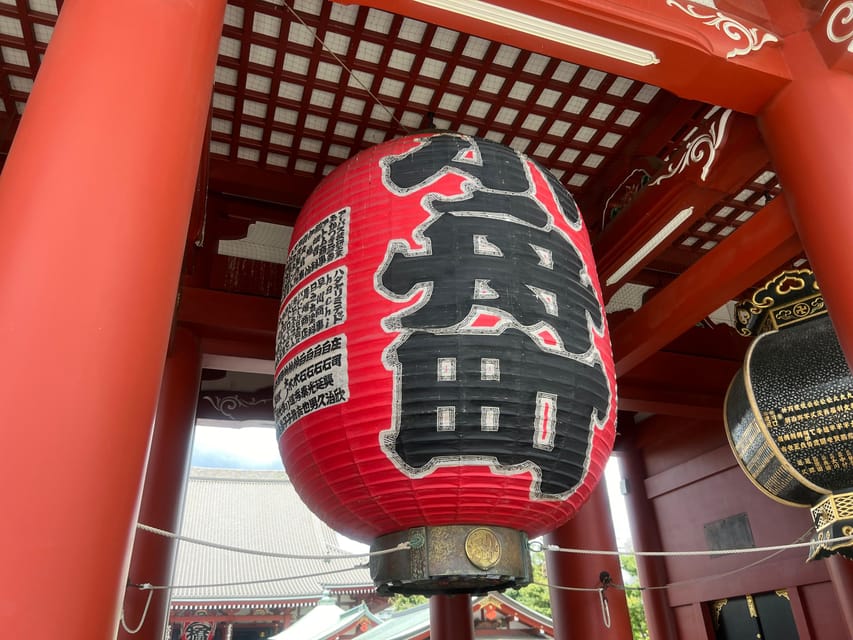
At $14, this is an inexpensive way to add structure to your first visit to Asakusa. You are paying for two hours with a live English-speaking guide, a planned route, and explanations at four significant locations. The value is strongest if you would otherwise walk through the area without understanding what you are seeing.
The price does not buy you a full-day Asakusa program. It is not a food tour, and there is no stated allowance for snacks, shopping, or optional temple activities such as fortunes. Think of it as a guided orientation, then use the rest of your day to choose what deserves more time.
For a solo visitor, the cost can be particularly reasonable. You get company without committing to a large group, and you may finish with recommendations for restaurants, pottery shops, foods, and souvenirs. A previous participant was directed to a pottery shop after the walk, showing how the guide’s advice can extend beyond the listed stops.
The tour also offers free cancellation up to 24 hours before departure and a reserve-now, pay-later option. Those policies make it easier to fit into a changing Tokyo schedule, though you still need to check available start times when booking.
Who should take this tour?
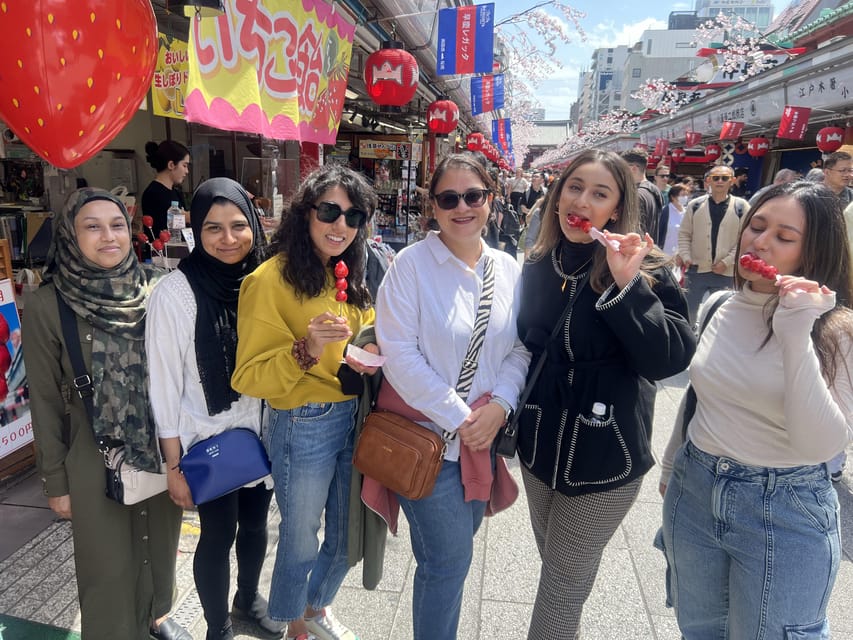
I would choose this for a first morning or early afternoon in Tokyo, especially if you want an easy introduction to traditional culture before tackling larger districts. It works well for couples, families, solo visitors, and small groups who prefer conversation over a headset and a large crowd.
History lovers will appreciate the stories about Edo-era Asakusa, samurai times, geisha districts, hidden shrines, and post-war recovery. Culture-focused visitors will value the practical instruction at Senso-ji and Asakusa Shrine. Food-minded visitors should listen closely to the snack and restaurant suggestions, then return to Nakamise or the surrounding streets with more time.
It is less suitable if you dislike walking, crowded shopping streets, or fixed group pacing. The route is short, but it is not a private tour, and you will need to keep up with the group. One participant noted that slow walkers and people talking during explanations affected the pace, although the guide handled the situation calmly and became more assertive when needed.
My final call on the Asakusa experience
I recommend this tour if you want a low-cost, well-organized introduction to old Tokyo. The combination of Kaminarimon, Nakamise, Senso-ji, and Asakusa Shrine gives you the essential sights, while the guide adds customs, legends, food advice, and local context.
Book it if you value a small group, clear English, and a short route that leaves time for your own exploring. Skip it only if you already know Asakusa well and prefer to move at your own pace, though even repeat visitors may enjoy the stories and ritual explanations. At $14, the risk is low, and the likely payoff is a much more meaningful visit to Senso-ji than you would get from photographs alone.
FAQ
How long does the Asakusa and Senso-ji tour last?
The walking tour lasts two hours. The listed route includes Kaminarimon, Nakamise Shopping Street, Senso-ji Temple, and Asakusa Shrine before returning to the meeting area.
Where does the tour meet?
You meet in front of the Starbucks closest to Asakusa Station. The listed coordinates are 35.7119461, 139.7979446.
What language is the tour conducted in?
The tour is conducted in English with a live English-speaking guide.
How many people can join the group?
The group is limited to 10 participants. Some departures may be smaller, including groups of two or seven people.
Is admission included?
The activity includes the guide, walking tour, and admission connected with Asakusa, Senso-ji Temple, and Nakamise Shopping Street. Optional purchases, such as food, souvenirs, or fortune slips, are not stated as included.
Can I cancel for a full refund?
Yes. You can cancel up to 24 hours in advance for a full refund. A reserve-now, pay-later option is also available.
Just added in Tokyo
- A One-of-a-Kind Sushi Experience in a Special Place of Japan★ 5.0 · 15 reviews
- Tokyo Cute Bento Cooking Class – Make a Kawaii Character Lunchbox★ 5.0 · 126 reviews
- Japanese Home Cooking Class & Walk in Todoroki Temple Tokyo★ 5.0 · 88 reviews
- Japan Tokyo Tower Observatory Deck E-Ticket★ 4.0 · 34 reviews
- Catch a Baseball Game in Tokyo with a Local – Tickets Included★ 5.0 · 24 reviews
- JDM Experience with Fast&Furious RX-7 (English speaking Driver)★ 5.0 · 57 reviews
- Tokyo Private Day Tour by Car with English speaking Driver Guide★ 4.0 · 29 reviews
- Japan Classic 10 Day – One Life Adventures★ 5.0 · 129 reviews
Temples and Shrines, compared.
![[Kyoto & Nara Day Tour] Sagano Scenic Railway & Nara Park & Fushimi Inari Taisha Thousand Torii Gates & Togetsukyo Bridge & Bamboo Grove & Kimono Forest (Departing from Osaka)](https://media.japanvisits.com/wp-content/uploads/kyoto-nara-day-tour-sagano-scenic-railway-nara-park-fushimi-inari-taisha-thousand-torii-gates-togetsukyo-bridge-bamboo-grove-kimono-forest-departing-from-osaka-k110001-400x257.jpg)
Kyushu One-Day Tour: Yufuin no Mori Train & Yufuin Town & Nyoirin-ji Temple & Dazaifu & Hell Hot Springs (Departing from Fukuoka)
Read our review →
Fushimi Inari, Kinkakuji, Bamboo Grove 1 Day Bus Tour
Read our review →
Tea Ceremony in a Traditional Tea House in Kiyomizu
Read our review →
Kyoto Nara Day Trip │ Kiyomizu-dera Temple + Fushimi Inari-taisha Shrine + Nara Park (Departing from Osaka/Kyoto)
Read our review →
Browse the lists this tour appears in