
Reviewed · WALKING TOURS
Tokyo: Asakusa Walking Tour with Japanese Comedian
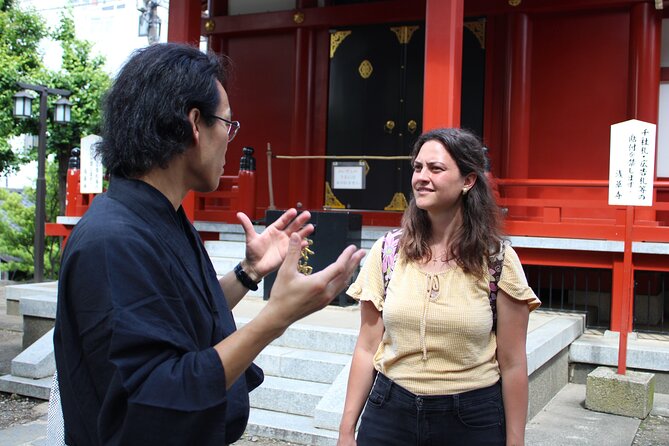
Asakusa rewards a slower look. This 90-minute walk with Ryo, an English-speaking Japanese comedian and former rickshaw driver, gives you more than a quick photo stop at Senso-ji. I like the mix of famous sights and smaller religious sites, and I like how Ryo explains Japanese customs in plain, local terms. The humor adds a personal touch without changing the main focus: understanding Asakusa.
The small group size, limited to eight people, makes it easier to ask questions and hear the guide. The $31 price is fair for a focused introduction to one of Tokyo’s most historic districts, though you should know the tour follows a set route and does not stop for food or souvenir shopping. One mixed experience also suggests that Ryo’s energy can vary, so book this for his local insight and cultural explanations more than for a nonstop comedy performance.
In This Review
- What makes this Asakusa walk worth your time
- Starting beside the Sumida River
- Tokyo Skytree, Asahi Beer, and the free viewpoint
- Kaminarimon Gate, Asakusa’s famous entrance
- Nakamise Shopping Street and the story behind Senso-ji
- Asakusa Shrine beside a Buddhist temple
- Small temples, shrines, and Buddhist statues
- Senso-ji Temple and the final stop
- How Ryo’s guiding style affects the experience
- Is $31 a fair price for 90 minutes?
- Who should book this Asakusa experience?
- Practical tips for getting more from the walk
- Should you book the Asakusa walking tour?
- FAQ
- How long is the Asakusa walking tour?
- How much does the tour cost?
- Where does the tour meet?
- How close is the meeting point to Asakusa Station?
- What language does the guide speak?
- Who leads the tour?
- Does the tour include food or shopping stops?
- What places are included on the route?
- Can I cancel the booking?
What makes this Asakusa walk worth your time
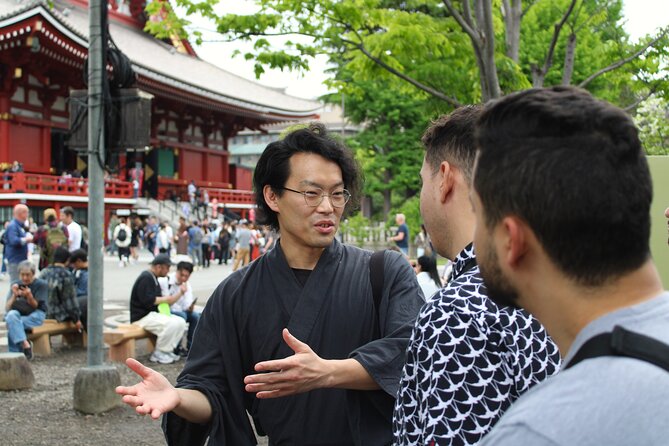
- Ryo’s local connection: He spent six years working in Asakusa as a rickshaw driver and knows the area from daily experience.
- A useful cultural contrast: You see a Buddhist temple and a Shinto shrine side by side, with explanations of how Japanese people relate to both traditions.
- An early Tokyo view: Before reaching Senso-ji, you see Tokyo Skytree, the Asahi Beer Company building, and Asakusa from the top of a nearby building at no extra charge.
- Small religious sites: The route includes more than Kaminarimon Gate and Senso-ji, with statues of Buddhist deities and smaller temples and shrines.
- A compact schedule: The advertised length is 90 minutes, making this easy to fit into a first day in Tokyo.
- Flexible booking: You can cancel up to 24 hours before the start for a full refund and reserve without paying immediately.
Starting beside the Sumida River
The meeting point is in front of Tokyo Cruise, the water bus station near Asakusa Station. From the Tokyo Metro Ginza Line station, it is about a one or two minute walk, which makes the start easy to find if you arrive by subway.
You need to arrive five minutes early. The group leaves on time, and the guide cannot wait for late arrivals. That rule matters in Asakusa, where station exits, crowds, and large streets can make a short walk take longer than expected.
The opening location near the Sumida River gives the tour a useful sense of place. Asakusa is not simply a temple district. It sits beside the river, with old entertainment streets, religious buildings, shopping lanes, modern towers, and busy transport links all packed into a walkable area.
Ryo begins by pointing out nearby sights before taking you toward Senso-ji. This is a good choice because it helps you understand the district as a whole rather than treating the temple as an isolated attraction.
More Walking Tours in Tokyo
- Tokyo Tsukiji Fish Market Food and Culture Walking Tour
★ 5.0 · 3,184 reviews - Tokyo: Imperial Palace and Shogun Historical Walking Tour
★ 5.0 · 2,251 reviews - Tokyo: Shinjuku Local Bar and Izakaya Guided Walking Tour
★ 4.9 · 1,794 reviews
Tokyo Skytree, Asahi Beer, and the free viewpoint
Early in the walk, Ryo shows you Tokyo Skytree and the Asahi Beer Company building. These are easy sights to spot on your own, but a guide adds value by connecting them to the view and to Asakusa’s changing identity.
Tokyo Skytree gives the district a modern reference point. Senso-ji represents centuries of religious and local life, while the tower represents present-day Tokyo. The Asahi building adds another recognizable marker near the river, helping you orient yourself as you move through the neighborhood.
You also visit the top of a nearby building for a view over Asakusa. There is no extra charge for this viewpoint. It is a small but useful part of the tour, especially if this is your first time in the area and you want to see how the temple district fits together before walking through it.
Do not expect a full observation deck experience. The value here is orientation, not height or a long photo session. Since the full tour lasts only 90 minutes, this stop is brief and practical.
Kaminarimon Gate, Asakusa’s famous entrance
The route then reaches Kaminarimon Gate, the large entrance associated with Asakusa. Its giant lantern makes it one of Tokyo’s easiest landmarks to recognize, and it is often the first image people associate with Senso-ji.
This is the natural point for photographs, but the guide gives the gate more meaning than a quick picture. Ryo explains the role of the entrance and helps place it within the larger approach to the temple.
The area around Kaminarimon can be crowded. A small group helps because you are less likely to lose the guide, but you should still keep an eye on the meeting point and listen for instructions. The tour is designed for walking and sightseeing, not for lingering in one place for a long photo session.
I like having this stop early in the route. You see the famous symbol, then continue beyond the obvious view. That keeps the walk from becoming a simple checklist of Asakusa’s best-known buildings.
Nakamise Shopping Street and the story behind Senso-ji
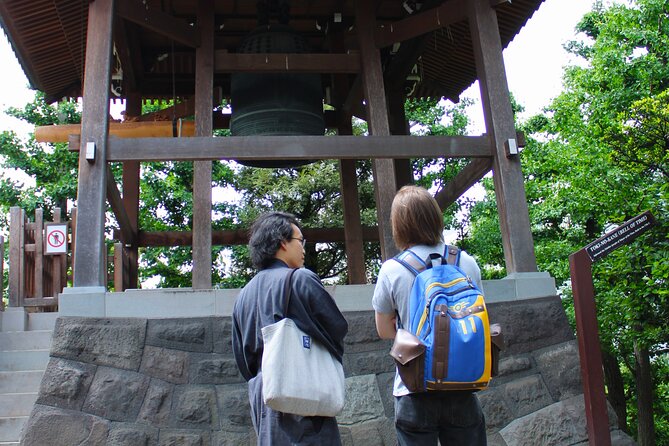
From Kaminarimon, you walk along Nakamise Shopping Street toward the temple. The street leads visitors directly into the Senso-ji complex and is lined with shops selling souvenirs, snacks, and traditional items.
This tour does not stop for shopping or food. That may disappoint you if you want to sample melon pan or browse at leisure, but it keeps the group moving and protects the short schedule. Ryo can recommend places to return to after the walk. One participant especially liked a melon pan purchased on his recommendation, so it is worth asking for food suggestions at the end.
Nakamise is also where Ryo explains the origin of Senso-ji using illustrations. This is one of the strongest parts of the walk because the story gives the buildings around you a clear purpose.
He explains how Senso-ji has been supported by many kinds of people over time, from local residents to powerful generals from different periods. That detail helps you see the temple not just as an old religious site, but as a place maintained through changing eras and communities.
The illustrations are useful if you prefer a story with visual support. Instead of asking you to remember a long list of names and dates, Ryo can point to images while explaining how the temple developed.
A completely different kind of day out:
- Tokyo Disney Resort – Tokyo Disneyland & Tokyo DisneySea Park Tickets
★ 4.8 · 99,488 reviews - SHIBUYA SKY Ticket
★ 4.7 · 46,509 reviews - JR Whole Japan Rail Pass
★ 4.8 · 29,150 reviews - Mt Fuji and Hakone 1-Day Bus Tour Return by Bullet Train
★ 5.0 · 26,383 reviews
Asakusa Shrine beside a Buddhist temple
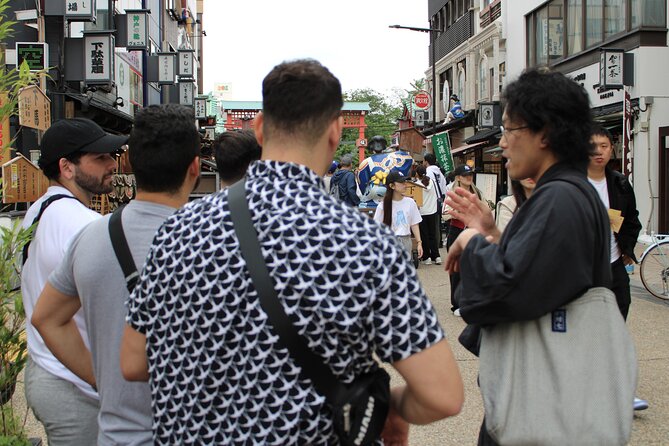
One of the most useful cultural lessons comes from seeing Asakusa Shrine close to Senso-ji Temple. The two belong to different religious traditions, yet they share the same historic area.
Senso-ji is Buddhist, while Asakusa Shrine is Shinto. For many visitors, this pairing raises an important question: how can both traditions exist beside each other? Ryo explains Japanese religious views and the way people may take part in Buddhist and Shinto customs without treating them as mutually exclusive choices.
This is exactly the kind of context that is hard to gain from a solo walk. You can read the names of the buildings and take photographs, but it is less easy to understand how the sites relate to one another or why both matter.
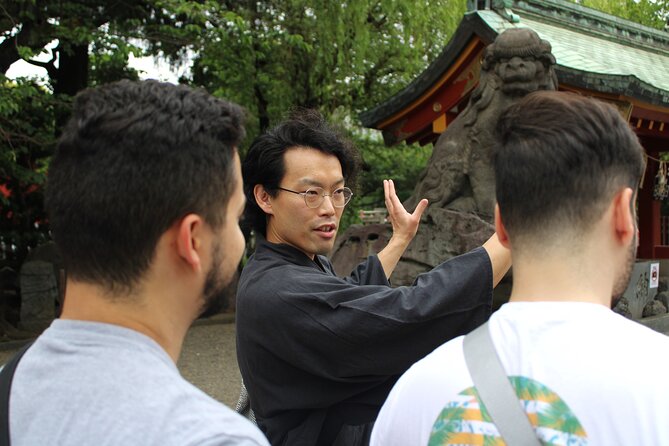
Asakusa Shrine is a quieter counterpoint to the larger temple approach. The route gives you time to look at the site and ask questions, though the 90-minute format means the stop remains focused rather than leisurely.
If cultural explanation is your main reason for booking, this part gives the tour its strongest value. Ryo is not only pointing out buildings. He is helping you read the religious character of the neighborhood.
Small temples, shrines, and Buddhist statues
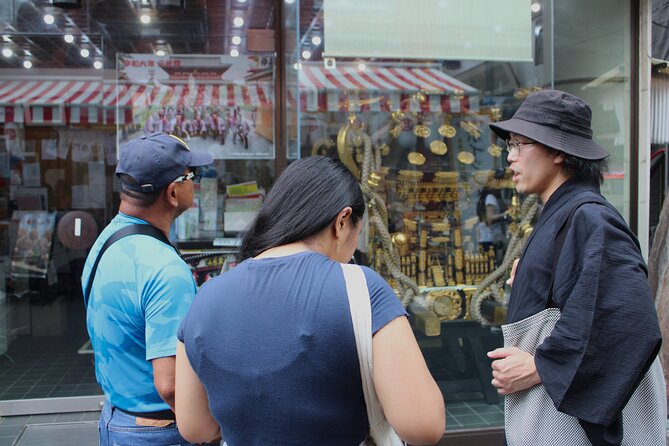
The walk includes several smaller temples and shrines around the main complex. These sites may not be the first places you would choose from a map, but they give the area more depth.
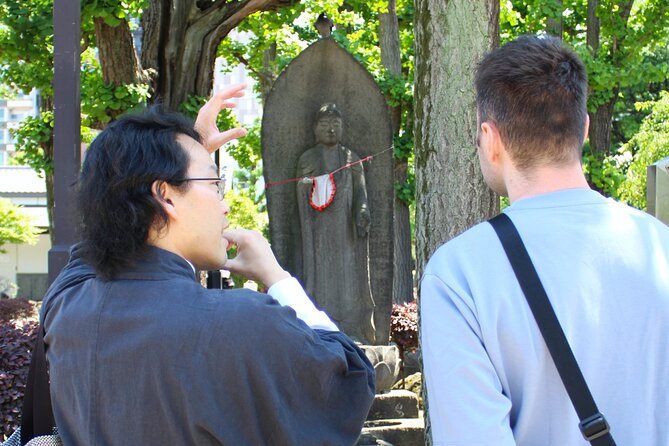
Ryo points out statues of Buddhist deities and explains their significance. That can make a major difference when you are looking at a courtyard filled with unfamiliar figures. Instead of seeing every statue as simply decorative, you get a basic guide to what the figures represent and why people may visit them.
The smaller stops also provide a break from the main flow of Nakamise and Senso-ji. You get a sense of Asakusa as a working religious district, not only as a famous sightseeing zone.
I would keep your expectations realistic. The tour does not promise lengthy visits to every temple or shrine, and the exact amount of time at each spot depends on the group and the guide’s explanations. The strength is the range of places covered within a short route.
Several high ratings praise Ryo for pointing out details that are easy to miss. That fits the design of this walk. You are not being taken far across Tokyo. You are being shown more of what is already close at hand.
Senso-ji Temple and the final stop
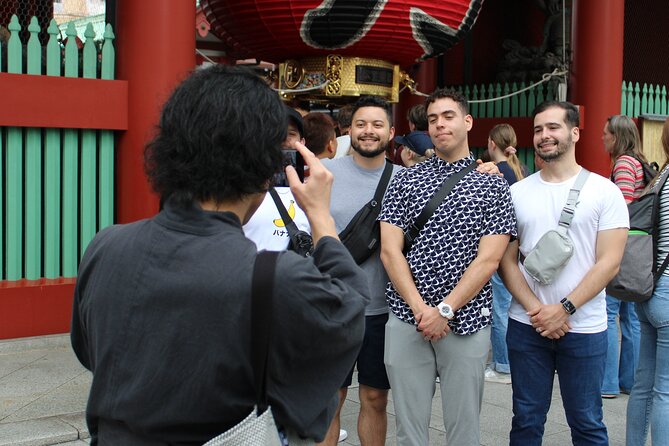
The tour finishes at the main hall of Senso-ji. This is the main religious and visual payoff of the route, and arriving after the earlier explanations makes the site easier to appreciate.
You have already seen Kaminarimon, walked through Nakamise, learned about the temple’s origins, and visited Asakusa Shrine. By the time you reach the main hall, the complex has a story rather than just a grand entrance and a famous photograph.
Ryo’s explanations focus on history and culture, with humor drawn from his work as an English-speaking comedian. His background as a rickshaw driver also matters here. Six years of working in Asakusa gave him time to observe the streets, answer questions, and learn how to introduce the district to people from outside Japan.
The comedy is best understood as an extra layer. You should not book this expecting a formal stand-up show. The appeal is a local guide who uses jokes and a Japanese perspective to make cultural points easier to remember.
The advertised tour length is 90 minutes. One booking experience lasted closer to two hours, so I would avoid scheduling a tight connection immediately afterward. The official plan ends at the main hall, and the guide does not escort you to a station or hotel.
How Ryo’s guiding style affects the experience
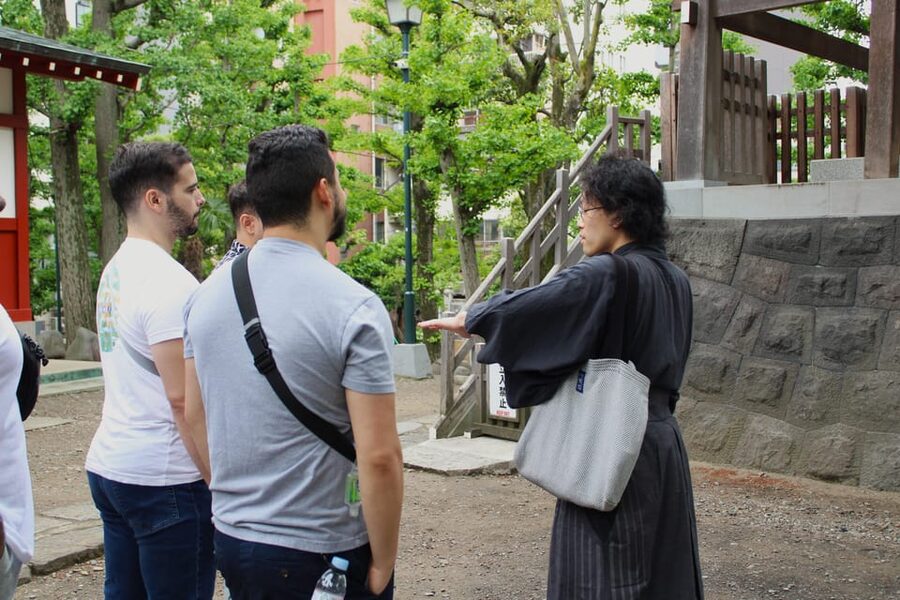
Ryo’s strongest qualities are his local experience, patience with questions, and ability to explain Japanese history in English. Several high ratings praise his detailed explanations, his kindness, and his willingness to share local suggestions.
You may also get a private or nearly private experience if few people book the same time. One person described being alone with Ryo and valued the chance to ask many questions. With a maximum of eight people, even a full group should remain more personal than a large bus tour.
The main qualification is energy. One lower rating found Ryo pleasant but not especially enthusiastic as a guide. That is useful to keep in mind. His style may feel calm and conversational rather than loud or theatrical.
For me, that makes this a better match for people who want history, local details, and cultural questions answered. If you need constant jokes, fast movement, or a performance-style guide, you may find the tone restrained.
The overall score of 4.6 from 18 ratings suggests that most people find the experience worthwhile, but the range of comments points to a clear lesson: your enjoyment depends partly on what you want from the guide.
Is $31 a fair price for 90 minutes?
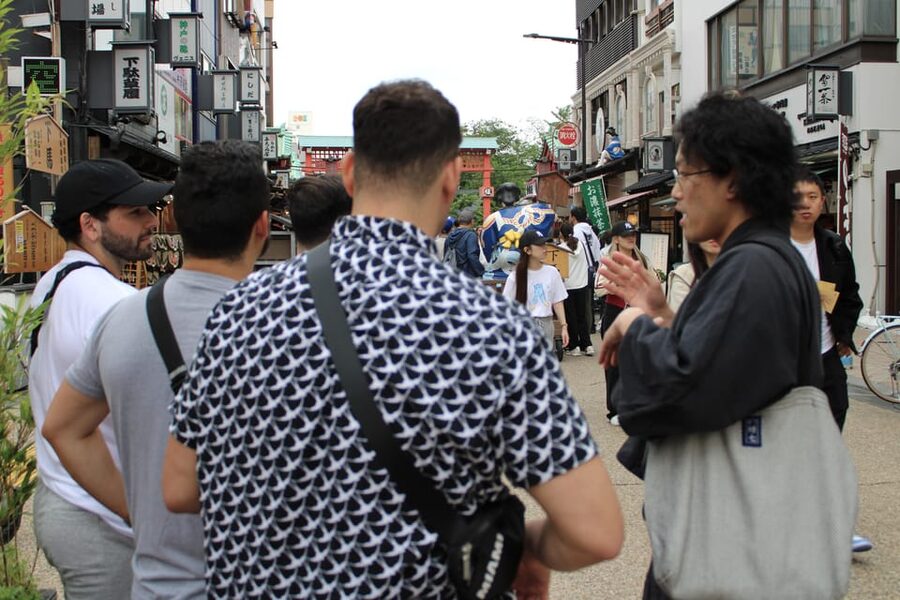
At $31 per person, the tour sits in a reasonable range for a small-group guided walk in central Tokyo. You are paying for Ryo’s time, English and Japanese guiding, a limited group size, local explanations, and a structured route through Asakusa’s major religious sites.
The price is strongest if you are visiting Asakusa for the first time. A guide can help you understand the layout quickly, explain customs that might otherwise remain unclear, and point out smaller sites you could pass without noticing.
The value is weaker if you have already researched Senso-ji closely or planned a detailed self-guided visit. The major sights are public, and you can see Kaminarimon, Nakamise, Asakusa Shrine, and Senso-ji without paying an admission fee for the walk itself.
Still, the cost is not mainly for access. It is for interpretation. If you want context rather than just photographs, $31 is a fair trade for a compact introduction.
The free viewpoint and local shopping advice add a little extra value. Since the tour does not include food or purchases, keep money and time aside if you want to return to Nakamise afterward.
Who should book this Asakusa experience?
I would recommend it most strongly to first-time visitors to Tokyo who want an easy introduction to Asakusa. It also suits you if you enjoy asking questions about religion, customs, temple symbols, and local history.
The walk is a good fit for:
- Solo visitors who want company without joining a large group
- Couples and families interested in Japanese culture
- People who prefer a short morning or afternoon activity
- Anyone who wants an English-speaking local guide
- Visitors who find religious architecture difficult to interpret alone
- People who enjoy gentle humor rather than a formal comedy show
You may want to skip it if you mainly want time for eating and shopping. The route does not pause for those activities, and you will need to return to Nakamise later.
It is also less suitable if you have only a few minutes between trains or bookings. Arrive early, expect the group to leave on time, and allow some flexibility after the scheduled finish.
The walk is listed as wheelchair accessible, which may make it a useful choice for people checking access needs. The supplied details do not explain every surface or restroom arrangement, so you should still confirm any specific mobility questions before booking.
Practical tips for getting more from the walk
Arrive at Tokyo Cruise five minutes early, and use the nearby Tokyo Metro Ginza Line station as your navigation reference. The meeting point is close, but Asakusa has several transport options and station exits.
Wear comfortable shoes. The route is only 90 minutes, but it includes several stops and outdoor walking between the river area, gate, shopping street, shrine, and temple.
Ask Ryo about food and souvenirs at the end rather than trying to shop during the tour. The route is timed, and stopping for purchases could cause you to miss the group.
Bring questions about Japanese religious practice. The pairing of Asakusa Shrine and Senso-ji creates a natural opening for a useful conversation, and Ryo’s local perspective is one of the main reasons to book.
If you want photographs without rushing, consider returning to the area afterward. The guided walk gives you orientation and context, while your second visit can focus on snacks, shopping, and details you did not have time to examine.
Should you book the Asakusa walking tour?
Book this tour if you want cultural context in a small group, especially on your first visit to Tokyo. Ryo’s six years working in Asakusa, his explanations of Buddhist and Shinto traditions, and his local recommendations give the walk more value than a simple route between famous sights.
Do not book it mainly for a comedy routine or a food tour. The humor is part of Ryo’s style, but the experience is first a guided history and culture walk. At $31, it is a sensible choice if you value explanation, orientation, and a friendly local voice. If you already know Senso-ji well, spend that time exploring the area at your own pace instead.
FAQ
How long is the Asakusa walking tour?
The advertised duration is 90 minutes. One booking experience lasted about two hours, so it is sensible to leave some extra time afterward.
How much does the tour cost?
The listed price is $31 per person.
Where does the tour meet?
The meeting point is in front of Tokyo Cruise, the water bus station near Asakusa Station.
How close is the meeting point to Asakusa Station?
It is about a one or two minute walk from Asakusa Station on the Tokyo Metro Ginza Line.
What language does the guide speak?
The tour is available in English and Japanese.
Who leads the tour?
The guide is Ryo, an English-speaking Japanese comedian who worked as a rickshaw driver in Asakusa for six years.
Does the tour include food or shopping stops?
No. The route does not stop for food or souvenir shopping, but Ryo can provide recommendations for shopping afterward.
What places are included on the route?
The walk includes Sumida Park, Kaminarimon Gate, Nakamise Shopping Street, Asakusa Shrine, and Senso-ji Temple. It finishes at the main hall.
Can I cancel the booking?
You can cancel up to 24 hours in advance for a full refund. You can also reserve now and pay later.
Just added in Tokyo
- Japanese Home Cooking Class & Walk in Todoroki Temple Tokyo★ 5.0 · 88 reviews
- A One-of-a-Kind Sushi Experience in a Special Place of Japan★ 5.0 · 15 reviews
- Tokyo Cute Bento Cooking Class – Make a Kawaii Character Lunchbox★ 5.0 · 126 reviews
- Japan Tokyo Tower Observatory Deck E-Ticket★ 4.0 · 34 reviews
- Catch a Baseball Game in Tokyo with a Local – Tickets Included★ 5.0 · 24 reviews
- JDM Experience with Fast&Furious RX-7 (English speaking Driver)★ 5.0 · 57 reviews
- Tokyo Private Day Tour by Car with English speaking Driver Guide★ 4.0 · 29 reviews
- Japan Classic 10 Day – One Life Adventures★ 5.0 · 129 reviews
Walking Tours, compared.
Kyoto Geisha Walking Tour: Gion District & Hidden Gems
Read our review →
Tokyo Tsukiji Fish Market Food and Culture Walking Tour
Read our review →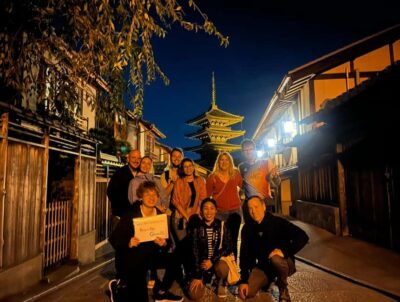
Gion Magical Night Walking Tour with Geisha Trivia
Read our review →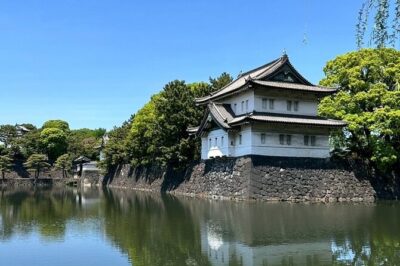
Imperial Palace and Shogun Historical Walking Tour
Read our review →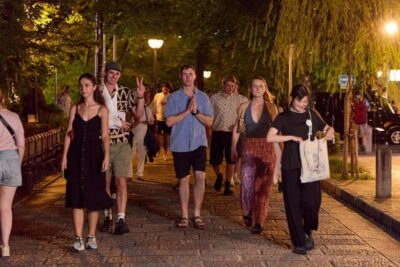
Gion Geisha District Walking Tour – Stories of Geisha
Read our review →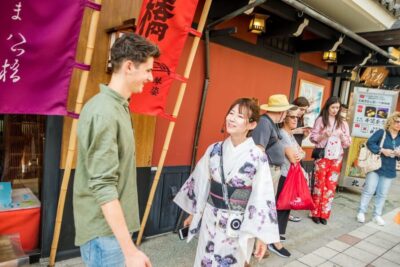
Shinjuku Local Bar and Izakaya Guided Walking Tour
Read our review →
Browse the lists this tour appears in