
Reviewed · CASTLES AND HISTORIC SITES
Tokyo: Edo Castle & East Garden of the Imperial Palace Tour
Tokyo’s past is hiding in plain sight. This two-hour walk through the Imperial Palace East Gardens follows the former grounds of Edo Castle, where shoguns once ruled Japan. I like the way the tour connects quiet gardens, stone walls, castle remains, and imperial history instead of treating them as unrelated sights. I also like the guides’ use of pictures, stories, and cultural details to make a mostly open-air visit easier to understand. Naoko, Hitoshi, Shigeru, Masahito, and Mikio have all earned especially warm praise for their clear English and patient manner.
The main catch is simple: you do not enter the Imperial Palace itself, and the East Garden is closed on Mondays and Fridays. At $42 per person, you are paying for interpretation rather than admission, since the garden is free to enter. That can be good value if you want context, but less so if you prefer to wander alone or are comparing the cost with a full-day trip to Nikko or Mount Fuji.
In This Review
- Key Points to Know Before You Go
- Starting at Wadakura Fountain Park
- Entering the East Gardens of Edo Castle
- Stone Walls, Castle Remains, and Old Entrances
- Gardens With More Than Pretty Scenery
- Stories That Make the Site Easier to Read
- The Koi Fish and Small Details
- How the Two Hours Feel
- Is $42 a Fair Price?
- Who Will Get the Most From This Walk?
- Practical Details Before Booking
- Should You Book the East Gardens Tour?
- FAQ
- How long does the tour last?
- Where does the tour meet?
- Where does the tour finish?
- Is the tour conducted in English?
- Does the tour enter the Imperial Palace?
- Which days is the East Garden closed?
- Is admission to the East Gardens included?
- Can I bring Japanese knives to the tour?
Key Points to Know Before You Go
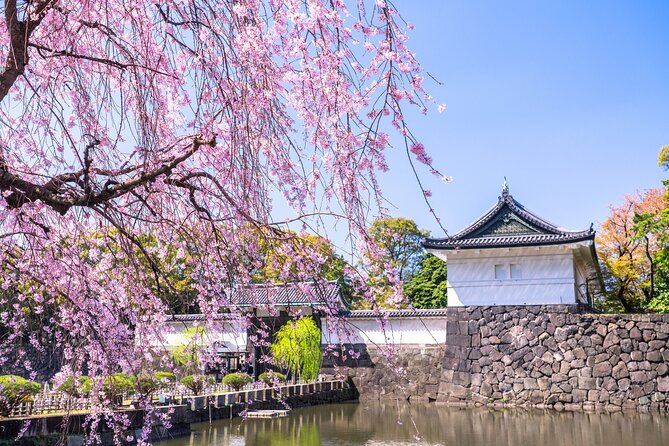
- The walk takes place on former Edo Castle grounds: You will see old walls, castle remains, gates, and gardens tied to the shogun era.
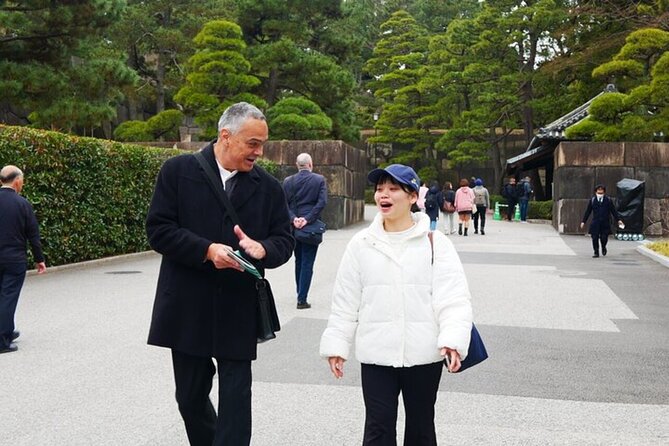
- The English guides are the main attraction: They explain Japanese history and culture at a steady pace, often using printed pictures and visual aids.
- The tour starts and ends at Wadakura Fountain Park: Look for the guide holding a sign marked Gotcha.
- The Imperial Palace interior is not part of the visit: The route covers the East Gardens only.
- Allow for a baggage inspection: Items considered potential weapons, including Japanese knives, should be stored before the meeting.
- The pace suits curious, unhurried walkers: Several guides have been praised for helping seniors, families, and a wheelchair user.
Starting at Wadakura Fountain Park
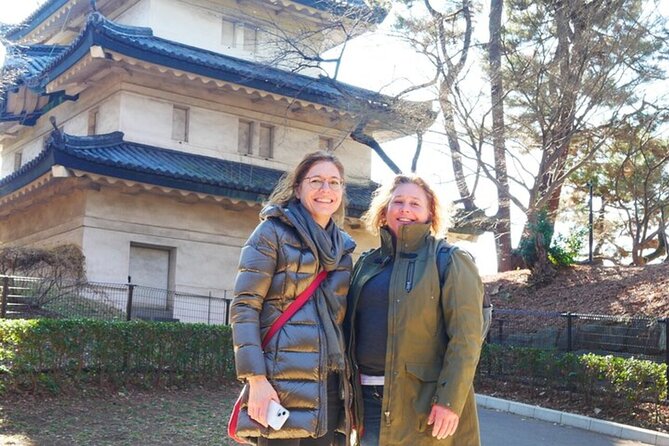
The meeting point is in front of the fountain at Wadakura Fountain Park. Your guide will hold a sign marked Gotcha, which makes the first meeting fairly easy to spot. Clear meeting instructions have been one of the strongest practical points of this experience, but you should still arrive with enough time to find the fountain without rushing.
The walk returns to the same area after two hours. That is useful if you want to continue toward another central Tokyo sight, return to your hotel, or let your guide point you toward public transportation. Several guides have gone beyond the official route by helping people reach a subway station or their next activity.
From the start, expect a walking tour rather than a formal palace visit. You will be outdoors, moving through broad paths, open spaces, garden areas, and historic remains. Comfortable shoes matter more than stylish ones. The tour is described as leisurely, and the strongest guide feedback points to a relaxed pace with time for questions and short stops.
More Castles and Historic Sites in Tokyo
- Tokyo: Imperial Palace and Shogun Historical Walking Tour
★ 5.0 · 2,251 reviews - Tokyo Castle & Imperial PalaceーShogun Walking Tour
★ 4.7 · 1,068 reviews - Tokyo: Samurai Ninja Museum Guided tour and Experience
★ 4.6 · 1,010 reviews
Entering the East Gardens of Edo Castle
The East Gardens occupy part of the former main grounds of Edo Castle. This is the central idea of the tour: you are not simply looking at a pretty public garden. You are walking through the place where the shogun government operated and where major parts of Japanese political history unfolded.
The gardens do not offer a complete castle preserved in its original form. That is important to understand before booking. Much of the original structure is gone, so the experience depends on your ability to read the site through stonework, foundations, walls, open ground, and the guide’s explanation.
This is where a good guide changes the visit. Mikio has used photographs and old images to show how the area looked in earlier periods, helping you connect present-day paths with the vanished castle complex. Other guides have explained the roles of shoguns, daimyo, ninjas, and the imperial family in plain English.
I like this approach because it gives you a sense of scale and power without turning the walk into a lecture. You can stop to look at a wall or a remaining structure while hearing why it mattered. The site becomes easier to picture when the guide supplies the missing pieces.
Stone Walls, Castle Remains, and Old Entrances
The route includes surviving sections of the old castle grounds and traces of former buildings. One stop includes the ministers’ entrance, along with explanations of how the site was used and what the buildings once represented.
You should not expect a sequence of intact rooms or lavish interiors. The physical remains are limited in places, and the guide often has to explain what is no longer there. For some people, that makes the visit less dramatic than a preserved castle such as Himeji. For others, the open setting creates a more thoughtful experience because you are standing in the actual footprint of a lost complex.
The value lies in the combination of evidence and explanation. A stone base may seem modest on its own, but a guide can show how it fitted into the castle’s wider plan. A gate can lead into a discussion of status, access, and the separation between political power and ordinary life.
The walk also brings together two periods that can be confusing on a first visit: the Edo period under the shoguns and the later imperial use of the palace grounds. Guides such as Shigeru and Masahito have been praised for giving a broad introduction to Japanese history before explaining the specific places along the route.
Gardens With More Than Pretty Scenery
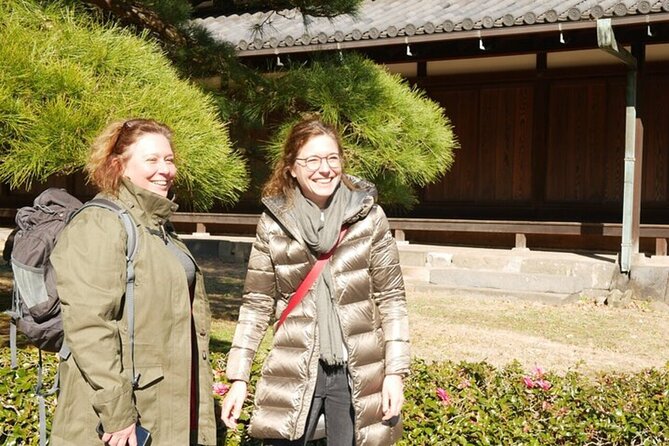
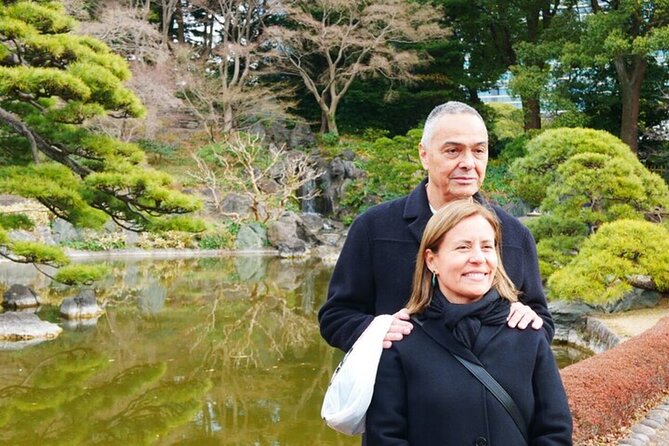
The East Gardens are a welcome change from Tokyo’s towers, traffic, and packed shopping streets. You get open green space, carefully arranged plantings, ponds or water features, and quiet paths on the former castle site. The garden setting gives the tour breathing room, especially if your Tokyo schedule has been heavy on indoor attractions.
Still, the garden is not treated as decoration alone. Your guide may explain the meaning of particular trees and plants, the way the grounds were arranged, and how garden design fit into Japanese culture. This is one reason the tour works well for people who want more than photographs.
The garden also gives you a chance to slow down. Mike described the tour as a lovely, slow-paced walk, and that matches the broader pattern of the experience. You are not being hurried from one photo stop to another. You have time to listen, look, ask questions, and take pictures.
Seasonal beauty can add to the visit, though the experience should not be booked only for blossoms. In April, Masahito took one group to cherry blossoms in an adjacent park, while other guides pointed out attractive garden areas and good spots for photographs. Those extras appear to depend on the guide, the season, and the day, so treat them as a pleasant possibility rather than a promise.
A completely different kind of day out:
- Tokyo Disney Resort – Tokyo Disneyland & Tokyo DisneySea Park Tickets
★ 4.8 · 99,488 reviews - SHIBUYA SKY Ticket
★ 4.7 · 46,509 reviews - JR Whole Japan Rail Pass
★ 4.8 · 29,150 reviews - Mt Fuji and Hakone 1-Day Bus Tour Return by Bullet Train
★ 5.0 · 26,383 reviews
Stories That Make the Site Easier to Read
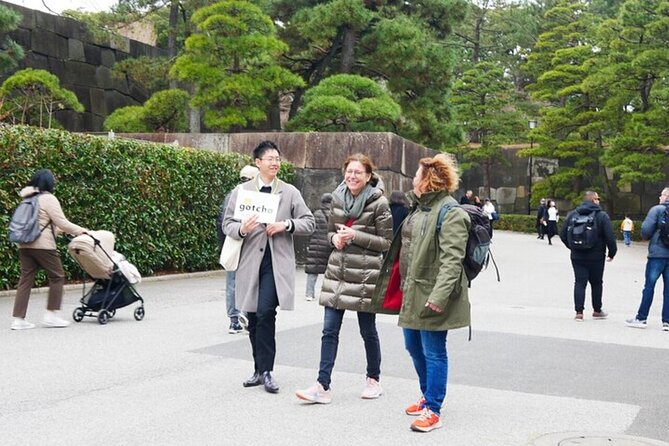
The best part of this walk is the storytelling. The guides explain the castle grounds, shogun rule, the imperial family, Japanese culture, and details that are easy to miss without help.
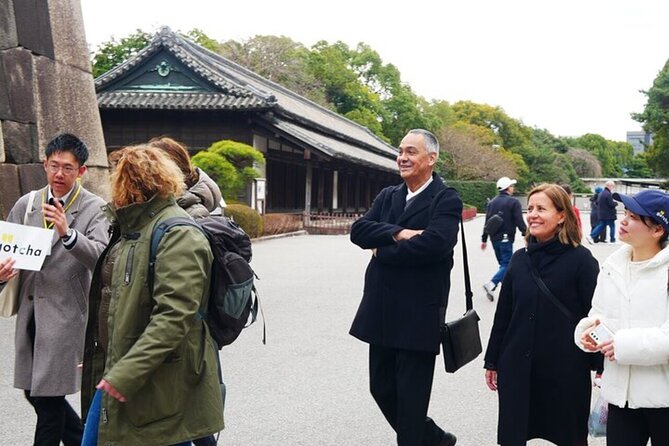
Hitoshi has been repeatedly praised for combining a general history of Japan with specific facts about the palace grounds. His explanations are described as clear, friendly, and easy to follow. Naoko has also received strong praise for making history interesting and fun, using visual material and answering questions patiently.
That personal style matters because history at the East Gardens is not always obvious. You may see a wall, a garden feature, or the remains of a building without knowing why it deserves your attention. A guide gives each stop a reason.
The tour can also work for families. Hitoshi made the experience accessible to a nine-year-old, while another guide used pictures and visual explanations to help the group follow along. If you are visiting with children, the mix of stories, castle facts, and open space should be easier to manage than a long museum tour.
English ability has been praised across many guide assignments. Shigeru, Hirashima, Masahito, Ayako, Mari, Miho, and others have been described as easy to understand and well prepared. The exact guide is not guaranteed, but the repeated pattern suggests that the operator places real emphasis on English communication.
The Koi Fish and Small Details
The tour highlights a special breed of koi fish, described as a must-see feature. If koi interest you, listen carefully when the guide points them out, since the fish add a memorable detail to an otherwise very large historic site.
This is a good example of why a guided walk can be worthwhile. You might notice the water and the fish on your own, but you may not know what makes this breed distinctive or how it fits into the garden experience. The guide can turn a quick glance into a small cultural lesson.
Other small touches have also helped make the walk personal. Shigeru took photographs for several people and even gave one group a folded origami crane. Naoko prepared farewell gifts for another group. These gestures are not part of the formal inclusions, so do not book expecting gifts. They do show the friendly, attentive style that many people have valued.
How the Two Hours Feel
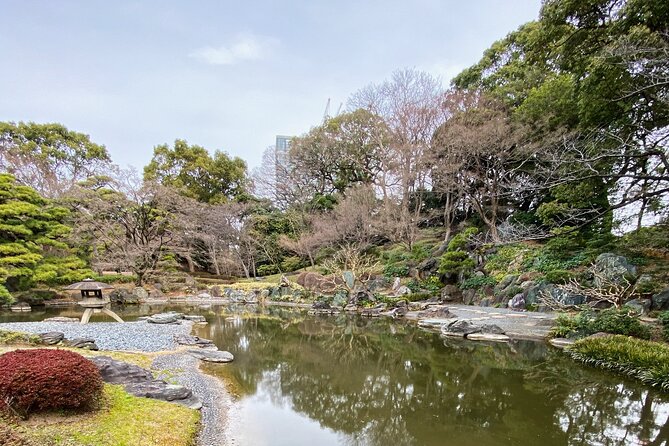
Two hours is a sensible length for this site. It is long enough to cover the main garden areas and historical points, yet short enough to fit into a busy Tokyo day.
The pace is particularly suitable if you want to stop often or ask questions. Senior groups have found guides patient, and Hitoshi assisted a visitor using a wheelchair. Mikio adjusted the pace for a pair who wanted to walk slowly and take regular breaks. That said, the experience remains a walking tour, so you should tell the guide about your needs at the beginning.
Rain does not cancel the history, but it can affect the pleasure of an outdoor visit. One group enjoyed the tour despite heavy rain, while another noted that sunshine would have improved the day. Bring suitable weather protection and keep your expectations realistic. The gardens are at their best when you can linger outdoors, but the guide’s explanations still provide value in poor weather.
The tour begins and ends at Wadakura Fountain Park, which keeps the logistics simple. It is also useful that several guides have helped people navigate toward a metro station afterward. That assistance is informal, not a guaranteed part of the schedule, but it can be welcome in a city where station routes can feel like a puzzle.
Is $42 a Fair Price?
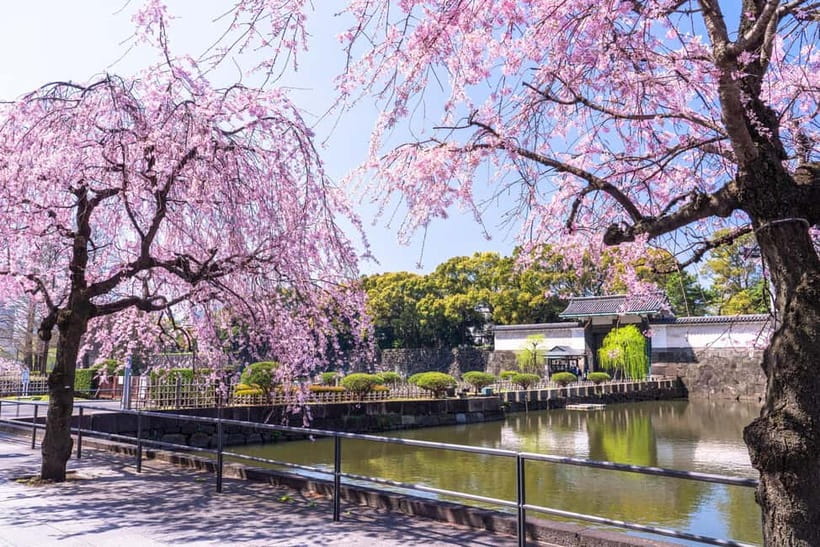
At $42 per person, the price deserves a close look. Entry to the East Gardens is free, so the fee pays for the English-speaking guide, the planned route, historical interpretation, and the convenience of having someone explain what you are seeing.
I think the price is fair for first-time visitors who want a clear introduction to Edo Castle and Japanese history. You are not paying for exclusive access or a palace interior. You are paying to make sense of a large site whose remains can be easy to overlook.
The comparison with other Tokyo activities is less favorable if your main goal is simply to walk through a garden. One person reasonably noted that the same money could go toward a full-day trip to Nikko or Mount Fuji. Those excursions offer more hours and more distance, though they are very different experiences and usually require a larger time commitment.
Book this tour for understanding, not for quantity. If you value a patient guide, cultural context, good questions, and a calm walk through an important site, the fee makes sense. If you are comfortable reading signs and exploring independently, you may prefer to enter the free gardens on your own.
Free cancellation up to 24 hours before the start and the option to reserve now and pay later reduce the risk of fitting it into a changing Tokyo schedule. Still, check the operating day carefully, since the East Gardens close on Mondays and Fridays.
Who Will Get the Most From This Walk?
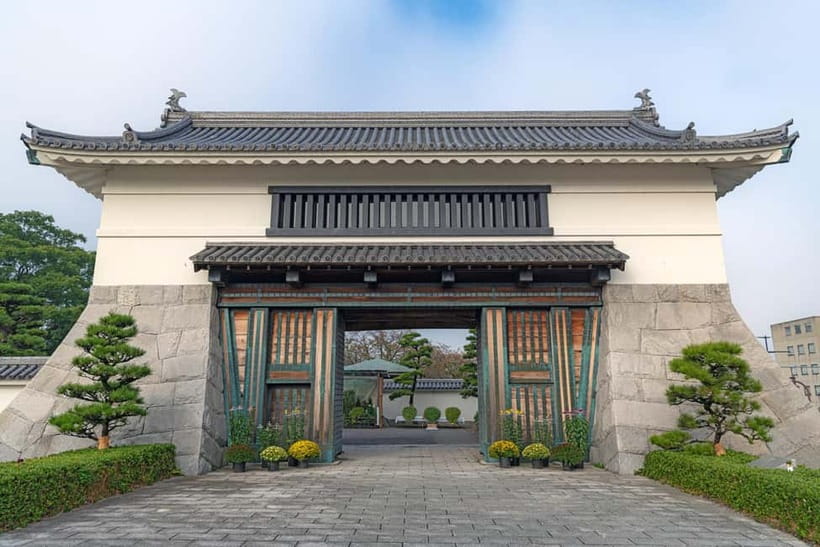
I would recommend this tour to first-time visitors who want a practical introduction to Japan’s political and imperial past. It also suits people who enjoy gardens but want to know what lies beneath the scenery.
Families can benefit from the visual aids and stories, especially if children are interested in castles, warriors, or unusual cultural details. Seniors and people who prefer a slower pace should mention their needs to the guide, since several guides have shown patience and flexibility.
It is less suitable if you expect to enter the Imperial Palace, see lavish interiors, or explore a fully preserved castle. The tour remains outside and focuses on the East Gardens. You should also avoid scheduling it for Monday or Friday.
Practical Details Before Booking
The tour is conducted in English and lasts two hours. The guide is included, as is the walking tour of the East Gardens.
The Inner Palace is not open to the public on this experience. Do not confuse the East Gardens with a full palace tour. You will see the former Edo Castle grounds, not the private interior of the Imperial Palace.
At the entrance, visitors are subject to a baggage inspection. If you plan to buy Japanese knives or similar objects at Tsukiji, Asakusa, or elsewhere before the tour, place them in a coin locker or another secure storage location first. This is an easy detail to miss, and it could save you an awkward delay at the gate.
Should You Book the East Gardens Tour?
Book it if you want the East Gardens to make sense. The site is beautiful, but the old walls, foundations, gates, and garden features become far more interesting when someone explains their place in the story of Edo and imperial Japan.
I especially like this tour for its calm pace and human guides. Hitoshi, Naoko, Shigeru, Masahito, Hirashima, and Mikio have each been praised for clear English, patience, useful visual material, and extra help with photographs or onward directions. That consistency is a strong reason to choose a guide rather than simply enter alone.
Skip it if you mainly want palace interiors or the biggest possible sightseeing return for $42. The garden admission is free, and a full-day excursion may offer more dramatic scenery. For a short, focused history walk in central Tokyo, though, this is a sensible and often rewarding choice.
FAQ
How long does the tour last?
The guided walking tour lasts two hours.
Where does the tour meet?
Meet your guide in front of the fountain at Wadakura Fountain Park. The guide will hold a sign marked Gotcha.
Where does the tour finish?
The tour returns to Wadakura Fountain Park.
Is the tour conducted in English?
Yes. The experience includes a live English-speaking guide.
Does the tour enter the Imperial Palace?
No. The tour visits the East Gardens and does not enter the Inner Palace.
Which days is the East Garden closed?
The East Garden is closed on Mondays and Fridays.
Is admission to the East Gardens included?
The tour includes the guided walk and guide. The supplied information does not state a separate garden admission charge, and the garden is described as free to enter.
Can I bring Japanese knives to the tour?
Visitors are subject to a baggage inspection when entering the palace grounds. If you buy Japanese knives or other objects that could be used as weapons before the tour, store them in a coin locker or similar location before meeting the guide.
Just added in Tokyo
- A One-of-a-Kind Sushi Experience in a Special Place of Japan★ 5.0 · 15 reviews
- Tokyo Cute Bento Cooking Class – Make a Kawaii Character Lunchbox★ 5.0 · 126 reviews
- Japanese Home Cooking Class & Walk in Todoroki Temple Tokyo★ 5.0 · 88 reviews
- Japan Tokyo Tower Observatory Deck E-Ticket★ 4.0 · 34 reviews
- Catch a Baseball Game in Tokyo with a Local – Tickets Included★ 5.0 · 24 reviews
- JDM Experience with Fast&Furious RX-7 (English speaking Driver)★ 5.0 · 57 reviews
- Tokyo Private Day Tour by Car with English speaking Driver Guide★ 4.0 · 29 reviews
- Japan Classic 10 Day – One Life Adventures★ 5.0 · 129 reviews
Castles and Historic Sites, compared.

Imperial Palace and Shogun Historical Walking Tour
Read our review →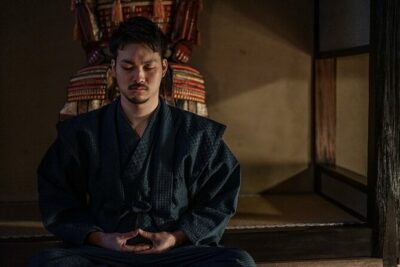
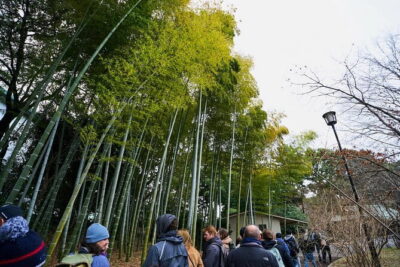
Tokyo Castle & Imperial PalaceーShogun Walking Tour
Read our review →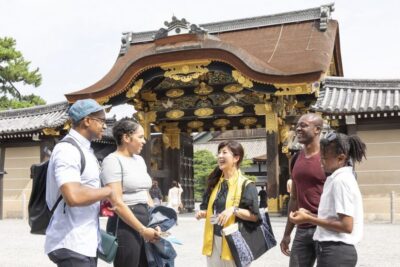
Nijo-jo Castle and Ninomaru Palace Guided Tour
Read our review →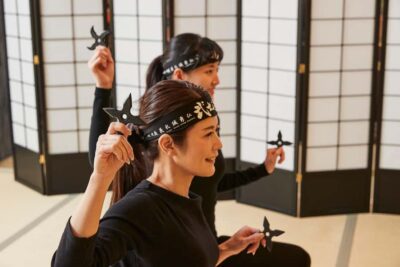
Samurai Ninja Museum Guided tour and Experience
Read our review →Browse the lists this tour appears in