
Reviewed · CASTLES AND HISTORIC SITES
Tokyo: Edo Castle Ruins & Imperial Palace East Garden Tour
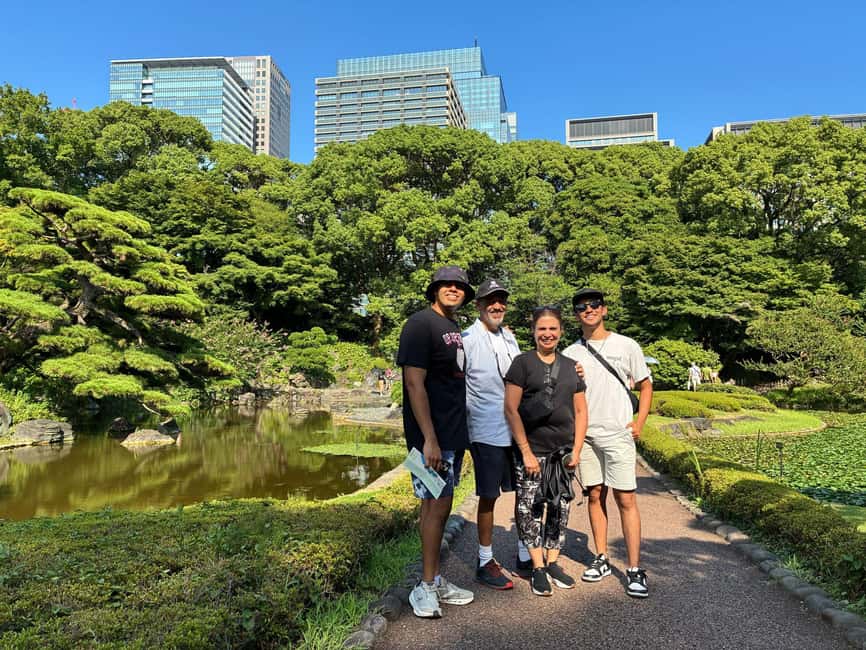
Tokyo’s samurai past is hiding in plain sight. This two-hour walk links the Edo Castle ruins with the Imperial Palace East Gardens, turning moats, gates, stone walls, and garden paths into an easy-to-follow story about shoguns and emperors. I like the clear route and the chance to see places such as Otemon Gate, Hyakunin Bansho, and the Tenshu-dai without having to work out the history alone. I also like the calm finish in Ninomaru Garden, where koi ponds and clipped plantings offer a welcome change from central Tokyo’s busy streets. The main drawback is simple: you cannot enter the palace buildings or the inner grounds, and the experience may feel like a guided park walk if your guide gives only brief explanations.
A good guide makes the difference here. Isao is praised for being friendly and patient with questions, while Mari has been noted for making the history engaging. One less satisfying experience involved a guide who said very little, so I would choose this tour for its small-group format and human explanation, not merely for access to the gardens.
In This Review
- Key details before you book
- Why Edo Castle matters in modern Tokyo
- Starting at Wadakura Fountain and Moat
- Passing through Otemon Gate
- Reading the castle through its guardhouses
- The Edo Castle ruins and Honmaru site
- The Tenshu-dai and the missing castle keep
- Prefectural trees and Suwa no Chaya
- Ninomaru Garden and the koi pond
- What the $37 price really buys
- Who will enjoy this two-hour walk
- FAQ
- Where does the tour meet?
- How long does the tour last?
- What language is the tour conducted in?
- Can I enter the Imperial Palace buildings?
- Does the tour include admission?
- Is hotel pickup included?
- What should I bring?
- Is the tour suitable for wheelchair users?
- Can I cancel for a refund?
- Should you book the Edo Castle tour?
Key details before you book
- The meeting point is the Wadakura Free Rest Area: Look for the guide outside the entrance, holding a yellow sign.
- The route follows the old castle defenses: You will see Otemon Gate, the Ote-San-no-mon ruins, guardhouses, moats, and remnants of Edo Castle.
- The Imperial Palace is not entered: The tour covers the public East Gardens and former castle grounds, not the palace buildings where the Imperial Family resides.
- The two-hour pace is fairly full: There are many stops, with little time for a leisurely visit at each one.
- The best views come from the Tenshu-dai: This former castle keep site gives you a broad view of the surrounding area.
- The tour costs $37 per person: That is fair if you want historical context and questions answered, less compelling if you are happy to walk through a public garden alone.
Why Edo Castle matters in modern Tokyo
Edo Castle was once the power center of Japan’s shoguns. Today, much of the original castle has disappeared, but its scale still comes through in the moats, gates, stonework, and broad open grounds.
That contrast is what makes this visit worthwhile. You are not touring a furnished fortress with rooms full of armor. You are reading the site through the pieces that remain. A guide can explain why a guardhouse mattered, how visitors moved through the gates, and how the castle worked as a protected seat of power.
The later Imperial Palace adds another layer. The same grounds shifted from shogunal rule to imperial rule, so the walk connects two major chapters of Japanese government. You will not see inside the palace, but the gardens and old castle foundations give you a useful sense of where you are and why the site remains important.
More Castles and Historic Sites in Tokyo
- Tokyo: Imperial Palace and Shogun Historical Walking Tour
★ 5.0 · 2,251 reviews - Tokyo Castle & Imperial PalaceーShogun Walking Tour
★ 4.7 · 1,068 reviews - Tokyo: Samurai Ninja Museum Guided tour and Experience
★ 4.6 · 1,010 reviews
Starting at Wadakura Fountain and Moat
The tour begins outside the Wadakura Free Rest Area. This is a practical meeting spot because it is indoors, easy to recognize, and close to the opening stops. Arrive ready to walk, and look for the yellow sign held by the guide.
The first stop is Wadakura Fountain National Park. The fountain was built to commemorate a royal wedding, giving the opening minutes a link to Japan’s modern imperial family rather than only its feudal past. The guide spends about ten minutes here, which is enough to set the scene without using up too much of the tour.
Next comes Wadakura Moat. The short stop lasts about five minutes, but it helps you understand that the castle was protected by more than walls. Water, gates, checkpoints, and carefully controlled movement all formed part of the defense system.
These first stops are not the most dramatic part of the route. Their value is mainly context. If you arrive expecting an imposing castle building, adjust your expectations early. Edo Castle is best understood as an archaeological and historical site, not a preserved palace.
Passing through Otemon Gate
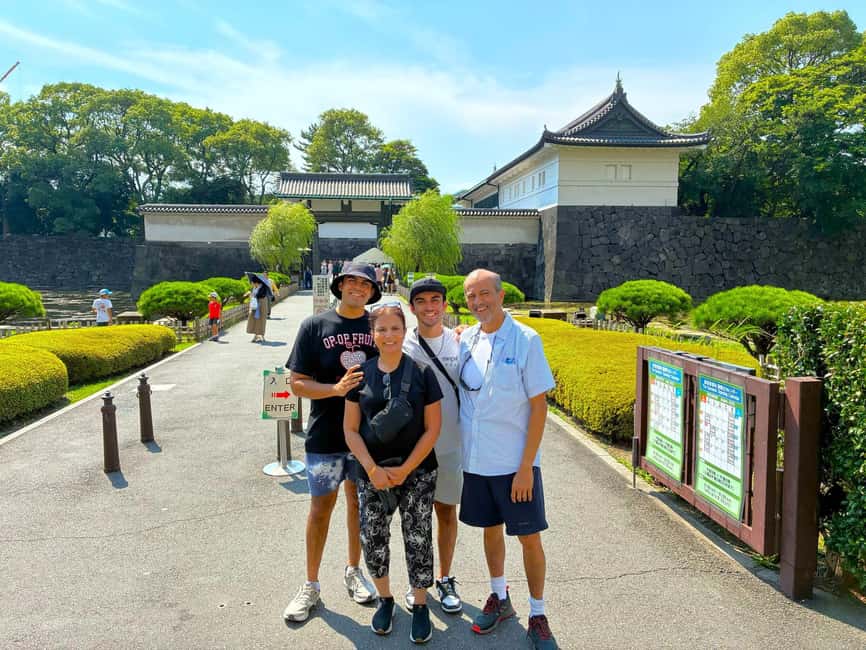
Otemon Gate is one of the tour’s strongest visual moments. It was the principal entrance to the castle, and its size helps explain the importance of the compound. A gate like this was not just an opening in a wall. It was a controlled threshold, designed to slow people down, monitor arrivals, and protect the shogun’s headquarters.
The guide then leads you to the Ote-San-no-mon Gate Ruins. These remains can look modest at first glance, especially beside Tokyo’s modern buildings. Their meaning becomes clearer when you consider that each gate created another layer between the outside world and the castle’s inner areas.
I like this part of the route because it gives the walk a clear narrative. You move from the outer approach toward the center, just as an official or samurai would have moved through a series of checks. The stop lasts around ten minutes, so listen closely and ask questions while you have the guide nearby.
Reading the castle through its guardhouses
Doshin Bansho and Hyakunin Bansho are two of the most useful stops for understanding daily castle security. These guardhouses show that Edo Castle was a working institution, not simply a grand residence.
Hyakunin Bansho, or the guardhouse associated with a hundred men, hints at the large number of people needed to protect and operate the castle. Doshin Bansho adds another piece to the system of guards and officials. The surviving structures are not packed with displays, so the guide’s explanation matters a great deal.
This is where the tour can either become genuinely informative or feel like a quiet walk with occasional labels. Some guides have been praised for answering questions patiently and explaining the palace and Japan with enthusiasm. Another experience was criticized because the guide said very little. That difference is important. If you enjoy asking about samurai rank, castle defenses, and the change from shogun to emperor, make your questions part of the plan.
A completely different kind of day out:
- Tokyo Disney Resort – Tokyo Disneyland & Tokyo DisneySea Park Tickets
★ 4.8 · 99,488 reviews - SHIBUYA SKY Ticket
★ 4.7 · 46,509 reviews - JR Whole Japan Rail Pass
★ 4.8 · 29,150 reviews - Mt Fuji and Hakone 1-Day Bus Tour Return by Bullet Train
★ 5.0 · 26,383 reviews
The Edo Castle ruins and Honmaru site
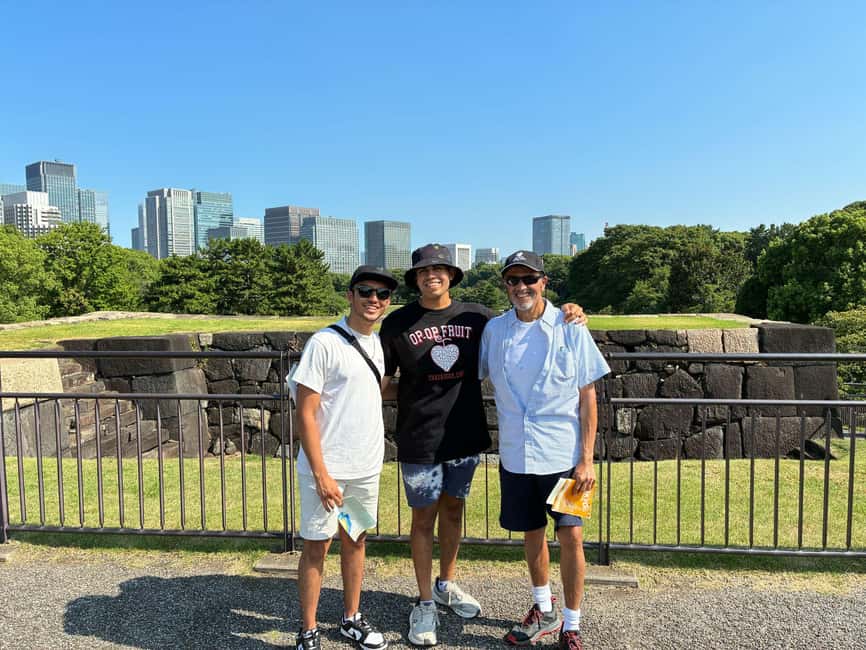
The route continues into the Edo Castle ruins, including the former Honmaru, or main hall, area. Honmaru was the central section of the castle, so this is one of the places where the political importance of the site feels clearest.
You will see foundations, open spaces, stonework, and traces of the former complex rather than an intact main hall. That can disappoint anyone hoping for rooms, furnishings, and a reconstructed fortress. Yet the openness also lets you grasp the scale of the old castle grounds.
The guide spends about fifteen minutes among the castle ruins and another ten minutes at the Honmaru site. Those time blocks are short enough to keep the tour moving, but they do not allow for a long independent examination. If you want detailed architectural study or many photographs, plan to return on your own if the gardens permit and opening conditions suit your schedule.
The Tenshu-dai and the missing castle keep
One of the most memorable points is the Tenshu-dai, the stone base where Edo Castle’s keep once rose. From here, you can enjoy panoramic views of the surrounding area and picture how dominant the keep must have been.
The castle keep restoration model helps fill the gap. Since the original structure no longer defines the skyline, the model gives you a visual reference for its former appearance. This is a useful stop for anyone who struggles to imagine a lost building from foundations alone.
The model is not a replacement for a surviving keep, and the tour does not present it as one. Think of it as a bridge between the physical remains under your feet and the larger castle that once occupied the site. I find that combination of model, stone base, and open view more useful than a simple photograph in a museum.
Bring a camera, but remember that flash photography is not allowed. Comfortable shoes and water are also sensible, since the tour involves steady walking across outdoor paths.
Prefectural trees and Suwa no Chaya
The route includes an area marked by the prefectural trees of Japan. This stop offers a change from military history and castle defenses. It is a reminder that the grounds also serve as a carefully maintained public garden, with plantings representing different parts of the country.
You then reach Suwa no Chaya, a traditional-style tea house. The stop adds a quieter visual note to the walk and helps break up the sequence of gates, guardhouses, and stone foundations.
Neither stop is likely to be the main reason you book the tour. Their value is in the variety they bring. A two-hour walk focused only on ruins could become repetitive, while these garden elements give you a more complete impression of the East Gardens.
Ninomaru Garden and the koi pond
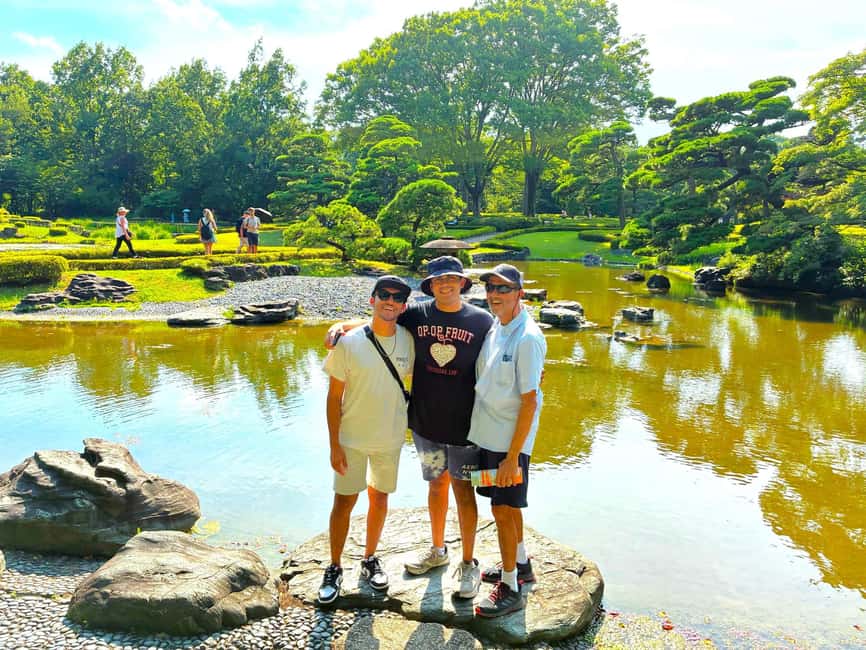
The final major stop is Ninomaru Garden. This is the most restful part of the experience, with carefully arranged plantings, paths, and a pond where you can see koi fish.
Ninomaru contrasts nicely with the Honmaru area. The former feels open, monumental, and tied to political power. The latter offers a slower garden setting where you can pause and look closely at the details.
About fifteen minutes is scheduled here. That is enough to enjoy the atmosphere, but it may feel brief if you like gardens and photography. The tour returns to the Wadakura Free Rest Area after this stop, so you can decide later if you want to spend more time exploring independently.
I especially like the garden ending because it keeps the experience from becoming a list of military sites. You finish with a sense of how the old castle grounds function today: part historical site, part public garden, and part living connection to Japan’s imperial center.
What the $37 price really buys
At $37 per person, this is not the cheapest way to enter a public garden. You are paying for a live English-speaking guide, a planned route, admission, and the ability to ask questions as the history unfolds.
That price makes good sense if you are new to Japanese history or want the site explained in plain language. The gates and foundations do not always explain themselves. A strong guide can connect them to samurai security, shogunal authority, imperial succession, and the physical layout of Edo Castle.
The value is less certain if you already know the story and prefer to set your own pace. One critical assessment described the activity as an ordinary park walk that could be done independently. That is a fair concern, especially because the route includes many short stops and does not enter the palace buildings.
The small-group or private format helps. A smaller group usually makes it easier to hear the guide and ask questions, though the exact group size depends on the option you choose. The commemorative photo opportunity is a pleasant extra, but it should not influence your booking decision much.
Who will enjoy this two-hour walk
I would recommend this experience to you if you want a compact introduction to Tokyo’s political history and prefer a guide to explain what you are seeing. It works well early in a Tokyo visit, when you are still learning the difference between shogunal Edo and imperial Tokyo.
It also suits people who enjoy historic sites without needing every original building to survive. The route rewards curiosity about foundations, walls, gates, and the way a place was organized.
You may want to skip it if your priority is entering the Imperial Palace itself. That is not part of the experience. You also may be disappointed if you expect a long, relaxed garden visit, because the itinerary moves through many locations in two hours.
The activity is not suitable for children under six, people with mobility impairments, or wheelchair users. Smoking and flash photography are not allowed. Since hotel pickup and drop-off are not included, you must make your own way to the Wadakura meeting point.
Cancellation is flexible, with a full refund available when you cancel at least 24 hours ahead. You can also reserve now and pay later, which is useful when your Tokyo schedule is still shifting.
FAQ
Where does the tour meet?
Meet outside the Wadakura Free Rest Area, in front of the entrance. The guide will be holding a yellow sign.
How long does the tour last?
The guided experience lasts two hours.
What language is the tour conducted in?
The live tour guide speaks English.
Can I enter the Imperial Palace buildings?
No. The palace buildings are not open to the public, and this tour does not enter the inner grounds. It focuses on the East Gardens and the former Edo Castle area.
Does the tour include admission?
Yes. Admission to Edo Castle and the Imperial Palace area covered by the experience is included.
Is hotel pickup included?
No. You must travel to the Wadakura Free Rest Area independently, and hotel pickup and drop-off are not provided.
What should I bring?
Bring comfortable shoes, water, and a camera. Flash photography is not allowed.
Is the tour suitable for wheelchair users?
No. The activity is not suitable for wheelchair users or people with mobility impairments.
Can I cancel for a refund?
Yes. You can cancel up to 24 hours in advance for a full refund. Reserve now and pay later is also available.
Should you book the Edo Castle tour?
Book this tour if you want historical explanation, a compact route, and a chance to ask questions while seeing the most important public parts of the old castle grounds. The Otemon Gate, guardhouses, Tenshu-dai, and Ninomaru Garden create a satisfying two-hour progression from defense to power to quiet garden.
I would not book it for palace interiors, a long garden stroll, or a fully reconstructed castle. The quality depends heavily on your guide, so the praised performances by Isao and Mari are encouraging, while the quieter experience shows the risk.
At $37, it is a reasonable buy for first-time visitors who want the ruins to make sense. If you are comfortable reading signs and exploring at your own pace, save the money and walk the East Gardens independently.
Just added in Tokyo
- A One-of-a-Kind Sushi Experience in a Special Place of Japan★ 5.0 · 15 reviews
- Tokyo Cute Bento Cooking Class – Make a Kawaii Character Lunchbox★ 5.0 · 126 reviews
- Japanese Home Cooking Class & Walk in Todoroki Temple Tokyo★ 5.0 · 88 reviews
- Japan Tokyo Tower Observatory Deck E-Ticket★ 4.0 · 34 reviews
- Catch a Baseball Game in Tokyo with a Local – Tickets Included★ 5.0 · 24 reviews
- Japan Classic 10 Day – One Life Adventures★ 5.0 · 129 reviews
- JDM Experience with Fast&Furious RX-7 (English speaking Driver)★ 5.0 · 57 reviews
- Tokyo Private Day Tour by Car with English speaking Driver Guide★ 4.0 · 29 reviews
Castles and Historic Sites, compared.
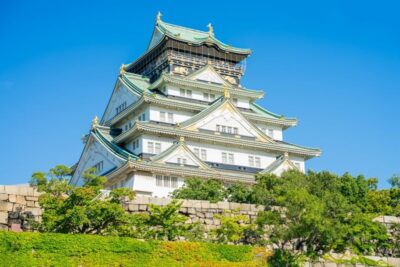

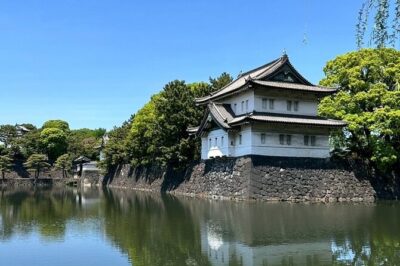
Imperial Palace and Shogun Historical Walking Tour
Read our review →
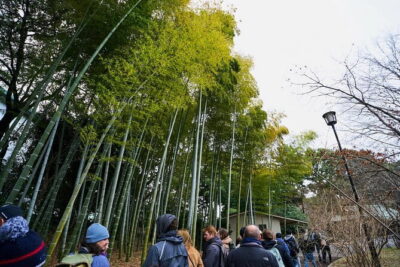
Tokyo Castle & Imperial PalaceーShogun Walking Tour
Read our review →
Nijo-jo Castle and Ninomaru Palace Guided Tour
Read our review →
Samurai Ninja Museum Guided tour and Experience
Read our review →Browse the lists this tour appears in