
Reviewed · TEMPLES AND SHRINES
Tokyo: Harajuku Meiji Shrine to Shibuya Crossing Guided Tour
Tokyo changes character in a few city blocks. This two-hour walk links Meiji Jingu Shrine, quirky Harajuku, and Shibuya Crossing, giving you a clear first look at three very different sides of the city. I like the simple route, and I like having a guide handle the navigation while explaining local customs and history. The main drawback is the brisk pace, especially if you want long shopping stops or quiet time at the shrine.
The group is capped at 10 people, which should make it easier to hear the guide and ask questions. Guide Naoko has been praised for friendly service and very good English, and another guest enjoyed seeing a traditional wedding during the shrine visit. At $79.73 per person, the price is fair if you value personal guidance, but high if you only want directions between places you could reach on your own.
In This Review
- Key points at a glance
- Starting at Harajuku Station
- Meiji Jingu Shrine: Tokyo’s quiet opening
- Takeshita Street: Harajuku’s youthful side
- The walk to Shibuya and the famous crossing
- Why the short format works
- What the guide adds for your money
- Walking needs and practical planning
- Who should book this Harajuku to Shibuya walk?
- Should you book it?
- FAQ
- How long is the Tokyo Harajuku to Shibuya tour?
- Where does the tour begin?
- Where does the tour end?
- What places are visited?
- Is admission included?
- How many people can join the tour?
- Does the tour require much walking?
- Is public transportation available near the tour?
- Can I cancel for a full refund?
Key points at a glance
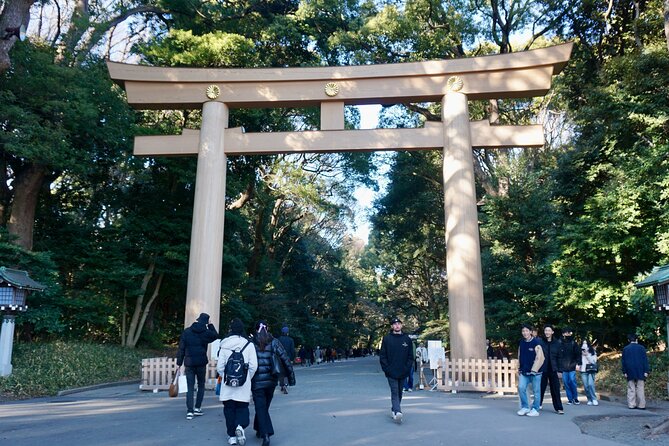
- Three major Tokyo sights in two hours: Meiji Jingu Shrine, Takeshita Street, and Shibuya Crossing fit into one compact route.
- A useful first-day orientation: You move from Harajuku Station to Shibuya, learning how the areas connect instead of seeing them as isolated stops.
- Small group capped at 10: This is a more personal setup than a large city walk.
- A mix of old and new Tokyo: Shrine rituals and forest paths give way to kawaii shops, crepes, and one of the city’s best-known intersections.
- Omikuji is included: The fortune paper fee is covered, adding a small cultural activity to the shrine visit.
- The finish is easy to use: The tour ends at Shibuya Mark City, next to JR and Ginza line connections.
Starting at Harajuku Station
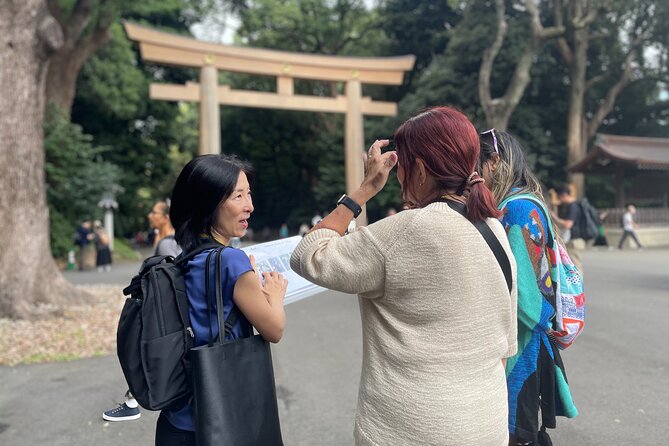
The meeting point is outside Harajuku Station at 1 Chome-18 Jingumae, in Shibuya. That location puts you beside one of Tokyo’s best starting points for a walk through the district. You do not need to spend the first part of the tour figuring out which street leads toward the shrine. The guide takes care of that.
I see this as a strong choice for a first visit to Tokyo. Harajuku can feel confusing because the area shifts quickly from a major rail station to broad shrine grounds, narrow shopping streets, and busy roads. A guide helps you understand the layout while you are still getting used to Tokyo’s scale.
The tour is offered as a mobile-ticket experience, and confirmation arrives when you book. It also begins near public transportation, so reaching the start should be straightforward. You should still arrive ready to walk, since the experience is built around moving between the three main stops rather than staying in one place.
The group limit of 10 matters here. On a city walk, a large group can get strung out at crossings or make it hard to hear explanations. A small group gives you a better chance to ask about customs, food, or the places you pass.
More Temples and Shrines in Tokyo
- Tokyo: Meiji Shrine, Asakusa, Skytree Bus Tour and Cruise
★ 4.7 · 1,986 reviews - Tokyo: Asakusa Walking Tour with Sensoji Temple Visit
★ 4.8 · 1,583 reviews - Nikko: Kegon Falls, Lake Chuzenji & Toshogu Temple
★ 4.6 · 1,577 reviews
Meiji Jingu Shrine: Tokyo’s quiet opening
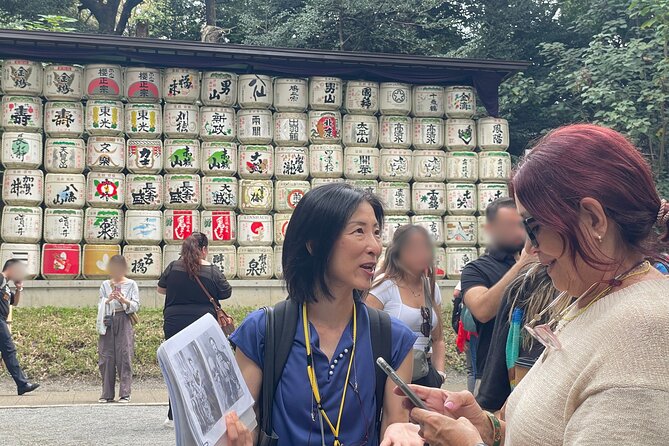
The first stop is Meiji Jingu Shrine, with about one hour planned for the visit. This is the calmest part of the route and gives the tour a useful sense of place before you enter Harajuku’s louder shopping district.
The shrine is known as one of Japan’s most visited sites for Hatsumode, the first shrine visit of the New Year. That detail helps explain its importance in Japanese life. You are not simply looking at an attractive religious building. You are entering a place connected to annual customs, prayer, fortune telling, and major life events.
The tour description highlights the shrine’s natural energy and its link to Japanese history and culture. A guide can make those ideas more useful by explaining what you are seeing and how to behave respectfully. For a first-time visitor, that context can prevent the visit from becoming a quick photo stop.
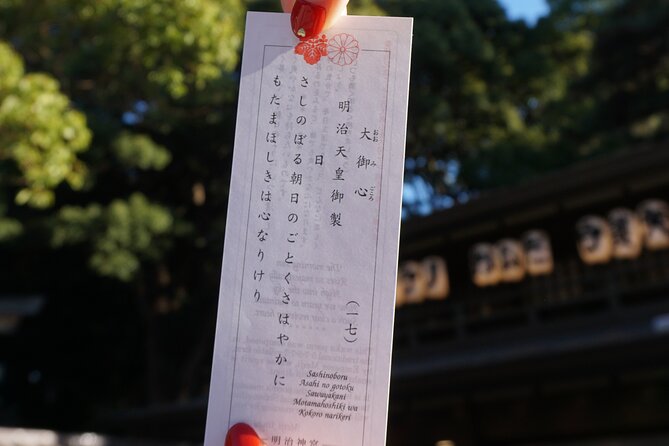
One included feature is the omikuji fortune paper fee. You can draw one of these fortunes as part of the visit without paying an additional charge. It is a small inclusion, but it gives you something hands-on to do and offers a simple window into shrine customs.
The shrine stop may also include a memorable cultural sight. One person specifically enjoyed seeing a traditional wedding there. Such an event is not guaranteed, of course, but it shows why a guided visit can feel more rewarding than walking through alone. A guide may help you recognize what is taking place instead of mistaking an important ceremony for ordinary sightseeing.
You should allow for walking on shrine grounds and standing during explanations. The activity asks for a moderate level of physical fitness. There is no suggestion of difficult hiking, but this is not a seated tour or a short transfer between attractions.
Takeshita Street: Harajuku’s youthful side
From the shrine, the route moves into modern Harajuku and spends about 30 minutes on Takeshita Street. The change is immediate in spirit. The shrine offers space and tradition, while Takeshita Street is known for fashionable shops, kawaii goods, and playful youth culture.
This is the part of the walk that will appeal most if you want to see Tokyo’s pop-culture side without committing half a day to shopping. The guide leads you along the iconic street and helps you take in the general character of the area. You get an introduction rather than a long retail session.
Japanese-style crepes are part of the food culture here, and the tour points out the chance to try one. The supplied details do not say that a crepe is included in the tour price, so plan to buy one separately if you want to taste it. That is a useful distinction, especially at a price near $80.
Thirty minutes is enough to see the street and understand why Harajuku is famous. It is not enough for a serious shopping trip. If a particular shop catches your eye, you may need to return after the tour. I would treat this stop as a lively introduction, not as a chance to browse every store.
The contrast with Meiji Jingu is the real value. In one morning or afternoon, you see a traditional shrine followed by a street associated with changing fashion and youth trends. That pairing gives you a better sense of Tokyo than visiting only one type of attraction.
The walk to Shibuya and the famous crossing
The route then continues from Takeshita Street toward Shibuya, with the walk taking about 20 minutes. This section is important because it shows you the connection between the districts. You are not simply being transported from one attraction to the next.
The walk adds to the physical demand. If you prefer a slow pace with frequent breaks, this may feel quick. The tour is designed to cover a lot in two hours, so comfortable shoes and a willingness to keep moving will help.
The final stop is Shibuya Crossing, with about 30 minutes planned for the area. The crossing needs little introduction. Once the signals change, people move through the intersection from several directions, creating the famous Scramble Crossing scene.
Your guide can help you find the main photo opportunity and explain how the area fits into modern Tokyo. The focus here is less on a long historical lesson and more on experiencing a major urban landmark. You should have time to take pictures and watch the crossing in action.
The finish is at Shibuya Mark City, at 1-chome-12-1 Dogenzaka. The stated endpoint is a viewpoint next to both the JR and Ginza lines. That is practical because you can continue sightseeing, return to your hotel, or use Shibuya as your next base without retracing the route.
A completely different kind of day out:
- Tokyo Disney Resort – Tokyo Disneyland & Tokyo DisneySea Park Tickets
★ 4.8 · 99,488 reviews - SHIBUYA SKY Ticket
★ 4.7 · 46,509 reviews - JR Whole Japan Rail Pass
★ 4.8 · 29,150 reviews - Mt Fuji and Hakone 1-Day Bus Tour Return by Bullet Train
★ 5.0 · 26,383 reviews
Why the short format works
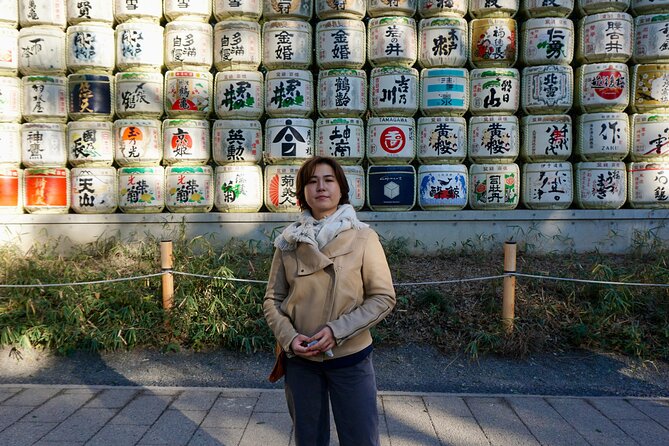
Two hours is a tight schedule, but the route has a clear shape. You begin with a major shrine, move through Harajuku’s shopping district, and finish at one of Tokyo’s most recognizable modern sights. Each stop supplies something different, so the tour avoids spending the entire time on one narrow theme.
I especially like the way the route works as a first-day orientation. You learn where Harajuku and Shibuya sit in relation to each other, see how the city shifts from wooded shrine grounds to dense shopping streets, and end near major rail lines.
The short length also suits a packed Tokyo schedule. You can fit it between other plans more easily than a half-day tour. If you have only a brief stay, this gives you a practical introduction without taking over your day.
The tradeoff is depth. You will not have much time for private reflection at Meiji Jingu, extended shopping on Takeshita Street, or a long food stop. You are paying for a guided overview and efficient route planning, not a leisurely day in one neighborhood.
What the guide adds for your money
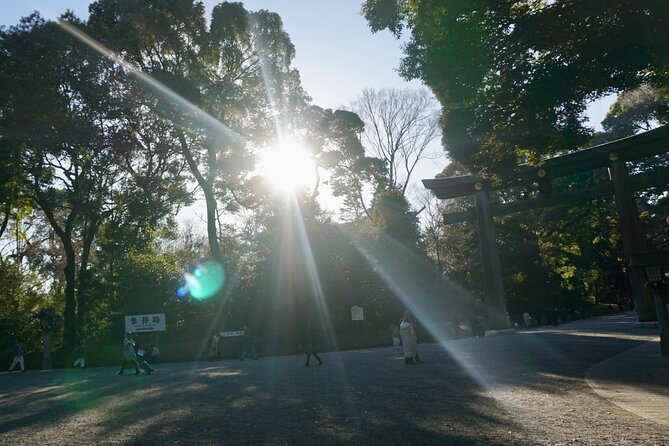
At $79.73 per person, the tour is not a budget walking route. You can reach all three areas independently using Tokyo’s excellent public transportation, and admission to the listed stops is free. The price makes more sense if you want a person beside you to explain customs, manage the route, and keep the visit moving.
The included guide service is the central benefit. Naoko has been praised for being friendly, informative, and comfortable speaking English. That matters at a shrine, where a few explanations about history or etiquette can change the way you experience the space.
The included omikuji fee adds a little value, though it is not a major financial saving. The real question is how much you value company and local explanation. If you enjoy planning routes and researching each stop in advance, the price may feel steep. If you want to get your bearings quickly, it can be worthwhile.
The 10-person maximum supports the price better than a large coach-style group would. It does not make the tour private, but it should keep the experience personal enough for questions and conversation.
The tour has a 4.9 rating from 27 reviews, with 100 percent recommending it. That is a strong result, though the sample is still modest. The clearest praised qualities are the friendly guide, clear English, historical explanation, and the chance to see a traditional wedding at the shrine.
Walking needs and practical planning
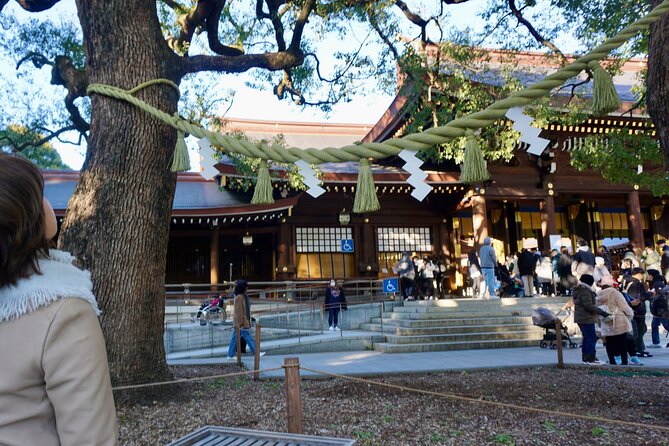
The activity requires moderate physical fitness. You will spend roughly one hour at Meiji Jingu, 30 minutes on Takeshita Street, and 30 minutes at Shibuya Crossing, with a 20-minute walk between Harajuku and Shibuya included in the route description.
The tour takes place near public transportation, but the end and start are in different areas. That is useful rather than inconvenient, since the route finishes at Shibuya Mark City beside JR and Ginza line access.
Plan for an active outing rather than a stop-and-go sightseeing session. You may want to eat before or after the tour, since the crepe opportunity is described as something to try on Takeshita Street, not as a provided meal. The mobile ticket also means you should have access to your booking details at the meeting point.
Free cancellation is available up to 24 hours before the start time for a full refund. Changes or cancellations inside that 24-hour window are not accepted, and the local start time controls the deadline. The activity also requires a minimum number of people, so if that minimum is not met, you are offered another date or experience, or a full refund.
Who should book this Harajuku to Shibuya walk?
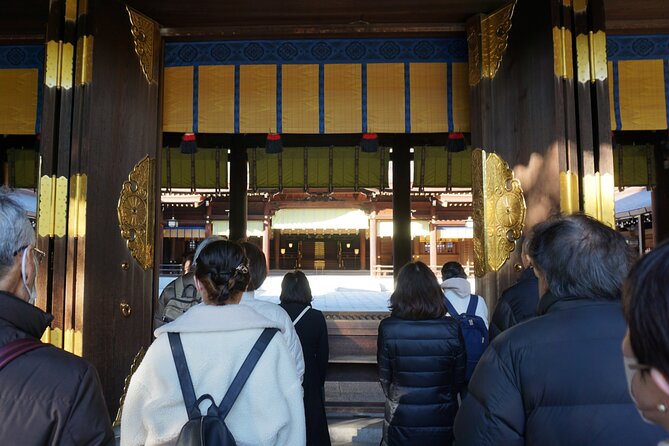
I would recommend this tour to first-time visitors who want a quick introduction to Tokyo without handling every turn themselves. It is also a good match if you enjoy history and culture but still want time for fashion, food, and photography.
It suits solo visitors and couples who prefer a small social group to exploring completely alone. Families with older children may also appreciate the variety, since the route changes mood several times and does not focus only on temples or museums.
You may want to skip it if your main goal is shopping on Takeshita Street. Thirty minutes is too short for serious browsing. It may also disappoint if you want a private tour, a slow shrine visit, or detailed time at each attraction.
For the best value, use it early in your Tokyo stay. The route gives you a working map of Harajuku and Shibuya, then leaves you free to return later to the places that interest you most.
Should you book it?
Book this walk if you want efficient orientation, a small group, and clear cultural context in just two hours. The Meiji Jingu to Harajuku to Shibuya route is well chosen, and the friendly guiding style praised in connection with Naoko adds more than simple directions.
Skip it if you are comfortable navigating Tokyo alone or if $79.73 feels too high for free public sights. For the right visitor, though, the tour turns three famous areas into one understandable story: shrine tradition, Harajuku style, and Shibuya energy.
FAQ
How long is the Tokyo Harajuku to Shibuya tour?
The experience lasts approximately two hours.
Where does the tour begin?
It begins at Harajuku Station, at 1 Chome-18 Jingumae, Shibuya, Tokyo 150-0001, Japan.
Where does the tour end?
The tour ends at Shibuya Mark City, at 1-chōme-12-1 Dōgenzaka, Shibuya, Tokyo 150-0043, Japan. The endpoint is next to JR and Ginza line access.
What places are visited?
The route includes Meiji Jingu Shrine, Takeshita Street in Harajuku, and Shibuya Crossing.
Is admission included?
Admission to Meiji Jingu Shrine, Takeshita Street, and Shibuya Crossing is listed as free. The omikuji fortune paper fee is included.
How many people can join the tour?
The group is capped at a maximum of 10 people.
Does the tour require much walking?
Yes. The route includes walking through the shrine grounds, along Takeshita Street, and a stated 20-minute walk from Takeshita Street to Shibuya. Moderate physical fitness is recommended.
Is public transportation available near the tour?
Yes. The start is near public transportation, and the endpoint at Shibuya Mark City is next to both JR and Ginza line connections.
Can I cancel for a full refund?
Yes. You can cancel at least 24 hours before the experience start time for a full refund. Cancellations or changes made less than 24 hours before the start time are not accepted.
Just added in Tokyo
- Mount Fuji Full Day Sightseeing Tour from Tokyo★ 4.5 · 101 reviews
- Mt Fuji Customizable Private Tour English Speaking Driver Pick-up★ 5.0 · 69 reviews
- From Tokyo Kamakura, Hachimangu Shrine and Enoshima Full Day Tour★ 4.5 · 36 reviews
- Discover the Art of Ikebana in Tokyo’s Historic Yanaka District★ 5.0 · 60 reviews
- Shinjuku Food and Drink Walking Tour★ 5.0 · 13 reviews
- Freely set up plans Guided Private Tours in Tokyo★ 4.5 · 130 reviews
- Flavors of Japan Food Tour in Tokyo★ 5.0 · 39 reviews
- Ebisu Local Food Tour: Shibuya’s Most Popular Neighborhood★ 5.0 · 20 reviews
Temples and Shrines, compared.
![[Kyoto & Nara Day Tour] Sagano Scenic Railway & Nara Park & Fushimi Inari Taisha Thousand Torii Gates & Togetsukyo Bridge & Bamboo Grove & Kimono Forest (Departing from Osaka)](https://media.japanvisits.com/wp-content/uploads/kyoto-nara-day-tour-sagano-scenic-railway-nara-park-fushimi-inari-taisha-thousand-torii-gates-togetsukyo-bridge-bamboo-grove-kimono-forest-departing-from-osaka-k110001-400x257.jpg)
Kyushu One-Day Tour: Yufuin no Mori Train & Yufuin Town & Nyoirin-ji Temple & Dazaifu & Hell Hot Springs (Departing from Fukuoka)
Read our review →
Fushimi Inari, Kinkakuji, Bamboo Grove 1 Day Bus Tour
Read our review →
Tea Ceremony in a Traditional Tea House in Kiyomizu
Read our review →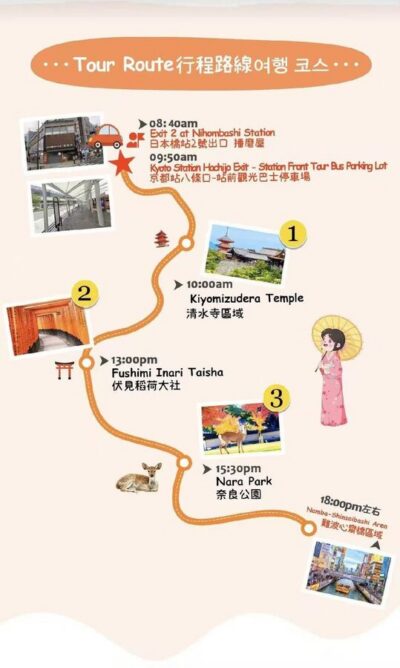
Kyoto Nara Day Trip │ Kiyomizu-dera Temple + Fushimi Inari-taisha Shrine + Nara Park (Departing from Osaka/Kyoto)
Read our review →
Browse the lists this tour appears in