
Reviewed · CASTLES AND HISTORIC SITES
Tokyo: Imperial Palace East Gardens and Tokyo Station Tour
The old castle still shapes Tokyo. This 150-minute walk links the quiet Imperial Palace East Gardens with the polished streets of Marunouchi, ending at Tokyo Station’s famous red-brick façade. I like the clear route from samurai-era Tokyo to modern Japan, and I like that the guide explains what you are seeing instead of simply pointing at gates and walls. The main consideration is walking: comfortable shoes, water, sun protection, and weather-ready clothing matter.
Guide Yuki receives especially warm praise for her easy explanations, humor, kindness, and careful organization. Her storytelling helps you picture Edo Castle as it was 400 years ago. At $38 per person, the tour offers good value if you want context and conversation, though independent visitors can enter the East Gardens without paying an admission fee.
In This Review
- Key details that shape the experience
- Starting at Wadakura Fountain Park
- Ote-mon Gate and the defenses of Edo Castle
- Ninomaru Garden and the art of controlled beauty
- Honmaru, castle ruins, and the Fujimi-yagura
- From palace grounds to Marunouchi in ten minutes
- Nijubashi views and imperial history
- Tokyo Station and the final change in scale
- What $38 buys you
- Walking, access, and practical limits
- Who will enjoy this walk most
- Should you book the Imperial Palace and Tokyo Station walk?
- FAQ
- How long does the Tokyo Imperial Palace and Tokyo Station tour last?
- Where does the tour begin?
- Where does the tour finish?
- Is admission to the Imperial Palace East Gardens included?
- Which landmarks are included?
- What languages are available?
- Is the tour wheelchair accessible?
- What should I bring?
Key details that shape the experience
- Start beside Wadakura Fountain Park: Meet at the Starbucks Coffee Imperial Palace Gaien Wadakura Fountain Park store, a practical landmark near the palace grounds.
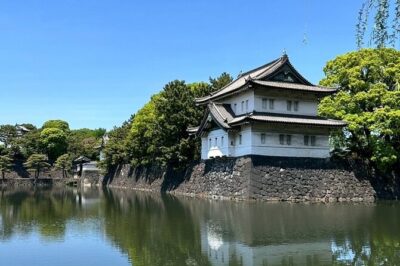
- See the former Edo Castle core: Ote-mon Gate, Hyakunin Bansho Guardhouse, Edo Castle ruins, the Fujimi-yagura watchtower, and a scale model of the former main keep put the site into focus.
- Spend about 30 minutes in the East Gardens: The garden design, stonework, moats, and Honmaru area show how power and beauty worked together in the shogunate era.
- Walk from history into modern Tokyo: A roughly 10-minute walk leads toward Marunouchi, where contemporary buildings and public art replace castle walls.
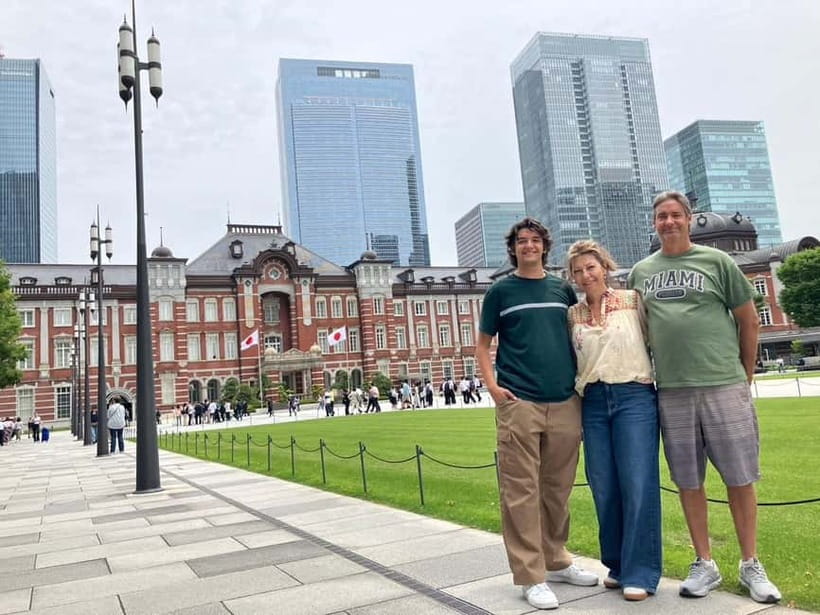
- Finish at Tokyo Station: The beautifully restored station exterior gives the tour a strong final image of Tokyo’s transformation.
- Choose from five guide languages: English, Japanese, Spanish, Chinese, and French are offered, with wheelchair access available.
Starting at Wadakura Fountain Park
The meeting point is Starbucks Coffee Imperial Palace Gaien Wadakura Fountain Park store. That is more useful than a vague palace entrance, since the Imperial Palace grounds have several gates and broad open spaces. You should still check your meeting instructions carefully and arrive ready to walk.
The tour begins near Kokyo Gaien National Garden, the open area around the palace. From here, the setting quickly shifts from Tokyo office towers and traffic to wide paths, formal greenery, moats, and stone defenses. It is a good first lesson in the city’s unusual mix: the center of a huge capital can feel surprisingly spacious.
You will want comfortable shoes from the start. The tour lasts two and a half hours, and the moderate walking comes in several sections rather than one long march. A hat, sunscreen, water, and weather-appropriate clothing are sensible choices. Backpacks are not allowed, and smoking and flash photography are also prohibited.
More Castles and Historic Sites in Tokyo
- Tokyo: Imperial Palace and Shogun Historical Walking Tour
★ 5.0 · 2,251 reviews - Tokyo Castle & Imperial PalaceーShogun Walking Tour
★ 4.7 · 1,068 reviews - Tokyo: Samurai Ninja Museum Guided tour and Experience
★ 4.6 · 1,010 reviews
Ote-mon Gate and the defenses of Edo Castle
Ote-mon Gate is one of the most useful places to begin understanding the site. This was not simply a decorative entrance. It formed part of a defensive system designed to control movement into Edo Castle, the seat of shogunal power.
Your guide can explain how the castle complex once worked, helping you read the remaining stones and gates as parts of a military and political center. Without that explanation, it is easy to see a moat and a wall and miss the larger story. With context, the scale of the former castle becomes easier to picture.
The Hyakunin Bansho Guardhouse adds another layer. Its name refers to a guardhouse associated with one hundred guards, and it gives the tour a human side. Castles were not only grand residences for rulers. They were controlled workplaces filled with sentries, rules, and carefully managed access.
This is where Yuki’s style seems especially valuable. Her explanations are described as easy to follow, humorous, and grounded in the place itself. You are not asked to memorize a long list of dates. Instead, the guide connects physical details with what daily life and political power may have looked like during the Edo period.
Ninomaru Garden and the art of controlled beauty
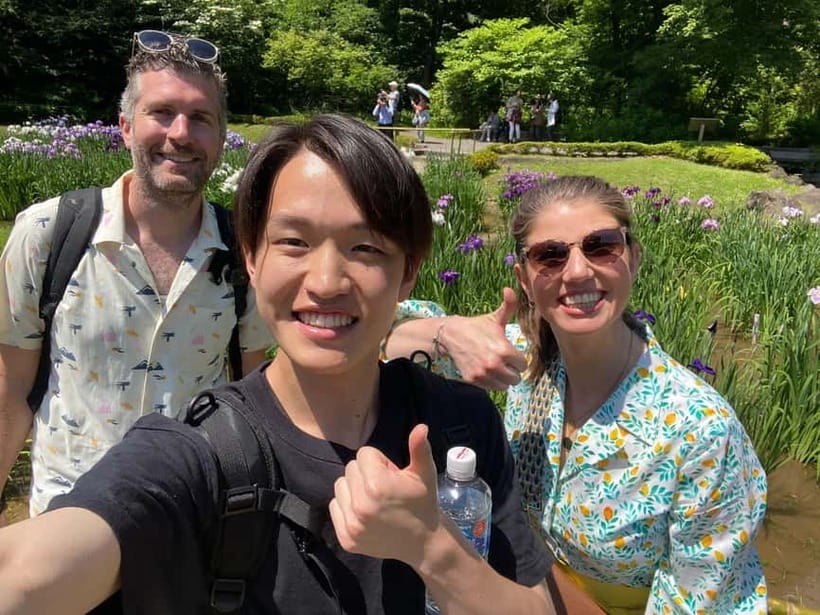
Ninomaru Garden offers a change of mood. The castle defenses give way to ponds, plantings, paths, and carefully arranged views. Japanese garden design is not random decoration. The placement of water, stones, trees, and open space shapes how you move and what you notice.
The garden is especially helpful for understanding the contrast between public authority and private calm. Edo Castle was the center of shogunal government, yet it also contained spaces designed for reflection, ceremony, and seasonal beauty. Your guide explains how the garden fits into that larger setting.
You should allow yourself time to look rather than rush from one landmark to the next. The guided portion in the East Gardens is listed at about 30 minutes, so the pace may feel purposeful. That is useful if you have limited time, but it may feel brisk if you want to photograph every pond, tree, and stone feature.
The tour’s value here comes from interpretation. Entry to the East Gardens does not require an admission fee, so you are paying mainly for the guide’s time and historical explanation. If you already know Edo-period history and prefer to wander alone, that distinction matters. If the palace grounds seem confusing or you want the meaning behind the design, the fee is easier to justify.
Honmaru, castle ruins, and the Fujimi-yagura
The Honmaru area was the central section of Edo Castle. Today, you will see traces rather than a complete castle, including ruins and open spaces that require some imagination. This is not a preserved European-style fortress with rooms you can enter. The experience depends on understanding what once occupied the ground.
A scale model of the Edo Castle main keep helps solve that problem. Models are often more useful than a bare foundation because they show the original scale and arrangement. You can compare the model with the remaining stonework and begin to see how much of the castle has disappeared.
The Fujimi-yagura watchtower is another important sight. Its name is linked to views of Mount Fuji, although the point for you is less about guaranteeing a view today and more about understanding the tower’s role within the castle grounds. It was part of the defensive and visual system that watched over the surrounding area.
The guide’s strongest contribution is turning absence into evidence. A ruined wall can seem like a small detail. With a clear explanation, it becomes a clue to the size of Edo Castle and the authority of the shogunate. Several comments about Yuki emphasize that she makes the past easy to picture, including Tokyo as it may have looked four centuries ago.
A completely different kind of day out:
- Tokyo Disney Resort – Tokyo Disneyland & Tokyo DisneySea Park Tickets
★ 4.8 · 99,488 reviews - SHIBUYA SKY Ticket
★ 4.7 · 46,509 reviews - JR Whole Japan Rail Pass
★ 4.8 · 29,150 reviews - Mt Fuji and Hakone 1-Day Bus Tour Return by Bullet Train
★ 5.0 · 26,383 reviews
From palace grounds to Marunouchi in ten minutes
The transition to Marunouchi takes about 10 minutes on foot. This short stretch is one of the tour’s best design choices because it makes Tokyo’s changes visible without a long transfer or a train ride.
Inside the palace grounds, you are dealing with moats, gates, garden paths, and castle remains. In Marunouchi, office towers, broad streets, modern architecture, and public art take over. The two areas sit beside each other, but they represent very different versions of the city.
The contrast also helps explain why this tour works better than a garden-only visit. You do not just see a historic site in isolation. You walk from the political center of the shogunate to a district linked with present-day business and city life. That physical movement gives the story a natural shape.
Marunouchi is not a museum quarter. It is an active urban district, so expect modern buildings and streets rather than a quiet historical setting. The guided walk points out architecture and art along the way, but the tour description does not promise entry into office buildings, museums, or galleries. Think of this part as an outdoor introduction to the district.
Nijubashi views and imperial history
The tour also includes scenic views of Nijubashi. The bridge is among the most recognizable sights associated with the Imperial Palace, and it offers a formal image of the imperial compound. You will want your camera ready, though flash photography is not allowed.
The palace story differs from the Edo Castle story, and that difference is important. The grounds connect Japan’s imperial period with the earlier shogunate era. A good guide helps you separate those chapters rather than treating every wall and gate as part of one undifferentiated past.
This is also a place where expectations matter. The tour focuses on the East Gardens and surrounding historical sites, not on entering the private palace buildings. You see exterior views, gardens, ruins, gates, and related landmarks. If your main goal is an indoor palace visit, this is not the right product.
Tokyo Station and the final change in scale
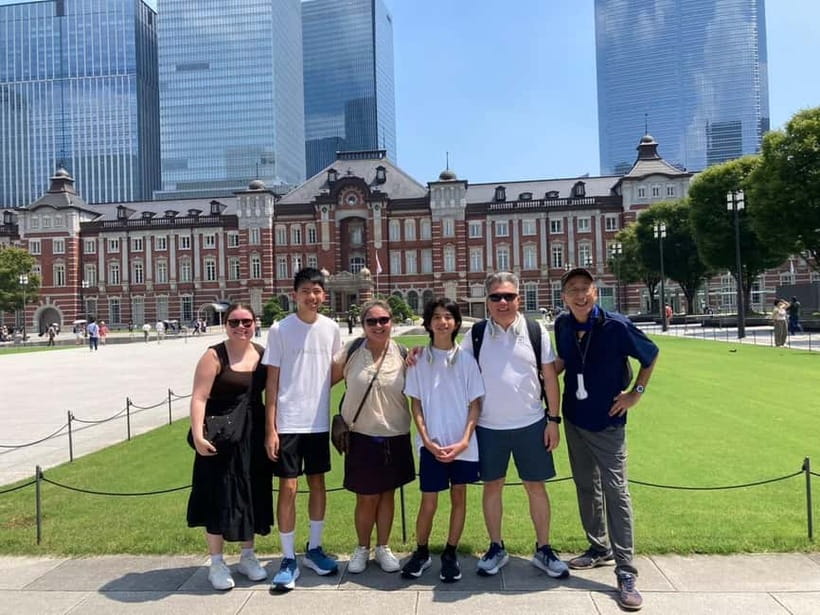
The final stop is Tokyo Station. Its red-brick exterior provides a satisfying ending because it gives you another clear marker of Tokyo’s transformation. You begin with castle walls and garden paths, pass through a modern business district, and finish at one of the city’s best-known transportation landmarks.
The station is beautifully restored, and the exterior is the focus of this tour. You should not expect a guided station museum visit or a detailed railway tour unless separately stated. The payoff is architectural and visual: the historic-looking façade contrasts with the huge city that surrounds it.
Ending at Tokyo Station is practical, too. You can continue by train, arrange a meal nearby, or use the station as your next reference point. The tour does not return you to the starting point, so plan your afternoon from Tokyo Station rather than assuming a circular route.
What $38 buys you
At $38 per person, this is not the cheapest way to see the East Gardens. You can enter the gardens without paying an admission fee, and independent visitors can look around at their own pace. The paid element here is the guided structure, the historical explanation, the connection between sites, and the convenience of finishing at Tokyo Station.
I consider that reasonable for first-time visitors who want the palace grounds to make sense. The tour covers several layers of Japanese history, from samurai-era defenses and shogunal government to imperial symbolism and modern city architecture. A private guide would cost far more, while a self-guided visit requires preparation and research.
The value drops if you dislike group pacing or already have strong knowledge of Edo Castle. The East Gardens are not hard to reach, and the main sights can be explored independently. You are paying for clarity, not exclusive access.
The guide quality matters greatly. Yuki is repeatedly praised for being kind, organized, humorous, and clear. Those qualities are particularly useful on a site where the remains are impressive but not always self-explanatory. The tour is available with live guides in English, Japanese, Spanish, Chinese, and French, so choose the language that lets you ask questions comfortably.
Walking, access, and practical limits
The experience is listed as wheelchair accessible, but you should still be prepared for an outdoor walking route through gardens, historic grounds, and city streets. The description calls for a moderate amount of walking, and the tour lasts 150 minutes.
Bring only what you need. Backpacks are not allowed, so pack light and confirm how your personal belongings should be handled before arrival. Water, sunscreen, and a hat are especially useful on a sunny day, while a light rain layer or other weather-ready clothing will help when conditions change.
The route includes outdoor stops, so weather affects comfort. Check the forecast and dress accordingly. Photography is welcome, but flash photography is prohibited. Smoking is not permitted during the activity.
Free cancellation is available up to 24 hours before the tour for a full refund, and you can reserve now and pay later. Those terms are useful if your Tokyo schedule is still shifting, but they do not remove the need to check the starting time and meeting instructions before you book.
Who will enjoy this walk most
I would recommend this tour to first-time Tokyo visitors who want an introduction to the city’s political and architectural story. It also fits history fans who enjoy seeing physical evidence, even when only ruins and foundations remain.
It is a good choice if you want:
- A guided explanation of Edo Castle and the shogunate
- Garden design alongside military architecture
- A clear view of Nijubashi
- A short introduction to Marunouchi’s buildings and art
- A convenient finish at Tokyo Station
- A live guide in one of five listed languages
Families and mixed-age groups may appreciate the short walking connection between the palace and Marunouchi, though the total time still requires steady movement. Photography-minded visitors should find plenty to frame, but the route may not allow unlimited time at each view.
I would skip it if you want a long, unhurried garden visit, an indoor palace tour, or a private experience. I would also think twice if carrying a backpack is essential, since backpacks are not allowed.
Should you book the Imperial Palace and Tokyo Station walk?
Book it if you want Tokyo’s past and present explained in one compact route. The strongest reason is the guide. Yuki’s clear, friendly storytelling appears to turn castle ruins, guardhouses, and garden design into a story you can follow, rather than a series of attractive but disconnected sights.
At $38, the tour makes sense for the context and time saved. You receive no special admission advantage to the East Gardens, but you do get a planned walk through Ote-mon Gate, Hyakunin Bansho, Ninomaru Garden, Honmaru, Nijubashi viewpoints, Marunouchi, and Tokyo Station.
Choose it early in your Tokyo stay if you want a useful introduction to the city’s central districts. Bring light luggage, wear good shoes, and keep your expectations focused on outdoor history and architecture. For that kind of half-day outing, this is a well-shaped and practical choice.
FAQ
How long does the Tokyo Imperial Palace and Tokyo Station tour last?
The tour lasts 150 minutes, or two and a half hours.
Where does the tour begin?
It begins at Starbucks Coffee Imperial Palace Gaien Wadakura Fountain Park store.
Where does the tour finish?
The tour finishes at Tokyo Station.
Is admission to the Imperial Palace East Gardens included?
Entry to the Imperial Palace East Gardens does not require an admission fee, and the guided visit is included in the tour.
Which landmarks are included?
The route includes Ote-mon Gate, Hyakunin Bansho Guardhouse, Ninomaru Garden, Edo Castle ruins, the Fujimi-yagura watchtower, the Honmaru area, Kokyo Gaien National Garden, Marunouchi, Nijubashi views, and Tokyo Station’s exterior.
What languages are available?
Live guides are available in English, Japanese, Spanish, Chinese, and French.
Is the tour wheelchair accessible?
Yes, the activity is listed as wheelchair accessible.
What should I bring?
Bring comfortable shoes, a hat, sunscreen, water, a camera, and clothing suitable for the weather. Backpacks are not allowed, and flash photography and smoking are prohibited.
Just added in Tokyo
- A One-of-a-Kind Sushi Experience in a Special Place of Japan★ 5.0 · 15 reviews
- Tokyo Cute Bento Cooking Class – Make a Kawaii Character Lunchbox★ 5.0 · 126 reviews
- Japanese Home Cooking Class & Walk in Todoroki Temple Tokyo★ 5.0 · 88 reviews
- Japan Tokyo Tower Observatory Deck E-Ticket★ 4.0 · 34 reviews
- Catch a Baseball Game in Tokyo with a Local – Tickets Included★ 5.0 · 24 reviews
- JDM Experience with Fast&Furious RX-7 (English speaking Driver)★ 5.0 · 57 reviews
- Tokyo Private Day Tour by Car with English speaking Driver Guide★ 4.0 · 29 reviews
- Japan Classic 10 Day – One Life Adventures★ 5.0 · 129 reviews
Castles and Historic Sites, compared.
Imperial Palace and Shogun Historical Walking Tour
Read our review →
Tokyo Castle & Imperial PalaceーShogun Walking Tour
Read our review →
Nijo-jo Castle and Ninomaru Palace Guided Tour
Read our review →
Samurai Ninja Museum Guided tour and Experience
Read our review →Browse the lists this tour appears in