
Reviewed · CASTLES AND HISTORIC SITES
Tokyo: Imperial Palace, the history of Japan (ENGLISH GUIDE)
History sits beneath Tokyo’s quietest paths. This walking tour takes you through the eastern gardens of the former Edo Palace, where stone walls, castle remnants, soldiers’ quarters, gardens, and special koi help explain how Japan changed over the centuries. I like the small-group feel, which makes it easier to ask questions, and I like the guide’s broad approach, covering the palace, imperial family, mythology, language, and modern Japan. The main drawback is important: you do not enter the inner palace, and the supplied information gives conflicting details about the guide language.
At $40 per person, the tour offers good value if you want context rather than a quick photo stop. I would especially look for a guide such as Nicolas, the Franco-Japanese guide praised for answering many kinds of questions and sharing lesser-known details about the grounds. I would also confirm the language before paying, since the overview says English-speaking guide while the booking details list French as the guide language.
In This Review
- What makes this palace walk worth your time
- Meeting at Wadakuramon Fountain Park
- Passing through Otemon into Edo Castle’s past
- The missing castle and its small-scale replacement
- Gardens, barracks, trees, and the special koi
- A history lesson that reaches beyond the palace
- What $40 buys you in Tokyo
- Weather, footwear, and practical comfort
- The guide-language detail you should settle first
- Who should book this eastern gardens tour?
- Should you book this palace history walk?
- FAQ
- Where does the tour start?
- How do I reach the meeting point?
- Where does the tour finish?
- Does the tour enter the inner palace?
- Does the tour visit the former Edo Castle site?
- Will I see the original main castle?
- What language is the tour conducted in?
- What is included in the price?
- Can I cancel for a refund?
- What happens if I arrive late?
What makes this palace walk worth your time
- You enter through Otemon, the large main gate of the former Edo Castle complex.
- You explore the eastern gardens, including palace ruins, old soldiers’ barracks, stone foundations, and trees sent from different prefectures.
- You see special koi, a breed said to be found only within this palace setting.
- You learn why the main castle is gone, with a miniature structure helping you picture what once stood there.
- You meet near Tokyo Station or Otemachi Station, then return to the same meeting point.
- You get a history-focused walk for $40, with a chance to ask questions in a small, friendly group.
Meeting at Wadakuramon Fountain Park
Your meeting point is in Wadakuramon Fountain Park, near the Starbucks by the fountain. You can reach it from Tokyo Station or Otemachi Station, followed by a walk of roughly five to ten minutes.
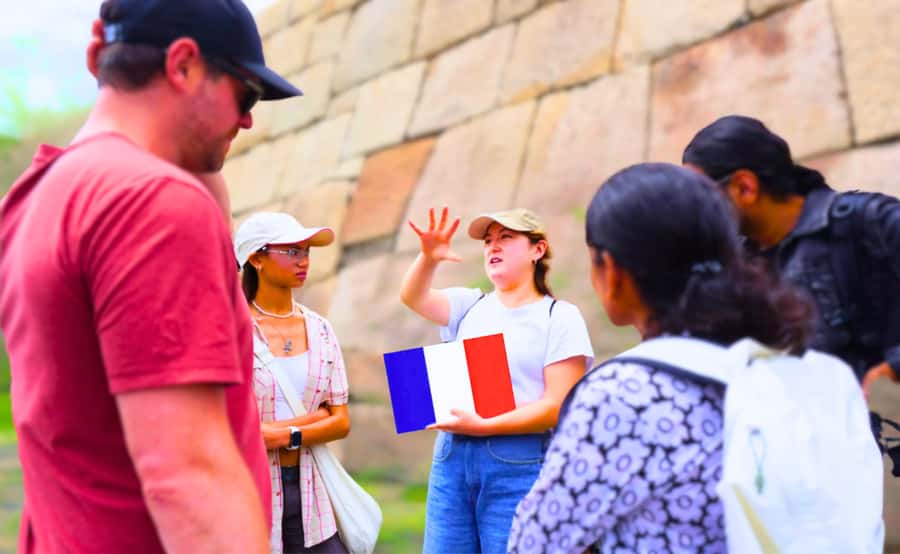
This sounds simple, but Tokyo Station is large and can slow you down if you leave the station through the wrong exit. Give yourself extra time. Look for the guide holding a sign with the Sunrise Adventure logo, and do not cut the timing close. If you are not at the meeting point within ten minutes of the scheduled start, the group may leave without you.
The meeting point also gives you a useful pause before the walk begins. You can check the weather, fill your water bottle if needed, and make sure you are ready for an outdoor visit. The tour runs in good weather or bad, so pack for the forecast rather than hoping the day stays dry.
The outing ends back at this same meeting point. That makes it easier to continue sightseeing around Tokyo Station afterward, though the tour itself does not include transport beyond getting yourself to the start.
More Castles and Historic Sites in Tokyo
- Tokyo: Imperial Palace and Shogun Historical Walking Tour
★ 5.0 · 2,251 reviews - Tokyo Castle & Imperial PalaceーShogun Walking Tour
★ 4.7 · 1,068 reviews - Tokyo: Samurai Ninja Museum Guided tour and Experience
★ 4.6 · 1,010 reviews
Passing through Otemon into Edo Castle’s past
The walk begins at Otemon, the main gate. This is more than a convenient entrance. It sets up the story of Edo Castle, the power center of the Tokugawa shoguns for more than 350 years.
From here, your guide leads you through the former palace grounds and explains how the site functioned. The value of a guided walk becomes clear at this point. A palace gate, defensive wall, or stone base can look like a pleasant old feature if you do not know what you are seeing. With an explanation, the same structure becomes part of a larger story about military rule, political power, and the eventual shape of modern Japan.
You should expect a walking tour rather than a museum visit. The focus is on visible remains, garden paths, historical traces, and conversation. There are no indoor palace rooms included, and the inner palace is specifically excluded.
That limitation may disappoint you if you imagine a grand imperial residence tour. The eastern gardens offer a different experience: you are walking through the former Edo Castle site, where the absence of the main structures is part of the story.
The missing castle and its small-scale replacement
One of the tour’s central questions is simple: where is the main castle?
The original main castle no longer exists, and the guide explains why. The provided information does not give the reason in advance, which is a good thing for the tour itself. You can see how the story develops on site rather than receiving every answer beforehand.
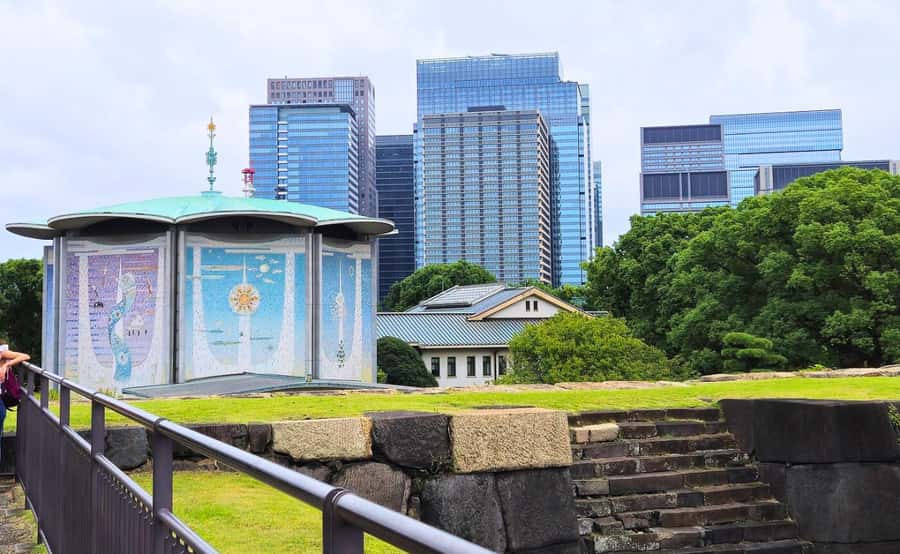
You also have the chance to view a miniature structure of the former palace. This is useful because the remaining foundations and walls cannot fully show you the scale of the old complex. A model gives your eyes something concrete to compare with the surviving stonework.
I like this part of the route because it links imagination with evidence. You are not simply told that a major castle once occupied the grounds. You see what remains and use the model to picture the lost buildings.
Still, manage your expectations. A miniature model cannot replace the original castle, and the visit does not recreate the Edo Palace interiors. If your main goal is grand architecture inside an active imperial residence, this is not the right experience. If you want to understand what happened to the old palace and how its site is used today, it makes more sense.
Gardens, barracks, trees, and the special koi
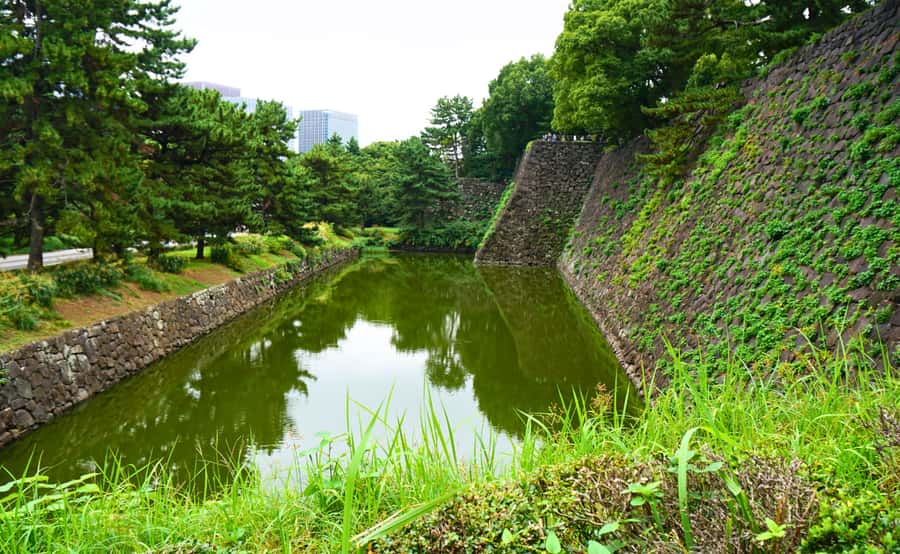
The eastern gardens provide the quieter side of this history walk. You stroll past oriental garden scenery while moving between old foundations and other remains. The setting gives you room to notice details instead of rushing from one famous building to another.
The former soldiers’ barracks add another layer. They remind you that Edo Castle was not only a seat of rulers. It was also a working military and administrative center, filled with people whose jobs supported the castle’s power.
The tour also points out trees from different prefectures of Japan. This may seem like a small detail, but it gives the grounds a national dimension. You are not only looking at one Tokyo site. You are seeing a collection of symbols and plantings connected to different parts of Japan.
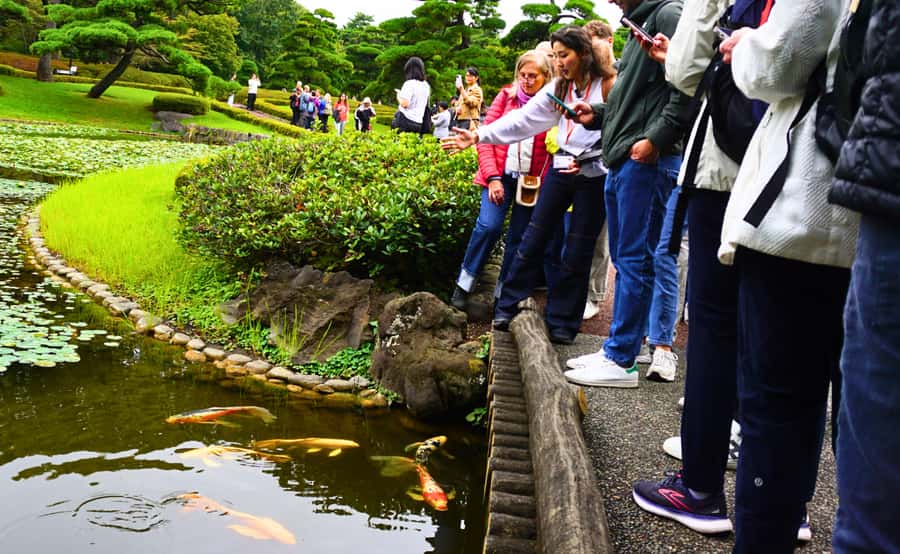
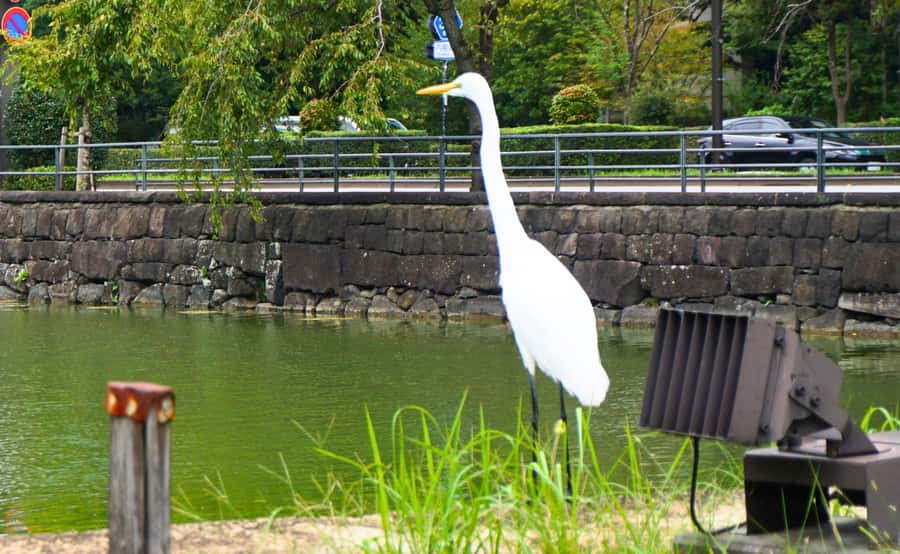
Then there are the koi. The tour highlights a special breed that can only be found here. This is one of the experience’s more unusual details, and it gives the garden walk a welcome change of pace. After hearing about rulers, walls, and military life, you can stop beside the water and look for the fish that make this location distinctive.
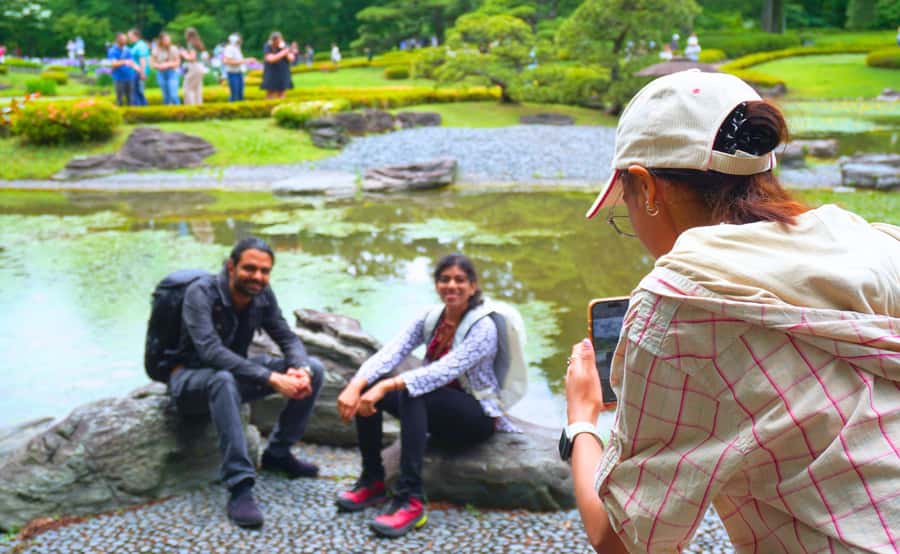
The gardens are also the best part of the tour for photographs. You can take pictures of the paths, stonework, water, trees, and remaining palace features. Your guide points out good photo spots, which matters because the most attractive view is not always obvious from the path.
A completely different kind of day out:
- Tokyo Disney Resort – Tokyo Disneyland & Tokyo DisneySea Park Tickets
★ 4.8 · 99,488 reviews - SHIBUYA SKY Ticket
★ 4.7 · 46,509 reviews - JR Whole Japan Rail Pass
★ 4.8 · 29,150 reviews - Mt Fuji and Hakone 1-Day Bus Tour Return by Bullet Train
★ 5.0 · 26,383 reviews
A history lesson that reaches beyond the palace
The tour is designed to explain how Japan became the country it is today. That is a large promise, but the route gives the guide a solid place to begin.
The former Edo Palace lets you examine a period when power was organized around the shogunate. From there, the guide connects the site’s past with later changes involving Japan, the imperial family, and the modern nation. The most useful part for you will be the chance to ask questions as they come up.
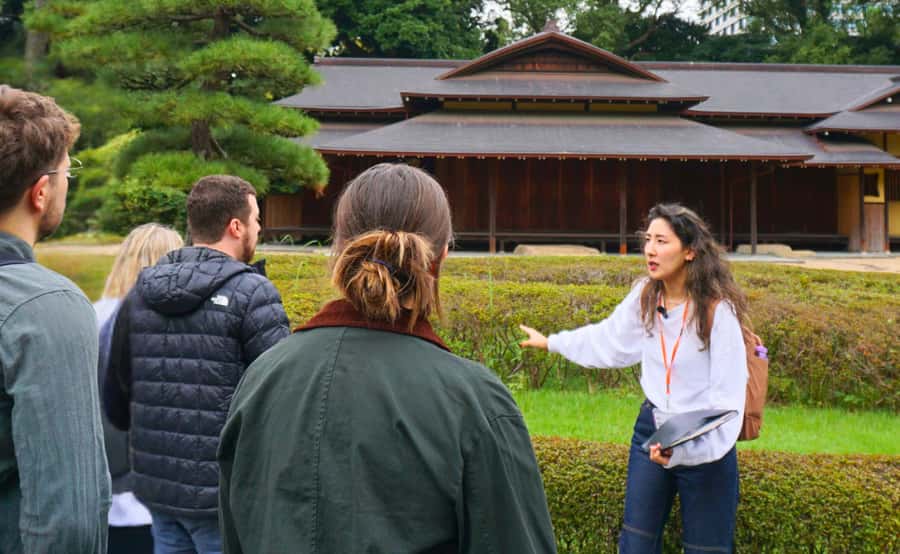
Nicolas, described as a Franco-Japanese guide, received especially warm praise for covering Japanese mythology, the language, Japan in general, and the imperial family. That range matters. You can ask about a stone wall, then move to a question about customs or the meaning of a word without waiting for a separate class or museum visit.
This conversational style seems strongest in a small group. One account describes a group of five people, which made it easy to talk and kept the visit friendly. Group size can vary, so I would not assume every departure will be that small. Still, the tour appears built around discussion rather than a large crowd moving silently behind a flag.
The experience may suit you best if you enjoy asking questions. If you prefer a short, fast-paced sightseeing loop with only the major facts, a private guide or a self-guided visit may be a better fit. The tour’s value comes from the explanations, not simply from entering the gardens.
What $40 buys you in Tokyo

The price is $40 per person. The package includes the historical walking tour and a guide, but it does not include entry to the inner palace or any meal.
For Tokyo, this is a reasonable price for a guided history walk, especially if the group stays small and the guide offers the broad cultural context described above. You are paying for interpretation of a large, complex site that can otherwise feel like a pleasant park with scattered ruins.
The value is lower if you only want the gardens and photographs. You can enjoy the scenery without a guide, and the walk does not include a special interior visit or a major castle building. You are paying for the story behind the stones, the palace’s development, and the connection between Edo-era power and Japan today.
One unusual extra detail is that the friendly group described around Nicolas continued to eat together after the visit. That meal is not part of the advertised package, so do not book expecting food or a social event. It does suggest that the guide’s conversational style can make the outing feel more personal than a standard site explanation.
You can reserve now and pay later, and cancellation is allowed up to 24 hours before the tour for a full refund. Those terms help if your Tokyo plans are still shifting.
Weather, footwear, and practical comfort
You should wear clothing suited to the forecast. The tour goes ahead in good weather or bad, and most of the experience takes place outdoors.
Comfortable walking shoes are the sensible choice. The information describes a walking tour through gardens, palace grounds, former barracks, and ruins, so you should expect to be on your feet. No specific duration is provided, so I would avoid planning a tight appointment immediately afterward.
Bring protection from the weather. On a sunny day, shade may not be available at every stop. On a wet day, paths and stone areas may feel less comfortable. The tour does not permit smoking, drones, alcohol, drugs, littering, or skateboards.
The route returns to the starting point, which simplifies the rest of your day. You can continue around Tokyo Station, head elsewhere by train, or treat the palace walk as a morning or afternoon history stop.
The guide-language detail you should settle first

There is a clear inconsistency in the supplied tour details. The title and overview describe an English guide, while the included section says French guide and the language information lists French.
That is not a minor detail. A history tour works only if you can follow the explanations and ask questions comfortably. Before booking, confirm the language of your specific departure with Sunrise Adventure. Do not rely only on the title.
Nicolas appears to be Franco-Japanese, and the strongest account describes communication in French. That may be ideal if you want a French-speaking guide. If you specifically need English, get written confirmation before committing.
This is the main point I would settle before considering the tour fully. The route, price, and subject are appealing, but the guide language determines the experience.
Who should book this eastern gardens tour?
I would recommend it to you if you:
- Want a clear introduction to Japan’s political and imperial past.
- Enjoy asking questions about mythology, language, culture, and history.
- Prefer a small, conversational group.
- Like gardens and photographs but want more meaning behind what you see.
- Are staying near Tokyo Station or Otemachi Station.
- Do not need access to the inner palace.
I would think twice if you:
- Expect to enter the active inner palace.
- Want to see a complete castle rather than ruins and a model.
- Prefer a self-guided visit with no fixed meeting time.
- Need an English guide but cannot confirm the language.
- Have difficulty with an outdoor walking route in poor weather.
Should you book this palace history walk?
Book it if you want the story behind the gardens, not just a pleasant stroll. The former Edo Palace gives you a strong setting for understanding Japan’s political past, and the mix of castle ruins, soldiers’ quarters, trees from different prefectures, koi, and photo spots keeps the walk varied.
At $40, I think it is good value for a history-minded visitor, especially if your group is small and your guide is as engaging as Nicolas. The main caution is the language mismatch. Confirm that point first, and remember that the inner palace is not included.
If those conditions work for you, this is a practical way to place Tokyo’s modern streets in a much longer story.
FAQ
Where does the tour start?
It starts at Wadakuramon Fountain Park, near the Starbucks by the fountain. The guide waits near the fountain with a Sunrise Adventure sign.
How do I reach the meeting point?
Take the train to Tokyo Station or Otemachi Station, then walk for about five to ten minutes to Wadakuramon Fountain Park.
Where does the tour finish?
The activity ends back at the original meeting point.
Does the tour enter the inner palace?
No. Access to the inner palace is not included.
Does the tour visit the former Edo Castle site?
Yes. The route explores the former Edo Palace grounds and includes the former base of Edo Castle, which dates back more than 350 years.
Will I see the original main castle?
No. The main castle no longer exists. The tour explains why and includes the opportunity to see a miniature structure of the former palace.
What language is the tour conducted in?
The supplied details conflict. The title and overview say English, while the included information and language listing say French. Confirm the language with Sunrise Adventure before booking.
What is included in the price?
The $40 price includes the historical walking tour and a guide.
Can I cancel for a refund?
Yes. You can cancel up to 24 hours in advance for a full refund.
What happens if I arrive late?
If you do not arrive within ten minutes of the meeting time, the tour may begin without you.
Just added in Tokyo
- A One-of-a-Kind Sushi Experience in a Special Place of Japan★ 5.0 · 15 reviews
- Tokyo Cute Bento Cooking Class – Make a Kawaii Character Lunchbox★ 5.0 · 126 reviews
- Japanese Home Cooking Class & Walk in Todoroki Temple Tokyo★ 5.0 · 88 reviews
- Japan Tokyo Tower Observatory Deck E-Ticket★ 4.0 · 34 reviews
- Catch a Baseball Game in Tokyo with a Local – Tickets Included★ 5.0 · 24 reviews
- JDM Experience with Fast&Furious RX-7 (English speaking Driver)★ 5.0 · 57 reviews
- Tokyo Private Day Tour by Car with English speaking Driver Guide★ 4.0 · 29 reviews
- Japan Classic 10 Day – One Life Adventures★ 5.0 · 129 reviews
Castles and Historic Sites, compared.

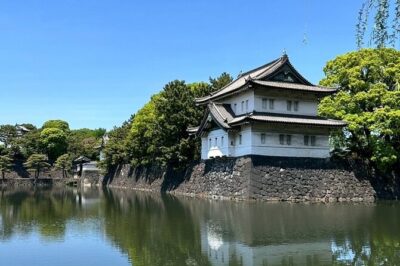
Imperial Palace and Shogun Historical Walking Tour
Read our review →
Tokyo Castle & Imperial PalaceーShogun Walking Tour
Read our review →
Nijo-jo Castle and Ninomaru Palace Guided Tour
Read our review →
Samurai Ninja Museum Guided tour and Experience
Read our review →Browse the lists this tour appears in