
Reviewed · TEMPLES AND SHRINES
Tokyo: Meiji Jingu, Harajuku, Shibuya, and Shijuku Tour
Tokyo changes mood in a few subway stops. This private four-hour tour links a forest shrine, Harajuku’s youth culture, Shibuya’s famous crossing, and Shinjuku after dark. I especially like the personal guide and the easy use of public transportation, which turns a wide stretch of West Tokyo into one manageable outing. The main tradeoff is time: four hours gives you a lively introduction, not a slow, thorough visit to every neighborhood.
I also like that the route can shift around your interests. Guides such as Maruf, Emir, Amir, Ayoub, Erica, and Joe have been praised for their warmth, cultural explanations, patience, and willingness to take photos. If you want long shopping sessions or a sit-down meal, though, you may need to trim some stops or continue exploring after the tour.
In This Review
- Key points at a glance
- Why this four-hour route works in West Tokyo
- Meiji Shrine: Tokyo begins under the trees
- Takeshita Street: Harajuku’s loudest half hour
- Harajuku beyond the main street
- Cat Street: a calmer link to Shibuya
- Shibuya: crossing, shopping, and a useful break
- Shinjuku: Omoide Yokocho, Golden Gai, and neon
- The guide is the main reason to book
- Is $103 per person good value?
- Practical tips for making the four hours work
- Should you book this Tokyo tour?
- FAQ
- How long is the Tokyo West Tokyo tour?
- What locations are available for pickup?
- Is the tour private?
- Is public transportation included?
- Are meals and drinks included?
- Can I visit an animal or snake cafe?
- Is the tour wheelchair accessible?
Key points at a glance
- Meiji Shrine begins the tour quietly, with a forested approach, Shinto customs, and time to learn about Emperor Meiji and Empress Shoken.
- Harajuku packs youth fashion and snack culture into a short walk, including Takeshita Street, boutiques, cafes, and the option to visit Kiddy Land.
- Cat Street offers a calmer change of pace, with vintage shops, stylish boutiques, and a more relaxed route toward Shibuya.
- Shibuya includes more than the crossing, with free time, shopping, the Pokémon Center, and Don Quijote.
- Shinjuku finishes the outing with nightlife and old Tokyo corners, including Omoide Yokocho, Golden Gai, and the Godzilla Head.
- A private English-speaking guide makes the $103 price easier to justify, especially if you are new to Tokyo or want help using trains.
Why this four-hour route works in West Tokyo
Tokyo is not one compact sightseeing district. Meiji Shrine, Harajuku, Shibuya, and Shinjuku are close enough to connect, but far enough apart that first-time visitors can lose time finding the right station exit, street, or entrance.
This tour solves that problem with a private guide and a simple rhythm: walk, learn, ride the subway, then walk again. The guide stays with you throughout the four hours, and public transportation within Tokyo is included. That matters because the train rides are not just transfers. They are part of daily Tokyo life, and using them with someone who knows the route can make the city feel less intimidating.
The group is private, so you are not tied to the pace of strangers. You can ask for more culture, more shopping, more food stops, or more photo time. The advertised route includes time in Shibuya and Shinjuku, but the guide can adjust the outing based on what you have already seen.
At $103 per person, this is not a budget walking tour. The value comes from the private format, transportation, English commentary, and help fitting several large districts into one afternoon or evening. For a couple or family that wants a useful first look at Tokyo, the cost can be sensible. Solo visitors should weigh it more carefully, since the per-person price feels higher when shared by only one person.
More Temples and Shrines in Tokyo
- Tokyo: Meiji Shrine, Asakusa, Skytree Bus Tour and Cruise
★ 4.7 · 1,986 reviews - Tokyo: Asakusa Walking Tour with Sensoji Temple Visit
★ 4.8 · 1,583 reviews - Nikko: Kegon Falls, Lake Chuzenji & Toshogu Temple
★ 4.6 · 1,577 reviews
Meiji Shrine: Tokyo begins under the trees
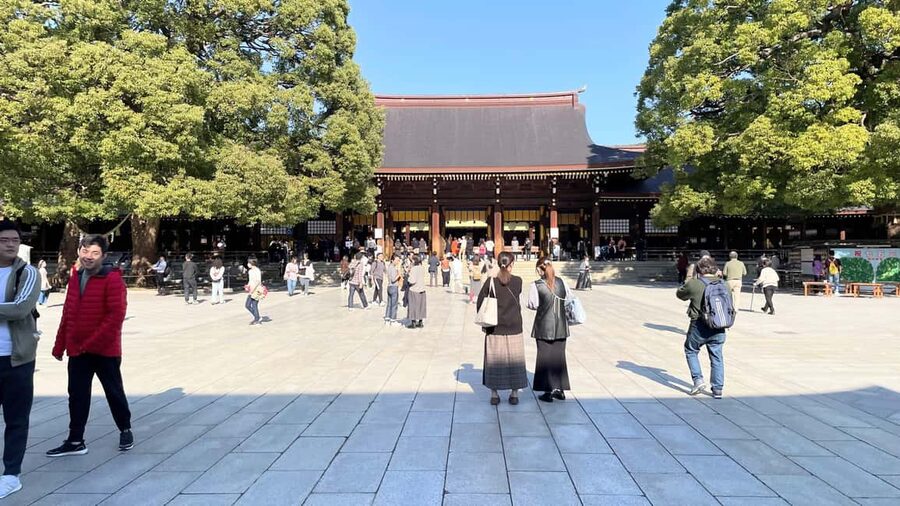
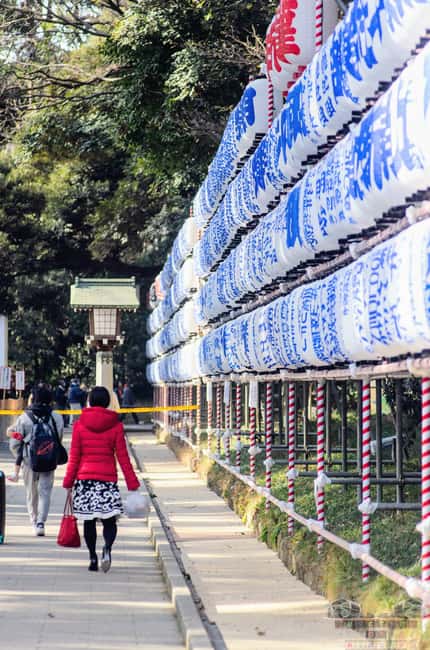
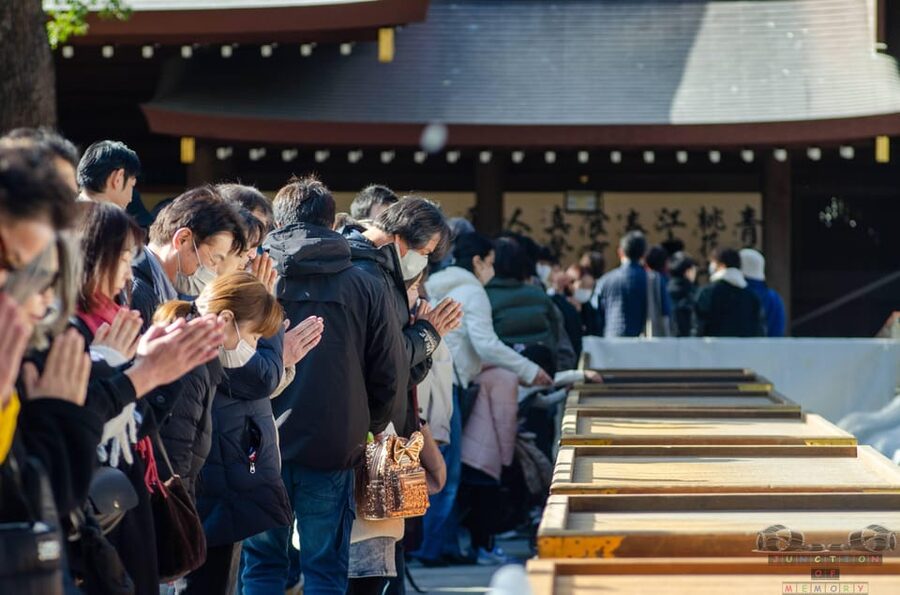
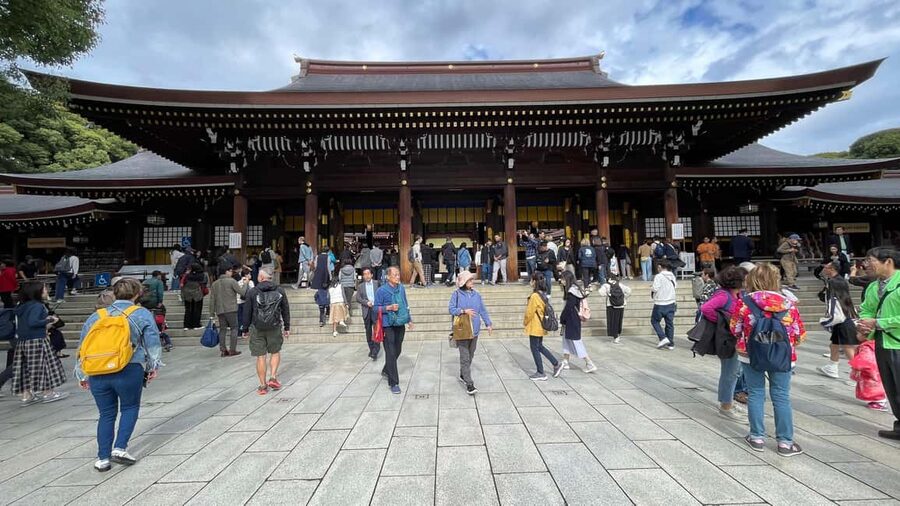
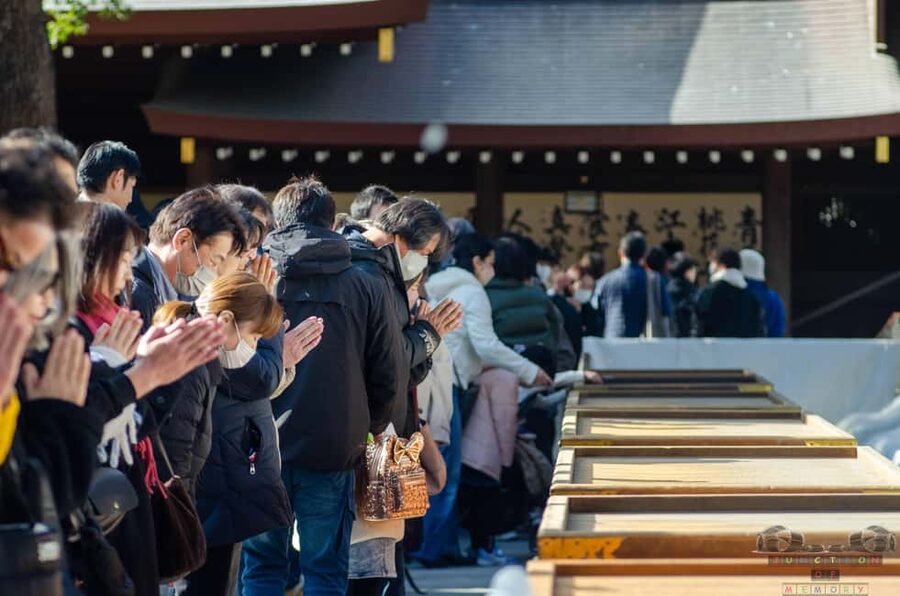
The first stop is Meiji Shrine, known locally as Meiji Jingu. It honors Emperor Meiji and Empress Shoken and sits within a large wooded area that feels far removed from the traffic and towers outside.
That contrast is the point. You move from modern Tokyo into a quiet Shinto setting, where the pace slows and the setting asks for a little respect. Your guide explains why the shrine matters and helps you understand the basic customs rather than simply pointing out buildings.
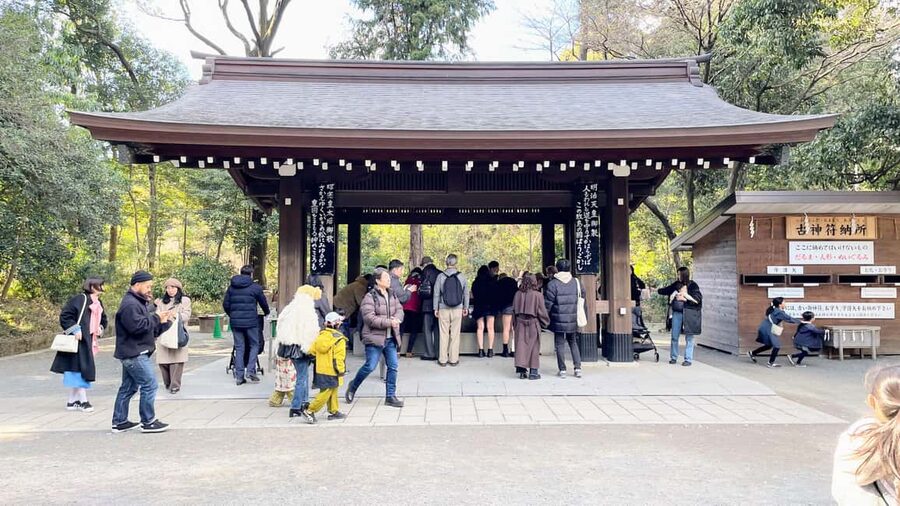
You can take part in familiar rituals such as washing your hands at the temizuya water pavilion or writing a wish on an ema wooden plaque. These small actions give the visit more meaning. You are not just photographing a shrine gate and leaving.
The shrine is an excellent opening stop because it provides cultural context before the shopping districts begin. The drawback is that the forested approach and shrine grounds require walking. The tour is listed as wheelchair accessible, but you should still discuss your needs when arranging the experience, especially since several later stops involve sidewalks, stations, and crowded commercial streets.
A guide can also help you notice the difference between a religious site and a tourist attraction. Meiji Shrine is a working place of worship, so the best approach is calm and observant. Keep your phone and conversation in check near the sacred areas, and follow the guide’s instructions for photographs and rituals.
Takeshita Street: Harajuku’s loudest half hour
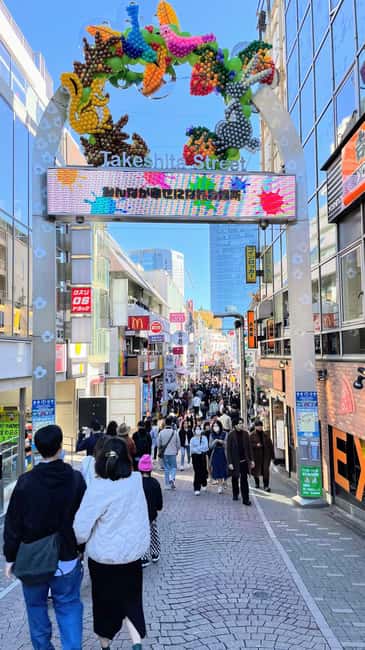
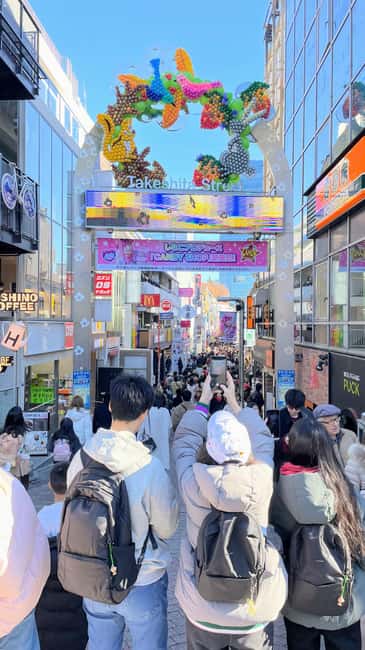
After Meiji Shrine, the route continues on foot for about 15 minutes to Takeshita Street. The scheduled visit lasts around 30 minutes, which is enough for a first look, a few photographs, and a quick taste of Harajuku’s famous snack culture.
Takeshita Street is known for youth fashion, unusual shops, street art, cafes, and sweet treats. Crepes and rainbow-colored cotton candy are the headline snacks. I would treat this stop as a chance to sample the mood rather than a serious shopping session.
The street can feel crowded and fast-moving, especially around popular food counters. That is part of its appeal, but it can also make the stop tiring. If you are traveling with a child or teenager, this may be one of the most enjoyable parts of the morning or afternoon. Erica received special praise for keeping a 12-year-old engaged, and that sort of family awareness can make a real difference.
Your guide can explain how Harajuku became a center for youth fashion and why its styles have reached far beyond Japan. That context helps you see the street as more than a row of colorful shops. It is a place where clothing, food, music, and self-expression meet.
Still, be realistic about the clock. Thirty minutes passes quickly if you stop for a snack, enter a shop, and take photographs. Tell your guide at the start if Takeshita Street is a top priority.
Harajuku beyond the main street
The wider Harajuku area gets about 15 minutes in the planned schedule, including a short visit, guided commentary, and time to pass through nearby streets.
This portion helps balance the intensity of Takeshita Street. You may find fashionable boutiques, cafes, cultural spots, and creative street art. Kiddy Land is included as a possible highlight, especially for families and anyone interested in Japanese character goods.
I like this broader look because it prevents Harajuku from being reduced to one crowded shopping lane. Your guide can point out how the area has changed and where different styles of Tokyo life show up side by side.
The limitation is simple: 15 minutes is a sampler. You will not have time to browse every boutique or linger over coffee. If you already know that Harajuku shopping is your main goal, ask whether the guide can shorten another stop. The private format gives you room to request that kind of change.
A completely different kind of day out:
- Tokyo Disney Resort – Tokyo Disneyland & Tokyo DisneySea Park Tickets
★ 4.8 · 99,488 reviews - SHIBUYA SKY Ticket
★ 4.7 · 46,509 reviews - JR Whole Japan Rail Pass
★ 4.8 · 29,150 reviews - Mt Fuji and Hakone 1-Day Bus Tour Return by Bullet Train
★ 5.0 · 26,383 reviews
Cat Street: a calmer link to Shibuya
The walk from Harajuku toward Cat Street takes about 22 minutes. This is one of the more useful transitions in the tour because it connects two major districts without making you depend entirely on the subway.
Cat Street has a more relaxed feel than Takeshita Street. You will find a mix of high-end stores, vintage clothing, and smaller boutiques. It is a good place to browse without the same concentrated rush found on Harajuku’s main strip.
Do not expect a quiet lane with no shoppers. It remains a popular commercial route, and the walking time adds to the day’s physical demand. Comfortable shoes are important.
This is also a place where a private guide can add value. A guide who knows the area may point out a shop or side street that fits your taste, while a large group would probably move straight through. Joe was praised for showing unusual and interesting places that participants would not have found alone, which is exactly the sort of benefit you want from this section.
Shibuya: crossing, shopping, and a useful break

The subway ride to Shibuya takes about 10 minutes. The Shibuya portion is scheduled for roughly one hour, making it one of the longer stops.
The famous Shibuya Crossing is the main event. When the traffic lights stop the cars, pedestrians move across from several directions at once. It looks chaotic from the outside, but the flow is remarkably orderly. You can watch from street level and take photographs, though the guide may help you find a better position depending on the time and crowd.
The hour also includes free time, shopping, and a break. The Pokémon Center in Shibuya is included, which makes this stop especially appealing to families and fans of Japanese pop culture. Don Quijote, the well-known discount store, adds another distinctly Tokyo experience. It is packed with snacks, gifts, household goods, cosmetics, and odd little purchases that are easy to carry home.
You should decide in advance what matters most here. One hour is enough to cross, photograph, visit one store, and get your bearings. It is not enough for a slow shopping expedition at both the Pokémon Center and Don Quijote.
An optional animal or snake cafe can be arranged in Shibuya if you tell the guide at the beginning. Additional fees may apply. Since this stop uses time that could otherwise go to shopping or the crossing, be clear about your priorities before the tour starts.
Shinjuku: Omoide Yokocho, Golden Gai, and neon
A second subway ride, around 15 minutes, takes you to Shinjuku. The final hour includes a break, photographs, free time, shopping, sightseeing, and the chance to see the district near sunset.
Shinjuku is a strong ending because its mood is so different from Meiji Shrine. Here, you get Tokyo’s nightlife, entertainment, tall buildings, busy streets, and glowing signs. The Godzilla Head is a popular landmark and an easy photo target.
The most interesting part of the stop is the chance to explore Omoide Yokocho, also called Memory Lane, and Golden Gai. These small entertainment areas offer a more intimate view of Shinjuku than the main station roads. Omoide Yokocho is associated with narrow dining lanes, while Golden Gai is known for its compact nightlife bars. The tour provides an introduction and recommendations, but meals and drinks are not included.
This is another place where one hour can feel brief. You may have time to look around and choose where to return later, but not to settle in for a full evening. I would use the guide’s suggestions, then continue independently if Shinjuku is where you want to spend the night.
The finish is also practical. Your guide can recommend places to eat, shop, or explore after the tour, so you do not have to end the evening at the exact moment the four hours are up.
The guide is the main reason to book
The route is appealing, but the guide determines how much you get from it. The strongest praise has focused on guides who explain Japanese customs clearly, adapt the plan, help with trains, and pay attention to the people in the group.
Maruf received repeated praise for friendly service, cultural explanations, customization, and photography. Emir was singled out for detailed explanations, kindness, and a personal view of life in Japan. Amir was praised for patience, safety, and helping with the train ride. Ayoub adjusted the plan as the outing unfolded, while Erica paid close attention to a young traveler’s interests. Joe was appreciated for fun stories and unusual stops.
Those comments point to the tour’s best feature: it is not simply a route between famous places. It can become an introduction to how Tokyo works. You can ask about shrine customs, shopping etiquette, Japanese life, train travel, food, or neighborhoods you plan to visit later.
The tour is conducted in English and is for a private group. The overall rating is 4.7 from 42 ratings, which supports the idea that the guiding service is generally dependable. No guide can guarantee the same personality or exact route every time, but the repeated praise for kindness and flexibility is encouraging.
Is $103 per person good value?
The price includes a private English-speaking guide, transportation within Tokyo, admission to Meiji Shrine, and the stated visits to the Pokémon Center and Don Quijote. It does not include meals, drinks, personal shopping, or optional entry charges such as an animal cafe.
I see the value in three situations. First, you are visiting Tokyo for the first time and want help with the city’s scale. Second, you are traveling with family and want someone to keep the day moving. Third, you have limited time and want to connect four major areas without planning the train routes yourself.
The value is weaker if you are already comfortable navigating Tokyo or prefer to spend an entire afternoon in one neighborhood. You can visit these districts independently, and the four-hour schedule leaves little room for slow browsing.
Ask yourself what you are buying. You are not paying for long visits inside museums or a meal-based food tour. You are paying for orientation, transportation help, cultural explanation, and a private route through several famous parts of West Tokyo.
Practical tips for making the four hours work
Tell the guide your priorities at the start. The tour can be customized, but customization works best when you are clear about whether you prefer shopping, shrine culture, food, photographs, family activities, or nightlife.
Wear shoes suitable for city walking. The route includes a 15-minute walk after Meiji Shrine, a 22-minute walk toward Cat Street, station transfers, and additional walking in Shibuya and Shinjuku.
Keep purchases small until the end. Takeshita Street, Cat Street, Shibuya, and Shinjuku all offer things to buy, but carrying shopping bags through the later train rides is inconvenient.
Bring a short list of questions. Guides have been praised for explaining customs, traditions, and everyday life, so use the time for more than directions. Ask what you should understand before visiting another shrine, how to behave in a bar district, or which Shinjuku areas deserve a return visit.
There are four pickup areas: Minato City, Shibuya City, Taito City, and Shinjuku City. Confirm that your accommodation fits one of these locations before booking. Starting times vary, so check availability and consider a late start if you want the Shinjuku portion near sunset.
The tour is wheelchair accessible, but the route includes public transit and urban walking. Discuss your specific requirements in advance so the guide can shape the route appropriately.
Should you book this Tokyo tour?
Book it if you want a private introduction to West Tokyo that mixes culture, shopping, pop culture, famous photographs, and nightlife in one compact outing. It is particularly useful for a first full day in Japan, a family trip, or anyone who would rather ask a local guide than decode Tokyo’s train system alone.
Skip it if you want deep shopping time, a leisurely meal, or a full evening in Shinjuku. Four hours moves quickly, and the major stops are introductions rather than exhaustive visits.
For most first-time visitors, the strongest reason to book is the guide’s flexibility. A good guide can turn a tight route into a useful personal map of Tokyo. Tell the guide what you care about, accept that you cannot see everything, and use the final Shinjuku recommendations to continue on your own.
FAQ
How long is the Tokyo West Tokyo tour?
The tour lasts four hours.
What locations are available for pickup?
Pickup is available in Minato City, Shibuya City, Taito City, and Shinjuku City.
Is the tour private?
Yes. It is operated as a private group experience with a private English-speaking guide.
Is public transportation included?
Yes. Public transportation fees within Tokyo are included in the tour price.
Are meals and drinks included?
No. Meals and beverages are not included unless they are specifically stated in the itinerary.
Can I visit an animal or snake cafe?
Yes, an animal or snake cafe in Shibuya can be added if you tell the guide at the beginning. Additional fees may apply.
Is the tour wheelchair accessible?
Yes, the activity is listed as wheelchair accessible. Because the route includes walking and subway travel, discuss your needs when arranging the tour.
Just added in Tokyo
- A One-of-a-Kind Sushi Experience in a Special Place of Japan★ 5.0 · 15 reviews
- Tokyo Cute Bento Cooking Class – Make a Kawaii Character Lunchbox★ 5.0 · 126 reviews
- Japanese Home Cooking Class & Walk in Todoroki Temple Tokyo★ 5.0 · 88 reviews
- Japan Tokyo Tower Observatory Deck E-Ticket★ 4.0 · 34 reviews
- Catch a Baseball Game in Tokyo with a Local – Tickets Included★ 5.0 · 24 reviews
- Japan Classic 10 Day – One Life Adventures★ 5.0 · 129 reviews
- JDM Experience with Fast&Furious RX-7 (English speaking Driver)★ 5.0 · 57 reviews
- Tokyo Private Day Tour by Car with English speaking Driver Guide★ 4.0 · 29 reviews
Temples and Shrines, compared.
![[Kyoto & Nara Day Tour] Sagano Scenic Railway & Nara Park & Fushimi Inari Taisha Thousand Torii Gates & Togetsukyo Bridge & Bamboo Grove & Kimono Forest (Departing from Osaka)](https://media.japanvisits.com/wp-content/uploads/kyoto-nara-day-tour-sagano-scenic-railway-nara-park-fushimi-inari-taisha-thousand-torii-gates-togetsukyo-bridge-bamboo-grove-kimono-forest-departing-from-osaka-k110001-400x257.jpg)
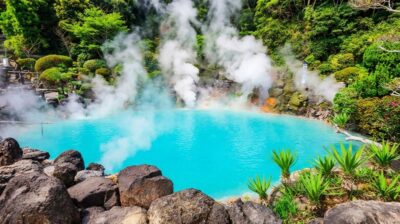
Kyushu One-Day Tour: Yufuin no Mori Train & Yufuin Town & Nyoirin-ji Temple & Dazaifu & Hell Hot Springs (Departing from Fukuoka)
Read our review →
Fushimi Inari, Kinkakuji, Bamboo Grove 1 Day Bus Tour
Read our review →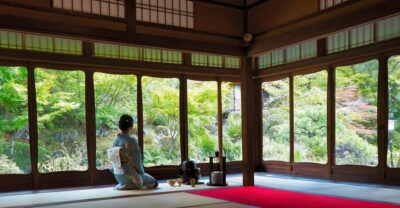
Tea Ceremony in a Traditional Tea House in Kiyomizu
Read our review →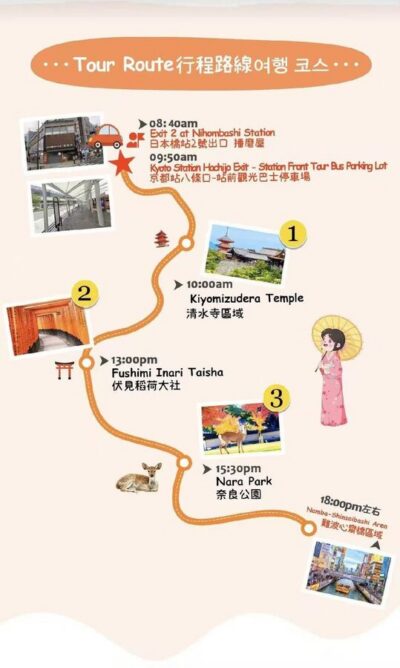
Kyoto Nara Day Trip │ Kiyomizu-dera Temple + Fushimi Inari-taisha Shrine + Nara Park (Departing from Osaka/Kyoto)
Read our review →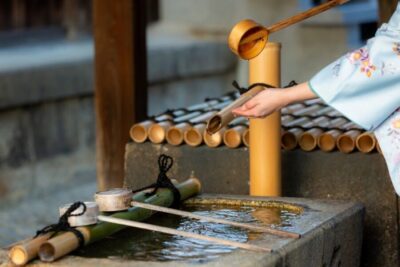
Browse the lists this tour appears in