
Reviewed · WORKSHOPS
Tokyo Original Shoes Making 1 Day Workshop / Ready made orders
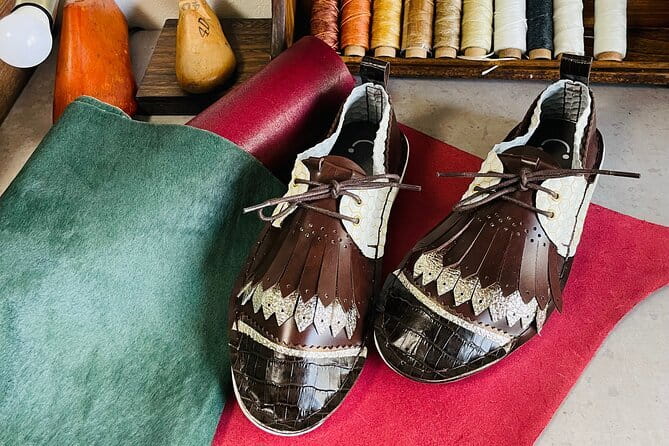
Shoes are better when they tell your story. This Tokyo workshop lets you choose the shoe pattern and materials, then build a pair with Haruka at her Leather Atelier in Jiyugaoka. I like the private setting and the rare chance to work with Japanese leather, antique kimono fabric, lace, and other unusual materials. The main consideration is time: the process can take three to eight hours, so this is not a quick activity between major sights.
You also get real creative control without having to hunt down supplies. You can select the sole, size, colors, stitching, and surface design, with optional kilties for an extra ¥3,850. The price is $164.22 per person, which is fair for a private, materials-included craft session, though optional charges and transportation are not included.
In This Review
- Key details before you book
- Why this Jiyugaoka shoe workshop is worth your time
- Starting with the pattern, from Derby to sneaker
- Picking a sole and finding your size
- Choosing leather, kimono fabric, lace, and more
- Learning the hands-on assembly process
- Haruka’s teaching style and the private format
- A practical look at timing and finished shoes
- What the $164.22 price really covers
- Who will enjoy this experience most
- Booking, cancellation, and useful planning tips
- Should you book the Tokyo shoe-making workshop?
- FAQ
- Where does the shoe-making workshop begin?
- How long does the activity take?
- What shoe styles can I choose?
- What sizes are available?
- What materials can I use?
- Are materials and tools included?
- Can I cancel for a full refund?
Key details before you book
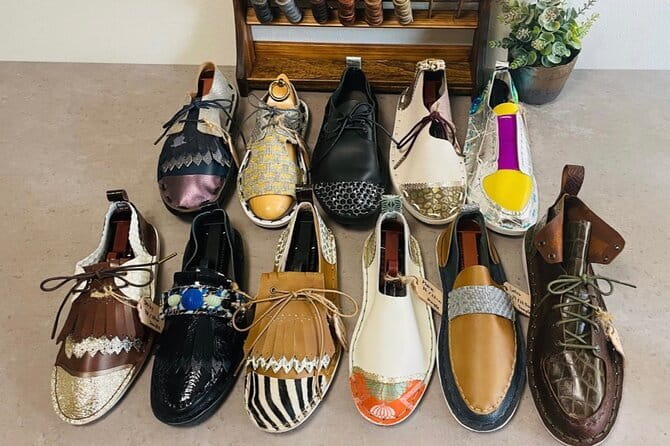
- Choose from several shoe styles: Options include Derby, Macalon, plain, open, loafer, and high-cut or low-cut sneaker designs.
- Use materials with a Tokyo connection: Japanese leather, antique kimono fabric, Italian leather, lace, tweed, ribbon, fur, and PVC are available.
- Work privately with Haruka: Only your own group takes part, making it easier to ask questions and make design decisions.
- Plan for up to eight hours: The listed activity lasts about six hours, while the finishing time can range from three to eight hours depending on your choices.
- Arrange your start time after booking: You need to message Haruka using the contact details on your voucher so she can confirm availability and timing.
- Pickup or delivery matters: For some designs, the shoemaker completes the pair and delivers it to you during your stay in Tokyo.
Why this Jiyugaoka shoe workshop is worth your time
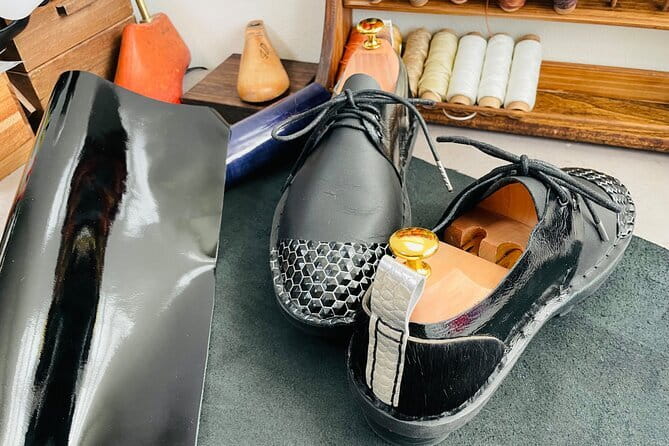
Tokyo is packed with things you can buy. This experience gives you something different: a pair of shoes linked to your own decisions. You are not simply selecting a finished product from a shelf. You are shaping the style, choosing the surface, and helping assemble the early version.
That personal element is the strongest reason to book. A handmade pair can become a useful souvenir rather than another small object for your suitcase. It also gives you a closer look at the work behind footwear, from selecting a pattern to handling thread, rope, soles, and fabric.
I especially like the private format. You are not working in a large class where everyone follows the same template. Your group gets the attention of Haruka, and the available feedback can help when the material choices begin to pile up. One past participant described the process as clear and patient, with enough structure to prevent the design stage from becoming confusing.
The workshop is held in Jiyugaoka, in Meguro City. The meeting point is near public transportation, and the activity returns to the same general meeting point. You will need to arrange your own transportation, but the location is practical for a day built around a neighborhood visit rather than a full-day tour across Tokyo.
A few more options to weigh up in Tokyo
- Tokyo Disney Resort – Tokyo Disneyland & Tokyo DisneySea Park Tickets
★ 4.8 · 99,488 reviews - SHIBUYA SKY Ticket
★ 4.7 · 46,509 reviews - JR Whole Japan Rail Pass
★ 4.8 · 29,150 reviews
Starting with the pattern, from Derby to sneaker
The first major decision is the shoe shape. You can choose a Derby, Macalon, plain shoe, open design, loafer, or sneaker. Sneakers come in high-cut and low-cut versions, giving you a little more control over the final character of the pair.
This choice matters more than it might seem. A simple pattern gives the materials and stitching more attention. A loafer or open style can look lighter, while a Derby has a more traditional outline. The high-cut sneaker option offers a more casual direction, but it may also require you to think carefully about how the selected fabric or leather will look over a larger area.
You can also add shoe kilties for ¥3,850. That optional detail changes the front of the shoe and adds another small design choice. Since optional fees are not included in the main price, ask about the exact cost before committing to extras.
The number of patterns is useful, but it also means you should arrive with a rough idea of the kind of shoe you want. You do not need a finished sketch. A basic preference, such as a dark loafer, a colorful sneaker, or a fabric shoe with visible stitching, will make the early choices easier.
Picking a sole and finding your size
After selecting the pattern, you choose from three sole types:
- Flat white sole, available in sizes 33 to 45
- White platform sole, available in sizes 35 to 40
- Black platform sole, available in sizes 35 to 40
The flat white sole offers the broadest size range. The platform choices are limited to sizes 35 through 40, so check this carefully if you need a smaller or larger size. The available shoe size range overall is 33 to 45, but not every sole works with every size.
The fitting step is important because this is a custom-made item, not a standard retail purchase that you can swap easily later. Haruka will help you select your size after the pattern and sole decisions. Give this part proper attention, even if you usually know your size, because the final comfort depends on more than the printed number.
You may also want to think about the weight and appearance of the sole. A platform gives the shoe a different profile from the flat white option. The black and white choices can either blend into your design or become a strong contrast. These decisions are small, but they are what make the pair feel personal.
Choosing leather, kimono fabric, lace, and more
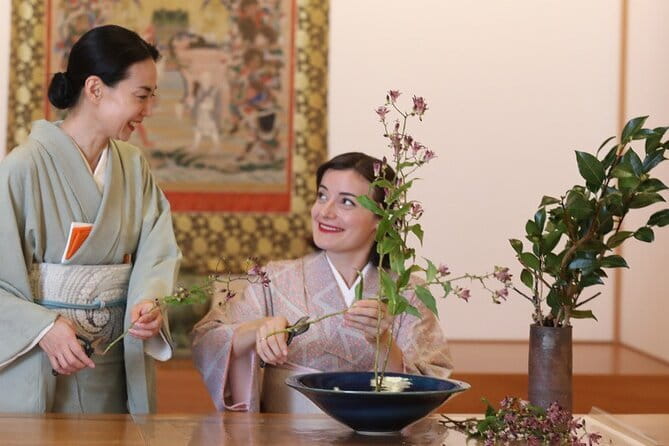
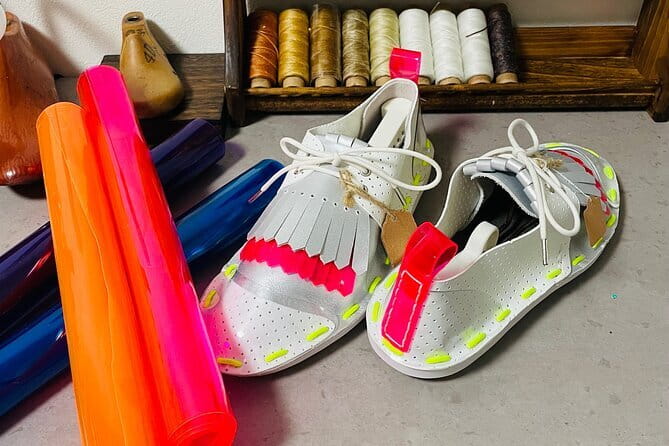
The material stage is where the workshop becomes especially distinctive. You can choose from Japanese-made leather and Italian leather, as well as fur, PVC, tweed, ribbon lace, and antique kimono fabrics.
The kimono fabric is the most unusual option for a visitor looking for a Tokyo-specific keepsake. Antique fabric can give the finished shoes a pattern and color combination that would be hard to find in an ordinary shoe shop. Lace, ribbon, and tweed can create a softer or more decorative look, while leather gives the pair a more classic finish.
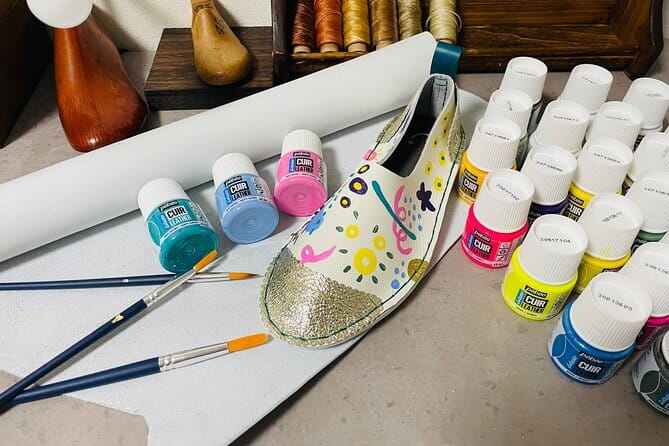
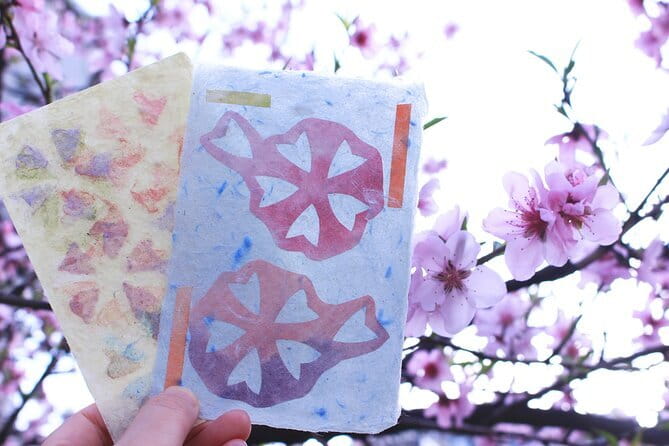
You can also draw your own patterns using paints. This is a good option if you want the shoes to carry a design that does not come from the material itself. It also means the final result can be more artistic than traditional, depending on how much you choose to add.
The amount of choice is generous, but it can be a little much at first. One useful approach is to decide what you want the shoes to do before choosing the material. If you want something understated and easy to wear, a restrained leather combination may make sense. If the shoes are meant to be a special art piece, kimono fabric, lace, paint, or unusual color contrasts give you more room to experiment.
You do not need to source any of these materials yourself. Materials and tool rental are included in the price, which simplifies the experience and protects you from spending the first part of the day shopping for supplies.
A completely different kind of day out:
- Mt Fuji and Hakone 1-Day Bus Tour Return by Bullet Train
★ 5.0 · 26,383 reviews - TOKYO SKYTREE® Ticket
★ 4.7 · 25,136 reviews - teamLab Borderless Tickets: MORI Building DIGITAL ART MUSEUM
★ 4.7 · 24,126 reviews - teamLab Planets TOKYO Ticket
★ 4.7 · 21,663 reviews
Learning the hands-on assembly process
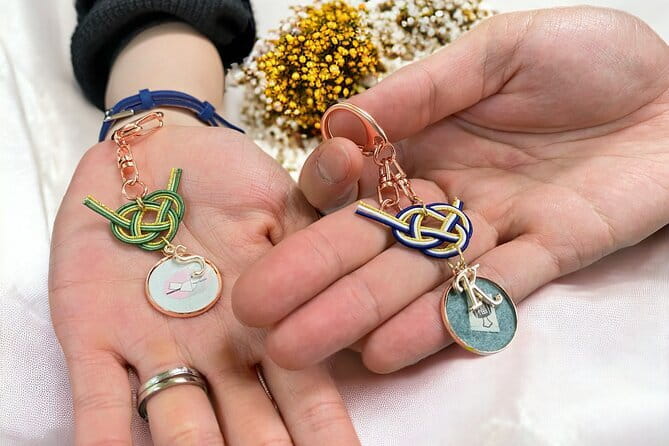
The workshop is not just a design consultation. You take part in assembling the draft and working with the materials. The shoes can be assembled with ropes or with needle and thread, depending on the pattern and design you select.
That hands-on element gives the experience its value. You get to see how separate pieces become footwear, and you gain a better sense of the patience required for handmade shoes. You may not do every final step yourself, especially if the design needs more finishing work, but you are involved in the creative and early construction stages.
The activity description gives a finishing time of three to eight hours. The standard duration is listed as about six hours, so plan for most of a day. A basic design may move more quickly, while a detailed pattern, painted surface, or complicated material combination can take longer.
This is not the right activity for someone who wants a quick demonstration followed by free time in the afternoon. It is better for you if you enjoy careful work and do not mind letting a project set the pace. The reward is a pair shaped by your choices, not a rushed souvenir.
Haruka’s teaching style and the private format
The most highly praised part of the experience is Haruka herself. The available feedback describes her as a terrific teacher, patient, and clear in her instructions. One participant appreciated being able to select the shoe type, leather, and thread while still receiving enough guidance to make the decisions manageable.
That balance matters. A craft workshop can fail in two ways: the instructor can take over, or you can be left alone with too many tools and choices. Here, the private format allows Haruka to guide the process around your group’s design instead of running a one-size-fits-all lesson.
Haruka can also meet you at the station and take you to the atelier, according to the experience details. You should confirm this when arranging your start time, since the meeting point and contact instructions are provided with the ticket voucher.
The private setup is particularly useful if you are booking as a couple, family, or small group with different ideas. You can ask about material combinations, compare patterns, and take the time needed to decide. Larger groups should contact the provider before booking, since the activity is designed around small private participation and special arrangements may be needed for more than two people.
A practical look at timing and finished shoes
The six-hour estimate requires some planning. The workshop is offered from 10:00 a.m. to 10:00 p.m., Monday through Sunday, during the stated operating period. You still need to message Haruka after booking to arrange the actual start time and confirm her availability.
The final delivery arrangement deserves special attention. The process for a ready-made order follows the same steps through the fourth stage, meaning you select the pattern, sole, size, and materials. Haruka then completes the shoes and delivers them to you during your stay in Tokyo.
The information also describes a professional shoemaker crafting and delivering the personalized pair after your design session. Since the exact completion and delivery timing can depend on the design, confirm this directly before booking if your Tokyo schedule is tight. You do not want to leave the city before the shoes are ready.
If you are making the shoes during the workshop, the three to eight-hour estimate gives you a useful planning range. If you are placing a ready-made order, allow enough days in Tokyo for delivery and ask how the process will work for your selected design.
What the $164.22 price really covers
At $164.22 per person, this is not a cheap craft class. It is also not simply a sightseeing activity with a souvenir attached. Your fee includes the materials, rental of tools, and all taxes and fees listed for the activity.
That makes the price easier to judge. Leather, decorative fabric, soles, thread, paints, and other supplies are part of the creative process, and you do not have to assemble the materials yourself. The private format adds value too, especially if you want personal help with fitting and design.
Still, you should budget for transport to Jiyugaoka and any optional extras. Kilties cost an additional ¥3,850, and the listing notes that other optional fees may apply. Private transportation is not included.
I would compare this cost with the price of a good handmade pair of shoes, not with the cost of a museum ticket or a short cooking class. If you care about the finished footwear and the process behind it, the price can be reasonable. If you mainly want an inexpensive activity, it may feel high.
Who will enjoy this experience most
I would recommend this workshop to you if you enjoy making things, care about personal style, or want a Tokyo souvenir with a practical use. It also suits anyone who likes textiles, leatherwork, fashion, or small-scale design.
The experience can work well for a couple or a private group of friends. The one-to-one nature of the teaching means you can take your time and build different designs without being rushed by a large class. Most people can participate, and the activity is near public transportation.
You may want to skip it if your schedule is packed, you dislike making design decisions, or you need guaranteed same-day completion. The workshop is slow by design. The many material choices are part of the fun, but they can also make the process harder for someone who wants a simple, predictable purchase.
Booking, cancellation, and useful planning tips
Confirmation is received at booking, but you should still contact Haruka after booking to arrange the start time. Use the link and contact details on the ticket voucher, and ask about delivery if you are ordering a finished pair rather than completing all the work during your visit.
Free cancellation is available if you cancel at least 24 hours before the local start time. Cancellations made less than 24 hours before the experience are not refunded, and late changes are not accepted.
My best planning advice is simple:
- Leave most of a day open.
- Check the sole size range before choosing a platform design.
- Decide if you want wearable shoes or a more decorative art piece.
- Ask about kilties and any other optional charges.
- Confirm how and when finished shoes will be delivered.
- Contact the provider before booking for more than two people.
Should you book the Tokyo shoe-making workshop?
Book it if you want a personal, useful souvenir and enjoy the making as much as the result. The strongest points are the private setting, Haruka’s patient instruction, the wide material selection, and the chance to use Japanese leather or antique kimono fabric.
Skip it if six to eight hours feels too long or if you need a fixed, fast itinerary. At $164.22, this is best viewed as a private craft lesson plus a custom pair of shoes, not a casual stop between attractions. For the right person, that is exactly the appeal.
FAQ
Where does the shoe-making workshop begin?
The workshop begins in Jiyugaoka, Meguro City, Tokyo, at the stated meeting point near public transportation.
How long does the activity take?
The experience lasts approximately six hours. Depending on the pattern and design, the shoes can take three to eight hours to finish.
What shoe styles can I choose?
Available patterns include Derby, Macalon, plain, open, loafer, and sneaker styles. Sneakers are available in high-cut and low-cut versions.
What sizes are available?
Sizes 33 through 45 are available overall. The flat white sole is available in sizes 33 through 45, while both platform soles are available in sizes 35 through 40.
What materials can I use?
You can choose Japanese-made leather, Italian leather, fur, PVC, tweed, ribbon lace, and antique kimono fabrics. You can also draw patterns with paints.
Are materials and tools included?
Yes. Materials and rental of tools are included, along with all listed fees and taxes.
Can I cancel for a full refund?
Yes, if you cancel at least 24 hours before the experience start time. Cancellations made less than 24 hours in advance are not refunded.
Just added in Tokyo
- Tokyo Private Day Tour by Car with English speaking Driver★ 5.0 · 25 reviews
- Tokyo Private Customizable Tour with English Speaking Chauffeur★ 5.0 · 92 reviews
- Chill Out in Tokyo: Personalized Private Tours with Local Friends★ 5.0 · 104 reviews
- Tokyo Private Customized Walking tours with Local guide★ 5.0 · 23 reviews
- Tokyo Private Tour with Local Expert Guide – Hidden Gems★ 5.0 · 36 reviews
- Tokyo 6 hour Tour : English Speaking Driver Only, No Guide★ 4.0 · 15 reviews
- Tokyo Metropolis★ 5.0 · 51 reviews
- Tokyo Portrait Tour with a Professional Photographer★ 5.0 · 58 reviews
Workshops, compared.
Sushi Making Tokyo Roll and Authentic Japanese Sushi Class
Read our review →
Gion Make Your Own Chopsticks with Engraving Option
Read our review →
Roll and Authentic Sushi Making Class in Asakusa
Read our review →
Ramen Cooking Class at Ramen Factory in Kyoto
Read our review →
Tokyo Asakusa Chopsticks Workshop: Make Your Own Pair
Read our review →
Ring Making Workshop : Vintage Japanese Coin Ring
Read our review →Browse the lists this tour appears in