
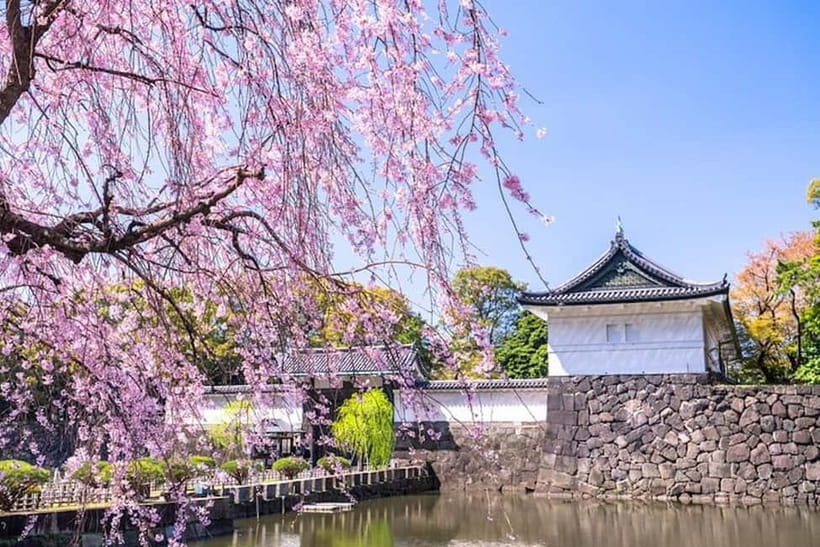
Reviewed · CASTLES AND HISTORIC SITES
Tokyo: Pvt. Tour – Edo Castle & Imperial Palace East Gardens
Tokyo hides its best history in plain sight. This two-hour private walk through the Imperial Palace East Gardens takes you from a calm fountain park to the stone walls, moats, and gardens of Edo Castle, with an English-speaking guide to explain what you are seeing. I like the personal pace and the way the tour connects Japan’s shogun era with its imperial present. The main limitation is clear: you do not enter the palace where the Emperor resides.
I also like the easy meeting point, just three minutes from Otemachi Station and about ten minutes from Tokyo Station. Guides such as Yoshi, Yuji, Naoko, and Masahito have been praised for clear English, thoughtful pacing, and useful help beyond the garden itself. Seasonal timing matters, though. Cherry blossoms and other flowers may not be in bloom when you visit.
In This Review
- Key points to know before booking
- Why Edo Castle is the right place to start
- Reading the ruins of Edo Castle
- Ninomaru Garden, where history becomes easier to feel
- What a private two-hour walk feels like
- The Imperial Palace question, answered plainly
- Is $63 good value for two hours?
- Finding the guide without stress
- Who will enjoy this most?
- Should you book the East Gardens tour?
- FAQ
- Where does the tour meet?
- How far is the meeting point from Otemachi Station?
- How far is it from Tokyo Station?
- How long does the tour last?
- Is this a private tour?
- Does the tour enter the Imperial Palace?
- Will my luggage be inspected?
- Can I bring a Japanese knife purchased earlier that day?
Key points to know before booking
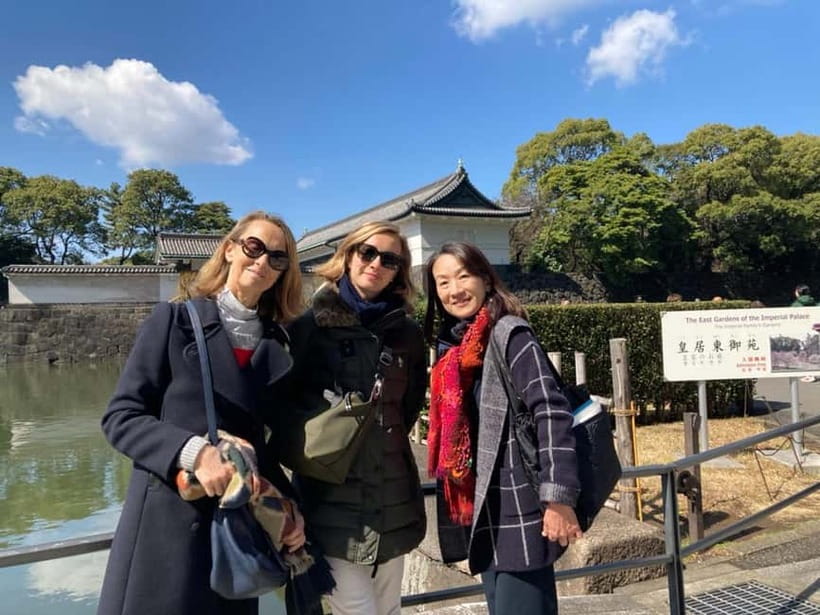
- Edo Castle survives in stone and space: See old walls, moats, gates, and the enormous foundations of the former keep.
- A private guide changes the visit: You can ask questions, set a comfortable pace, and focus on the parts that interest you most.
- Ninomaru Garden brings the history to life: Seasonal flowers, koi, ponds, and carefully arranged plantings soften the old military site.
- The meeting point is central: Find the guide with a sign saying gotcha at Wadakura Fountain Park.
- The Imperial Palace itself is off limits: This is an outdoor East Gardens visit, not an interior palace tour.
- Pack light: Expect a baggage inspection at the entrance, and store knives or similar items before meeting the guide.
Why Edo Castle is the right place to start
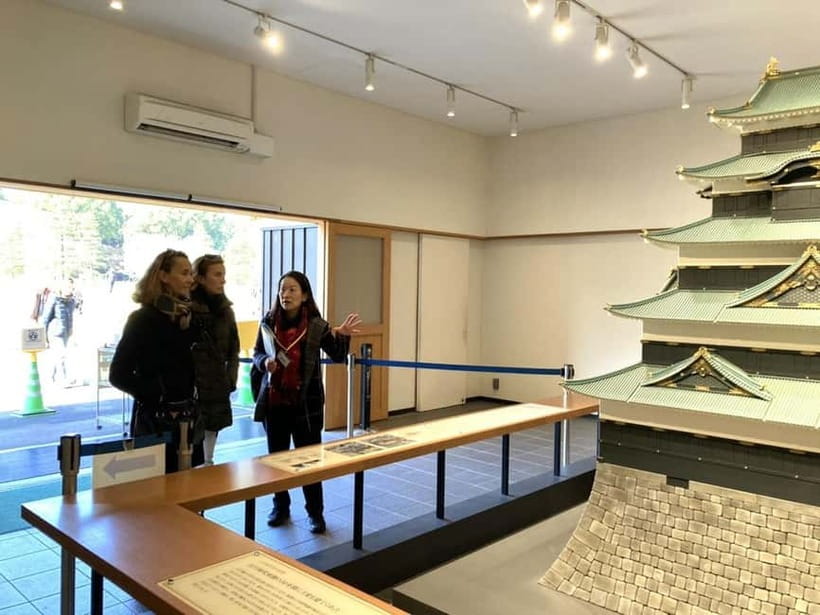
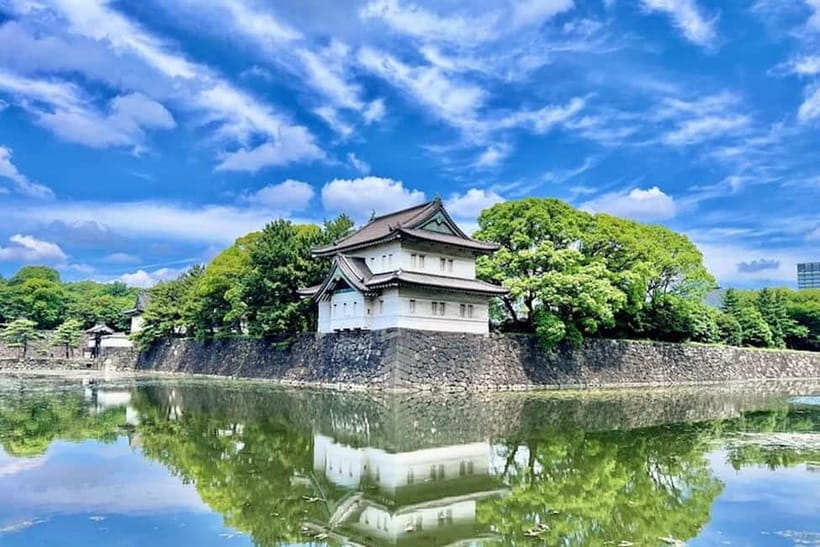
The Imperial Palace East Gardens occupy ground once controlled by Edo Castle, the seat of the Tokugawa shoguns. That name matters. For centuries, the shogun held practical power in Japan while the Emperor remained a revered but more distant figure in Kyoto. Walking these grounds gives you a physical sense of that old political order.
You begin at Wadakura Fountain Park, in front of Starbucks. It is a modern and easy-to-find spot, surrounded by office towers and broad city streets. Then the guide leads you toward the historic Main Gate, where the old guardhouse offers an early clue to the site’s military purpose.
The gate is especially interesting because old and new security exist side by side. You see traditional architecture, but you also pass through a modern controlled entrance. That small contrast helps explain the character of the entire visit: this is not a preserved medieval town, but a working part of central Tokyo with layers of history still visible.
At the entrance, allow time for a baggage inspection. The instruction is practical and worth taking seriously. If you have bought Japanese knives or other objects that could be used as weapons at Tsukiji, Asakusa, or elsewhere, put them in a coin locker before meeting the guide. Do not arrive hoping to explain them at the gate.
More Castles and Historic Sites in Tokyo
- Tokyo: Imperial Palace and Shogun Historical Walking Tour
★ 5.0 · 2,251 reviews - Tokyo Castle & Imperial PalaceーShogun Walking Tour
★ 4.7 · 1,068 reviews - Tokyo: Samurai Ninja Museum Guided tour and Experience
★ 4.6 · 1,010 reviews
Reading the ruins of Edo Castle
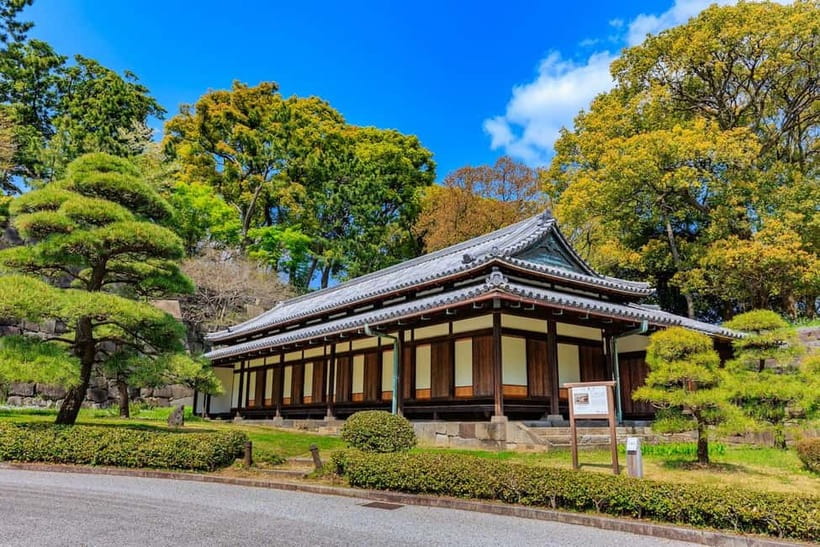
The East Gardens do not give you a complete castle. The wooden buildings and much of the old complex are gone, but the remaining stonework is impressive. Massive walls, moats, gates, and the base of the former keep show the scale of the Tokugawa stronghold more clearly than a museum model ever could.
The guide’s role is important here. Without context, a stone wall can become just another photo stop. With an explanation of who used the gates, how the castle was organized, and why the keep mattered, the open spaces begin to make sense.
I would pay close attention to the castle keep ruins. You will not see a tall tower rising above the trees, but the huge foundation gives you a useful idea of the structure that once dominated the site. It also makes the tour less about grand buildings and more about reading evidence left behind.
This is where a private format earns its price. You can stop to ask about Japanese feudal society, the role of the shogun, or the difference between the castle grounds and the palace today. Guides have been praised for answering questions carefully, and one guide, Masahito, even sought help from another guide when he did not have an answer immediately. That is the sort of small effort that makes a two-hour walk feel personal rather than rehearsed.
The ruins also provide a welcome change from Tokyo’s crowded commercial districts. You are still in the center of the capital, but the moats and open grounds create breathing room. The contrast is part of the pleasure: a few minutes earlier you were near train stations and office buildings, and now you are following old castle lines through trees and stone.
Ninomaru Garden, where history becomes easier to feel
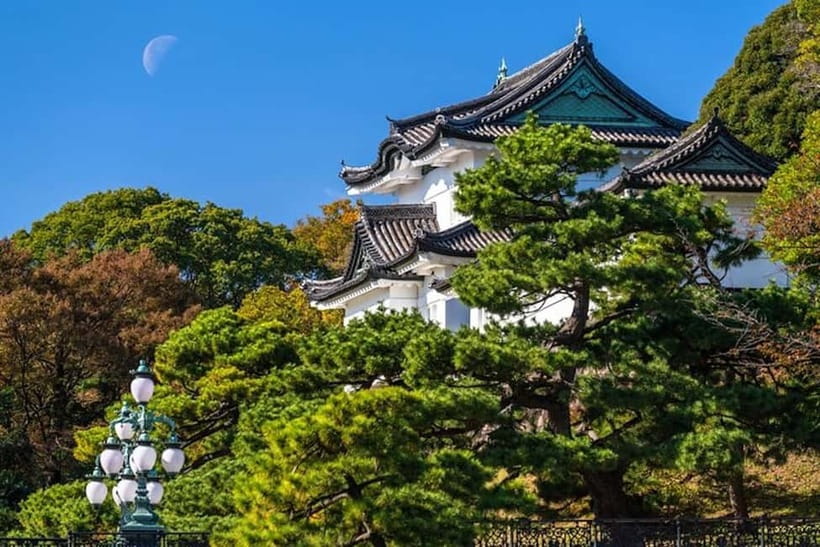
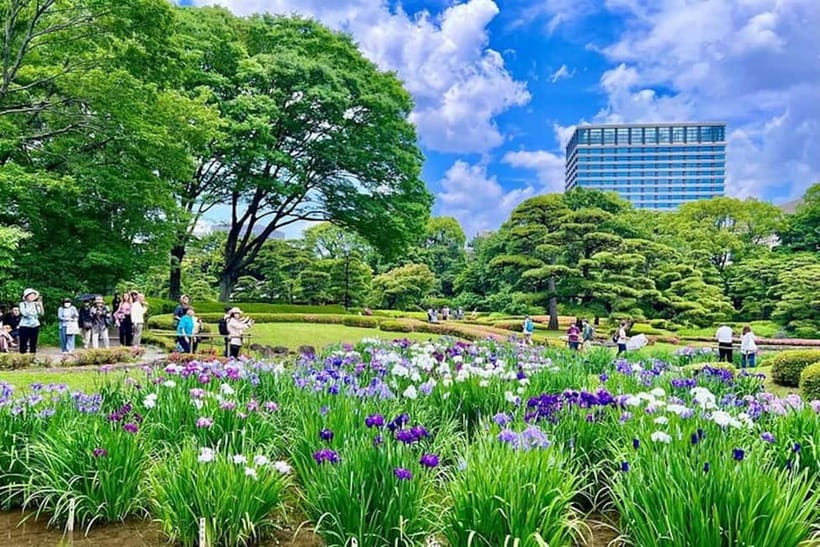
The Ninomaru Garden is likely to be the prettiest part of the walk. It is a traditional Japanese garden with ponds, shaped trees, seasonal flowers, and koi. Its calm design is a sharp counterpoint to the defensive walls and formal gates you see elsewhere.
The garden is also a useful reminder that Edo Castle was not only a military headquarters. Great power required ceremony, controlled movement, impressive spaces, and close attention to beauty. The garden’s quiet paths help you picture a courtly world behind the castle defenses.
Seasonal timing affects what you will see. Cherry blossoms may be the main reason you choose spring, but they are not guaranteed. One April visit found that the blossoms and flowers were still not fully open. That is not a flaw in the tour, but it is a good reason to keep expectations sensible.
Summer brings irises, while autumn offers changing leaves. Other plantings may look good at different times, but the supplied details specifically highlight cherry blossoms in spring, irises in summer, and autumn foliage. If flowers are central to your plans, check the likely season rather than assuming the garden will look like a peak-bloom photograph.
The koi are another small but memorable detail. Naoko was praised for explaining the hybrid koi and the plants, buildings, and people connected with the site. That kind of detail gives you more to notice after the tour ends. You may find yourself looking into the ponds and gardens with a better sense of what has been carefully arranged.
What a private two-hour walk feels like
The group is private, which means you are not tied to the pace of strangers. That matters more than it might seem. A garden walk can feel rushed if the guide moves on just as you find something worth examining, or slow if the group stops too long at a place that does not interest you.
Families should find the format useful. Yuji was praised for walking at a comfortable pace and helping a family notice features they might otherwise have missed. Another guide, Mari, was described as organized and easy to follow. These comments point to the main benefit of the experience: the guide can adjust the walk to the people in front of them.
You should still expect a walking tour, not a seated history lesson. Wear shoes that suit a two-hour outing and plan for time outdoors. The information provided does not promise a fixed route beyond the East Gardens, so the exact order and amount of time at each point may change with the guide and your interests.
The English-language support is a major reason to book. Visitors who already know Japanese history may appreciate the chance to ask detailed questions. If you are new to the Edo period, the guide can provide the basic framework that turns walls, gates, and gardens into a coherent story.
Several guides have earned specific praise. Yoshi was appreciated for strong English and interesting facts about palace buildings and gardens. Yuji was described as welcoming and attentive, while Ishida was praised for his command of the Edo period. Hiroshito was noted for kindness, punctuality, and a smooth visit. These individual strengths suggest that the company places real value on the guide, though you may not be able to choose a particular person when booking.
A completely different kind of day out:
- Tokyo Disney Resort – Tokyo Disneyland & Tokyo DisneySea Park Tickets
★ 4.8 · 99,488 reviews - SHIBUYA SKY Ticket
★ 4.7 · 46,509 reviews - JR Whole Japan Rail Pass
★ 4.8 · 29,150 reviews - Mt Fuji and Hakone 1-Day Bus Tour Return by Bullet Train
★ 5.0 · 26,383 reviews
The Imperial Palace question, answered plainly
The name can create confusion. This experience visits the Imperial Palace East Gardens, but it does not take you inside the Inner Palace or into the residence used by the Emperor.
You should book this if you want the grounds, castle remains, garden scenery, and historical explanation. You should not book it expecting palace rooms, imperial ceremonies, or an interior tour.
That distinction is not a minor technicality. The appeal here is the setting and the story of the former castle complex. The open grounds let you see how Tokyo’s imperial center relates to its shogun-era past, but you remain outside the palace buildings.
For many people, that is enough. The East Gardens offer more visible history than a distant glimpse of a palace roof, and the outdoor route allows you to move through gates, ruins, moats, and plantings. If your main goal is to enter the Imperial Palace, you will need a different activity.
Is $63 good value for two hours?
At $63 per person, this is not the cheapest way to walk through a public garden. You can visit the East Gardens without hiring a private guide, assuming you follow the site’s admission and opening arrangements separately. The question is whether you want to supply the historical explanation yourself.
I think the price is reasonable for a private English-language walk, especially for a first visit to Tokyo. You are paying for a guide who can explain the political meaning of Edo Castle, point out details you might pass, answer questions, and adjust the pace for your group.
The value rises for families and small groups with mixed interests. A guide can keep children engaged with visible features such as moats, walls, gates, and koi, while adults ask about the shoguns or imperial history. It also helps if nobody in your group wants to spend time reading signs or sorting out the site alone.
The value is lower if you enjoy independent research, already understand the Edo period, or only want quick garden photographs. Two hours is focused rather than expansive, and the palace interior is not included. You are buying interpretation and company, not access to a restricted building.
The reserve-now, pay-later option keeps the booking flexible, and cancellation is free up to 24 hours before the start for a full refund. Those terms are useful when you are arranging a Tokyo schedule around weather, jet lag, and changing plans.
Finding the guide without stress
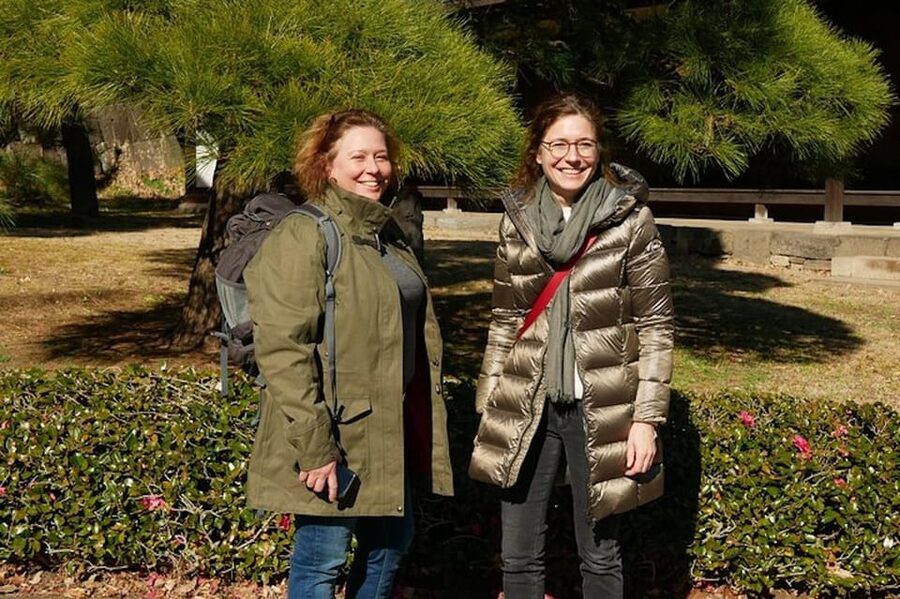
The meeting point is in Wadakura Fountain Park, in front of Starbucks. Look for a guide holding a sign that says gotcha. From Tokyo Metro Otemachi Station, use exit D2 and allow about three minutes on foot. From Tokyo Station’s Marunouchi Central Exit, allow about ten minutes.
That is a good location for fitting the tour into a day of sightseeing. The area is central, and the short walk from either station is manageable. Still, Tokyo station areas can be confusing, so do not leave the meeting point until the last second.
The guide speaks English, and the group is private. Starting times vary, so you need to check availability when booking. The listed duration is two hours, which makes the tour easy to place in a morning or afternoon schedule.
Keep your luggage light. The baggage inspection is the one practical detail most likely to cause trouble if ignored. Store knives and similar purchases before the meeting, rather than carrying them from Tsukiji, Asakusa, or another shopping stop.
Who will enjoy this most?
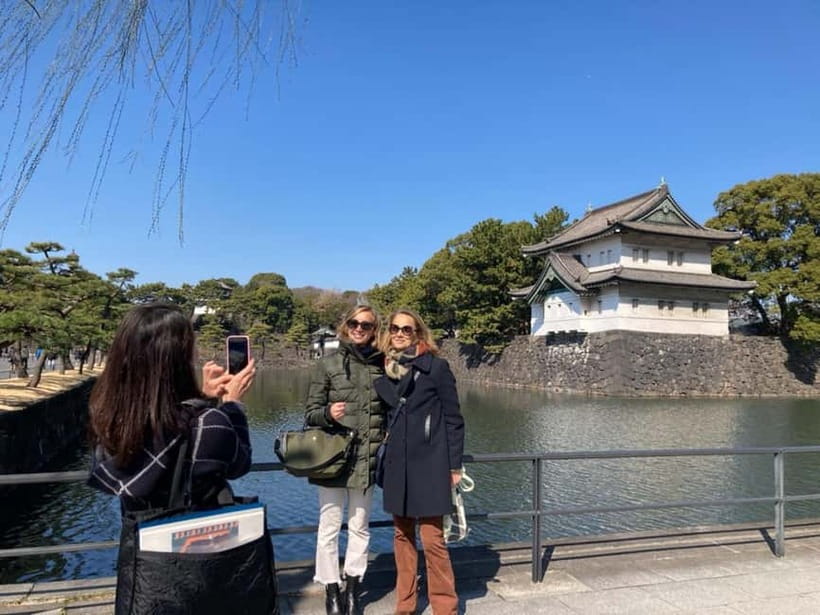
I would recommend this walk to first-time Tokyo visitors who want history without giving up an easy city-center location. It gives you a useful introduction to the Edo period and lets you see one of Tokyo’s quietest major historic areas.
It is also a good choice for families. The private setting, flexible pace, and mix of ruins, garden scenery, and koi make it easier to hold everyone’s attention. Yuji’s family-friendly pacing is a good example of what you should hope for from the format.
Couples and older visitors may appreciate the calm setting and the chance to walk without a large group. The route is outdoors, so weather and personal walking comfort still matter. The available information does not give specific accessibility details, so you should ask the operator directly if your group has mobility needs.
History fans will get the most from the castle ruins. Garden lovers may prefer the Ninomaru section, especially in a season with cherry blossoms, irises, or autumn leaves. If you want both, schedule the walk when the plants are likely to look their best, but remember that nature does not follow a booking calendar.
This is less suited to someone chasing Tokyo’s modern neighborhoods, food stalls, or shopping streets. It also will not satisfy you if entering the Imperial Palace is the main purpose of your day.
Should you book the East Gardens tour?
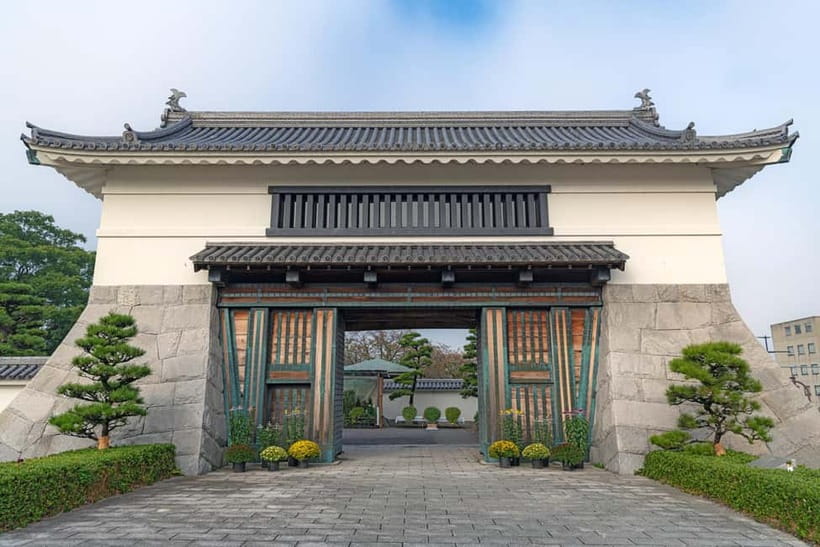
Book it if you want a private guide, a clear Edo-period story, and a peaceful walk in central Tokyo. The strongest part of the experience is the combination of personal attention and visible remains: stone walls, moats, castle foundations, and the carefully planned Ninomaru Garden.
I would be especially inclined to book for a family, a first Tokyo visit, or anyone who wants more than attractive garden photographs. Guides such as Yoshi, Yuji, Naoko, Mari, and Masahito have been praised for clear English, kindness, organization, and useful answers.
Skip it if you want to enter the palace, need a very short sightseeing stop, or prefer to explore gardens without commentary. Also think twice if your schedule depends on peak cherry blossoms, since flowering dates can disappoint.
For most visitors who want a calm historical pause in the middle of Tokyo, $63 buys a worthwhile two hours. Just arrive at the correct fountain park, store any knife purchases, and remember that the castle ruins and gardens are the main event, not the palace interior.
FAQ
Where does the tour meet?
Meet in front of Starbucks at Wadakura Fountain Park. Look for the guide holding a sign that says gotcha.
How far is the meeting point from Otemachi Station?
The meeting point is about a three-minute walk from Tokyo Metro Otemachi Station exit D2.
How far is it from Tokyo Station?
It is about a ten-minute walk from Tokyo Station’s Marunouchi Central Exit.
How long does the tour last?
The guided walk lasts two hours.
Is this a private tour?
Yes. The experience is arranged for a private group with an English-speaking guide.
Does the tour enter the Imperial Palace?
No. The tour visits the Imperial Palace East Gardens but does not enter the Inner Palace or the building where the Emperor resides.
Will my luggage be inspected?
Visitors are subject to a baggage inspection when entering the Imperial Palace grounds.
Can I bring a Japanese knife purchased earlier that day?
You should place Japanese knives or other items that could be used as weapons in a coin locker or similar storage before meeting the guide.
Just added in Tokyo
- A One-of-a-Kind Sushi Experience in a Special Place of Japan★ 5.0 · 15 reviews
- Tokyo Cute Bento Cooking Class – Make a Kawaii Character Lunchbox★ 5.0 · 126 reviews
- Japanese Home Cooking Class & Walk in Todoroki Temple Tokyo★ 5.0 · 88 reviews
- Japan Tokyo Tower Observatory Deck E-Ticket★ 4.0 · 34 reviews
- Catch a Baseball Game in Tokyo with a Local – Tickets Included★ 5.0 · 24 reviews
- JDM Experience with Fast&Furious RX-7 (English speaking Driver)★ 5.0 · 57 reviews
- Tokyo Private Day Tour by Car with English speaking Driver Guide★ 4.0 · 29 reviews
- Japan Classic 10 Day – One Life Adventures★ 5.0 · 129 reviews
Castles and Historic Sites, compared.

Imperial Palace and Shogun Historical Walking Tour
Read our review →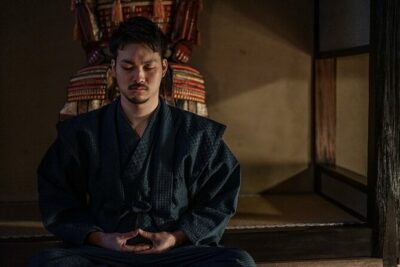
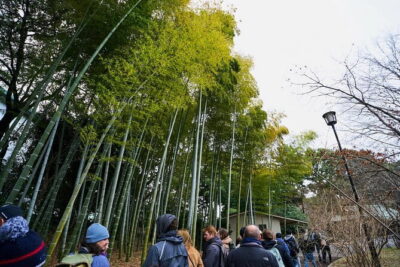
Tokyo Castle & Imperial PalaceーShogun Walking Tour
Read our review →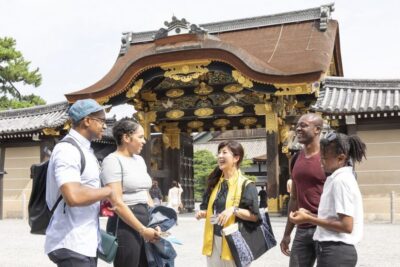
Nijo-jo Castle and Ninomaru Palace Guided Tour
Read our review →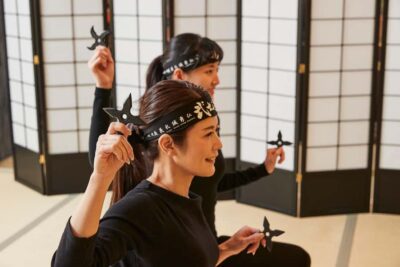
Samurai Ninja Museum Guided tour and Experience
Read our review →Browse the lists this tour appears in