

Reviewed · CASTLES AND HISTORIC SITES
Tokyo Samurai Experience: Kyudo (Archery) and Swordsmanship
Samurai training fits neatly into a Tokyo afternoon. This one-hour experience in Asakusa gives you a playful introduction to kyudo, Japanese archery, and katana technique without requiring prior skill. I like the traditional hakama outfit, which makes the session feel more special, and I like that the bilingual staff keep the explanations simple for different levels of English.
I also like the mix of activity and culture. You learn a little about samurai traditions, compete in a mini-game, try a bow and single-edged sword, enjoy Japanese snacks, and get help taking photos. The main drawback is the short one-hour format. You will get a taste of each skill rather than serious martial arts training, so anyone hoping for a long archery lesson may find the pace brisk.
In This Review
- Key details at a glance
- Arriving at the Heiwa Building in Asakusa
- Changing into a samurai hakama outfit
- A quick lesson in samurai customs and rank
- Learning kyudo with a Japanese bow
- Handling the katana and finding the right pose
- Friendly instruction from Mori, Joe, and the team
- Snacks, photos, and the value of the $96 price
- How the one-hour schedule feels
- Who will enjoy this Asakusa activity most
- Practical tips before you book
- Should you book the Tokyo Samurai Experience?
- FAQ
- Where does the Tokyo Samurai Experience take place?
- How long does the experience last?
- How much does the experience cost?
- Is prior experience required?
- Is the activity taught in English?
- What clothing should I wear?
- What is included in the price?
- Is the experience suitable for families?
- Is the activity wheelchair accessible?
- What is the cancellation policy?
Key details at a glance

- Dress in a hakama set: Traditional clothing comes in many sizes and heights, so most people can take part comfortably.
- Try two very different skills: Kyudo uses a traditional Japanese bow and has a different feel from Western archery, while the katana lesson focuses on posture and handling.
- Compete for the shogun position: A short samurai mini-game adds a light, social challenge before the main training begins.
- Meet friendly English-speaking instructors: Coaches including Mori and Joe have been praised for patience, clear instruction, and a fun approach.
- Leave with photos and snacks: Staff help capture pictures during the activity, and Japanese snacks are included.
- Easy Asakusa location: The activity takes place at 2 Chome 6-11 in Taito-ku, inside the Heiwa Building on the fifth floor.
Arriving at the Heiwa Building in Asakusa

The meeting point is Tokyo, Taito-ku, Asakusa, 2 Chome 6-11, Heiwa Building. You need to take the elevator to the fifth floor, an important detail because the activity is not at street level.
I would arrive 10 minutes early. That gives you time to find the building, use the elevator, and get ready without rushing. If the entrance proves hard to locate, the provider asks you to contact them rather than wander around Asakusa with a sword lesson waiting upstairs.
Asakusa is a useful area for this kind of activity. You can pair the session with sightseeing in the neighborhood, but keep your schedule sensible. The experience lasts one hour, and the listed start times depend on availability. Since changing clothes and receiving instructions take part of that hour, arriving early matters.
The activity is wheelchair accessible. Comfortable clothes and comfortable shoes are recommended, and alcohol and drugs are not allowed. Those rules are simple, but sensible: you will be standing, moving, posing, and handling training equipment.
More Castles and Historic Sites in Tokyo
- Tokyo: Imperial Palace and Shogun Historical Walking Tour
★ 5.0 · 2,251 reviews - Tokyo Castle & Imperial PalaceーShogun Walking Tour
★ 4.7 · 1,068 reviews - Tokyo: Samurai Ninja Museum Guided tour and Experience
★ 4.6 · 1,010 reviews
Changing into a samurai hakama outfit
The first memorable step is changing into a samurai outfit, known as a hakama set. Traditional clothing changes the mood at once. You are no longer simply attending a quick indoor activity in Asakusa. You are preparing to play the part of a warrior from another period of Japan.
The available outfits cover different heights and sizes, which makes this more practical than a one-size costume photo stop. Still, wear clothes that are easy to change out of and shoes that feel secure. The supplied guidance specifically asks for comfortable clothing and shoes.
I see the outfit as more than decoration. It helps you understand the posture and controlled movement that the instructors want. A katana pose looks different when you are wearing traditional clothing, and the photos have more character than ordinary snapshots.
This is also a good option for families and mixed-age groups. You do not need martial arts experience, and the clothing gives children and adults an immediate role to play. The activity is family-friendly, though anyone who dislikes dressing up may find this part less appealing.
A quick lesson in samurai customs and rank

Before the archery and sword work, the staff give a brief introduction to samurai history and traditions. Do not expect a long museum-style lecture. The purpose is to give you enough context to understand the activities and the idea of samurai discipline.
Then comes a fun mini-game to determine your samurai rank. The prize is the chance to compete for the general, or shogun, position. This is a clever way to get people involved before the technical instruction begins.
The mini-game also lowers the pressure. You can lose and still continue to the real training, so nobody is eliminated from the main experience. I like that approach because it keeps the tone playful rather than making the activity feel like a serious test.
If you are visiting with friends, this opening competition may be one of the most entertaining parts. It gives your group something to laugh about and creates a little friendly rivalry. If you prefer quiet, formal instruction, the game may feel less traditional than you expected.
Learning kyudo with a Japanese bow
Kyudo is the main cultural surprise here. It is Japanese archery, but it is not simply a Japanese version of the Western archery you may have seen at a range. The posture, handling, and overall method are different, which gives the lesson its own character.
The instructor introduces the traditional Japanese bow and explains how to hold and use it. Since no prior experience is needed, you will receive guidance from the beginning. The staff adapt their English to your level, which is especially helpful when an activity involves precise body position.
The lesson includes a competition with your friends for the shogun position. That competitive element keeps the bow work lively, but it is worth keeping your expectations realistic. This is a one-hour sampler, not a formal kyudo course. You will learn the basic feel of the discipline rather than develop refined archery technique.
I like this part because it offers something less common than a standard photo session. You are not only wearing a costume and holding a prop. You are introduced to a traditional martial art and asked to pay attention to how the bow is handled.
The activity provider supplies the bow, so you only need to arrive in comfortable clothes and shoes. Follow the instructor carefully, especially if you are used to Western archery. Trying to force familiar habits onto kyudo may make the lesson harder.
A completely different kind of day out:
- Tokyo Disney Resort – Tokyo Disneyland & Tokyo DisneySea Park Tickets
★ 4.8 · 99,488 reviews - SHIBUYA SKY Ticket
★ 4.7 · 46,509 reviews - JR Whole Japan Rail Pass
★ 4.8 · 29,150 reviews - Mt Fuji and Hakone 1-Day Bus Tour Return by Bullet Train
★ 5.0 · 26,383 reviews
Handling the katana and finding the right pose
The second skill is the use of a single-edged sword, the katana. The instruction centers on how to hold the sword, how to position your body, and how to create the strong samurai pose.
That focus makes sense for a short session. Safe sword technique takes time to learn, and the experience does not pretend to turn you into a trained swordsman in one hour. Instead, you get an accessible introduction to posture and presentation, with staff nearby to guide you.
This is likely the best part for photos. The staff help take plenty of pictures, so you do not have to rely only on a quick selfie. The goal is to look like the strongest samurai in Asakusa, and the instructors can correct your stance so the images look more convincing.
The katana portion should suit people who enjoy visual activities and group photos. It is also a good match for younger participants who may find the bow more technical. As with the kyudo lesson, listen closely and treat the sword as training equipment rather than a toy.
Friendly instruction from Mori, Joe, and the team

The human side of this experience matters. Coach Mori has been praised for being patient and kind, while instructor Joe is described as friendly and clear with children and young adults. Those details fit the structure of the activity, which depends on instructors who can explain unfamiliar movements without making beginners feel awkward.
The staff speak English and adjust explanations to different levels of English knowledge. That does not mean every technical term will be explained at length, but the listed language support makes the activity approachable for international visitors.
I also like the informal local help available after the session. Staff have offered useful suggestions about other experiences and shopping in the area. That can add value when you are still planning your time in Tokyo, though the main reason to book is the samurai activity itself.
The tone appears to be upbeat and encouraging. That matters because many people will arrive with no idea how to stand, hold a bow, or pose with a katana. A patient instructor can turn that uncertainty into part of the fun.
Snacks, photos, and the value of the $96 price
The price is $96 per person for one hour. At first glance, that is not a low-cost activity, especially when the session is short. The value depends on what you want from it.
You are paying for more than equipment rental. The price includes traditional clothing, use of a Japanese bow and katana, English instruction, Japanese snacks, and help with photos. It also includes the set-up and guidance needed to make the experience work for a first-time participant.
I would consider it good value if you want a polished cultural activity with strong photo potential and a clear structure. It is less convincing value if your only goal is to practice archery or swordsmanship for as long as possible. A specialist lesson would likely offer more technical time, but that is not what this experience promises.
The snacks are a small touch, yet they help round out the session. They give you a short cultural detail beyond the clothing and weapons. Do not book this expecting a meal. Think of the snacks as a pleasant extra during a compact activity.
The pictures may be the lasting benefit. Staff help you capture the poses, and several participants have particularly liked how the photos and videos turned out. If you are traveling with friends or family, those images can be more memorable than another ordinary group picture in front of a landmark.
How the one-hour schedule feels

The hour is carefully packed:
- You arrive, change into a hakama outfit, and receive an introduction.
- You take part in a samurai rank mini-game.
- You learn the basic ideas behind kyudo and try the traditional bow.
- You practice katana handling, posture, and the samurai pose.
- You take photos and enjoy Japanese snacks.
Because all of this happens in one hour, expect transitions to move along. You will not spend a long time on any single technique. That is the tradeoff for fitting the activity into a sightseeing day.
I would avoid booking it immediately before a train, show, or timed meal. Arriving early is required, and changing clothes can take attention at the beginning and end. The activity itself is listed as one hour, but your full door-to-door time will be longer.
The compact schedule is also a strength. You can add this experience to a day in Asakusa without giving up half a day. It works well as a break between sightseeing stops, provided you allow enough time to reach the building and continue afterward.
Who will enjoy this Asakusa activity most
I would recommend the experience to:
- Families looking for a shared activity that works for children and adults
- Friends who enjoy friendly competition and group photos
- First-time visitors who want a simple introduction to samurai traditions
- People curious about the difference between kyudo and Western archery
- Visitors who want a short, organized activity rather than a full-day lesson
- Anyone with limited English who prefers bilingual instruction
The strongest match is someone who wants culture, costumes, movement, and humor in one package. You do not need to arrive athletic or experienced. The instruction is designed for beginners.
I would be more cautious if you want a serious study of kyudo, detailed sword training, or a long historical lecture. The experience is introductory and playful. That is not a flaw, but it is important to book it for the right reason.
Practical tips before you book
Arrive 10 minutes early and look for the Heiwa Building. The activity is on the fifth floor, reached by elevator. Keep the address handy: Tokyo, Taito-ku, Asakusa, 2 Chome 6-11.
Wear comfortable clothing that will be easy to change out of. Comfortable shoes are also required, and you should avoid anything that makes standing or moving difficult.
Do not worry about prior experience. The activity is built for beginners, and the staff explain the basics in English. If you are visiting with children, expect the mini-game and photo poses to be especially engaging.
You can cancel up to 24 hours before the activity for a full refund, and the reserve-now, pay-later option keeps your plans flexible. Wheelchair access is available, which is useful to confirm when arranging a wider Tokyo itinerary.
Most of all, arrive ready to play along. The samurai ranking game and competitive bow lesson are designed for participation, not silent observation.
Should you book the Tokyo Samurai Experience?
I would book this if you want a fun, photo-friendly introduction to Japanese martial culture in Asakusa. The hakama outfit, kyudo lesson, katana poses, snacks, and English-speaking staff give you a lot to do in one hour, and the friendly teaching style suits beginners.
The $96 cost is easiest to justify when you value the full package and the pictures. If you want deep technical training, the short duration will feel limiting. For families, young adults, couples, and groups of friends seeking an unusual Tokyo memory, this is a strong choice.
FAQ
Where does the Tokyo Samurai Experience take place?
It takes place at Tokyo, Taito-ku, Asakusa, 2 Chome 6-11, Heiwa Building. Take the elevator to the fifth floor.
How long does the experience last?
The activity lasts one hour. Starting times depend on availability.
How much does the experience cost?
The listed price is $96 per person.
Is prior experience required?
No. You do not need previous experience with kyudo, archery, or swordsmanship.
Is the activity taught in English?
Yes. Bilingual staff provide instruction in English and adjust explanations to your level of English knowledge.
What clothing should I wear?
Wear comfortable clothes and comfortable shoes. Traditional clothing is provided during the activity.
What is included in the price?
The price includes use of a traditional Japanese bow and katana, traditional clothing, Japanese snacks, and bilingual staff.
Is the experience suitable for families?
Yes. The activity is family-friendly, and the instruction is suitable for beginners.
Is the activity wheelchair accessible?
Yes. The activity is listed as wheelchair accessible.
What is the cancellation policy?
You can cancel up to 24 hours in advance for a full refund. A reserve-now, pay-later option is also available.
Just added in Tokyo
- A One-of-a-Kind Sushi Experience in a Special Place of Japan★ 5.0 · 15 reviews
- Tokyo Cute Bento Cooking Class – Make a Kawaii Character Lunchbox★ 5.0 · 126 reviews
- Japanese Home Cooking Class & Walk in Todoroki Temple Tokyo★ 5.0 · 88 reviews
- Japan Tokyo Tower Observatory Deck E-Ticket★ 4.0 · 34 reviews
- Catch a Baseball Game in Tokyo with a Local – Tickets Included★ 5.0 · 24 reviews
- JDM Experience with Fast&Furious RX-7 (English speaking Driver)★ 5.0 · 57 reviews
- Tokyo Private Day Tour by Car with English speaking Driver Guide★ 4.0 · 29 reviews
- Japan Classic 10 Day – One Life Adventures★ 5.0 · 129 reviews
Castles and Historic Sites, compared.
Imperial Palace and Shogun Historical Walking Tour
Read our review →
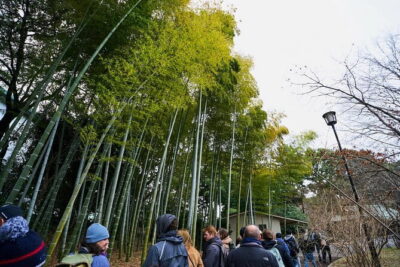
Tokyo Castle & Imperial PalaceーShogun Walking Tour
Read our review →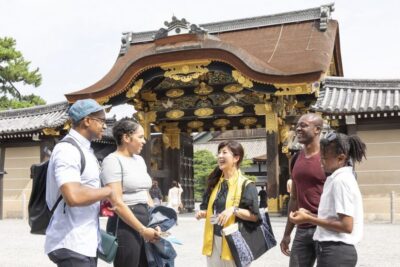
Nijo-jo Castle and Ninomaru Palace Guided Tour
Read our review →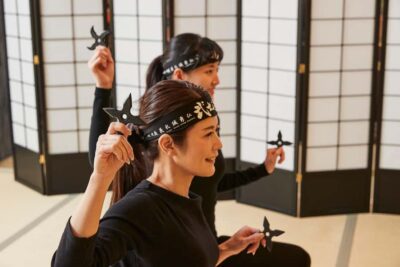
Samurai Ninja Museum Guided tour and Experience
Read our review →Browse the lists this tour appears in