

Reviewed · CASTLES AND HISTORIC SITES
Tokyo: Samurai Sword & Archery Class from Samurai Descendant
Samurai training gets serious fast. This three-hour class near Machida gives you hands-on instruction in swordsmanship, sparring, target cutting, and traditional Japanese archery from Yoshioki Sumida, a samurai descendant and master of both disciplines. I like the way the class treats you as a student rather than a spectator, and I like the mix of history and physical practice. The main caution is simple: this is a workout, not a soft cultural show, and the $193 price requires a real interest in martial arts.
The class takes place at Toyama-ryu Bizen-kai, a working dojo about 10 minutes on foot from JR Machida Station. You change into supplied training clothes, learn sword etiquette and technique, then handle bows and arrows linked to an older period of samurai warfare. It is taught in Japanese and English, with patient instruction and plenty of correction. Expect a shared class of up to 15 people, although smaller groups can feel much more personal.
In This Review
- Key Points Before You Book
- Finding the Bizen-kai Dojo in Machida
- Changing Into Training Clothes
- The Opening Lesson: Samurai Weapons in Context
- Iai: Learning the Basic Sword Forms
- Gekken Sparring and the Timing of Attack
- Cutting Targets With a Katana
- Traditional Japanese Archery With a Long Bow
- The Demonstration by a Senior Practitioner
- What the Instructors Do Well
- Is $193 a Fair Price?
- Who Should Skip This Class?
- Planning the Day Around the Class
- Should You Book the Samurai Sword and Archery Class?
- FAQ
- How long does the samurai sword and archery class last?
- Where is the dojo located?
- Is the class taught in English?
- What equipment and clothing are included?
- Can children participate?
- What should I bring?
Key Points Before You Book
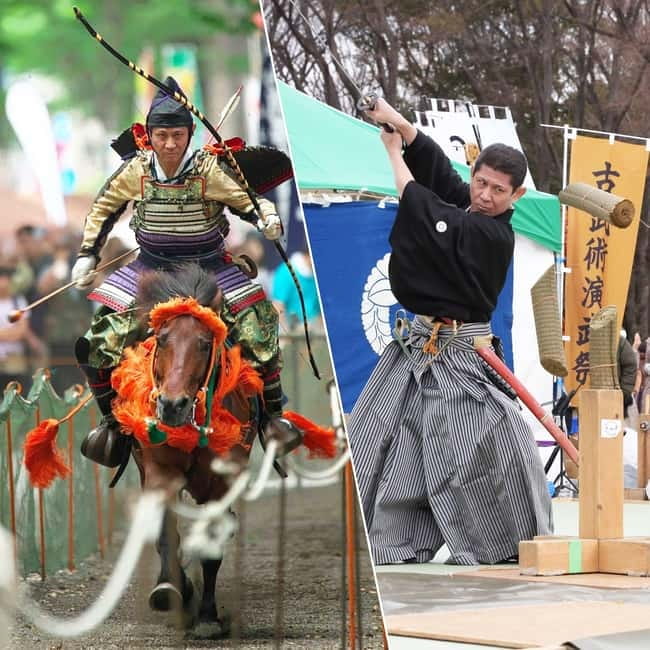
- You practice several disciplines in one session: iai forms, gekken sparring, target cutting, and Japanese archery all appear in the three-hour class.
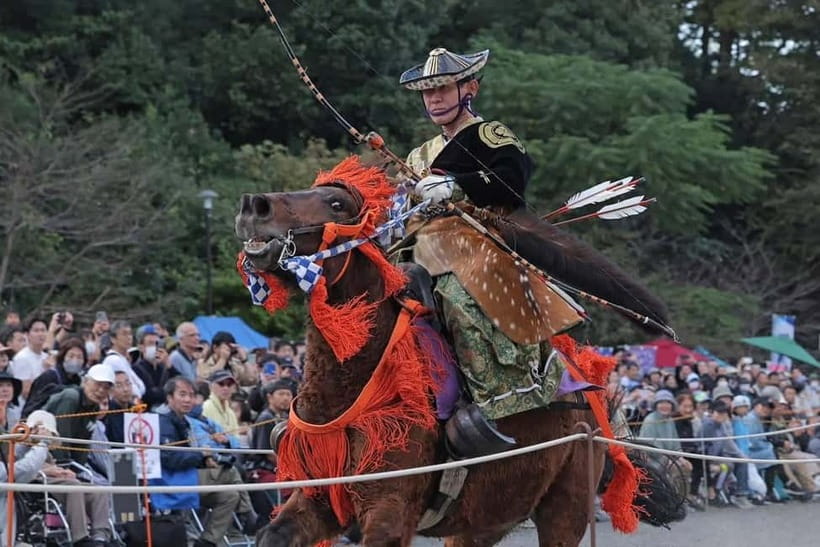
- The instructor is Yoshioki Sumida: he is presented as a samurai descendant and has trained in both swordsmanship and traditional horseback archery.
- The bow offers useful historical perspective: about 1,000 years ago, the bow was the samurai’s main weapon, long before the sword took that role.
- Target cutting is harder than it looks: you work on blade alignment and may slash several targets while moving.
- Training clothes and a practice sword are supplied: send each participant’s height and weight after booking so the uniform can be prepared.
- This suits active, curious adults: you need enough strength to swing a sword, and several medical and mobility restrictions apply.
Finding the Bizen-kai Dojo in Machida
The meeting point is Toyama-ryu Bizen-kai, written 戸山流備前会 BIZENKAI. From JR Machida Station, allow about 10 minutes to walk there. The dojo is on the third floor, reached by stairs at the back, between the sword shop and the vending machines on the first floor.
That last detail matters. This is not a large attraction with a glowing sign and a reception desk. The entrance can be easy to miss if you arrive at the last minute, so I would get there early. One useful tip from the class experience is to arrive around 30 minutes ahead if you want time to speak with the instructor or watch practice before your scheduled start.
Machida is in the Tokyo area, but it is not central Tokyo. One participant estimated the journey from Shimbashi at around 90 minutes, so check your route before booking a tight afternoon plan. The class itself lasts three hours, and you will want a little extra time for the walk, changing clothes, and finding the room.
More Castles and Historic Sites in Tokyo
- Tokyo: Imperial Palace and Shogun Historical Walking Tour
★ 5.0 · 2,251 reviews - Tokyo Castle & Imperial PalaceーShogun Walking Tour
★ 4.7 · 1,068 reviews - Tokyo: Samurai Ninja Museum Guided tour and Experience
★ 4.6 · 1,010 reviews
Changing Into Training Clothes
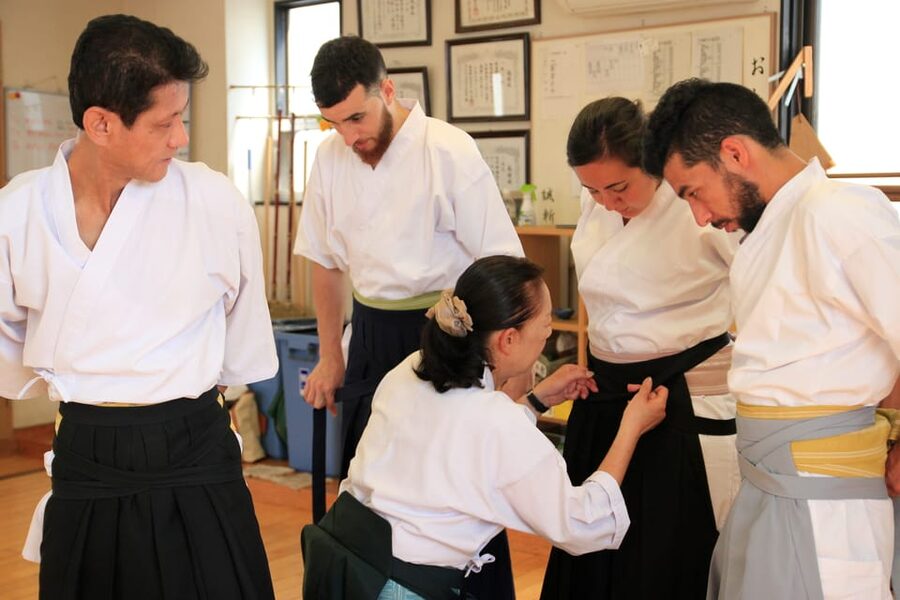
On arrival, you receive a short introduction and change into the provided practice uniform. This is more than a photo prop. The clothing helps you move freely and gives the session the feel of a proper lesson.
You need to provide the height and weight of everyone in your group so the organizer can prepare suitable uniforms. Bring water or another drink, and bring a camera if you want photos or video during the permitted moments. Wear something comfortable underneath, since the class includes repeated movement, swinging, stance work, and archery.
The class may include up to 15 people. That is still a manageable size for a hands-on activity, but the amount of personal correction can vary with the group. Some sessions may feel close to a private lesson when attendance is low. If detailed one-to-one coaching matters most to you, ask about the expected group size before you go.
The Opening Lesson: Samurai Weapons in Context
The first lecture gives the physical work some context. The instructor explains how samurai weapons changed over time: the bow was central around 1,000 years ago, the matchlock gun became more powerful about 450 years ago, and the sword took on a leading role after the civil wars ended roughly 400 years ago.
That short timeline is one of the class’s best features. It helps you avoid the usual movie version of the samurai, where the sword seems to have been the only weapon that mattered. You may also be allowed to hold an antique matchlock gun, adding a tangible link to the changes in Japanese warfare.
There is also a lecture on Japanese swords, including details about the blade and its construction. The teaching aims to correct common screen and pop-culture habits, such as handling or returning a katana incorrectly. Pay attention to etiquette here. In this setting, the sword is not just a dramatic object. Its handling demands care, control, and respect.
Iai: Learning the Basic Sword Forms
The iai portion introduces the way a sword is drawn, handled, and swung. You begin with a practice sword and learn basic forms, known as kata. The focus is on stance, grip, movement, timing, and the path of the blade.
This can look simple when the instructor demonstrates it. It is not. A clean movement requires your hands, feet, posture, and attention to work together. Beginners often want to swing hard, but the lesson puts more weight on correct form and control.
The instructor, Yoshioki Sumida, is repeatedly praised for making corrections clearly and patiently. He is also described as exact about safety and proper technique without being harsh. That is important in a class where a small mistake in grip or blade direction can matter.
You should not expect to master swordsmanship in one morning. The useful result is a first understanding of why these movements are structured the way they are. You learn to watch the blade line, keep your body organized, and treat each motion as deliberate rather than theatrical.
A completely different kind of day out:
- Tokyo Disney Resort – Tokyo Disneyland & Tokyo DisneySea Park Tickets
★ 4.8 · 99,488 reviews - SHIBUYA SKY Ticket
★ 4.7 · 46,509 reviews - JR Whole Japan Rail Pass
★ 4.8 · 29,150 reviews - Mt Fuji and Hakone 1-Day Bus Tour Return by Bullet Train
★ 5.0 · 26,383 reviews
Gekken Sparring and the Timing of Attack
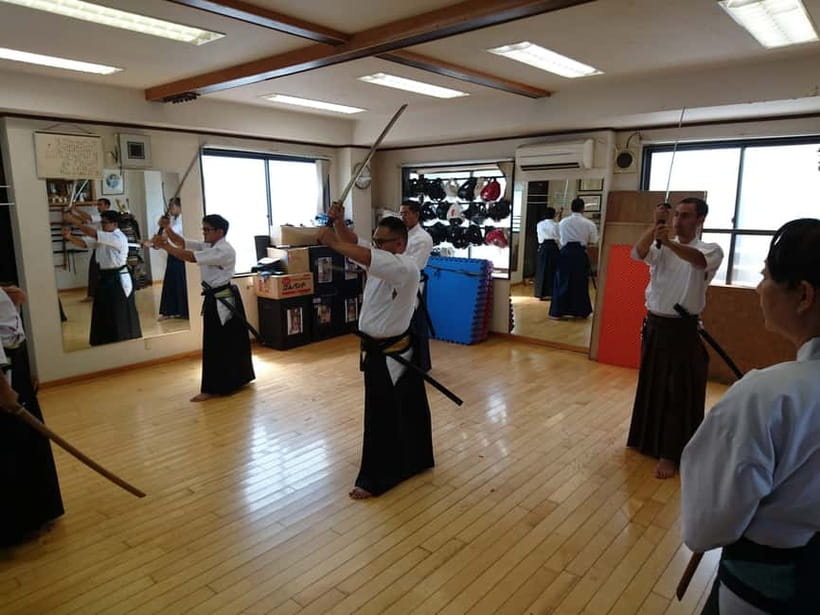
The gekken section shifts from solo form to interaction. Using practice swords, you learn the timing of attack and defense, then spar with another participant in a controlled way.
This is often the most playful part of the class, but it still calls for focus. You are not simply waving a sword at a partner. You must watch distance, react to movement, and understand when an attack can be made safely. The friendly format makes it accessible to beginners, while the physical demands keep it from feeling like a staged fight.
The class can be tiring because you repeat movements and stay alert. If you have never trained in martial arts, your legs, shoulders, and back may feel the work the next day. That is not a flaw, but it is worth planning around. This is a poor choice immediately before a long walking day or if you want a calm, seated cultural activity.
Cutting Targets With a Katana
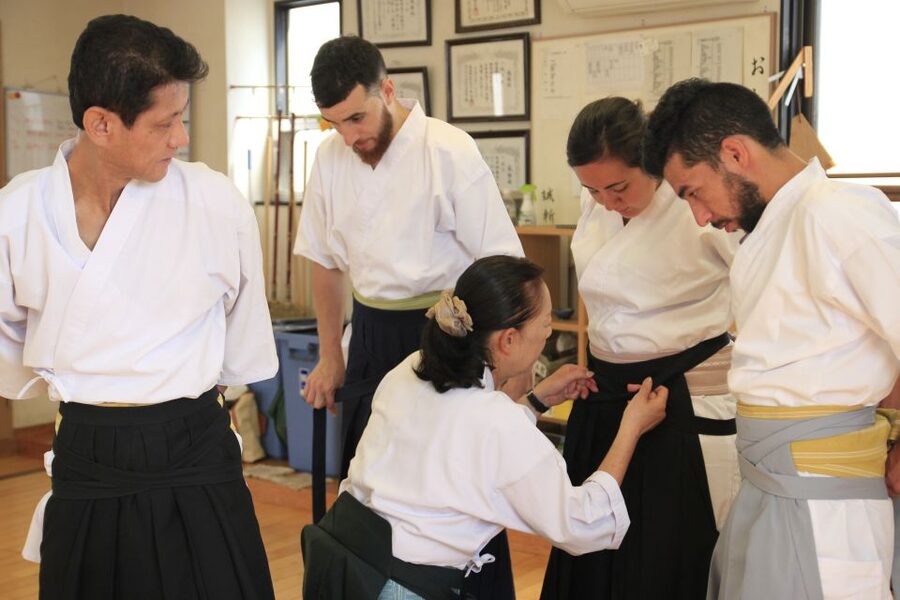
The cutting portion provides the biggest thrill, and also the clearest lesson in why technique matters. You work toward cutting targets with a sword, with an emphasis on the correct blade line. The advertised challenge includes slashing multiple targets while moving, which is much harder than making one stationary swing.
This is where movie habits fall apart. A cut is not just a matter of strength. The angle, direction, body position, and follow-through all affect the result. You may find that a controlled swing works better than a powerful one.
The supplied information describes a mock sword for some practice, while class experiences also describe hands-on cutting with a real katana. The exact equipment and sequence may depend on the instructor, conditions, and safety decisions on the day. Follow instructions closely and do not treat this as an opportunity for dramatic improvisation.
Photos and video may be possible at points during the class. Ask before filming, and keep your phone or camera out of the way during active practice. A wide lens can help if you want to record the bow-and-arrow section, where the extended Japanese bow needs more room in the frame.
Traditional Japanese Archery With a Long Bow
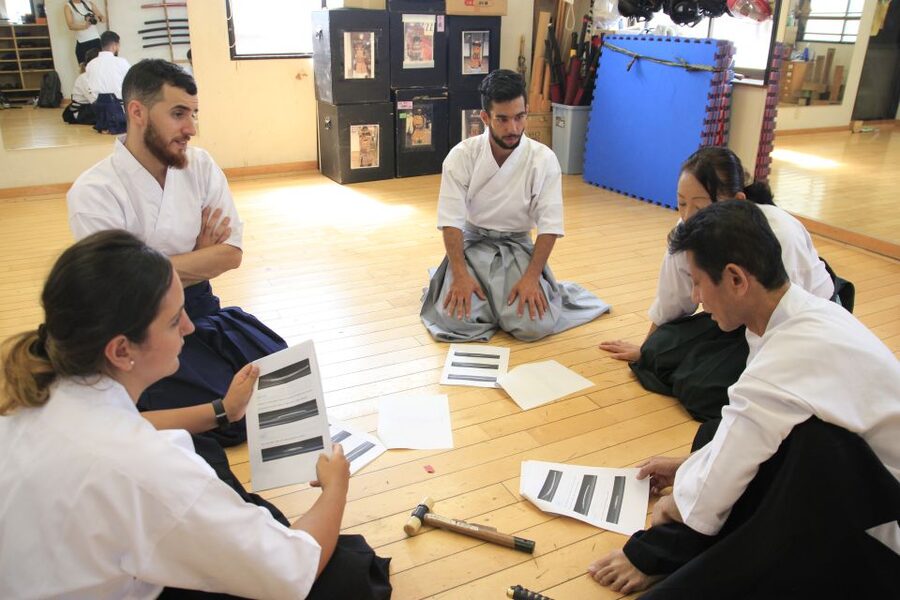
The archery section connects the modern lesson with the older side of samurai history. You try a Japanese bow associated with traditional horseback archery, using arrows to shoot at targets.
The bow is not a compact Western-style bow. Its length and shape require a different approach, and the draw can feel unfamiliar. This is less about hitting a bullseye than learning how the weapon is held, drawn, and released. Patience matters more than brute force.
The instructor’s background in horseback archery gives this part particular value. You are not simply handed a bow for a quick photo. You receive instruction from someone who continues to practice and teach the discipline.
The class does not put you on a horse. The experience is an introduction to the bow and its traditions on foot. That distinction is important if you are expecting a mounted archery demonstration or a full horseback activity.
The Demonstration by a Senior Practitioner
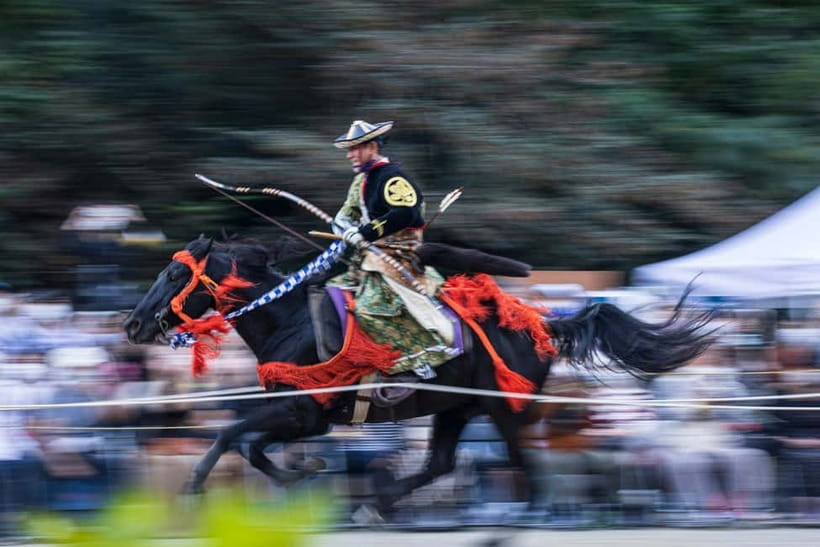
At some point, you may see a live demonstration of Toyama-ryu technique, including a performance by a seventh-grade practitioner. This is one of the moments when you can appreciate the gap between basic instruction and serious training.
The movements may look calm, exact, and graceful, but the class description makes clear that the techniques are difficult. Do not expect a theatrical stunt show. The demonstration is meant to show the discipline, precision, and control behind the art.
Arriving early may give you a chance to watch practice before your own session. That can help you understand the standard of movement before you pick up a sword yourself. It also gives you time to settle into the dojo rather than rushing in from the station.
What the Instructors Do Well
The strongest part of this experience is the teaching. Sumida-sensei is described as warm, funny, patient, and serious about safety. His assistant, Harry, and other supporting instructors have also been praised for clear explanations and a friendly manner.
English ability is sufficient for the class, although the level may be basic in places. Instructions are supported by demonstrations, repetition, and physical corrections. Several class participants from English-speaking countries found the teaching easy to follow, even without strong Japanese skills.
I especially like the balance between kindness and discipline. The instructor may correct you repeatedly, and the class is not designed to flatter every attempt. That is useful. You leave with a better sense of what the movement should be, rather than a vague memory of pretending to be a samurai.
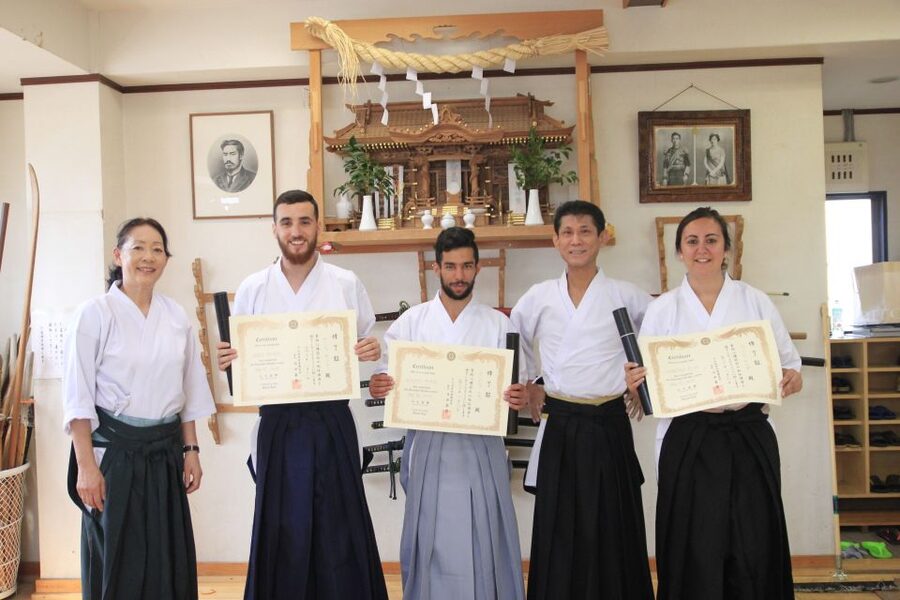
A certificate may also be signed at the end to confirm that you learned the basics of both swordsmanship and archery. Treat it as a keepsake, not a martial arts qualification.
Is $193 a Fair Price?
At $193 per person, this is expensive compared with a short sword demonstration or a costume photo session. It is also far more involved than those options. The price includes the instructor, samurai experience, practice uniform, and practice sword, with three hours of instruction across several activities.
The value depends on what you want from Japan. If you only want a quick samurai-themed photo, this class is too costly and too demanding. If you want direct instruction, historical context, supervised practice, and access to a real dojo, the price becomes easier to justify.
You are paying for the instructor’s specialized background as well as the equipment and time. The unusual combination of swordsmanship and traditional Japanese horseback archery is the central reason to choose this class over a simpler sword lesson.
The strongest value comes when you take the session seriously. Ask questions, listen to corrections, and be ready to work. If you spend most of the class waiting for photos, you will not get your money’s worth.
Who Should Skip This Class?
The activity is not suitable for pregnant women, people with back, heart, or mobility problems, wheelchair users, people with epilepsy, or people with visual impairments. The supplied information also says children under 18 are not suitable, although another note says minors may participate with parental permission and supervision if they have enough strength to swing the sword. Because those instructions conflict, confirm the age policy directly before booking a minor.
You should also think honestly about your physical condition. The class involves standing, swinging, stepping, sparring, and drawing a bow. It is not described as extreme, but it can leave you sore.
Left-handed participants can take part, though the traditional setup is right-handed. One left-handed participant found that this did not ruin the session but made the archery portion somewhat less natural. If you are left-handed, expect to adapt rather than receive a mirrored lesson.
Planning the Day Around the Class
Give yourself extra travel time from central Tokyo. The dojo is in Machida, and the walk from JR Machida Station takes about 10 minutes once you arrive. A late arrival is especially unhelpful here because the opening explanation covers etiquette, safety, and the structure of the lesson.
Bring water, a camera if desired, and comfortable clothing for underneath the uniform. Avoid alcohol and drugs, which are not allowed. Do not schedule a demanding physical activity immediately afterward unless you are comfortable with the possibility of sore muscles.
The class offers free cancellation up to 24 hours before the start time for a full refund, and a reserve-now, pay-later option is available. Check the available start times when choosing your date, since the three-hour duration can affect your wider Tokyo plans.
Should You Book the Samurai Sword and Archery Class?
Book it if you want active cultural learning, have a genuine interest in Japanese martial arts, and are happy to travel beyond central Tokyo. The best reasons to go are the careful instruction from Yoshioki Sumida, the chance to practice several disciplines, and the setting in a real dojo rather than a staged attraction.
Skip it if you want a light, polished show, dislike physical activity, or mainly want a quick photograph in costume. The class asks for attention, effort, and respect.
For the right person, $193 buys more than sword swinging. You get a practical look at how samurai weapons were used, how disciplined movement is built, and how a living martial tradition is passed from teacher to student. That makes it one of the more unusual active experiences available from Tokyo.
FAQ
How long does the samurai sword and archery class last?
The class lasts three hours. Check the available start times when booking so you can plan transport and other activities around it.
Where is the dojo located?
The dojo is Toyama-ryu Bizen-kai, about a 10-minute walk from JR Machida Station. It is on the third floor, reached by stairs at the back between the sword shop and the vending machines on the first floor.
Is the class taught in English?
Yes. The listed languages are Japanese and English. The instructor uses explanations, demonstrations, and corrections to teach the techniques.
What equipment and clothing are included?
The activity includes an instructor, a samurai experience, a practice uniform, and a practice sword. You must provide the height and weight of all participants so the training clothes can be prepared.
Can children participate?
The safety information says children under 18 are not suitable, while another note says minors may participate with parental permission and supervision if they have enough strength to swing the sword. Confirm the current age policy with the organizer before booking.
What should I bring?
Bring a camera if you want photos or video and drinks for hydration. Alcohol and drugs are not allowed.
Just added in Tokyo
- A One-of-a-Kind Sushi Experience in a Special Place of Japan★ 5.0 · 15 reviews
- Tokyo Cute Bento Cooking Class – Make a Kawaii Character Lunchbox★ 5.0 · 126 reviews
- Japanese Home Cooking Class & Walk in Todoroki Temple Tokyo★ 5.0 · 88 reviews
- Japan Tokyo Tower Observatory Deck E-Ticket★ 4.0 · 34 reviews
- Catch a Baseball Game in Tokyo with a Local – Tickets Included★ 5.0 · 24 reviews
- JDM Experience with Fast&Furious RX-7 (English speaking Driver)★ 5.0 · 57 reviews
- Tokyo Private Day Tour by Car with English speaking Driver Guide★ 4.0 · 29 reviews
- Japan Classic 10 Day – One Life Adventures★ 5.0 · 129 reviews
Castles and Historic Sites, compared.


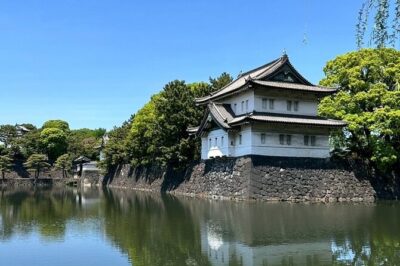
Imperial Palace and Shogun Historical Walking Tour
Read our review →
Tokyo Castle & Imperial PalaceーShogun Walking Tour
Read our review →
Nijo-jo Castle and Ninomaru Palace Guided Tour
Read our review →
Samurai Ninja Museum Guided tour and Experience
Read our review →Browse the lists this tour appears in