
Reviewed · WALKING TOURS
Tokyo: Shibuya Highlights Walking Tour & Secret View Spot
Shibuya rewards a guide who knows where to turn. I like the mix of famous sights and tucked-away corners, especially the Hachiko statue, Shibuya Crossing, and local food alleys. I also like the practical advice guides such as Mao, Ayaka, Sota, and Noa provide about restaurants, train routes, customs, and photo spots.
The main drawback is the brisk format. You cover a lot in 90 minutes, but this is an introduction rather than a slow, detailed study of Shibuya. Crowds, traffic, rain, and stairs or uneven pavement may also make parts of the walk less comfortable for some people.
In This Review
- Key points about the Shibuya walking tour
- Starting beside Hachiko at Shibuya Station
- Hachiko and the story behind the meeting place
- Crossing Shibuya at the world-famous scramble
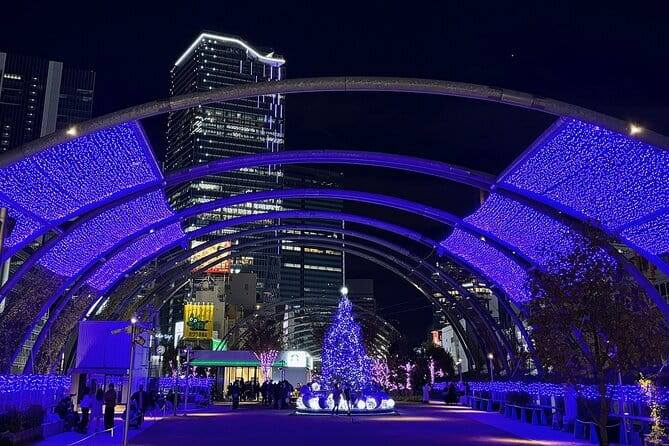
- Shibuya Scramble Square and the search for a high view
- Nonbei Yokocho, a small alley with a different mood
- Miyashita Park, Shibuya’s urban pause
- Center-Gai and the culture of young Shibuya
- Shibuya Mark City and the return to Hachiko
- What the $23 price really buys you
- Timing, pace, weather, and comfort
- Who should book this Shibuya walk?
- Should you book the Shibuya Highlights Walking Tour?
- FAQ
- Where does the Shibuya walking tour begin?
- How do I identify the guide?
- How long does the tour last?
- What languages are available?
- Is Shibuya Crossing included?
- Does the tour include a view of Shibuya from above?
- Are food and drinks included?
- Does the tour provide transportation or hotel pickup?
- Can I cancel for a refund?
Key points about the Shibuya walking tour
- See Shibuya Crossing from street level and above: You cross the famous intersection and may also be shown a nearby viewing point without waiting in a long line.
- Meet beside Hachiko: The tour begins at the well-known dog statue near JR Shibuya Station, an easy place to connect with your guide.
- Move beyond the neon: The route includes Nonbei Yokocho, a narrow alley of small eateries, as well as Miyashita Park, a popular urban retreat.
- Get useful Tokyo advice: Guides have helped people choose ramen, monja, shopping areas, restaurants, and train routes after the walk.
- Good value at $23: For 90 minutes with a local guide, the price is modest, especially if you are new to Tokyo.
- Rain or shine: Bring an umbrella or raincoat. The tour operates in wet weather, and food, drinks, and transportation cost extra.
Starting beside Hachiko at Shibuya Station
Your meeting point is in front of SHIBU HACHI BOX, near the JR Shibuya Station Hachiko Gate and Tokyo Metro Exit A8. Look for a guide holding a Local Guide Stars sign. This is a sensible starting point because Hachiko is one of the easiest landmarks to find in a station area that can otherwise feel like a maze.
The address is 2-1-1 Dogenzaka, Shibuya-ku, Tokyo 150-0043. I would allow extra time to reach the station exit, particularly if you have luggage or are arriving during a busy period. Shibuya Station has several levels and exits, and a wrong turn can quickly become a ten-minute detour.
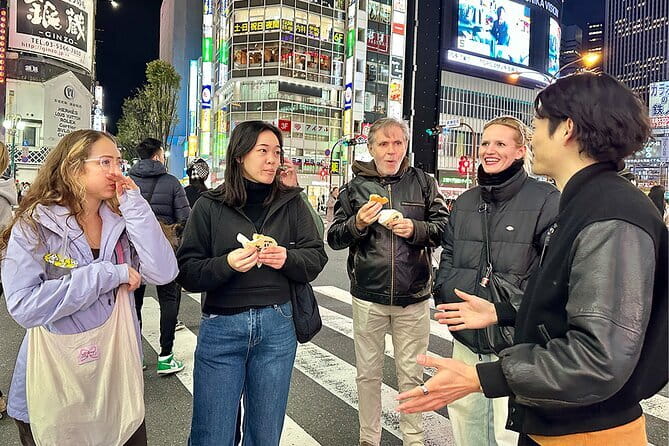
Your guide may be Sakura, Hannah, Mao, Ayaka, Sota, Noa, Tomo, Yuki, or another member of the English and Japanese-speaking team. The strongest reports repeatedly praise the guides for their friendly manner, clear English, local advice, and willingness to answer questions.
That personal contact is the real point of the walk. Shibuya is easy to photograph, but harder to understand at first glance. A local guide gives you a way to read the signs, notice changes in the district, and ask about the parts of Japan that do not fit neatly into a guidebook paragraph.
More Walking Tours in Tokyo
- Tokyo Tsukiji Fish Market Food and Culture Walking Tour
★ 5.0 · 3,184 reviews - Tokyo: Imperial Palace and Shogun Historical Walking Tour
★ 5.0 · 2,251 reviews - Tokyo: Shinjuku Local Bar and Izakaya Guided Walking Tour
★ 4.9 · 1,794 reviews
Hachiko and the story behind the meeting place
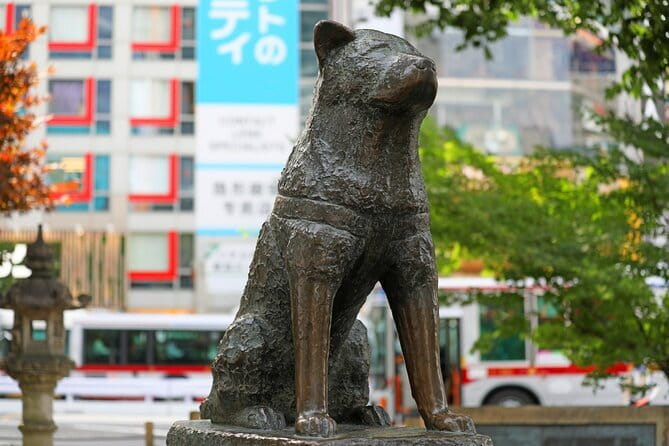
The Hachiko statue is more than a convenient landmark. It is one of Tokyo’s most famous meeting points, and your guide uses it to introduce Shibuya and the loyal dog whose story made the statue famous.
Expect a short explanation rather than a long historical lecture. The value is in getting a sense of how a public place becomes part of everyday city life. People meet here, take photographs, and use the statue as a fixed point before heading into the station, shops, or nightlife streets.
This stop is also useful for orientation. Your guide can point out the main station exits, the direction of Shibuya Crossing, and some of the district’s major buildings. If you are visiting Tokyo early in your trip, this can help you return later without feeling lost.
The area around Hachiko is crowded and noisy. You will not get a quiet moment with the statue, and photographs may include many other people. Still, the stop works well because it puts the tour directly into the middle of Shibuya’s daily rhythm.
Crossing Shibuya at the world-famous scramble
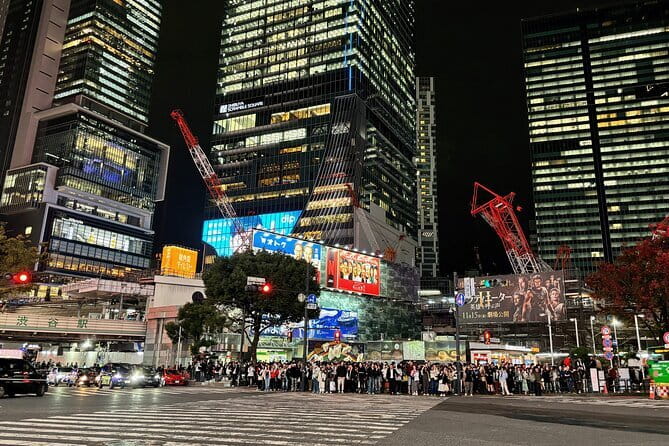
The walk across Shibuya Crossing lasts about ten minutes as a formal stop, though the crossing itself takes only a short time. The fun comes from standing at the edge, watching the signals change, and then moving with several streams of pedestrians from different directions.
You get the famous street-level experience that photographs cannot quite capture. Tall screens, traffic, station buildings, and hundreds of people create the sense of a city operating at full speed. Your guide can help you choose a good place to pause, cross safely, and understand why this intersection became such a symbol of modern Tokyo.
Some guides also help with photographs. Ayaka has taken pictures for people during the crossing, while Yuki was praised for encouraging photos at several popular locations. That small service matters when you are traveling as a couple or group and do not want every picture to be a selfie.
The crossing is not a private experience, and the walk does not remove you from the crowd. If you dislike busy streets, this may be the most tiring part. For most people, though, it is a quick, memorable introduction to Shibuya’s scale.
Shibuya Scramble Square and the search for a high view
Shibuya Scramble Square receives roughly ten minutes on the route. It is one of the district’s major modern buildings and a useful place to understand how quickly Shibuya has changed.
The title promises a secret view spot, but you should read that carefully. This is not presented as a reserved visit to a paid observation deck. Instead, guides may show you a good place to see the crossing from above without waiting in a long line, as Noa and Mao have done for people on earlier walks.
That can be excellent value. You get a different view of the crossing without spending extra money or using a large part of your day at an observation attraction. It also gives you a chance to see how the streets connect, which is hard to grasp from ground level.
The exact view can depend on access, timing, and the guide’s route. Do not book this expecting a guaranteed sunset panorama or a formal observatory visit. Think of it as a local tip that adds another angle to a famous place.
A completely different kind of day out:
- Tokyo Disney Resort – Tokyo Disneyland & Tokyo DisneySea Park Tickets
★ 4.8 · 99,488 reviews - SHIBUYA SKY Ticket
★ 4.7 · 46,509 reviews - JR Whole Japan Rail Pass
★ 4.8 · 29,150 reviews - Mt Fuji and Hakone 1-Day Bus Tour Return by Bullet Train
★ 5.0 · 26,383 reviews
Nonbei Yokocho, a small alley with a different mood
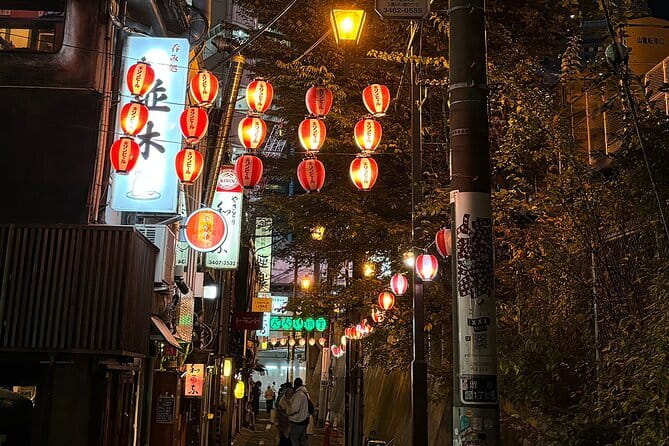
Nonbei Yokocho offers a sharp change from Shibuya’s giant screens and broad pedestrian routes. This narrow alley is lined with small eateries and bars, giving you a glimpse of a more intimate side of the district.
The stop lasts about ten minutes, so you should not expect a full meal or an extended food tasting. Food and drinks are not included. Instead, your guide can explain what kind of place you are seeing and point out options for returning later.
I like this part of the walk because it gives Shibuya some texture. The district is not only department stores, fashion, and loud advertising. It also has compact drinking spots and local restaurants where the setting feels far less polished.
The alley can be tight, and the small businesses may be serving customers when you pass. You are there to look and learn, not to stop the group for a long dinner. Ask your guide for recommendations at the end if you want to come back.
Miyashita Park, Shibuya’s urban pause
The tour then spends about twenty minutes at Miyashita Park. This urban oasis offers a useful pause from the station area and introduces a different side of youth culture in Shibuya.
Miyashita Park is popular with young people, and its role in the route is not simply to provide a green patch. It shows how Tokyo uses limited city space for recreation, meeting, shopping, and social life. Your guide can help you notice how the park fits into the wider redevelopment of Shibuya.
I would welcome this stop on a warm day because it breaks up the hard surfaces and heavy crowds. One guide, Sota, was praised for moving the group in and out of air-conditioned places to make the heat easier to manage. That kind of pacing can make a real difference in summer.
The park is not a wilderness walk. It remains part of central Tokyo, surrounded by buildings and city noise. Still, it gives the tour a welcome change of rhythm and keeps the experience from becoming one long march through commercial streets.
Center-Gai and the culture of young Shibuya

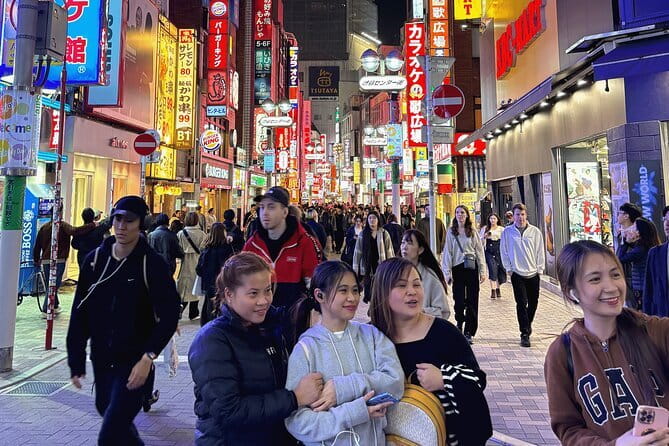
Shibuya Center-Gai gets around twenty minutes, making it one of the longer stops. This is where the district’s fashion, food, music, advertising, and youth culture come together most clearly.
Your guide may explain how Shibuya became associated with new styles and changing social trends. The information is likely to be conversational rather than academic, which suits the street. You can ask about fashion, Japanese etiquette, food choices, nightlife, and the way locals use the area.
Several guides have helped people find ramen, monja restaurants, shopping, and places worth returning to after the tour. Noa was praised for knowing the best places to eat and shop, while Tomo recommended a local monja restaurant that people enjoyed after the walk.
That advice can be worth more than a list of famous restaurants. You are getting recommendations matched to the area and, if you ask, to your interests. The guide may also help you understand ordering customs or explain what to expect in a small restaurant.
Center-Gai is loud and crowded. It can feel overwhelming, especially at night, and the pace may require you to stay close to the guide. Keep your belongings secure and wear shoes suitable for a good deal of walking.
Shibuya Mark City and the return to Hachiko
The final major stop is Shibuya Mark City, with about twenty minutes before the group returns to SHIBU HACHI BOX. This section helps connect the upper and lower parts of the district and can provide another useful angle on the station and surrounding streets.
Mark City is also practical for orientation. Shibuya’s transport links, shopping centers, elevated walkways, and underground passages can seem confusing even after you have visited once. A guide who points out the routes can save you time later.
This is where the tour’s practical value often becomes clear. Guides have helped people navigate the train system, find their next destination, and decide where to eat. Yuki even took time after the walk to help with a requested direction, while other guides offered restaurant and sightseeing suggestions.
The tour ends where it begins, which makes planning easier. You can continue shopping, return to the station, or follow your guide’s advice for lunch or dinner. Since transportation is not included, you will make your own way to your next stop.
What the $23 price really buys you
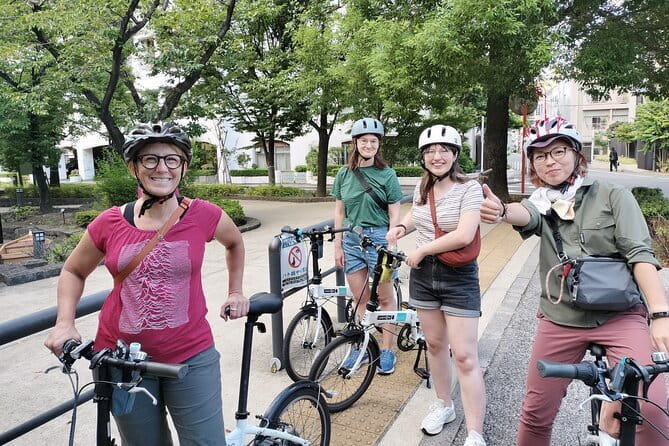
At $23 per person, this is a reasonably priced orientation walk. The package includes the 90-minute walking tour and a live English or Japanese-speaking guide, but not meals, drinks, transportation, or hotel pickup and drop-off.
I think the price works best for first-time visitors. In an hour and a half, you receive a working introduction to Hachiko, the crossing, major shopping areas, a food alley, Miyashita Park, and local customs. Finding all of these places alone would be possible, but you would lose time and miss some of the connections between them.
The tour is less useful if you already know Shibuya well or want a specialist food tour. You will not receive included tastings, and the short stops mean you cannot spend long inside shops or restaurants.
At 4.9 from 196 ratings, the experience has a strong record. The most praised qualities are consistent: guides are friendly, explain the area clearly, adapt to group preferences, and offer advice beyond the scheduled walk.
Timing, pace, weather, and comfort
Ninety minutes is a good length for this route. It is long enough to cover several parts of Shibuya but short enough to fit around shopping, museums, dinner, or an evening train. The walk does cover a lot of ground, so I would not treat it as a relaxed café stroll.
The tour runs in rain or shine. Bring an umbrella or raincoat if rain is forecast, and wear comfortable shoes in all seasons. Summer heat can be tiring, while rain may make crowded pavement and crossings less pleasant.
The experience is wheelchair accessible, but Shibuya’s crowds and changing street conditions can still affect the pace. If you have specific mobility needs, confirm the practical route details when booking rather than assuming every section will feel equally easy.
Free cancellation is available up to 24 hours before the start, and you can reserve now and pay later. That flexibility is useful when your Tokyo plans depend on weather, jet lag, or changing train arrangements.
Who should book this Shibuya walk?
I would recommend it to first-time visitors, families, couples, solo visitors, and anyone who wants local context without giving up half a day. It is also a smart choice near the beginning of a Tokyo stay, since the guides can help you understand the station, choose restaurants, and plan later visits.
It suits people who enjoy a mix of major sights and ordinary city details. You will see the famous crossing, but you will also walk through Nonbei Yokocho, hear about local food, and get a sense of how young people use Miyashita Park and Center-Gai.
I would hesitate if you want a slow photography tour, a full food experience, or a deep historical study. The route is active and fairly quick, and the busiest parts of Shibuya can be tiring.
Should you book the Shibuya Highlights Walking Tour?
Book it if you want to get your bearings fast, see the essential Shibuya sights, and leave with useful ideas for food, shopping, transport, and photographs. The $23 cost is fair for a local guide and a route that combines major landmarks with places you might not notice alone.
Skip it if you already know the district or prefer exploring entirely at your own pace. For most first-time visitors, though, the short format, modest price, strong guide feedback, and practical local advice make this a sensible start to Tokyo.
FAQ
Where does the Shibuya walking tour begin?
It begins in front of SHIBU HACHI BOX at 2-1-1 Dogenzaka, Shibuya-ku, Tokyo. The meeting point is near the JR Shibuya Station Hachiko Gate and Tokyo Metro Exit A8.
How do I identify the guide?
The guide will be holding a Local Guide Stars sign at the meeting point.
How long does the tour last?
The walking tour lasts 90 minutes.
What languages are available?
The live tour is available in English and Japanese.
Is Shibuya Crossing included?
Yes. The route includes a visit to Shibuya Crossing, where you can walk across the famous intersection.
Does the tour include a view of Shibuya from above?
The route includes Shibuya Scramble Square, and guides may show you a viewing spot from above without waiting in a line. A paid observation-deck admission is not listed as included.
Are food and drinks included?
No. Food and drinks are not included in the price.
Does the tour provide transportation or hotel pickup?
No. Transportation and hotel pickup and drop-off are not included.
Can I cancel for a refund?
Yes. You can cancel up to 24 hours in advance for a full refund. You can also reserve now and pay later.
Just added in Tokyo
- A One-of-a-Kind Sushi Experience in a Special Place of Japan★ 5.0 · 15 reviews
- Tokyo Cute Bento Cooking Class – Make a Kawaii Character Lunchbox★ 5.0 · 126 reviews
- Japanese Home Cooking Class & Walk in Todoroki Temple Tokyo★ 5.0 · 88 reviews
- Japan Tokyo Tower Observatory Deck E-Ticket★ 4.0 · 34 reviews
- Catch a Baseball Game in Tokyo with a Local – Tickets Included★ 5.0 · 24 reviews
- JDM Experience with Fast&Furious RX-7 (English speaking Driver)★ 5.0 · 57 reviews
- Tokyo Private Day Tour by Car with English speaking Driver Guide★ 4.0 · 29 reviews
- Japan Classic 10 Day – One Life Adventures★ 5.0 · 129 reviews
Walking Tours, compared.
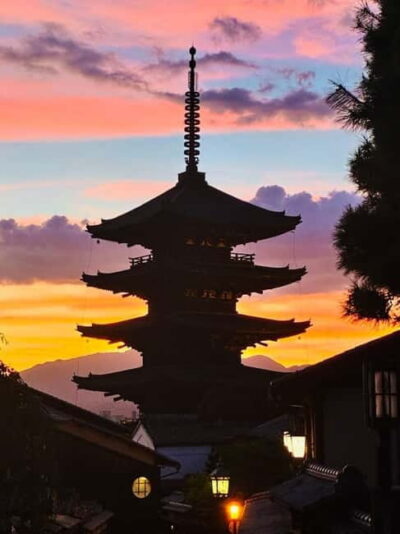
Kyoto Geisha Walking Tour: Gion District & Hidden Gems
Read our review →
Tokyo Tsukiji Fish Market Food and Culture Walking Tour
Read our review →
Gion Magical Night Walking Tour with Geisha Trivia
Read our review →
Imperial Palace and Shogun Historical Walking Tour
Read our review →
Gion Geisha District Walking Tour – Stories of Geisha
Read our review →
Shinjuku Local Bar and Izakaya Guided Walking Tour
Read our review →
Browse the lists this tour appears in