
Reviewed · WALKING TOURS
Tokyo: Shibuya Highlights Walking Tour
Shibuya is easiest when someone shows you where to look. I like this 90-minute walking tour for its small groups of up to six and its mix of famous sights, local streets, restaurant tips, and quieter corners. I also like the excellent viewing spot for Shibuya Scramble, which helps you see the crossing without being swallowed by the crowd. The main drawback is time: 90 minutes gives you a useful introduction, but not a full tour of every corner of this large district.
Meeting at the Hachi dog statue makes sense, since it is one of Shibuya’s clearest landmarks and an easy place to begin. Guides such as Sakura, Hiroko, Fumino, Rick, and Yoshi have been praised for friendly English, local advice, and a warm way of explaining the neighborhood. Just arrive early: the guide waits only five minutes, and late arrivals cannot join midway.
- A smart first look at Shibuya: Start with the famous Hachi statue and Scramble crossing, then move into less obvious streets.
- Small groups matter: With a maximum of six people, the guide can answer questions and adjust the pace more easily.
- Useful local advice: Guides point out places to eat, shop, and continue exploring after the tour.
- A better crossing view: You visit a spot with a clear view of Shibuya Scramble, away from the thickest crowd.
- Rain or shine: The walk runs in wet weather, so bring an umbrella or raincoat when needed.
- Good value at $19: The price is modest for a live English guide and a practical orientation to one of Tokyo’s busiest districts.
In This Review
- Starting beneath the Hachi statue
- Crossing Shibuya Scramble with a local guide
- Finding the best view of the crossing
- Leaving the main crowds for bars and back streets
- Seeing Shibuya’s quieter side
- Why the six-person limit improves the walk
- A practical price check at $19
- Choosing the right time and weather
- Who will get the most from this tour
- Should you book the Shibuya Highlights Walking Tour?
- FAQ
- Where does the Shibuya walking tour begin?
- How long does the tour last?
- How much does the tour cost?
- Is the tour conducted in English?
- How large is the group?
- Is the tour wheelchair accessible?
- What does the tour include?
- Are food and drinks included?
- What happens if I arrive late?
Starting beneath the Hachi statue
The tour begins at SHIBU HACHI BOX, the tourist information center in front of the Hachi statue. You reach it from the Hachiko Exit of JR Shibuya Station. This sounds simple, but Shibuya Station is a maze of exits, signs, platforms, and underground passages, so give yourself extra time.
Hachi is more than a meeting point. The statue recalls the loyal dog associated with Shibuya, and the opening explanation gives you a little background before the tour moves into the district. That small story helps turn a familiar photo stop into a piece of local identity.
You need to tell the staff at SHIBU HACHI BOX that you are joining the tour. The guide waits only five minutes, which is the one detail I would take seriously. In Shibuya, a wrong station exit can cost five minutes before you even begin searching for the meeting place.
The tour includes no hotel pickup or transport. That is not a problem for most people, since the route starts beside a major station, but you should plan your own way to the meeting point. Wear comfortable clothes and shoes suitable for walking.
Crossing Shibuya Scramble with a local guide
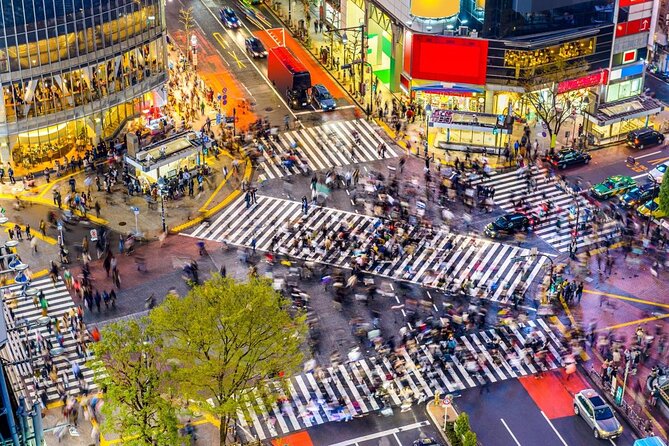
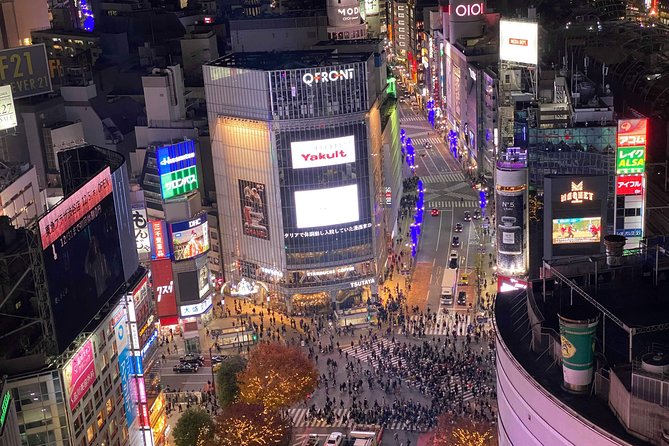
From Hachi, you walk toward Shibuya Scramble, the district’s great stage. When the signals change, streams of people move across the intersection from several directions. It is loud, bright, quick, and wonderfully odd to watch.
Crossing it yourself is easy. Understanding why it became such a central image of Tokyo is more useful, and the guide supplies context about the area and its development. This is one reason I see the tour as an introduction rather than just a photo walk.
The crossing can feel crowded, especially at popular times. A group of six is easier to keep together than a large tour following a flag, and a small group also makes it simpler to stop for explanations without blocking the pavement.
You should expect people, traffic noise, flashing signs, and a quick pace around the crossing. This is not a quiet sightseeing walk. It is a direct look at one of Tokyo’s most energetic public spaces, followed by streets where the mood changes.
More Walking Tours in Tokyo
- Tokyo Tsukiji Fish Market Food and Culture Walking Tour
★ 5.0 · 3,184 reviews - Tokyo: Imperial Palace and Shogun Historical Walking Tour
★ 5.0 · 2,251 reviews - Tokyo: Shinjuku Local Bar and Izakaya Guided Walking Tour
★ 4.9 · 1,794 reviews
Finding the best view of the crossing
One of the tour’s strongest features is a stop at an impressive viewing point above or around the crossing. The exact location can vary, but the purpose is clear: you get a broad view of the intersection rather than seeing it only from street level.
This makes the tour useful even if you already plan to visit Shibuya Scramble. From the pavement, you notice the people around you. From a higher viewpoint, you can watch the entire movement of the crossing and understand its scale.
Several guides have also helped with photographs along the way. Sakura was especially praised for taking pictures and for suggesting good places to frame the crossing. I would still keep your phone ready, since some stops may be brief and the tour continues on foot.
There is a practical limit here. The activity promises a great view, not a dedicated observation deck visit with unlimited time. If your main goal is a long, polished skyline photo session, you may want to plan a separate visit to a paid viewing attraction. This walk is better for combining one strong view with local orientation.
Leaving the main crowds for bars and back streets
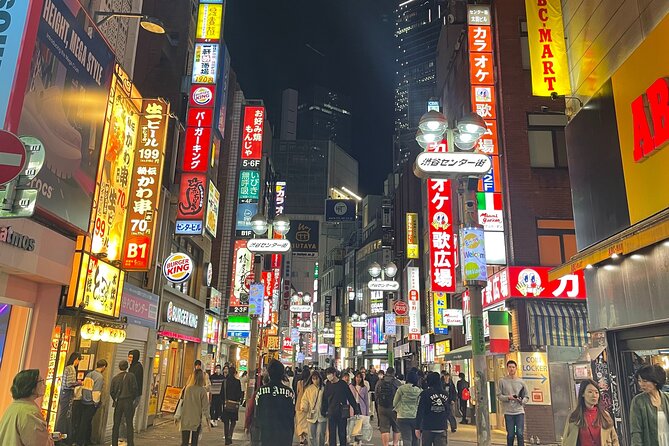
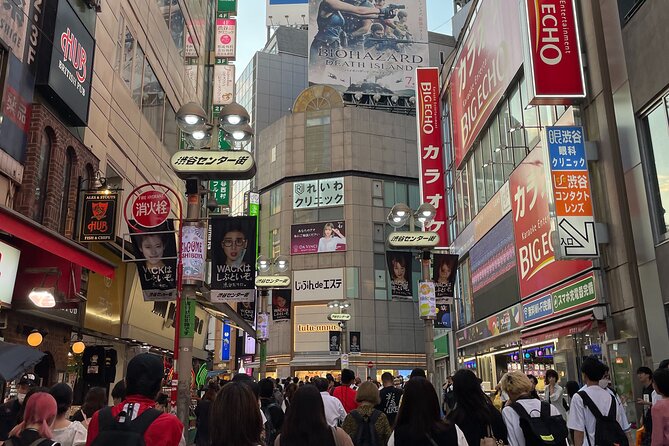
After the crossing, the route shifts toward Shibuya’s restaurants, bars, and pubs. This is where the walk becomes more useful than a simple list of famous sights. You see the district as a place where people eat, meet friends, shop, and go out, rather than only as a backdrop for photographs.
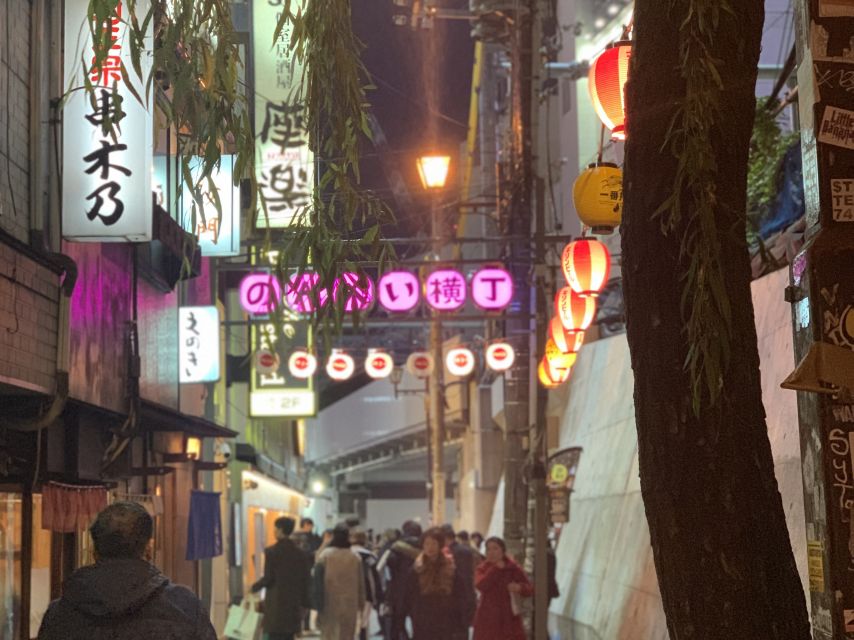
The guides point out areas associated with local nightlife, including Drunkards Alley. The name tells you what kind of atmosphere to expect: narrow lanes, small drinking spots, and a very different scale from the broad station area.
You may not enter every bar or restaurant, and food and drinks are not included. That is worth understanding before booking. The value comes from seeing where these places are and getting suggestions for later, not from receiving a meal or a tasting.
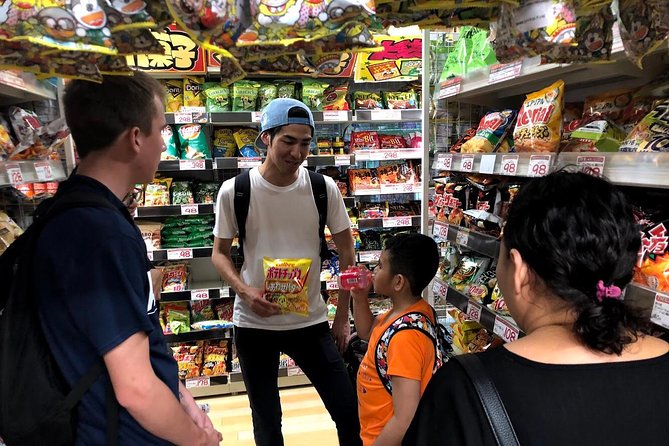
Food advice is one of the most consistent strengths of the experience. Guides have suggested ramen restaurants, lunch spots, local eateries, popular stores, and places to return after the walk. One person went back to a recommended restaurant after the tour and had a good meal, which is exactly how this kind of activity can pay off.
I would write down names or take photos of signs as you walk. Shibuya has many similar-looking streets, and a recommendation is less helpful if you cannot find it again two hours later.
Seeing Shibuya’s quieter side
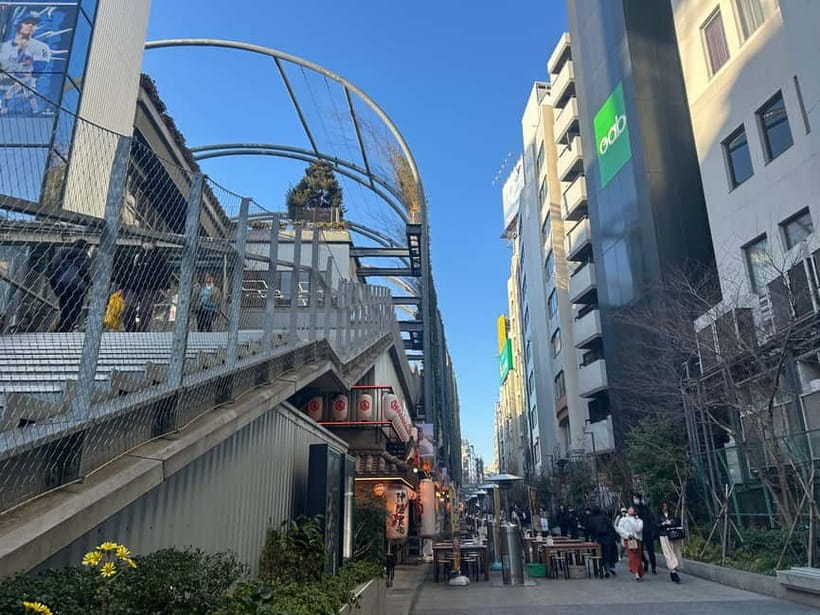
The tour does not remain in the loudest part of the district. Your guide leads you away from the main flow and points out lesser-known places that are easy to miss when you explore alone.
This change of pace gives the walk its best balance. You still get the famous crossing, bright signs, and major streets, but you also see a more ordinary side of Shibuya. The contrast helps you understand the area instead of simply collecting the standard photographs.
The guides also explain local customs. One guide, Rick, warned about places where taking pictures was inappropriate. That is useful advice in a district where it is tempting to photograph every sign, doorway, and busy lane. A local guide can help you notice when a camera would be intrusive.
Do not expect the secret back streets of an entire city in 90 minutes. The route covers a limited part of Shibuya, and one person felt the area covered was too short. That is a fair criticism. The tour works best if you use it to choose where to return, not if you expect it to replace a full day of independent exploring.
A completely different kind of day out:
- Tokyo Disney Resort – Tokyo Disneyland & Tokyo DisneySea Park Tickets
★ 4.8 · 99,488 reviews - SHIBUYA SKY Ticket
★ 4.7 · 46,509 reviews - JR Whole Japan Rail Pass
★ 4.8 · 29,150 reviews - Mt Fuji and Hakone 1-Day Bus Tour Return by Bullet Train
★ 5.0 · 26,383 reviews
Why the six-person limit improves the walk
A group capped at six gives this tour a personal feel. You can ask about a restaurant, a shopping street, station shortcuts, or the right place to take a photograph without waiting for a large crowd to catch up.
Some departures have been even smaller, including private-feeling walks with one participant or two parties. That can be a real advantage if you like conversation and personal suggestions. It also means the experience may feel different from one departure to another, depending on the guide and group.
The tour is wheelchair accessible, which is an important practical point. Still, the supplied information does not describe the exact surface, slope, or restroom arrangements along the route, so you should confirm any detailed mobility needs with JLB Tours before booking.
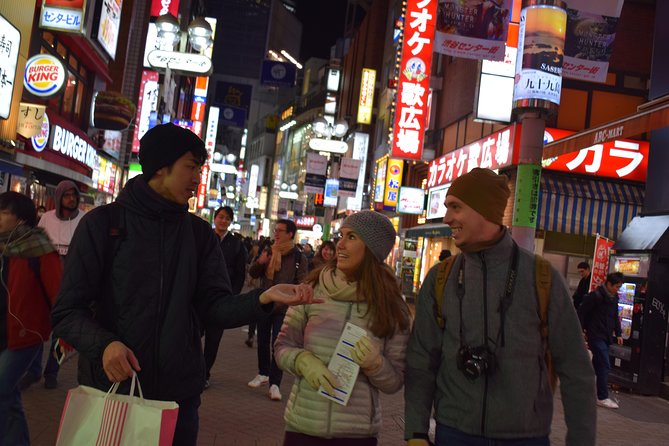
The English-language guiding is another strong point. Guides including Sakura, Hiroko, Fumino, Hayato, Roko, and Izumi have been praised for clear communication and friendly conversation. Some guides use a picture book with English text, which can help when explaining places or ideas while walking.
Families can also fit comfortably into the format. Hiroko kept children aged seven and ten entertained, while another group with young adult children found the walk enjoyable. Since the route is short, it can work well as a first activity before a longer afternoon in the district.
A practical price check at $19
At $19 per person, this is inexpensive for a live, English-language tour in central Tokyo. You are paying for a guide who helps you get oriented, explains the area, and saves you the work of finding good viewpoints and streets on your own.
The price is strongest if you take the tour early in your Tokyo stay. You can use the restaurant suggestions, shopping advice, and route knowledge for the rest of your visit. It is less valuable if you already know Shibuya well or only want to cross the famous intersection and leave.
Food, drinks, transport, and hotel pickup are not included. That keeps the cost low, but you should budget separately for anything you decide to eat or visit afterward.
Free cancellation is available up to 24 hours before the start time, and you can reserve while paying later. Those terms help if your Tokyo schedule is still shifting, though the strict five-minute waiting rule means you should not cut the arrival time close.
Choosing the right time and weather
The tour runs in rain or sunshine. Bring an umbrella or raincoat in wet weather, and choose comfortable clothing. Rain did not prevent one group from finding the walk interesting, but wet pavement and crowded sidewalks can make Shibuya harder to manage.
A late afternoon departure can be especially appealing in winter. One person recommended starting at 4 p.m., when daylight begins to fade and the signs and streets take on stronger evening light. That timing may give you both daytime orientation and a look at Shibuya after dark.
You should check the available start times when booking, since the exact schedule is not fixed in the information provided. If photography matters to you, ask about a time that gives you the kind of light you want. If eating afterward is your priority, choose a departure that leaves room for dinner.
The tour is only 90 minutes, so it fits neatly before shopping, a meal, or another Tokyo activity. I would avoid placing it immediately after a complicated long-distance journey unless you have plenty of station-navigation time. Shibuya’s size makes a calm arrival worthwhile.
Who will get the most from this tour
I would recommend this walk to first-time Tokyo visitors who want an easy introduction to Shibuya without spending half a day in a large group. It is also a good choice if you want local food advice or feel unsure about where to begin in the district.
It suits solo visitors particularly well. A small group gives you a chance to ask questions, and if the departure is quiet, the walk may feel almost like a private conversation with a local guide.
Families and older children can enjoy it, provided everyone is comfortable walking through crowded public areas. The short duration helps, though the busy station and crossing may be tiring for anyone who dislikes noise or dense crowds.
I would be less likely to book it if you want a long stop inside bars, a full meal, extensive shopping time, or a detailed tour of every major attraction. The guide shows you where to continue, but you do the eating, shopping, and extra sightseeing afterward.
Should you book the Shibuya Highlights Walking Tour?
I would book it as an opening activity, especially at the start of a Tokyo visit. For $19, you get a friendly English-speaking guide, a small group, a strong view of Scramble, local nightlife streets, and practical advice that can shape the rest of your time in Shibuya.
The tour is not a complete district survey, and its short length means some stops receive only a quick explanation. But that is also its strength. You get your bearings without losing a whole morning, then return to the places that interest you most.
Arrive at SHIBU HACHI BOX well before the meeting time, use the Hachiko Exit, wear comfortable clothes, and carry rain gear if the forecast calls for it. If you want a relaxed first look at Shibuya with useful local direction, this is a sensible, well-priced choice.
FAQ
Where does the Shibuya walking tour begin?
It begins at SHIBU HACHI BOX, the tourist information center in front of the Hachi statue. Use the Hachiko Exit of JR Shibuya Station.
How long does the tour last?
The tour lasts 90 minutes.
How much does the tour cost?
The listed price is $19 per person.
Is the tour conducted in English?
Yes. The tour has a live English-speaking guide.
How large is the group?
The tour is limited to six participants.
Is the tour wheelchair accessible?
Yes, the activity is listed as wheelchair accessible.
What does the tour include?
It includes the walking tour and a local guide.
Are food and drinks included?
No. Food and drinks are not included in the price.
What happens if I arrive late?
The guide can wait only five minutes at the starting point. Late arrivals cannot join the tour midway, so contact JLB Tours as soon as possible if you cannot arrive on time.
Just added in Tokyo
- A One-of-a-Kind Sushi Experience in a Special Place of Japan★ 5.0 · 15 reviews
- Tokyo Cute Bento Cooking Class – Make a Kawaii Character Lunchbox★ 5.0 · 126 reviews
- Japanese Home Cooking Class & Walk in Todoroki Temple Tokyo★ 5.0 · 88 reviews
- Japan Tokyo Tower Observatory Deck E-Ticket★ 4.0 · 34 reviews
- Catch a Baseball Game in Tokyo with a Local – Tickets Included★ 5.0 · 24 reviews
- JDM Experience with Fast&Furious RX-7 (English speaking Driver)★ 5.0 · 57 reviews
- Tokyo Private Day Tour by Car with English speaking Driver Guide★ 4.0 · 29 reviews
- Japan Classic 10 Day – One Life Adventures★ 5.0 · 129 reviews
Walking Tours, compared.
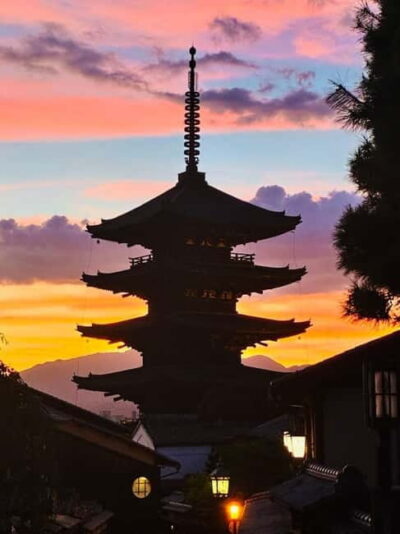
Kyoto Geisha Walking Tour: Gion District & Hidden Gems
Read our review →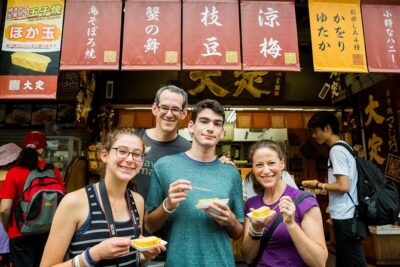
Tokyo Tsukiji Fish Market Food and Culture Walking Tour
Read our review →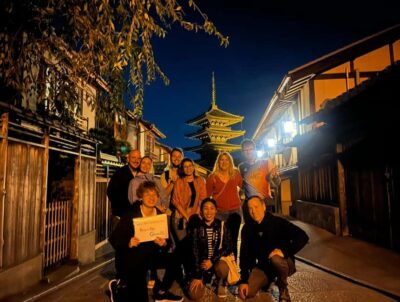
Gion Magical Night Walking Tour with Geisha Trivia
Read our review →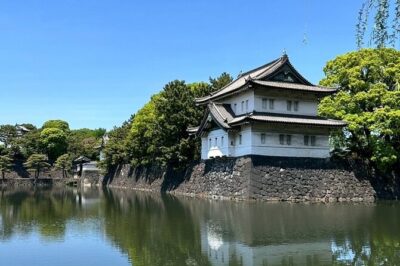
Imperial Palace and Shogun Historical Walking Tour
Read our review →
Gion Geisha District Walking Tour – Stories of Geisha
Read our review →
Shinjuku Local Bar and Izakaya Guided Walking Tour
Read our review →
Browse the lists this tour appears in