
Reviewed · KIMONO AND CULTURAL DRESS
Tokyo: Winter Kimono Experience in Asakusa
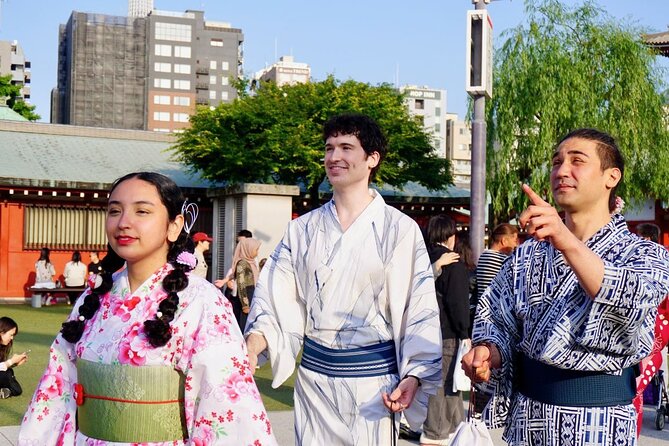
Dress up, then meet old Tokyo. This Asakusa experience lets you choose an authentic kimono, receive professional help getting dressed, and spend the day walking around Senso-ji Temple and nearby sights. I especially like the wide choice of kimono colors and obi belts, plus the freedom to explore without being tied to a guided group. The experience costs $31.63 per person, which is a fair price for several hours of wear, dressing assistance, and a souvenir photo.
The small shop sits about three minutes from Senso-ji, and the staff can suggest good places for pictures. Kazune, who grew up in Asakusa, helps with the dressing, while another staff member holds Japanese national certification as a kimono dresser. The strongest praise goes to the careful styling, friendly help, and willingness to take photos and videos.
The main catch is finding the shop. One customer spent an hour and a half searching before receiving extra location photos, so you should arrive early and use the directions closely. The dressing process may also feel rushed at busy times, and any photography arrangement should be confirmed clearly before you leave the shop.
In This Review
- Key details before you book
- Why Asakusa is the right place for a kimono
- Choosing a kimono and getting dressed
- Walking from Kaminarimon Gate to Senso-ji
- Bridges, viewpoints, and temple gates
- How much time do you really get?
- The photo value of this experience
- Price, group size, and who gets the most value
- What could go wrong, and how to avoid it
- Who should book this Asakusa experience?
- Should you book it?
- FAQ
- Where does the kimono experience begin?
- How close is the shop to Senso-ji Temple?
- What time should I arrive?
- Can I choose my own kimono?
- Who helps with the dressing?
- How long can I keep the kimono?
- Can I return the kimono the next day?
- Is a photo included?
- How many people can join?
- Who cannot participate?
Key details before you book
- Three minutes from Senso-ji: The shop is at f.2-chōme-8-10 Kaminarimon, about a short walk from the temple.
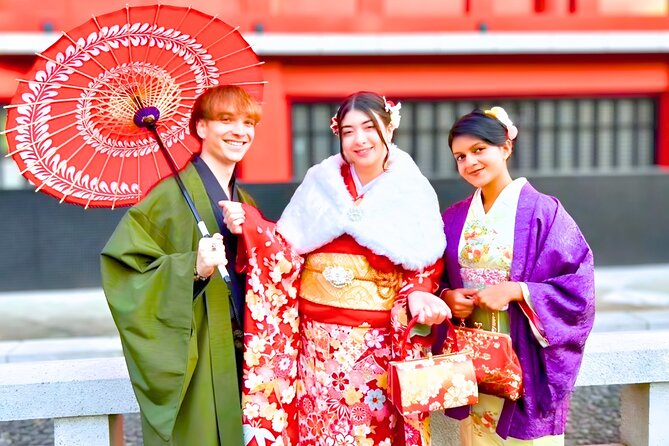
- Choose your own style: You can select from different kimono colors, patterns, and obi belts.
- Professional dressing help: Kazune assists with the fitting, and a certified kimono dresser is also on staff.
- Explore independently: After dressing, you have free time to walk around Asakusa and take photos.
- Return by 17:30: The kimono must come back the same day unless you pay a small extra fee for next-day return.
- Small-group setting: The activity accepts a maximum of five people, though your booking may be private or nearly so.
Why Asakusa is the right place for a kimono
A kimono feels most natural in Asakusa because the neighborhood gives you a traditional setting right outside the shop. You can step into the outfit, walk a few minutes, and begin taking pictures around Kaminarimon Gate and Senso-ji without spending time crossing Tokyo.
This is not a guided cultural lecture or a tea ceremony. It is a dress-up and sightseeing experience with plenty of personal freedom. That distinction matters. If you want a tightly scheduled lesson about Japanese clothing, this may feel light. If you want to look the part while exploring one of Tokyo’s most recognizable old districts, the format works well.
The winter setting also suits the activity. The season gives your photographs a clear, cool-city feel, though the supplied details do not specify what outer layers or winter accessories are included. Ask the shop what can be worn over the kimono if the temperature is low. You should also remember that a kimono can restrict your stride, so plan a relaxed walk rather than a long march across Tokyo.
More Kimono Experiences in Tokyo
- Tokyo Asakusa Kimono&Yukata Rental at Kimono Miyabi Asakusa Station
★ 4.9 · 8,489 reviews - Tokyo Kimono, Furisode, and Yukata Rental Experience | Exquisite Hairstyling & Japanese Makeup & Photo Shoot (Ookini Asakusa Kaminarimon)
★ 4.8 · 767 reviews - Let’s make kimono !(Kimono is a gift for you
★ 5.0 · 252 reviews
Choosing a kimono and getting dressed
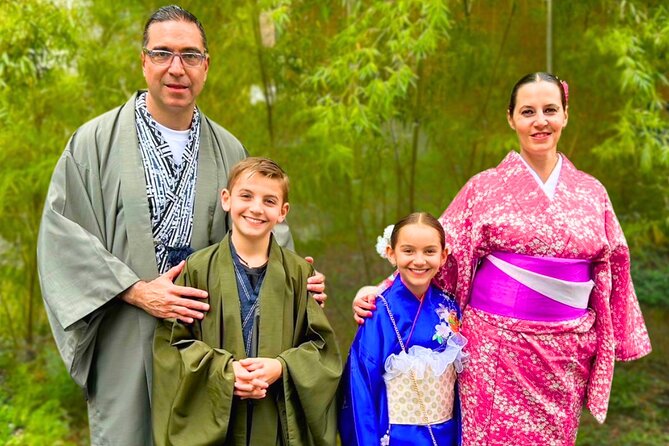
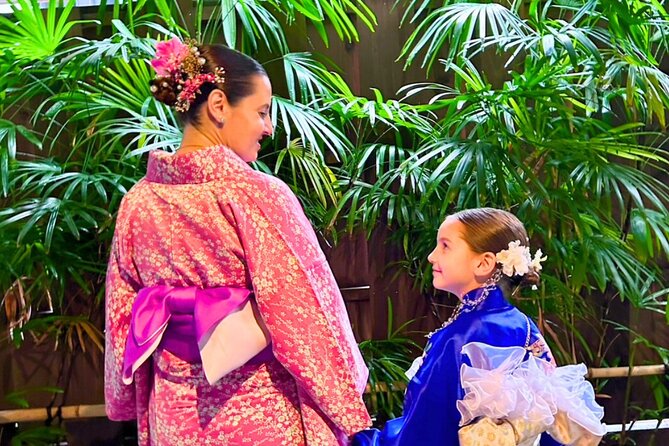
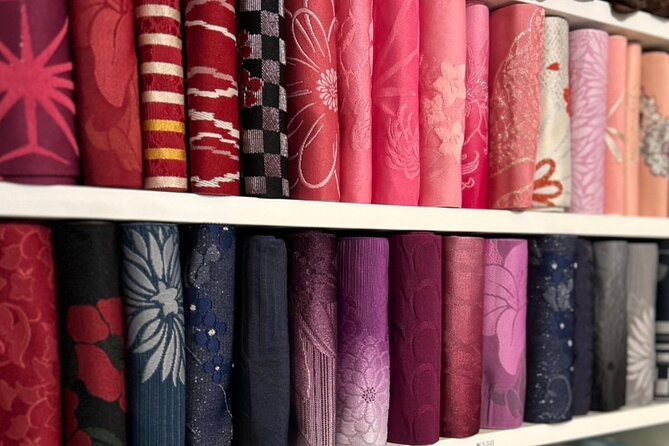
The experience begins at the shop near Kaminarimon. You are invited to choose from real kimono in different styles, with a good range of colors and belts. That choice is one of the best parts of the outing because it gives you some control over the final look rather than placing you in a standard outfit.
Staff then dress you correctly and adjust the clothing so it looks neat and feels comfortable. Kimono dressing involves more layers and careful tying than putting on an ordinary robe, so professional help saves both time and guesswork. The outfit needs to look right in photographs, but comfort matters just as much when you will be walking around for hours.
Kazune is identified as a local who grew up in Asakusa. Her local connection is useful in two ways: she helps with the fitting, and she can point you toward photo locations nearby. Another member of the team is a Japanese National Certified Kimono Dresser, adding confidence for anyone concerned about the details of the clothing.
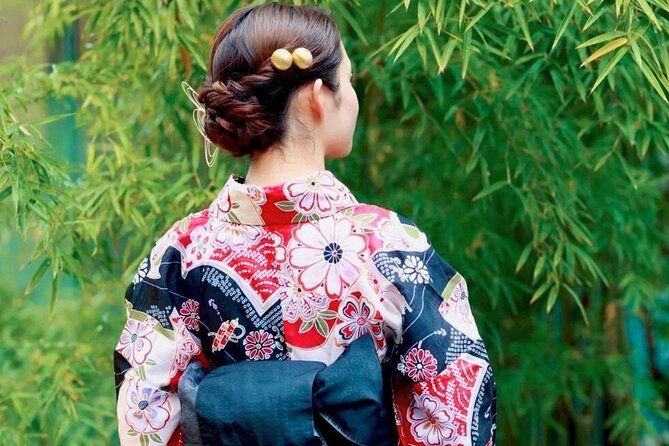
Hair styling was included in one particularly positive account, but it is not clearly listed as a guaranteed part of every booking. Ask the shop what your selected package includes. The same advice applies to photography. The experience includes a souvenir photo, and staff may help take additional pictures or videos, but a separate photographer was difficult for one customer to locate. Confirm the photo plan before setting off.
Walking from Kaminarimon Gate to Senso-ji
Once dressed, you can begin at Kaminarimon Gate, the large entrance point associated with Asakusa. It is an easy first stop because the shop is close by, and the gate gives you an immediate backdrop for a kimono portrait.
From there, walk along Nakamise Shopping Street, which leads toward Senso-ji. This is a good place for pictures because the route connects the gate with the temple precinct and gives your outing a natural sense of progress. It is also a shopping street, so you can browse as you go, but keep your pace comfortable and watch your sleeves and obi around other people.
The next stop is Senso-ji Temple, the main reason this location works so well. You can photograph the kimono against the temple grounds, then continue at your own speed. Since the experience is not a guided tour, you are responsible for deciding how long to spend at each place.
The route also includes Asakusa Shrine, another nearby stop within the same historic area. Including it gives you a quieter change of scene from the main temple approach. The exact amount of time at each location is not fixed, so build your own rhythm around photographs, shopping, and sightseeing.
Bridges, viewpoints, and temple gates
The listed route continues to Azumabashi Bridge, giving you a different setting from the temple lanes. A bridge photograph can help vary your souvenir pictures, especially if you do not want every image to show the same gate or courtyard.
You can also visit the Asakusa Culture Tourist Information Center. The center is listed as a stop, but the activity details do not say that an admission ticket, guided visit, or special presentation is included. Treat it as part of the suggested area to visit rather than a scheduled program.
Back near Senso-ji, the route names Hozomon, a major temple gate, followed by Senso-ji Temple Yogodo and Senso-ji Temple Shinokuyama. These stops make sense for anyone who wants several different temple backdrops without leaving Asakusa. Still, the supplied information gives no exact walking order, time allowance, or explanation of what happens at each point, so you should see them as suggested places to explore rather than timed tour stations.
The final temple stop is Nitemmon Gate, after which the activity returns to the Asakusa area and ends at the original meeting point. Tokyo and Taito are also listed in the route information, but they are broad location labels rather than separate attractions with a planned activity.
A completely different kind of day out:
- Tokyo Disney Resort – Tokyo Disneyland & Tokyo DisneySea Park Tickets
★ 4.8 · 99,488 reviews - SHIBUYA SKY Ticket
★ 4.7 · 46,509 reviews - JR Whole Japan Rail Pass
★ 4.8 · 29,150 reviews - Mt Fuji and Hakone 1-Day Bus Tour Return by Bullet Train
★ 5.0 · 26,383 reviews
How much time do you really get?
The experience is described as lasting about one day, but the important practical limit is the return time. You must bring the kimono back to the shop by 17:30 on the same day.
That gives you a useful block of sightseeing time, but you should not assume you can keep the outfit overnight without arranging it. Next-day return is possible for a small extra fee paid directly at the shop. If you want an evening photo session or a slower dinner stop, settle that arrangement before leaving.
You also need to arrive at least 10 minutes before your booking time. I would allow more than that, especially because one customer had trouble locating the shop. The meeting point is f.2-chōme-8-10 Kaminarimon, Taito City, Tokyo 111-0034, Japan. Save the address and check the directions before you reach Asakusa, rather than trying to solve the final turn while dressed and on a schedule.
The photo value of this experience
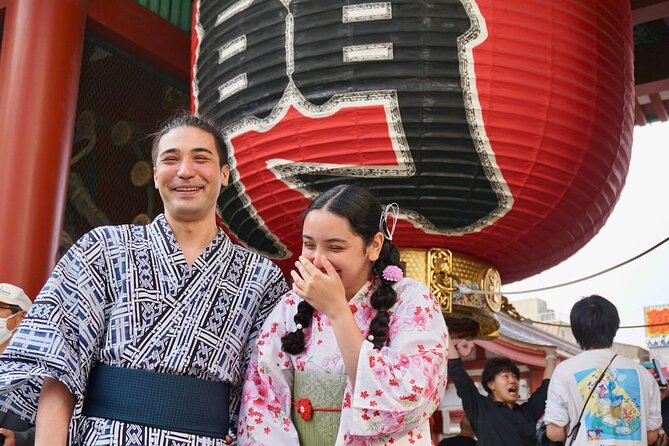
The photographs are the real reason to book. You get more than a quick studio portrait because the outfit travels with you into Asakusa. Kaminarimon, Nakamise, the temple gates, the shrine, and Azumabashi Bridge all give you different settings for a small collection of memorable images.
The staff’s help is a major advantage. Several people praised the styling, and one account specifically noted that the dresser took pictures and videos. Another said the outfit was selected and arranged in a way that made the wearer feel especially well presented. That personal attention is worth more than simply renting a costume and being left to figure out the ties yourself.
The included souvenir photo adds some value at $31.63. It is not clear how many images you receive or whether all additional photography is included, so ask before you begin. Do not count on finding a photographer at the temple unless the staff gives you exact instructions.
You may also feel unsure about wearing traditional clothing as a foreign visitor. The shop’s own position is welcoming: it considers participation a positive way to enjoy Japanese culture, provided you wear the clothing respectfully. The staff handles the formal dressing, so you can focus on enjoying the day rather than worrying about assembling the outfit incorrectly.
Price, group size, and who gets the most value
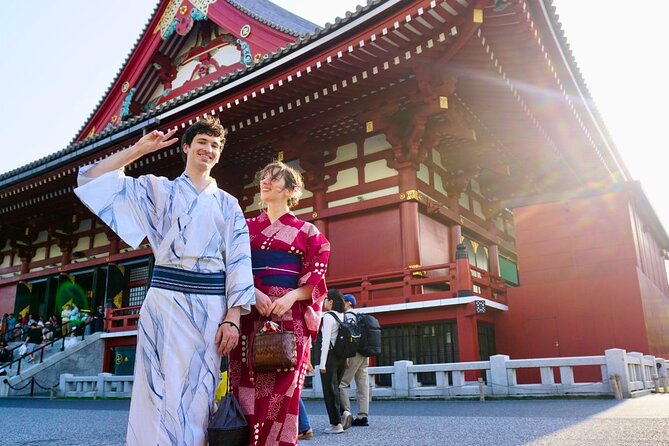
At $31.63 per person, the price is reasonable for kimono selection, professional dressing, several hours of use, free time around Asakusa, and a souvenir photo. It is especially good value if you plan to take many photographs or if you would otherwise pay separately for a costume rental and styling.
The value is weaker if you only want a short portrait and do not care about walking around the neighborhood. The experience is designed around using the kimono for a larger part of the day, so make use of that time.
The maximum group size is five. The small capacity should make the dressing process more personal, though one account suggests that the pace can feel hurried in some situations. Couples, friends, and parent-child bookings suit this format well. One parent and daughter enjoyed choosing colors and belts together, and another booking involved just two people in the studio, creating a cozy feel.
The activity is near public transportation, and most people can participate. It does not accept anyone over 210 centimeters or over 160 kilograms, listed as 264 pounds in the supplied information. It is also not suitable for pregnant women. These limits relate to the clothing and dressing process, so check before booking if you have any concern about fit.
What could go wrong, and how to avoid it
The biggest practical issue is navigation. The shop address is specific, but the entrance can still be hard to spot. Arrive early, keep the booking confirmation available, and contact the provider or platform promptly if the directions do not make sense. Do not use the full 10-minute arrival window as your target if you are unfamiliar with Asakusa.
Pricing can also cause confusion if you want extras. The base experience includes the kimono outing and a souvenir photo, while next-day return costs extra. Hair styling and additional photography are not clearly defined in the supplied details, so ask what is included in your reservation.
Finally, keep your day flexible. The activity is not a guided march through the nine named stops. You dress at the shop, then explore independently and return the clothing by the deadline. That freedom is a benefit, but it means you need to manage your own route and time.
Who should book this Asakusa experience?
I would choose this for a first visit to Tokyo if you want a personal memory tied to a famous neighborhood. It works particularly well for couples, families, friends, and anyone who enjoys taking photographs. The choice of kimono and belts makes the experience more personal, while the staff assistance removes the hardest part of dressing.
It is also a good fit if you want to see Senso-ji without committing to a full-day guided tour. You can move at your own pace, stop at Nakamise, visit the shrine, cross toward Azumabashi Bridge, and return when you are ready.
I would hesitate if you dislike structured clothing, have difficulty walking in a restricted outfit, need a guaranteed professional photo session at a specific time, or cannot return by 17:30. In those cases, confirm the details carefully or consider a shorter studio-based option.
Should you book it?
Yes, if you want a low-cost kimono rental with personal dressing help and free time in Asakusa. The 4.9 rating from 29 reviews and 97 percent recommendation rate fit the strongest pattern here: people appreciate the kind staff, broad clothing choice, flattering styling, and chance to take photos around Senso-ji.
Book with two precautions. First, plan extra time to find the shop. Second, confirm exactly what photography, hair styling, and late return arrangements are included. If you do that, this is an easy way to turn a visit to Senso-ji into a more memorable Tokyo experience.
FAQ
Where does the kimono experience begin?
It begins at f.2-chōme-8-10 Kaminarimon, Taito City, Tokyo 111-0034, Japan.
How close is the shop to Senso-ji Temple?
The shop is about a three-minute walk from Senso-ji Temple.
What time should I arrive?
You should arrive at least 10 minutes before your booked time so the staff can prepare you.
Can I choose my own kimono?
Yes. You can choose from different kimono styles, colors, and obi belts in the shop’s collection.
Who helps with the dressing?
Kazune helps dress you, and another staff member is a Japanese National Certified Kimono Dresser.
How long can I keep the kimono?
You can keep it during the day and must return it by 17:30 on the same day.
Can I return the kimono the next day?
Yes, next-day return is possible for a small extra fee arranged directly with the shop.
Is a photo included?
The experience includes a souvenir photo. The details do not specify the number of photos or whether extra photography services are included.
How many people can join?
The activity has a maximum of five participants.
Who cannot participate?
The activity is not for people over 210 centimeters, people over 160 kilograms or 264 pounds, or pregnant women.
More Winter Activities in Tokyo
- From Tokyo: Private Tour Snow Monkey Park & Zenko-ji Temple
★ 4.7 · 184 reviews - Nagano Snow Monkey 1 Day Tour with Beef Sukiyaki Lunch from Tokyo
★ 4.5 · 123 reviews - Nagano Tokyo: Snow Monkey Private Day Tour Hotel Pick & Drop
★ 4.7 · 84 reviews - From Tokyo: Snow Monkey Private Customize Day Tour
★ 5.0 · 54 reviews
Just added in Tokyo
- Private homevisit for whole cultual experience, 20min from Tokyo★ 5.0 · 20 reviews
- Yanaka and Asakusa Walk around DOWNTOWN TOKYO like a local★ 5.0 · 36 reviews
- Yokohama/Kamakura Private Tour by Car- English speaking Driver★ 5.0 · 15 reviews
- Yanaka Historical Walking Tour in Tokyo’s Old Town★ 5.0 · 182 reviews
- 3-Hour Tokyo Pub Crawl Nightlife Welcome Guided Tour in Shibuya★ 5.0 · 209 reviews
- Official Japan Go-Kart Through Shibuya / Shinjuku (IDP Required)★ 5.0 · 92 reviews
- Tokyo private transfer from/to Tokyo Ports★ 4.5 · 26 reviews
- 2 Hours Mochi &Nerikiri Making & Matcha Class in Bunkyo★ 5.0 · 21 reviews
Kimono and Cultural Dress, compared.

Tokyo Asakusa Kimono&Yukata Rental at Kimono Miyabi Asakusa Station
Read our review →
Kyoto Geisha Walking Tour: Gion District & Hidden Gems
Read our review →
Gion Magical Night Walking Tour with Geisha Trivia
Read our review →
Gion Geisha District Walking Tour – Stories of Geisha
Read our review →
Best of Kyoto: Gion, Geisha, Pagodas & Cobblestones
Read our review →
Kyoto Kimono Rental Experience (Optional Exquisite Hair Styling/Japanese Makeup/Photography) (Ookini Kiyomizu-dera Main Store)
Read our review →Browse the lists this tour appears in