
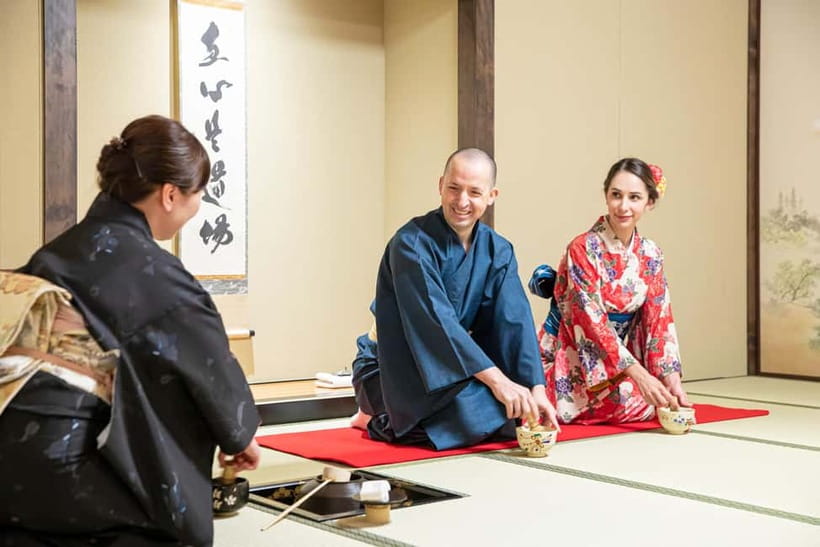
Reviewed · TEA CEREMONIES
Asakusa: Kimono Tea Ceremony with Matcha and Sweet
Tea, silk, and a little Zen. This 90-minute Asakusa experience gives you two things I especially like: careful kimono dressing with hair styling and a hands-on lesson where you whisk your own matcha. The staff provide clear English guidance, and hosts such as Mia, Wakana, Yoko, and Kyoko have been praised for making the ceremony friendly and easy to follow. The main consideration is the calm format: you sit on tatami mats, remove your shoes, and spend time in a group of roughly 12 to 14 people.
I also like the chance to take photographs afterward, including in a small garden and staged indoor settings. Some arrangements let you continue wearing the kimono nearby after the ceremony, which adds value for anyone hoping for memorable Asakusa pictures. If you have limited mobility, request a bamboo chair in advance, since standard seating is on the floor.
In This Review
- Key points to know before booking
- What the Asakusa experience is really offering
- Choosing a kimono, obi, and hairpiece
- The dressing process and what to wear underneath
- Entering the tea room and learning the four principles
- Watching the matcha preparation
- Whisking your own bowl of matcha
- Wagashi and the seasonal touch
- Photos in the garden and after the ceremony
- Is $66 good value?
- Who will enjoy this most?
- Practical tips for a smoother visit
- FAQ
- How long does the kimono tea ceremony last?
- Is English guidance provided?
- What is included in the price?
- Do I need to remove my shoes?
- Can children take part?
- Can I sit on a chair instead of the tatami?
- Should you book this Asakusa experience?
Key points to know before booking
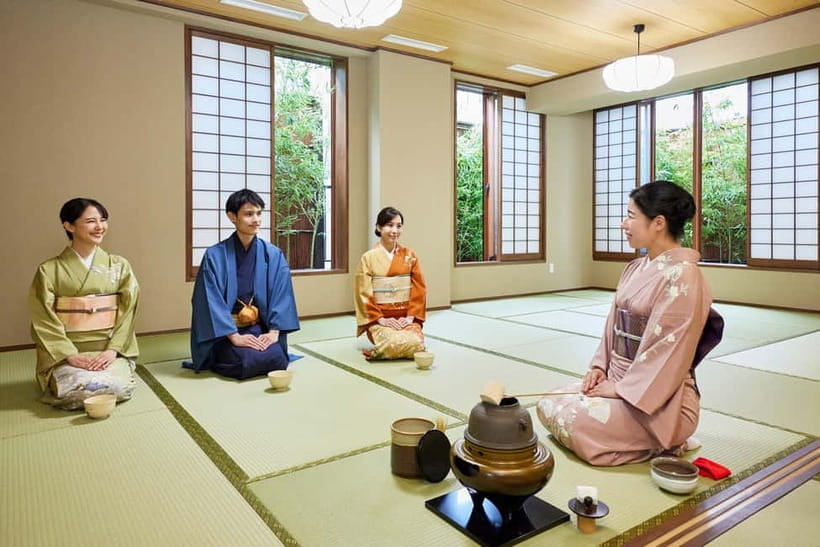
- Seasonal kimono selection: Choose from a range of colors and prints, then match the outfit with an obi and hair accessory.
- Hair styling included for women: This is available for women with long hair and adds polish to the finished look.
- You make your own matcha: The tea master demonstrates the process, then guides you as you whisk your own bowl.
- Wagashi completes the lesson: Seasonal Japanese sweets are served with the tea, with vegan-friendly sweets reported during some sessions.
- Photography is part of the fun: Use the small garden and indoor photo settings, and staff can help take pictures.
- A quiet, English-led ceremony: The tone is respectful and calm, not a loud costume photo session.
What the Asakusa experience is really offering
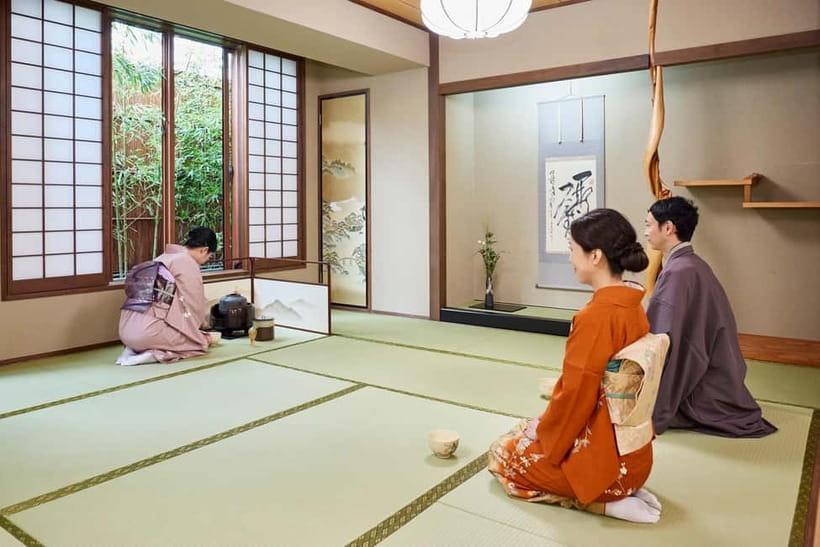
At $66 per person, this is more than a quick kimono rental and a cup of green tea. Your fee covers dressing, professional styling, the tea ceremony, matcha preparation, sweets, English instruction, and time for photographs. That package makes the price reasonable if you want several Japanese cultural activities in one compact booking.
You should still keep your expectations in check. This is an introduction to tea ceremony, not a full-day study with a tea school. The session lasts about 90 minutes, and the group can include around 12 to 14 people because bookings from several sources are combined.
That group size affects the mood. You will have enough room to observe the demonstration and take part, but you should not expect a private ceremony for two. At quieter times, the group may be smaller. One couple described a session with only two couples, while the stated group limit can be larger.
The overall rating is 4.9 from 153 ratings, and the most repeated praise centers on the staff, kimono choice, clear explanations, and picture-taking help. Those are the parts I would use to judge the value.
More Kimono Experiences in Tokyo
- Tokyo Asakusa Kimono&Yukata Rental at Kimono Miyabi Asakusa Station
★ 4.9 · 8,489 reviews - Tokyo Kimono, Furisode, and Yukata Rental Experience | Exquisite Hairstyling & Japanese Makeup & Photo Shoot (Ookini Asakusa Kaminarimon)
★ 4.8 · 767 reviews - Let’s make kimono !(Kimono is a gift for you
★ 5.0 · 252 reviews
Choosing a kimono, obi, and hairpiece
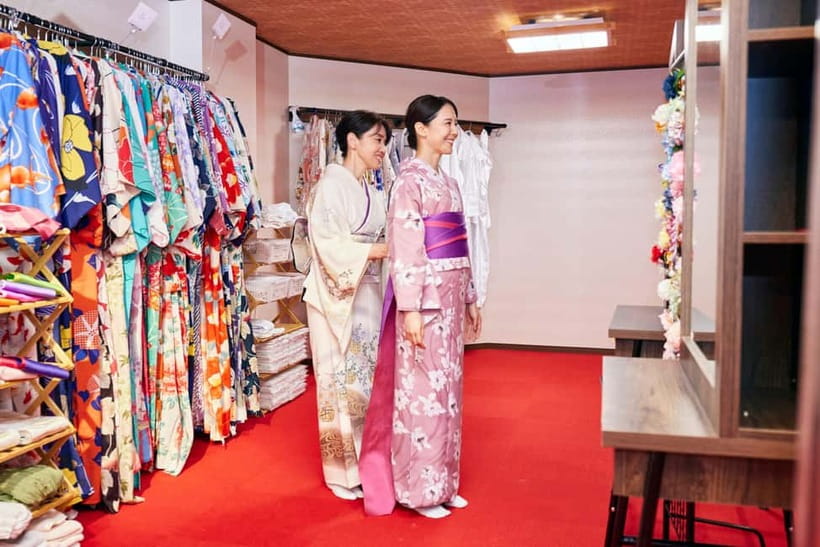
The experience begins with one of its most enjoyable decisions: selecting your kimono. You can choose from different colors and prints, with staff helping you pair the kimono with an obi and a hair ornament.
This is not a quick grab-and-go costume change. The dressing process takes care, and the finished outfit has several pieces that need to sit correctly. Staff members do the work while you decide what suits you. If you already know which colors you like, that can make the selection faster, but you do not need to arrive with a complete outfit in mind.
The choice matters because the kimono becomes the center of the rest of the session. It gives the tea ceremony a stronger sense of occasion, and it makes the photographs far more special than ordinary sightseeing snapshots.
For women with long hair, hair styling is included. The staff can finish the look with an appropriate accessory, and the styling has been described as quick but polished. Women should note the qualification carefully: hair styling is for long hair only.
Men can still take part in the kimono and tea ceremony portions, but the supplied information does not promise hair styling for men or for short hair.
The dressing process and what to wear underneath
You must remove your shoes, and the tea ceremony takes place on tatami mats. Wear clothing that is comfortable underneath the kimono and easy to change out of, though the supplied details do not specify a required outfit.
Once dressed, walking and sitting feel different from ordinary sightseeing. A kimono is designed for measured movement, and the obi holds the outfit firmly around your middle. Give yourself time to adjust rather than expecting to move at your usual Tokyo pace.
This is one reason the experience works best when you are not rushing to a second appointment. The dressing, ceremony, and photographs fill the stated 90 minutes, and the quiet setting rewards patience.
If sitting on the floor is difficult, ask for a bamboo chair before the appointment. Chairs are available only upon advance request, so do not wait until you arrive. Children under seven cannot participate.
Entering the tea room and learning the four principles
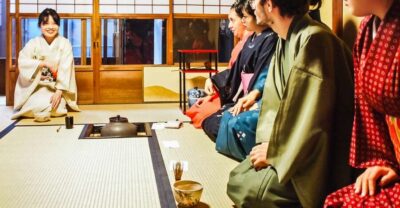
After dressing, you enter a quiet tea room for the ceremony. The tea master explains the etiquette and meaning behind the movements, with full English guidance throughout.
Four Zen ideas provide the framework:
- Wa, harmony: The ceremony creates a shared sense of balance between host, participants, tools, and surroundings.
- Kei, respect: The careful handling of tea utensils and the attention given to each person reflect courtesy.
- Sei, purity: Cleaning and preparation carry both practical and symbolic meaning.
- Jaku, tranquility: The slow pace gives the room a calm character, far removed from Tokyo’s busy streets.
You do not need previous knowledge of tea ceremony etiquette. The host explains what to watch, how the utensils are used, and how to approach the tea and sweets.
The ceremony’s quiet nature is important. This is not a performance built around constant jokes or fast entertainment, although hosts including Yoko and Kyoko have been praised for adding warmth and humor where appropriate. You will get more from it if you listen closely and allow the pauses to remain pauses.
More Tea Ceremonies in Tokyo
- Matcha Making Class in Tokyo with Authentic Japanese Sweets Set
★ 5.0 · 744 reviews - Tokyo: Traditional Tea Ceremony with a Tea Master
★ 5.0 · 528 reviews - Tokyo: Matcha Making Experience with Mochi Sweets in Asakusa
★ 4.9 · 388 reviews - Tokyo: Matcha and Kimono Experience
★ 4.7 · 219 reviews
Watching the matcha preparation
The tea master demonstrates each stage of preparing matcha. You can watch the precise handling of the tools and utensils, some of which are treasured objects rather than disposable props.
This demonstration is valuable because matcha preparation is not simply stirring powder into hot water. The movement of the whisk, the order of the steps, and the care given to the equipment all form part of the ceremony.
The host also explains what the gestures mean. That context turns the session from a photo opportunity into a short lesson in Japanese manners and aesthetics.
The English instruction is a major benefit. Several hosts are named in the feedback, including Mia, Wakana, Yoko, and Kyoko, and the staff are repeatedly described as patient, kind, and clear. One participant who spoke Japanese received explanations in Japanese with English added where needed, suggesting that the staff can adjust their approach when possible.
Whisking your own bowl of matcha
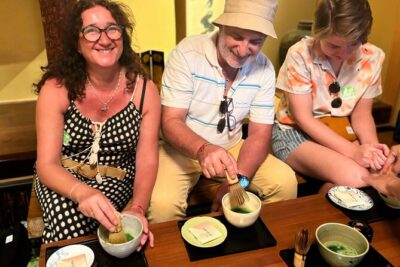
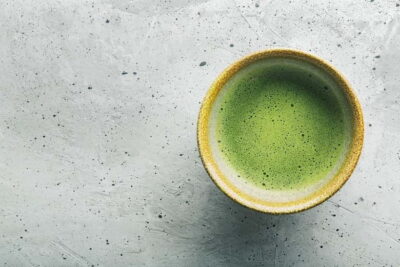
The most hands-on moment comes when you prepare matcha yourself. After watching the demonstration, you whisk your own bowl of green tea under the tea master’s guidance.
This part makes the experience worthwhile for anyone who prefers doing rather than simply watching. You get to feel the whisk in your hand, follow the same basic motions, and see how the tea changes as you work.
Do not expect to leave as a tea master after one bowl. The point is to understand the rhythm and care of the process, not to master every detail in a single sitting.
The flavor of matcha can surprise first-time drinkers. It is earthy, concentrated, and not sweet in the way many Western tea drinks are. That is why the wagashi pairing matters.
Wagashi and the seasonal touch
The matcha is served with wagashi, traditional Japanese sweets designed to complement the tea. Their colors and flavors reflect the season, giving the small snack a visual and cultural role beyond simple refreshment.
The sweets are included in the $66 price, but no meal is provided. Plan to eat before or after if you need something substantial. This is a light cultural tasting, not a lunch stop.
Some sessions have offered vegan-friendly wagashi, but the supplied information does not promise that every sweet will meet every dietary need. If you have allergies or strict dietary requirements, confirm the details before booking rather than assuming the seasonal selection will suit you.
Photos in the garden and after the ceremony
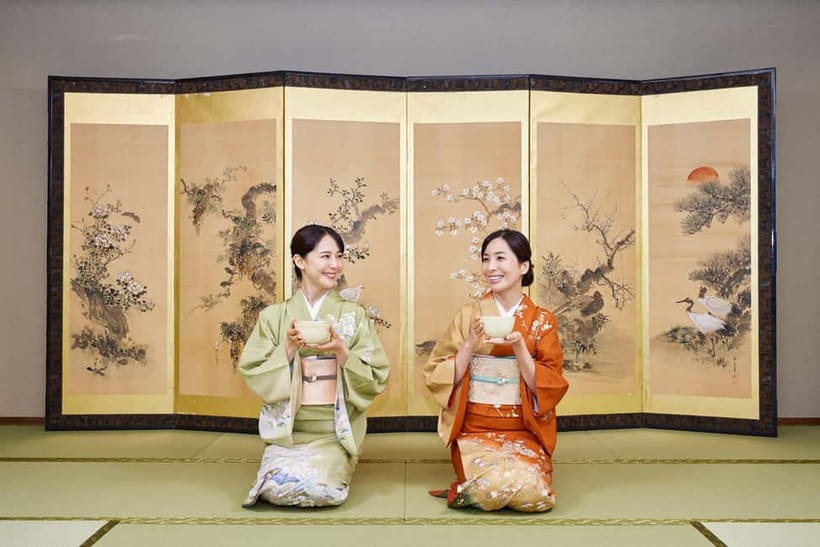
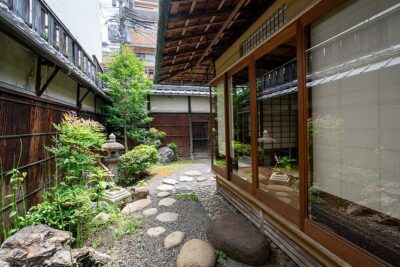
Once the formal portion ends, you have time for photographs. A small garden and several indoor settings provide backgrounds for individual and couple portraits.
The staff may help take pictures, which is especially useful if you are traveling alone. One solo participant received extended help with photographs, and another person received a special Polaroid birthday souvenir. Those personal touches are not listed as guaranteed inclusions, so treat them as possible kindnesses rather than promised features.
Couples should plan a few minutes for pictures together. The kimono, hair styling, obi, and tea room create a more meaningful record of the day than a standard street selfie.
You may also be able to go sightseeing nearby in the kimono afterward, depending on the arrangement made at the venue. Several people used the rental for the remainder of the day. Confirm this point when you arrive, since the formal activity details guarantee the kimono rental but do not clearly set out the exact return period.
Weather matters if you plan to walk outside afterward. In cold conditions, the outfit may be less comfortable for a long outing, and the kimono itself can make brisk walking awkward. A short photo walk in Asakusa is more realistic than an ambitious full-day sightseeing route.
Is $66 good value?
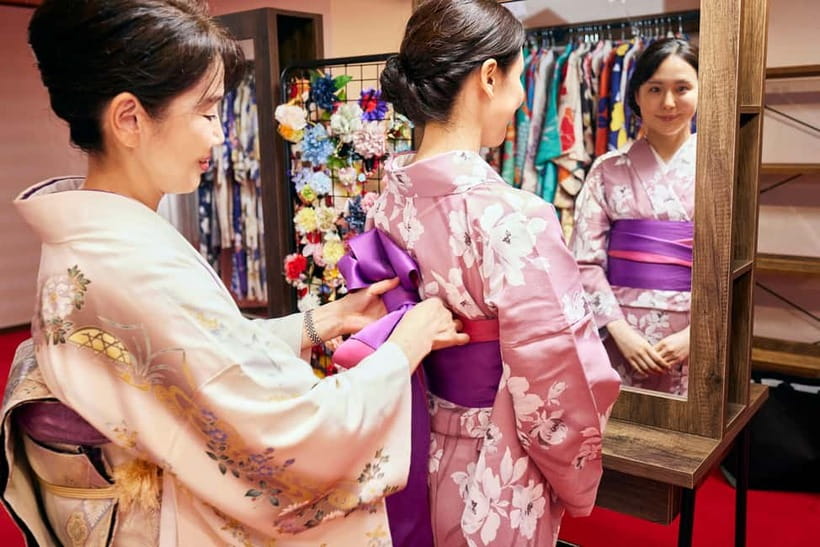
I consider $66 fair for the amount included. Kimono dressing alone can be a worthwhile activity, but here you also receive hair styling for eligible women, a guided ceremony, matcha preparation, wagashi, English instruction, and photo time.
The strongest value comes if you want a cultural activity that feels special but takes only 90 minutes. You can fit it around sightseeing in Asakusa without surrendering half a day.
The price is less attractive if you mainly want to wear a kimono for hours and explore Tokyo. The ceremony has a fixed schedule, the group may reach 12 to 14 people, and the tea portion is intentionally quiet. Someone seeking a private photography session or a long kimono walk may prefer a different type of booking.
There is also no transportation or full meal included. You make your own way to the venue and should budget separately for food and any local transport.
Free cancellation up to 24 hours before the start time helps reduce the risk of booking too early. The reserve-now, pay-later option also gives you some flexibility while your Tokyo plans are still taking shape.
Who will enjoy this most?
I would recommend this for first-time visitors who want a clear, respectful introduction to Japanese tea ceremony. It also suits couples, solo visitors who want help with photographs, and anyone who enjoys clothing, design, or traditional crafts.
It is a particularly good choice for:
- Couples looking for a memorable shared activity.
- Solo visitors who want staff assistance with portraits.
- People interested in Japanese etiquette and seasonal sweets.
- Anyone who wants an English-led cultural activity.
- Visitors with a free 90-minute window in Asakusa.
- Returning Japan fans who want a structured cultural lesson rather than another landmark visit.
It is less suitable for children under seven, people who cannot sit on tatami mats unless they arrange a bamboo chair, or anyone who dislikes quiet group activities.
Practical tips for a smoother visit
Arrive ready for a calm pace. You will remove your shoes, change into a kimono, and sit on tatami, so avoid building a tight schedule around the activity.
If you need a bamboo chair, request it ahead of time. Do not assume one will be available on arrival.
If you are a woman with long hair and want the included styling, arrive with enough time for the staff to work without pressure. The hair arrangement is part of the finished look, so choose your kimono and hairpiece as a coordinated set.
Think about the season when choosing colors. Seasonal prints can look especially good in photographs, and the wagashi is also selected to reflect the time of year.
If you want outdoor pictures afterward, check the weather and ask how long the kimono may be worn away from the venue. You may prefer to keep the outing short, especially in cold weather.
Finally, tell the host if you speak Japanese or have a special occasion. Staff may adapt explanations, and small personal touches such as a birthday Polaroid have occurred, though they are not guaranteed.
FAQ
How long does the kimono tea ceremony last?
The full activity lasts approximately 90 minutes, including kimono dressing, hair styling where applicable, the tea ceremony, matcha preparation, sweets, and photographs.
Is English guidance provided?
Yes. The instructor and staff provide full English guidance throughout the experience.
What is included in the price?
The $66 price includes the traditional tea ceremony, kimono rental and professional dressing, hair styling for women with long hair, matcha preparation, seasonal wagashi, and English guidance. Bamboo chairs are available upon advance request.
Do I need to remove my shoes?
Yes. Shoes are not allowed, and the ceremony takes place on tatami mats.
Can children take part?
Children under seven are not permitted to join the experience.
Can I sit on a chair instead of the tatami?
Yes, bamboo chairs are available, but you must request one in advance.
Should you book this Asakusa experience?
Book it if you want a polished introduction to two closely linked parts of Japanese culture: kimono dressing and tea ceremony. The staff support, broad kimono choice, English explanations, hands-on matcha preparation, and photo time make the $66 cost reasonable.
I would be especially happy to recommend it to couples and solo visitors. Couples get a memorable portrait session, while solo visitors can rely on staff for photographs. The activity also suits anyone who wants something more personal than another fast-moving Tokyo attraction.
Skip it if you need a private session, a full meal, or an all-day kimono outing. For everyone else, this is a well-paced, respectful way to spend 90 minutes in Asakusa, with enough hands-on activity to make the tradition feel real and enough photographs to remember it.
Just added in Tokyo
- A One-of-a-Kind Sushi Experience in a Special Place of Japan★ 5.0 · 15 reviews
- Tokyo Cute Bento Cooking Class – Make a Kawaii Character Lunchbox★ 5.0 · 126 reviews
- Japanese Home Cooking Class & Walk in Todoroki Temple Tokyo★ 5.0 · 88 reviews
- Catch a Baseball Game in Tokyo with a Local – Tickets Included★ 5.0 · 24 reviews
- Japan Tokyo Tower Observatory Deck E-Ticket★ 4.0 · 34 reviews
- JDM Experience with Fast&Furious RX-7 (English speaking Driver)★ 5.0 · 57 reviews
- Tokyo Private Day Tour by Car with English speaking Driver Guide★ 4.0 · 29 reviews
- Japan Classic 10 Day – One Life Adventures★ 5.0 · 129 reviews
Tea Ceremonies, compared.
Tea Ceremony in a Traditional Tea House in Kiyomizu
Read our review →
World Heritage Kyoto & Nara Uji Authentic Matcha Experience
Read our review →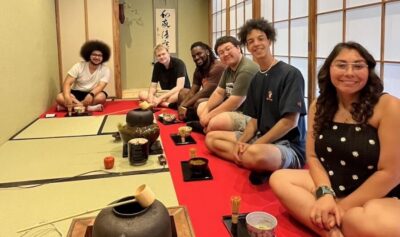
Browse the lists this tour appears in