
Reviewed · CASTLES AND HISTORIC SITES
Tokyo’s Imperial Palace & Nihonbashi Tour
Tokyo’s past is hiding in plain sight. This four-hour walking tour links the Imperial Palace East Gardens with Nihonbashi’s old shops, giving you history, food traditions, crafts, and sake in one half-day outing. I especially like the contrast between the quiet palace grounds and the polished shopping streets. I also like the chance to visit long-running businesses, including a knife shop founded in 1792 and a nori producer dating to 1849.
The main caution is simple: you do not tour the Imperial Palace itself. You visit the outer grounds and East Gardens, which are open to the public without an admission fee. The tour can also feel like a lot of walking, and several stops may change or offer less hands-on activity than the description suggests.
In This Review
- Key things to know before booking
- From Tokyo Station to the Imperial Palace grounds
- Otemon Gate and the East Gardens
- The subway ride to Nihonbashi
- Ninben and the taste of dashi
- Yamamoto Nori and traditional seaweed
- Kiya, the 1792 knife shop
- Ozu Washi and the paper-making stop
- Toyama’s regional shop and sake tasting
- The guides can make or break the day
- Is $101.72 a good value?
- Who should book it?
- FAQ
- How long is the Tokyo Imperial Palace and Nihonbashi tour?
- Where does the tour begin?
- Where does the tour end?
- Does the tour enter the Imperial Palace buildings?
- Is admission to the East Gardens included?
- Is transportation included?
- Are dashi and sake included?
- How large can the group be?
- Can I cancel for a full refund?
Key things to know before booking
- The palace visit means the East Gardens and Edo Castle ruins, not the modern Imperial Palace buildings or private interior rooms.
- Nihonbashi provides the tour’s most distinctive experiences, with dashi, nori, knives, washi paper, regional products, and sake.
- The route involves plenty of walking, plus a subway ride between the palace area and Nihonbashi.
- Hands-on activities are not guaranteed at every stop, especially washi making and demonstrations at the food shops.
- Guide quality matters greatly, with strong praise for guides such as Mari, Michi, Kishy, Yama-san, Kudo-san, Tombi, Yuji, Toyo, Eriko, Saiyo, Andy Watanabe, and Yoshi.
- The $101.72 price is fair if your guide is strong and the full route operates, but less attractive if shops are closed or visits become quick shopping stops.
From Tokyo Station to the Imperial Palace grounds
The tour begins at Tokyo Station, at 1 Chome-9 Marunouchi in Chiyoda City. That location is practical, since Tokyo Station is one of the city’s main transport hubs, but you are responsible for getting there. The tour itself does not include transportation.
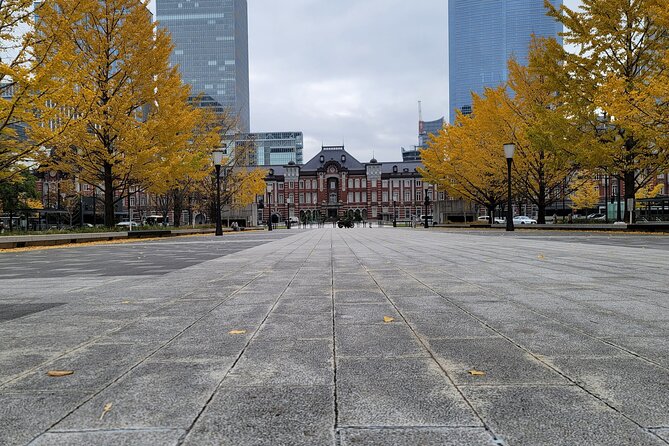
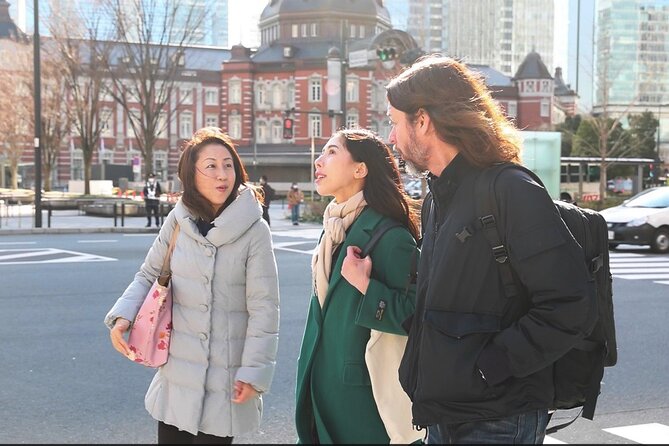
From the meeting point, you walk along a handsome avenue lined with ginkgo trees toward the palace area. The opening walk gives you a useful sense of Tokyo’s odd but appealing mix: office towers, formal avenues, open space, stone walls, and carefully maintained gardens all sit close together.
The first palace stop is brief, about 15 minutes. This is mainly an introduction to the outer grounds before you pass through Otemon Gate into the East Gardens. Your guide can help explain what you are seeing, which matters here because the modern palace buildings are not the main focus.
Set your expectations correctly. If you picture an open castle with rooms, royal displays, and grand interiors, this is not that kind of visit. The Imperial Palace is the home of Japan’s Imperial Family, but this tour does not take you inside the palace residence. The public route centers on the grounds and garden areas.
More Castles and Historic Sites in Tokyo
- Tokyo: Imperial Palace and Shogun Historical Walking Tour
★ 5.0 · 2,251 reviews - Tokyo Castle & Imperial PalaceーShogun Walking Tour
★ 4.7 · 1,068 reviews - Tokyo: Samurai Ninja Museum Guided tour and Experience
★ 4.6 · 1,010 reviews
Otemon Gate and the East Gardens
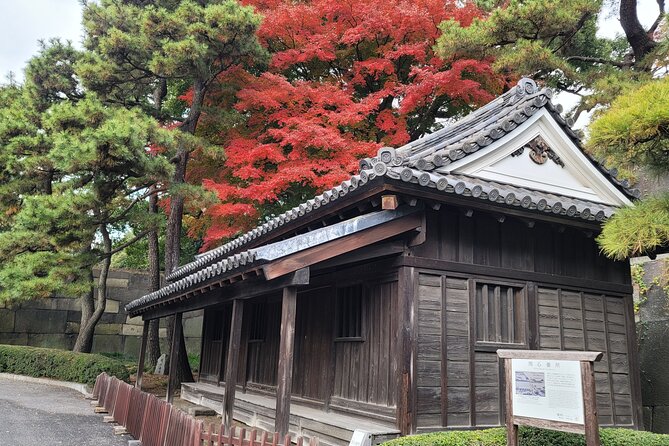
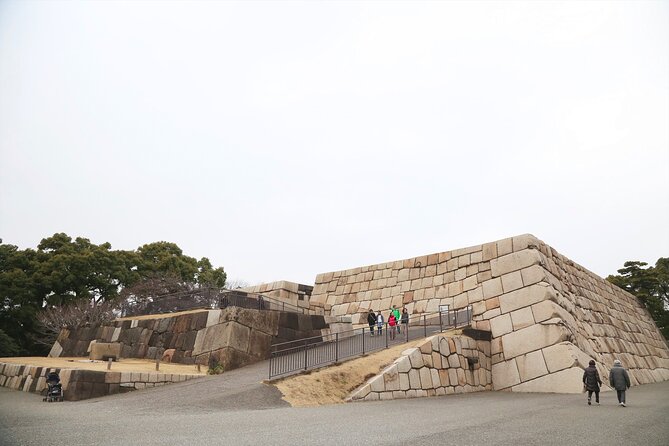
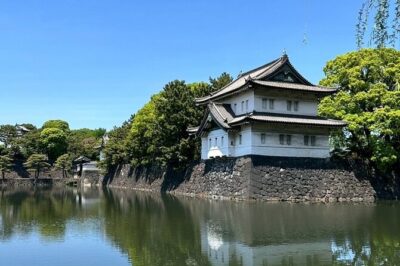
You spend about an hour in the East Gardens, the historical heart of the first half of the tour. Otemon Gate was once the main entrance to Edo Castle, the seat of the Tokugawa shoguns. The surviving stonework, broad spaces, trees, and garden features help you picture the scale of the former castle complex.
The Edo Castle ruins are the key historical sight. There is no castle building waiting at the top, but the remaining foundations and grounds show how much power was concentrated here during the shogun era. A good guide turns what could be a pleasant garden walk into a clearer lesson in Japan’s political past.
Season matters. One spring visit featured lingering cherry blossoms and azaleas in bright color. Other times of year will offer a different look. The gardens are carefully maintained, with pine and other trees providing shape and shade, but Tokyo weather can alter the experience quickly.
You should also plan for outdoor conditions. One guide, Mari, kept the tour moving during heavy rain and high winds, while another group had to shorten the route during intense September heat. The tour can go ahead in less-than-perfect conditions, but its cancellation rules allow a new date or full refund if poor weather causes the operator to cancel.
The East Gardens are free to enter, so the value here comes from the guide’s explanation and the way the palace visit connects with Nihonbashi. If you are comfortable reading historical signs and walking alone, you could visit the gardens without a tour. You are paying for interpretation, navigation, and the rest of the afternoon’s arranged route.
The subway ride to Nihonbashi
After the gardens, the group travels to Nihonbashi by subway. Transportation is not included in the tour price, so you should be prepared to pay your own fare. The subway transfer is part of the experience, though it can add time and effort, particularly in rain.
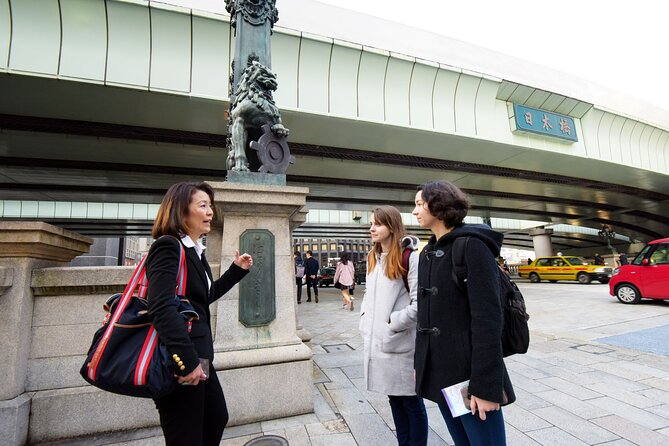
The move to Nihonbashi makes historical sense. The district has been a major commercial center for more than 400 years, and Nihonbashi Bridge marked the starting point of Japan’s national highway network from the early seventeenth century. The area today is known for department stores, established companies, food shops, and luxury retail, but its older commercial identity is still visible.
This is where the tour becomes less about famous monuments and more about everyday Japanese culture. You are not simply looking at old buildings. You are learning why soup stock, seaweed, knives, paper, and regional food products still matter in Japanese life.
Ninben and the taste of dashi
Ninben’s Nihombashi main store is scheduled for about 20 minutes. Ninben specializes in dashi, the soup stock used in noodle soups, hot pots, and many other Japanese dishes. The included sample gives you a direct taste of a basic flavor that visitors often consume without realizing how central it is.
This is one of the tour’s most useful food stops because dashi can be hard to understand from a description alone. A small sample shows how much flavor comes from ingredients such as dried fish and seaweed, even when the finished broth looks clear and mild.
There is an important practical warning. One group arrived to find the dashi business closed, and the replacement experience was not clearly explained. Shops can have closures or altered programs, so do not book this tour solely for one promised tasting.
A completely different kind of day out:
- Tokyo Disney Resort – Tokyo Disneyland & Tokyo DisneySea Park Tickets
★ 4.8 · 99,488 reviews - SHIBUYA SKY Ticket
★ 4.7 · 46,509 reviews - JR Whole Japan Rail Pass
★ 4.8 · 29,150 reviews - Mt Fuji and Hakone 1-Day Bus Tour Return by Bullet Train
★ 5.0 · 26,383 reviews
Yamamoto Nori and traditional seaweed
Yamamoto Noriten Honten is a nori producer that has operated since 1849. The scheduled visit lasts about 20 minutes. You can see different varieties of nori and, when the demonstration is operating as planned, watch staff roast the seaweed.
Nori is familiar to anyone who has eaten sushi, but the stop gives you a chance to see it as a carefully produced ingredient rather than a black sheet wrapped around rice. The shop setting also shows how traditional food businesses continue to operate in a modern commercial district.
The weakness is that the visit may become a short stop in a retail shop. One account found packaged seaweed but little explanation of how it was roasted or made. If the demonstration matters to you, ask your guide what will actually be available that day.
Kiya, the 1792 knife shop
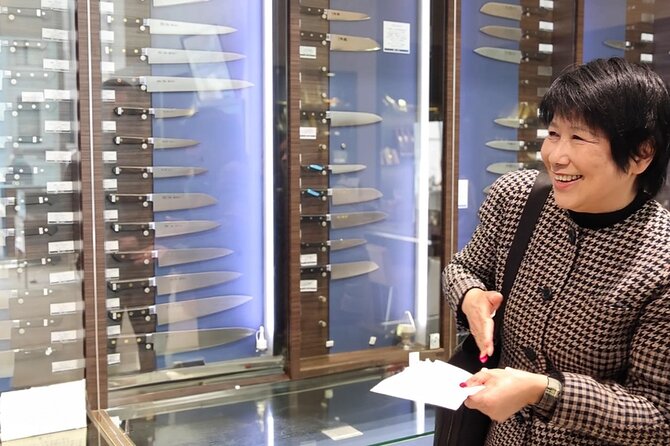
Kiya Nihombashi Main Branch dates to 1792 and carries hundreds of utensils. The selection includes traditional Japanese knives along with more modern European-style designs. You have around 20 minutes here.
This stop works best if you are interested in cooking, craft, or the practical design of kitchen tools. Japanese knives are attractive souvenirs, but they are also serious purchases. Take care with airline packing and local rules, and do not feel pressured to buy. The tour price does not include purchases.
The description suggests knife sharpening or a more active demonstration, but the actual visit may simply give you time to look at the knives and shop. That can still be worthwhile, but it is different from receiving a lesson. I would treat Kiya as a focused introduction to Japanese kitchen tools, not a workshop.
Ozu Washi and the paper-making stop
Ozu Washi is scheduled for about an hour, making it the longest Nihonbashi visit. The shop presents Japanese washi paper, stationery, and related craft goods. The planned experience includes learning how traditional paper is made and making a sheet yourself.
This is likely the most distinctive stop for visitors who want something beyond shopping. Washi is tied to Japanese writing, packaging, art, and ritual, and the store gives you a physical sense of the material. Even watching a paper-making film and examining the finished paper can make the craft easier to appreciate.
Still, the hands-on portion needs a caveat. One group found that paper making required a separate reservation and extra payment, with no available spaces when they visited. Do not assume that the one-hour stop guarantees that you will make paper. Ask in advance if this activity is essential to your decision.
The shop can also be a good place for a small, packable souvenir. Paper goods are lighter and easier to carry than a knife or larger food purchase, though the exact selection will depend on what is in stock.
Toyama’s regional shop and sake tasting
The final stop is the Toyama Prefecture Antenna Shop, also called Toyama-kan. These prefectural stores sell products from a specific region, in this case Toyama on the Sea of Japan coast. You may see local foods and other goods that are not common in standard Tokyo souvenir shops.
The tour ends on a relaxed note with a Japanese sake set included. Several participants particularly enjoyed tasting three varieties of sake. This is not presented as a formal sake course, and the shop may offer only brief explanations, but it gives you an easy introduction to differences between bottles.
The stop lasts about 30 minutes. It is a pleasant finish because you can browse after the walking portion is done. It also leaves you in Nihonbashi, where you can continue shopping or find your own meal.
The guides can make or break the day
The strongest part of this experience is often the guide. Several guides received warm praise for clear explanations, good pacing, patience, and personal attention. Mari handled difficult weather with care. Michi was praised for local information. Kishy, Yama-san, and Kudo-san were appreciated for their pace and willingness to answer questions.
Tombi and Yuji helped one small group navigate the end of the tour, while Toyo made seasonal flowers and palace history more meaningful. Eriko and Saiyo kept a family engaged during a cold, wet day. Andy Watanabe was remembered for humor and energy, and Yoshi was praised for bringing the palace and Nihonbashi together effectively.
That said, guide performance is not perfectly consistent. One unhappy participant found the guide’s English weak and felt the group missed major parts of the route. Because the tour is conducted with a nationally accredited guide-interpreter, English support is part of what you are paying for, but communication quality can still vary.
The maximum group size is 28 people. That is not a tiny private tour, though some departures may be much smaller. Small groups can feel personal, while a full group may make it harder to hear or keep everyone together in the subway and busy shopping streets.
Is $101.72 a good value?
At $101.72 per person, this is not a bargain walking tour. The palace gardens are free, the subway fare is extra, and shopping or additional food costs your own money. The price makes more sense if you want a guide to connect the historical sites with specialized shops and handle the route in English.
I think the value is strongest for a first Tokyo visit. You get an overview of Edo Castle history, a look at one of Tokyo’s established commercial districts, a dashi sample, a sake tasting, and introductions to Japanese paper, nori, and knives. That is a lot of cultural ground in four hours.
The value drops if you are expecting entry to the Imperial Palace, a full craft workshop, detailed production demonstrations, or a formal sake lesson. In those cases, the itinerary can feel overpromised, especially if a shop is closed or the group only browses.
The tour requires at least some walking ability. One group described the day as close to a 10K in bad weather, while others found the pace easy and appreciated the guides’ patience with physical limitations. Wear comfortable shoes, bring water, and check the forecast. Morning and afternoon departures let you fit the tour around other plans.
Who should book it?
I would recommend this tour to first-time visitors who want a guided introduction to Tokyo’s imperial setting and old commercial culture. It suits curious shoppers, food lovers, home cooks, and anyone who wants more context than a solo walk through a garden can provide.
It is less suitable if you want a slow palace visit, dislike shopping stops, have limited tolerance for walking, or expect every activity to be hands-on. Independent visitors can see the East Gardens for free and explore Nihonbashi on their own, but they will need to arrange the connections and research the businesses themselves.
Book with realistic expectations: this is a palace grounds and Nihonbashi culture tour, not an Imperial Palace interior tour. If that matches what you want, the combination is unusual and useful. If the palace is your main goal, choose a visit built around the specific areas open to the public instead.
Free cancellation is available up to 24 hours before the start time for a full refund. Confirmation is sent within 48 hours, subject to availability, and the tour may be canceled if the minimum number of participants is not reached.
FAQ
How long is the Tokyo Imperial Palace and Nihonbashi tour?
The tour lasts approximately four hours.
Where does the tour begin?
It begins at Tokyo Station, at 1 Chome-9 Marunouchi, Chiyoda City, Tokyo 100-0005, Japan.
Where does the tour end?
The tour ends in Nihonbashi, near Nihombashi Station and Mitsukoshimae Station.
Does the tour enter the Imperial Palace buildings?
No. The route visits the outer palace grounds and the East Gardens of the Imperial Palace. It does not provide a tour of the Imperial Palace residence.
Is admission to the East Gardens included?
Yes. Entrance to the East Gardens is included, although the gardens themselves are open to the public without an admission fee.
Is transportation included?
No. Transportation to the meeting point is not included, and the subway journey between the palace area and Nihonbashi is also not included in the tour price.
Are dashi and sake included?
Yes. The tour includes a sample of dashi soup stock and a Japanese sake set. Other food and beverages are not included.
How large can the group be?
The tour can have a maximum of 28 participants.
Can I cancel for a full refund?
Yes. You can cancel at least 24 hours before the experience start time for a full refund. Changes or cancellations made less than 24 hours before the start time are not accepted for a refund.
Just added in Tokyo
- Very popular in Harajuku♡Animal petting zoo★ 4.6 · 39 reviews
- Yokohama Port: Private Customizable Tour with Transfer★ 5.0 · 19 reviews
- Wagyu & Sake 8 Course Tasting Dinner in Shinjuku★ 4.9 · 20 reviews
- Warner Bros. Studio Tour Tokyo – The Making of Harry Potter★ 4.8 · 181 reviews
- Yanaka District: Historical Walking Tour in Tokyo’s Old Town★ 4.8 · 117 reviews
- Tokyo: Classic Tsukiji Food Tour★ 4.9 · 78 reviews
- Tokyo: Tsukiji Fish Market Tour with 6 Stops & Seafood Lunch★ 4.5 · 165 reviews
- Tokyo Wagyu & Sake Pairing Tasting Experience with Local Flavors★ 5.0 · 108 reviews
Castles and Historic Sites, compared.
Imperial Palace and Shogun Historical Walking Tour
Read our review →
Tokyo Castle & Imperial PalaceーShogun Walking Tour
Read our review →
Nijo-jo Castle and Ninomaru Palace Guided Tour
Read our review →
Samurai Ninja Museum Guided tour and Experience
Read our review →Browse the lists this tour appears in