
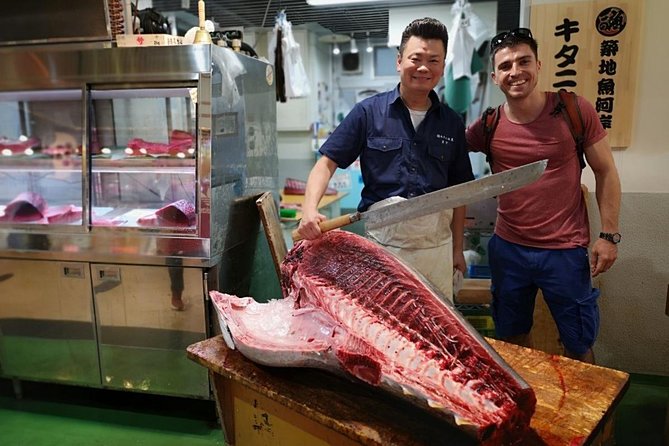
Reviewed · MARKETS AND FOOD HALLS
Tsukiji Fish Market Small-Group Food Walking Tour
Come hungry, leave curious. This three-hour walk through Tokyo’s Tsukiji Outer Market combines fresh seafood, local snacks, a sit-down lunch, and visits to a Buddhist temple and Shinto shrine. I especially like the generous food focus and the small group size, which can make crowded market lanes easier to manage.
The tour costs $87.37 per person, a fair price if you want several tastings plus lunch and a guide to handle the ordering. The main thing to understand before booking is that the famous inner wholesale fish market moved to Toyosu. You will not see the old auction floor here. Tsukiji is still active, but this experience centers on the Outer Market’s shops, food stalls, culture, and nearby seafood sellers.
The best guides add real value. Kazu, Yuki, Hitomi, Mark, Tiger, and others have been praised for explaining ingredients, pointing out good stops, and helping with food choices. Still, guide quality can vary, and one poor experience included little explanation and fewer tastings than expected.
In This Review
- Key points to know before you book
- What Tsukiji is now, and what it is not
- Meeting at Tsukiji Station Exit 1
- Walking the old Tsukiji market lanes
- The seafood lunch is the anchor
- A Buddhist temple and Shinto shrine add useful context
- The Tokyo view and the walk toward Shiodome
- Is $87.37 a good value?
- Who will enjoy this food walk most?
- Practical tips for a better morning
- Should you book the Tsukiji food tour?
- FAQ
- How long is the Tsukiji Fish Market food tour?
- Where does the tour meet?
- Where does the tour end?
- Is lunch included?
- What foods might I sample?
- Does the tour visit the old wholesale fish market?
- Are vegan options available?
- Can the tour accommodate allergies or dietary restrictions?
Key points to know before you book
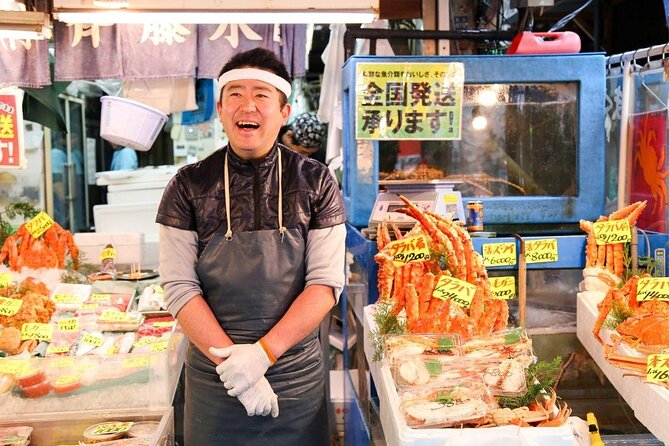
- Fresh seafood lunch included: The main meal is served at a local restaurant, with some flexibility over what you choose.
- About three hours on foot: Expect market lanes, food stops, cultural sites, and a Tokyo view rather than a quick tasting visit.
- Maximum of seven people: This is a small-group tour, not a private booking by default.
- Tsukiji today means the Outer Market: The wholesale market moved to Toyosu, so set your expectations correctly.
- Several food samples: Past menus have included tamagoyaki, tuna nigiri, grilled eel, scallops, crab, dried seafood, and local snacks.
- Diet limits need care: Vegan options are not available, and allergy-free food cannot be guaranteed.
What Tsukiji is now, and what it is not
Tsukiji once held Tokyo’s famous inner wholesale market, where the city’s fish trade operated on a huge scale. That wholesale business moved to Toyosu, so the old image of watching tons of fish being traded does not match this tour.
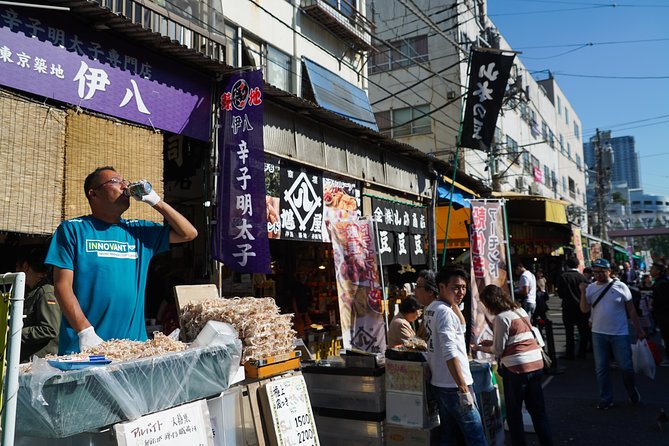
What remains is the Outer Market, a dense collection of about 460 shops selling seafood, produce, meat, dried goods, seasonings, cooking tools, and tableware. It is still a working market, not just a sightseeing set. Local residents shop here, businesses buy supplies, and food stalls serve people who have come to eat.
That distinction matters. If your main goal is the wholesale auction or industrial fish-trading operation, book a Toyosu experience instead. If you want to taste your way through narrow lanes and learn how Japanese ingredients are used, Tsukiji is the better fit.
The market can feel crowded, and some lanes have signs asking people not to stop and eat. A guide helps keep the group moving and avoids blocking shop entrances. You will also get more from the visit if you treat it as a food-and-culture walk rather than a behind-the-scenes tour of the modern seafood distribution system.
More Markets and Food Halls in Tokyo
- Tokyo Tsukiji Fish Market Food and Culture Walking Tour
★ 5.0 · 3,184 reviews - Tokyo: Tsukiji Fish Market Food and Walking tour
★ 5.0 · 1,724 reviews - Tokyo: Tsukiji Fish Market Guided Walking Tour
★ 4.9 · 1,397 reviews
Meeting at Tsukiji Station Exit 1
The meeting point is outside Tsukiji Station, Exit 1, at 3 Chome-9 Tsukiji. Your guide will be waiting there, and confirmation is provided when you book. The tour ends at Shiodome Tower in Higashi-Shimbashi, so you finish in a different part of Tokyo rather than returning to the station.
Arrive early. One useful tip is to check around for other people who appear to be waiting for the same small-group tour, since the meeting point can be easy to miss in a busy city. You receive a mobile ticket, so keeping the booking confirmation accessible on your phone is sensible.
This is a walking tour through tight spaces. Wear comfortable shoes and keep your belongings manageable. Summer adds another concern: Tokyo can be hot and humid, so bring water and a hat. The market itself provides plenty of stimulation, but not much room to pause comfortably.
Walking the old Tsukiji market lanes
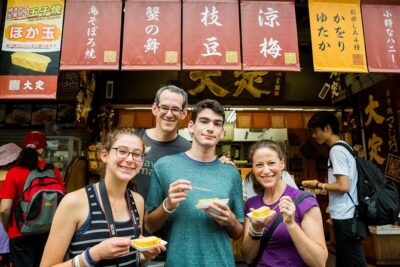
The first real part of the experience is eating around the market. This is where the tour earns its keep for food lovers. Instead of sitting down immediately, you sample items from shops and stalls, seeing ingredients up close and trying foods that may be unfamiliar.
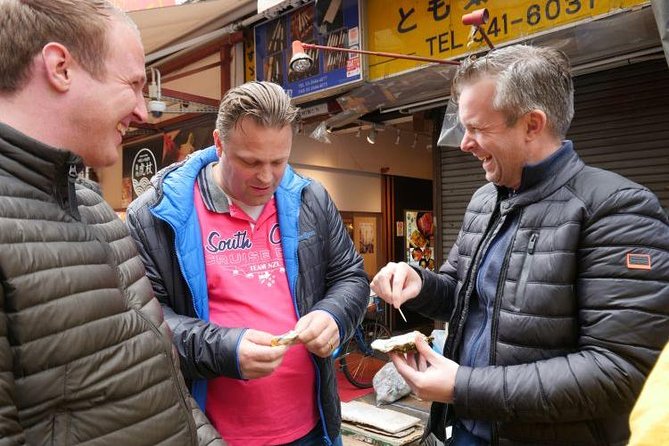
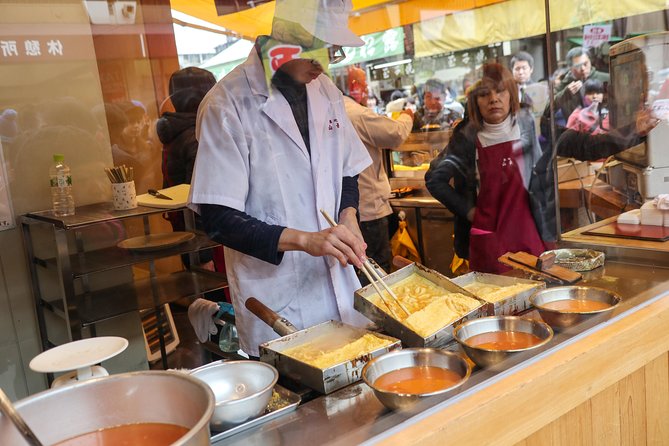
The exact stops can vary, but food sampled on past tours has included sweet Japanese omelet, tuna nigiri sushi, grilled eel, scallops on a stick, giant crab legs, dried seafood, and smaller local snacks. Dried stingray has even appeared as a memorable tasting for some groups. You may not receive every item listed in another person’s experience, so think of the menu as a broad guide, not a promise.
Tamagoyaki is a particularly good introduction. It is a Japanese omelet with a sweet flavor and soft layers, quite different from the savory egg dishes many people expect. Fresh tuna nigiri and grilled eel offer another useful comparison, one raw and delicate, the other smoky and rich.
The guide’s role is important here. A good guide explains what you are looking at, how a food is normally eaten, and why a particular shop is worth visiting. Mark has been praised for explaining seafood types, while Yuki has been singled out for knowing where to stop and what to order. Kazu has also helped people navigate substitutions and food concerns.
There is one practical catch: lines can change the route. A stop planned around takoyaki was skipped when the queue became too long, and another weaker experience included only a couple of modest samples before lunch. The tour company may try to make up for a missed stop elsewhere, but you should not expect a fixed tasting list.
The seafood lunch is the anchor
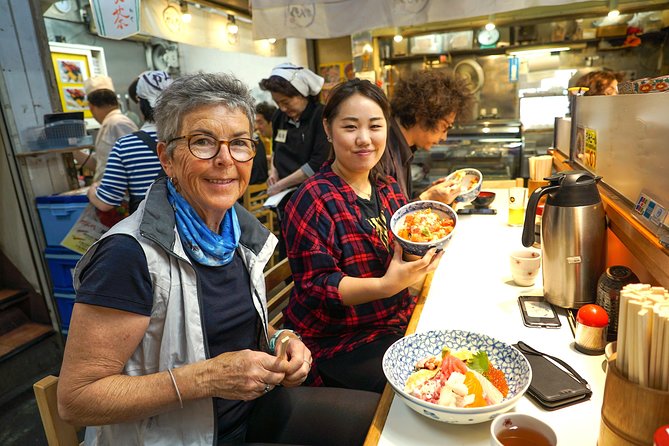
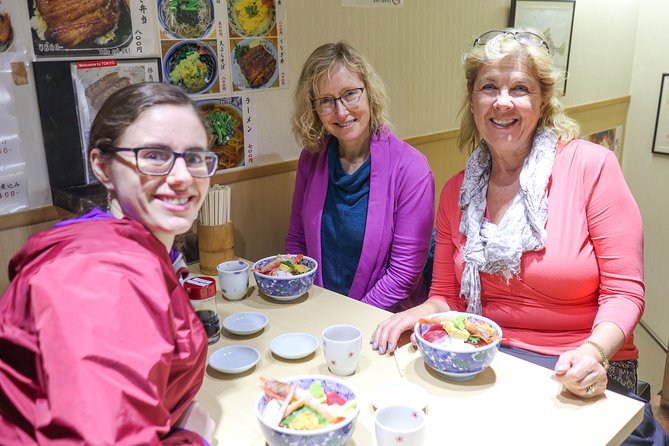
A fresh seafood lunch is included, and this is more substantial than simply grazing on samples. The meal takes place at a local restaurant, sometimes in a small booth, and the sit-down break gives you a chance to slow down after working through the market.
The food has received especially strong praise. Sushi has been a favorite, and some groups have been able to choose what they wanted for the one seated meal. That flexibility is useful because seafood preferences vary widely. You might be delighted by eel or scallops but less interested in a particular raw fish.
Come with an appetite. The snacks add up, and the lunch follows them. This is not the right outing if you prefer one tiny taste and a long historical lecture. It is designed around eating, with cultural information woven between the stops.
The tour cannot guarantee allergy-free preparation because the food comes from kitchens and stalls outside the operator’s control. Vegan options are not available. Substitutions may not be possible at every stop, although the guide will make an effort to compensate at another stop. A guide once went out of his way to help a diner with coeliac disease, but you should still disclose dietary needs before setting out and remain cautious.
More Walking Tours in Tokyo
- Tokyo: Imperial Palace and Shogun Historical Walking Tour
★ 5.0 · 2,251 reviews - Tokyo: Shinjuku Local Bar and Izakaya Guided Walking Tour
★ 4.9 · 1,794 reviews - Tokyo: Asakusa Walking Tour with Sensoji Temple Visit
★ 4.8 · 1,583 reviews - Tokyo Castle & Imperial PalaceーShogun Walking Tour
★ 4.7 · 1,068 reviews
A Buddhist temple and Shinto shrine add useful context
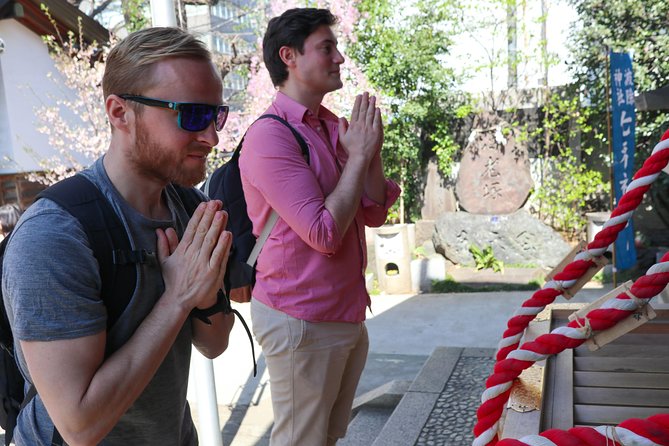
Tsukiji is not only about fish. The route also includes a Japanese Buddhist temple and a Shinto shrine, giving the walk a cultural pause between food stops.
These visits help explain why the neighborhood feels like more than a row of restaurants. You get a chance to learn about Japanese religious traditions and the role these sites play in city life. The tour also includes information about the history of the buildings and religion in Japan.
The cultural portions are not the longest parts of the experience, so do not book this as a temple-focused tour. Their value comes from the contrast. One moment you are examining seafood and seasonings in a market stall, and the next you are considering a place of worship and the customs around it.
The quality of the explanation depends heavily on your guide. Several guides have been praised for giving historical background before the tasting began. One disappointing experience included almost no facts about the market or food. If you enjoy context, ask questions as you walk. A friendly, well-prepared guide can turn a simple food crawl into a much more useful introduction to Japanese cuisine.
The Tokyo view and the walk toward Shiodome
The itinerary also includes a city view, with the walk ending near Shiodome Tower. The exact viewing point is not described in detail, so do not expect a dedicated observatory visit with a long scheduled stay. Think of it as a scenic finish to the market walk.
This helps give the three-hour route some variety. You are not spending every minute in crowded food lanes. The market, religious sites, and city outlook create three different impressions of Tokyo: working commerce, spiritual tradition, and modern development.
Since the end point is in Higashi-Shimbashi, the tour can fit well into a day that continues around Shiodome or nearby areas. You will need to plan your next stop from there, since the experience does not return you to Tsukiji Station.
Is $87.37 a good value?
At $87.37, this is not the cheapest way to eat at Tsukiji. You can buy individual snacks yourself, wander the Outer Market, and spend less. The price makes more sense when you add up what the tour handles for you: a guide, several tastings, a seafood lunch, cultural stops, and a three-hour route through a confusing set of lanes.
The small group matters too. With a maximum of seven people, the guide has a better chance of answering questions and keeping everyone together than on a large coach-style outing. It is not automatically private, though. Some bookings have included only one or two couples, while others have had a fuller small group.
I would call the price reasonable for a first visit, especially if you want to try seafood without guessing at every menu or shop. It is less compelling for confident food explorers who already know Tsukiji and want to choose every bite themselves.
The tour is booked about 40 days ahead on average, which suggests you should not leave it until the last morning of a short Tokyo visit. Free cancellation is available up to 24 hours before the start time, but cancellations or changes inside that window are not accepted for a refund.
Who will enjoy this food walk most?
I would recommend it to first-time visitors who want a guided introduction to Japanese market food. Couples, small families, and solo food lovers can all fit comfortably into the format, and the group size keeps the outing personal without making it a private tour.
It also suits people who want more than sushi. The mix may include cooked seafood, egg, dried goods, grilled items, and market snacks, so you get a wider look at Japanese eating habits. The Buddhist temple, shrine, and city view give non-food stops enough weight to keep the morning from feeling like one long restaurant queue.
You should think twice if you need strict dietary control, want vegan food, or expect to see the inner wholesale market. You may also prefer to explore alone if crowds and fixed stops bother you.
Practical tips for a better morning
- Eat lightly beforehand, but do not arrive starving. The food comes in stages, and lunch is included.
- Wear shoes suited to three hours of walking and standing.
- Carry water and a hat in summer.
- Arrive early at Tsukiji Station Exit 1 and keep your mobile ticket ready.
- Ask the guide what each item is before tasting it. The explanations are part of the value.
- Tell the guide about allergies or dietary limits before the food begins, but do not assume substitutions are guaranteed.
- Leave room in your budget for shopping. The market sells seasonings, dried seafood, cooking tools, tableware, and other food goods.
- Remember that the market is a working place. Follow signs, avoid blocking lanes, and eat where the guide directs you.
Should you book the Tsukiji food tour?
Book it if you want a friendly, food-first introduction to Tsukiji with lunch included and a little Japanese culture along the way. The strongest experiences come from guides such as Kazu, Yuki, Mark, Hitomi, and Tiger, who have been praised for good food choices, clear explanations, and warm company.
Skip it if the old wholesale market is your main reason for going. That operation moved to Toyosu, and this tour cannot recreate it. Also skip it if vegan food or strict allergy control is essential.
For most curious eaters, the tour offers a sensible first look at Tsukiji. You pay for guidance, variety, and a meal, not just a walk through shops. Set your expectations around the Outer Market, arrive hungry, and you should come away with a better sense of how Japanese seafood culture works at street level.
FAQ
How long is the Tsukiji Fish Market food tour?
The tour lasts approximately three hours.
Where does the tour meet?
It meets at Tsukiji Station Exit 1, at 3 Chome-9 Tsukiji, Chuo City, Tokyo.
Where does the tour end?
The tour ends at Shiodome Tower, 1-6-3 Higashishimbashi, Minato City, Tokyo.
Is lunch included?
Yes. A fresh seafood lunch at the market is included.
What foods might I sample?
Possible samples include fresh seafood, local snacks, tamagoyaki, tuna nigiri sushi, grilled eel, scallops, crab, and dried seafood. The exact stops and items can vary.
Does the tour visit the old wholesale fish market?
No. The inner wholesale market moved to Toyosu. This experience focuses on the Tsukiji Outer Market and nearby seafood sellers.
Are vegan options available?
No. Vegan options are not available on this tour.
Can the tour accommodate allergies or dietary restrictions?
Allergy-free food cannot be guaranteed, and substitutions may not be possible at every stop. The guide will make an effort to provide alternatives at other stops when possible.
Just added in Tokyo
- The 10 Tastings of Tokyo With Locals: Private Street Food Tour★ 5.0 · 48 reviews
- Small Town in the Big City: Tasting Tokyo’s Kichijoji★ 5.0 · 195 reviews
- Explore Kichijoji: Walk Through One of Tokyo’s Beloved Districts★ 5.0 · 21 reviews
- Small Town in the Big City: Tasting Tokyo’s Kichijoji★ 5.0 · 16 reviews
- EXCLUSIVE Tokyo Secret: Kichijoji Small-Group Food & Bar Hopping★ 5.0 · 29 reviews
- Tokyo:Mt Fuji & Hakone Day Tour with English Speaking Driver★ 5.0 · 26 reviews
- 【R34】Tokyo:Private Daikoku tour in Modified R34★ 4.9 · 92 reviews
- :Tokyo,Shibuya/ Pro Photography in Kimono / English-Friendly★ 5.0 · 26 reviews
Markets and Food Halls, compared.
Tokyo Tsukiji Fish Market Food and Culture Walking Tour
Read our review →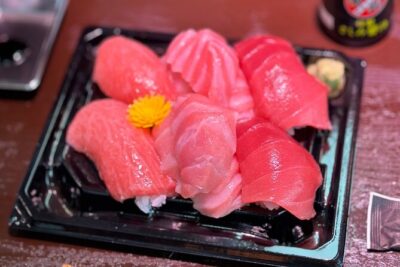
Nishiki Market Brunch Walking Tour (7 Tastings + Brunch)
Read our review →
Tokyo Sushi Making Class in Tsukiji with Professional Chef
Read our review →
Tsukiji Fish Market Guided Tour and Sushi Making with Pro Chef
Read our review →Tsukiji Fish Market Food and Culture Walking Tour
Read our review →Browse the lists this tour appears in