
Reviewed · WORKSHOPS
Authentic Japanese calligraphy class in Tokyo! Kanji your name
Beautiful writing takes patience.
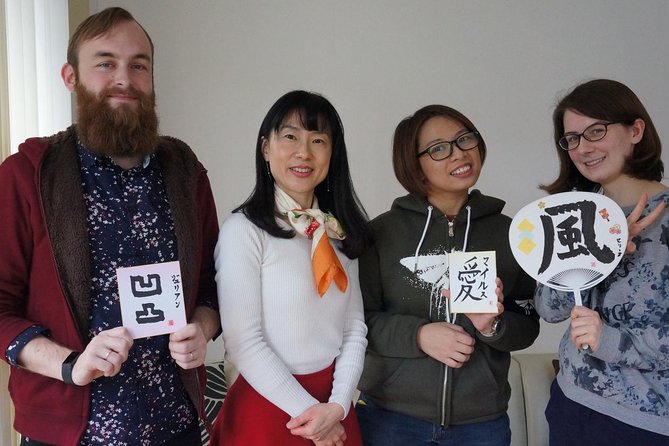
This private Japanese calligraphy class in Tokyo gives you something many sightseeing stops cannot: direct time with a local teacher, in her home, learning an art you can continue after your trip. Maki guides you through writing systems, tools, posture, brush control, and a finished character on traditional paper.
I like the one-to-one instruction and the personal setting near Yoga Station. I also like that your work goes home with you, rather than ending as a quick demonstration. The main consideration is timing: at about 90 minutes, this is a focused introduction, not a full course in Japanese calligraphy.
In This Review
- What makes this calligraphy class worth your time
- Meeting Maki near Yoga Shrine
- Your first lesson in Japanese writing systems
- Learning the tools before touching the paper
- Practice paper gives you room to make mistakes
- Creating your character on traditional paper
- Why the living-room setting changes the experience
- A closer look at Maki’s teaching style
- Is $56 good value for 90 minutes?
- Who will enjoy this Tokyo experience most?
- Practical details before you book
- What to bring and how to prepare
- Final verdict: should you book it?
- FAQ
- Where does the Japanese calligraphy class take place?
- How long does the experience last?
- How much does the experience cost?
- Is this a private activity?
- What will I learn during the class?
- Do I need to bring calligraphy supplies?
- Can I cancel for a full refund?
What makes this calligraphy class worth your time
- Maki teaches step by step, repeating explanations as needed and making the lesson comfortable for beginners.
- The class takes place in a local home, giving the experience a more personal feel than a large cultural workshop.
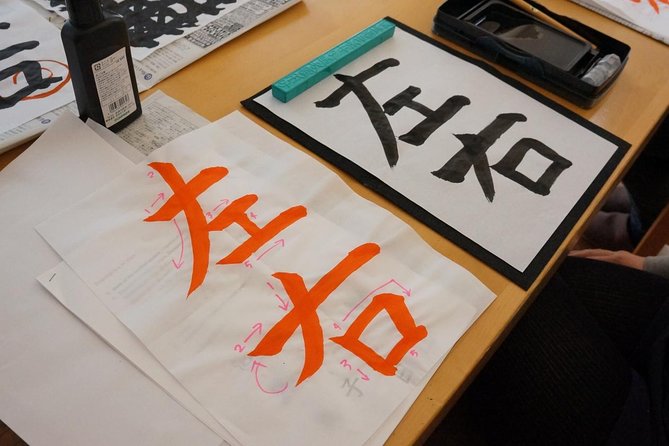
- You practice with real calligraphy tools, traditional paper, colored paper, or a fan, plus paper for repeated attempts.
- The lesson covers more than brush strokes, including Japanese writing systems, posture, and how to hold the brush.
- You create a keepsake, giving you a physical reminder of your time in Tokyo.
- The private format suits couples, families, friends, and solo visitors, with only your group taking part.
Meeting Maki near Yoga Shrine
Your meeting point is at Yoga Station in Setagaya City, at 2 Chome-39 Yoga, Tokyo 158-0097. The activity begins and ends at the same meeting point, and the area is near public transportation.
The itinerary lists Yoga Shrine as the stop. That means the experience is tied to a real neighborhood setting rather than a large visitor attraction. The class itself takes place in a local person’s living room, so you should expect a home-based lesson with a more intimate tone.
Maki is the instructor and host. Her teaching style is one of the strongest reasons to consider this class. She speaks English very well, explains techniques carefully, and is comfortable repeating an instruction several times. That matters in calligraphy, where a small change in wrist position or brush angle can alter the whole character.
You are not simply handed a brush and told to copy a sample. The lesson is designed to help you understand what your hands, back, and brush should be doing. That makes the class a better choice for a first attempt than a short activity built mainly around taking photographs.
The location does require some planning. Yoga Station is in Setagaya City, not in the central sightseeing core most first-time visitors use as their base. The benefit is a local neighborhood setting. The tradeoff is that you need to allow time to reach the meeting point and return afterward.
A few more options to weigh up in Tokyo
- Tokyo Disney Resort – Tokyo Disneyland & Tokyo DisneySea Park Tickets
★ 4.8 · 99,488 reviews - SHIBUYA SKY Ticket
★ 4.7 · 46,509 reviews - JR Whole Japan Rail Pass
★ 4.8 · 29,150 reviews
Your first lesson in Japanese writing systems
The class begins with an introduction to Japanese writing systems. This gives the brushwork some context, since Japanese calligraphy is not simply decorative handwriting.
You learn that the marks you create belong to a larger written language, with different systems used in Japanese writing. For someone unfamiliar with the language, this opening is useful because it explains what you are actually practicing instead of treating the characters as abstract shapes.
You do not need to arrive with Japanese language skills. The structure is designed for beginners, and Maki explains the activity as she goes. If you have already studied Japanese, you may appreciate the chance to connect familiar characters with traditional brush technique.
The lesson also helps you understand why calligraphy takes concentration. A character has shape, direction, balance, and rhythm. The goal is not only to make a mark that looks vaguely Japanese. You are learning to place each stroke with care.
Learning the tools before touching the paper
Maki introduces the calligraphy tools and explains how they are used. This is an important part of the class because the brush behaves differently from a pencil, marker, or ballpoint pen.
You learn how to hold the brush and how to sit or stand with correct posture. These details may sound basic, but they are central to producing controlled strokes. If your grip is too tight, you may lose the brush’s natural movement. If your posture is poor, the work can feel awkward within minutes.
The practical instruction makes the class approachable. One of the nice details in the teaching is Maki’s willingness to repeat the same point until it makes sense. That patience is especially helpful when you are trying to coordinate pressure, direction, and movement at the same time.
The supplied materials include the calligraphy tools, practice paper, consumable supplies, and colored paper or a fan. You do not need to assemble a kit before arriving. That lets you focus on learning rather than wondering which brush or paper to buy.
Practice paper gives you room to make mistakes
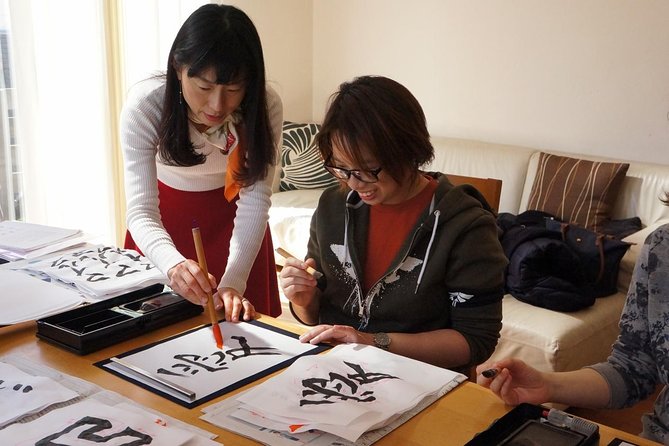
You first write on paper for practice. This is where the class earns its hands-on character.
Calligraphy is not a skill you can fully understand by watching someone else. You need to feel how the brush moves and see how quickly the ink responds. Practice sheets give you room to make uneven strokes, adjust your grip, and try again without worrying about ruining your final piece.
Maki’s teaching style appears particularly suited to this stage. She explains the process carefully and keeps the activity participatory. You can ask questions, repeat a movement, and work toward a result that feels like your own.
One useful way to approach the practice is to treat it as part of the finished experience, not as a test you need to pass. Your early attempts help you understand the brush. The point is not to produce museum-quality work in a few minutes.
That relaxed attitude makes this a good activity for families and friends. It also works for solo visitors who prefer an experience where they can concentrate instead of keeping up with a group.
A completely different kind of day out:
- Mt Fuji and Hakone 1-Day Bus Tour Return by Bullet Train
★ 5.0 · 26,383 reviews - TOKYO SKYTREE® Ticket
★ 4.7 · 25,136 reviews - teamLab Borderless Tickets: MORI Building DIGITAL ART MUSEUM
★ 4.7 · 24,126 reviews - teamLab Planets TOKYO Ticket
★ 4.7 · 21,663 reviews
Creating your character on traditional paper
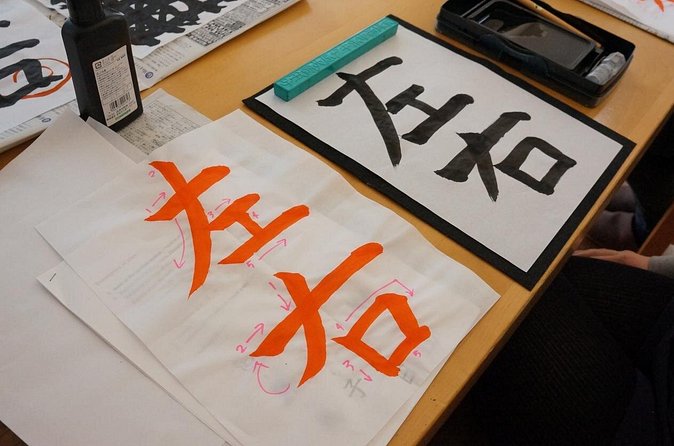
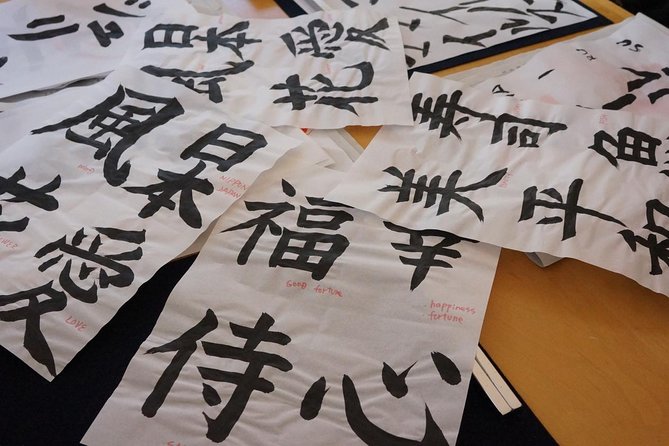
Once you have practiced, you write a word or character on Japanese traditional paper. This is the moment when the lesson becomes a souvenir-making activity, but the cultural value comes from the instruction that leads up to it.
You are not simply printing a name from a template. The class is described as a way to kanji your name, while also teaching the basics of shodo, the Japanese art of calligraphy. The final character gives you a personal connection to the lesson.
The paper provides a proper surface for your work, and the included colored paper or fan adds another possible format for the finished piece. The exact choice may depend on the class arrangement, but you should expect to take your calligraphy creations home.
That is a strong feature for a short Tokyo activity. Many experiences give you a pleasant hour and nothing tangible afterward. Here, you leave with work that can remind you of the lesson and the place where you learned it.
You should also keep your expectations realistic. A 90-minute introduction can teach the foundations, but it cannot make you an accomplished calligrapher. The value is in learning the method, trying the tools, and producing a meaningful first piece.
Why the living-room setting changes the experience
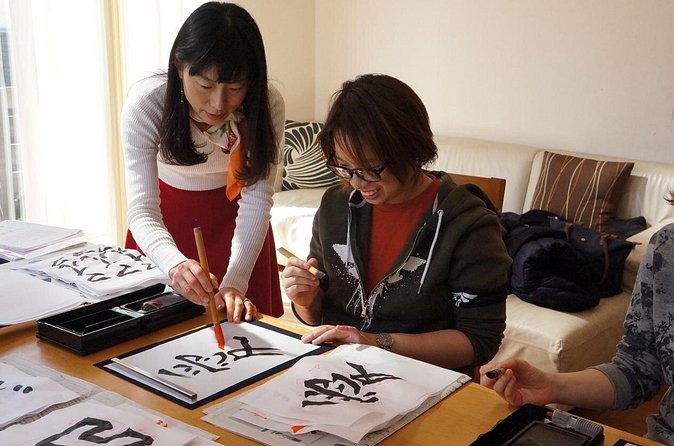
The class takes place in Maki’s living room. That setting makes the activity feel more personal than a workshop held in a hotel conference room or a large commercial studio.
You have the chance to learn in an atmospheric home setting and ask about Japanese culture as part of the visit. The class is not limited to technical instruction. Maki is also open to explaining aspects of Japan connected to the tradition.
Several specific touches add warmth. Maki has offered drinks for participants to try, and she has prepared something special for a birthday occasion. Those details are not guaranteed for every booking, but they show the kind of personal hospitality associated with the class.
The home setting may not suit every visitor. If you prefer a polished attraction with a formal reception desk, display cases, and a busy program of activities, this will feel modest. If you like meeting a local person in a real neighborhood environment, the simplicity is part of the appeal.
Because this is a private activity, only your group participates. That gives you more freedom to ask questions and work at a comfortable pace. It also makes the experience a good option for a couple, a family, or a small group of friends.
A closer look at Maki’s teaching style
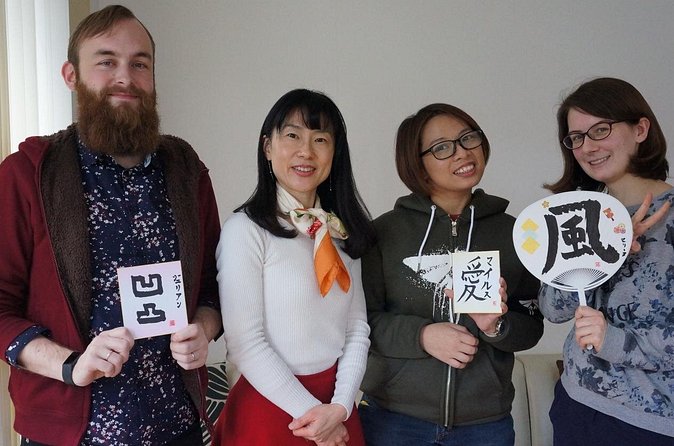
Maki receives especially strong praise for being kind, professional, and careful. Those qualities matter more here than theatrical presentation.
Calligraphy requires correction. You may need to hear the same instruction more than once, and you may want help with a stroke that does not look right. Maki’s patience allows you to keep trying without feeling rushed or embarrassed.
Her English ability is another practical advantage. The class includes technical details about tools, posture, and brush control, so clear communication makes a real difference. You can ask questions about the language and the cultural background as well as the physical technique.
The lesson is also described as participatory. That means you are doing the work throughout the session instead of watching a long demonstration before receiving a brief turn.
Maki’s friendly approach makes the class suitable for first-time calligraphy students. If you already practice shodo, you may find the session introductory, but the private format still lets you ask for specific guidance.
Is $56 good value for 90 minutes?
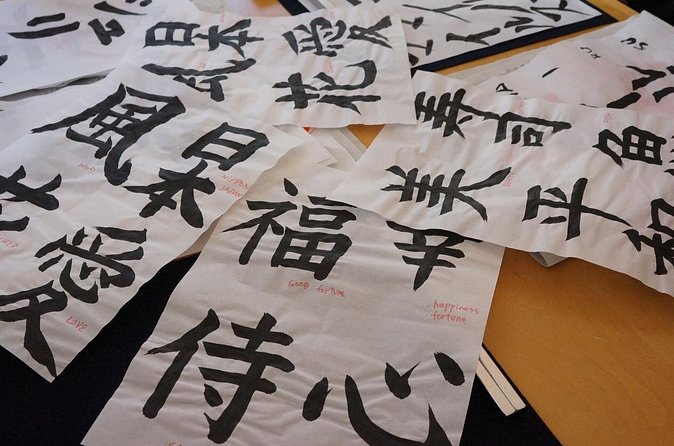
At $56, the experience is not the cheapest cultural activity in Tokyo, but the price includes more than admission to a demonstration.
The fee covers the experience, calligraphy tools, colored paper or a fan, practice paper, consumable supplies, and consumption tax. You also receive private instruction from Maki and take your completed work home.
That package gives the price a reasonable balance. You are paying for personal teaching time, materials, and access to a local home setting. A large group class might cost less, but it may not offer the same chance to ask questions or repeat a technique until you understand it.
The value is strongest if you want participation rather than observation. If you only want a quick photograph with a brush, $56 may feel high. If you want to learn the basic process and make a keepsake, the fee is easier to justify.
You should also factor in your transportation costs to Yoga Station, since private transportation is not included. The class begins and ends at the meeting point, so your route planning is your responsibility.
Who will enjoy this Tokyo experience most?
I would recommend this class to anyone who wants a calm cultural activity with a clear hands-on focus.
It is particularly well suited to:
- First-time visitors who want more than temple photographs
- Couples looking for a private activity
- Families with an interest in Japanese culture
- Solo visitors who enjoy learning directly from a local
- People who like making souvenirs instead of buying them
- Visitors who want a gentle introduction to Japanese writing
The class also works well for a special occasion. Maki has prepared a birthday surprise before, so you can contact the provider if you are arranging a celebration. Do not assume a special arrangement is included unless it is confirmed in advance.
You may want a different activity if you are looking for a long, advanced course. The class lasts about one hour and 30 minutes, so it is best understood as a focused introduction.
Practical details before you book
Confirmation is provided when you book. The activity is near public transportation, but private transportation is not included.
The meeting point is 2 Chome-39 Yoga, Setagaya City, Tokyo 158-0097, Japan, near Yoga Station. You return to the same meeting point at the end.
Most people can participate, and the class is private for your group. That is useful if you want a lesson shaped around your own pace rather than a fixed public class.
The booking has free cancellation if you cancel at least 24 hours before the experience start time. A cancellation made less than 24 hours before the start is not refunded, and changes inside that period are not accepted. The cutoff follows local Tokyo time, so check the time carefully if you are booking from another country.
What to bring and how to prepare
The necessary calligraphy equipment and practice materials are supplied. You do not need to purchase brushes, ink, or paper in advance.
Bring an open mind and allow yourself time to repeat the basic movements. Calligraphy rewards patience more than artistic confidence. You do not have to arrive believing you are good at drawing.
It is also wise to plan your day around the 90-minute lesson rather than squeezing it between two distant Tokyo attractions. The activity begins and ends at Yoga Station, so adding generous travel time will help you enjoy the class without watching the clock.
If you are booking for a group, decide in advance whether you want to write a name, a word, or a character. The class allows you to write a word or character on traditional paper, but the exact choice is best discussed with Maki during the lesson.
Final verdict: should you book it?
Book this class if you want a personal introduction to Japanese calligraphy, clear English guidance, and a finished piece to take home. Maki’s patient teaching, private format, and home setting give the experience a friendly human scale.
Skip it if you want a major Tokyo landmark, a full-day cultural course, or advanced instruction. The location requires a trip to Setagaya, and the 90-minute format only covers the basics.
For most visitors who value authentic contact and practical participation, this is a well-priced way to spend part of an afternoon. You will learn how the tools work, practice the correct posture and brush grip, and leave with more than a souvenir. You will have a better sense of why Japanese calligraphy demands both control and patience.
FAQ
Where does the Japanese calligraphy class take place?
The meeting point is at 2 Chome-39 Yoga, Setagaya City, Tokyo 158-0097, Japan, near Yoga Station. The lesson takes place in a local person’s home, and the activity ends back at the meeting point.
How long does the experience last?
The class lasts approximately one hour and 30 minutes.
How much does the experience cost?
The listed price is $56. The fee includes the experience, calligraphy tools, colored paper or a fan, practice paper, consumable supplies, and consumption tax.
Is this a private activity?
Yes. Only your group participates in the activity.
What will I learn during the class?
You will learn about different Japanese writing systems and calligraphy tools, along with correct posture and how to hold the brush. You will also practice writing a word or character on traditional Japanese paper.
Do I need to bring calligraphy supplies?
No. Calligraphy tools, practice paper, colored paper or a fan, and consumable supplies are included.
Can I cancel for a full refund?
Yes, if you cancel at least 24 hours before the experience start time. Cancellations made less than 24 hours before the start are not refunded, and changes during that period are not accepted.
Just added in Tokyo
- Manga Lesson with a Professional Japanese Manga Artist in Nakano★ 5.0 · 77 reviews
- Making a bento box with cute character look in Japan★ 5.0 · 15 reviews
- Tokyo/Ikebukuro Manga drawing workshop by pro-Manga artists★ 5.0 · 65 reviews
- Luxury Tokyo Sake, Cocktail, Whisky and Pairing Tour★ 5.0 · 18 reviews
- Tokyo Ueno Food & Nature & Localtown Tour: 10Dishes+ Drinks★ 5.0 · 34 reviews
- Make Your Own Bonsai with a Professional Bonsai Artist in Tokyo★ 4.5 · 18 reviews
- Make Traditional Nerikiri Sweets & Matcha experience in Shibuya★ 5.0 · 130 reviews
- Daikoku Parking Tokyo Drift & APIT Car Meet JDM Culture Tour★ 5.0 · 79 reviews
Workshops, compared.

Sushi Making Tokyo Roll and Authentic Japanese Sushi Class
Read our review →
Gion Make Your Own Chopsticks with Engraving Option
Read our review →
Roll and Authentic Sushi Making Class in Asakusa
Read our review →
Ramen Cooking Class at Ramen Factory in Kyoto
Read our review →
Tokyo Asakusa Chopsticks Workshop: Make Your Own Pair
Read our review →
Ring Making Workshop : Vintage Japanese Coin Ring
Read our review →Browse the lists this tour appears in