Reviewed · TOKYO TOURS
Authentic Kyudo Japanese Archery Experience in Tokyo
Kyudo rewards patience over power. This Tokyo lesson gives you a rare chance to wear a traditional kyudo uniform, learn the formal shooting sequence, and fire a Japanese bow under close instruction. I especially like the small group limit of four and the steady move from basic form to target practice. The main concern is logistics: meeting-point details have caused confusion, and late arrivals are not admitted.
You should also know that kyudo is not simply western archery with a different bow. The stance, hand positions, draw, and graceful sequence all matter. I like that the instructor offers corrections as you practice, but English instruction may be limited, and the bowstring can leave a bruise if your form or arm position is off.
In This Review
- Key points before you book
- What kyudo adds to an ordinary Tokyo visit
- Meeting at Tokyo Station, then heading to the hall
- Changing into the kyudo uniform
- Choosing a bow and learning the first movements
- Starting close to the straw bale target
- Moving to the range and trying for the target
- Why the instructor matters so much
- How much value you get for $125.50
- Who should book this experience
- Practical advice for a smoother session
- Should you book the Tokyo kyudo lesson?
- FAQ
- Where does the kyudo experience start?
- Where does the activity end?
- How long does the experience last?
- Is previous archery experience required?
- What age must participants be?
- Can I take photographs or videos inside the facility?
- What happens if I arrive late or need to cancel?
Key points before you book
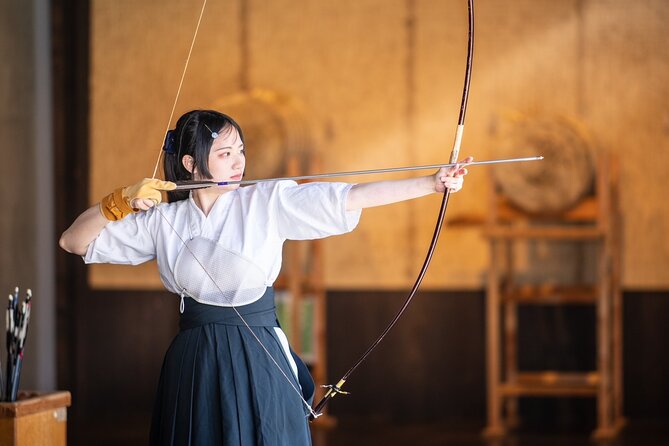
- Traditional clothing is part of the lesson: You change into kyudo training clothes before handling the equipment.
- The class is limited to four people: That allows for more direct advice than a large group activity.
- You shoot at close range first: The instructor builds your form before moving you farther from the straw bale target.
- No previous archery skill is needed: The lesson focuses on technique, posture, and controlled movement rather than strength.
- The experience takes about two hours: Some sessions have lasted closer to three hours, so avoid placing a tight appointment immediately afterward.
- Arrive early and confirm the meeting details: The activity begins on time, and late arrivals receive no refund.
What kyudo adds to an ordinary Tokyo visit
Tokyo offers endless shrines, museums, food stops, and shopping streets. Kyudo gives you something different: a quiet, physical lesson in a Japanese martial art where the act of shooting matters as much as hitting the target.
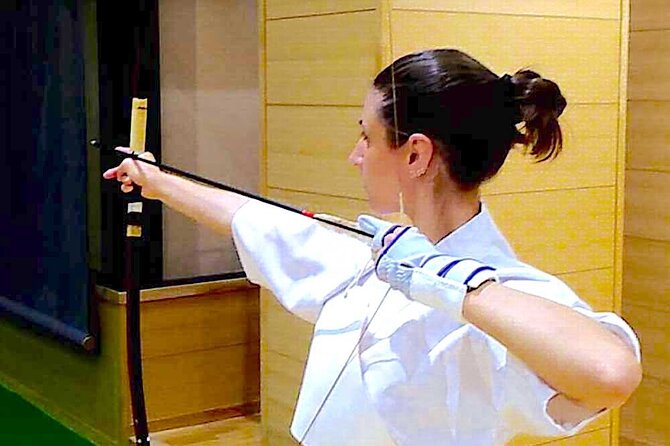
The goal is not quick-fire accuracy. You learn a set sequence of movements, often described through a series of formal steps. The bow rises above your head, the draw opens your body, and the release comes only after the position is ready. That makes the activity feel closer to disciplined practice than casual recreation.
I think this is the right experience for you if you want hands-on culture. You are not only watching a demonstration or posing in borrowed clothing. You handle the equipment, repeat the motions, and receive corrections from the instructor.
The 4.7 rating from 43 reviews, with 91 percent recommending the experience, reflects its strong appeal. The praise centers on the instructor’s patience, the authenticity of the clothing and equipment, and the chance to shoot several rounds. The lower rating points to a real issue, though: meeting information needs careful checking.
A few more options to weigh up in Tokyo
- Tokyo Disney Resort – Tokyo Disneyland & Tokyo DisneySea Park Tickets
★ 4.8 · 99,488 reviews - SHIBUYA SKY Ticket
★ 4.7 · 46,509 reviews - JR Whole Japan Rail Pass
★ 4.8 · 29,150 reviews
Meeting at Tokyo Station, then heading to the hall
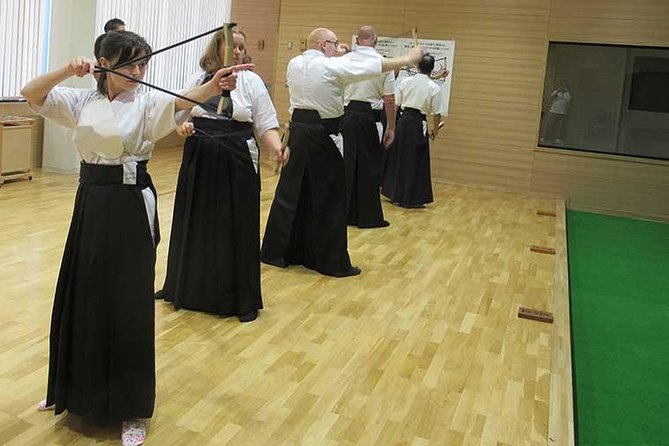
The published starting point is Tokyo Station at 1 Chome-9 Marunouchi, Chiyoda City. The activity ends back at the meeting point. However, some participants received instructions directing them to a different station, including Shimo or an area described as Minami Senju.
That difference is not a minor detail. Tokyo is enormous, and a wrong station can turn a calm morning into a race across the city. Confirm the final meeting instructions as soon as you receive them, then check the station name and exit against your day’s plans.
The operator may send the confirmed venue details within 48 hours of booking, depending on availability. One report says the exact meeting information arrived only about four hours before the start. If your schedule is packed, leave breathing room around this class.
At the meeting point, you join the instructor and walk to the training hall. The walk itself has been described as a pleasant way to get acquainted with the group and ask questions. Since the venue is near public transportation, reaching the area should be manageable once the final location is clear.
Changing into the kyudo uniform
At the hall, you change into a traditional dōgi, or training uniform. The instructor helps with the clothing and accessories, and the act of dressing is part of the lesson rather than a quick photo opportunity.
The uniform is designed around a Japanese body type. If you have larger arms or weigh more than 150 kilograms, it may not fit. In that case, you may need to take part in regular clothing.
The experience also includes the specialized glove used for kyudo. Getting dressed helps you understand that the art has its own equipment and formal habits. It also makes the session feel more focused once you begin practicing.
Photography and video recording are restricted inside the archery facility. Follow the instructor’s directions rather than assuming you can use your phone. In some sessions, the instructor has taken photographs and shared them afterward, which is useful because you can keep your phone away while learning.
Choosing a bow and learning the first movements
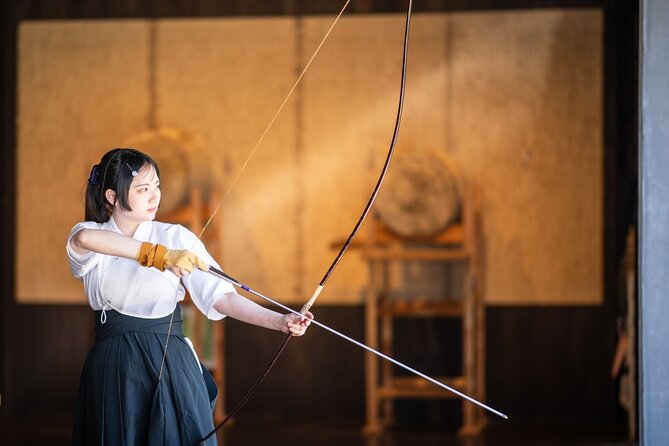
The instructor matches your bow and arrows to your height. This matters because kyudo equipment is not a one-size-fits-all prop. The correct fit lets you focus on posture and movement instead of wrestling with equipment that feels awkward.
You first learn how to hold the bow and arrow. A practice aid similar to a sling may be used to help you understand the motion before you begin firing arrows. This is a smart teaching step because kyudo’s sequence can feel unfamiliar even if you have tried western archery.
The instructor breaks the technique into manageable parts. You learn where to place your feet, how to position your hands, how to raise the bow, and how to draw. The movements may look easy when demonstrated, but the class makes clear that kyudo requires careful control.
Strength is not the main issue. Several participants found the technique surprisingly accessible because the movement itself helps create the needed power. Your job is to follow the sequence, stay balanced, and listen to corrections.
The instructor has been described as patient, energetic, and encouraging. One account identifies the teacher as Jun Sensei, while another says the instructor had practiced kyudo for 20 years. English ability may be limited, with Japanese mixed with English words, but physical demonstrations and repeated movements help communicate the lesson.
A completely different kind of day out:
- Mt Fuji and Hakone 1-Day Bus Tour Return by Bullet Train
★ 5.0 · 26,383 reviews - TOKYO SKYTREE® Ticket
★ 4.7 · 25,136 reviews - teamLab Borderless Tickets: MORI Building DIGITAL ART MUSEUM
★ 4.7 · 24,126 reviews - teamLab Planets TOKYO Ticket
★ 4.7 · 21,663 reviews
Starting close to the straw bale target
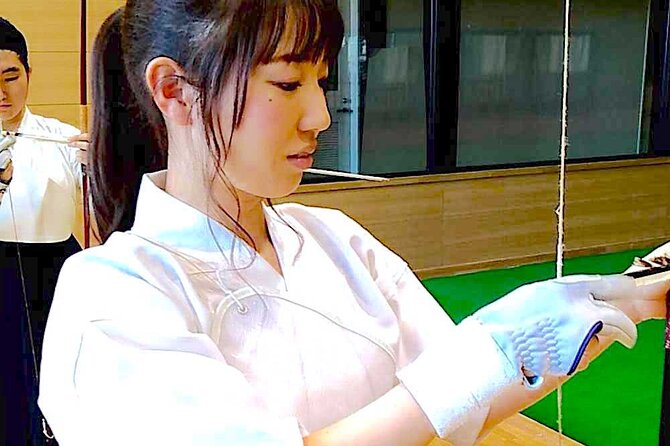
Your first arrows go toward a nearby straw bale target. The short distance lets you concentrate on the basics without worrying too much about aim.
This is where the class becomes hands-on. You are not expected to master the full form immediately. The instructor watches your posture and adjusts your movement as you repeat the shot.
Expect plenty of misses. Even after extended practice, only a few arrows may find the target. That is not a sign that the class has failed. Kyudo is difficult because accuracy depends on the entire body position and release, not just on pointing the arrow in the right direction.
I like this part because it keeps the activity honest. You get the pleasure of shooting, but you also learn why the graceful movements matter. If you arrive expecting an arcade-style hit rate, you may feel frustrated. If you enjoy learning a demanding skill, the misses become part of the fun.
Some people have reported bruising from the bowstring catching the arm. Ask about an arm guard before you start, and listen closely when the instructor corrects your position. Protective equipment and proper form are more important than looking elegant for a photograph.
Moving to the range and trying for the target
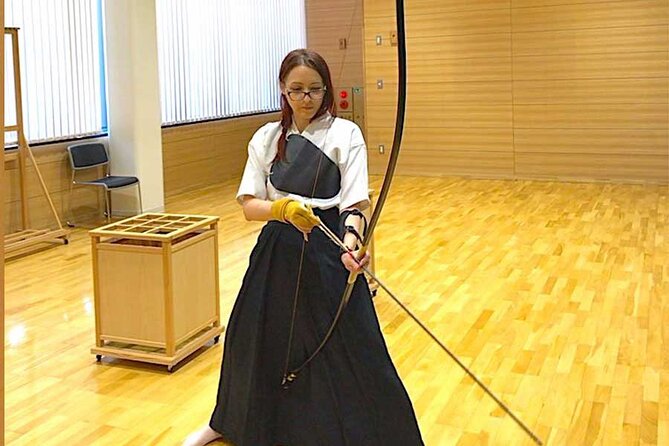
As the session continues, you move farther from the target. The instructor increases the challenge gradually rather than sending beginners straight to the full shooting distance.
This slow progression is one of the best features of the lesson. You have time to understand the motion, test the equipment, and make small adjustments. The instructor may correct the angle of your bow, the position of your shoulders, or the timing of your release.
The setting can vary in comfort. One participant found the facility cold, while another described it as a modern indoor and outdoor-style space. The target area is covered, so rain should not stop the lesson, but you may still want a light layer if you tend to get chilly.
Watching nearby kyudo practice adds value. You can see experienced practitioners repeat the same disciplined form with a calmness that beginners are still trying to find. That quiet concentration gives the activity a meditative quality, even when your own arrows land nowhere near the center.
Why the instructor matters so much
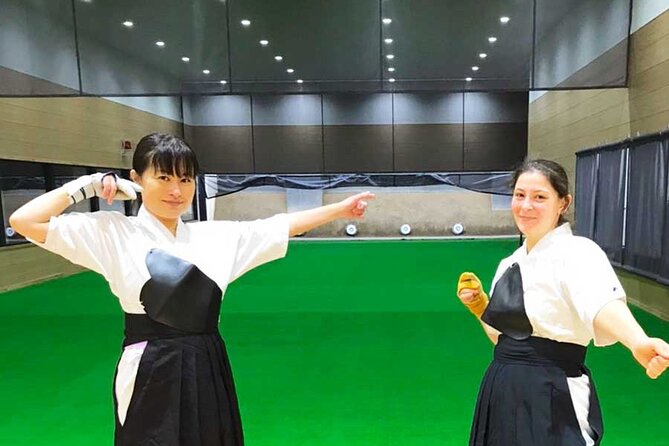
The instructor shapes the whole experience. A good teacher has to explain an unfamiliar art, keep beginners safe, and offer corrections without turning the session into a stiff lecture.
The strongest descriptions focus on patient teaching and lighthearted commentary. That balance is important. You need clear instructions, but you also need permission to laugh when your first arrows go astray.
Limited English can be a consideration. If you need a long verbal explanation for every step, you may find parts of the lesson difficult. The teaching relies on demonstration, repetition, and context, so watch closely and copy the physical movements.
The small maximum of four people is a major advantage. You get more chances to shoot and more opportunity for the instructor to notice your form. A larger group could mean more waiting, although one account suggested keeping the class to five or fewer, which still points to the value of a compact session.
The experience can include mixed Japanese and international groups. That does not prevent the lesson from working, but group size and pace may vary from one departure to another.
How much value you get for $125.50
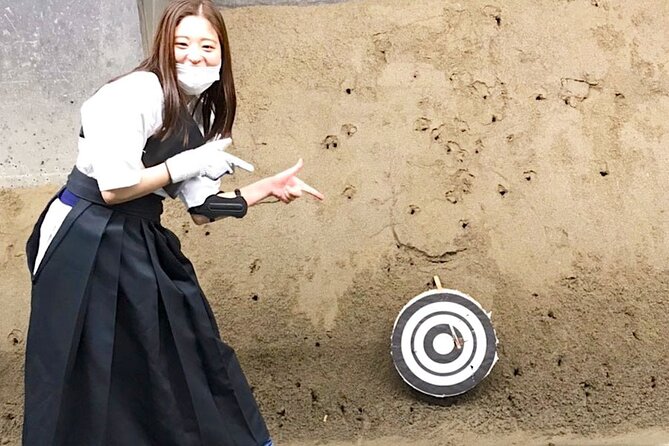
At $125.50 per person, this is not a bargain activity. You are paying for a specialist lesson, equipment, traditional clothing, a small group, and access to a formal training facility rather than a simple tourist demonstration.
For me, the price makes sense if you value participation over sightseeing. You receive roughly two hours of instruction and repeated practice, with some sessions lasting longer. You also get a cultural experience that is difficult to reproduce by walking into a museum or watching a performance.
The value is weaker if you only want a quick photo in traditional dress or guaranteed target hits. Kyudo takes concentration, and success is measured in learning the form as much as in landing an arrow.
The price also deserves extra scrutiny because the activity is non-refundable and cannot be changed after booking. Since confirmation is subject to availability and late arrivals are not admitted, check your schedule carefully before paying.
Who should book this experience
I would recommend it to adults who enjoy martial arts, archery, Japanese history, meditation, or unusual cultural activities. It suits solo participants, couples, and small groups who want to do something more active than visiting another temple.
You do not need previous archery experience. The class begins with the basics, and reports indicate that strength is not a major concern. Patience matters more than athletic ability.
This is also a good choice for an archer who has already tried western or other Asian styles. Kyudo uses a distinctly different stance and shooting sequence, so you will have to set aside familiar habits.
It is less suitable for children because participants must be at least 18. You also cannot take part if you are unwell or under the influence of alcohol. The operator will refuse participation in those cases without a refund.
Anyone with limited mobility or concerns about handling a bow should ask the operator before booking, since the supplied information does not spell out specific accessibility arrangements.
Practical advice for a smoother session
Arrive early. The activity leaves on time, and a late arrival means you will not be admitted or refunded.
Keep your schedule flexible. The advertised duration is about two hours, but one account describes a three-hour training session. Do not book a train, dinner, or timed attraction immediately afterward.
Wear something that allows comfortable movement before changing clothes. The dōgi may not fit every body type, so be prepared to participate in regular clothing if needed.
Ask about an arm guard before the first shot. A bowstring can catch the arm when your form is still developing, and a bruise is an avoidable souvenir.
Put your phone away unless the instructor permits photographs. Facility photography and video are restricted, but the instructor may take pictures and share them later.
Finally, confirm the meeting point. Tokyo Station is the published location, but other instructions have directed participants to different stations. This is the one detail I would verify twice.
Should you book the Tokyo kyudo lesson?
Book it if you want a genuine, hands-on Japanese activity and are willing to practice a difficult skill without expecting instant accuracy. The small group, traditional dress, repeated shooting, and personal coaching make this more substantial than a quick cultural photo stop.
Skip it if you need a guaranteed schedule, easy English-only instruction, or a fully refundable booking. The meeting-point confusion and strict late-arrival rule require care.
For the right person, $125.50 buys a memorable lesson in control, posture, and patience. You may leave without many bullseyes, but you will understand why kyudo is treated as an art rather than just a way to send arrows at a target.
FAQ
Where does the kyudo experience start?
The published meeting point is Tokyo Station at 1 Chome-9 Marunouchi, Chiyoda City, Tokyo 100-0005, Japan. Confirm the final instructions because some participants have received directions for other Tokyo stations.
Where does the activity end?
The activity ends back at the meeting point.
How long does the experience last?
The listed duration is approximately two hours. Some sessions have lasted closer to three hours, so allow extra time if your schedule permits.
Is previous archery experience required?
No. The class teaches the basic kyudo movements, equipment handling, and shooting technique from the beginner level.
What age must participants be?
Participants must be 18 or older.
Can I take photographs or videos inside the facility?
Photography and video recording are restricted inside the archery facility. Follow the guide’s instructions. In some sessions, the instructor has taken photographs and shared them afterward.
What happens if I arrive late or need to cancel?
The program departs on time, and late arrivals cannot participate or receive a refund. The experience is non-refundable and cannot be changed for any reason after booking.
Just added in Tokyo
- Manga Lesson with a Professional Japanese Manga Artist in Nakano★ 5.0 · 77 reviews
- Making a bento box with cute character look in Japan★ 5.0 · 15 reviews
- Tokyo/Ikebukuro Manga drawing workshop by pro-Manga artists★ 5.0 · 65 reviews
- Luxury Tokyo Sake, Cocktail, Whisky and Pairing Tour★ 5.0 · 18 reviews
- Tokyo Ueno Food & Nature & Localtown Tour: 10Dishes+ Drinks★ 5.0 · 34 reviews
- Make Your Own Bonsai with a Professional Bonsai Artist in Tokyo★ 4.5 · 18 reviews
- Make Traditional Nerikiri Sweets & Matcha experience in Shibuya★ 5.0 · 130 reviews
- Daikoku Parking Tokyo Drift & APIT Car Meet JDM Culture Tour★ 5.0 · 79 reviews
Tokyo Tours, compared.

Tokyo Disney Resort – Tokyo Disneyland & Tokyo DisneySea Park Tickets
Read our review →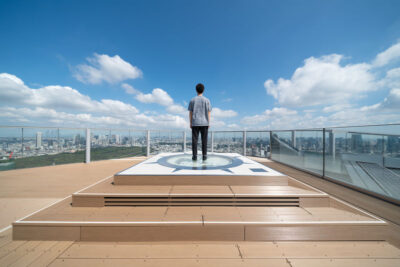
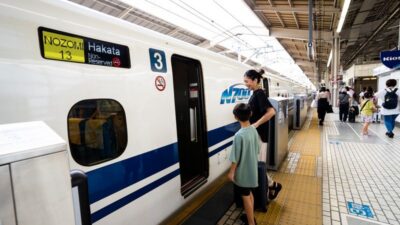
Mt Fuji and Hakone 1-Day Bus Tour Return by Bullet Train
Read our review →

teamLab Borderless Tickets: MORI Building DIGITAL ART MUSEUM
Read our review →