
Reviewed · CASTLES AND HISTORIC SITES
Samurai Experience – Learn Bushido through Kendo, in Tokyo
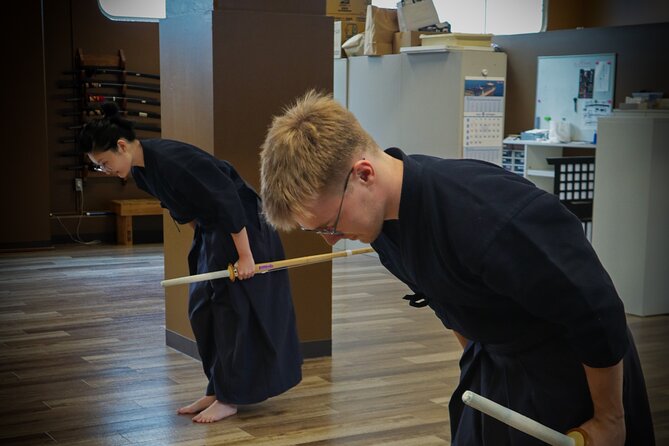
Trade temples for the dojo. This two-hour kendo session gives you a direct way to experience modern Japanese martial culture, not just look at samurai armor behind glass. I like the small maximum group of eight and the patient instruction from Daichi, who has 19 years of kendo training. I also like that you practice with real kendo attire and a bamboo sword, then finish with a friendly match.
The main consideration is physical effort. You do not need athletic or martial arts experience, and more than 90 percent of participants are beginners, but you will be standing, moving, shouting, and striking for much of the session. At $132.14 per person, this is not a bargain sightseeing stop, yet the instruction, equipment, photos, videos, bottled water, guide, and souvenir make it a fair choice if you want an activity rather than another hour of passive sightseeing.
In This Review
- Key points to know before you book
- Why Kendo Makes a Better Cultural Lesson Than a Costume Photo
- Arriving at the Nihonbashi Dojo
- Getting Dressed and Meeting the Instructors
- The First Lesson: Posture, Footwork, and the Shinai
- What Bushido Means in This Setting
- The Final Match Brings the Lesson Together
- Photos, Video, and the Take-Home Value
- Is $132.14 a Fair Price?
- Who Will Enjoy This Most?
- Booking, Cancellation, and Practical Tips
- Should You Book the Samurai Experience?
- FAQ
- Where does the kendo experience take place?
- What time does the experience begin?
- How long does the kendo session last?
- Is the activity suitable for beginners?
- Does the instructor speak English?
- Do I need to bring kendo clothing or a bamboo sword?
- Are photos and videos included?
Key points to know before you book
- Train in a working Tokyo dojo: You practice where Japanese kendo practitioners train, rather than in a staged tourist setting.
- Daichi leads the session: He brings 19 years of kendo practice and speaks fluent English.
- Beginners are welcome: Instruction starts with the basics and moves slowly enough for people with no martial arts background.
- You wear the full look: Kendo clothing, a T-shirt, pants, and a bamboo sword are supplied.
- The lesson ends with action: After learning the basic movements, you take part in a friendly battle-style exercise.
- Photos and video are included: A photographer records the session and sends the files by email afterward.
Why Kendo Makes a Better Cultural Lesson Than a Costume Photo
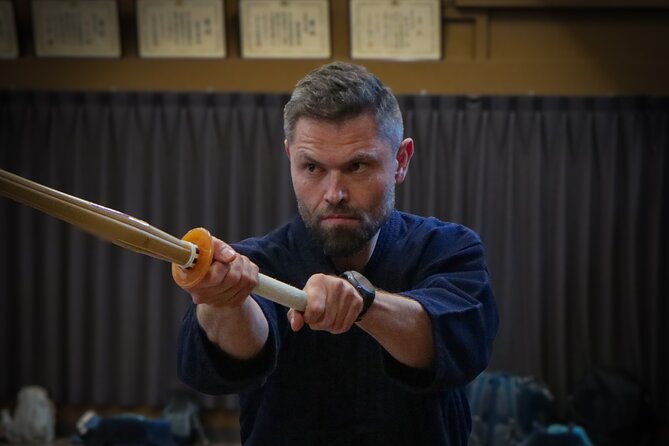
Kendo means the way of the sword, but this is not a lesson in swinging a metal samurai blade. You use a shinai, a flexible bamboo sword made for kendo practice. The focus is on posture, footwork, timing, control, and mental discipline.
That distinction matters. Samurai imagery is everywhere in Japan, yet much of it is packaged for sightseeing. Kendo remains a living practice, followed by Japanese students and adults today. In the dojo, you see how the old ideals associated with Bushido are expressed through present-day training: respect before action, control under pressure, and attention to form.
The session also gives you a better sense of why kendo can feel demanding even when the movements look simple. A correct strike is not just a hard hit. Your feet, body position, sword path, timing, and voice must work together. The lesson teaches you to pay attention to the whole movement, not only the target.
That makes this a good choice for you if you enjoy learning by doing. You will not leave as a samurai, of course, but you should leave with a clearer idea of how kendo works and why practitioners treat it as both a sport and a discipline.
More Castles and Historic Sites in Tokyo
- Tokyo: Imperial Palace and Shogun Historical Walking Tour
★ 5.0 · 2,251 reviews - Tokyo Castle & Imperial PalaceーShogun Walking Tour
★ 4.7 · 1,068 reviews - Tokyo: Samurai Ninja Museum Guided tour and Experience
★ 4.6 · 1,010 reviews
Arriving at the Nihonbashi Dojo
The meeting point is at Japan 103-0024 Tokyo, Chuo City, Nihonbashikobunacho, at 29 Sec日本橋ビル. The activity begins at 10:00 a.m. and finishes back at the same meeting point.
The location is near public transportation, which helps in a city where a small delay on the train can make a tight schedule stressful. I would still allow extra time to find the building. Tokyo addresses can be less intuitive than a simple street-number system, and the experience begins with preparation rather than a casual stroll-in.
Once you arrive, you receive the clothing and equipment needed for the class. You do not need to bring a uniform, practice sword, or special clothing. T-shirts and pants are provided to wear under the kendo uniform, so you can pack lightly.
Bottled water is included. Snacks are not, so eat beforehand if you know you get hungry during physical activity. The morning start is useful for fitting the session into a full day in Tokyo, but you should avoid booking something immediately afterward if you want time to change, collect your emailed photo information, or simply recover.
Getting Dressed and Meeting the Instructors
The change into kendo attire is part of the lesson. Putting on the uniform helps shift the mood from sightseeing to practice. It also gives you a practical introduction to the etiquette of entering a martial arts space.
Daichi leads the instruction. He has trained in kendo for 19 years and remains an active practitioner, which is important here. You are not being taught a loose collection of movie moves. The session is based on techniques used in current kendo practice.
English is not a problem. Daichi has overseas work experience and speaks fluent English. That allows you to ask questions about technique, history, and the mental side of training without relying only on gestures.
Assistants may also help during the class. One experience included Makoto and other kendo assistants, giving the participants more personal attention during practice and the final match. English ability may vary among assistants, but Daichi provides the main explanation.
The group is capped at eight people. That is one of the strongest practical features of the activity. A large class could turn a hands-on lesson into a demonstration, while a small group gives you more chances to practice and receive corrections.
The First Lesson: Posture, Footwork, and the Shinai
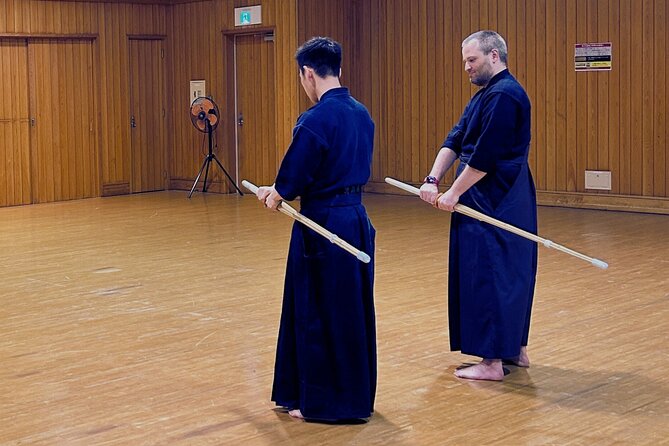
The class starts at a beginner level. You learn how to hold and use the shinai, then work through basic movement before attempting more advanced actions. The goal is not to rush you into protective armor or a dramatic duel. It is to build a reliable base.
Expect the instructor to focus on posture and footwork. Kendo movement can feel unfamiliar because the body needs to stay controlled while the feet move with purpose. People with experience in another martial art may recognize parts of the rhythm, but you do not need that background.
One participant with some taekwondo experience found that the footwork helped, while another person with fencing experience enjoyed comparing the two styles. Those connections can make the lesson more interesting, but they are not required. The instructors teach the essentials from the beginning.
The strikes are practiced with care. You learn how to swing the shinai with strength and accuracy, not simply wave it around. A good hit depends on timing and body coordination. The physical effort is manageable for beginners, but the concentration can be surprisingly tiring.
You will also learn the role of the voice, or kiai. The shout is not decorative. It is tied to focus and commitment, and it changes the feel of the exercise. For some people, the loud call is the most uncomfortable part at first. It is also one of the moments when the class begins to feel like kendo rather than a basic sword demonstration.
A completely different kind of day out:
- Tokyo Disney Resort – Tokyo Disneyland & Tokyo DisneySea Park Tickets
★ 4.8 · 99,488 reviews - SHIBUYA SKY Ticket
★ 4.7 · 46,509 reviews - JR Whole Japan Rail Pass
★ 4.8 · 29,150 reviews - Mt Fuji and Hakone 1-Day Bus Tour Return by Bullet Train
★ 5.0 · 26,383 reviews
What Bushido Means in This Setting
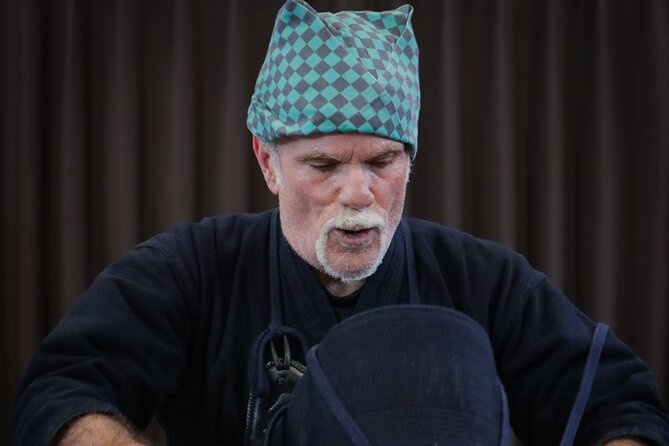
Bushido is often presented to visitors as a tidy list of samurai virtues. The real lesson is less theatrical. Here, Bushido is connected to conduct, discipline, and the ability to act with control.
Respect is shown through the way you begin and end practice. Focus appears in the effort to repeat a movement correctly. Courage is not about pretending to be fearless. It is about committing to the action even when the movement feels new and awkward.
This is where the experience offers more than a costume session. You are asked to pay attention to your posture, your timing, and your response to pressure. The physical work gives the cultural ideas a practical shape.
The instructors also explain the background and spirit of kendo alongside the technique. That balance received strong praise from participants who wanted more than a sports lesson. You get history and culture, but you also have to put the ideas into your own body.
The Final Match Brings the Lesson Together
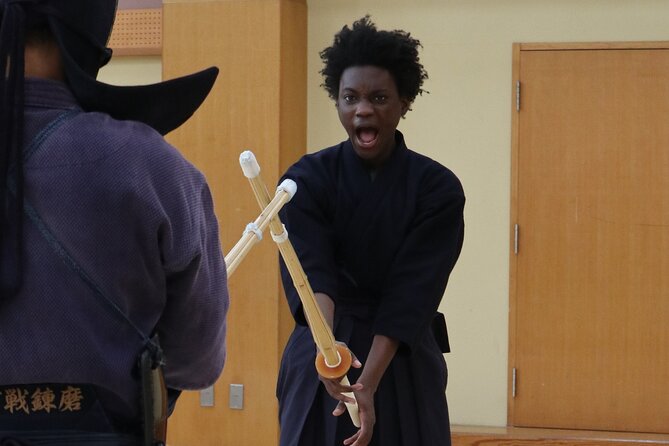
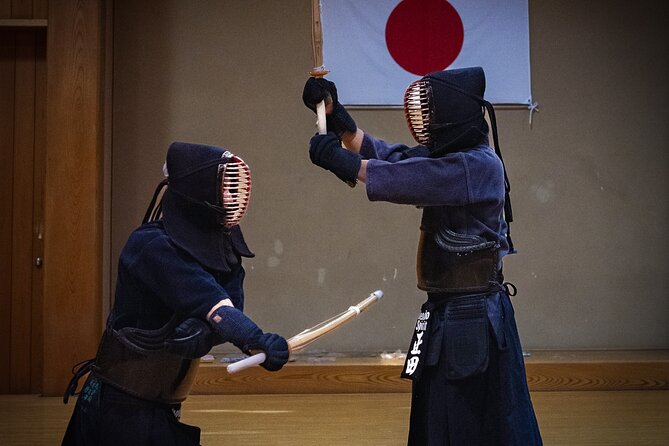
After the basic training, the activity builds toward a battle-style exercise. It is not a serious contest between trained opponents. It is a guided chance to use the footwork, strikes, timing, and voice you have just practiced.
This final portion is often the most exciting part because it gives the earlier drills a clear purpose. You are no longer repeating a movement only because the instructor told you to. You are watching an opponent, judging timing, and trying to stay composed.
Do not expect to defeat a kendo master after two hours. The point is participation, not ranking. Still, the friendly match can feel surprisingly lively, especially in a small group where the instructors can keep things controlled.
The experience provider’s own responses describe participants winning matches against assistants, but you should treat any victory as a bit of fun rather than proof that you have mastered kendo. The real success is making a clean movement under pressure and remembering the principles behind it.
This part may appeal most to families with older children, couples, and friends who enjoy an activity with a little competitive energy. A 12-year-old has taken part successfully, but the supplied information does not give a formal minimum age, so families should confirm that point before booking.
Photos, Video, and the Take-Home Value
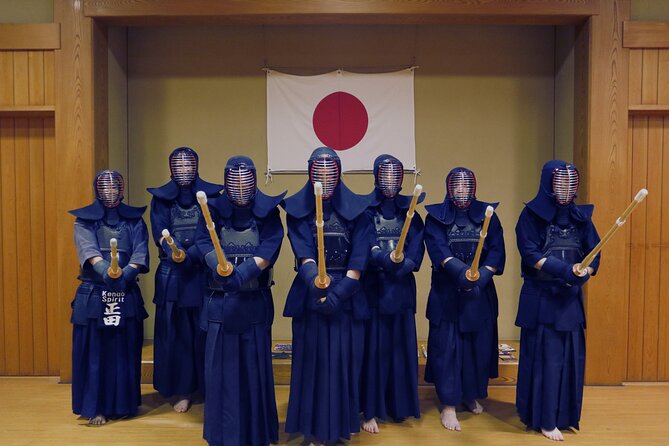
A photographer takes photos and videos during the session. The files are sent by email after the experience. This is useful for two reasons: you receive a record of the activity, and you can sometimes study your own posture and movement later.
Photos also add value to an activity that costs more than a standard museum visit. You are paying for instruction and equipment first, but the visual record helps preserve the memory. The included souvenir adds another small reminder of the day.
The more important take-home benefit is practical. You learn movements you can continue studying after your trip. Several participants left interested in taking kendo lessons at home, including one person considering continuing in Canada.
That does not mean the Tokyo class replaces regular training. Two hours can introduce you to the discipline, but lasting skill requires repeated practice. Think of this session as a well-made first lesson and a test of whether kendo appeals to you.
Is $132.14 a Fair Price?
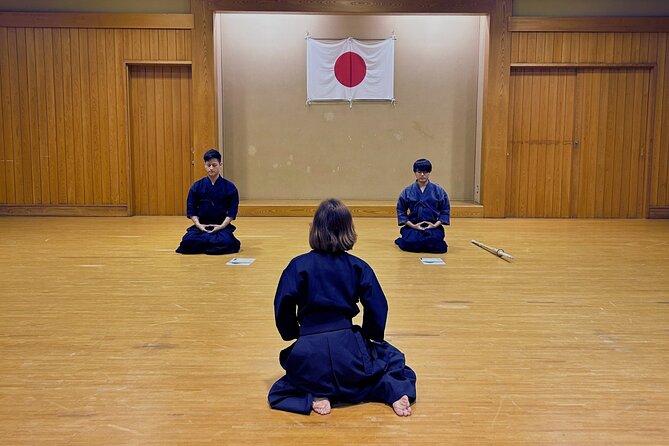
At $132.14 per person, the session costs more than a quick cultural demonstration. The price makes sense when you count what is included: about two hours of instruction, a small group, kendo attire, a shinai, other cultural tools, bottled water, a guide, photography, video, and a souvenir.
The strongest value comes from the instructor attention. With a maximum of eight people, you are not simply watching a performer. You have time to practice and make mistakes while the instructors guide you.
The value is weaker if you only want a short samurai photo opportunity. You will spend much of the session concentrating on technique and movement, and the activity requires real participation. If you dislike exercise, uniforms, shouting, or structured instruction, the price will feel high.
For someone who has already planned the usual Tokyo sights, this can be a sensible splurge. It replaces another passive attraction with a personal skill lesson and a connection to a martial art still practiced in Japan.
Who Will Enjoy This Most?
I would recommend this activity to you if you fit one or more of these descriptions:
- You want a cultural activity that involves your body, not just your camera.
- You are curious about Japanese martial arts but have no previous training.
- You enjoy small-group instruction and direct contact with a teacher.
- You are interested in Bushido as a living discipline rather than a movie image.
- You want something suitable for friends, families, or couples who like a shared challenge.
- You may want to continue kendo after returning home.
You do not need to be athletic. The instruction is designed for beginners, and the group is kept small. Still, you should be comfortable with physical movement and willing to participate fully.
This may not suit you if you want a quiet morning, a historical lecture, or a performance you can watch from the side. It is also not the right choice if your Tokyo schedule has no flexibility around the 10:00 a.m. start.
Booking, Cancellation, and Practical Tips
You receive booking confirmation at the time of reservation, and the activity ends at the original meeting point. Mobile tickets make the arrival process simple, but save the meeting address and allow time for public transportation and finding the building.
Free cancellation is available up to 24 hours before the start time for a full refund. Changes or cancellations made less than 24 hours before the local start time are not accepted for a refund, so keep that deadline in mind when arranging your Tokyo plans.
Wear a mindset ready for practice rather than a polished show. You will be given the needed clothing and equipment, so there is no need to bring anything special. Since snacks are not included, eat before the class and use the provided water during the session.
If you want to continue after Japan, ask Daichi about the basic movements you should remember and how to find kendo instruction at home. The session is short, but it can give you a useful starting point.
Should You Book the Samurai Experience?
Yes, if you want an active and personal introduction to Japanese culture. The small group, fluent English instruction, authentic dojo setting, and careful beginner training give this experience real substance. Daichi’s long practice and the help of additional assistants make the two hours feel focused rather than rushed.
Book it for the chance to learn, not just dress up. You will practice posture, footwork, strikes, voice, timing, and composure before taking part in a friendly match. At $132.14, it is a premium activity, but the equipment, photos, videos, souvenir, and close instruction help justify the cost.
Skip it if your idea of a perfect Tokyo morning involves sitting quietly or moving from one landmark to the next. For everyone else, this is a memorable way to meet Japan through discipline, effort, and a bamboo sword.
FAQ
Where does the kendo experience take place?
It takes place at a genuine Japanese dojo in Nihonbashikobunacho, Chuo City, Tokyo, at 29 Sec日本橋ビル, Japan 103-0024.
What time does the experience begin?
The activity begins at 10:00 a.m.
How long does the kendo session last?
The session lasts approximately two hours.
Is the activity suitable for beginners?
Yes. More than 90 percent of participants are beginners, and the instructors teach slowly and carefully. No martial arts experience is required.
Does the instructor speak English?
Yes. Daichi has overseas work experience and speaks fluent English, so you can ask questions during the session.
Do I need to bring kendo clothing or a bamboo sword?
No. Kendo attire, a T-shirt and pants to wear underneath, a bamboo sword called a shinai, and other cultural experience tools are provided.
Are photos and videos included?
Yes. A photographer takes photos and videos during the session, and the files are sent to you by email afterward.
Just added in Tokyo
- Tokyo Like a Local: Private & Personalised Experience (2-3 hours)★ 4.5 · 81 reviews
- Tokyo Layover 5 Hours Private Tour★ 5.0 · 40 reviews
- Tokyo: SEGA Joypolis E-Tickets with Optional Tokyo Metro Pass★ 4.0 · 14 reviews
- Experience Big soba knife Soba Making Class in Tokyo Kappabashi★ 5.0 · 71 reviews
- Traditional Japanese Comedy, Juggling & Magic Live Show in Tokyo★ 5.0 · 37 reviews
- Tokyo Ikebukuro Evening Tour Dive into Japanese culture★ 5.0 · 15 reviews
- Imperial Palace Tour: Discover Samurai History with a Local Guide★ 5.0 · 20 reviews
- Tokyo Imperial Palace with Kagurazaka Alley Tour★ 5.0 · 54 reviews
Castles and Historic Sites, compared.
Imperial Palace and Shogun Historical Walking Tour
Read our review →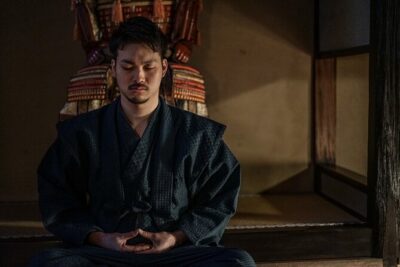
Tokyo Castle & Imperial PalaceーShogun Walking Tour
Read our review →
Nijo-jo Castle and Ninomaru Palace Guided Tour
Read our review →
Samurai Ninja Museum Guided tour and Experience
Read our review →Browse the lists this tour appears in