
Reviewed · CASTLES AND HISTORIC SITES
Gifu Samurai Sword Town;Japanese Damascus Knife Making Experience
Steel, fire, and a knife you keep. This small-group experience gives you a hands-on look at Seki’s famous cutlery trade, from museum displays and factory production to assembling, polishing, sharpening, and signing your own blade. I especially like the chance to test the finished knife by cutting fresh vegetables, and I like that you learn how to sharpen it instead of simply taking home a pretty souvenir. The main drawback is the price: at $250.38 per person for about two and a half hours, it is a serious purchase, not a casual afternoon activity.
You will meet at Sekitomioka Station at 10:30 am, with pickup offered and the activity ending back at the meeting point. The group is limited to five people, which should make the workshop more personal than a large factory demonstration. English support is available through the hosts, and past bookings have included help from Hiro, Sumi, and Yoshi. The location is outside the usual sightseeing route, so you need to plan the train ride carefully.
In This Review
- Key points to know before booking
- Why Seki is the right place for knife making
- Starting at Sekitomioka Station at 10:30 am
- The Knife Museum in its Canadian-style log house
- Seeing modern knife production at G.SAKAI
- Choosing among three Damascus knife styles
- Assembling, polishing, and sharpening your own knife
- Learning to sharpen instead of fearing a dull blade
- Cutting fresh vegetables with the finished blade
- Is $250.38 a fair price?
- Who will enjoy this Gifu workshop most?
- Planning the trip from Kyoto
- Should you book the Seki knife-making experience?
- FAQ
- Where does the experience start?
- What time does the activity begin?
- Where does the activity end?
- How long does the experience last?
- Is pickup available?
- Which knives can I choose to make?
- How far is Seki from Kyoto?
- How many people can join the activity?
- What happens during the workshop?
- Can I cancel for a full refund?
Key points to know before booking
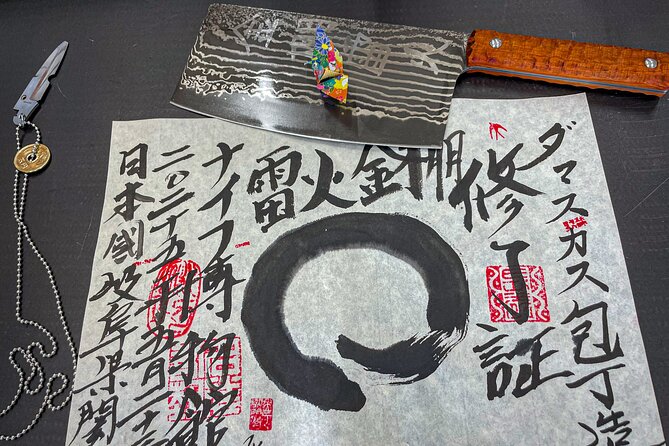
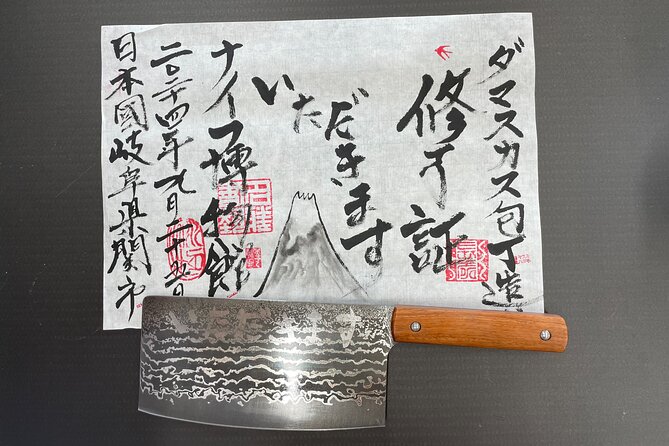
- You make and test a real Damascus knife: The workshop includes assembly, polishing, sharpening, name writing, and vegetable cutting.
- Seki’s cutlery story comes first: You visit the Knife Museum and see how modern Japanese knives are made at the G.SAKAI factory.
- Three knife types are available: Choose a Japanese Damascus kitchen knife, folding Damascus hunting knife, or Chinese Damascus kitchen knife.
- The group is capped at five people: This is a useful size for questions, demonstrations, and hands-on help.
- The outing lasts about two and a half hours: The start time is 10:30 am, and you return to the original meeting point.
- Pickup can simplify the day: Hotel pickup has been provided in at least one reported arrangement, but confirm the exact pickup details when booking.
Why Seki is the right place for knife making
Seki City has been tied to sword making since the 13th century. The local Nagaragawa River provided iron sand, helping the town grow into a center for blacksmiths and blade production.
During the Edo period, several hundred blacksmiths worked in Seki, producing Samurai swords and knives. The sword trade has changed, but the town’s connection to cutting tools remains strong. Today, Seki is regarded as one of the world’s three major cutlery centers, alongside Sheffield in the United Kingdom and Solingen in Germany.
That history gives this activity more weight than a simple craft class. You are not making a random souvenir in a workshop chosen for tourists. You are visiting a town whose identity has been shaped by blades for centuries.
G.SAKAI is a major Japanese knife producer with business partners around the world. Its knives are used in cooking, hunting, outdoor sports, and other professional settings. You will not see only one narrow type of blade here. The company’s range helps explain why Seki remains relevant in modern life, not just in stories about samurai.
More Castles and Historic Sites in Takayama
- Ninja Experience in Takayama – Basic Course
★ 5.0 · 62 reviews - Ninja Experience in Takayama – Basic Course
★ 4.6 · 59 reviews - Knife Making Experience in Samurai Sword Town
★ 5.0 · 29 reviews
Starting at Sekitomioka Station at 10:30 am
The meeting point is Sekitomioka Station in Seki, Gifu Prefecture. The listed start time is 10:30 am, and the activity finishes back at the same meeting point.
That return arrangement matters if you are using local trains or planning another stop later in the day. You can leave luggage and onward plans out of the workshop itself, then continue from the station after the activity ends.
Seki is not beside Kyoto’s main sightseeing core. The journey from Kyoto takes roughly one and a half to two hours by train, making this a realistic day trip but not a quick add-on between central attractions. I would check the train schedule before booking, especially because the workshop has a fixed start time.
Pickup is offered, and one participant had hotel pickup from Hiro. That same outing also included extra help getting to a sword museum and a local sword shop. Since pickup arrangements can vary, treat it as an option to confirm rather than assume it is automatically included at every hotel.
The Knife Museum in its Canadian-style log house
The first stop is the Knife Museum, located beside the G.SAKAI factory in an attractive Canadian-style log house. The setting sounds unusual for a Japanese blade center, but that contrast is part of the charm.
Inside, you will see rare items and cutlery exhibits from Japan and other parts of the world. This helps place Seki’s work in a wider setting. You are not only looking at finished kitchen knives. You are seeing how different cultures have designed and used cutting tools.
The museum also gives you useful context before you begin making your own knife. Once you have seen the range of blades, the choice between a kitchen knife and a folding hunting knife becomes more meaningful. You can think about how the shape, size, and purpose match your own interests.
Do not expect a large museum visit to fill half a day. The whole experience lasts about two and a half hours, including the factory and workshop. The museum is best understood as a focused introduction before the practical part begins.
Seeing modern knife production at G.SAKAI
After the museum, you enter the factory and see how Japanese knives are made today. The supplied details do not specify every machine or production stage on view, so I would not book this expecting a full industrial tour with a long technical lecture.
What you do get is a useful bridge between old Seki and present-day manufacturing. The town’s sword-making past is important, but G.SAKAI also shows that Japanese blade craft continues through modern production and professional use.
This portion is especially helpful if you are interested in how a finished knife moves from material to usable tool. It also gives the hands-on workshop a clearer purpose. You see the work of experienced makers before handling and finishing your own blade.
The factory visit is likely to appeal most to people who enjoy process. If you only want to make a knife and have little interest in how knives are produced at scale, this part may feel less exciting than the atelier. Still, it adds context that a stand-alone craft class would miss.
A completely different kind of day out:
- Kanazawa: World Heritage Shirakawa-go Morning Guided Tour
★ 4.9 · 988 reviews - Kanazawa: World Heritage Shirakawa-go & Two Local Experience
★ 4.9 · 274 reviews - Kanazawa/Takayama: Shirakawago & Takayama Private Day Tour
★ 4.8 · 172 reviews - Departing from Takayama [Regular sightseeing bus] World Heritage Sites Shirakawago and Gokayama Ainokura
★ 4.5 · 137 reviews
Choosing among three Damascus knife styles
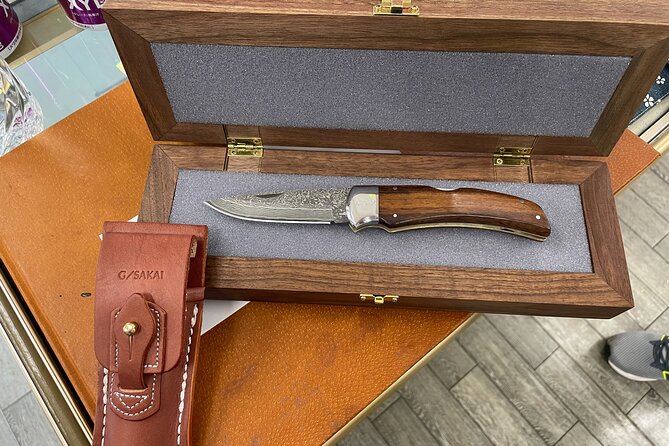
You can choose from three knife types:
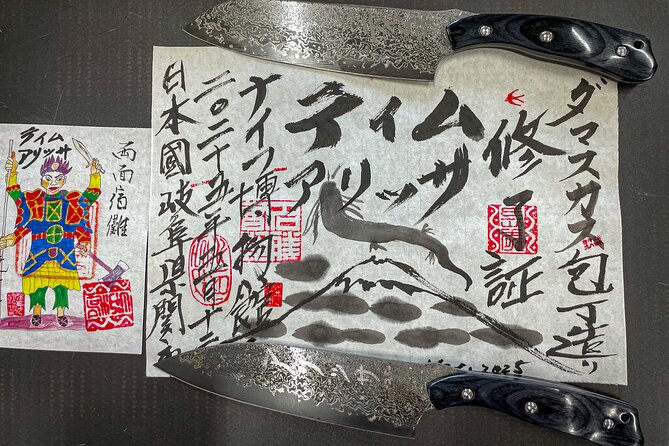
- Japanese Damascus kitchen knife
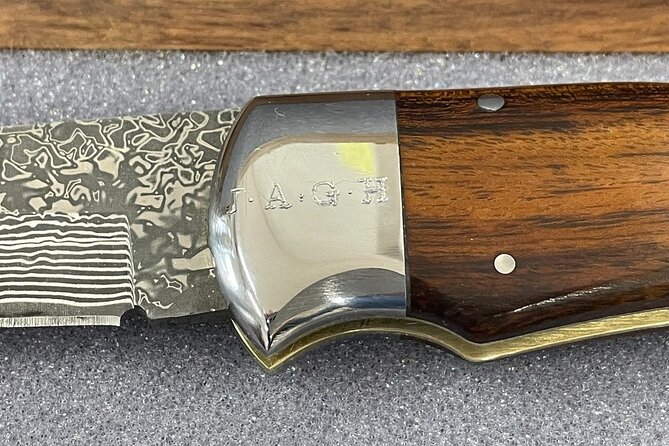
- Folding Damascus hunting knife
- Chinese Damascus kitchen knife
The Japanese kitchen knife is the straightforward choice for everyday cooking. It is also the easiest option to connect with regular use at home. If you cook often, a kitchen blade gives the finished object a clear place in your daily routine.
The folding Damascus hunting knife is aimed at outdoor use. Its folding format makes it a different kind of tool from a kitchen knife, and it may appeal more to someone interested in hunting or outdoor sports.
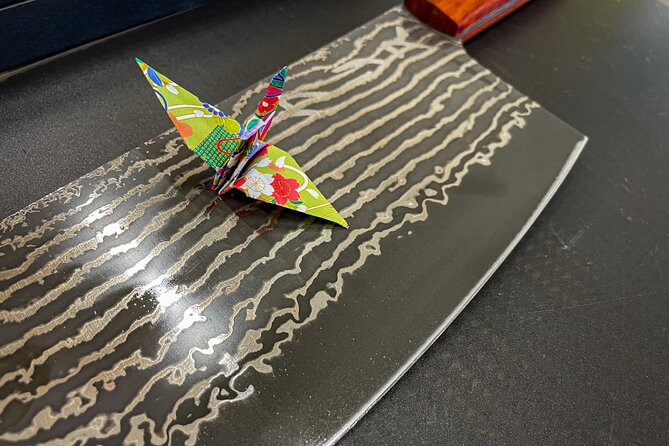
The Chinese Damascus kitchen knife is intended for traditional Chinese cooking techniques. This gives you a chance to choose a blade based on the food and cooking style you actually enjoy, rather than simply selecting the most familiar option.
Prices vary by knife type. The advertised $250.38 per person should therefore be treated as a starting reference unless your chosen knife is clearly covered at that rate. Confirm the final cost before committing to a specific blade.
Assembling, polishing, and sharpening your own knife
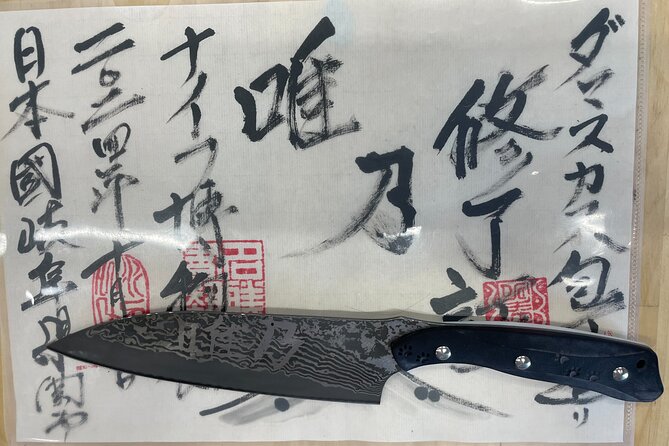
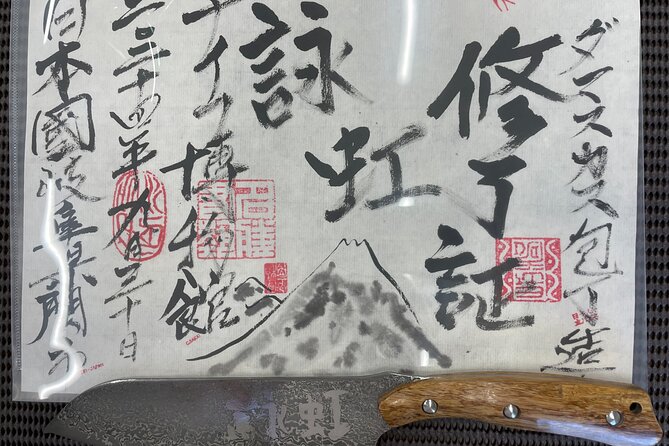
The main workshop takes place in the atelier with a knife craftsman guiding you through the work. You will assemble, polish, and sharpen the knife, then write your name on it.
That sequence gives the experience a satisfying sense of progress. You are not simply watching a master make a blade while you stand nearby. You take part in the finishing work that turns the knife into your own object.
The name writing is a small detail, but it matters. A purchased knife can be a good souvenir. A knife you helped assemble, polish, sharpen, and sign has a stronger connection to the place and the day.
The hosts are another important part of the experience. Hiro, Sumi, and Yoshi are named as welcoming hosts, and Hiro has been described as speaking English well. Clear instruction matters here because polishing and sharpening are practical skills. You want help that is calm and direct, especially when working close to a sharp edge.
The small maximum of five people should help. You are less likely to disappear behind a crowd, and there should be more room to ask questions or request help with a step. The exact amount of hands-on work may depend on the knife type and the workshop pace, so keep your expectations practical rather than imagining a full blacksmithing course.
Learning to sharpen instead of fearing a dull blade
The sharpening lesson is one of the strongest reasons to consider this experience. Many knife workshops let you take home a finished blade but do not teach you how to care for it. Here, sharpening is part of the process.
That knowledge has lasting value. A knife is only useful if you can maintain its edge, and learning the basic technique gives you more confidence when the blade eventually needs attention.
You may not leave as a professional sharpener after one session. Still, the lesson should help you understand the relationship between a sharp edge and regular care. It also makes the finished knife less like a fragile display piece. You have been shown how to keep it in working condition.
If you are buying the knife mainly as decoration, this part may matter less. If you plan to cook or use the blade outdoors, it is a major benefit.
Cutting fresh vegetables with the finished blade
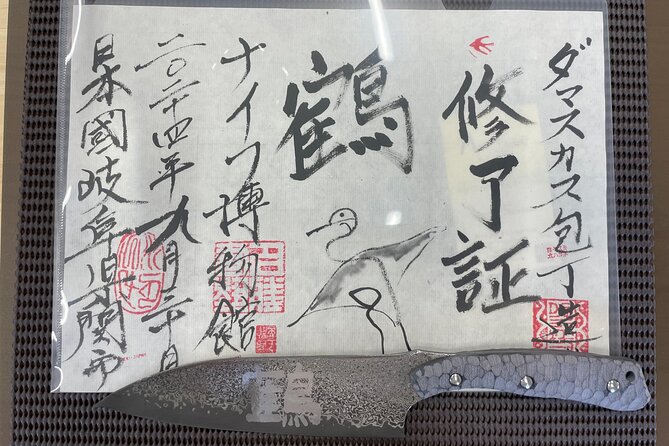
The final test is practical: you use the completed knife to cut fresh vegetables. This is a simple but effective ending because it turns the workshop from theory into something you can feel immediately.
You may be surprised by how sharp the knife is. The vegetable test also gives you a chance to see the result of the polishing and sharpening work while the instruction is still fresh in your mind.
There is a nice balance here. You get the pleasure of making something beautiful, but you also use it for its intended purpose. That is more satisfying than leaving with a knife that has never touched food.
Follow the craftsman’s instructions closely during this stage. The activity includes the test, but the supplied information does not specify which vegetables are used or how much independent cutting you will do. Think of it as a guided demonstration and test of the edge, not an open-ended cooking class.
Is $250.38 a fair price?
At $250.38 per person, this is not the cheapest way to buy a Japanese knife. You could purchase a good blade for less, especially if your only goal is to bring home a useful kitchen tool.
The value comes from the complete package. You get the Knife Museum, a look at G.SAKAI’s factory, a small-group atelier session, a knife you help finish, sharpening instruction, name writing, and a vegetable test. You are paying for the object and the time, guidance, setting, and local connection around it.
The cost makes the most sense for a few types of visitors:
- You care about how Japanese knives are made.
- You want a hands-on activity rather than another sightseeing stop.
- You enjoy practical souvenirs with a story.
- You are willing to travel beyond Kyoto’s main route.
- You plan to use the knife and value sharpening instruction.
The price is harder to justify if you are on a tight budget, dislike workshops, or only want a quick look at Seki’s sword tradition. In that case, a museum or shop visit may be enough.
The knife choice can also change the final price, so ask about the cost of each option before you settle on one. That small check prevents an unpleasant surprise at the workshop.
Who will enjoy this Gifu workshop most?
This experience suits adults, couples, families with older children, and anyone interested in Japanese craft. A parent and son used the workshop together, and the activity worked well as a shared project rather than a passive visit.
It is also a good fit for visitors who want something less predictable than temples, gardens, and city shopping. The location is off the usual route, but that is part of the appeal. You are going to a working cutlery town for a reason.
The activity is not limited to professional cooks. The three knife choices cover ordinary kitchen use, traditional Chinese cooking, and outdoor interests. You do not need to arrive with technical knowledge, and most people can participate according to the supplied activity details.
English-speaking support appears available, particularly through Hiro, but the exact language arrangement is not fully stated for every session. If language is important to you, confirm it when booking.
The small group also helps make this suitable for people who prefer direct instruction. If you want a large, lively class with many other participants, the five-person limit may feel too quiet. For most hands-on craft work, I see that as an advantage.
Planning the trip from Kyoto
The journey from Kyoto takes roughly one and a half to two hours by train. That makes the activity possible as a day trip, but you should treat it as a main event for the day rather than a spare two-hour stop.
Start with the 10:30 am meeting time and work backward. Allow enough time to reach Sekitomioka Station without relying on a tight connection. Since the activity returns to the meeting point, you can plan your trip home from there once the workshop ends.
The mobile ticket and booking confirmation are useful practical features. The activity is also near public transportation, so you are not dependent on a car. Pickup is offered, but confirm where and when it applies to your booking.
Free cancellation is available if you cancel at least 24 hours before the local start time. Cancellations or changes made less than 24 hours before the start are not refunded or accepted.
Should you book the Seki knife-making experience?
Book it if you want a real object, a practical skill, and a stronger connection to Seki’s cutlery tradition. The museum and factory add context, while the small atelier session gives you something active to do. I particularly value the sharpening lesson and vegetable test because they show that the knife is meant to work, not just sit in a display case.
Think twice if $250.38 feels high for a two-and-a-half-hour activity, or if you are not interested in carrying home a knife. Also check the price of your chosen knife type and confirm any pickup or language details before paying.
For the right person, this is one of the more memorable ways to spend a day outside Kyoto. You leave with a blade connected to Seki, plus the basic knowledge needed to keep its edge useful.
FAQ
Where does the experience start?
It starts at Sekitomioka Station, Hidase, Seki, Gifu 501-3911, Japan.
What time does the activity begin?
The listed start time is 10:30 am.
Where does the activity end?
The experience ends back at the original meeting point.
How long does the experience last?
It lasts approximately two hours and 30 minutes.
Is pickup available?
Pickup is offered. Confirm the exact pickup location and arrangement when booking, since the provided information does not specify that it applies to every hotel or reservation.
Which knives can I choose to make?
You can choose a Japanese Damascus kitchen knife, a folding Damascus hunting knife, or a Chinese Damascus kitchen knife. Prices vary depending on the type selected.
How far is Seki from Kyoto?
The activity can be joined as a day trip from Kyoto, taking roughly one and a half to two hours by train.
How many people can join the activity?
The maximum group size is five travelers.
What happens during the workshop?
You visit the Knife Museum, see the G.SAKAI factory, and then assemble, polish, sharpen, and write your name on your knife. You also test its sharpness by cutting fresh vegetables.
Can I cancel for a full refund?
Yes. You can cancel for a full refund up to 24 hours before the local start time. Cancellations or changes made less than 24 hours before the start are not accepted, and the amount paid is not refunded.
Just added in Takayama
- Takayama Local Cuisine, Food & Sake Cultural Tour with Government-Licensed Guide★ 5.0 · 17 reviews
- Takayama Old Town Walking Tour with Local Guide★ 4.5 · 50 reviews
- Takayama Half Day Tour (Private Guide)★ 5.0 · 15 reviews
- Private Transfer from Takayama to Kanazawa Including Shirakawago★ 5.0 · 17 reviews
- Takayama Rice Ball and Miso Soup Making at a buddhist temple★ 5.0 · 13 reviews
- Takayama: Authentic Sake Tasting at a Historic Brewery★ 5.0 · 65 reviews
- Takayama Full-Day Private Tour with Government Licensed Guide★ 4.5 · 13 reviews
- Shuriken Experience in Takayama★ 5.0 · 46 reviews
Castles and Historic Sites, compared.



Imperial Palace and Shogun Historical Walking Tour
Read our review →
Tokyo Castle & Imperial PalaceーShogun Walking Tour
Read our review →
Nijo-jo Castle and Ninomaru Palace Guided Tour
Read our review →
Samurai Ninja Museum Guided tour and Experience
Read our review →Browse the lists this tour appears in