
Reviewed · CASTLES AND HISTORIC SITES
Knife Making Experience in Samurai Sword Town
Sharpen steel where samurai blades were born. This five-hour visit to Seki, Gifu, combines hands-on Damascus knife making with sword museums, local cutlery, and a historic temple. I like that the blade is yours to finish, not just a souvenir picked from a shop shelf. The small-group format also means close help from hosts including Sumio, Yoshi, and Hiro.
The main consideration is the price: at $316.27 per person, this is a serious half-day spend. Still, the package includes the knife work, museum admissions, lunch, a signed certificate, and a limited-time mini knife souvenir, so it offers more than a basic craft class.
In This Review
- Key points before you book
- Why Seki is the right place for a knife class
- Starting at Sekitomioka Station at 10:30
- The Knife Museum: two hours with steel in your hands
- Seki Swordsmith Museum: the samurai setting explained
- Gifu Cutlery Hall: a short stop with buying potential
- Seki Zenko-ji Temple: a calmer final hour and a half
- What the $316.27 price really covers
- The people who will enjoy this most
- Practical booking advice for this five-hour outing
- Should you book the Seki knife-making experience?
- FAQ
- Where does the experience begin?
- Where does the experience end?
- How long does the experience last?
- Is pickup available?
- What will I make during the class?
- Is lunch included?
- Can I cancel for a full refund?
Key points before you book
- Finish your own Damascus kitchen knife by polishing, sharpening, engraving, and assembling the blade.
- Learn from experienced bladesmiths including Sumio, Yoshi, and Hiro, with more than 50 years of craft experience behind the instruction.
- Explore Seki’s sword and cutlery tradition at the Knife Museum, Seki Swordsmith Museum, and Gifu Cutlery Hall.
- Test the finished knife by cutting fresh vegetables, a practical moment that gives the class a clear payoff.
- Enjoy useful extras including Japanese lunch, a signed certificate, and a handcrafted mini knife souvenir while supplies last.
- Make it a private outing with only your own group participating, starting and ending at Sekitomioka Station.
Why Seki is the right place for a knife class
Seki City is not simply a convenient setting for this activity. It has been connected with sword making since the 13th century and remains one of Japan’s major cutlery centers. The city is also described as one of the three leading cutlery-producing regions in the world, with the highest cutlery production volume in Japan.
That background changes the class. You are not making a knife in an ordinary workshop with a samurai theme added afterward. You are working in a city where blade production has shaped local identity for centuries. The museums and cutlery hall help explain why Seki became important, while the workshop lets you handle part of that tradition yourself.
The experience focuses on a professional Damascus kitchen knife. Damascus steel is known for its patterned appearance, so the finished blade should have a visual character that differs from a plain kitchen knife. The exact look will depend on the blade and your finishing work, but the point is clear: you take home a useful object with a personal mark on it.
This is also a good choice if you are interested in Japanese swords but cannot fit a long museum day into your schedule. The sword displays provide context without making the whole outing a lecture. Then the knife class gives you something active to do.
More Castles and Historic Sites in Takayama
- Ninja Experience in Takayama – Basic Course
★ 5.0 · 62 reviews - Ninja Experience in Takayama – Basic Course
★ 4.6 · 59 reviews - Gifu Samurai Sword Town;Japanese Damascus Knife Making Experience
★ 5.0 · 27 reviews
Starting at Sekitomioka Station at 10:30
The tour begins at Sekitomioka Station at 10:30 am and ends back at the same meeting point. Pickup is offered, but the stated starting point is the station, so check the arrangement when booking if you need a pickup rather than meeting there.
Seki is reachable by public transportation, and the activity information notes that you can make it a day trip from Kyoto in roughly 1.5 to 2 hours by train. That makes the timing important. You will want to plan your train connection carefully so you are at the station before the 10:30 start, especially since the class has a fixed schedule and late arrival can reduce your working time.
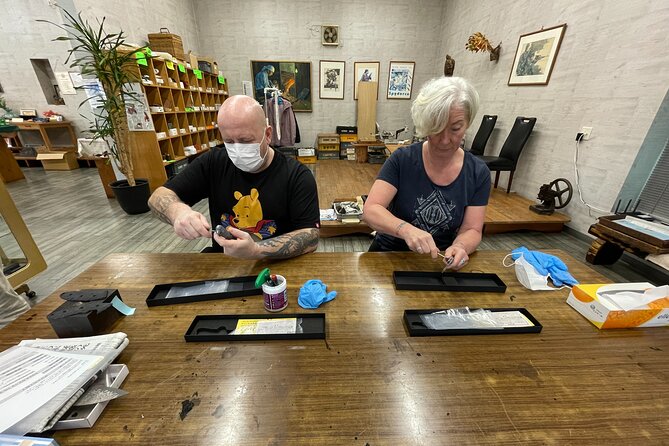
The activity is private, meaning only your own group participates. That is a real advantage for a hands-on craft. You can ask questions, slow down during a tricky step, or request help without competing with a large class. One published account specifically praised the small group for giving everyone the attention they needed.
The overall duration is about five hours. The schedule is full, but it is not built around rushing from one attraction to the next. The first stop receives about two hours, followed by one hour at the swordsmith museum, 30 minutes at the cutlery hall, and 1.5 hours at Zenko-ji Temple.
The Knife Museum: two hours with steel in your hands
The Knife Museum is the heart of the day. It displays unusual and rare knives from around the world, giving you a broad look at blade design before you begin your own work.
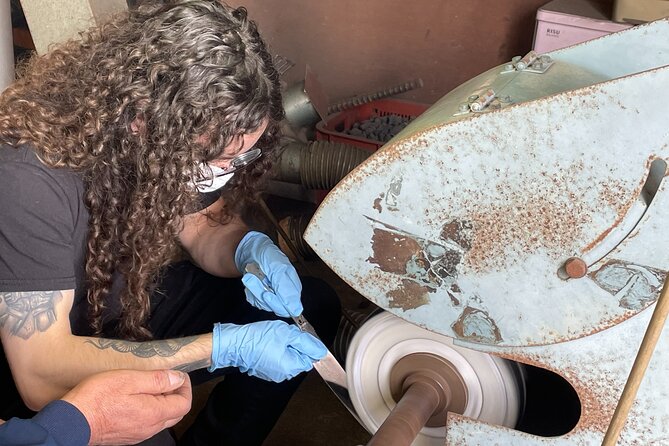
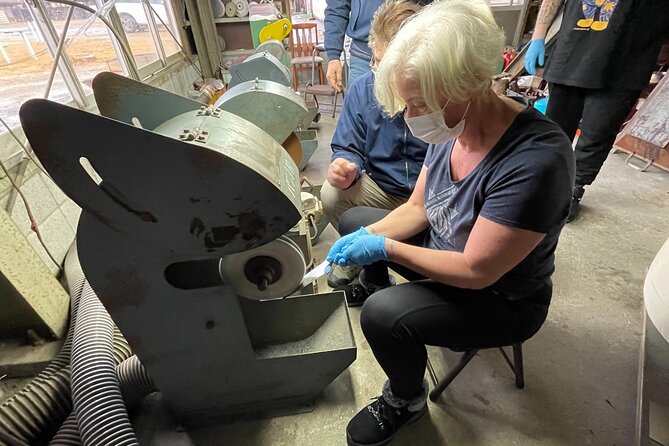
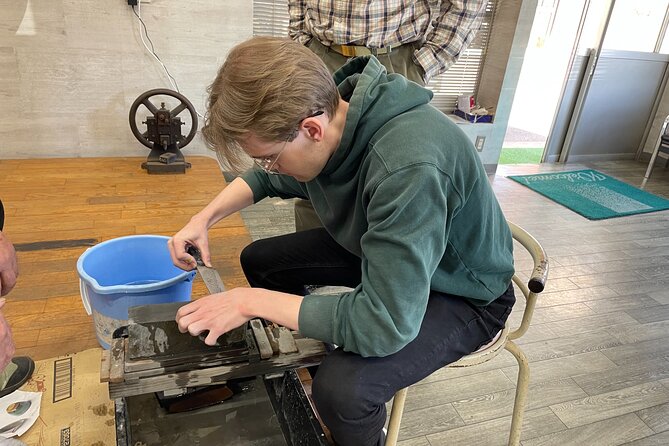
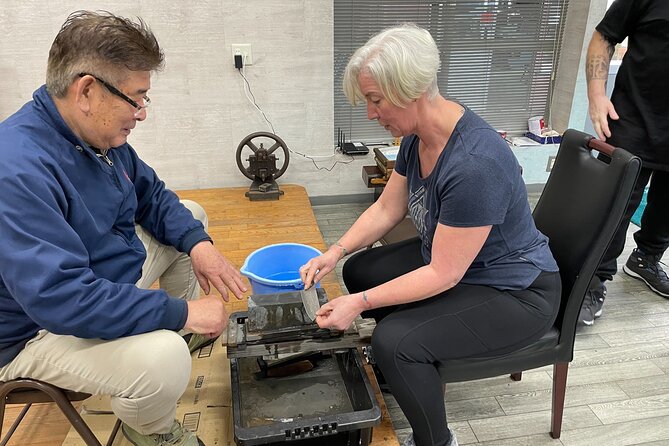
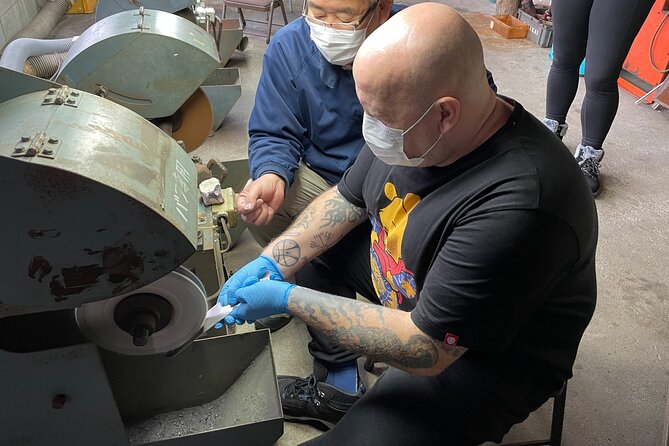
The practical portion includes polishing, sharpening, engraving, and assembly. This is not a demonstration where you watch a craftsperson complete every important step. You are expected to take part, with instruction and support from the bladesmiths.
That distinction matters. A factory-made knife purchased in Seki may be excellent, but it will not carry the memory of shaping the finish yourself. Here, the blade becomes personal through the work you put into it. The engraving is especially important because it gives the finished knife a mark connected to your visit.
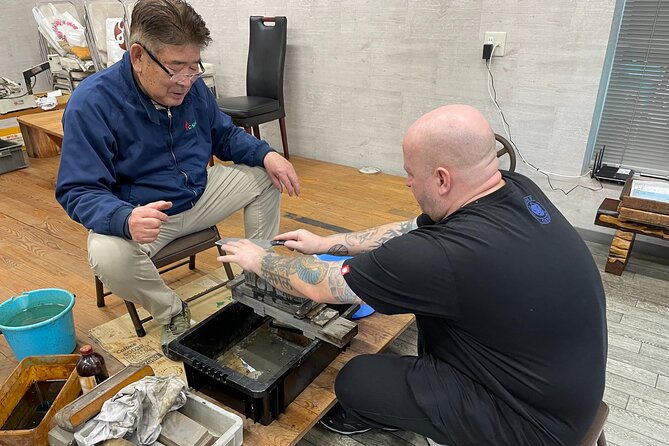
The instructors are a major part of the experience. Sumio, Yoshi, and Hiro are repeatedly praised for clear instruction, patience, humor, and their willingness to share stories about knives and the process. One account also highlights the passion of two Sakai brothers who guide the work. The names in the available information vary slightly, with Sumio sometimes written as Sumi, but Sumio, Yoshi, and Hiro are the hosts most closely associated with the activity.
You should expect to work under supervision rather than simply handle tools without direction. The class is designed so most people can participate, and the small-group setup gives you room to ask for help. Still, knife making involves sharp edges and careful hand work, so listen closely and do not treat the process like a casual souvenir activity.
The final test is a satisfying practical touch. You use the completed knife to cut fresh vegetables and check its sharpness. That moment shows you what the polishing and sharpening were meant to achieve. It also gives the class a natural finish: you make something, then use it.
The experience includes a Japanese lunch, which helps justify part of the cost and keeps the five-hour schedule self-contained. The exact menu is not specified, so do not book this expecting a particular dish. Think of it as a welcome meal within a craft-focused day.
Seki Swordsmith Museum: the samurai setting explained
The Seki Swordsmith Museum gives you one hour to look at the city’s sword-making past and understand how Seki became a major blade center. Its importance is not only the objects on display. It explains the older traditions that sit behind the modern kitchen knife workshop.
If you arrive mainly for the practical class, this stop may feel quieter and more historical than the Knife Museum. That is part of its value. Without it, the samurai connection could remain a decorative theme. With it, you get a better sense of how sword-making skills and local expertise shaped Seki’s continuing cutlery industry.
The museum also gives the day some balance. The first stop asks you to work with your hands. The second asks you to look closely and place that work in context. I would pay attention to the connection between sword production and everyday blades, rather than expecting the museum to be another workshop.
This stop is particularly useful for samurai fans, but you do not need prior knowledge of Japanese swords. The tour is designed to explain the subject to general visitors as well as enthusiasts.
A completely different kind of day out:
- Kanazawa: World Heritage Shirakawa-go Morning Guided Tour
★ 4.9 · 988 reviews - Kanazawa: World Heritage Shirakawa-go & Two Local Experience
★ 4.9 · 274 reviews - Kanazawa/Takayama: Shirakawago & Takayama Private Day Tour
★ 4.8 · 172 reviews - Departing from Takayama [Regular sightseeing bus] World Heritage Sites Shirakawago and Gokayama Ainokura
★ 4.5 · 137 reviews
Gifu Cutlery Hall: a short stop with buying potential
The 30-minute visit to Gifu Cutlery Hall is brief, but it adds a modern commercial side to the day. Here you see Seki’s continuing role in Japanese cutlery production and get a better feel for the range of blades made in the region.
The hall is a natural place to compare your newly finished knife with other local products. You may find more knives, kitchen tools, or gift ideas, although the precise selection is not provided. Because this stop is short, I would not count on a long shopping session or extensive time to compare every item.
Its main purpose is to show that Seki is not only a historical sword town. The city’s blade trade continues today, and the cutlery hall connects old technique with modern production. For someone who enjoys kitchen tools, this may be one of the most tempting stops. For someone focused only on the class, it is a quick but useful addition.
Seki Zenko-ji Temple: a calmer final hour and a half
The final stop is Seki Zenko-ji Temple, whose foundation dates to the mid-18th century. You have about 1.5 hours here, making it the longest stop after the knife workshop.
The temple is known for its Great Bell and the tour of the Kaidan, a feature tied to Japanese religious tradition and history. You can also try ringing the bell. After concentrating on sharpening and assembly, this slower visit gives the day a different rhythm.
The temple stop may appeal most to people who want more than a technical class. It adds a cultural site without requiring a separate temple excursion. At the same time, if your main aim is to spend every possible minute with blades, you may find 1.5 hours here longer than necessary.
That is the tradeoff built into the schedule. This is not a knife class with a quick museum photo attached. It is a small cultural tour of Seki, with the knife work as its anchor. I like that wider approach, but you should choose a shorter workshop elsewhere if temple visits and local history do not interest you.
What the $316.27 price really covers
At $316.27 per person, the experience costs more than a simple craft lesson. The value depends on how much of the full package you would use.
You are paying for roughly five hours of private guiding, hands-on knife finishing, museum admission, a Japanese lunch, the completed Damascus kitchen knife, a signed certificate, and a handcrafted mini knife souvenir when available. You also receive direct instruction from experienced bladesmiths rather than only a short demonstration.
The certificate is a nice record of the day, though the knife itself is the more meaningful takeaway. The mini knife is a particularly appealing extra, but it is limited-time and subject to availability. Do not treat it as guaranteed unless the provider confirms it for your date.
The cost makes the most sense for someone who values personal instruction and a lasting object. If you only want to buy a Japanese knife, you can likely find simpler ways to shop. If you want to understand the work, finish a blade yourself, visit the museums, eat lunch, and spend the day with a private group, the price becomes easier to defend.
Group size matters here. A large class could make this fee feel high, but the private format and the reported close attention from the hosts change the comparison. You are not paying only for admission. You are paying for access to the instructors and time at the workbench.
The people who will enjoy this most
I would recommend this experience first to knife enthusiasts, home cooks, and anyone fascinated by traditional Japanese craft. The finished knife gives the day a useful purpose, rather than leaving you with a decorative object that sits in a drawer.
It is also a strong match for samurai fans. The sword museum and Seki’s connection to blade making give the theme substance. You do not need to know the names of sword schools or understand Japanese metallurgy before arriving.
The private format works well for couples, families with older children, friends, or small groups with different interests. Someone can focus on the technical work while another person enjoys the museums and temple.
I would be more cautious about recommending it to anyone with very limited time in Japan. The journey from Kyoto can take roughly 1.5 to 2 hours each way, according to the activity details, so the outing takes much of a day once transport is included. It is also not the best choice if you want a fast, low-cost activity near a major sightseeing center.
Most people can participate, and the activity is near public transportation. Even so, the hands-on steps require attention around sharp tools. If you have concerns about the physical work, ask the provider before booking rather than assuming every part can be adapted.
Practical booking advice for this five-hour outing
Book far enough ahead if the mini knife souvenir matters to you, since it is described as a limited-time bonus. Confirmation is provided at booking, and free cancellation is available up to 24 hours before the local start time. Changes or cancellations inside that window are not accepted for a refund.
Wear clothing that lets you work comfortably and plan to keep your hands focused during the workshop. Specific clothing requirements are not provided, so I would avoid anything you would be upset to mark or damage during a craft session.
Build your day around the 10:30 am start at Sekitomioka Station. Since the tour returns there, you do not need to arrange a separate end point. If you are coming from Kyoto, allow enough time for the train journey and a little margin before the meeting time.
The activity has received a 5.0 rating from 29 published ratings, with 100 percent recommending it. The praise centers on the friendly hosts, clear instruction, small-group attention, and the quality of the finished knives. Those are the points I would weigh most heavily, since they relate directly to what can make or break a hands-on class.
Should you book the Seki knife-making experience?
Book it if you want to make something useful, learn from experienced bladesmiths, and see the city that helped shape Japanese cutlery. The combination of a personal Damascus knife, sword museums, lunch, and a temple visit gives you a fuller picture of Seki than a shop visit alone.
Skip it if $316.27 feels high for a souvenir or if your Japan schedule cannot spare a full day around a five-hour activity. The long journey from Kyoto and the temple portion also mean this is not a pure workshop.
For the right person, the finished knife is more than proof that you attended. It is a practical reminder of a morning spent sharpening, polishing, engraving, and learning in Seki. The hosts’ warmth and the private format appear to be the strongest reasons to choose this particular class over a larger, cheaper demonstration.
FAQ
Where does the experience begin?
It begins at Sekitomioka Station in Hidase, Seki, Gifu, at 10:30 am.
Where does the experience end?
The activity ends back at the meeting point, Sekitomioka Station.
How long does the experience last?
The total duration is approximately five hours.
Is pickup available?
Pickup is offered. The stated meeting point is Sekitomioka Station, so confirm the pickup arrangement when booking.
What will I make during the class?
You will finish your own professional Damascus kitchen knife through polishing, sharpening, engraving, and assembly.
Is lunch included?
A Japanese lunch is part of the advertised experience.
Can I cancel for a full refund?
Yes. You can cancel up to 24 hours before the experience start time for a full refund. Cancellations or changes made less than 24 hours before the start are not accepted for a refund.
Just added in Takayama
- Takayama Old Town Walking Tour with Local Guide★ 4.5 · 50 reviews
- Takayama Local Cuisine, Food & Sake Cultural Tour with Government-Licensed Guide★ 5.0 · 17 reviews
- Takayama Half Day Tour (Private Guide)★ 5.0 · 15 reviews
- Private Transfer from Takayama to Kanazawa Including Shirakawago★ 5.0 · 17 reviews
- Takayama Rice Ball and Miso Soup Making at a buddhist temple★ 5.0 · 13 reviews
- Takayama: Authentic Sake Tasting at a Historic Brewery★ 5.0 · 65 reviews
- Takayama Full-Day Private Tour with Government Licensed Guide★ 4.5 · 13 reviews
- Shuriken Experience in Takayama★ 5.0 · 46 reviews
Castles and Historic Sites, compared.

Imperial Palace and Shogun Historical Walking Tour
Read our review →
Tokyo Castle & Imperial PalaceーShogun Walking Tour
Read our review →
Nijo-jo Castle and Ninomaru Palace Guided Tour
Read our review →
Samurai Ninja Museum Guided tour and Experience
Read our review →Browse the lists this tour appears in