
Reviewed · TEMPLES AND SHRINES
Gion and Fushimi Inari Shrine Kyoto Highlights with Government-Licensed Guide
Kyoto reveals itself best on foot. This six-hour tour links Fushimi Inari Shrine and Gion with several important temples and shrines, giving you a guided look at Kyoto’s geisha districts, Shinto traditions, and narrow historic lanes without forcing you to plan every turn yourself. I especially like the small maximum group of 10 and the chance to ask direct questions about geiko and maiko life. The main caution is that this is a demanding walking experience, and admission to Kiyomizu-dera and Kennin-ji is not included.
I also like the route’s variety. You move from the famous vermilion torii gates of Fushimi Inari to the quieter Shirakawa canal, then on to Yasaka Shrine, Kiyomizu-dera, and Kennin-ji. The experience is strongest for first-time Kyoto visitors who want context, not just photographs. Still, the price of $154.37 per person is significant, so you should value a guide’s interpretation and a compact sightseeing plan rather than expect a cheap orientation walk.
In This Review
- Five details worth knowing before you book
- Why this route works for a first Kyoto evening
- Starting at Tatsumi Daimyojin Shrine
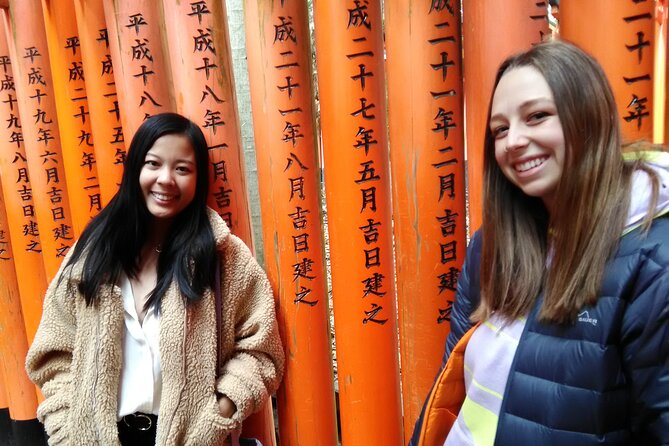
- Fushimi Inari and the red torii gates
- Gion, Pontocho, and Miyagawacho on foot
- Shirakawa canal and Tatsumi Daimyojin
- Yasaka Shrine and Kyoto’s old city edge
- Kiyomizu-dera after the Gion lanes
- Kennin-ji and the calmer final stop
- How much value do you get for $154.37?
- Who should book this walking tour?
- Final verdict: book it for context and convenience
- FAQ
- How long does the tour last?
- Where does the tour start?
- Where does the tour end?
- Is transportation provided between the stops?
- What language does the guide speak?
- How many people can join the tour?
- Are entrance fees included?
- Can I cancel for a full refund?
Five details worth knowing before you book
- A maximum of 10 people keeps the walk personal: A small group makes it easier to hear the guide and ask questions in tight lanes.
- The tour begins and ends at Tatsumi Daimyojin Shrine: There is no private vehicle, and pickup and drop-off are on foot.
- Fushimi Inari takes about one hour: You will see the shrine’s celebrated torii-gate trails, though the tour does not suggest covering the entire mountain route.
- Gion is more than a photo stop: The walk includes Gion, Pontocho, Miyagawacho, and the Shirakawa area, with explanations of geiko and maiko traditions.
- Temple admission costs extra at two stops: Kiyomizu-dera and Kennin-ji are listed as not included, so budget for those tickets separately.
- A guide can help with cultural manners: The route enters areas connected with working geisha, where respectful behavior matters.
Why this route works for a first Kyoto evening
Kyoto can feel confusing at street level. Main roads are easy enough, but Gion’s lanes, small shrines, canals, teahouses, and temple approaches quickly form a maze. This tour gives you a fixed meeting point, a licensed English-speaking guide, and a planned route through several districts.
The mix is appealing because no single stop has to carry the whole experience. Fushimi Inari supplies the classic Kyoto image. Gion offers old wooden streets and geisha culture. Kiyomizu-dera brings a major temple with a long religious history, while Kennin-ji gives you a calmer temple setting close to the center of Gion.
The schedule is listed at about six hours. That is a substantial outing, not a quick neighborhood stroll. You should expect extended time on your feet, stairs or sloping approaches at some sites, and a pace shaped by the group. Comfortable shoes are essential.
The route also includes Pontocho and Miyagawacho in the broader Gion experience. These areas are known for restaurants, teahouses, and evening atmosphere, but this is not presented as a dining tour or a geisha performance. You are paying for guided sightseeing and cultural explanation, not a meal or entertainment package.
More Private Tours in Kyoto
- Kyoto 6hr Private Tour with Government-Licensed Guide
★ 5.0 · 1,369 reviews - 10 Must-see Spots in Kyoto One Day Private Tour (up to 7 people)
★ 5.0 · 1,108 reviews - Kyoto 4hr Private Tour with Government-Licensed Guide
★ 5.0 · 629 reviews
Starting at Tatsumi Daimyojin Shrine
The meeting point is Tatsumi Daimyojin Shrine in the Gion area, at Motoyoshicho 59, Kyoto’s Higashiyama Ward. This is an important practical detail. You do not meet at a hotel, and no vehicle collects you. You need to reach the shrine independently and arrive ready to walk.
Tatsumi Daimyojin is a small shrine near the Shirakawa area, close to lanes associated with ochaya, or traditional teahouses. Its location puts you near one of Gion’s most atmospheric sections from the start.
The shrine is also a sensible meeting point because it is less overwhelming than trying to find someone in the middle of a crowded avenue. Even so, you should allow time to locate it. The tour ends back at the same meeting point, so you will need to plan your onward transport from there.
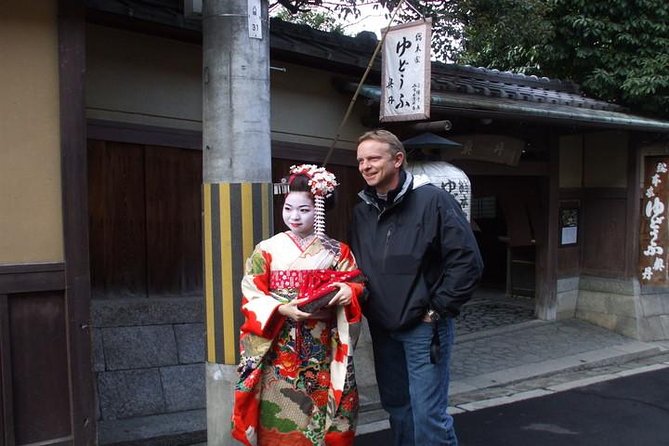
The guide is a government-licensed local English speaker. That matters in Gion, where cultural details are easy to flatten into movie stereotypes. One especially useful subject is the difference between maiko, apprentice performers, and geiko, the Kyoto term for established geisha. A guide can explain the training system and customs in a way a sign or map cannot.
Fushimi Inari and the red torii gates
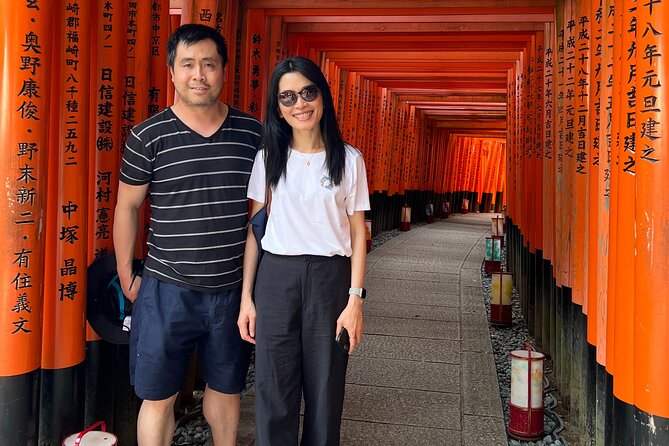
Fushimi Inari-taisha is the most distant-feeling stop on the route, even though it is a major Kyoto sight. It is dedicated to Inari, a Shinto deity associated with rice, prosperity, and commerce, and is famous for its thousands of vermilion torii gates.
The gates form covered paths behind the main shrine buildings. Their repeated shapes create the visual rhythm people come to see, but the site is more than a quick photo backdrop. The trails climb through wooded sections of Mount Inari, and the scale of the shrine becomes clearer as you move beyond the first gates.
The scheduled visit is about one hour. That gives you enough time to see the main shrine area and walk through a section of the torii paths, but not enough for a leisurely exploration of every trail. If you want to hike all the way up the mountain, this tour is not the right format.
Admission is free, which helps the value of this part of the day. The main challenge is that Fushimi Inari is one of Kyoto’s best-known attractions, so the approach and lower gate sections can be busy. A guide helps you make good use of the allotted hour, but the group schedule means you cannot simply stay until the crowds thin.
Gion, Pontocho, and Miyagawacho on foot

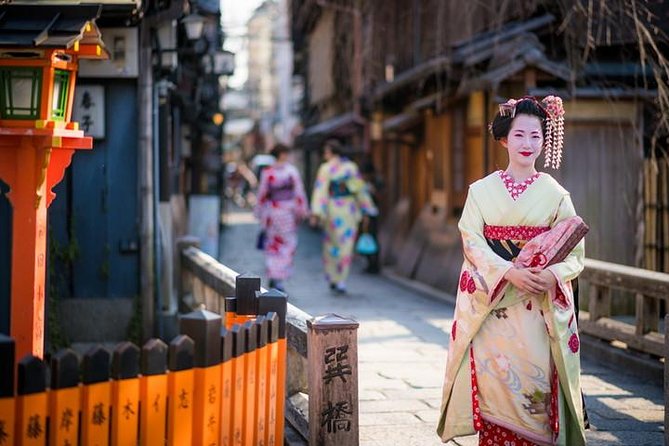
The Gion portion is the heart of the experience. Gion lies around Shijo Avenue between Yasaka Shrine and the Kamo River, with traditional shops, restaurants, and ochaya tucked into its streets. Cars cannot reach many of the lanes, so walking is the only useful way to see their scale and design.
I like this part because the guide can point out the difference between a street built for ordinary movement and a lane shaped by the old entertainment districts. Wooden facades, discreet entrances, and narrow passages tell you something about how Gion functions, even when you are not entering any business.
The walk also brings in Pontocho and Miyagawacho. These districts broaden the picture beyond the most photographed section of Gion. You can see how Kyoto’s traditional dining and performance quarters connect along the river and central streets.
Do not expect a guaranteed geisha sighting. One piece of feedback describes unexpectedly seeing several maiko and geiko, while another notes that no maiko or geiko appeared during the walk. That is the honest reality. These are working people, not attractions scheduled for a tour group.
Your guide can explain the difference between spotting someone respectfully and treating the district like a stage. That cultural advice is one of the better reasons to choose a guided walk here. Keep your camera ready, but do not block lanes, touch clothing, follow anyone, or assume a person in traditional dress is available for a photograph.
More Temples and Shrines in Kyoto
- [Kyoto & Nara Day Tour] Sagano Scenic Railway & Nara Park & Fushimi Inari Taisha Thousand Torii Gates & Togetsukyo Bridge & Bamboo Grove & Kimono Forest (Departing from Osaka)
★ 4.9 · 10,942 reviews - Kyoto: Fushimi Inari, Kinkakuji, Bamboo Grove 1 Day Bus Tour
★ 4.8 · 4,316 reviews - Kyoto: Tea Ceremony in a Traditional Tea House in Kiyomizu
★ 4.9 · 3,519 reviews - Kyoto Nara Day Trip │ Kiyomizu-dera Temple + Fushimi Inari-taisha Shrine + Nara Park (Departing from Osaka/Kyoto)
★ 4.7 · 3,408 reviews
Shirakawa canal and Tatsumi Daimyojin
The Shirakawa area runs along a canal parallel to Shijo Avenue. Willow trees, traditional restaurants, and teahouses line the water, giving this section a quieter character than the main shopping roads.
This is likely to be one of the most photogenic parts of the tour. The canal adds reflections and open space, while the old buildings provide the setting people often hope to find in Kyoto. It is also a useful place to pause and listen, since the scenery makes the district’s past easier to picture.
Tatsumi Daimyojin Shrine sits near this area and is associated with the local geisha quarter. Its story is not completely clear, which makes it a good example of why a guide can be useful. Rather than presenting every shrine legend as settled fact, a careful explanation can separate local tradition from documented history.
The walk is not only about major monuments. Small shrines and side lanes often explain Kyoto better than a long list of famous sights. They show how religious sites, homes, restaurants, and entertainment businesses share the same compact neighborhoods.
Yasaka Shrine and Kyoto’s old city edge
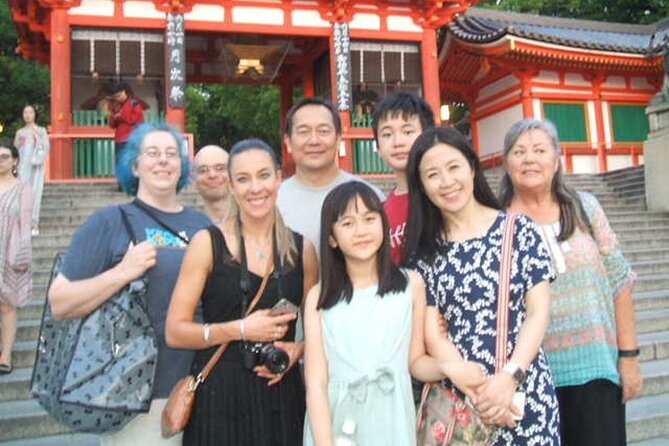
Yasaka Shrine is also called Gion Shrine and was founded more than 1,350 years ago. It sits between Gion and the Higashiyama area, making it a natural bridge between the geisha district and the temple quarter.
The scheduled stop is only about 10 minutes, so think of it as a focused introduction rather than a full shrine visit. You can see the main setting and hear why Yasaka matters, but you will not have much independent time if the group is keeping to the overall plan.
There is no admission charge. That keeps the stop easy to fit into the route, especially for visitors who want religious and cultural context without adding another ticket.
The short timing is both a benefit and a limitation. It keeps the tour moving, but anyone who enjoys studying shrine architecture, watching worshippers, or exploring side buildings may want to return independently.
Kiyomizu-dera after the Gion lanes
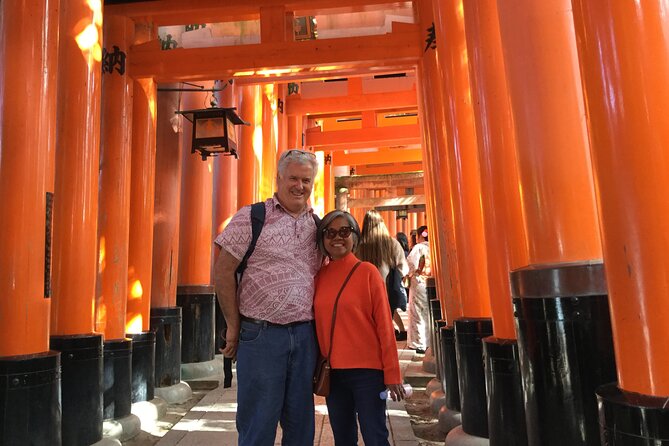
Kiyomizu-dera sits halfway up Mount Otowa, one of the peaks in Kyoto’s Higashiyama range. The temple dates back more than 1,250 years and is one of the city’s major cultural sights.
The approach is part of the experience. You reach the temple area through an uphill section of Higashiyama, with shops and narrow streets along the way. Since this is a walking tour, you should be prepared for a more physical stretch after already spending time on foot.
The planned visit lasts about one hour. That is enough for a meaningful look at the temple grounds and the famous setting, though the exact amount of free time will depend on the guide’s pacing and the group.
Admission is not included. This is important when judging the total cost. You pay $154.37 for the guided experience, then add the temple ticket and the separate Kennin-ji admission. The guide’s entry fees are covered only for sights listed as included, so check the final ticket arrangements before you go.
Kiyomizu-dera can also be crowded. A guide may help you understand what you are seeing and keep the visit organized, but no guided route can remove the popularity of the site. If you want quiet contemplation, visit independently at a less busy time.
Kennin-ji and the calmer final stop
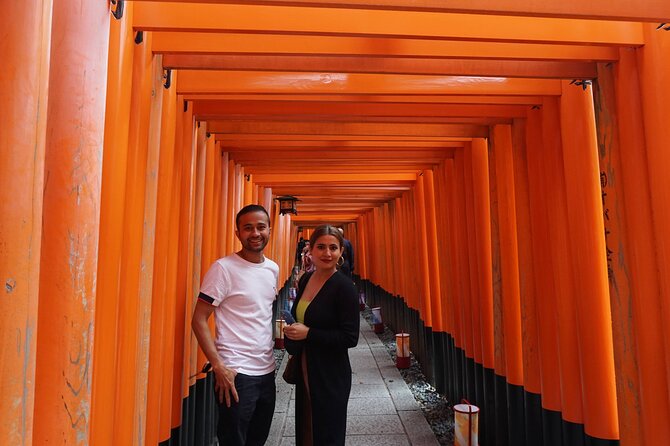
Kennin-ji is close to Hanamikoji and Shijo streets, yet its grounds offer a more peaceful change of pace. The temple is known for expansive grounds and two dry gardens, where carefully placed rocks, gravel, and simple lines invite a slower look.
The scheduled stop is listed as one minute, which is plainly too brief for a full temple visit. Treat this as a passing introduction or exterior orientation, not as a chance to study the gardens at length.
Admission is not included here either. If Kennin-ji is a priority, you should ask the guide how much actual time the group will have and decide if you want to return on your own. The temple’s location near Gion makes that practical, but the organized tour itself cannot promise a long visit based on the stated schedule.
This stop highlights one of the tour’s central tradeoffs. You see many important places in one outing, but some receive only a short visit. The format favors breadth and explanation over deep exploration of every temple.
How much value do you get for $154.37?
At $154.37 per person, this is not a budget walking tour. The price makes more sense if you are visiting Kyoto for the first time, have limited planning time, and want a licensed English-speaking guide to connect several districts in one day.
The group limit of 10 improves the value. You are not lost in a large crowd, and a small group usually makes it easier to hear explanations in narrow streets. The guide can also respond to questions about geisha culture, shrine customs, and the difference between major and minor sites.
The value is weaker if you already know Kyoto well or plan to visit each place independently. Fushimi Inari and Yasaka Shrine are free, and you can reach the districts by public transportation. You will still need to pay admission at Kiyomizu-dera and Kennin-ji, but those costs are separate from the tour.
Group discounts may be available, which could improve the price for families or friends booking together. The experience also offers a mobile ticket, making it easier to keep the booking details with you while moving around the city.
Free cancellation is available up to 24 hours before the start time. Changes or cancellations inside that window are not refunded, so mark the local start time carefully.
Who should book this walking tour?
I would choose this tour if you want a structured introduction to Kyoto’s eastern districts and prefer asking a real guide instead of piecing together signs and online notes. It suits first-time visitors, couples, friends, and small families who can handle six hours of walking.
It is also a good fit if geisha culture interests you but you want a respectful, historical explanation rather than a staged show. The tour does not include a geisha performance, meal, or private vehicle.
I would hesitate if you have mobility limits, dislike hills and stairs, or want long, quiet visits inside temples. Most people can participate, and service animals are allowed, but the tour is explicitly on foot and includes several large sites connected by walking.
Final verdict: book it for context and convenience
Book this experience if you want breadth, a small group, and cultural guidance in one long Kyoto outing. The strongest parts are the Gion and Shirakawa walk, the explanations of maiko and geiko traditions, and the chance to connect famous sights with less obvious local shrines.
Skip it if you prefer setting your own pace or want to spend half a day at only one temple. The $154.37 price is fair only when the guide’s knowledge and route planning matter to you. For a first visit, that help can be worth paying for, especially if you want to see Gion without getting lost.
FAQ
How long does the tour last?
The experience lasts approximately six hours.
Where does the tour start?
It starts at Tatsumi Daimyojin Shrine in Motoyoshicho, Kyoto’s Higashiyama Ward.
Where does the tour end?
The tour ends back at the meeting point at Tatsumi Daimyojin Shrine.
Is transportation provided between the stops?
No. Pickup and drop-off are on foot, and no private vehicle is included.
What language does the guide speak?
The tour includes a licensed local English-speaking guide.
How many people can join the tour?
The maximum group size is 10 travelers.
Are entrance fees included?
Admission to Fushimi Inari-taisha Shrine and Yasaka Shrine is free. Admission to Kiyomizu-dera and Kennin-ji is not included.
Can I cancel for a full refund?
Yes. You can cancel at least 24 hours before the experience start time for a full refund. Cancellations or changes made less than 24 hours before the start time are not accepted for a refund.
Just added in Kyoto
- The “Golden Route” and Ancient Japan by DIAMIR Erlebnisreisen – 14-Day Tour★ 2.0 · 2 reviews
- Japan: Castles & Cuisine by G Adventures – 6-Day Kyoto to Osaka Tour★ 4.5 · 4 reviews
- Cycle Japan by Explore! – 13-Day Kyoto to Tokyo Tour★ 4.7 · 12 reviews
- Cycle Japan by Intrepid Travel – 11-Day Kyoto to Tokyo Tour★ 4.8 · 2 reviews
- Classic Japan by Intrepid Travel – 11-Day Kyoto to Tokyo Tour★ 4.4 · 14 reviews
- Ancient & Modern Japan 14-Day Tour by Exodus Adventure Travels★ 4.4 · 40 reviews
- 5 Day Cultural Adventure of Kyoto, Nara & Osaka by Tourist Journey★ 2.5 · 2 reviews
- 12 Days Kinosaki Onsen Escape: A Journey Through Japan’s Timeless Towns by UME Travel★ 4.8 · 5 reviews
Temples and Shrines, compared.
![[Kyoto & Nara Day Tour] Sagano Scenic Railway & Nara Park & Fushimi Inari Taisha Thousand Torii Gates & Togetsukyo Bridge & Bamboo Grove & Kimono Forest (Departing from Osaka)](https://media.japanvisits.com/wp-content/uploads/kyoto-nara-day-tour-sagano-scenic-railway-nara-park-fushimi-inari-taisha-thousand-torii-gates-togetsukyo-bridge-bamboo-grove-kimono-forest-departing-from-osaka-k110001-400x257.jpg)
Kyushu One-Day Tour: Yufuin no Mori Train & Yufuin Town & Nyoirin-ji Temple & Dazaifu & Hell Hot Springs (Departing from Fukuoka)
Read our review →
Fushimi Inari, Kinkakuji, Bamboo Grove 1 Day Bus Tour
Read our review →
Tea Ceremony in a Traditional Tea House in Kiyomizu
Read our review →
Kyoto Nara Day Trip │ Kiyomizu-dera Temple + Fushimi Inari-taisha Shrine + Nara Park (Departing from Osaka/Kyoto)
Read our review →
Browse the lists this tour appears in