

Reviewed · FOOD TOURS
Hidden Osaka Foodie Tour: Nishinari Backstreets & Local Dining
Osaka gets more interesting after dark. This small-group walk takes you through Nishinari’s Deep Osaka, where local restaurants, old routes, street art, and hard-earned neighborhood history replace the usual sightseeing circuit. I like the five-person limit, which keeps the experience personal, and I like that each food stop includes a drink. The main consideration is that the tour moves through an area with a complicated social history, so it suits visitors who want context and real neighborhood character, not a polished sightseeing show.
Guide Jaymie has earned particular praise for connecting the food with the area’s past. You can expect a three to four hour outing that begins near Dobutsuen-mae and ends at Tengachaya Station. The $84.92 price is not cheap for an Osaka food walk, but the small group, several restaurant stops, drinks, guiding, and cultural focus give it a reasonable case.
In This Review
- Key points about the Nishinari food walk
- Why Nishinari makes a memorable food tour setting
- Starting at Lawson near Haginochaya
- Walking through Kamagasaki and Deep Osaka
- Following an old samurai pilgrim route
- Street art, back alleys, and everyday Osaka
- What the food stops add to the experience
- Is $84.92 a fair price?
- Timing, transport, and the finish at Tengachaya
- Who will enjoy this Osaka experience most?
- Should you book the Nishinari foodie tour?
- FAQ
- Where does the Hidden Osaka Foodie Tour begin?
- Where does the tour end?
- How long does the tour last?
- How many people can join the tour?
- Does the experience include food and drinks?
- What area does the tour explore?
- Does the tour include historical information?
- Is public transportation available after the tour?
- Can I cancel for a full refund?
Key points about the Nishinari food walk
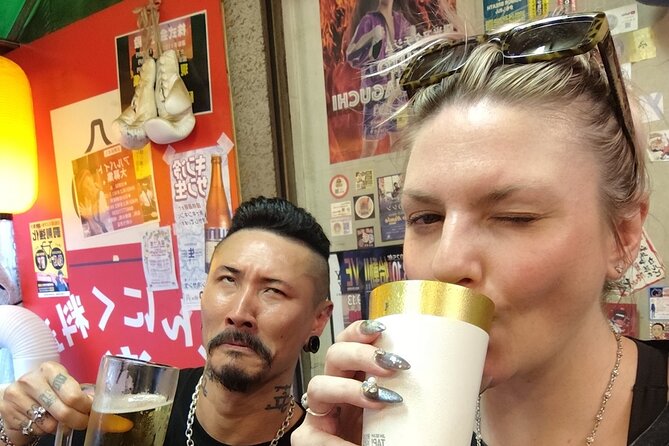
- Five-person maximum: This is a genuinely small group, useful for asking questions and keeping the walk relaxed.
- Food with a drink at each stop: You are not simply touring restaurants from the outside. The experience includes local dishes and a drink along the way.
- A walk through Kamagasaki: The route introduces one of Osaka’s most talked-about neighborhoods through its past and present.
- Old samurai pilgrim route: Part of the walk follows a historic route that adds an unexpected layer to the backstreets.
- Street art and local stories: Colorful graffiti and stories of resilience give the walk more substance than a standard tasting tour.
- Convenient finish: The tour ends at Tengachaya Station, with Osaka Metro, Nankai Line, and taxis close by.
Why Nishinari makes a memorable food tour setting
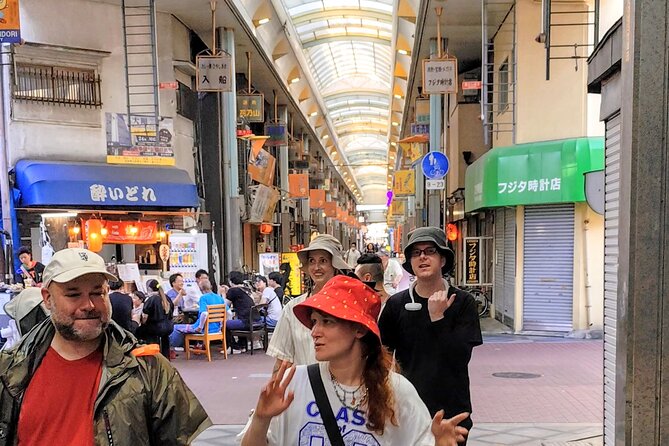
Nishinari is not the Osaka most first-time visitors picture. Instead of grand shopping avenues and famous restaurant signs, you get narrow streets, modest buildings, local businesses, and reminders of how ordinary people have shaped the neighborhood over time.
The tour focuses on the Kamagasaki area, often called Deep Osaka. That name hints at the neighborhood’s reputation, but it does not tell the whole story. You will hear about the area from the Edo Period through modern urbanization and social unrest. The important point is not simply learning dates. It is seeing how a community survives, adapts, and keeps going.
I value that approach. Food tours can become a string of snacks with a few quick facts added between bites. Here, the setting is part of the meal. The streets explain why local businesses matter, why family-run restaurants deserve support, and why Osaka culture cannot be reduced to its best-known food districts.
This is also a good choice if you have already seen the major sights. The walk takes you away from the standard tourist route without requiring a full day or difficult transportation plan.
More Food Tours in Osaka
- Osaka: Shinsekai Food Tour with 13-15 Dishes at 5 Eateries
★ 4.8 · 2,204 reviews - Osaka Food Tour: 13 Dishes at 5 Local Eateries
★ 5.0 · 2,149 reviews - Hungry Osaka Street Food Tour:15 Tastings & 3 Drinks with a Local
★ 5.0 · 1,727 reviews
Starting at Lawson near Haginochaya
The meeting point is the Lawson Haginochaya 1 Chome Store, at 1-chōme-6-20 Haginochaya, Nishinari Ward. You should plan to arrive with enough time to locate the store and get settled before the start time. Since the tour begins on foot, being at the correct place matters more than arriving at a broad station area and hoping to spot the group.
The starting point places you near the Dobutsuen-mae side of Nishinari. From there, the walk heads into the backstreets around Kamagasaki. The setting changes the tone right away. You are not being led from one major attraction to another. You are entering an everyday neighborhood where the details are easy to miss if you move too quickly.
A mobile ticket makes the booking side simple. Confirmation is provided at booking, so you have the basic information in hand before arriving. The tour is often reserved about 12 days ahead, which suggests that you should not leave it until the last minute if your Osaka schedule is tight.
Walking through Kamagasaki and Deep Osaka
The main walking section lasts about two hours. That is a substantial portion of the experience, so comfortable shoes are a sensible choice. The route is not just a transfer between restaurants. It is the central part of the tour.
Your guide explains the area’s path from samurai-era travel to modern city life. You will also hear about social unrest and the ways local communities have managed difficult conditions. This kind of background can change how you read the streets. A plain-looking building, a small gathering place, or a piece of public art may carry more meaning once you know something about the neighborhood around it.
The tone matters. A respectful guide should help you understand the area without turning hardship into a spectacle. The description of this experience centers on resilience, creativity, and everyday life. That makes it more useful than a tour that treats Nishinari as merely strange or rough.
Jaymie received strong praise for explaining the history clearly while also pointing out the food and graffiti art. That combination is important. You get social context, but the outing does not become a lecture. It keeps returning to the things that make Osaka enjoyable: eating, walking, looking closely, and talking with people.
Still, you should come with an open mind. This is not a carefully staged historic district. You may find the streets more raw and less comfortable than Osaka’s central shopping areas. That is part of the point, but it will not suit everyone.
Following an old samurai pilgrim route

One of the more unusual features is the section along an old samurai pilgrim route. The route connects the current city with an older pattern of movement, when journeys were tied to pilgrimage, duty, and foot travel rather than train timetables.
You should not expect a preserved monument at every turn. The value is in walking a historic line through a modern neighborhood. That contrast gives the experience its character. An old route can survive in fragments, street alignments, stories, or local landmarks, even when the surrounding city has changed dramatically.
This portion also gives the tour a useful rhythm. You move from food and conversation into history, then back into present-day Osaka. The changing pace keeps the three to four hours from feeling like one long restaurant visit.
More Food Tours in Japan:
- Tokyo: Shinjuku Food Tour (13 Dishes at 4 Local Eateries)
★ 5.0 · 6,603 reviews - Tokyo: Shinjuku Food Tour (15 Dishes and 4 Eateries)
★ 4.9 · 2,033 reviews - Best of Shinjuku: Izakaya Food Tour (4 Stops, 14+ Tastings)
★ 5.0 · 1,863 reviews - Kyoto Night Foodie Tour in Gion (9+ dishes + 6 Sake tastings)
★ 5.0 · 1,762 reviews
Street art, back alleys, and everyday Osaka
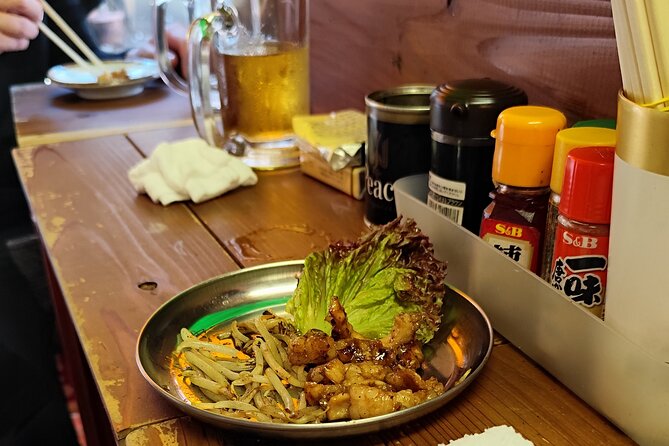
Colorful street art is another highlight. The tour includes graffiti artist work in the backstreets, giving you a reason to look above shopfronts and beyond the main road. The art adds energy to streets that might otherwise seem easy to pass by.
I like that the artwork is presented alongside the area’s history. It becomes part of a wider story about expression, survival, and creativity. You are not simply collecting photographs. You are seeing how people use an urban neighborhood as a place to make a mark.
The backstreets also show a less packaged side of Osaka. You might notice small signs, older facades, narrow lanes, or the daily routines of local businesses. Since the tour supports family-run restaurants during quieter hours, your spending has a direct purpose beyond filling your own stomach.
That community angle is one of the strongest reasons to choose this walk. It connects eating with place. You are helping keep smaller businesses part of the city’s working life rather than directing every yen toward large, famous venues.
What the food stops add to the experience
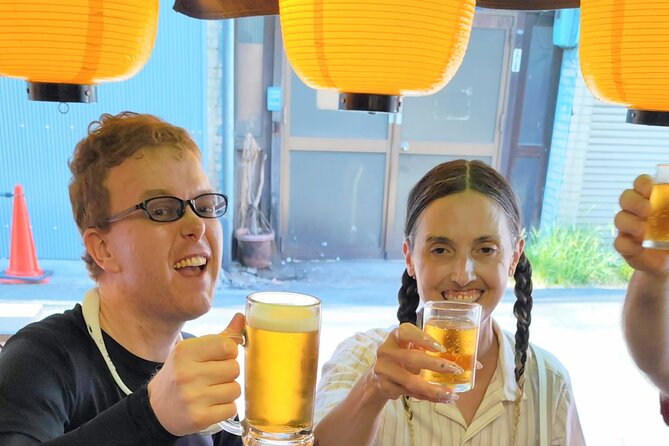
The exact dishes are not specified in advance, so you should book this for the setting and format rather than for one particular food. At hand-picked neighborhood restaurants, you will receive a local dish and a drink at each stop.
That wording suggests a progressive meal rather than one large sit-down dinner. You can expect the stops to break up the walk, give you time to rest, and let you experience more than one local dining setting. The drink at each stop is also useful because it makes the meal feel social instead of rushed.
The lack of a published menu has two sides. It keeps the experience tied to local conditions and the guide’s choices, which can feel more genuine than a fixed tourist menu. On the other hand, you cannot choose the tour based on a named specialty, and you should not expect a detailed menu preview from the information provided.
If you have dietary restrictions, ask before booking. The available details do not state whether vegetarian, vegan, allergy-friendly, or religious dietary requests can be handled. Most people can participate, but food needs are not spelled out.
The group size helps here. With no more than five people, the guide can keep the stops manageable and answer questions. A large group would change the mood, especially in small neighborhood restaurants. Five people still allows conversation without turning every stop into an organized production.
Is $84.92 a fair price?
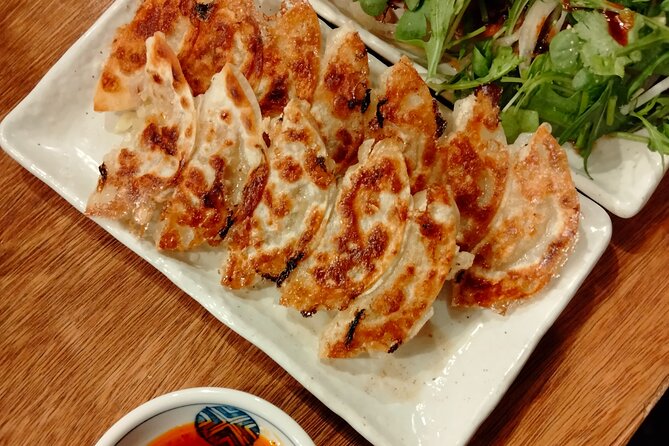
At $84.92 per person, this is priced above a casual Osaka meal and above many simple neighborhood walks. You are paying for more than food. The fee covers the guide’s time, the route, several restaurant visits, a drink with each dish, and the work of creating a small cultural experience around those stops.
The five-person maximum is a real part of the value. A larger food tour can lower the cost, but it often means less contact with the guide and more difficulty fitting into local restaurants. Here, the small group supports a quieter, more flexible format.
The price makes the most sense if you would otherwise spend money on dinner and a separate neighborhood tour. You are combining both into one outing, while also supporting family-run businesses during quieter hours.
It makes less sense if you mainly want the cheapest way to sample Osaka food, or if you need a guaranteed list of famous dishes. The exact menu is not provided, and the experience is built around local atmosphere and history as much as eating.
Group discounts may lower the per-person cost for some bookings. If you are traveling with friends, check the available rate before assuming the listed individual price is final.
Timing, transport, and the finish at Tengachaya
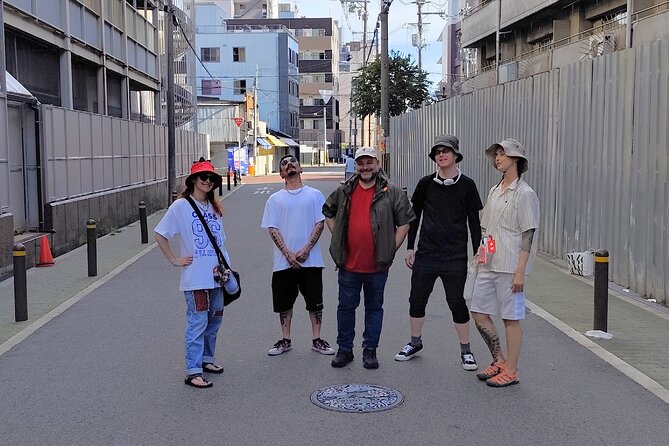
The tour lasts approximately three to four hours, with about two hours devoted to exploring the Nishinari backstreets. You should keep the rest of your day flexible. The timing is long enough to feel substantial, but short enough to fit around other Osaka plans.
The finish at Tengachaya Station is practical. The station connects with Osaka Metro Lines and the Nankai Line, and a taxi stand is in front. You do not have to retrace the entire route to return to central Osaka or continue to your next stop.
That end point also makes the tour easier to combine with a wider day around southern Osaka. You can leave by train or taxi once the experience ends, rather than waiting for a group transfer.
Free cancellation is available if you cancel at least 24 hours before the start time. Changes or cancellations made later are not refunded, and the cut-off follows local Osaka time. That is a fair policy, but keep it in mind when arranging a tightly packed itinerary.
Who will enjoy this Osaka experience most?
I would choose this tour for you if you want food tied to local life. It is especially suitable for people who enjoy walking, neighborhood stories, street art, and small restaurants more than polished attractions.
It also works well for repeat visitors who have already explored Osaka’s major food areas. Nishinari offers a different kind of city experience, and the guide helps you approach it with context.
The tour is a good fit for:
- Couples or friends who want a small group
- Solo visitors who prefer a guide for a less familiar neighborhood
- Food lovers who enjoy trying local dishes without needing a fixed menu
- Visitors interested in urban history and social change
- People who want to support family-run businesses
It may not suit you if you dislike walking, prefer famous landmarks, need a fully published menu, or want a quiet fine-dining evening. Most people can participate, and service animals are allowed, but the information does not describe the route’s exact walking distance or surfaces.
The tour has a perfect five rating from 13 submitted ratings and a 100 percent recommendation rate. That is a small sample, so I would treat it as encouraging rather than final proof. The strongest praise centers on the combination of good food, history, graffiti art, and Jaymie’s guiding.
Should you book the Nishinari foodie tour?
Book it if you want Osaka with fewer filters. The best part is not one promised dish. It is the way the meal, the streets, the old route, the artwork, and the neighborhood stories fit together.
At $84.92, you should expect a full experience rather than a bargain food crawl. I think the cost is justified for a group of no more than five, especially if you value local context and personal guiding. Go with curiosity, comfortable shoes, and a willingness to see a side of Osaka that may be rough around the edges.
Skip it if your priority is a famous restaurant list or a guaranteed menu. Choose it if you want food that comes with a sense of place, honest history, and a practical train connection at the end.
FAQ
Where does the Hidden Osaka Foodie Tour begin?
The tour begins at the LAWSON Haginochaya 1 Chome Store, located at 1-chōme-6-20 Haginochaya, Nishinari Ward, Osaka, 557-0004, Japan.
Where does the tour end?
The experience ends at Tengachaya Station in Nishinari Ward. The station has access to Osaka Metro Lines and the Nankai Line, and a taxi stand is located in front.
How long does the tour last?
The tour lasts approximately three to four hours. About two hours are allocated to exploring the Nishinari backstreets.
How many people can join the tour?
The tour has a maximum of five participants.
Does the experience include food and drinks?
Yes. The tour visits selected neighborhood restaurants, where each local dish is served with a drink. Specific dishes are not listed in the available details.
What area does the tour explore?
The walk explores the Kamagasaki area around Nishinari and Dobutsuen-mae, an area also referred to as Deep Osaka.
Does the tour include historical information?
Yes. The guide discusses the area from the Edo Period through modern urbanization and social unrest. The walk also includes part of an old samurai pilgrim route.
Is public transportation available after the tour?
Yes. Tengachaya Station provides access to Osaka Metro Lines and the Nankai Line. There is also a taxi stand in front of the station.
Can I cancel for a full refund?
Yes, if you cancel at least 24 hours before the experience start time. Cancellations or changes made less than 24 hours before the start are not accepted for a refund.
More Dinner Experiences in Japan
- Osaka: Deep Backstreets Walking Tour with Dinner Option
★ 4.9 · 902 reviews - Sumida River: Japanese Traditional Yakatabune Dinner Cruise
★ 4.6 · 779 reviews - Kyoto Gion Cultural Walk & Geisha Show with Dining Options
★ 5.0 · 518 reviews - Kyoto Gion Cultural Walk & Geisha Show with Dining Options
★ 5.0 · 483 reviews
More Dining Experiences in Japan
- Tokyo Bar Hopping Tour in Shinjuku (All-You-Can-Drink + Dinner)
★ 5.0 · 3,587 reviews - Tokyo: Sumo Show and Dining Experience
★ 4.8 · 2,742 reviews - Tokyo: Samurai Restaurant Show Ticket with 2 Drinks
★ 4.5 · 1,307 reviews - Deep Backstreet Osaka Tours (Option to add Dinner)
★ 5.0 · 1,290 reviews
Just added in Japan
- Japanese Home Cooking Class & Walk in Todoroki Temple Tokyo★ 5.0 · 88 reviews
- A One-of-a-Kind Sushi Experience in a Special Place of Japan★ 5.0 · 15 reviews
- Tokyo Cute Bento Cooking Class – Make a Kawaii Character Lunchbox★ 5.0 · 126 reviews
- Japan Tokyo Tower Observatory Deck E-Ticket★ 4.0 · 34 reviews
- Catch a Baseball Game in Tokyo with a Local – Tickets Included★ 5.0 · 24 reviews
- JDM Experience with Fast&Furious RX-7 (English speaking Driver)★ 5.0 · 57 reviews
- Tokyo Private Day Tour by Car with English speaking Driver Guide★ 4.0 · 29 reviews
- Japan Classic 10 Day – One Life Adventures★ 5.0 · 129 reviews
Food Tours, compared.
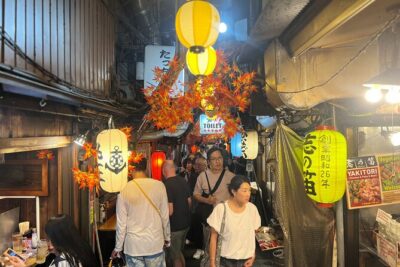
Shinjuku Food Tour (13 Dishes at 4 Local Eateries)
Read our review →
Shinsekai Food Tour with 13-15 Dishes at 5 Eateries
Read our review →
Osaka Food Tour: 13 Dishes at 5 Local Eateries
Read our review →
Shinjuku Food Tour (15 Dishes and 4 Eateries)
Read our review →
Best of Shinjuku: Izakaya Food Tour (4 Stops, 14+ Tastings)
Read our review →
Kyoto Night Foodie Tour in Gion (9+ dishes + 6 Sake tastings)
Read our review →
Hungry Osaka Street Food Tour:15 Tastings & 3 Drinks with a Local
Read our review →
Tokyo Night Foodie Tour in Shinjuku – Seasonal Sushi, Wagyu Beef
Read our review →Browse the lists this tour appears in