
Reviewed · COOKING CLASSES
Japanese Cooking Class with Local Family in Takayama Old Town
A meal can open more doors than a sightseeing tour. This three-hour class brings you into a 200-year-old wooden townhouse on Takayama’s main street, where Hisa and Bob teach Japanese home cooking while sharing stories about family life, local customs, and the changing seasons. You begin with tea and wagashi, cook five seasonal dishes, and eat together in a historic home that was once a neighborhood clinic.
I especially like the small private setting and the chance to learn from people who actually live in Takayama. I also like that the food can be adapted to requests and restrictions when you explain them in advance. The main consideration is the price, $211.37 per person, which is high for a three-hour cooking class, although the home visit, meal, private format, and personal cultural exchange make it more than a standard lesson.
The 10:00 AM session includes lunch, while the 4:30 PM option includes dinner. You will need to decide if the cost fits your budget, but if your aim is to meet local people rather than simply look at Takayama’s old buildings, this is one of the more personal ways to spend an afternoon or evening.
In This Review
- What makes this Takayama cooking class special
- Entering a 200-year-old home on Kamisannomachi
- Tea, wagashi, and the basics of Japanese home cooking
- Cooking in the semi-outdoor kitchen
- Eating what you prepared for lunch or dinner
- Stories about Takayama and seasonal life
- Is $211.37 per person a fair price?
- Timing, meeting point, and practical details
- Who will enjoy this experience most?
- Should you book the Takayama family cooking class?
- FAQ
- Where does the Japanese cooking class take place?
- How long does the experience last?
- What time does the class start?
- What food will I learn to prepare?
- Are food restrictions and preferences accommodated?
- Are drinks included?
- Can I cancel for a full refund?
What makes this Takayama cooking class special
- Cook inside a family townhouse more than 200 years old: The home sits at 93 Kamisannomachi, right in the Old Town, and was once used as a local clinic.
- Learn five seasonal dishes: You help prepare traditional food, dashi, key ingredients, and a dessert of fresh seasonal fruit.
- Meet Hisa and Bob in a private setting: Only your own group participates, giving the class a relaxed, conversational feel.
- Use traditional cooking tools and methods: Activities can include shaving bonito, preparing dashi, shaping rice balls, making sushi rolls, and practicing Japanese omelette techniques.
- Choose lunch or dinner: The morning class starts at 10:00 AM and includes lunch. The evening class starts at 4:30 PM and includes dinner.
- Connect cooking with Takayama’s past: You hear about the house, local businesses, seasonal living in the Hida mountains, and the family’s long connection to the neighborhood.
Entering a 200-year-old home on Kamisannomachi
The meeting point is 93 Kamisannomachi, on the main street of Takayama’s Old Town. That location matters. You do not need a long transfer to reach the class, and the activity begins in the same historic district that many people come to see.
From the street, you enter a private family home that is normally closed to the public. The townhouse has been in Hisa’s family for generations and was once a local clinic. One especially striking detail is that many babies in the neighborhood were born there. That gives the building a human story, not just an old facade.
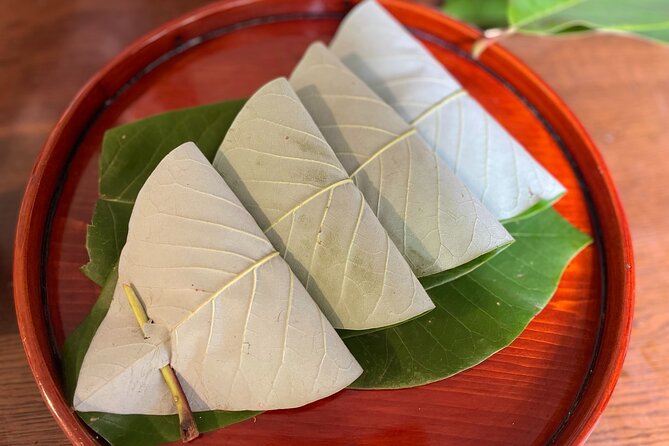
Hisa and Bob begin by welcoming you with Japanese tea and wagashi, traditional sweets served in small, delicate portions. This opening is gentle rather than rushed. You have time to settle in, look around, and hear how the class will work.
The house itself is part of the experience. You may see the former clinic area and the family’s traditional living spaces while learning how the rooms were used. Several people who took the class found the home as memorable as the food, especially because it offered a look at a type of Japanese residence most visitors only pass from the outside.
You should keep your expectations sensible. This is a lived-in historic house, not a polished museum. Its small oddities and worn details are part of its appeal. If you prefer a modern teaching kitchen with lots of room and restaurant-style presentation, the setting may feel cramped or informal. If you enjoy old buildings with personal stories, it adds real value.
More Cooking Classes in Takayama:
- Sushi Making Tokyo Roll and Authentic Japanese Sushi Class
★ 5.0 · 3,971 reviews - Tokyo: Roll and Authentic Sushi Making Class in Asakusa
★ 4.9 · 1,957 reviews - Ramen Cooking Class at Ramen Factory in Kyoto
★ 5.0 · 1,937 reviews
Tea, wagashi, and the basics of Japanese home cooking
After the welcome, Hisa and Bob introduce the ideas behind Japanese home cooking. The focus is not simply on copying a recipe. You learn how ingredients work together and how food connects with the seasons and daily life in Takayama.
Dashi is an important part of the lesson. You may examine the ingredients, taste the stock, and learn why it forms the base of many Japanese dishes. One particularly hands-on detail is bonito preparation. A class participant described seeing bonito shaved with a household tool and getting a chance to try it. That sort of task is easy to miss in a restaurant but helps explain how traditional flavor begins.
The class can also cover differences among soy sauces, dashi, seasonings, and the order in which ingredients are added. These details are useful if you want to repeat the food at home. The lesson is not presented as a fixed performance. Hisa and Bob have asked participants if they wanted a casual class or a more informative one, then adjusted the amount of explanation to suit.
This flexibility is important for mixed groups. A serious home cook may want technique and ingredient detail, while a family with children may prefer a lighter pace and more hands-on tasks. One family even had the menu changed to gyoza and tempura, which became the children’s favorite part of their Japan trip. You should send food requests and restrictions before arrival rather than hoping to make changes at the last minute.
Cooking in the semi-outdoor kitchen
Once the introduction is finished, you put on a traditional apron and move into the semi-outdoor kitchen. The space is described as peaceful and suited to communal cooking. You work alongside the hosts rather than standing behind a demonstration counter.
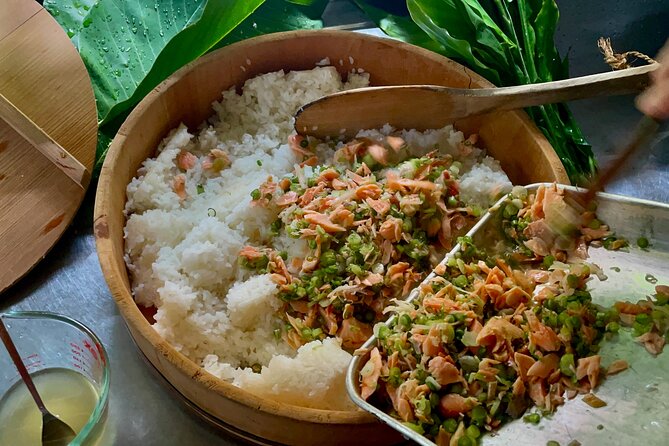
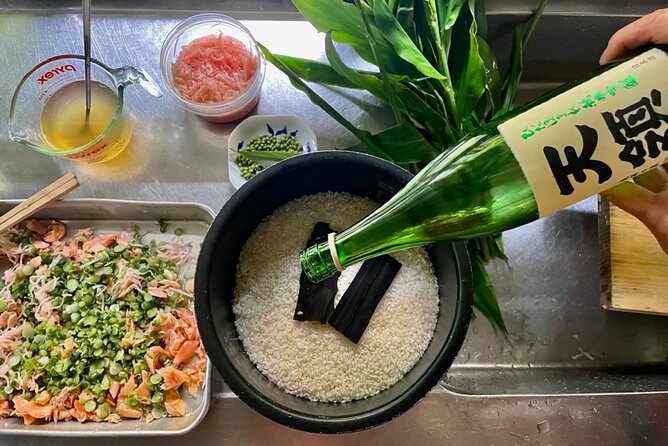
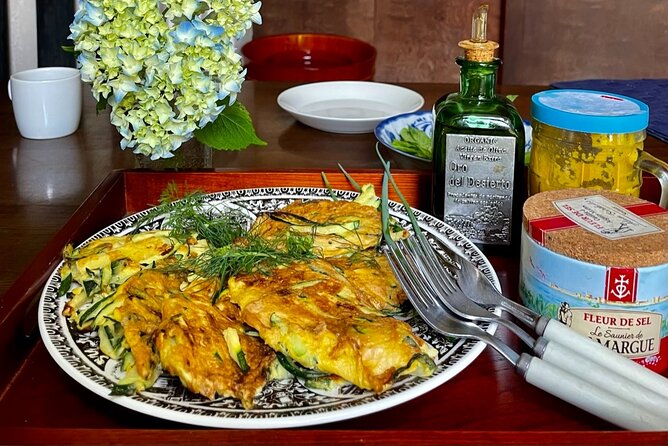
The exact menu changes with the season and your preferences, but the class includes five seasonal dishes. Past meals have included sushi rolls, fresh tofu, sashimi, Hida or Japanese wagyu, fish from northern Japan, rice balls, and Japanese omelette. Those examples should not be treated as a guaranteed menu. The useful point is that the meal can include a broad mix of techniques, from shaping and rolling to simmering, seasoning, and handling fresh ingredients.
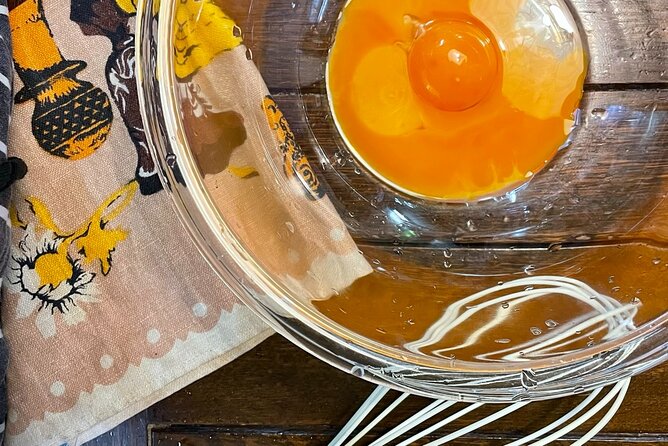
You may get your hands into nearly every stage. That can include making dashi, preparing ingredients, forming rice balls, rolling sushi, and attempting a Japanese omelette. One participant described an egg-flipping attempt that went badly, but the mistake became part of the fun. This is not a precision exam. The hosts encourage you as you work, and the relaxed mood makes it easier to try something unfamiliar.
The class is also a good fit for people who want to understand Japanese tools. Traditional utensils and household equipment become part of the lesson, and you can see how cooking methods differ from those in a typical Western kitchen. Because Hisa and Bob are fluent in English, you can ask questions without relying only on gestures or a recipe sheet.
Still, you should not expect a professional chef’s curriculum. The experience is built around home cooking and conversation. Instructions may feel informal, and the menu can change. That is a strength for anyone seeking personal contact, but a weakness if you want a tightly structured class with exact measurements and formal culinary training.
Eating what you prepared for lunch or dinner
The food is served at the same home after cooking. The 10:00 AM time slot includes lunch, and the 4:30 PM time slot includes dinner. Eating together gives the class a natural finish, because you can taste the dishes while talking about the ingredients and techniques you just used.
Several meals have been described as generous and delicious, with enough food to feel like a full meal rather than a few samples. That matters when you compare the $211.37 price with a short demonstration class. You are paying for food, instruction, a private host-led visit, and time in a historic home.
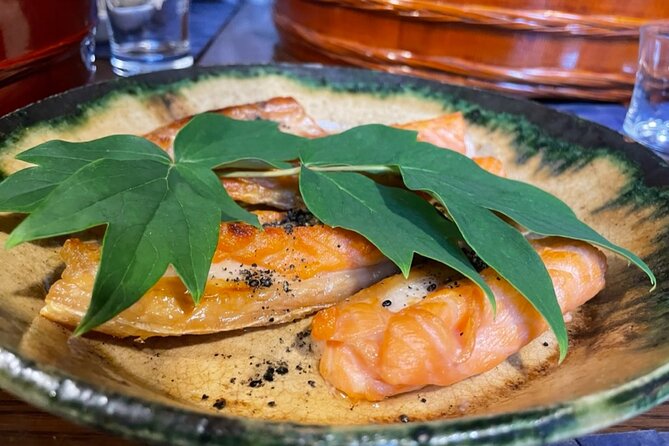
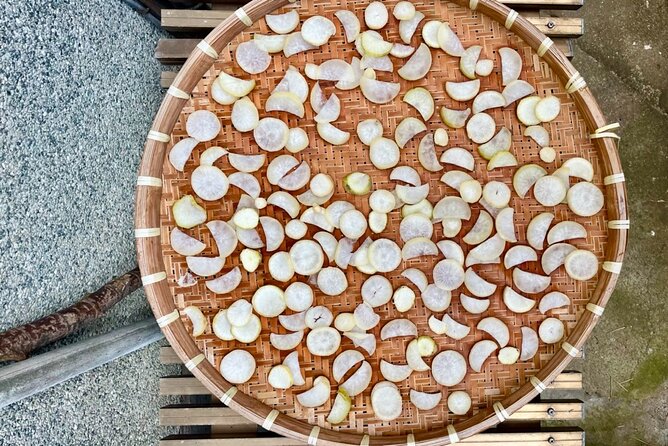
The menu may include local ingredients from the Hida area and seasonal produce. One participant received several fresh local plants, while another praised the quality of the produce used in the meal. A separate experience included fresh tofu, sashimi, wagyu, rice balls, omelette, and cooked fish. Again, these dishes are examples rather than promises, but they show the range of the cooking.
Alcoholic drinks are not included in the stated price. One solo participant was offered local yuzu sake and umeboshi sake, but you should not assume these drinks will be part of every booking. If tasting local alcohol matters to you, ask Hisa and Bob before the class.
The meal is also where the social side becomes clearest. You are not simply eating food prepared by someone else. You sit down with the people who taught you, talk about Takayama, and share the results of your work. For many people, that friendly exchange is the main reason the class feels different from a restaurant meal.
A few more options to weigh up in Takayama
- Kanazawa: World Heritage Shirakawa-go Morning Guided Tour
★ 4.9 · 988 reviews - Kanazawa: World Heritage Shirakawa-go & Two Local Experience
★ 4.9 · 274 reviews - Kanazawa/Takayama: Shirakawago & Takayama Private Day Tour
★ 4.8 · 172 reviews - Departing from Takayama [Regular sightseeing bus] World Heritage Sites Shirakawago and Gokayama Ainokura
★ 4.5 · 137 reviews
Stories about Takayama and seasonal life
The cultural material is woven into the visit rather than added as a long lecture. Hisa and Bob talk about life in Takayama, the Hida mountains, local food, and the way people live with the seasons. You may also hear how the house was used by earlier generations and how the family’s daily life changed over time.
The old townhouse gives those stories a physical setting. You can connect the discussion of family life with the rooms where that life took place. You can also hear about local shops that supplied ingredients for the class. One participant received a short tour of the local businesses where the food had been purchased, which added a practical link between the meal and the town’s food culture.
This is useful for anyone who wants more than a quick introduction to Japanese customs. You can ask about home meals, cooking habits, local ingredients, and the role of seasonality. The hosts’ warmth is repeatedly praised, but the experience is not only about being entertained. It gives you a chance to see how food, family, work, and place connect in a historic Japanese town.
The class can be especially rewarding for solo visitors. One solo participant booked close to the date and was still welcomed during the New Year period, a time when Japanese families often spend time together and many businesses close. That example also shows why advance booking is wise. The experience is popular, and it averages 49 days of advance booking.
Is $211.37 per person a fair price?
At first glance, $211.37 is a steep price for three hours. You can eat a good meal in Japan for far less, and many cooking classes cost less if they take place in a commercial studio or include a larger group.
The comparison changes when you consider what is included. You receive tea and wagashi, instruction, ingredients, a five-dish seasonal meal, and lunch or dinner depending on the time. You also spend time inside a private 200-year-old home, hear family stories, and cook with the hosts rather than watching a distant demonstration.
The activity is private, so only your group participates. That makes the price easier to justify for a small group that values conversation and personal attention. For a solo visitor or couple on a tight budget, the cost may be harder to accept. I would book it for the cultural access and the meal together, not for the cooking lesson alone.
The perfect comparison is not a low-cost recipe workshop. It is a private cultural visit that happens to be built around cooking. If you would happily pay for a historic-house tour, a local meal, and an English-speaking host, the value improves.
Timing, meeting point, and practical details
The activity lasts about three hours and ends back at the starting point. You can choose the 10:00 AM slot for lunch or the 4:30 PM slot for dinner. The evening option may suit you after exploring Takayama’s markets and Old Town, while the morning class leaves the rest of the day open.
The meeting point is near public transportation, but the provided details do not specify a pickup service. Plan to reach 93 Kamisannomachi independently and allow enough time to find the townhouse on the Old Town’s main street.
A mobile ticket is available. Confirmation is sent within 48 hours of booking, subject to availability. Service animals are allowed. Since this is a private activity, you do not share the class with an unrelated group.
Food restrictions and preferences should be sent with your request. The family is happy to accommodate as much as possible, and the menu has been changed for participants before. Do not wait until the class begins, especially if you have serious allergies or need a strict dietary arrangement.
Free cancellation is available if you cancel at least 24 hours before the local start time. A cancellation made less than 24 hours before the experience is not refunded, and late changes are not accepted.
Who will enjoy this experience most?
I would recommend this class to you if you care about local contact, historic homes, seasonal food, and small-group experiences. It suits solo visitors, couples, families, and small groups who want to take part rather than sit quietly and watch.
It is also a strong choice for home cooks. You can ask about dashi, soy sauce, bonito, seasoning order, traditional tools, and techniques such as sushi rolling or omelette making. Children may enjoy it too, especially if the hosts agree to a menu such as gyoza or tempura.
You may want to skip it if your priority is a low-cost meal, a large professional kitchen, or a fixed menu with guaranteed dishes. The house is historic and personal, not a purpose-built cooking school. The experience depends on conversation and participation, so it is best for people who enjoy a relaxed pace.
Should you book the Takayama family cooking class?
I would book this if you want one meaningful local experience in Takayama and can accept the high price. Hisa and Bob offer more than recipes: you see a private family townhouse, learn about a former clinic, cook seasonal dishes, and share a meal with English-speaking hosts.
Before booking, choose lunch or dinner, send your food requests, and ask about any alcohol or menu details that matter to you. If your budget allows, this is a thoughtful way to move beyond Old Town’s beautiful streets and spend time with people who call the area home.
FAQ
Where does the Japanese cooking class take place?
The class takes place at 93 Kamisannomachi, Takayama, Gifu 506-0846, Japan, on the main street of Takayama’s Old Town.
How long does the experience last?
The cooking class lasts approximately three hours and ends back at the meeting point.
What time does the class start?
You can choose a 10:00 AM start or a 4:30 PM start. The morning option includes lunch, and the evening option includes dinner.
What food will I learn to prepare?
You will prepare five seasonal dishes, with the menu tailored to preferences when possible. Past examples include dashi, sushi rolls, fresh tofu, sashimi, wagyu, rice balls, Japanese omelette, gyoza, and tempura. Specific dishes are not guaranteed.
Are food restrictions and preferences accommodated?
You can send requests about food and restrictions in advance. Hisa and Bob will accommodate them as much as possible, and the menu has been changed for participants before.
Are drinks included?
Coffee and tea are included. Alcoholic beverages are not included in the stated price.
Can I cancel for a full refund?
Yes. You can receive a full refund if you cancel at least 24 hours before the experience’s local start time. Cancellations or changes made less than 24 hours before the start are not accepted for a refund.
Just added in Takayama
- Ninja experience in Takayama – Special Course★ 5.0 · 20 reviews
- Departing from Takayama [Regular sightseeing bus] World Heritage Sites Shirakawago and Gokayama Ainokura★ 4.5 · 137 reviews
- Ninja Experience in Takayama – Trial Course★ 5.0 · 20 reviews
- From Takayama: Alpine Splendor – Shinhotaka Ropeway and Kamikochi★ 5.0 · 91 reviews
- Private group Local Food Tour in Takayama★ 5.0 · 59 reviews
- 1-Day Tour from Takayama: Hida Folk Village, Caves & Ropeway★ 5.0 · 24 reviews
- 1-Day Takayama Tour: Explore Scenic Takayama and Shirakawago★ 5.0 · 113 reviews
- Private Afternoon Cycling Tour in Hida-Furukawa★ 5.0 · 109 reviews
Cooking Classes, compared.
Sushi Making Tokyo Roll and Authentic Japanese Sushi Class
Read our review →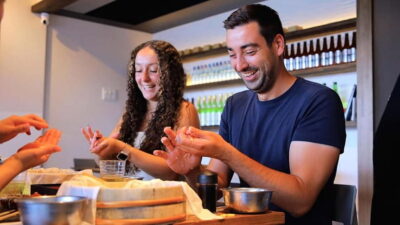
Roll and Authentic Sushi Making Class in Asakusa
Read our review →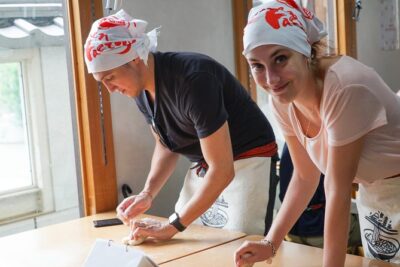
Ramen Cooking Class at Ramen Factory in Kyoto
Read our review →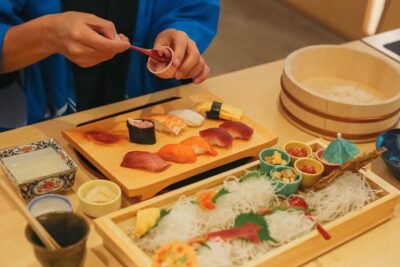
Sushi Making Class in a Happi Coat near a Famous Spot
Read our review →
Sushi Making Osaka Roll and Authentic Japanese Sushi Class
Read our review →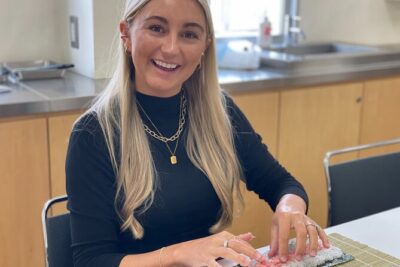
Tokyo Sushi Making Class in Tsukiji with Professional Chef
Read our review →
Ramen & Gyoza Cooking Class in Tokyo with Local Supermarket Visit
Read our review →Browse the lists this tour appears in