
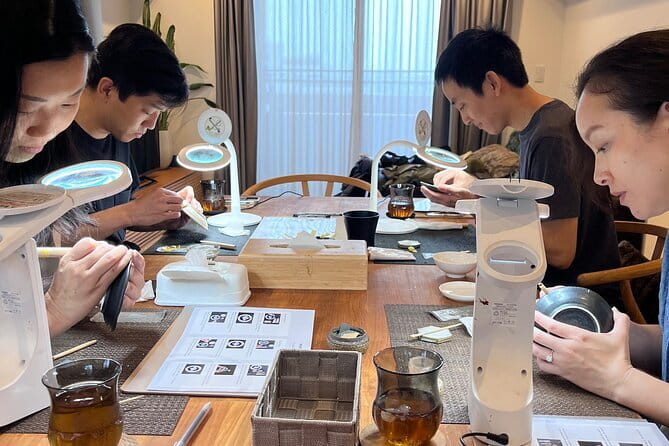
Reviewed · WORKSHOPS
Kintsugi Workshop Class in Shibuya, Tokyo with mon cadeau
Slow down in the middle of Tokyo. This two-hour kintsugi class gives you a quiet break from Shibuya while teaching the Japanese art of repairing broken pottery with gold glue. I like the small group size, limited to six people, and the thoughtful mix of matcha, local sweets, history, and hands-on craft. The main drawback is the firm, non-refundable cancellation policy, so you will want to book only when your plans are solid.
I also like that you choose your own piece from Mon Cadeau’s pottery collection rather than working on a standard class object. Michiko and Yuki provide patient, personal guidance, and the warm setting sounds more like a visit to a welcoming home than a large commercial lesson. At $145.35 per person, this is not a cheap souvenir activity, but the price includes instruction, tea, sweets, pottery, and a finished object to take home.
In This Review
- Key Points About This Shibuya Kintsugi Class
- Why Kintsugi Makes a Good Tokyo Experience
- Arriving at Central Hospital in Shibuya
- Starting With Matcha and Japanese Sweets
- Choosing Your Piece From Mon Cadeau’s Collection
- Learning the Technique Step by Step
- The Value of Personal Instruction From Michiko and Yuki
- What the Kintsugi Meaning Adds
- Is Two Hours Long Enough?
- Does the $145.35 Price Offer Good Value?
- Who Should Book This Workshop?
- Important Booking Details Before You Commit
- Should You Book the Mon Cadeau Kintsugi Class?
- FAQ
- Where does the kintsugi workshop take place?
- How long does the workshop last?
- Where does the workshop end?
- How many people can join the class?
- Do I choose the pottery I will repair?
- Is tea included?
- Can I take my repaired pottery home?
- Is the workshop suitable for beginners?
- Can I cancel or change my booking?
Key Points About This Shibuya Kintsugi Class
- Only up to six people: The limited group keeps the lesson personal and gives you time to ask for help.
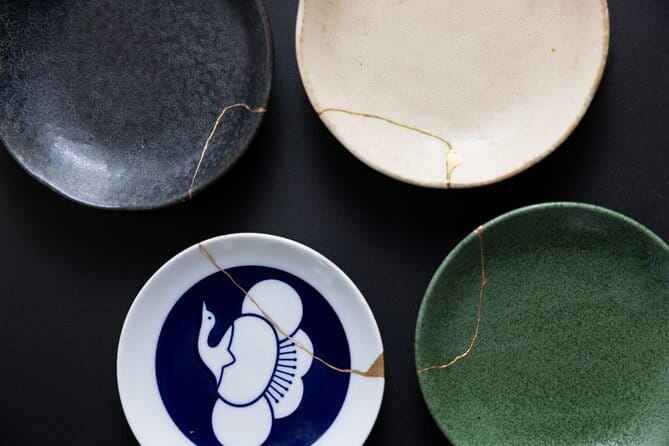
- Choose your own pottery: You select the crockery you will repair from Mon Cadeau’s collection.
- Matcha starts the class: Tea and Japanese sweets create a calm opening before the practical work begins.
- Michiko and Yuki guide each step: Their patient, friendly teaching is a major part of the experience.
- A two-hour creative break: The class fits neatly into a Tokyo day without taking over your entire schedule.
- You take home your work: Your repaired pottery becomes both a keepsake and a reminder of the kintsugi idea.
Why Kintsugi Makes a Good Tokyo Experience
Tokyo can fill every hour with stations, shopping streets, observation decks, and neon. A kintsugi workshop gives you permission to sit down and work slowly for a change.
Kintsugi is the Japanese practice of repairing broken pottery with gold glue. Rather than hiding a crack, the repair becomes part of the object’s appearance. That idea gives the craft more weight than a simple souvenir-making class. You are not just decorating a bowl or cup. You are learning why a repaired object can still be useful and beautiful.
The class also offers a different kind of cultural experience. You are not watching a performance or walking through a display. You handle the material yourself, follow the process, and leave with something connected to your own time in Japan.
That makes this a particularly good choice if you want a quieter activity between major sightseeing stops. It also suits couples, parents with older children, friends, and solo visitors who like making things with their hands.
A few more options to weigh up in Tokyo
- Tokyo Disney Resort – Tokyo Disneyland & Tokyo DisneySea Park Tickets
★ 4.8 · 99,488 reviews - SHIBUYA SKY Ticket
★ 4.7 · 46,509 reviews - JR Whole Japan Rail Pass
★ 4.8 · 29,150 reviews
Arriving at Central Hospital in Shibuya
The meeting point is Central Hospital at 25-1 Shinchō, Shibuya, Tokyo 150-0045. The location is near public transportation, which makes it practical to reach from other parts of Tokyo.
You should allow time to find the exact entrance and arrive ready for a calm start. The activity begins and ends at the same meeting point, so you do not need to arrange a separate return transfer or figure out a new neighborhood at the end.
The address is in Shibuya, but this is not presented as a walking tour of the district. The appeal comes after you arrive, when the pace shifts from city movement to quiet handwork. If you are planning a packed day, place the class where you can reach it without rushing.
Starting With Matcha and Japanese Sweets
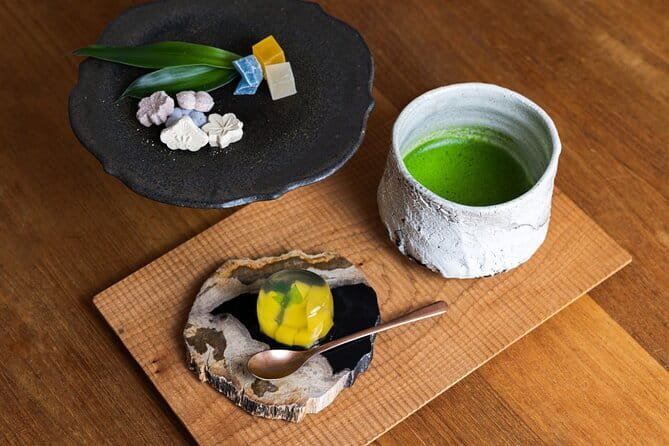
The workshop begins with a matcha tea experience. This is more than a drink before class. It helps set the mood for a craft that rewards patience and careful attention.
You will also receive local Japanese sweets. The food and tea give the opening a hospitable feel, and they help the workshop feel connected to Japanese daily culture rather than reduced to a technical lesson.
I like this approach because it gives you a moment to settle before handling your pottery. Kintsugi is a slow process, so beginning with a quiet tea ritual makes sense. It also gives the instructor time to welcome the group and introduce the meaning behind the art.
The tea and sweets are included in the experience, according to the information provided. If you have food allergies or dietary restrictions, the available details do not specify alternatives, so ask Mon Cadeau before booking.
Choosing Your Piece From Mon Cadeau’s Collection

One of the best features is the chance to choose your own piece of crockery. You are not handed an identical item and told to copy a sample. Instead, you select from Mon Cadeau’s collection before beginning the repair.
That small choice adds personality to the class. A cup, bowl, or other piece will feel more meaningful when you selected it yourself and worked on it from start to finish.
The exact range of pottery is not specified, so you should not book expecting a particular shape or size. The practical advantage is that you can make a choice that suits your taste, while the limitation is that the selection may depend on what is available on the day.
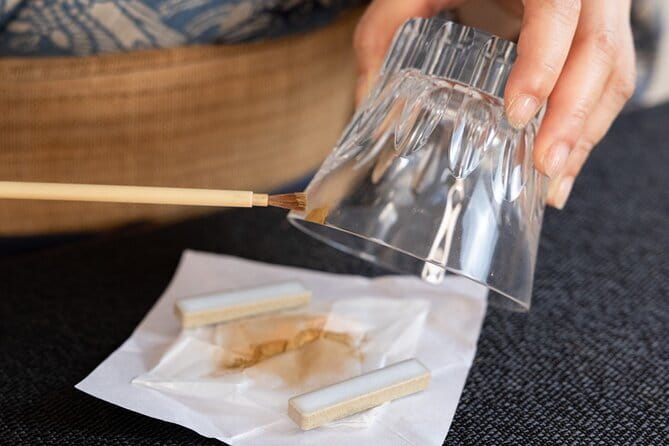
Your instructor then guides you through the restoration process. Step-by-step demonstrations are part of the class, and you receive help as you work rather than simply watching someone else complete the craft.
A completely different kind of day out:
- Mt Fuji and Hakone 1-Day Bus Tour Return by Bullet Train
★ 5.0 · 26,383 reviews - TOKYO SKYTREE® Ticket
★ 4.7 · 25,136 reviews - teamLab Borderless Tickets: MORI Building DIGITAL ART MUSEUM
★ 4.7 · 24,126 reviews - teamLab Planets TOKYO Ticket
★ 4.7 · 21,663 reviews
Learning the Technique Step by Step
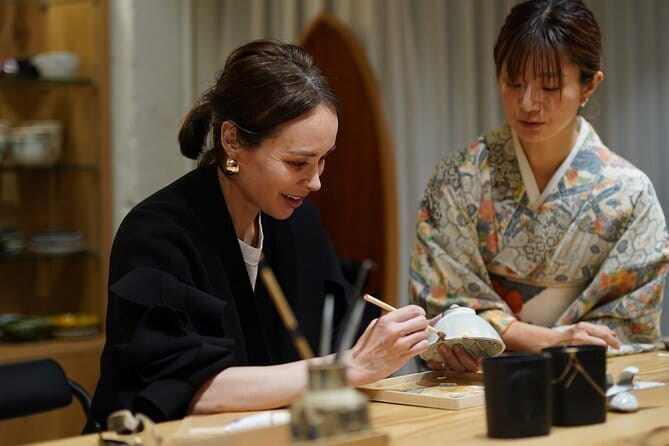
The class is designed for hands-on participation. You learn the basic process through demonstrations, then apply the technique to your chosen pottery.
That format is useful for beginners. You do not need to arrive with prior craft experience, and the class is not built around a lecture alone. The instructor shows you what to do, then provides personal guidance as you move through the repair.
The available information describes the method as modern kintsugi using gold glue. You should understand this as a contemporary workshop technique, not assume that it follows every traditional Japanese repair method in full. The class focuses on learning the art and its meaning in an accessible, practical way.
The pace matters. With a maximum of six people, Michiko and Yuki can watch your progress and offer assistance when needed. One participant specifically appreciated that the instructors explained the process clearly and helped everyone succeed. That is reassuring if your first attempt at careful pottery repair feels intimidating.
The Value of Personal Instruction From Michiko and Yuki
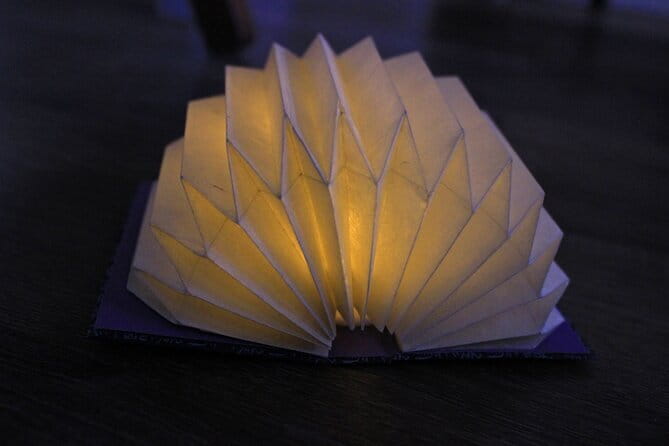
The instructors are frequently praised for their warmth, patience, and attention. Michiko is identified as a host and instructor, while Michiko and Yuki are both described as helping with each step.
This is important because craft classes can vary widely. A large group may leave you waiting for help or trying to copy instructions from across the room. Here, the small format should give you more direct contact with the instructors.
The teaching style also seems suited to people who want a friendly introduction rather than a formal art course. You receive guidance as needed, but the experience is still your own. The aim is not to produce identical pottery. It is to help you create a successful repair and understand what the practice represents.
The hospitality is part of the appeal. The setting has been described as welcoming and home-like, with tea, sweets, and friendly conversation. That makes the activity feel personal, though visitors who prefer a sleek studio or a large cultural institution may find the atmosphere more intimate than expected.
What the Kintsugi Meaning Adds
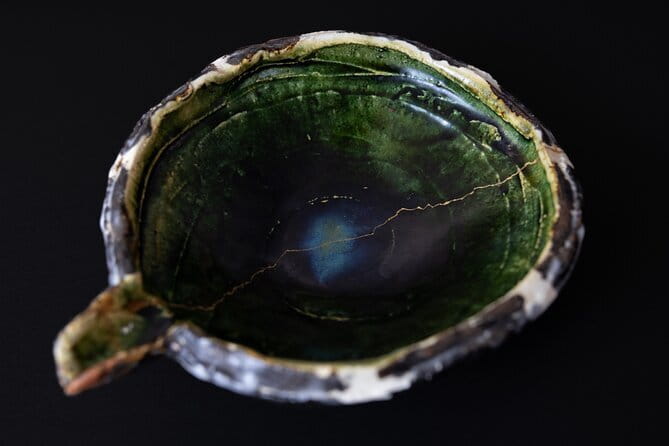
The practical craft is only half the reason to book this class. Kintsugi also carries a way of thinking about damage, repair, and beauty.
Instead of treating a crack as something that ruins an object, the repair highlights it. The gold line records what happened and gives the piece a new appearance. You can appreciate that idea without turning the workshop into a heavy philosophical lesson.
This makes the class especially appealing during a first visit to Japan. You leave with a physical object, but also with a clearer sense of one Japanese artistic tradition. The lesson connects craft, hospitality, and an attitude toward imperfection in a way that a quick souvenir purchase cannot.
I would not choose this workshop if you want a fast activity with an instant result. You need to pay attention and follow the process. The reward comes from making the object yourself, not from receiving something finished at the beginning.
Is Two Hours Long Enough?
The stated duration is about two hours. That is enough time for the tea welcome, an introduction to kintsugi, a pottery choice, demonstrations, and hands-on repair.
Two hours also makes this easy to fit into a Tokyo itinerary. You can plan it as a focused break rather than giving up half a day. Still, keep your schedule reasonable around it. The class is meant to feel calm, and arriving late or racing to the next appointment would work against its purpose.
The workshop ends back at the meeting point. Since no separate transportation is included or needed, you can continue your day from the same area after finishing.
The final result is described as a beautifully restored piece of crockery that you take home. The precise drying or handling instructions are not provided, so ask the instructor how best to pack and transport your item before leaving Japan.
Does the $145.35 Price Offer Good Value?
At $145.35 per person, this workshop costs more than a casual craft activity or an ordinary pottery purchase. The value depends on what you want from the experience.
You are paying for a private group setting, instruction, your selected pottery, matcha, Japanese sweets, cultural context, and the time to complete your own repair. You also take home a handmade object that carries a personal memory of Tokyo.
The price makes more sense if you value direct teaching and a small class. A group of six or fewer means you are not paying for a crowded demonstration where personal help is limited. The hospitality also matters. Tea and sweets are not the main reason to book, but they help create a more complete cultural experience.
I would consider the cost worthwhile for a special occasion, a creative date, or a meaningful family activity. If your budget is tight, you may find it expensive for two hours. In that case, book it only if the hands-on lesson and personal keepsake matter more to you than adding another low-cost attraction to your itinerary.
Who Should Book This Workshop?
This class is a strong fit for anyone interested in Japanese culture, crafts, design, or mindful activities. It also suits people who have already seen Tokyo’s major sights and want an experience with a slower pace.
Couples can work side by side, and a parent with a child can share a practical activity rather than simply moving from one attraction to another. The private format is useful for small families and friends who want the session to feel personal.
Solo participants should also feel comfortable booking. The group is small, and the instructors provide direct attention. You do not need to bring a companion to get value from the class.
Most people can participate, and service animals are allowed. The available details do not describe specific wheelchair access, pottery hazards, or other mobility arrangements, so contact Mon Cadeau directly if you need particular accommodations.
Important Booking Details Before You Commit
Confirmation is provided at the time of booking, and the experience uses a mobile ticket. Keep the ticket easy to access on your phone when you reach Central Hospital.
This is a private activity for your group, with a maximum of six people. The small limit is one reason to reserve ahead. It is booked, on average, 23 days in advance, so leaving it until the last day of your Tokyo stay may not work.
The cancellation rule is strict. The experience is non-refundable and cannot be changed for any reason. If the minimum number needed to run the class is not reached and Mon Cadeau cancels, you are offered another date or experience, or a full refund.
That policy is the main practical drawback. Check your Tokyo dates carefully before paying, especially if your plans may change.
Should You Book the Mon Cadeau Kintsugi Class?
Book it if you want a small, friendly, hands-on cultural experience rather than another fast-paced Tokyo attraction. The combination of matcha, local sweets, personal instruction, and a pottery piece you repair yourself gives the class a clear sense of purpose.
I especially like the limited group size and the warm teaching style associated with Michiko and Yuki. You get time to ask questions, work carefully, and leave with something made during your visit.
Skip it if $145.35 feels too high for a two-hour activity, or if you need flexible cancellation. For everyone else, this is a thoughtful way to spend part of a Tokyo day, with a useful reminder that broken things can be repaired rather than discarded.
FAQ
Where does the kintsugi workshop take place?
The meeting point is Central Hospital, 25-1 Shinchō, Shibuya, Tokyo 150-0045, Japan.
How long does the workshop last?
The activity lasts approximately two hours.
Where does the workshop end?
The class ends back at the meeting point at Central Hospital.
How many people can join the class?
The workshop has a maximum of six people. It is a private activity, so only your group participates.
Do I choose the pottery I will repair?
Yes. You choose your own piece of crockery from Mon Cadeau’s collection.
Is tea included?
Yes. The workshop begins with a matcha tea experience and includes local Japanese sweets.
Can I take my repaired pottery home?
Yes. The class provides a restored piece of crockery for you to take home.
Is the workshop suitable for beginners?
Yes. The instructor gives step-by-step demonstrations and personal guidance as you work. Most people can participate.
Can I cancel or change my booking?
No. The experience is non-refundable and cannot be changed for any reason. If Mon Cadeau cancels because the minimum number of participants is not met, you are offered another date or experience, or a full refund.
Just added in Tokyo
- A One-of-a-Kind Sushi Experience in a Special Place of Japan★ 5.0 · 15 reviews
- Tokyo Cute Bento Cooking Class – Make a Kawaii Character Lunchbox★ 5.0 · 126 reviews
- Japanese Home Cooking Class & Walk in Todoroki Temple Tokyo★ 5.0 · 88 reviews
- Catch a Baseball Game in Tokyo with a Local – Tickets Included★ 5.0 · 24 reviews
- Japan Tokyo Tower Observatory Deck E-Ticket★ 4.0 · 34 reviews
- JDM Experience with Fast&Furious RX-7 (English speaking Driver)★ 5.0 · 57 reviews
- Tokyo Private Day Tour by Car with English speaking Driver Guide★ 4.0 · 29 reviews
- Japan Classic 10 Day – One Life Adventures★ 5.0 · 129 reviews
Workshops, compared.
Sushi Making Tokyo Roll and Authentic Japanese Sushi Class
Read our review →
Gion Make Your Own Chopsticks with Engraving Option
Read our review →
Roll and Authentic Sushi Making Class in Asakusa
Read our review →
Ramen Cooking Class at Ramen Factory in Kyoto
Read our review →
Tokyo Asakusa Chopsticks Workshop: Make Your Own Pair
Read our review →
Ring Making Workshop : Vintage Japanese Coin Ring
Read our review →Browse the lists this tour appears in