
Reviewed · TEMPLES AND SHRINES
Kyoto 6h Private Tour Fushimi Inari, Kiyomizu, Gion & Hidden Gems
Kyoto rewards a well-planned route. This private half-day tour links seven major sights across southern and eastern Kyoto, including Fushimi Inari-taisha, Kiyomizu-dera, Sanjusangendo, the Ninenzaka and Sannenzaka slopes, Yasakanoto, and Gion. I like the efficient mix of famous temples and a quieter stop at Chishaku-in, plus the fact that a private guide handles the route for your group alone. The main catch is pace: you cover a lot in about five and a half hours, and transportation and temple entry fees are extra.
I also like the practical use of taxis and public transit, which cuts down on wasted time between sights. Guides named in past feedback, including Yoshi, Kaori, and Mutsumi, were praised for patience, humor, clear explanations, and adapting to individual interests. You should arrive after lunch, bring yen, and wear comfortable shoes, because this is a walking-heavy afternoon with little room for delay.
In This Review
- Key points at a glance
- Why this route works for a first afternoon in Kyoto
- Fushimi Inari’s orange torii gates
- Chishaku-in, a quieter garden break
- Sanjusangendo and its thousand Kannon figures
- Kiyomizu-dera and the classic Kyoto view
- Ninenzaka, Sannenzaka, and Kyoto’s old streets
- Yasakanoto, Kyoto’s five-story photo landmark
- Gion at the end of the day
- What the private format is worth
- Guides, pace, and the practical details
- Who should book this Kyoto tour?
- FAQ
- How long does the tour last?
- Where does the tour begin?
- Where does the tour end?
- Is lunch included?
- Are transportation and temple admissions included?
- Can I cancel for a full refund?
- Should you book it?
Key points at a glance
- Seven Kyoto sights in one route: You visit Fushimi Inari, Chishaku-in, Sanjusangendo, Kiyomizu-dera, Ninenzaka and Sannenzaka, Yasakanoto, and Gion.
- A private guide for up to three people: Your group does not share the guide with strangers, which makes questions and small changes easier.
- A useful mix of grand and quiet places: Chishaku-in offers a calmer Japanese garden between the better-known temples.
- Transport is built for speed: The tour uses taxis and public transportation, but you pay those costs separately.
- A strong first-day introduction: The route gives you major religious sites, old streets, views, shopping, and Kyoto’s famous geisha district in one afternoon.
- Plan for extra costs: Temple admissions are about 1,500 yen per person in total, public transit is listed at 150 yen per person, and a taxi costs about 2,500 to 3,000 yen.
Why this route works for a first afternoon in Kyoto
Kyoto has too many temples and shrines for casual planning. That can be wonderful when you have several days, but it becomes a problem when you have one free afternoon and want to see the city’s most important places without spending half your time studying maps.
This tour solves that problem with a private, tightly arranged route. You start at Kyoto Station at noon and finish around Gion, so the afternoon moves eastward rather than sending you back and forth across the city. The guide handles the practical navigation while you focus on the buildings, gardens, streets, and stories.
The route is especially useful for a first visit. Fushimi Inari gives you Kyoto’s most recognizable shrine experience. Sanjusangendo supplies a powerful indoor temple visit. Kiyomizu-dera brings the classic hillside view, while Gion and the old streets provide a more ordinary sense of Kyoto’s traditional neighborhoods.
There is a trade-off. The listed stop times total nearly five hours before you add transit, so the schedule is full. You can ask questions and enjoy each stop, but this is not a slow temple day. The tour also says the itinerary and starting point cannot be changed because so many places are included.
More Private Tours in Kyoto
- Kyoto 6hr Private Tour with Government-Licensed Guide
★ 5.0 · 1,369 reviews - 10 Must-see Spots in Kyoto One Day Private Tour (up to 7 people)
★ 5.0 · 1,108 reviews - Kyoto 4hr Private Tour with Government-Licensed Guide
★ 5.0 · 629 reviews
Fushimi Inari’s orange torii gates
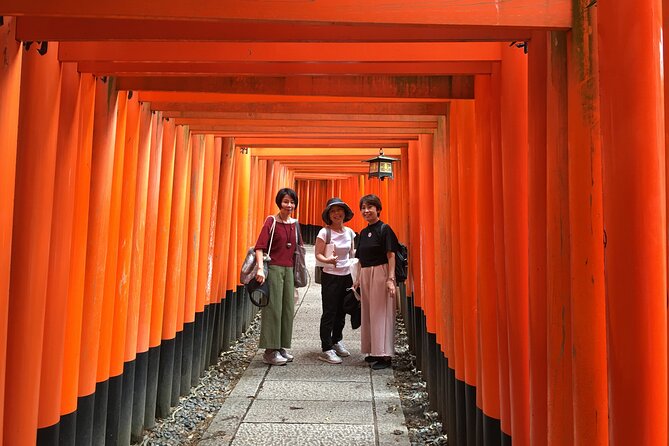
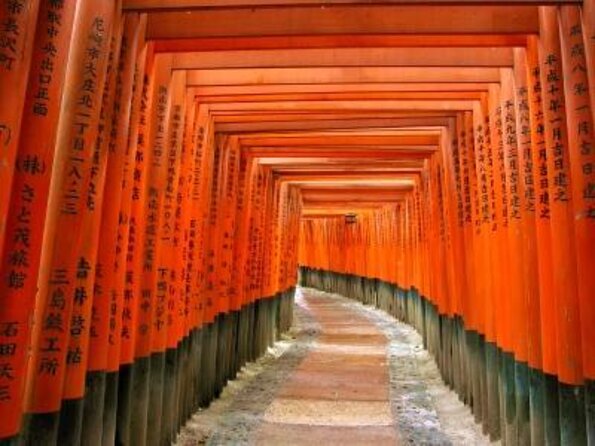
The tour begins at Fushimi Inari-taisha Shrine, with about one hour here and no admission fee. This is one of Kyoto’s most recognizable sights, thanks to its long rows of orange torii gates climbing the wooded hillside.
The famous gates are donated by individuals and businesses, and Fushimi Inari is linked with Inari, the Shinto deity associated with business and prosperity. Fox figures appear around the shrine because foxes are regarded as Inari’s messengers. A guide can help turn a quick photo stop into a clearer look at how the shrine works and why it matters.
One hour is enough to enter the main shrine area and walk through part of the torii route. It is not enough to explore every section of the mountain, so keep your expectations in check. The path can become crowded near the lower gates, and there are steps and slopes. Comfortable footwear matters from the very first stop.
Starting here makes sense for another reason. Fushimi Inari is close to Kyoto Station, so you begin with a major sight before moving toward the Higashiyama area. The shrine is also free, which helps offset some of the entry costs later in the afternoon.
Chishaku-in, a quieter garden break
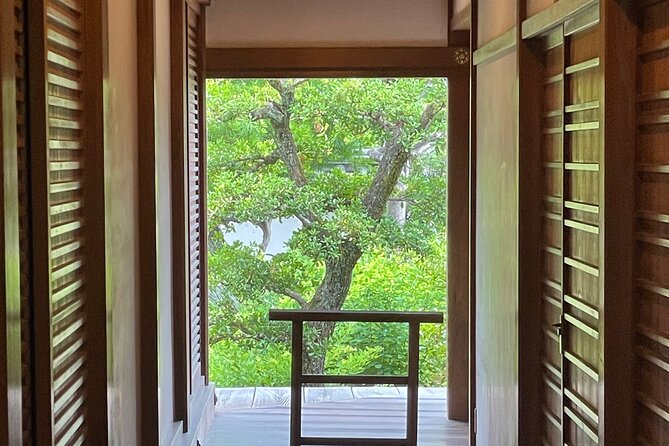
Next comes Chishaku-in, with about 40 minutes allocated and admission not included. This is the less familiar stop on the route, and I like its role in the afternoon. After the strong visual impact of Fushimi Inari, a Japanese garden offers a chance to slow down.
The appeal is not a long list of famous objects. It is the atmosphere: garden views, temple architecture, and a calmer setting where you can sit and take in the scene. The tour description specifically encourages you to relax here, which is welcome on a schedule packed with major attractions.
The 40-minute visit is short, but it gives the guide a chance to show you a side of Kyoto you might skip if you planned only the headline sights. This is also one of the places where a private guide can add value by explaining what to notice in the garden rather than simply pointing you toward a photo spot.
Admission is extra, so keep some yen handy. The exact fee is not given for this temple alone, but total entry fees for the temples on the route are estimated at about 1,500 yen per person.
Sanjusangendo and its thousand Kannon figures
Sanjusangendo receives about an hour and also requires an additional admission fee. The temple is known for its exceptionally long wooden hall and its 1,000 statues of Kannon, the Buddhist goddess of mercy.
This is one of the strongest cultural stops on the route. Fushimi Inari is open-air and highly visual. Sanjusangendo is more focused and contemplative, with the long hall creating a very different experience. The large number of statues gives the interior a sense of repetition and order that is hard to convey in a photograph.
An hour should allow time to see the main hall properly, though the exact visit will depend on walking speed and the guide’s explanations. Photography rules inside Japanese temples can be strict, so be ready to put the camera away and pay attention.
I would not treat Sanjusangendo as filler between two more famous sites. For many people, it will be the most memorable temple interior of the afternoon. It also gives you a look at Kyoto’s religious art that the outdoor shrines and shopping streets cannot provide.
More Temples and Shrines in Kyoto
- [Kyoto & Nara Day Tour] Sagano Scenic Railway & Nara Park & Fushimi Inari Taisha Thousand Torii Gates & Togetsukyo Bridge & Bamboo Grove & Kimono Forest (Departing from Osaka)
★ 4.9 · 10,942 reviews - Kyoto: Fushimi Inari, Kinkakuji, Bamboo Grove 1 Day Bus Tour
★ 4.8 · 4,316 reviews - Kyoto: Tea Ceremony in a Traditional Tea House in Kiyomizu
★ 4.9 · 3,519 reviews - Kyoto Nara Day Trip │ Kiyomizu-dera Temple + Fushimi Inari-taisha Shrine + Nara Park (Departing from Osaka/Kyoto)
★ 4.7 · 3,408 reviews
Kiyomizu-dera and the classic Kyoto view
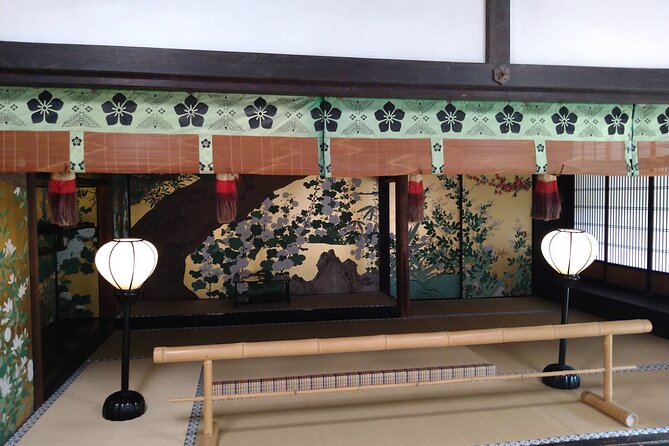
Kiyomizu-dera is allotted one hour and is another paid stop. This UNESCO World Heritage site is famous for its large wooden stage, which projects from the hillside and looks over Kyoto.
The temple complex has more than one photo opportunity. You will see the wooden balcony, traditional buildings, hillside paths, and views across the city. The setting helps explain why Kiyomizu-dera is one of Kyoto’s essential visits, even if the approach can feel busy.
One hour is enough for the central sights, but not for every corner of the complex. The route is also not flat. You will be walking uphill and along stone paths, so shoes with good support are more useful than stylish footwear.
The guide’s presence matters here because Kiyomizu-dera can feel like a procession of buildings if you do not know what you are looking at. A good explanation can connect the temple’s setting, religious purpose, and architectural design. Feedback about Kaori and Mutsumi placed particular emphasis on patience and clear explanations, qualities that suit a stop like this.
Ninenzaka, Sannenzaka, and Kyoto’s old streets
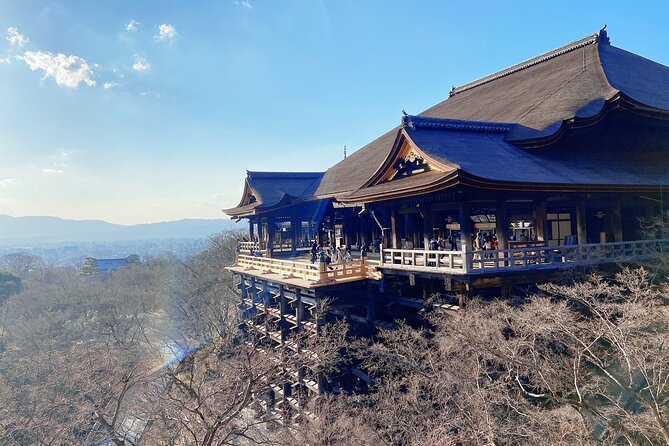
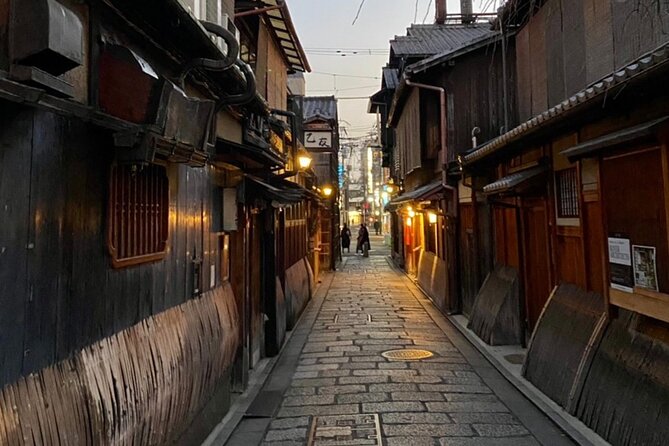
After Kiyomizu-dera, you walk through the Ninenzaka and Sannenzaka slopes for about an hour. These streets are lined with traditional wooden buildings, souvenir shops, and places selling gifts.
This part of the tour changes the mood. You move from temple grounds into an old-style commercial district where Kyoto’s traditional appearance is presented through shops, lanes, and preserved buildings. It is a good place to look for small presents, but it is also a practical section for understanding how historic streets function as part of modern Kyoto.
The slopes can be crowded, and the stone surfaces are uneven in places. Keep your group together, especially if you stop to browse. Since the schedule gives this area a full hour, you should have time for photographs and a little shopping, but you will not have unlimited time to enter every shop.
I like that this stop is not treated as a rushed walk-through. The streets connect Kiyomizu-dera with Gion and help the afternoon feel like a journey through a neighborhood rather than a string of isolated attractions.
Yasakanoto, Kyoto’s five-story photo landmark
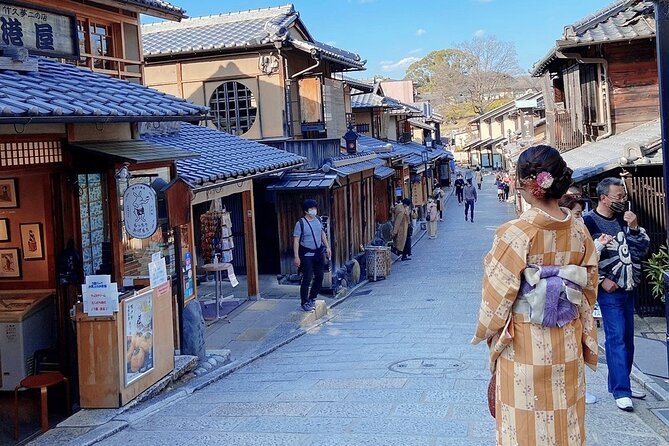
Yasakanoto takes only five minutes, and the visit is from the outside. That makes this the clearest photo stop on the route rather than a full temple visit.
The five-story pagoda is one of the best-known visual markers in the Higashiyama area. Its position among traditional streets makes it especially useful for photographs, and the short stop keeps the schedule moving.
Do not expect an interior visit or a detailed exploration. The value is the view from the street and the chance to capture one of Kyoto’s classic scenes. Five minutes may feel brief, but a longer stop is not necessary if the aim is simply to see the pagoda and take pictures.
Gion at the end of the day
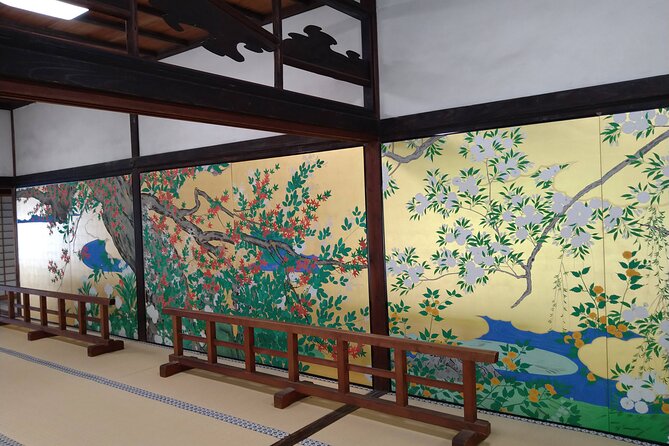
The tour ends with about 20 minutes in Gion, the district associated with Maiko and Geiko and its traditional entertainment houses. Ending here is practical because the tour finishes around Gion rather than returning you to Kyoto Station.
Twenty minutes gives you an introduction, not a full evening in the district. You can look along the streets, take in the traditional architecture, and receive directions for continuing on your own. The guide explains how to reach your next stop after the tour, which is useful if you want dinner or more time in the area.
Please keep your behavior respectful. Gion is a working neighborhood, not a stage set. The tour offers a short orientation, and you may want to remain in the area afterward if you have time.
What the private format is worth
The listed price is $236.48 per group of up to three people. That is not a budget tour for one person, but the calculation looks better when shared by two or three people. You are paying for a private guide, route planning, and help with transport across a busy half-day.
The price does not include lunch, public transportation, taxis, or temple admissions. The stated public transit cost is 150 yen per person. Taxi rides are estimated at about 2,500 to 3,000 yen per taxi, and temple admissions together are estimated at roughly 1,500 yen per person.
For three people, the base cost works out to about $78.83 each before those extras. For a solo visitor, the same price is much harder to justify unless saving planning time is your top concern. Couples and small families get the clearest value, especially on a first day when the city’s layout is unfamiliar.
The private format also helps if your group wants to ask many questions or needs a flexible pace within the fixed route. Still, the itinerary cannot be changed freely, and there is no pickup service. You must meet at the Kyoto Tourist Information Center, Kyo-Navi, on the second floor of the Kyoto Station Building.
Guides, pace, and the practical details
The strongest feedback centers on the guides. Yoshi was praised for being friendly and informative. Kaori was described as patient, humble, and deeply enthusiastic about Kyoto. Mutsumi received praise for humor, historical explanations, and adapting to suggestions. These comments point to the human value of the tour, though the specific guide you receive is not guaranteed.
The tour lasts about five hours and 30 minutes, beginning at 12:00 p.m. Since there is no lunch break, eat before meeting the guide. Bring Japanese yen because admission desks, taxis, public transit, and some shops may not accept other payment methods.
You should also expect plenty of walking, steps, slopes, and old stone streets. The route is near public transportation, and most people can participate, but the schedule will feel demanding if you have difficulty walking for several hours.
The mobile ticket is convenient, and confirmation is sent within 48 hours, subject to availability. Free cancellation is available up to 24 hours before the start time. Changes made inside that window are not accepted, and poor weather can lead to a different date or a full refund.
Who should book this Kyoto tour?
I would choose this tour for a couple or small group visiting Kyoto for the first time, especially if you want the major southern and eastern sights in one afternoon. It is also a good fit if you prefer a human guide to explain religious buildings, gardens, and local customs rather than reading signs on your own.
Families and friends may appreciate the private setting, since the guide can answer questions without a large group slowing things down. The route also suits anyone with limited time who wants a broad introduction before returning to favorite areas later.
I would skip it if you prefer lingering at one temple, shopping without a schedule, or exploring at your own pace. Independent visitors who already know Kyoto may find the fixed itinerary too packed. Solo visitors should also think carefully about the group price.
FAQ
How long does the tour last?
The tour lasts approximately five hours and 30 minutes. It starts at 12:00 p.m.
Where does the tour begin?
You meet at the Kyoto Tourist Information Center, Kyo-Navi, on the second floor of the Kyoto Station Building in Kyoto.
Where does the tour end?
The tour ends around Gion, at 570-177 Gionmachi Minamigawa in Kyoto’s Higashiyama Ward. The guide explains how to reach your next destination.
Is lunch included?
No. Lunch is not included, and there is no time set aside for a meal. You should eat before the tour begins.
Are transportation and temple admissions included?
No. Public transportation costs 150 yen per person, taxi rides cost about 2,500 to 3,000 yen per taxi, and temple admission fees total about 1,500 yen per person.
Can I cancel for a full refund?
Yes. You can cancel at least 24 hours before the experience start time for a full refund. Cancellations or changes made less than 24 hours before the start time are not accepted for a refund. Poor weather may result in a new date or a full refund.
Should you book it?
Book this private Kyoto tour if you want a smart first-day route with strong temple coverage, a quieter garden stop, and a guide focused only on your group. The mix of Fushimi Inari, Sanjusangendo, Kiyomizu-dera, old Higashiyama streets, and Gion gives you a useful picture of Kyoto in one afternoon.
Just budget for the extra yen, eat before noon, and accept the brisk pace. If you do, the $236.48 group price can be fair for two or three people who value clear navigation, cultural context, and more than the usual headline sights.
Just added in Kyoto
- The “Golden Route” and Ancient Japan by DIAMIR Erlebnisreisen – 14-Day Tour★ 2.0 · 2 reviews
- Japan: Castles & Cuisine by G Adventures – 6-Day Kyoto to Osaka Tour★ 4.5 · 4 reviews
- Cycle Japan by Explore! – 13-Day Kyoto to Tokyo Tour★ 4.7 · 12 reviews
- Cycle Japan by Intrepid Travel – 11-Day Kyoto to Tokyo Tour★ 4.8 · 2 reviews
- Classic Japan by Intrepid Travel – 11-Day Kyoto to Tokyo Tour★ 4.4 · 14 reviews
- Ancient & Modern Japan 14-Day Tour by Exodus Adventure Travels★ 4.4 · 40 reviews
- 5 Day Cultural Adventure of Kyoto, Nara & Osaka by Tourist Journey★ 2.5 · 2 reviews
- 12 Days Kinosaki Onsen Escape: A Journey Through Japan’s Timeless Towns by UME Travel★ 4.8 · 5 reviews
Temples and Shrines, compared.
![[Kyoto & Nara Day Tour] Sagano Scenic Railway & Nara Park & Fushimi Inari Taisha Thousand Torii Gates & Togetsukyo Bridge & Bamboo Grove & Kimono Forest (Departing from Osaka)](https://media.japanvisits.com/wp-content/uploads/kyoto-nara-day-tour-sagano-scenic-railway-nara-park-fushimi-inari-taisha-thousand-torii-gates-togetsukyo-bridge-bamboo-grove-kimono-forest-departing-from-osaka-k110001-400x257.jpg)
Kyushu One-Day Tour: Yufuin no Mori Train & Yufuin Town & Nyoirin-ji Temple & Dazaifu & Hell Hot Springs (Departing from Fukuoka)
Read our review →
Fushimi Inari, Kinkakuji, Bamboo Grove 1 Day Bus Tour
Read our review →
Tea Ceremony in a Traditional Tea House in Kiyomizu
Read our review →
Kyoto Nara Day Trip │ Kiyomizu-dera Temple + Fushimi Inari-taisha Shrine + Nara Park (Departing from Osaka/Kyoto)
Read our review →
Browse the lists this tour appears in