Reviewed · KYOTO TOURS
Kyoto Early Bird English Tour: Gion & Higashiyama(Private opt)
Kyoto is best before breakfast. This three-hour walk through Gion and Higashiyama gives you a smart route through old wooden streets, shrines, pagodas, and Kiyomizu-dera without making you wrestle with a map. I especially like the early 7 a.m. start, which helps you see the area before the busiest part of the day, and the professional photos taken during the walk. The main consideration is the amount of walking, including uphill streets and stone paving.
I also like the choice between a private outing and a small-group format, depending on the booking option available to you. Guide Ikki Kataoka earns especially warm praise for his clear English, patience, detailed explanations, and skill behind the camera. The Kiyomizu-dera admission fee costs an additional ¥500, and arriving late means you cannot join or receive a refund.
In This Review
- Key points to know before booking
- Why an early start works in Gion
- Hanamikoji Street and the old wooden town
- Yasui-Konpiragu and the meaning of cutting ties
- Yasaka Pagoda, a landmark above the lanes
- Sannenzaka and Ninenzaka, Kyoto’s stone-paved approach
- One hour at Kiyomizu-dera Temple
- Yasaka Koshin-do adds a splash of color
- Finishing at Yasaka Shrine
- What the English guide adds
- Who gets the best value from this walk
- Should you book the Kyoto Early Bird English Tour?
- FAQ
- How long does the Kyoto Early Bird English Tour last?
- What time does the early tour begin?
- Where does the tour meet?
- Where does the tour end?
- Is the Kiyomizu-dera admission fee included?
- Is the tour private or shared?
- What happens if I arrive late?
- Can I cancel for a full refund?
Key points to know before booking
- A 7 a.m. start makes a real difference: Gion and Higashiyama are far calmer before the main crowds arrive.
- Guide Ikki Kataoka adds personal value: His patient style suits older visitors and anyone who wants careful explanations in English.
- The route covers Kyoto’s essential old-town sights: You visit Gion, Hanamikoji Street, Yasaka Shrine, Yasaka Pagoda, Sannenzaka, Ninenzaka, and Kiyomizu-dera.
- Professional photos are included: You are not limited to quick phone snapshots of your group.
- Kiyomizu-dera is the only listed admission charge: Budget ¥500 per person in addition to the tour price.
- This is a walking tour first: Expect about three hours on foot, with uneven stone streets and some uphill sections.
Why an early start works in Gion

The tour begins at the Statue of Izumo-no-Okuni in Kawaramachi, in Kyoto’s Higashiyama Ward. That location puts you close to the Gion area, and the early meeting time is one of the strongest reasons to choose this experience instead of a later sightseeing walk.
Gion is Kyoto’s best-known geisha district, with traditional wooden machiya houses, teahouses, and carefully preserved streets. The attraction is not one single monument. It is the feeling of moving through an older version of Kyoto, where the scale, building fronts, and narrow lanes create a strong sense of place.
I like having a guide here because Gion can look simple at first glance. A guide gives meaning to the buildings and points out details you could easily pass without noticing. The route also helps you behave respectfully in an area connected with working geisha and maiko. You are seeing a real district, not a staged theme park.
The early hour has a practical benefit beyond avoiding crowds. It gives you more breathing room for photographs and lets you examine the streets without constantly stopping to make space. The trade-off is obvious: you must be ready at the meeting point early, and a late arrival ends your chance to take part.
A few more options to weigh up in Kyoto
- PERFECT KYOTO 1-Day Bus Tour
★ 5.0 · 13,518 reviews - [Kyoto & Nara Day Tour] Sagano Scenic Railway & Nara Park & Fushimi Inari Taisha Thousand Torii Gates & Togetsukyo Bridge & Bamboo Grove & Kimono Forest (Departing from Osaka)
★ 4.9 · 10,942 reviews - Kyoto: Fushimi Inari, Kinkakuji, Bamboo Grove 1 Day Bus Tour
★ 4.8 · 4,316 reviews
Hanamikoji Street and the old wooden town
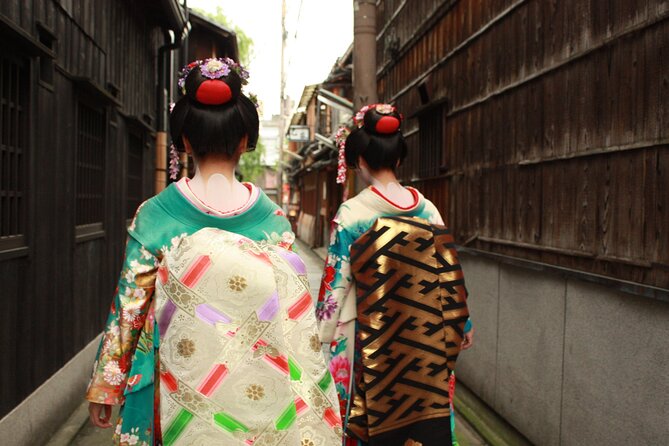
From Gion, the route continues along Hanamikoji Street for about 15 minutes. This is one of the district’s best-known lanes, lined with traditional teahouses and wooden machiya buildings.
You may have a chance to see geisha or maiko here, but that should not be treated as a promise or the main reason to book. The street is valuable even without that possibility. Its historic appearance gives you a clear picture of the architectural character that makes Gion so closely associated with old Kyoto.
The guide’s commentary matters on this stretch. Without context, it is easy to treat the street as a photo stop and move on. With explanation, you can better understand why the teahouse district has such a careful atmosphere and why respectful conduct is important.
The stop is brief, so you should not expect a long visit inside a teahouse or a performance. This is a walking tour through the public streets, not an entertainment package.
Yasui-Konpiragu and the meaning of cutting ties
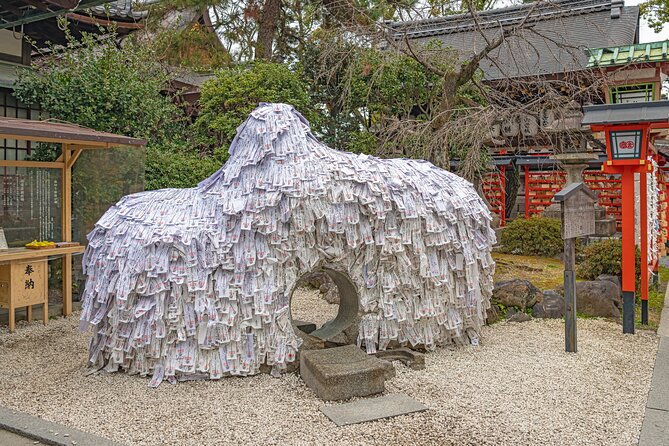
Yasui-Konpiragu offers a change of mood. The shrine is known for prayers to end harmful relationships and break negative ties, while also seeking better connections in the future.
That purpose gives the stop a more personal quality than a standard architectural photo stop. Your guide can help explain the shrine’s role and the customs connected with it. The visit lasts about 15 minutes, which is enough for an introduction but not an extended religious experience.
I appreciate this kind of stop because it shows how shrines remain part of everyday life. Kyoto’s sacred places are not only old buildings. They also reflect hopes, worries, and choices that still matter to people now.
The listing gives no admission charge for Yasui-Konpiragu. As with all the shrine visits on this route, you should follow the guide’s instructions and act quietly and respectfully.
Yasaka Pagoda, a landmark above the lanes
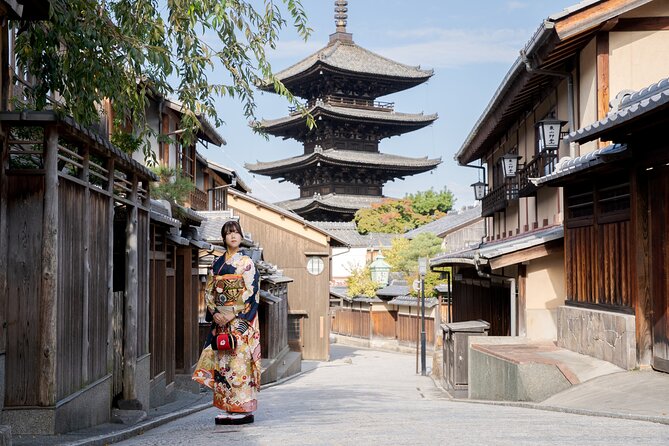
Next comes Yasakanoto, better known as Yasaka Pagoda at Hokanji Temple. The pagoda is described as one of Japan’s oldest wooden structures and a major symbol of Kyoto.
The stop lasts around 15 minutes. That is enough time to take in the pagoda from the surrounding streets and hear the guide’s explanation. The route does not state that you enter the tower, so you should think of this as an exterior landmark visit rather than an interior tour.
This is one of the places where the walking route earns its price. You are not simply being taken from one famous building to another by vehicle. The pagoda appears within the old-town streets, giving you a more connected sense of how the monuments and traditional buildings fit together.
The setting also makes this a useful photography stop. With professional photos included, you can ask the guide to capture more than a quick solo picture. The exact number of photos and delivery method are not specified, so I would confirm those details before booking if photography is a major reason for your choice.
A completely different kind of day out:
- Kyoto: Tea Ceremony in a Traditional Tea House in Kiyomizu
★ 4.9 · 3,519 reviews - Kyoto: Gion Make Your Own Chopsticks with Engraving Option
★ 5.0 · 3,465 reviews - Kyoto Nara Day Trip │ Kiyomizu-dera Temple + Fushimi Inari-taisha Shrine + Nara Park (Departing from Osaka/Kyoto)
★ 4.7 · 3,408 reviews - Kyoto Geisha Walking Tour: Gion District & Hidden Gems
★ 4.7 · 3,273 reviews
Sannenzaka and Ninenzaka, Kyoto’s stone-paved approach
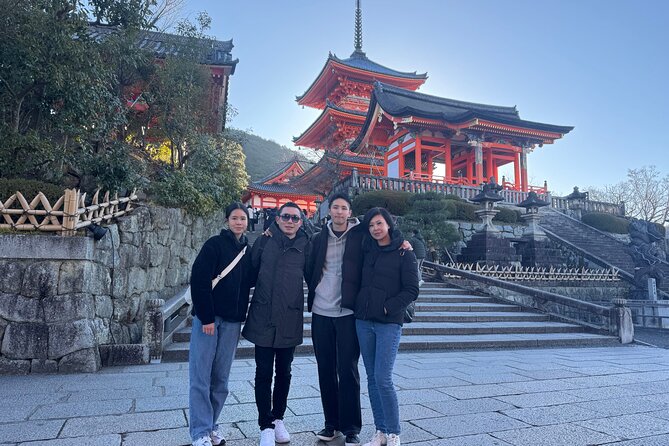
The route then reaches Sannenzaka and Ninenzaka, two well-known stone-paved streets leading through historic Higashiyama. Wooden buildings, restaurants, and souvenir shops line the way.
These streets are attractive, but they are also among the most popular parts of Kyoto. Their narrow paving and traditional fronts make them feel wonderfully old, yet the area can become crowded later in the day. That makes the morning schedule particularly useful.
The stop lasts about 15 minutes, so you will get an introduction rather than a leisurely shopping session. If you find a shop or food stall you want to explore, you may need to return on your own after the tour. The short stop keeps the larger route moving, but it limits time for browsing.
Watch your footing here. The tour information calls for moderate physical fitness and makes clear that this is a walking experience. Stone streets can be tiring, especially when combined with the climb toward Kiyomizu-dera. Comfortable shoes are a sensible choice.
One hour at Kiyomizu-dera Temple
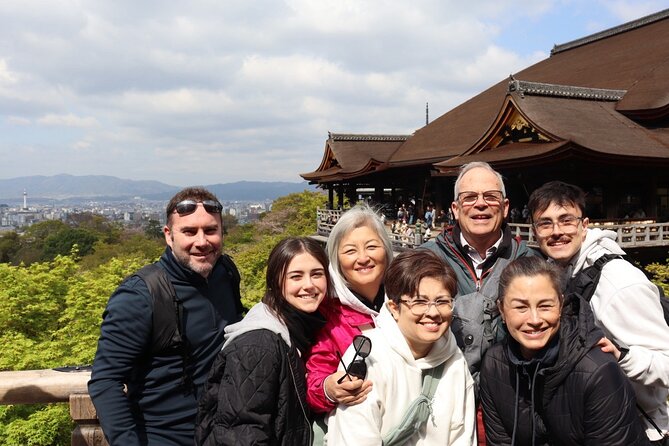
Kiyomizu-dera receives the longest stop, about one hour, and rightly so. It is the central paid attraction on the route and one of Kyoto’s most important sights, with broad views over Kyoto City from its hillside location.
The temple is part of the UNESCO World Heritage content included in the route. Its fame means it can be busy, but an early visit gives you a better chance of enjoying the approach and temple grounds with less pressure than a late morning arrival.
The ¥500 admission fee is not included. At about $64.01 per person for the tour, that extra cost is modest, but you should still add it to your planning. Food and drinks are also not included.
One hour is a useful amount of time for a guided introduction. You can see the main setting, hear the essential background, and take photographs without turning the whole morning into a single temple visit. If you want to study every building or spend time shopping nearby, you will probably need a separate visit.
The hilltop position brings one of the tour’s best rewards, but also its physical challenge. You should expect slopes and continued walking. Anyone with limited stamina may find the full route demanding, even though the pace is described as patient and suitable for people with moderate fitness.
Yasaka Koshin-do adds a splash of color
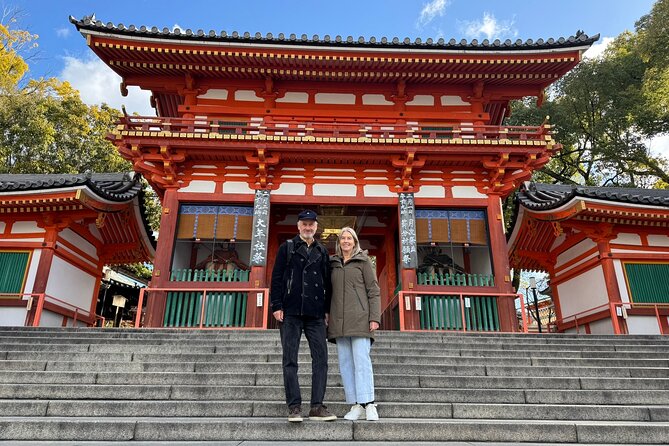
Yasaka Koshin-do is a smaller temple stop with a very different look. Its colorful decorations contrast with the subdued tones often associated with Kyoto’s religious sites.
The stop lasts about 15 minutes. That is enough time to see the unusual decoration and learn about the temple, whose construction date is not known. It is a useful reminder that Higashiyama is not only a procession of major landmarks. Smaller places can provide some of the most memorable visual details.
This stop is also well placed in the route. After the large scale and crowds associated with Kiyomizu-dera, Yasaka Koshin-do offers a shorter, more focused visit. You can pause, look closely, and take a few photographs before continuing.
No admission fee is listed for this stop. As always, avoid treating the temple as a backdrop only. The guide can help you understand what you are seeing and how to behave appropriately.
Finishing at Yasaka Shrine
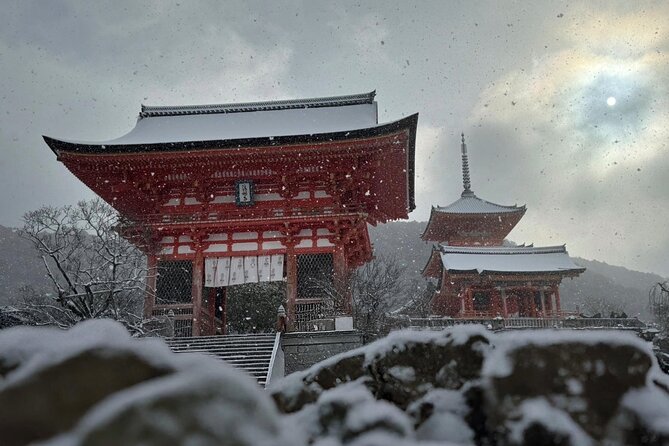
The final destination is Yasaka Shrine, reached after about 30 minutes at the end of the route. It is described as the headquarters of roughly 2,300 related shrines across Japan and is connected with prosperity and protection.
A half-hour gives this large historic shrine more attention than a quick pass-by. You can take in the main grounds, learn why the shrine matters, and finish the walk in a place with a strong connection to Kyoto’s religious life.
Ending here is practical. Yasaka Shrine is a clear final landmark, and the activity returns to the original meeting point. The precise return time can vary with walking pace and stops, so keep your later plans flexible rather than booking a tight reservation immediately afterward.
The route’s final section also brings the morning full circle. You begin in Gion’s historic streets and end at one of the area’s major religious centers, with the smaller temples and traditional lanes connecting the two.
What the English guide adds
The guide is more than a person who keeps the group moving. The value comes from having someone explain what you are looking at, answer questions, and help you understand why the stops matter.
Ikki Kataoka is specifically praised for strong English, patience, and detailed explanations. That patient approach is important if you prefer a slower pace or need extra time with stairs and uneven streets. It also suits older visitors, who may appreciate not being rushed from one stop to the next.
The professional photography is another useful extra. During a walking tour, one person usually ends up missing from every group picture. Having the guide take photographs solves that problem and lets you focus on the surroundings. The available information does not specify the number of images, editing, or delivery process, so ask about those points if you want a clear photography package.
The tour offers group discounts and a mobile ticket. The price is listed at $64.01 per person, though the final amount can vary depending on the selected option or booking details. For that price, you are paying mainly for route planning, English commentary, a private or small-group format, and the added photography rather than for entrance tickets or meals.
Who gets the best value from this walk
I would recommend this experience to you if it is your first time in Kyoto and you want a guided introduction to Gion and Higashiyama in one morning. It gathers many of the city’s most recognizable sights into a route that would take more effort to organize alone.
It is also a good match if you care about context. The guide can connect Gion’s wooden streets, personal shrine prayers, historic pagoda, hillside temple, and major shrine into a more meaningful morning.
The private option is especially useful for families, couples, or small groups that want a more personal pace. The experience information also describes a private activity in which only your group participates, so check the exact option shown at booking if group size is important to you.
I would be more cautious if you dislike early starts, walking uphill, uneven paving, or fixed meeting times. You also should not book this expecting a relaxed food tour, extended shopping time, or a guaranteed encounter with geisha or maiko.
Free cancellation is available if you cancel at least 24 hours before the local start time. Changes or cancellations inside that window are not accepted, and late arrival brings no refund, so build in plenty of time to reach the Statue of Izumo-no-Okuni.
Should you book the Kyoto Early Bird English Tour?
Book it if you want a well-shaped morning that combines Gion’s atmosphere, Higashiyama’s old streets, Kiyomizu-dera, and several smaller religious sites. The early start, patient English guidance from Ikki, and included photographs give this walk more substance than a simple landmark checklist.
Skip it if you want to explore at your own pace, spend hours shopping, or avoid hills and stone streets. For most first-time visitors with moderate fitness, though, the route offers a practical introduction to Kyoto’s most famous historic district, with the quiet morning timing doing much of the hard work.
FAQ
How long does the Kyoto Early Bird English Tour last?
The tour lasts approximately three hours.
What time does the early tour begin?
The tour can begin at 7 a.m., based on the available morning tour information.
Where does the tour meet?
The meeting point is the Statue of Izumo-no-Okuni in Kawaramachi, Higashiyama Ward, Kyoto.
Where does the tour end?
The activity ends back at the original meeting point.
Is the Kiyomizu-dera admission fee included?
No. Admission to Kiyomizu-dera costs ¥500 per person and is paid separately.
Is the tour private or shared?
The experience offers private or small-group options. The activity information also describes a private format in which only your group participates, so check the selected option when booking.
What happens if I arrive late?
If you are late for the meeting time, you cannot join the tour and will not receive a refund.
Can I cancel for a full refund?
Yes. You can cancel at least 24 hours before the experience start time for a full refund. Cancellations or changes made less than 24 hours before the start are not accepted.
Just added in Kyoto
- The “Golden Route” and Ancient Japan by DIAMIR Erlebnisreisen – 14-Day Tour★ 2.0 · 2 reviews
- Japan: Castles & Cuisine by G Adventures – 6-Day Kyoto to Osaka Tour★ 4.5 · 4 reviews
- Cycle Japan by Explore! – 13-Day Kyoto to Tokyo Tour★ 4.7 · 12 reviews
- Cycle Japan by Intrepid Travel – 11-Day Kyoto to Tokyo Tour★ 4.8 · 2 reviews
- Classic Japan by Intrepid Travel – 11-Day Kyoto to Tokyo Tour★ 4.4 · 14 reviews
- Ancient & Modern Japan 14-Day Tour by Exodus Adventure Travels★ 4.4 · 40 reviews
- 5 Day Cultural Adventure of Kyoto, Nara & Osaka by Tourist Journey★ 2.5 · 2 reviews
- 12 Days Kinosaki Onsen Escape: A Journey Through Japan’s Timeless Towns by UME Travel★ 4.8 · 5 reviews
Kyoto Tours, compared.
Fushimi Inari, Kinkakuji, Bamboo Grove 1 Day Bus Tour
Read our review →
Tea Ceremony in a Traditional Tea House in Kiyomizu
Read our review →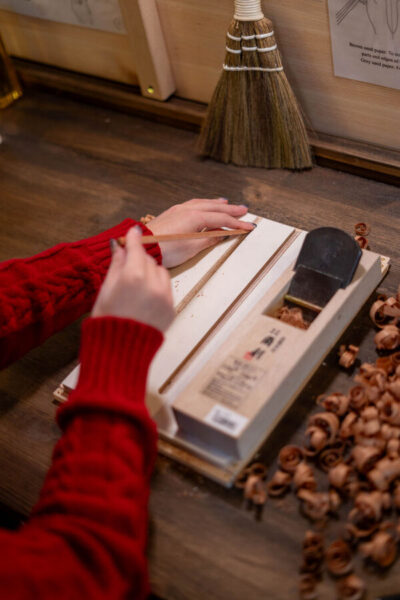
Gion Make Your Own Chopsticks with Engraving Option
Read our review →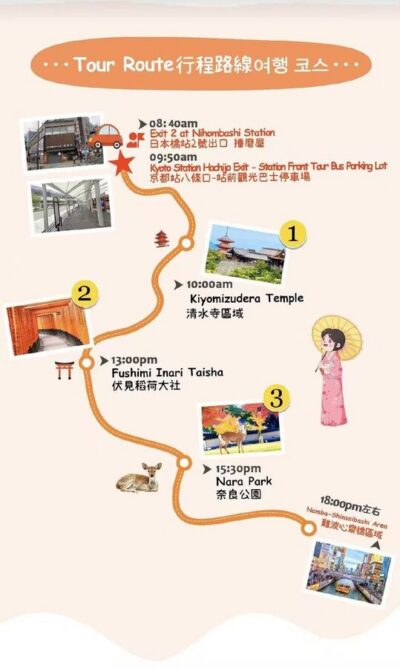
Kyoto Nara Day Trip │ Kiyomizu-dera Temple + Fushimi Inari-taisha Shrine + Nara Park (Departing from Osaka/Kyoto)
Read our review →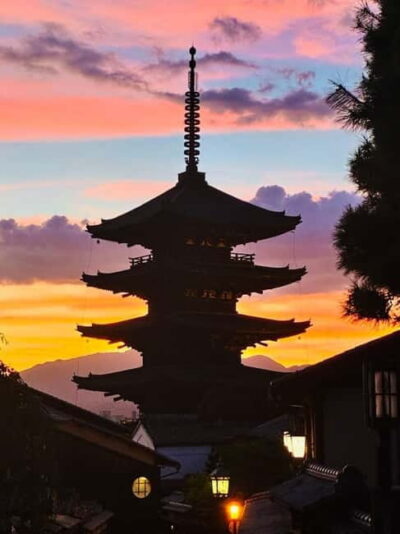
Kyoto Geisha Walking Tour: Gion District & Hidden Gems
Read our review →