
Reviewed · KIMONO AND CULTURAL DRESS
Kyoto Geisha District Walking Tour in Gion
Gion reveals itself one quiet lane at a time. This two-hour walk gives you a useful introduction to Kyoto’s best-known geisha district, pairing narrow streets, shrines, waterways, and traditional wooden houses with explanations of geiko and maiko customs. I like the small group, capped at 10 people, and the chance to ask questions as you go. I also like that the route includes both famous sights and calmer back streets, rather than treating Gion as one large photo stop.
The guides are a major part of the experience. Guests have praised Takuma, Yuko, Yoko, Yuji, Tom, Hide, Eric, and others for being friendly, informative, and easy to talk with. One important consideration is consistency: a small number of people found their guide disorganized, difficult to understand, or too focused on taking photos instead of explaining the area. You should book this as a guided introduction, not as a guaranteed geisha sighting.
In This Review
- Key points to know before you book
- Why a two-hour walk works well in Gion
- Yasaka Shrine: the tour’s strongest historical start
- Gion’s narrow lanes and the realities of geiko culture
- Tatsumi Daimyojin and Tatsumi Bridge
- Gion Shirakawa and the canal-side views
- Hanamikoji Street and Gion Corner
- What the guides do well, and where the tour can fall short
- Price, pace, and practical value
- Who should book this Gion walk?
- Should you book the Kyoto Geisha District Walking Tour?
- FAQ
- How long does the Kyoto Geisha District Walking Tour last?
- How much does the tour cost?
- How many people can join the tour?
- Where does the tour begin and end?
- Is admission to the sights included?
- Will I definitely see a geisha or maiko?
- What should I wear?
- Can I cancel for a full refund?
Key points to know before you book
- The group is limited to 10 people: That makes it easier to hear the guide and ask questions than on a large coach-style outing.
- Yasaka Shrine anchors the walk: You get about 40 minutes to learn about one of Gion’s most important Shinto sites.
- The route includes Gion Shirakawa and Tatsumi Bridge: These are among the most photogenic parts of the district, with canals, wooden houses, and traditional streets.
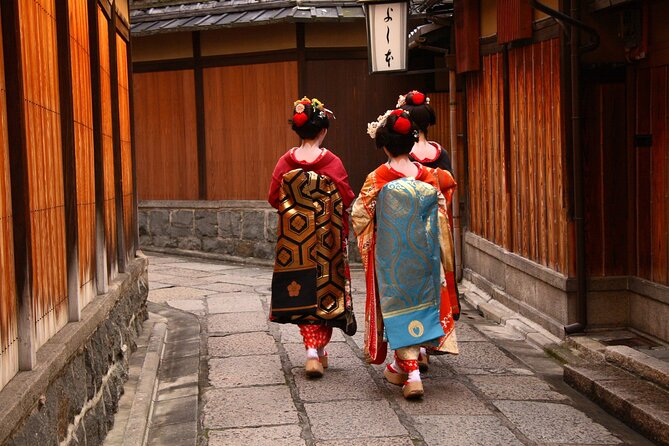
- Geiko and maiko sightings are possible, never promised: Some people have seen several during evening walks, while others saw none.
- The tour costs $29.85 per person: For two hours of local orientation and cultural explanation, that is a fair price if your guide is strong.
- Comfortable shoes matter: The tour runs in rain or shine and includes stairs, narrow lanes, and steady walking.
Why a two-hour walk works well in Gion
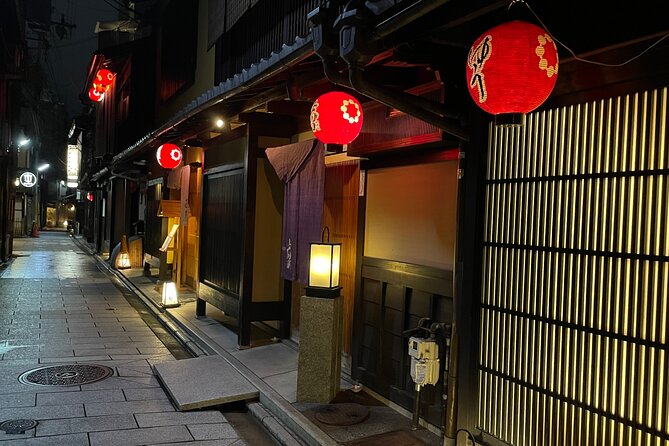
Gion is easy to visit on your own, but it is not always easy to understand. You can walk past a wooden townhouse, a lantern-lit entrance, or a small shrine without knowing what makes it important. A guide gives those details a place in the larger story.
That matters most if this is your first visit to Kyoto. In two hours, you get a clear introduction to the district without committing half a day to a long cultural program. The walk also helps you get your bearings, so you can return later for dinner, photography, or a slower stroll.
The small group is a real advantage. With no more than 10 people, the guide can keep the pace manageable and respond to questions. Several highly praised guides have been described as warm, polite, funny, patient, and passionate about Gion’s customs. That personal contact is likely to be more valuable than a long recorded explanation delivered through headphones.
The experience is not a performance or a formal geisha encounter. It is a walk through a working historic district. If you treat it as a chance to learn where geiko and maiko live, work, and move through Gion, you will have the right expectations.
More Kimono Experiences in Kyoto
- [Kyoto & Nara Day Tour] Sagano Scenic Railway & Nara Park & Fushimi Inari Taisha Thousand Torii Gates & Togetsukyo Bridge & Bamboo Grove & Kimono Forest (Departing from Osaka)
★ 4.9 · 10,942 reviews - Kyoto Geisha Walking Tour: Gion District & Hidden Gems
★ 4.7 · 3,273 reviews - Kyoto: Gion Magical Night Walking Tour with Geisha Trivia
★ 4.9 · 2,393 reviews
Yasaka Shrine: the tour’s strongest historical start
The walk begins at Gion Kōbu Kaburenjō and heads to Yasaka Shrine, with about 40 minutes set aside for the shrine. Admission is free, and the site gives the guide room to explain Shinto beliefs, shrine customs, architecture, and the connection between religious places and everyday life in Kyoto.
Yasaka Shrine is one of the city’s best-known Shinto shrines. Its lanterns and architecture offer easy photo opportunities, but the better reason to spend time here is context. The shrine is not simply a decorative entrance to Gion. It helps explain the religious setting in which the district developed.
I would pay attention to the guide’s explanation rather than rush toward the next street. Several people valued the way their guides connected the shrine, Shinto religion, and the history of geiko culture. That combination gives the tour more substance than a simple walk past old buildings.
The 40-minute stop is also useful for families. Children may not want a long lecture, but the shrine provides visual details to keep the visit moving. Families with children aged 10 and 13 enjoyed the tour, and an 11-year-old was said to have stayed engaged throughout.
Gion’s narrow lanes and the realities of geiko culture
After Yasaka Shrine, the route moves through Gion itself. The district is famous for narrow streets, traditional wooden machiya houses, tea houses, shops, and restaurants. The walk includes one 20-minute Gion stop, then returns to another part of Gion later in the route.
The split between these areas is useful. Gion is not one single postcard corner. Its atmosphere changes as you move from the more familiar streets to quieter lanes and waterways. One particularly appealing feature is the chance to walk through back streets that feel calmer than Kyoto’s main thoroughfares.
This is where the guide’s skill matters most. You want clear explanations of geiko and maiko life, not vague folklore. The strongest feedback praised guides for explaining customs, training, history, and the way the district functions. One person who had lived in Japan for years still learned new information about geiko and Gion, which suggests the subject can reward more than a first-time visitor.
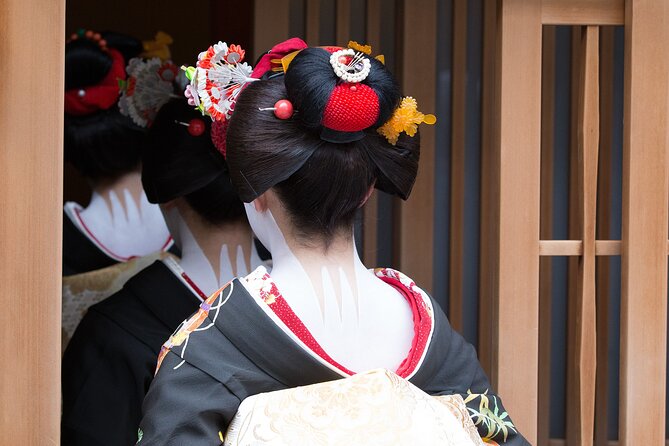
A good guide should also help you behave respectfully. Gion is not an open-air theater. Geiko and maiko may be moving between professional engagements, and the possibility of seeing one does not give anyone permission to block a lane, follow her, or take intrusive photos. The tour can help you understand that distinction.
Some people saw two maiko and one geiko during an evening walk. Others saw three or four. Those moments can be memorable, but timing is luck. Do not choose the tour only for the sighting.
Tatsumi Daimyojin and Tatsumi Bridge
The stop at Tatsumi Daimyojin Shrine is brief, about five minutes. That may sound minor, but small shrines often help you notice how religious sites fit into ordinary city streets. The shrine is associated with protection, good fortune, and safety, especially for travelers and warriors, and its origins reach back to the Heian period.
Because the stop is short, expect a quick explanation rather than a full visit. It works as part of the walking sequence, not as a destination that requires a separate trip.
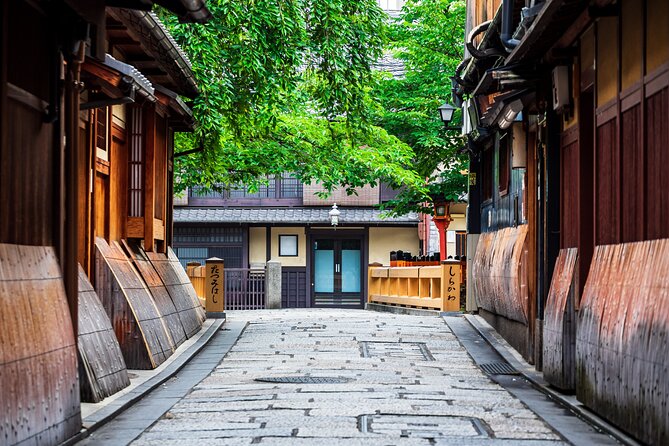
Tatsumi Bridge gets about 10 minutes. This small traditional bridge is surrounded by wooden machiya houses and has the sort of compact setting that makes a good photograph. It can feel like a film scene, especially when the street is quiet, but the important point is that it is an actual piece of Gion rather than a constructed attraction.
The bridge stop may be especially helpful for photographers. You can frame the water, bridge, timber buildings, and traditional details in one place. Still, the area is compact, so a group of 10 can use the space quickly. Listen first, take photos second, and avoid treating the bridge as a private studio.
More Walking Tours in Kyoto
- Kyoto: Gion Geisha District Walking Tour – Stories of Geisha
★ 4.7 · 2,187 reviews - Night Walk in Gion: Kyoto’s Geisha District
★ 4.5 · 2,003 reviews - Kyoto Gion Geisha District Walking Tour – The Stories of Geisha
★ 5.0 · 1,441 reviews - Nishiki Market Brunch Walking Tour (7 Tastings + Brunch)
★ 5.0 · 1,355 reviews
Gion Shirakawa and the canal-side views
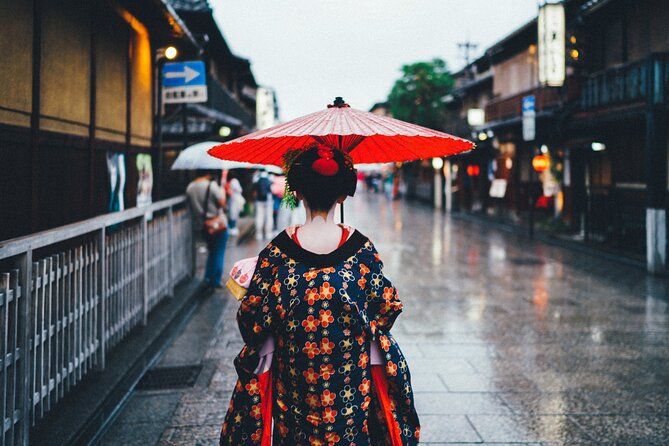
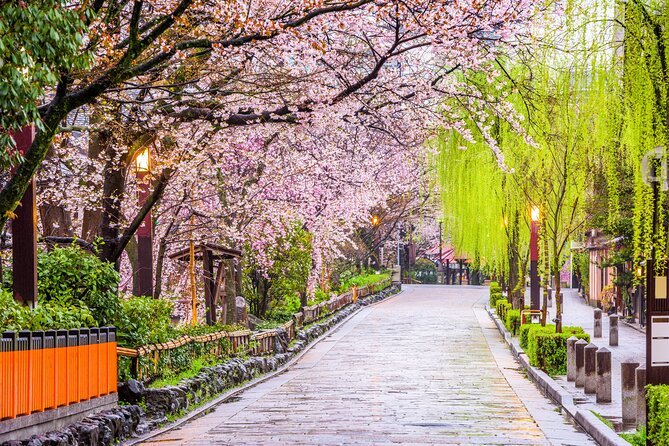
Gion Shirakawa, also called the Shirakawa Canal, is one of the prettiest sections of the route. The waterway is lined with preserved wooden machiya houses and weeping cherry trees. Even outside cherry blossom season, the canal gives this part of Gion a quieter mood than the main streets.
This is one of the tour’s best photo locations. The canal creates depth in your pictures, while the wooden buildings provide the visual character people expect from old Kyoto. The guide’s commentary can also help you see past the scenery and understand why the area has retained such a traditional appearance.
The schedule does not give a separate time for this stop, so the length of the visit may depend on the group and the guide. That is worth knowing if you want a long photography session. This is a guided walk, not a dedicated photo tour.
Night tours may be especially appealing here. Paper lanterns begin to glow as daylight fades, giving the streets a more mysterious feel. Several people enjoyed the evening atmosphere, and one described the tour as a perfect evening outing because the guide knew where to be at the right time.
Hanamikoji Street and Gion Corner
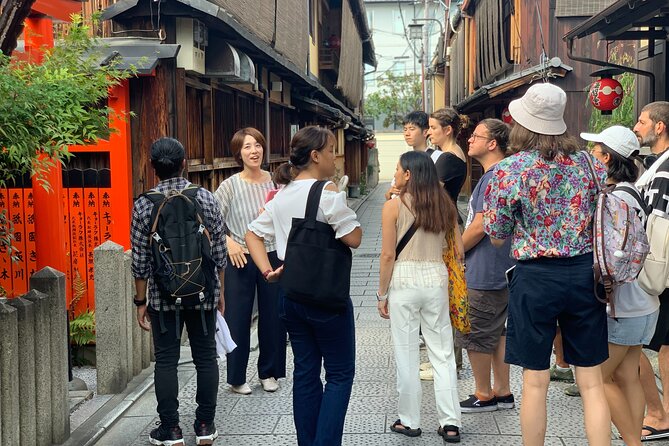
Hanamikoji Street is a main route through Gion, lined with machiya houses, tea houses, shops, and restaurants. The scheduled stop lasts about 10 minutes, so expect a concise overview and time for photographs, not a detailed shopping or dining visit.
This street is a useful contrast with the smaller lanes. It shows the public face of Gion, where visitors can see the district’s traditional design and active businesses in one place. You can also learn how the buildings connect to tea houses and geiko culture.
Gion Corner is included as a cultural reference point. It presents traditional art performances that introduce Kyoto’s cultural heritage. The information provided does not indicate that admission to a performance is included, so you should regard it as a stop or explanation during the walk, not assume you will attend a show.
The route then finishes back at Gion Kōbu Kaburenjō. The guide can help you find your way from there, which is useful if you are not yet comfortable navigating Kyoto at night.
What the guides do well, and where the tour can fall short
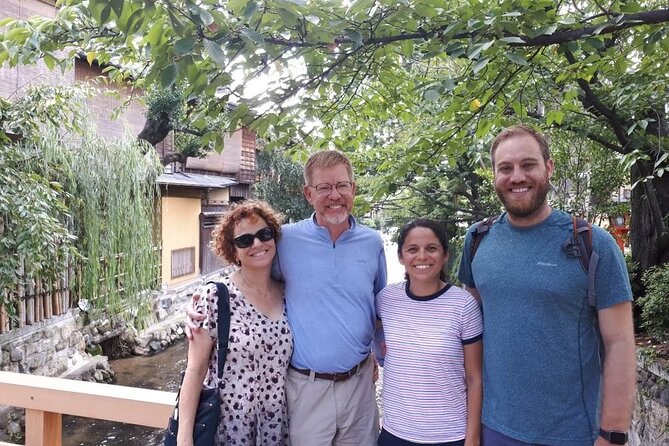
The most praised feature is the human element. Takuma was singled out for being funny, friendly, and well informed, with one person noting that he spoke a little Spanish. Yuko and Yoko were praised for their pleasant and informative style. Yuji was appreciated for warmth and patience, while Tom received praise for explaining shrines, religions, and geisha culture.
Hide was credited with finding a good moment to see geiko leaving one engagement and heading to another. That sort of timing can make an evening memorable, but it also shows why the guide’s local awareness matters.
English ability may vary by guide. Many people found the explanations clear and helpful, but one person said the English was difficult to follow and another felt the information was too basic. A separate complaint described a guide as distracted and disorganized, with too much attention given to group photos and not enough to explanation.
That criticism should not be ignored. The overall score is 4.8 out of 5, with 98 percent recommending the experience, but no tour is perfect for every group. If you care most about detailed cultural interpretation, use the booking notes to check the language offered and arrive ready to ask questions. If your guide spends too much time on photos, politely steer the conversation back toward Gion’s history and customs.
The photo permission form also deserves a quick note. Signing consent for social media use is optional, according to the provider’s clarification. If you do not want your image used, choose no before the walk begins.
Price, pace, and practical value
At $29.85 per person, this is priced as an accessible introduction rather than a luxury cultural program. You are paying for roughly two hours of guiding, local orientation, and interpretation, not transport, meals, drinks, hotel pickup, or drop-off.
I think the value is strongest on a first day in Kyoto or early in your stay. The tour can show you how Gion is arranged and point out places you may later revisit independently. It also saves the time needed to research shrine customs, geiko terminology, and the significance of the district’s streets.
The tour takes place near public transportation, but you must make your own way to Gion Kōbu Kaburenjō at 570-2 Gionmachi Minamigawa. The same location is used at the end. Wear comfortable walking shoes, since the outing continues in rain or shine and is not suitable for people who have difficulty going up and down stairs.
Children must be accompanied by an adult. Most people can participate, but anyone with mobility limits should think carefully about the stairs and walking conditions before booking.
If you have a kimono plan attached to your booking, there are extra timing rules. After changing, you must walk to the Japan Kanji Museum and Library yourself, a journey of about five minutes from the rental shop. After the tour, the kimono must be returned by 5:30 p.m. Those details make the kimono option less flexible than a standard walking booking.
Free cancellation is available up to 24 hours before the start time. Cancellations within 24 hours are not refunded, and changes made inside that window are not accepted.
Who should book this Gion walk?
I would recommend it to first-time Kyoto visitors who want a short cultural orientation without spending a full day indoors. It also suits families, couples, solo visitors, and anyone who prefers asking a guide questions rather than reading signs and guidebooks.
It is a good choice if you want to photograph Yasaka Shrine, Tatsumi Bridge, Gion Shirakawa, and Hanamikoji Street in one outing. It is also useful if geiko culture interests you but you want a grounded explanation tied to real streets and working buildings.
I would be more cautious if you want guaranteed geisha sightings, advanced historical detail, or a very polished lecture. The guide makes or breaks the experience, and a small number of people found the commentary weak or the organization loose.
Should you book the Kyoto Geisha District Walking Tour?
Book it if you want a reasonably priced, small-group introduction to Gion, especially in the evening. The strongest guides make the district come alive by explaining Shinto customs, geiko and maiko traditions, shrine history, and the meaning behind the streets you are walking.
Do not book it solely to see a geisha. Treat that as an unexpected bonus. At $29.85, the tour offers fair value when you want orientation, photos, and cultural context in two hours. If you are willing to stay curious, listen closely, and accept that guide quality can vary, this is a sensible first step into Gion.
FAQ
How long does the Kyoto Geisha District Walking Tour last?
The tour lasts approximately two hours.
How much does the tour cost?
The listed price is $29.85 per person.
How many people can join the tour?
The tour has a maximum of 10 participants.
Where does the tour begin and end?
It begins and ends at Gion Kōbu Kaburenjō, 570-2 Gionmachi Minamigawa, Higashiyama Ward, Kyoto.
Is admission to the sights included?
The listed stops, including Yasaka Shrine, Gion, Tatsumi Daimyojin Shrine, Tatsumi Bridge, and Hanamikoji Street, have no admission charge. The information does not state that a performance at Gion Corner is included.
Will I definitely see a geisha or maiko?
No. A sighting is possible, and some people have seen several, but it is not guaranteed.
What should I wear?
Wear comfortable walking shoes. The tour operates in rain or shine and includes walking and some stairs.
Can I cancel for a full refund?
Yes, if you cancel at least 24 hours before the experience start time. Cancellations within 24 hours are not refunded.
Just added in Kyoto
- The “Golden Route” and Ancient Japan by DIAMIR Erlebnisreisen – 14-Day Tour★ 2.0 · 2 reviews
- Japan: Castles & Cuisine by G Adventures – 6-Day Kyoto to Osaka Tour★ 4.5 · 4 reviews
- Cycle Japan by Explore! – 13-Day Kyoto to Tokyo Tour★ 4.7 · 12 reviews
- Cycle Japan by Intrepid Travel – 11-Day Kyoto to Tokyo Tour★ 4.8 · 2 reviews
- Classic Japan by Intrepid Travel – 11-Day Kyoto to Tokyo Tour★ 4.4 · 14 reviews
- Ancient & Modern Japan 14-Day Tour by Exodus Adventure Travels★ 4.4 · 40 reviews
- 5 Day Cultural Adventure of Kyoto, Nara & Osaka by Tourist Journey★ 2.5 · 2 reviews
- 12 Days Kinosaki Onsen Escape: A Journey Through Japan’s Timeless Towns by UME Travel★ 4.8 · 5 reviews
Kimono and Cultural Dress, compared.
![[Kyoto & Nara Day Tour] Sagano Scenic Railway & Nara Park & Fushimi Inari Taisha Thousand Torii Gates & Togetsukyo Bridge & Bamboo Grove & Kimono Forest (Departing from Osaka)](https://media.japanvisits.com/wp-content/uploads/kyoto-nara-day-tour-sagano-scenic-railway-nara-park-fushimi-inari-taisha-thousand-torii-gates-togetsukyo-bridge-bamboo-grove-kimono-forest-departing-from-osaka-k110001-400x257.jpg)

Tokyo Asakusa Kimono&Yukata Rental at Kimono Miyabi Asakusa Station
Read our review →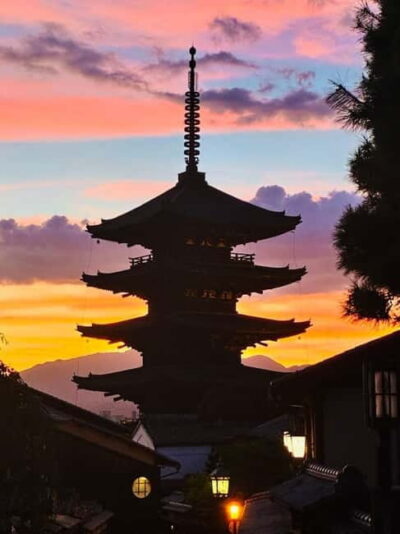
Kyoto Geisha Walking Tour: Gion District & Hidden Gems
Read our review →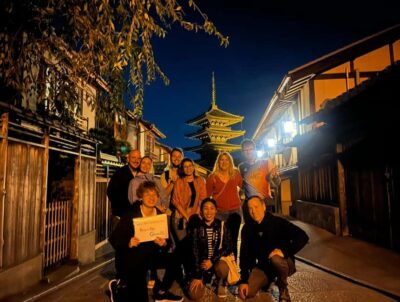
Gion Magical Night Walking Tour with Geisha Trivia
Read our review →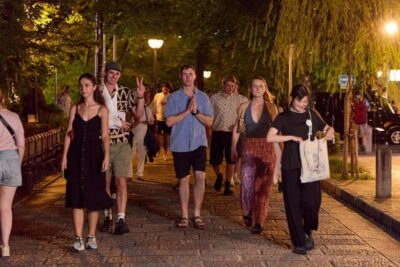
Gion Geisha District Walking Tour – Stories of Geisha
Read our review →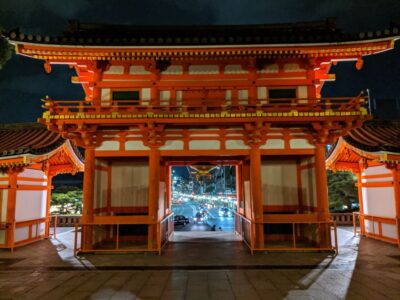
Best of Kyoto: Gion, Geisha, Pagodas & Cobblestones
Read our review →
Kyoto Kimono Rental Experience (Optional Exquisite Hair Styling/Japanese Makeup/Photography) (Ookini Kiyomizu-dera Main Store)
Read our review →Browse the lists this tour appears in