
Reviewed · KIMONO AND CULTURAL DRESS
Kyoto Gion: 2-Hour Geisha Culture & History Walking Tour
Gion rewards a slower walk. This two-hour tour connects geisha culture, old wooden homes, shrines, temples, and local streets in one compact route. I especially like the chance to learn what lies behind a geisha’s training, dress, dance, and daily work, rather than treating the district as a backdrop for photographs.
I also like the route’s mix of famous stops and quieter lanes, plus the local tips on restaurants and rooftop bars. The main drawback is simple: seeing a geisha is never guaranteed, and the two hours include a fair amount of walking with no scheduled drink stop. In Kyoto’s heat, that matters.
In This Review
- Key Points Before You Book
- Why a Guide Helps You Read Gion
- Hanamikoji Street: Gion’s Main Stage
- Sannenzaka and Ninenzaka: Kyoto’s Famous Photo Streets
- Yasaka Shrine: A Short Look at a Thousand Years
- Hokan-ji Temple and the Classic Kyoto View
- Pontocho and the Kamogawa River
- Gion Shirakawa: Wooden Kyoto at Its Most Atmospheric
- Yasui-Konpiragu and Shinto Worship
- What the Two Hours Really Feel Like
- Choosing the Best Time to Walk
- Is $23.88 Good Value?
- Who Will Enjoy This Gion Walk Most?
- Should You Book the Gion Culture Tour?
- FAQ
- How long does the Kyoto Gion walking tour last?
- How much does the tour cost?
- Is seeing a geisha guaranteed?
- Where does the tour begin?
- Where does the tour finish?
- What places does the tour visit?
- How large is the tour group?
- What happens if the weather is poor?
Key Points Before You Book
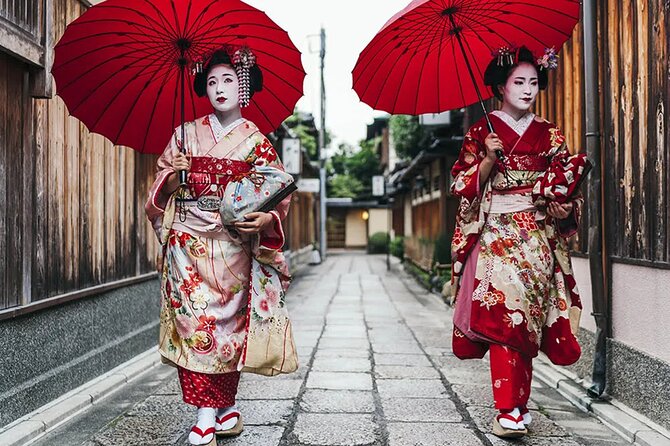
- Hanamikoji Street offers context, not just photos: Learn how maiko and geisha train, dress, and work in Gion.
- The route includes several major sights: Yasaka Shrine, Hokan-ji Temple, Sannenzaka and Ninenzaka, Pontocho, Gion Shirakawa, and Yasui-Konpiragu.
- You may spot a geisha or maiko: The chance improves around the early evening, especially near 5 or 6 p.m., but nobody can promise it.
- The group can reach 15 people: Small enough for a personal feel, though not a private walk.
- The price is modest for a guided introduction: At $23.88 per person, you pay less than many formal cultural activities while covering a broad slice of central Kyoto.
- Expect moderate physical effort: The tour lasts about two hours and takes place on city streets, lanes, and shrine or temple approaches.
Why a Guide Helps You Read Gion
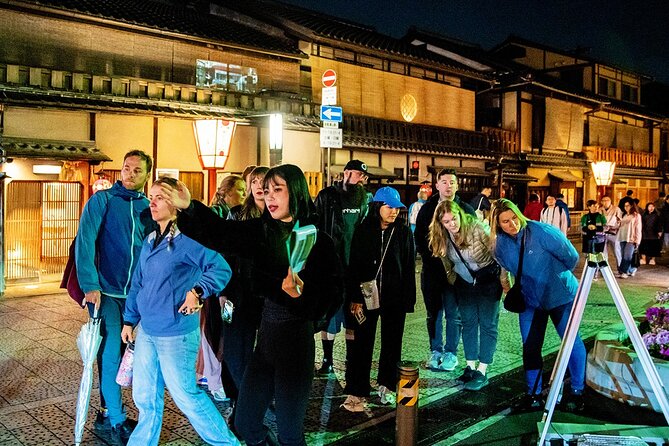
Gion can look easy to understand. You walk past wooden buildings, stone lanes, lanterns, and discreet entrances, then move on. Without context, though, it can be hard to tell which buildings are working teahouses, which streets matter, and why the district developed its particular customs.
A local guide gives the streets a human story. You learn about the long training required of geisha and maiko, the meaning behind their graceful performances, and the work involved in their hairstyles and kimonos. Those details help you see Gion as a living cultural district, not a stage set arranged for visitors.
The guides on this tour have included Soyo, Uta, Dan, Kenta, Ukyo, Alex, Naoya, and Oliver. The strongest praise has focused on warm personalities, clear English, good storytelling, and practical help. Uta has been described as lively and engaging, while Dan and Naoya are noted for explaining local history in an easy, enjoyable way.
Guide quality can vary from one departure to another, as it does on any walking tour. Still, the format gives your guide room to answer questions and point out small details you might pass without noticing.
More Kimono Experiences in Kyoto
- [Kyoto & Nara Day Tour] Sagano Scenic Railway & Nara Park & Fushimi Inari Taisha Thousand Torii Gates & Togetsukyo Bridge & Bamboo Grove & Kimono Forest (Departing from Osaka)
★ 4.9 · 10,942 reviews - Kyoto Geisha Walking Tour: Gion District & Hidden Gems
★ 4.7 · 3,273 reviews - Kyoto: Gion Magical Night Walking Tour with Geisha Trivia
★ 4.9 · 2,393 reviews
Hanamikoji Street: Gion’s Main Stage
The tour begins with Hanamikoji Street, often treated as the heart of the geisha district. This is where you start learning how Gion’s entertainment world works and why the district has such strict customs.
Your guide explains the difference between maiko and geisha, their training, their dances, and the craftsmanship behind their appearance. This is useful preparation for the rest of the walk because it replaces the usual mystery with a clearer picture of work, discipline, and tradition.
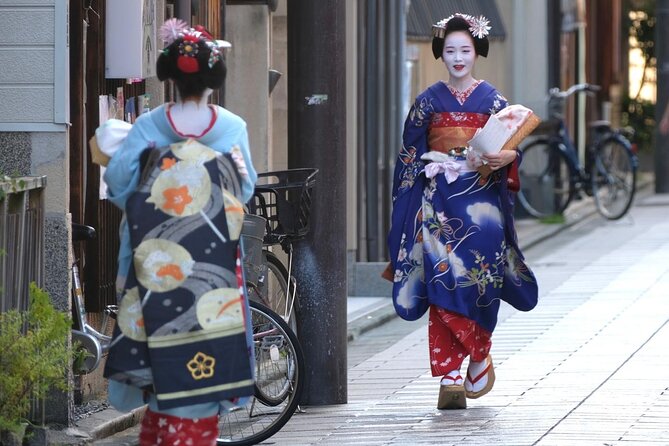
You may see a geisha or maiko heading to an appointment, particularly around the early evening. Several people have been lucky enough to spot one during the walk, but you should not book the tour solely for that possibility. A sighting depends on timing, chance, and respectful distance.
That last point matters. Gion is not an outdoor performance venue. If you see a geisha, the proper approach is to watch quietly and avoid blocking her path. The guide can help you understand what you are seeing without turning the moment into a noisy photo chase.
Sannenzaka and Ninenzaka: Kyoto’s Famous Photo Streets
The walk continues toward Sannenzaka and Ninenzaka, two of Kyoto’s best-known old streets. Their sloping paths and traditional buildings make them excellent places for photographs, though they can also be crowded.
The guide shares the local story that falling on the steps brings death within two years, then explains the truth behind the eerie rumor. This is a good example of the tour’s approach: familiar sights become more interesting when you hear the story attached to them.
These streets can be busy, so do not expect a quiet stroll at every moment. You may need to pause for photographs or keep moving with the group. If you have limited time in Kyoto, the stop is useful because it brings together old-town architecture and one of the city’s most recognizable views.
Yasaka Shrine: A Short Look at a Thousand Years
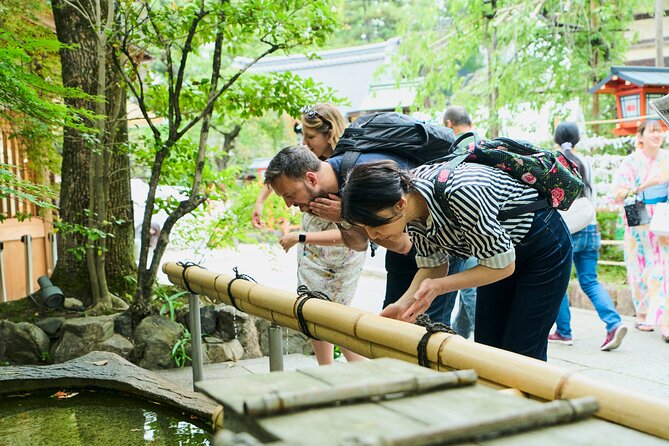
Yasaka Shrine gives the route a change of pace. The tour allows about 20 minutes here, enough for an introduction to the shrine and a look at its role in Kyoto’s religious life.
The shrine is described as 1,000 years old, giving it a long connection to the city and its customs. Your guide also explains how to approach Shinto worship, which makes this more than a quick pass through a photogenic gate.
Do not expect an exhaustive shrine visit in 20 minutes. The value lies in having someone explain what you are seeing and how the site fits into Gion. If you want a lengthy prayer, detailed architectural study, or quiet solo time, you will need to return on your own.
More Walking Tours in Kyoto
- Kyoto: Gion Geisha District Walking Tour – Stories of Geisha
★ 4.7 · 2,187 reviews - Night Walk in Gion: Kyoto’s Geisha District
★ 4.5 · 2,003 reviews - Kyoto Gion Geisha District Walking Tour – The Stories of Geisha
★ 5.0 · 1,441 reviews - Nishiki Market Brunch Walking Tour (7 Tastings + Brunch)
★ 5.0 · 1,355 reviews
Hokan-ji Temple and the Classic Kyoto View
Hokan-ji Temple is presented as the most photogenic stop on the route. Its familiar pagoda and surrounding old streets provide the kind of Kyoto view that appears on postcards and travel posters.
The tour gives you about 20 minutes here. That is enough to take photographs and hear the story of the area, but not enough for an extended temple visit. The stop works best if you want a strong visual moment without spending half a day at one site.
Crowds can affect the experience. Your guide may help you find a useful angle or explain where you are, but the tour cannot control how many people are on the street. Keep your expectations practical: this is a short photo and cultural stop, not a private viewing.
Pontocho and the Kamogawa River

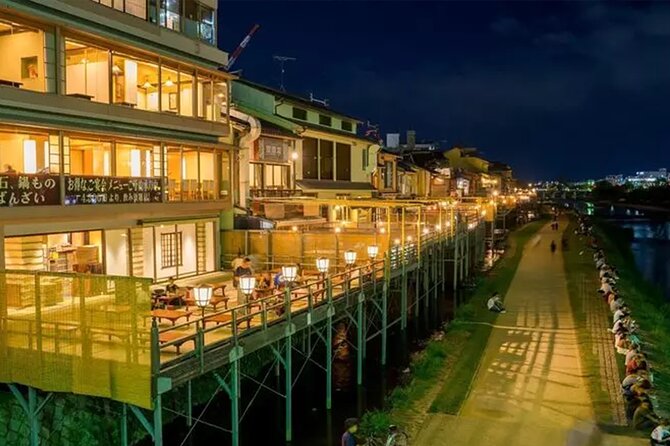
Pontocho adds a food and evening angle to the walk. This narrow historic street is known for restaurants and traditional dining, making it a useful place to ask your guide for suggestions.
The tour also pauses at a local relaxation spot beside the Kamogawa River. That break gives your eyes and feet a rest after the shrine and temple streets. It also shows you a more everyday side of central Kyoto, away from the formal gates and famous photo points.
The guide may suggest restaurants, rooftop bars, or other places for later. That advice can add real value, especially if you have just arrived in Kyoto and want help deciding where to eat. Remember that recommendations are personal rather than a guarantee of quality or availability.
Gion Shirakawa: Wooden Kyoto at Its Most Atmospheric
Gion Shirakawa is one of the most appealing sections of the route. Here you see wooden townhouses from the Edo period and a quieter side of the district.
The buildings are important because they show how traditional Kyoto looked and functioned beyond the major shrine grounds. Your guide explains the stories behind them, helping you notice construction details and the way the street preserves an older town pattern.
This part of the walk often feels more relaxed than Hanamikoji Street or Sannenzaka. It is a good place to slow down, listen, and take photographs without treating every doorway as a tourist attraction.
The atmosphere can change with the hour. An early evening walk may give you attractive light and a better chance of seeing the district during its working hours. At the same time, some sites and businesses may be less active later at night, so a very late start is not ideal.
Yasui-Konpiragu and Shinto Worship
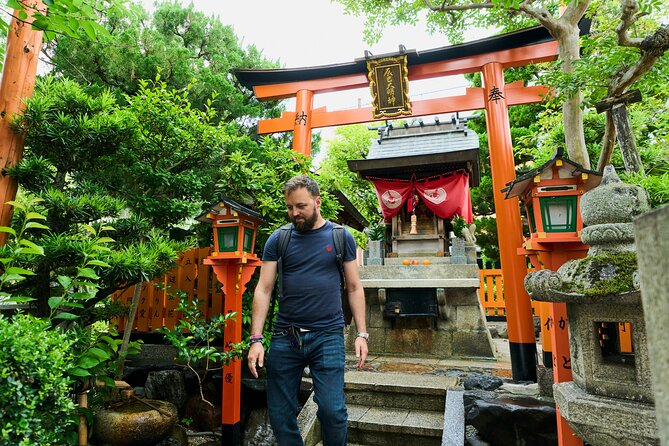
The final named stop is Yasui-Konpiragu, where the guide introduces Shinto worship. This gives the tour a practical ending because you leave with a better sense of how to behave at a Japanese shrine.
The visit is scheduled for about 15 minutes. That makes it a brief cultural lesson rather than a long religious visit, but it rounds out the route well. You have seen entertainment traditions, historic streets, temples, and now a place of worship.
The tour finishes back at the original meeting point. That is convenient if you want to continue your evening in central Kyoto, though it means the walk is a loop rather than a way to reach a different neighborhood.
What the Two Hours Really Feel Like
Two hours is a sensible length for this route. It is long enough to cover a lot of ground and short enough to fit before dinner or another evening plan.
You should still prepare for steady walking. The tour requires a moderate level of fitness, and the route includes slopes, old streets, shrine approaches, and crowded pedestrian areas. Comfortable shoes are more important than stylish ones, especially around Sannenzaka and Ninenzaka.
Hot weather is the main practical concern. One departure was considered manageable because the tour lasted only two hours, but the lack of a drink stop was a problem in extreme heat. Carry water and avoid assuming that a short tour will feel easy in Kyoto’s summer weather.
The group limit is 15 people. That is a reasonable size for a city walk, though you may not always stand beside the guide in a busy lane. If you want a completely private experience or unlimited time at each stop, this is not the right format.
Choosing the Best Time to Walk
Timing affects what you see. An early evening departure, around 5 or 6 p.m., may improve your chance of seeing a geisha or maiko going to work. Sunset can also make Gion Shirakawa and the old streets especially attractive.
There is a tradeoff. Some areas may be quieter later, but businesses and certain sites may not be as active. One practical recommendation is to avoid starting too late, with 6 p.m. suggested as a useful upper limit for finding open places.
Daytime departures can work well if you care more about architecture and clear photographs than the possibility of a geisha sighting. Evening departures suit you better if you want Gion’s working atmosphere and softer light.
Is $23.88 Good Value?
At $23.88 per person, this is a strong value for a two-hour guided introduction to Gion. You visit several major places, hear about geisha and maiko culture, and get local suggestions for food and nightlife without paying an admission fee at each listed stop.
The price is especially attractive if you are new to Kyoto or have only one evening in the city. A guide can help you understand places you might otherwise see only as attractive streets and buildings.
The value is less clear if you already know Gion well or plan to spend several days studying Kyoto’s temples and neighborhoods on your own. You are paying for interpretation and route planning, not exclusive access, a meal, or a guaranteed geisha encounter.
The tour uses a mobile ticket and is available near public transportation. Booking confirmation is provided at the time of purchase. Free cancellation is available up to 24 hours before the start time, but changes or cancellations inside that window are not refunded. Because the activity requires good weather, a weather cancellation offers a different date or a full refund.
Who Will Enjoy This Gion Walk Most?
I would recommend this tour to first-time Kyoto visitors who want a clear introduction without committing to a full-day cultural program. It also suits solo visitors, couples, and small groups who want someone to explain local customs and point out places worth revisiting.
It is a good fit if you enjoy stories, street scenes, and short visits to several sites. The route is also useful for photographers who want to see Hanamikoji, Hokan-ji, and Gion Shirakawa in one outing.
You may want another option if you dislike walking, need frequent scheduled breaks, or want a deep visit inside one temple or shrine. It is also not ideal if your main goal is a guaranteed geisha performance. This tour offers a chance to see one in the street, not a ticket to a formal show.
Should You Book the Gion Culture Tour?
Book it if you want an affordable, well-paced orientation to Gion with a strong focus on geisha culture and old Kyoto streets. The guide’s explanations are the main reason to go, and the combination of Hanamikoji, Yasaka Shrine, Hokan-ji, Pontocho, Gion Shirakawa, and Yasui-Konpiragu gives you plenty for the price.
Choose an early evening time if seeing a geisha is important to you, and carry water in warm weather. If you can accept that the sighting is luck rather than part of the guarantee, this is a practical and enjoyable way to make Gion’s streets easier to understand.
FAQ
How long does the Kyoto Gion walking tour last?
The tour lasts approximately two hours.
How much does the tour cost?
The listed price is $23.88 per person.
Is seeing a geisha guaranteed?
No. You have a chance to spot a real geisha or maiko, but sightings are not guaranteed. An early evening start around 5 or 6 p.m. may improve your chances.
Where does the tour begin?
The meeting point is McDonald’s at Shijo-ohashi Bridge, 105-1 Hashimotocho, Shimogyo Ward, Kyoto 600-8011, Japan.
Where does the tour finish?
The activity ends back at the original meeting point.
What places does the tour visit?
The route includes Hanamikoji Street, Sannenzaka and Ninenzaka, Yasaka Shrine, Hokan-ji Temple, Pontocho, Gion Shirakawa, a local spot beside the Kamogawa River, and Yasui-Konpiragu.
How large is the tour group?
The maximum group size is 15 people.
What happens if the weather is poor?
The experience requires good weather. If it is canceled because of poor weather, you will be offered a different date or a full refund. You can also cancel for a full refund up to 24 hours before the start time.
Just added in Kyoto
- The “Golden Route” and Ancient Japan by DIAMIR Erlebnisreisen – 14-Day Tour★ 2.0 · 2 reviews
- Japan: Castles & Cuisine by G Adventures – 6-Day Kyoto to Osaka Tour★ 4.5 · 4 reviews
- Cycle Japan by Explore! – 13-Day Kyoto to Tokyo Tour★ 4.7 · 12 reviews
- Cycle Japan by Intrepid Travel – 11-Day Kyoto to Tokyo Tour★ 4.8 · 2 reviews
- Classic Japan by Intrepid Travel – 11-Day Kyoto to Tokyo Tour★ 4.4 · 14 reviews
- Ancient & Modern Japan 14-Day Tour by Exodus Adventure Travels★ 4.4 · 40 reviews
- 5 Day Cultural Adventure of Kyoto, Nara & Osaka by Tourist Journey★ 2.5 · 2 reviews
- 12 Days Kinosaki Onsen Escape: A Journey Through Japan’s Timeless Towns by UME Travel★ 4.8 · 5 reviews
Kimono and Cultural Dress, compared.
![[Kyoto & Nara Day Tour] Sagano Scenic Railway & Nara Park & Fushimi Inari Taisha Thousand Torii Gates & Togetsukyo Bridge & Bamboo Grove & Kimono Forest (Departing from Osaka)](https://media.japanvisits.com/wp-content/uploads/kyoto-nara-day-tour-sagano-scenic-railway-nara-park-fushimi-inari-taisha-thousand-torii-gates-togetsukyo-bridge-bamboo-grove-kimono-forest-departing-from-osaka-k110001-400x257.jpg)

Tokyo Asakusa Kimono&Yukata Rental at Kimono Miyabi Asakusa Station
Read our review →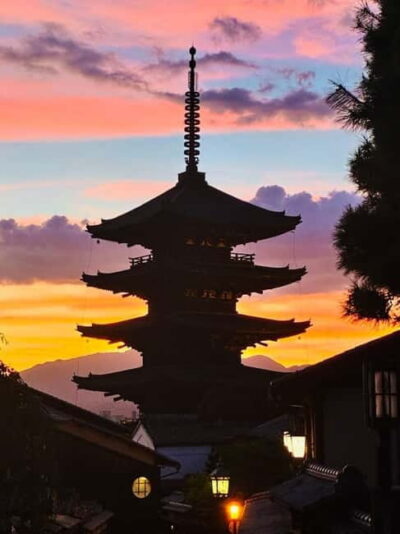
Kyoto Geisha Walking Tour: Gion District & Hidden Gems
Read our review →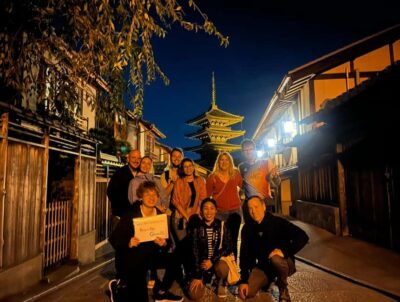
Gion Magical Night Walking Tour with Geisha Trivia
Read our review →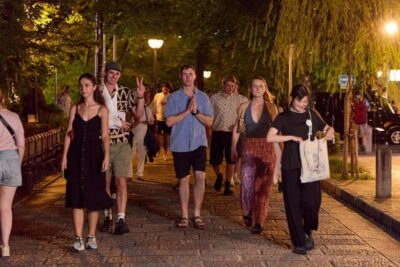
Gion Geisha District Walking Tour – Stories of Geisha
Read our review →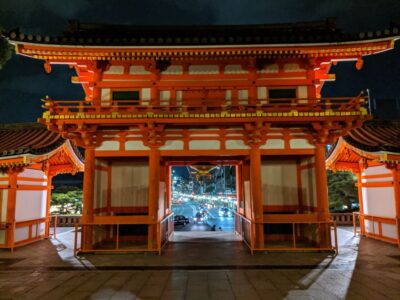
Best of Kyoto: Gion, Geisha, Pagodas & Cobblestones
Read our review →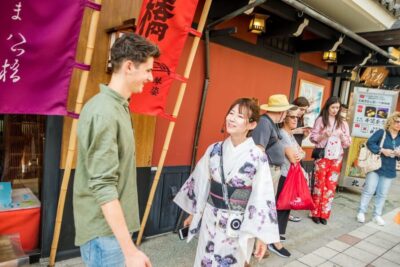

Kyoto Kimono Rental Experience (Optional Exquisite Hair Styling/Japanese Makeup/Photography) (Ookini Kiyomizu-dera Main Store)
Read our review →Browse the lists this tour appears in