
Reviewed · KIMONO AND CULTURAL DRESS
Kyoto: Gion and Geisha District Walking Tour
Gion rewards a slower walk. This two-hour outing links Yasaka Shrine, Maruyama Park, Nene-no-Michi, Ninenzaka, Yasui-Konpiragu, and Hanamikoji Street, with stories about geisha culture, samurai, tea shops, and local customs along the way. I especially like the small maximum of 10 people and the chance to learn what you are seeing instead of simply photographing old wooden buildings. The price, $22.55 per person, is also fair for a focused English-language introduction to one of Kyoto’s most famous districts.
I also like the practical guidance about where you might spot geisha and the way the route mixes major sights with quieter lanes. Guides such as Sam, Shin, Amy, Tim, Naoya, and Maria have been praised for clear English, friendliness, good organization, and patience with photo stops. The main consideration is pace: two hours covers a lot of ground, and the route includes stone streets and slopes, so you will not have long at every stop.
In This Review
- Key points to know before you book
- Starting beside Gion Hotel
- Yasaka Shrine sets the tone
- Maruyama Park brings in seasonal beauty
- Nene-no-Michi offers a quieter old-Kyoto scene
- Ninenzaka adds stone streets and gentle exertion
- Yasui-Konpiragu brings a memorable local custom
- Hanamikoji Street reveals the heart of Gion
- What the guides add to the walk
- Is $22.55 good value?
- Who should book this Gion walk?
- My booking advice
- FAQ
- How long does the Gion and Geisha District Walking Tour last?
- How much does the tour cost?
- What is the maximum group size?
- Is the tour conducted in English?
- Where does the tour begin?
- Where does the tour end?
- Are admission tickets included?
- Can I cancel for a full refund?
Key points to know before you book
- Six classic Gion-area stops: The walk connects shrines, parks, preserved lanes, and traditional entertainment streets.
- A small group capped at 10 people: You get more room to ask questions than on a large coach-style tour.
- Strong focus on geisha culture: Expect helpful context about geiko, maiko, tea houses, and appropriate places to look for them.
- Useful for first-time visitors: The guide supplies orientation and tips that are easy to miss when exploring alone.
- Free admission at the stops: Your payment covers the English-speaking guide and the guided experience, not entrance tickets to paid attractions.
- A modest price for a two-hour walk: At $22.55, it offers good value if you want cultural context without booking a longer or more expensive package.
Starting beside Gion Hotel
The meeting point is the Starbucks Coffee at Kyoto Gion Hotel, at 555 Gionmachi Minamigawa in Kyoto’s Higashiyama Ward. The tour ends back at this same meeting point, which makes planning easier if you have dinner, another reservation, or an evening walk afterward.
The area is near public transportation, but the supplied details do not give a precise station exit or walking time. I would arrive early enough to locate the hotel and café without rushing. Your confirmation arrives when you book, and the mobile ticket means you can keep the booking on your phone.
The guide speaks English. The group can include no more than 10 people, a useful limit in narrow lanes such as Hanamikoji Street. You should still expect a public walking tour, not a private visit inside a tea house. Much of the value comes from explanation, timing, and local pointers rather than exclusive access.
More Kimono Experiences in Kyoto
- [Kyoto & Nara Day Tour] Sagano Scenic Railway & Nara Park & Fushimi Inari Taisha Thousand Torii Gates & Togetsukyo Bridge & Bamboo Grove & Kimono Forest (Departing from Osaka)
★ 4.9 · 10,942 reviews - Kyoto Geisha Walking Tour: Gion District & Hidden Gems
★ 4.7 · 3,273 reviews - Kyoto: Gion Magical Night Walking Tour with Geisha Trivia
★ 4.9 · 2,393 reviews
Yasaka Shrine sets the tone
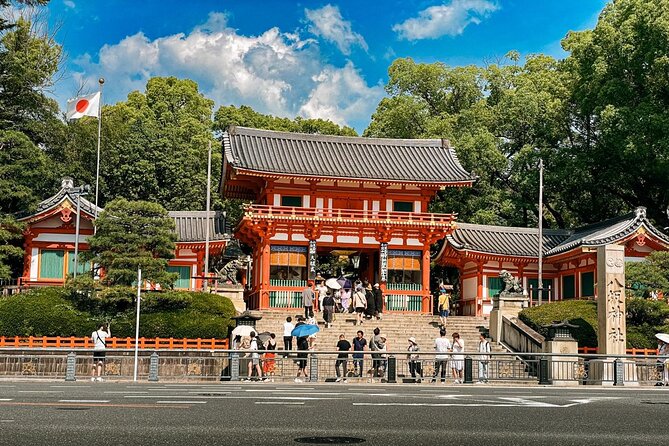
The walk begins at Yasaka Shrine, one of the key religious sites between Gion and Higashiyama. The vermilion gate, lantern-lit paths, and long connection with local worship give you an immediate sense of Kyoto’s mix of daily life, ceremony, and tourism.
The scheduled stop lasts about 20 minutes. That is enough time to get your bearings, hear about shrine customs, and take photographs, but it is not a full religious-site tour. I like this as an opening because it gives the rest of the walk a cultural frame. Gion is not just a pretty collection of old buildings. It is also a living neighborhood shaped by worship, seasonal events, traditional arts, and business.
Your guide may point out details you would pass without noticing. The comments from past bookings repeatedly praise guides for explaining shrine rituals clearly and making the lantern-lit paths meaningful rather than decorative. This is the kind of help that turns a quick stop into a useful introduction.
Maruyama Park brings in seasonal beauty
From Yasaka Shrine, the route moves into Maruyama Park for roughly 10 minutes. It is Kyoto’s oldest public park and is known for seasonal scenery, especially its famous weeping cherry trees.
The short visit is best treated as a pause rather than a full park exploration. Your guide may explain seasonal celebrations and the role of public spaces in Kyoto’s traditions. The park also provides a change of mood after the shrine. Instead of moving from one street to another, you get a little room to breathe.
Timing matters here. The park’s appeal changes with the season, and the cherry trees are especially popular when in bloom. The tour does not promise a particular display, so you should not book it solely for flowers. I see Maruyama Park as a bonus that adds natural beauty and seasonal context to the cultural walk.
Nene-no-Michi offers a quieter old-Kyoto scene
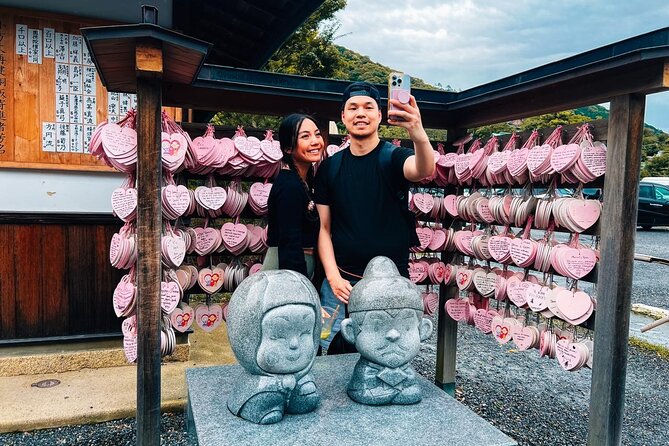
The approximately 10-minute stop on Nene-no-Michi is one of the route’s more atmospheric sections. The lane takes its name from Nene, the wife of samurai warlord Toyotomi Hideyoshi. Preserved buildings, small shops, and tea houses line the route.
This is where a guide can make a real difference. The architecture is attractive, but the larger reward is learning why the street looks as it does and how it connects with Kyoto’s past. Guides have been praised for pointing out architectural features that are easy to overlook, helping each wooden townhouse feel less like scenery and more like part of the neighborhood’s story.
Do not expect a long shopping stop. Ten minutes passes quickly, and the tour is designed to keep moving. If you see a shop you want to revisit, note its location and return later. That is one reason the route works well as an introduction early in your Kyoto stay.
More Walking Tours in Kyoto
- Kyoto: Gion Geisha District Walking Tour – Stories of Geisha
★ 4.7 · 2,187 reviews - Night Walk in Gion: Kyoto’s Geisha District
★ 4.5 · 2,003 reviews - Kyoto Gion Geisha District Walking Tour – The Stories of Geisha
★ 5.0 · 1,441 reviews - Nishiki Market Brunch Walking Tour (7 Tastings + Brunch)
★ 5.0 · 1,355 reviews
Ninenzaka adds stone streets and gentle exertion
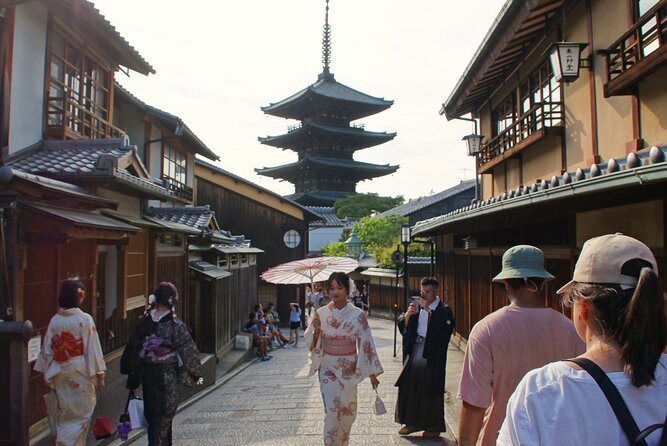
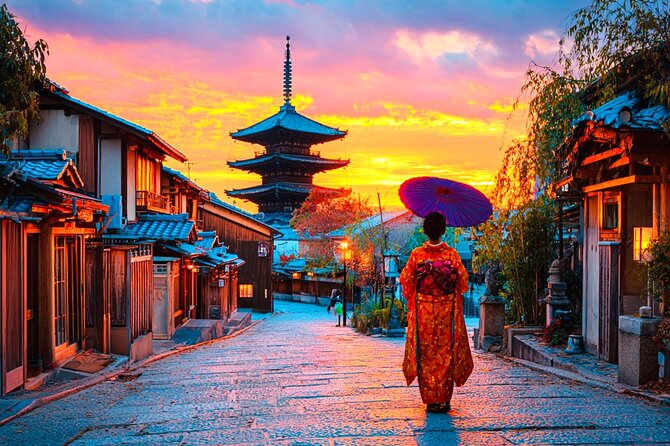
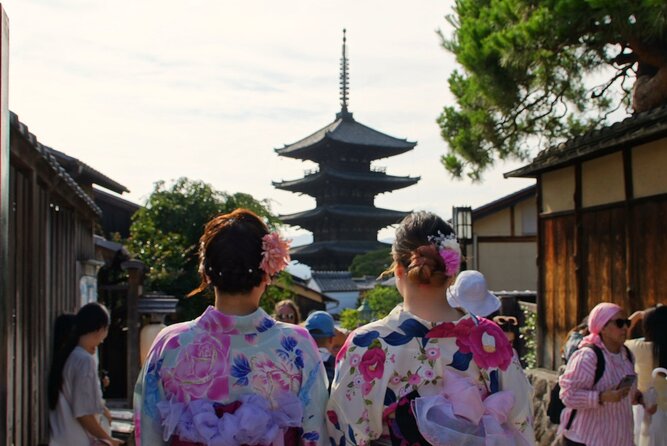
The tour then reaches the Sannenzaka and Ninenzaka area, with about 15 minutes on the schedule. The route includes a descent along the charming Ninenzaka path, where stone paving, wooden buildings, artisan shops, and traditional-looking storefronts create one of Kyoto’s most recognizable scenes.
This is a beautiful section, but it is also where footwear and weather begin to matter. Stone streets and slopes are manageable for most participants, yet you should wear comfortable shoes and avoid treating this as a stroll in flat city streets. The tour information says most people can participate, but the route is still a walking route through historic lanes.
The guide’s stories add value here. One of the most praised parts of the experience is the explanation of samurai traditions and how these streets looked to people in earlier periods. That context can help you see past the postcard view. The buildings are not merely old-fashioned props. They reflect the type of setting in which crafts, food, lodging, and traditional entertainment developed.
Yasui-Konpiragu brings a memorable local custom
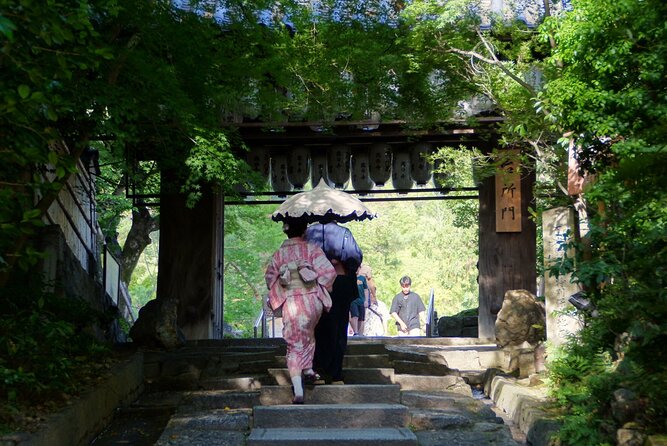
At Yasui-Konpiragu, the group spends about 10 minutes. This shrine is known for its Power Stone archway, through which people crawl while praying for strong relationships or for freedom from an unwanted tie to the past.
It is an engaging stop because the custom is easy to understand and visually distinctive. The tradition also gives the guide a chance to explain how religious practice can connect with everyday worries, hopes, and relationships. One especially praised detail is the guide’s light, accessible explanation of the Power Stone tradition. Ancient customs can feel distant when presented as dates and names. Here, the ritual has an immediate human point.
The stop is brief, so you may not have time for a long personal visit. If the shrine interests you, ask the guide when would be best to return. The tour includes free admission at this stop, as it does at the other listed locations.
Hanamikoji Street reveals the heart of Gion
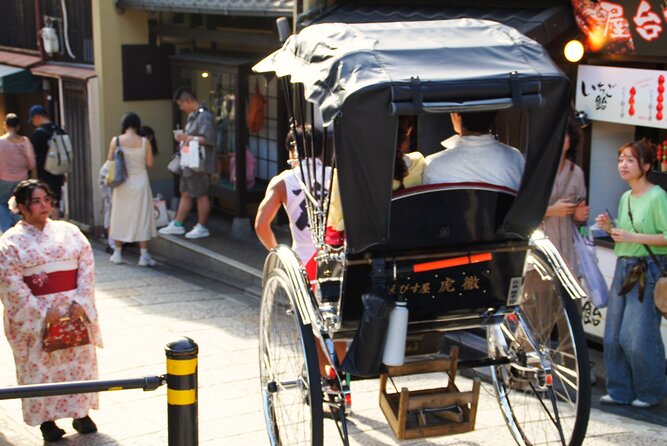
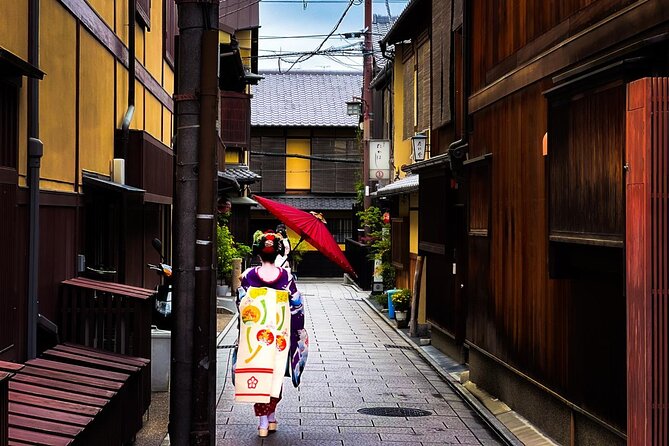
The final major stop is Hanamikoji Street, with about 15 minutes scheduled. This is the most direct encounter with Gion’s traditional entertainment district, lined with preserved wooden machiya townhouses, teahouses, and lanterns.
The guide’s explanation matters most here. Gion is associated with geisha culture, but the subject deserves more care than a quick hunt for a costumed figure. The walk is meant to explain the world of geiko and maiko, traditional entertainment customs, and the role of tea houses. It also gives you practical advice about places where you might spot geisha.
Keep your expectations sensible. A sighting is not guaranteed, and the experience is not a backstage visit. You are walking through a working district, so respectful behavior matters. Listen to the guide’s advice, avoid blocking doorways, and treat performers and residents as people rather than photo subjects.
The schedule may work especially well if your departure time gives you an evening setting. One account describes Gion at night as particularly special, with lantern-lit alleys and a more subdued mood. Since the tour time is not specified in the supplied details, confirm your departure time before booking if nighttime atmosphere is important to you.
What the guides add to the walk
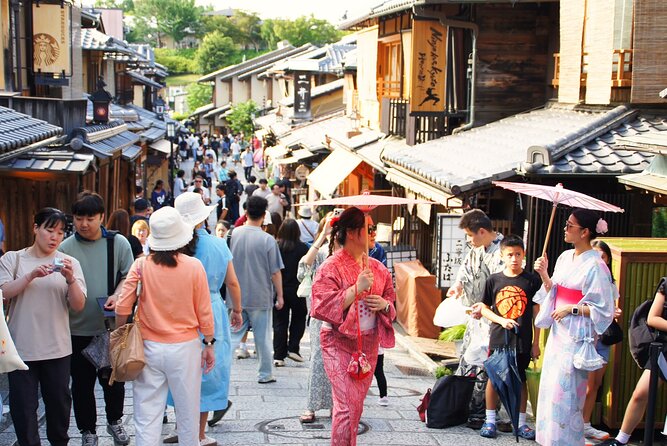
The strongest part of this experience is the guiding. Several guide names appear in the feedback: Sam, Shin, Amy, Tim, Naoya, and Maria. The praise is consistent across those accounts, with special attention to clear English, friendly manner, historical explanation, and enthusiasm for traditional arts.
Amy is described as keeping the history and culture interesting throughout the walk. Maria contacted a participant before the tour, helped with organization, and adjusted the route to keep the group in the shade during hot weather. That detail matters in Kyoto, where a two-hour walk can feel much longer under strong sun.
The guide can also make the tour more personal. You may get answers about maiko training, tea ceremonies, shrine rituals, local legends, and the small architectural details that guidebooks often skip. The group limit of 10 helps, though the actual feel will depend on how many people book your departure.
Is $22.55 good value?
At $22.55 per person, I consider this a solid value for a two-hour guided walk through Gion and nearby Higashiyama. You are paying for an English-speaking guide, route planning, cultural explanation, and local advice. The listed stops do not require admission fees, so there are no major ticket costs included in the price.
The value is strongest if you are new to Kyoto or if you want to understand geisha culture without committing to a costly tea-house experience. A self-guided walk is possible, of course, but you may miss the meaning behind the shrines, the history of the lanes, and the etiquette around geiko and maiko.
The price is less compelling if you already know Gion well or prefer to linger at each stop. The route has a set structure, and six stops in two hours means steady movement. You will get an overview, not an exhaustive study of every street and tradition.
Who should book this Gion walk?
I would recommend it to first-time Kyoto visitors, couples, solo explorers, and anyone who wants cultural background without a full-day commitment. It is also a good early-trip choice because the guide can point out places and customs that help you plan later time in the district.
It suits people who enjoy stories as much as photographs. The best moments may come from explanations of shrine rituals, samurai traditions, local legends, tea ceremonies, and geisha training rather than from any single landmark.
Families and older participants should consider the walking surface and the short time at each stop. The tour is open to most participants, but comfortable footwear remains important. If you want a slow photographic session, a private visit, or guaranteed access to a tea house, choose a different type of experience.
Free cancellation is available when you cancel at least 24 hours before the start time. Cancellations or changes inside that window are not refunded or accepted, so check your plans before the cutoff.
My booking advice
Book this tour if you want a clear, affordable introduction to Gion with a small group and a guide who can explain what lies behind the scenery. The combination of Yasaka Shrine, Maruyama Park, old lanes, Yasui-Konpiragu, and Hanamikoji Street gives you a well-shaped look at the district in just two hours.
I would book it early in your Kyoto stay, especially if you want help planning later visits. Choose a different option if you need lots of free time, guaranteed geisha sightings, or an in-depth indoor cultural program. For most visitors who want a practical first look at Gion, $22.55 is a reasonable price for the orientation and local insight.
FAQ
How long does the Gion and Geisha District Walking Tour last?
The tour lasts approximately two hours.
How much does the tour cost?
The listed price is $22.55 per person.
What is the maximum group size?
The tour has a maximum of 10 participants.
Is the tour conducted in English?
Yes. An English-speaking guide is included.
Where does the tour begin?
It begins at Starbucks Coffee at Kyoto Gion Hotel, 555 Gionmachi Minamigawa, Higashiyama Ward, Kyoto, 605-0074.
Where does the tour end?
The tour ends back at the original meeting point.
Are admission tickets included?
Entry and admission to Gion and Hanamikoji Street are included. The listed itinerary stops have free admission.
Can I cancel for a full refund?
Yes. You can receive a full refund if you cancel at least 24 hours before the experience start time. Cancellations or changes made less than 24 hours before the start time are not accepted and are not refunded.
Just added in Kyoto
- The “Golden Route” and Ancient Japan by DIAMIR Erlebnisreisen – 14-Day Tour★ 2.0 · 2 reviews
- Japan: Castles & Cuisine by G Adventures – 6-Day Kyoto to Osaka Tour★ 4.5 · 4 reviews
- Cycle Japan by Explore! – 13-Day Kyoto to Tokyo Tour★ 4.7 · 12 reviews
- Cycle Japan by Intrepid Travel – 11-Day Kyoto to Tokyo Tour★ 4.8 · 2 reviews
- Classic Japan by Intrepid Travel – 11-Day Kyoto to Tokyo Tour★ 4.4 · 14 reviews
- Ancient & Modern Japan 14-Day Tour by Exodus Adventure Travels★ 4.4 · 40 reviews
- 5 Day Cultural Adventure of Kyoto, Nara & Osaka by Tourist Journey★ 2.5 · 2 reviews
- 12 Days Kinosaki Onsen Escape: A Journey Through Japan’s Timeless Towns by UME Travel★ 4.8 · 5 reviews
Kimono and Cultural Dress, compared.
![[Kyoto & Nara Day Tour] Sagano Scenic Railway & Nara Park & Fushimi Inari Taisha Thousand Torii Gates & Togetsukyo Bridge & Bamboo Grove & Kimono Forest (Departing from Osaka)](https://media.japanvisits.com/wp-content/uploads/kyoto-nara-day-tour-sagano-scenic-railway-nara-park-fushimi-inari-taisha-thousand-torii-gates-togetsukyo-bridge-bamboo-grove-kimono-forest-departing-from-osaka-k110001-400x257.jpg)

Tokyo Asakusa Kimono&Yukata Rental at Kimono Miyabi Asakusa Station
Read our review →
Kyoto Geisha Walking Tour: Gion District & Hidden Gems
Read our review →
Gion Magical Night Walking Tour with Geisha Trivia
Read our review →
Gion Geisha District Walking Tour – Stories of Geisha
Read our review →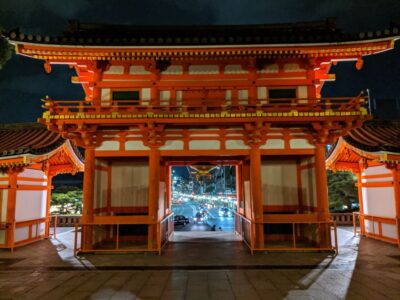
Best of Kyoto: Gion, Geisha, Pagodas & Cobblestones
Read our review →
Kyoto Kimono Rental Experience (Optional Exquisite Hair Styling/Japanese Makeup/Photography) (Ookini Kiyomizu-dera Main Store)
Read our review →Browse the lists this tour appears in