
Reviewed · KIMONO AND CULTURAL DRESS
Kyoto: Gion Geisha District Walking Tour and Hidden Gems
Kyoto reveals itself one alley at a time. This three-hour walk links Gion with northern Higashiyama, mixing famous sights with quiet lanes, small shrines, and stories about geisha life. I like the low $25 price and the way the route finishes at Kiyomizu-dera rather than returning you to the starting point. The main drawback is the amount of walking and stair climbing, so this is not a good match for anyone with low fitness.
I also like the strong history focus. Guides such as Ben and J, also called Jay, explain more than what you are looking at. They connect Kyoto’s temples, samurai, Shinkansen, tanuki, religious customs, and modern daily life. The pace is active, and the tour covers a lot of ground, but rest breaks are given when possible.
In This Review
- At a Glance: What Makes This Walk Worthwhile
- Why This Gion Walk Feels Different
- Meeting Ben, J, or Jay in Central Kyoto
- Gion Tatsumi Bridge and the World of Geisha
- Chion-in: A Major Temple With a Big Story
- Maruyama Park and Kyoto’s Green Pause
- Hōkan-ji and the Famous Higashiyama Streets
- Ninenzaka and Sannenzaka: Beautiful, Steep, and Busy
- Finishing at Kiyomizu-dera’s Niomon Gate
- What You Get for $25
- Who Should Book This Walk
- Should You Book the Gion Walking Tour?
- FAQ
- How long does the Kyoto Gion walking tour last?
- How much does the tour cost?
- Where does the tour begin?
- Where does the tour finish?
- What language is the tour conducted in?
- Does the tour include temple admission?
- Are there many stairs?
- Who may find the tour unsuitable?
- Can I cancel for a full refund?
At a Glance: What Makes This Walk Worthwhile

- Gion Tatsumi Bridge: Begin among Kyoto’s famous lantern-lit lanes and traditional wooden buildings.
- A guide with a history background: J has a degree in history, while Ben is praised for wide-ranging explanations and easy conversation.
- Northern Higashiyama in one sweep: Chion-in, Maruyama Park, Hōkan-ji, Ninenzaka, and Sannenzaka all fit into the route.
- Geisha culture explained with care: Learn about maiko and geisha training, work, traditions, and daily routines.
- A useful finish: End at Kiyomizu-dera’s Niomon Gate, a practical place for continuing your sightseeing.
- A real physical workout: Expect many steps, sloping streets, and three hours on foot.
Why This Gion Walk Feels Different
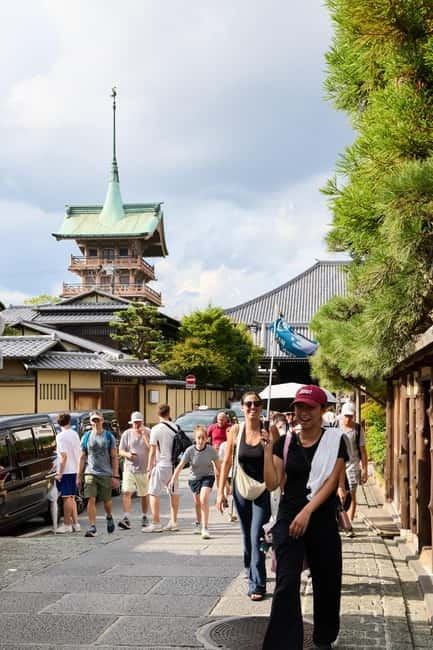
Gion is easy to reduce to a postcard: wooden townhouses, paper lanterns, teahouse doors, and the hope of spotting a maiko. This tour gives those details a wider setting. You learn how the district fits into Kyoto’s religious life, political past, and present-day culture.
I especially like that the tour does not stop at the busiest photo points. The route uses backstreets and smaller religious sites, so you get a better sense of how the old city is arranged. The most memorable parts may be the short pauses between major sights, when your guide explains what daily life looks like behind the traditional facades.
The experience is conducted in English and lasts three hours. At $25 per person, it is priced as an affordable introduction to Kyoto rather than a specialist cultural seminar. You are paying for a guide who can make sense of a complicated city while moving you between several important areas.
The high rating of 4.9 from 14 published ratings fits the tour’s main strengths: warm guiding, clear historical explanations, and good value. The praise is particularly strong for Ben and J. J’s history degree appears in the way he handles questions, while Ben is described as both accommodating and broad in his knowledge.
More Kimono Experiences in Kyoto
- [Kyoto & Nara Day Tour] Sagano Scenic Railway & Nara Park & Fushimi Inari Taisha Thousand Torii Gates & Togetsukyo Bridge & Bamboo Grove & Kimono Forest (Departing from Osaka)
★ 4.9 · 10,942 reviews - Kyoto Geisha Walking Tour: Gion District & Hidden Gems
★ 4.7 · 3,273 reviews - Kyoto: Gion Magical Night Walking Tour with Geisha Trivia
★ 4.9 · 2,393 reviews
Meeting Ben, J, or Jay in Central Kyoto
The meeting point is in front of Ben’s Cookies Kyoto Shijo. Your guide will hold a sign, which is useful in a busy shopping area and removes some of the usual first-meeting confusion.
The opening section lasts about 10 minutes. Treat it as a chance to get your bearings and meet the guide before the route settles into Gion. Since the walk ends at a different place, this is also the moment to note where you began and make sure you have anything you need for the next three hours.
The guides named in the tour feedback include Ben and J, with one family referring to the guide as Jay. The exact guide can depend on the date, but the pattern is clear: expect an English-speaking guide who enjoys questions and can discuss both formal history and ordinary life in Japan.
That flexibility matters. Kyoto’s history is long and layered, and a good guide can adjust the conversation when you ask about customs, food, religion, transport, or modern life. One tour group included children aged 11 and 15, a 47-year-old parent, and a 79-year-old grandparent, all of whom found the explanations easy to follow. That suggests the tour is not aimed only at history specialists.
Gion Tatsumi Bridge and the World of Geisha
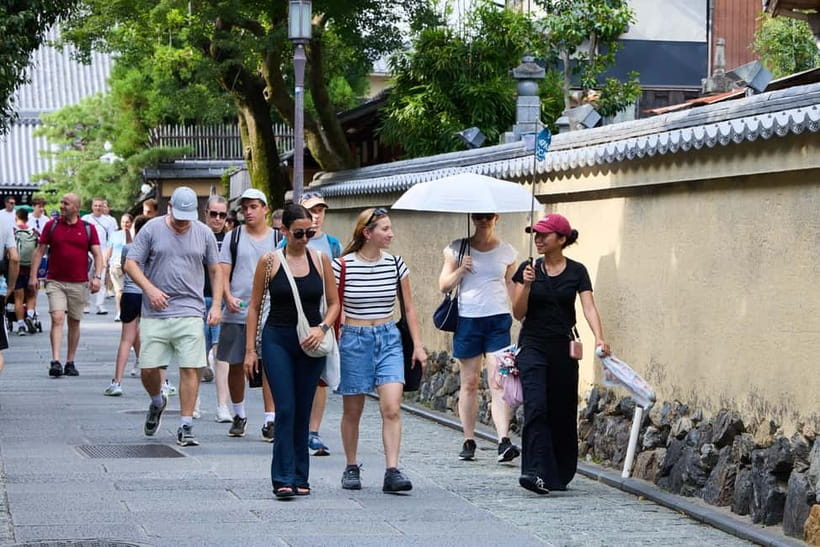
Gion Tatsumi Bridge is the first major sightseeing stop, with about 20 minutes for a guided visit. It is a fitting introduction because the bridge places you close to the traditional lanes and waterways that define this part of Kyoto.
Here, the guide explains the difference between maiko and geisha, how they train, and how their work fits into the teahouse tradition. This is valuable because geisha culture is often presented as a costume spectacle. A thoughtful explanation gives you a more accurate picture of training, performance, etiquette, and working life.
You will also hear how Kyoto changed from imperial capital to modern cultural center. That story helps explain why old wooden townhouses and contemporary shops can sit side by side without the district feeling like a museum.
The stop is short enough to keep the walk moving, but you should not expect a long private discussion at every point. If you have specific questions about geisha customs, ask them while the group is gathered. The guides are praised for answering questions with patience and detail.
Chion-in: A Major Temple With a Big Story
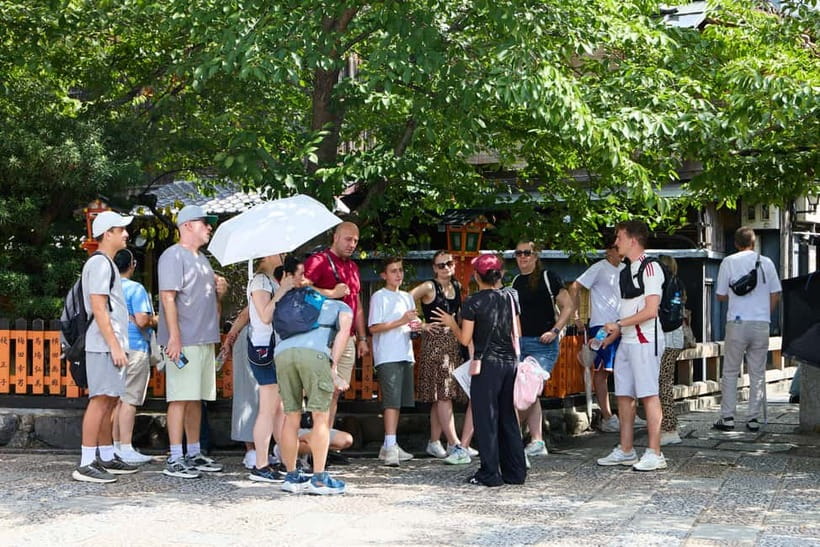
From Gion, the route continues to Chion-in for roughly 30 minutes. This is one of the longer stops, and rightly so. Chion-in gives the tour room to discuss Kyoto’s religious traditions and the role temples have played in the city’s development.
The guide’s value is especially clear at a large temple complex. Without context, you may notice grand gates, steep steps, and sweeping temple buildings, then move on. With explanation, you can better understand how the site relates to Japanese Buddhism and to Kyoto’s religious identity.
This stop also introduces the physical character of the route. Chion-in includes steps, and the tour as a whole has many more. Wear comfortable shoes, carry water, and avoid treating this as a gentle café-to-café stroll.
The route is designed to cover a lot of ground. One participant described it as a long three-hour walk, but also noted that the guide allowed time to rest when possible. That is a fair description: the tour is efficient and active, not rushed from one photo stop to the next.
More Walking Tours in Kyoto
- Kyoto: Gion Geisha District Walking Tour – Stories of Geisha
★ 4.7 · 2,187 reviews - Night Walk in Gion: Kyoto’s Geisha District
★ 4.5 · 2,003 reviews - Kyoto Gion Geisha District Walking Tour – The Stories of Geisha
★ 5.0 · 1,441 reviews - Nishiki Market Brunch Walking Tour (7 Tastings + Brunch)
★ 5.0 · 1,355 reviews
Maruyama Park and Kyoto’s Green Pause
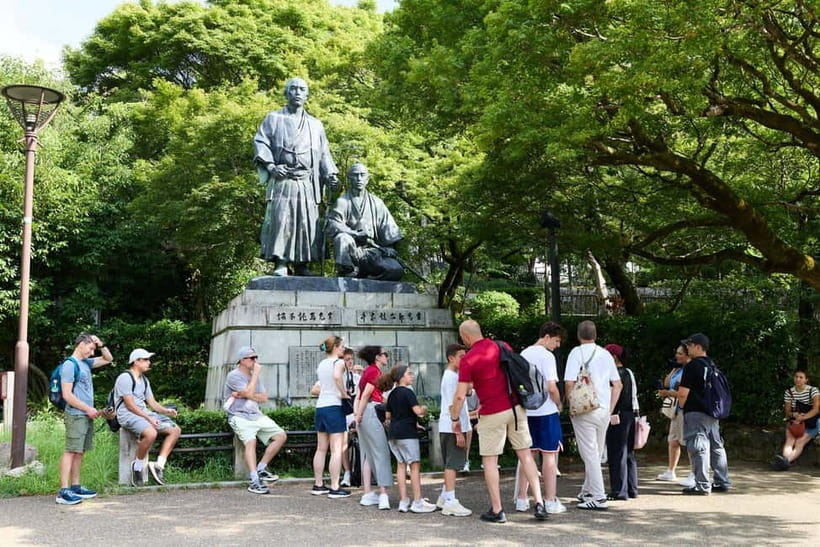
The walk reaches Maruyama Park for about 20 minutes. After the lanes and temple approaches, the park gives you breathing room and a change of pace.
This is a useful place for your guide to connect Kyoto’s religious sites with everyday public life. Parks, shrines, temple grounds, and shopping streets are not isolated attractions here. They form a walkable network that locals use as well as visitors.
You may also appreciate this stop as a practical rest point. Three hours on foot can feel demanding, particularly in warm weather or during a busy sightseeing day. The tour information asks you to bring water, and that advice is worth taking seriously.
The park section is not presented as a long free period. It remains a guided visit, so use the time to ask questions and listen for the links between the sites. The best value in this tour comes from those connections, not from simply ticking off another location.
Hōkan-ji and the Famous Higashiyama Streets
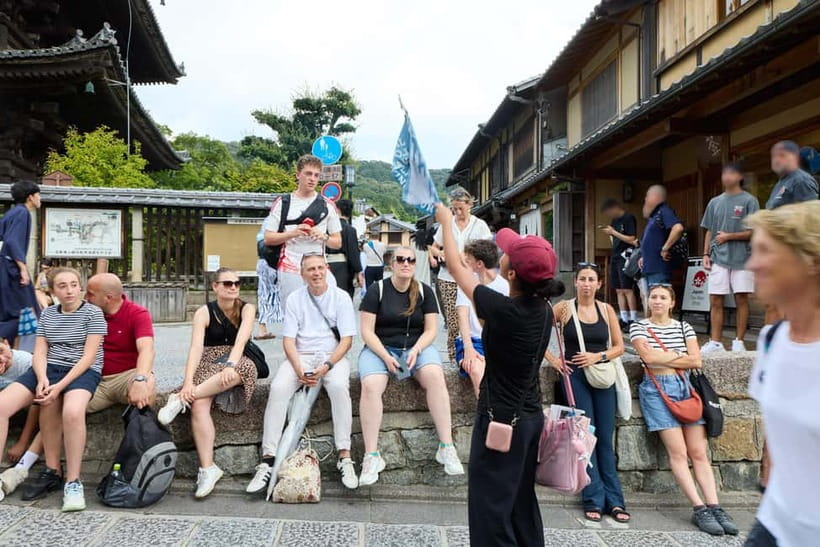
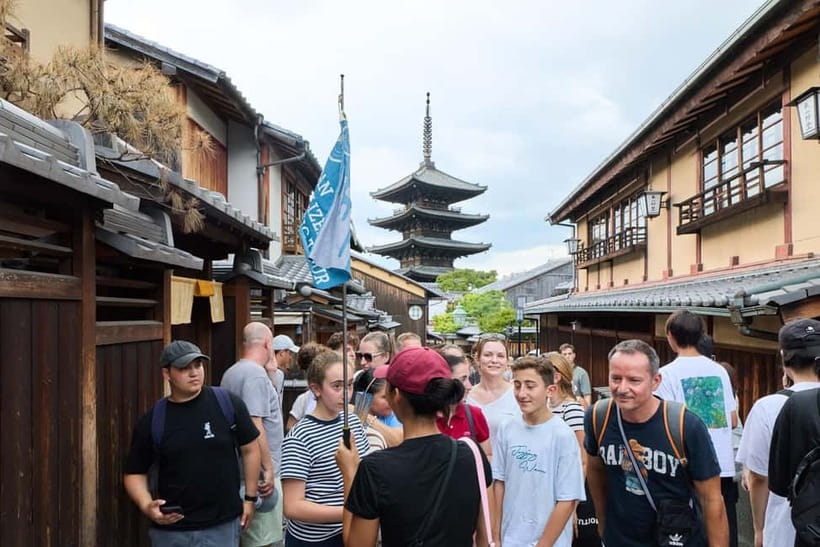
The route then moves toward Hōkan-ji, with about 10 minutes for a guided visit. The temple is widely associated with the familiar Yasaka-no-Tō pagoda, one of Kyoto’s most recognizable sights.
This part of the walk shows how quickly the mood changes in Higashiyama. You move from open parkland and large temple grounds into narrow streets lined with preserved wooden buildings. The architecture is one of the tour’s strongest photo opportunities, but the guide adds the needed context.
The short stop means you should expect an overview rather than an extended temple visit. If you want a long look inside each site, this route may feel too busy. If your goal is to see several important areas and understand how they fit together, the schedule makes good sense.
Keep your camera ready, but remember that these streets are also part of a living neighborhood. The tour’s emphasis on local perspective is most useful here, where respectful behavior matters more than getting the perfect picture.
Ninenzaka and Sannenzaka: Beautiful, Steep, and Busy
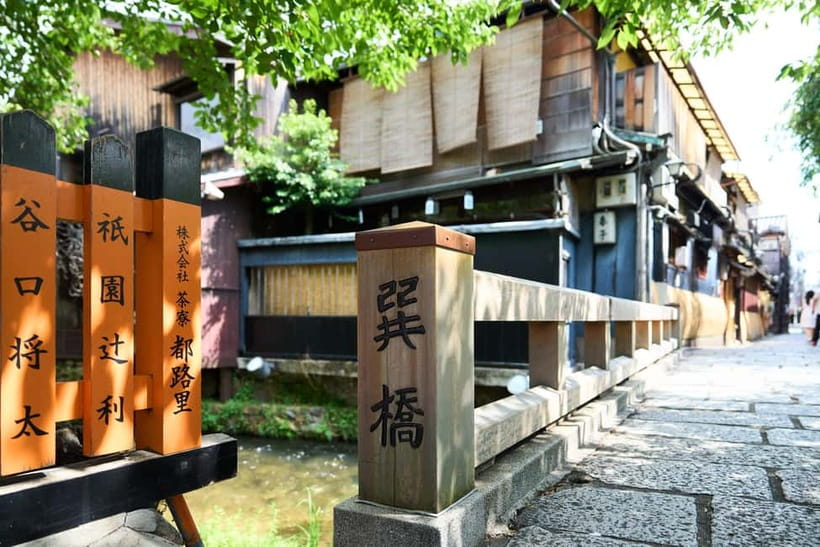
Ninenzaka and Sannenzaka receive about five minutes each. That sounds brief, but these stops function as part of a continuous walk through Higashiyama rather than as separate temple visits.
The two historic paths are known for stone paving, traditional buildings, shops, and changing views toward the surrounding temple district. Their charm is obvious, though the crowds and steps can make the route less relaxed than the quiet Gion lanes.
Your guide can help you read the streets instead of seeing them as a row of souvenir shops. Look at the building fronts, the slope of the paths, and the way the streets lead toward major religious sites. The preserved character is not accidental. It reflects Kyoto’s effort to retain old town forms while remaining a working city.
These are also the places where the walking demands become most apparent. Sannenzaka and Ninenzaka are sloped, and the full route includes many steps. If you have knee, balance, or stamina concerns, consider this carefully before booking.
Finishing at Kiyomizu-dera’s Niomon Gate
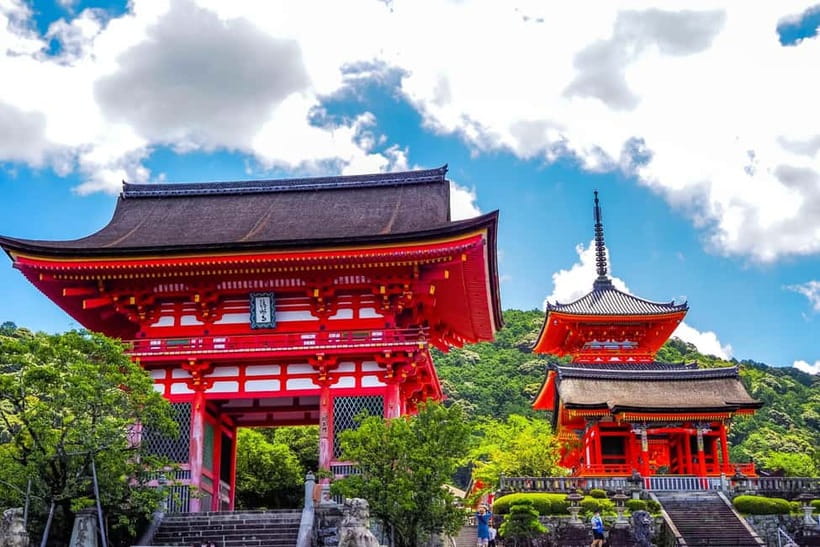
The tour ends at Kiyomizu-dera Niomon Gate, rather than at Ben’s Cookies Kyoto Shijo. I consider that a smart design choice because it leaves you in one of Kyoto’s key sightseeing areas.
The finish also gives the walk a sense of direction. You begin in the commercial center near Shijo, pass through Gion and northern Higashiyama, then arrive at a major temple entrance. One guide described the ending as especially memorable, and it is easy to see why: the route builds from city streets to religious landmarks and finishes at a landmark gate.
The tour does not include a full guided visit inside Kiyomizu-dera. The stated finish is the Niomon Gate, so plan separately if you want to explore the temple grounds. That is not a flaw, but it is important for planning your afternoon.
Because the tour ends away from the start, you should think about what comes next. You can continue sightseeing in the area, look for food, or arrange your next stop from the Higashiyama side of town. You will not need to retrace the full route back to central Kyoto.
What You Get for $25
At $25, this is strong value if you want interpretation rather than transportation or admission tickets. The included item is the guided tour. The price does not promise private guiding, food, or entry to additional attractions.
You are getting three hours of local explanation across a large part of Gion and northern Higashiyama. That is considerably more useful than wandering through the area with only a map, especially if Kyoto is your first visit and you want the basic cultural framework early in your stay.
The strongest value comes from the guide. Ben is praised for explaining Kyoto’s past in detail and for making the experience accommodating. J is praised for his history training, patience, and ability to answer questions. Another guide discussion ranged from samurai to the Shinkansen and tanuki, suggesting that the conversation can stretch well beyond the formal stops.
Group size can vary. One outing had a very small group and felt almost like one-to-one guiding, while the same format could also work with a larger group. Do not book expecting a guaranteed private tour.
Free cancellation is available up to 24 hours before the start for a full refund, and you can reserve now and pay later. Those terms are helpful if your Kyoto schedule is still shifting.
Who Should Book This Walk
I would recommend it to first-time Kyoto visitors who want a clear introduction to Gion, geisha traditions, temples, and the old street pattern. It also suits anyone who prefers stories and context over simply collecting photographs.
Families can do well here. The explanations have worked for children and adults across a wide age range, and the guide’s conversational style helps keep the history from becoming dry. Ask questions as you go, especially if younger members of your group are curious about samurai, trains, religion, or daily life.
The tour also suits visitors with only a short stay. In three hours, you cover several major areas and finish near Kiyomizu-dera. It is an efficient way to understand the eastern side of central Kyoto before returning later for slower exploration.
I would hesitate to recommend it to anyone with low fitness. The tour includes many steps, sloping streets, and a long period of walking. Bring water, wear supportive shoes, and avoid placing this activity immediately after another demanding day.
Should You Book the Gion Walking Tour?
Book it if you want a well-priced history walk that combines Gion’s famous sights with less obvious streets and religious sites. The strongest reason to go is the guide’s ability to connect geisha culture, temple traditions, Kyoto’s political past, and modern Japanese life in one understandable route.
Skip it if you want a slow, private experience with long visits inside each temple. The route covers a lot, and some stops last only five or 10 minutes. For most visitors, that trade-off is worthwhile: you see a broad slice of Kyoto, learn why it matters, and finish in a useful sightseeing area.
For $25, this is one of the better ways to get your bearings in Gion and northern Higashiyama. Just bring water, expect stairs, and leave room in your day to continue exploring after Kiyomizu-dera’s Niomon Gate.
FAQ
How long does the Kyoto Gion walking tour last?
The tour lasts three hours.
How much does the tour cost?
The price is $25 per person.
Where does the tour begin?
The meeting point is in front of Ben’s Cookies Kyoto Shijo. The guide will hold a sign.
Where does the tour finish?
The tour finishes at Kiyomizu-dera Niomon Gate.
What language is the tour conducted in?
The tour is conducted in English with a live English-speaking guide.
Does the tour include temple admission?
The included service is the guided tour. The provided details do not state that additional temple admission is included.
Are there many stairs?
Yes. The tour information specifically warns that there are many steps.
Who may find the tour unsuitable?
The tour is not suitable for people with a low level of fitness because it involves extensive walking and many steps.
Can I cancel for a full refund?
Yes. You can cancel up to 24 hours in advance for a full refund. You can also reserve now and pay later.
Just added in Kyoto
- The “Golden Route” and Ancient Japan by DIAMIR Erlebnisreisen – 14-Day Tour★ 2.0 · 2 reviews
- Japan: Castles & Cuisine by G Adventures – 6-Day Kyoto to Osaka Tour★ 4.5 · 4 reviews
- Cycle Japan by Explore! – 13-Day Kyoto to Tokyo Tour★ 4.7 · 12 reviews
- Cycle Japan by Intrepid Travel – 11-Day Kyoto to Tokyo Tour★ 4.8 · 2 reviews
- Classic Japan by Intrepid Travel – 11-Day Kyoto to Tokyo Tour★ 4.4 · 14 reviews
- Ancient & Modern Japan 14-Day Tour by Exodus Adventure Travels★ 4.4 · 40 reviews
- 5 Day Cultural Adventure of Kyoto, Nara & Osaka by Tourist Journey★ 2.5 · 2 reviews
- 12 Days Kinosaki Onsen Escape: A Journey Through Japan’s Timeless Towns by UME Travel★ 4.8 · 5 reviews
Kimono and Cultural Dress, compared.
![[Kyoto & Nara Day Tour] Sagano Scenic Railway & Nara Park & Fushimi Inari Taisha Thousand Torii Gates & Togetsukyo Bridge & Bamboo Grove & Kimono Forest (Departing from Osaka)](https://media.japanvisits.com/wp-content/uploads/kyoto-nara-day-tour-sagano-scenic-railway-nara-park-fushimi-inari-taisha-thousand-torii-gates-togetsukyo-bridge-bamboo-grove-kimono-forest-departing-from-osaka-k110001-400x257.jpg)

Tokyo Asakusa Kimono&Yukata Rental at Kimono Miyabi Asakusa Station
Read our review →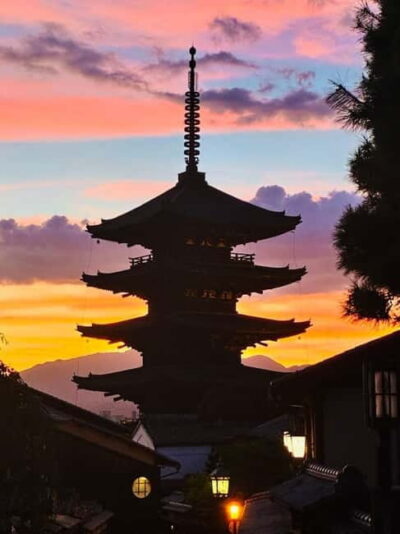
Kyoto Geisha Walking Tour: Gion District & Hidden Gems
Read our review →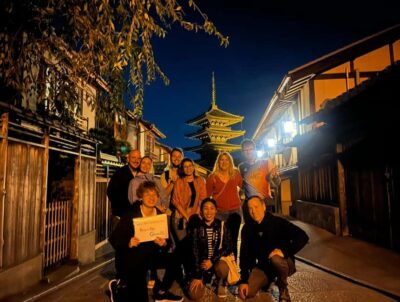
Gion Magical Night Walking Tour with Geisha Trivia
Read our review →
Gion Geisha District Walking Tour – Stories of Geisha
Read our review →
Best of Kyoto: Gion, Geisha, Pagodas & Cobblestones
Read our review →

Kyoto Kimono Rental Experience (Optional Exquisite Hair Styling/Japanese Makeup/Photography) (Ookini Kiyomizu-dera Main Store)
Read our review →Browse the lists this tour appears in