
Reviewed · KIMONO AND CULTURAL DRESS
Kyoto: Gion Night Walking Tour with Geisha Insight
Gion comes alive after dark. This two-hour walk leads you through Kyoto’s famous geisha district, from wooden teahouses and willow-lined canals to quiet shrines and local backstreets. I like the small-group format, capped at 15 people, and the chance to see Gion when the daytime crowds have thinned. I also like that the guide adds food tips, not just sightseeing commentary.
The price is a reasonable $25 per person for a guided introduction to one of Kyoto’s most confusing areas. The main consideration is expectation: you may not see a geisha or maiko, and photography around them is restricted. One visitor found the walk too dark for photos and felt the experience was advertised too strongly around geisha sightings.
In This Review
- Five things to know before you book
- Starting at Tanaka Coffee Gion
- Hanamikoji Street and the world of ochaya
- The Shirakawa Canal after sunset
- Tatsumi Daimyojin Shrine in the backstreets
- From Gion to Kawaramachidori
- What the $25 price really covers
- Who should take this evening walk
- Booking, cancellation, and practical details
- Should you book the Gion night walk?
- FAQ
- How long does the Kyoto Gion night walking tour last?
- Where does the tour begin?
- Where does the tour end?
- What areas does the tour visit?
- Can I see a geisha or maiko on the tour?
- Can I take photographs of geisha?
- How many people can join the tour?
- Is the tour available as a mobile ticket?
- What is the cancellation policy?
Five things to know before you book
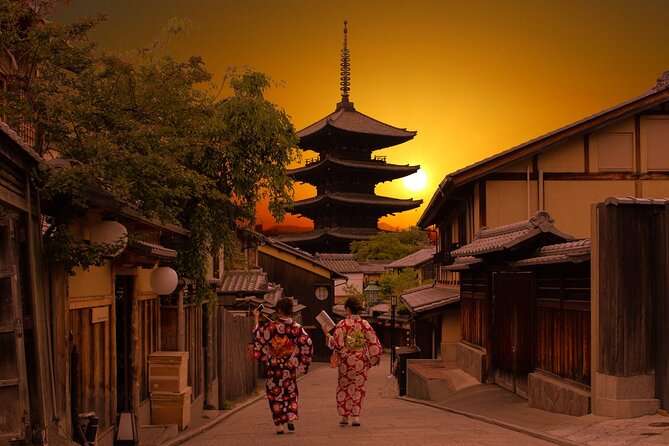
- Gion after dark feels different: Lanterns, wooden townhouses, stone alleys, and the Shirakawa Canal give this district a quieter evening character.
- Geisha sightings are never guaranteed: The guide can explain where and how to look, but you should treat seeing one as a bonus.
- The route covers two distinct areas: The first hour focuses on Gion, while the second moves toward Kawaramachidori and the Shijo-Kawaramachi area.
- A guide helps with orientation: Gion’s narrow lanes can be confusing, and the walk includes corners that are easy to miss on your own.
- The $25 price buys context, not entry tickets: The value lies in local explanation, navigation, and food recommendations rather than paid attractions.
- Respect matters here: You are entering a working neighborhood, not a stage set, so quiet behavior and careful photography are essential.
Starting at Tanaka Coffee Gion
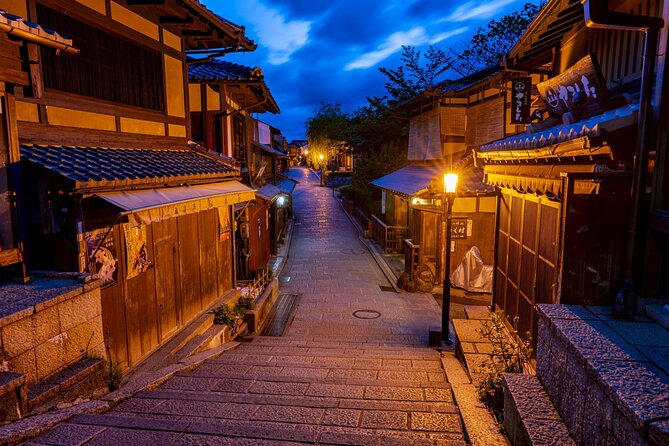
The tour begins at Tanaka Coffee Gion in Kyoto’s Higashiyama Ward, at 993 Shinchisu Yoshiyacho, postal code 605-0085. The meeting point is useful because it places you close to the Gion streets you will explore, though you should allow time to find it before the scheduled start.
This is a walking tour from beginning to end. There is no sightseeing bus or private vehicle, and the experience finishes back at the same meeting point. For you, that means simple logistics, but also two hours on foot over streets and alleys. Comfortable shoes will make the evening easier.
The mobile ticket is convenient. Confirmation arrives when you book, so you can keep the booking on your phone rather than print anything. The group can include up to 15 people, which is not an intimate private walk, but it is still small enough for a guide to speak with the group and answer questions.
One guide named Ryu has received particular praise for explaining geisha tradition and practice clearly. Guide quality matters on a tour like this. The streets themselves are attractive, but the difference between a pleasant walk and a useful one comes from the stories, cultural explanation, and practical advice added along the way.
More Kimono Experiences in Kyoto
- [Kyoto & Nara Day Tour] Sagano Scenic Railway & Nara Park & Fushimi Inari Taisha Thousand Torii Gates & Togetsukyo Bridge & Bamboo Grove & Kimono Forest (Departing from Osaka)
★ 4.9 · 10,942 reviews - Kyoto Geisha Walking Tour: Gion District & Hidden Gems
★ 4.7 · 3,273 reviews - Kyoto: Gion Magical Night Walking Tour with Geisha Trivia
★ 4.9 · 2,393 reviews
Hanamikoji Street and the world of ochaya
The first hour centers on Gion, beginning with Hanamikoji Street. This is the district’s best-known thoroughfare, lined with traditional wooden teahouses called ochaya. These buildings are not ordinary restaurants that you can casually enter. They are part of a highly private entertainment tradition, which helps explain why the area asks for discretion from visitors.
Your guide can point out the difference between simply seeing an old wooden facade and understanding its purpose. Gion is still a working district, so the quiet lanes are not merely preserved scenery. People live and work here, and the evening foot traffic may include performers heading to appointments.
This is also where expectations need careful handling. The tour offers insight into geisha and maiko culture and advice on how to recognize them, but it cannot promise a sighting. The description allows for the chance of seeing one heading to an evening appointment, not a scheduled encounter.
That distinction is important. If your main reason for booking is a guaranteed geisha photograph, I would not choose this experience. If you want to learn how to look respectfully and understand what you are seeing, the tour is a better fit.
Photography is another concern. A negative experience came from learning almost immediately that a geisha sighting was unlikely and that people should not photograph or speak to performers. The walk also felt dark for taking pictures. Those limits can disappoint if you expect a photo-focused evening, but they reflect the need to protect people working in the district.
The Shirakawa Canal after sunset
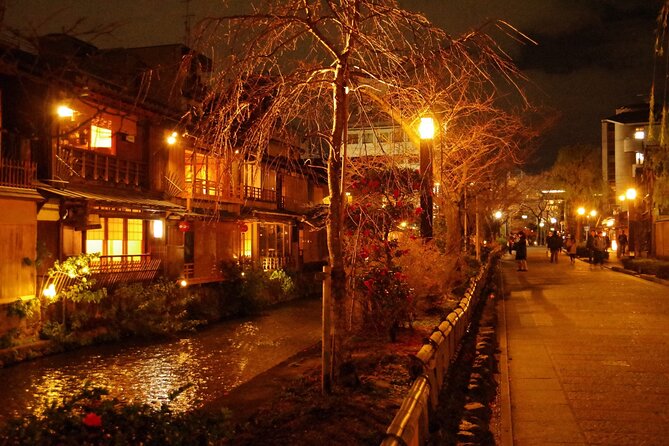
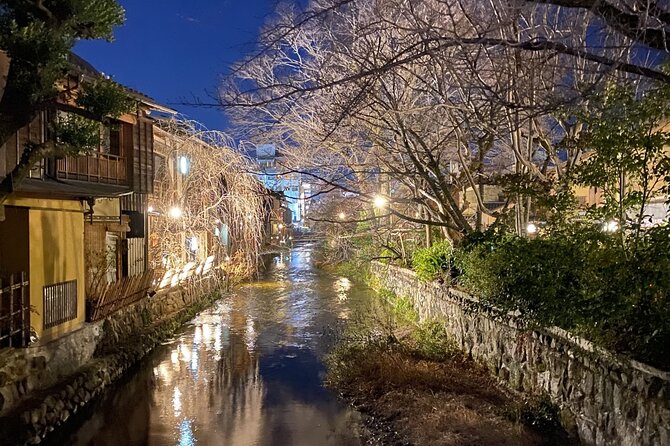
From Hanamikoji, the route continues toward the Shirakawa Canal area. This is one of the most scenic parts of Gion, with stone-paved lanes, red bridges, willow trees, and water reflecting the evening light.
The canal section gives the tour a change of pace. Hanamikoji introduces the formal side of Gion, while Shirakawa offers a more atmospheric walk through narrow streets and traditional architecture. I like this part because it is not simply a march between famous points. The setting gives you time to notice small details, such as the wooden fronts, carefully maintained paths, and the way the canal shapes the neighborhood.
Night lighting can also be a limitation. The area may look lovely in person while producing poor photographs on a phone. Bring a camera if you like, but do not judge the walk only by how well your pictures turn out. The appeal here is the setting and the guide’s explanation, not a guarantee of bright, dramatic images.
The group format is helpful in these lanes. A guide reduces the chance that you will take a wrong turn, and you can focus on the streets instead of constantly checking a map. This is especially useful if Gion is your first visit to Kyoto or if you are exploring after a long day of sightseeing.
Tatsumi Daimyojin Shrine in the backstreets
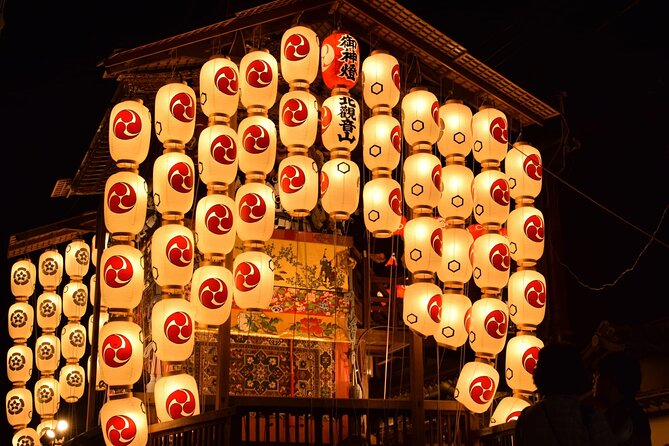
The route includes Tatsumi Daimyojin Shrine, a small but culturally important place tucked away from the main streets. It is not presented as a grand temple complex or a major ticketed attraction. Its appeal comes from its setting and its connection to the surrounding Gion neighborhood.
A stop like this is where a local guide earns the fee. Without help, you might walk past a small shrine without realizing why it matters. With an explanation, the visit becomes part of a larger picture of how religious sites, entertainment districts, homes, and businesses sit close together in Kyoto.
The shrine also helps break up the famous-name sightseeing. You get Hanamikoji and Shirakawa, but you also get a quieter corner that is less obvious on a standard first visit. Admission is included, though there are no separate paid attractions listed for the route.
Do not expect a long temple visit here. The stop is one piece of a walking circuit, not a full guided tour of Kyoto’s religious architecture. Its value is in the setting and the story.
More Walking Tours in Kyoto
- Kyoto: Gion Geisha District Walking Tour – Stories of Geisha
★ 4.7 · 2,187 reviews - Night Walk in Gion: Kyoto’s Geisha District
★ 4.5 · 2,003 reviews - Kyoto Gion Geisha District Walking Tour – The Stories of Geisha
★ 5.0 · 1,441 reviews - Nishiki Market Brunch Walking Tour (7 Tastings + Brunch)
★ 5.0 · 1,355 reviews
From Gion to Kawaramachidori
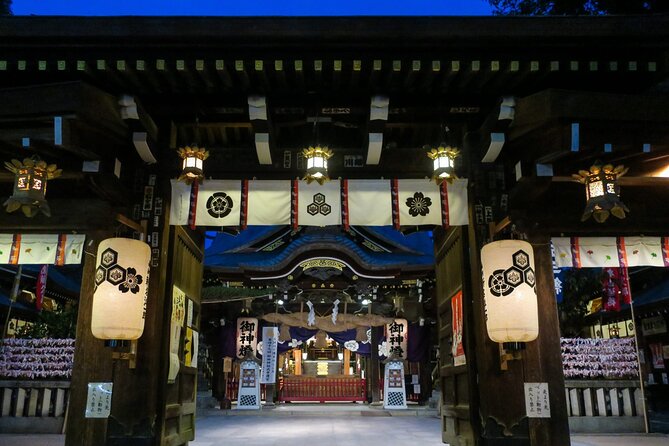
The second hour moves toward Kawaramachidori and the Shijo-Kawaramachi intersection. This part of the route shows a different side of Kyoto. The polished wooden streets of Gion give way to a more modern urban area filled with shops, dining, and evening activity.
I like this contrast. A first-time visitor can easily think of Kyoto as only temples, gardens, and old houses. The Shijo-Kawaramachi area makes clear that this is also a working city with contemporary nightlife and busy commercial streets.
Your guide leads you into smaller alleys around the main intersection. These lanes are associated with cozy bars, eateries, and old machiya houses. The food recommendations are a useful part of the tour, especially if you still need dinner or a late evening snack after the walk.
The guide cannot include your meal, and the tour does not promise reservations or a particular restaurant. Instead, you receive local suggestions that can help you decide what to try after the tour. That makes the timing practical: you finish back at the meeting point with Kyoto’s dining areas within the wider route.
This part may appeal less if you want a purely historic walk. The reward is the change in mood and the explanation of how the area developed from traditional Kyoto streets into a major modern crossroads.
What the $25 price really covers
At $25 per person, this is an accessible introduction to Gion. The fee includes the walking tour and insider recommendations for local eateries. Admission is included for the listed stops, but the experience is not built around expensive attractions or special access.
I see the value in three things: orientation, interpretation, and time saved. Gion is easy to wander, but it is also easy to miss the significance of what you are seeing. A guide can connect the teahouses, shrine, canal, machiya houses, and modern streets in a way a map cannot.
The tour is also useful early in a Kyoto visit. After two hours, you will have a better sense of where Gion sits, how it connects with Kawaramachidori, and which areas may suit you for a later meal or independent walk.
The value drops if you want guaranteed entertainment. There is no geisha performance, reserved meal, or promised sighting. You are paying for a guided evening walk, not a show.
Who should take this evening walk
I would recommend the tour to you if you want a manageable first look at Gion and prefer having someone handle navigation. It suits visitors who enjoy cultural explanation, traditional streets, and a mix of famous areas and less obvious lanes.
It is also a good choice if you want practical restaurant advice. The food tips are included, so you can use the walk to plan the rest of your evening rather than treating it as an isolated activity.
The tour is less suitable if photography is your central goal. Darkness can make pictures difficult, and photographing or approaching geisha and maiko is not encouraged. You should come ready to observe quietly, not chase a perfect image.
It may also disappoint you if you expect a fully private experience. The maximum group size is 15, so the guide’s attention is shared. Still, that limit is more personal than a large bus tour, and the group should remain small enough for questions.
Most people can participate, according to the activity information. Since the experience lasts about two hours and takes place on foot, you should still consider your own comfort with walking before booking.
Booking, cancellation, and practical details
The tour is often booked about 31 days ahead, which suggests that planning early is sensible during a busy Kyoto visit. Confirmation is provided at booking, and the mobile ticket keeps the process straightforward.
Free cancellation is available up to 24 hours before the start time for a full refund. Cancellations or changes made inside that 24-hour window are not refunded or accepted. The cut-off uses local Kyoto time.
The experience requires a minimum number of participants. If the provider cancels because that minimum is not reached, you can receive a full refund or be offered another date or experience. Gratuities are not included, so plan for that separately if you want to thank your guide.
Should you book the Gion night walk?
Book it if you want a low-cost, guided introduction to Gion with cultural explanation, evening scenery, and food suggestions. The route gives you a useful mix: Hanamikoji and ochaya, Shirakawa Canal, Tatsumi Daimyojin Shrine, and the modern streets around Shijo-Kawaramachi.
Do not book it expecting a guaranteed geisha sighting or a bright photo opportunity. The strongest approach is to treat geisha as a possibility, not the product. If you can respect the district as a living workplace and enjoy the walk for its streets, stories, and local orientation, $25 is a fair price.
FAQ
How long does the Kyoto Gion night walking tour last?
The tour lasts approximately two hours. The first hour focuses on Gion, and the second hour covers Kawaramachidori and the Shijo-Kawaramachi area.
Where does the tour begin?
The meeting point is Tanaka Coffee Gion in Kyoto’s Higashiyama Ward, at 993 Shinchisu Yoshiyacho, postal code 605-0085.
Where does the tour end?
The activity ends back at the same meeting point where it begins.
What areas does the tour visit?
The route includes Gion, Hanamikoji Street, the Shirakawa Canal area, Tatsumi Daimyojin Shrine, Kawaramachidori, and the area around the Shijo-Kawaramachi intersection.
Can I see a geisha or maiko on the tour?
You might see one heading to an evening appointment, but a sighting is not guaranteed. The guide explains how to identify geisha and maiko and how to behave respectfully around them.
Can I take photographs of geisha?
The tour information states that visitors should not take photos or speak to geisha or maiko. Night conditions may also make general photography difficult.
How many people can join the tour?
The tour has a maximum capacity of 15 participants.
Is the tour available as a mobile ticket?
Yes. Confirmation is provided when you book, and the experience features a mobile ticket.
What is the cancellation policy?
You can cancel up to 24 hours before the start time for a full refund. Cancellations or changes made less than 24 hours before the start time are not refunded or accepted.
Just added in Kyoto
- The “Golden Route” and Ancient Japan by DIAMIR Erlebnisreisen – 14-Day Tour★ 2.0 · 2 reviews
- Japan: Castles & Cuisine by G Adventures – 6-Day Kyoto to Osaka Tour★ 4.5 · 4 reviews
- Cycle Japan by Explore! – 13-Day Kyoto to Tokyo Tour★ 4.7 · 12 reviews
- Cycle Japan by Intrepid Travel – 11-Day Kyoto to Tokyo Tour★ 4.8 · 2 reviews
- Classic Japan by Intrepid Travel – 11-Day Kyoto to Tokyo Tour★ 4.4 · 14 reviews
- Ancient & Modern Japan 14-Day Tour by Exodus Adventure Travels★ 4.4 · 40 reviews
- 5 Day Cultural Adventure of Kyoto, Nara & Osaka by Tourist Journey★ 2.5 · 2 reviews
- 12 Days Kinosaki Onsen Escape: A Journey Through Japan’s Timeless Towns by UME Travel★ 4.8 · 5 reviews
Kimono and Cultural Dress, compared.
![[Kyoto & Nara Day Tour] Sagano Scenic Railway & Nara Park & Fushimi Inari Taisha Thousand Torii Gates & Togetsukyo Bridge & Bamboo Grove & Kimono Forest (Departing from Osaka)](https://media.japanvisits.com/wp-content/uploads/kyoto-nara-day-tour-sagano-scenic-railway-nara-park-fushimi-inari-taisha-thousand-torii-gates-togetsukyo-bridge-bamboo-grove-kimono-forest-departing-from-osaka-k110001-400x257.jpg)

Tokyo Asakusa Kimono&Yukata Rental at Kimono Miyabi Asakusa Station
Read our review →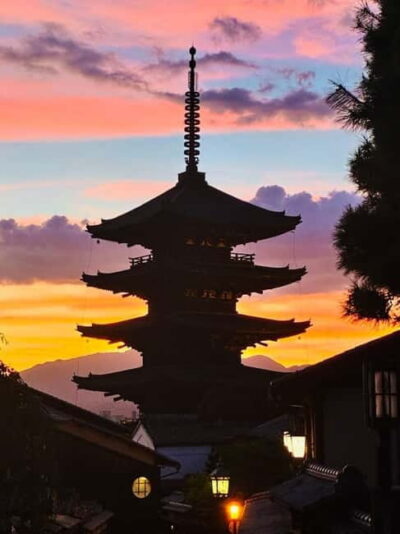
Kyoto Geisha Walking Tour: Gion District & Hidden Gems
Read our review →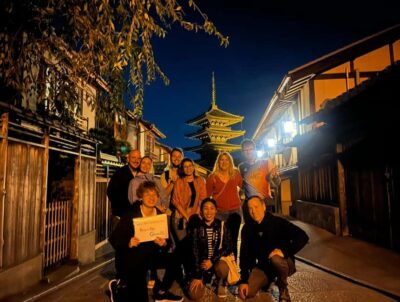
Gion Magical Night Walking Tour with Geisha Trivia
Read our review →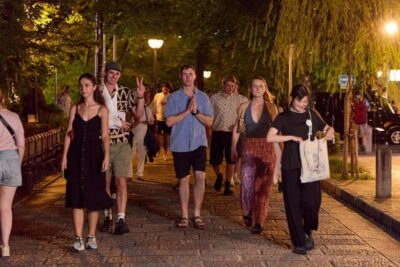
Gion Geisha District Walking Tour – Stories of Geisha
Read our review →
Best of Kyoto: Gion, Geisha, Pagodas & Cobblestones
Read our review →

Kyoto Kimono Rental Experience (Optional Exquisite Hair Styling/Japanese Makeup/Photography) (Ookini Kiyomizu-dera Main Store)
Read our review →Browse the lists this tour appears in