
Reviewed · KIMONO AND CULTURAL DRESS
Kyoto Gion Private Tour with a Local Guide – Geisha District
Kyoto reveals itself one quiet lane at a time. This private walking tour gives you a flexible introduction to Gion, with a local host explaining the customs, architecture, shrines, teahouses, and entertainment traditions that can be hard to grasp on your own. I especially like the one-to-one attention and the chance to shape the walk around your interests. I also like that it links Gion with Pontocho Alley, rather than treating the famous district as a quick photo stop. The main caution is simple: seeing a geiko or maiko is never promised, and the quality of the experience depends heavily on the individual guide.
The tour costs about $101.57 per person and lasts roughly two to three hours. That is a fair price for a private guide if you are traveling as a small group and want conversation, questions, and a custom route. It is less compelling if you only want to photograph pretty streets or expect a formal geisha performance.
In This Review
- Key points to know before booking
- What this private Gion walk is really like
- Starting near Shijo Kawaramachi
- Gion’s lantern streets and wooden machiya
- Yasaka Shrine and the spiritual side of Gion
- Hanamikoji and the details most people miss
- Shinbashi Dori and Tatsumi Bridge
- Pontocho Alley after dark
- How much value does $101.57 offer?
- The guide makes or breaks the experience
- Who should book this Gion experience?
- Should you book this private Gion walk?
- FAQ
- How long does the Kyoto Gion private tour last?
- What is the price of the tour?
- Is the tour private?
- Where does the tour start?
- Where does the tour end?
- Does the tour guarantee a geisha or maiko sighting?
- Are food and drinks included?
- Is transportation included?
- Can I cancel for a refund?
Key points to know before booking
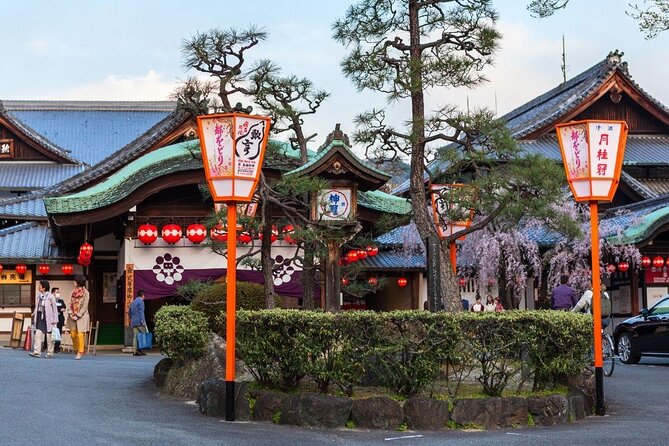
- Gion is the main event: Walk traditional streets, pass historic teahouses, and learn how Kyoto’s entertainment district works.
- Your guide shapes the walk: A pre-tour questionnaire lets you request history, food, photography, shrines, or local customs.
- Yasaka Shrine adds spiritual context: This 1,300-year-old Shinto site shows that Gion is more than restaurants and lanterns.
- Shinbashi Dori offers the prettiest pause: Willow trees, old facades, and Tatsumi Bridge make this a strong photo stop.
- Pontocho changes the mood: The tour ends in a narrow nightlife lane lined with bars and restaurants.
- Geisha sightings are luck, not a feature: You might see a maiko, but the walk does not include a guaranteed meeting or performance.
What this private Gion walk is really like
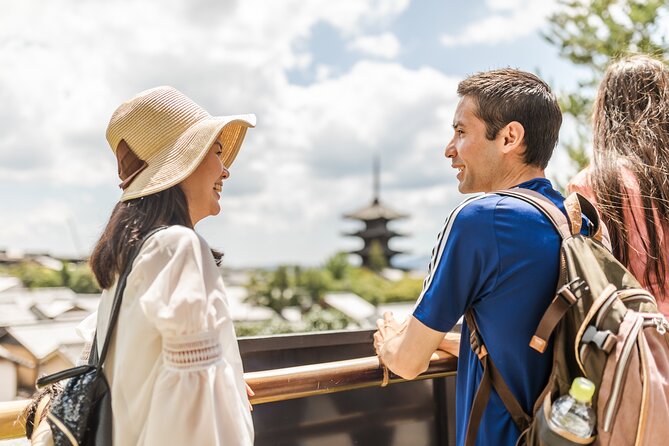
This is not a ticketed show or a museum tour. It is a guided stroll through one of Kyoto’s most carefully preserved traditional districts, with the guide filling in the meaning behind what you see.
That difference matters. Gion can look like a stage set at first: wooden facades, paper lanterns, narrow lanes, and people taking photographs. A good guide helps you understand which buildings are teahouses, how geiko and maiko work within the entertainment world, and why certain streets feel more private than others.
The private format is the strongest feature. You are not trying to hear a guide over a large group, and you can stop to ask about something that catches your eye. Guides such as Emi, Alexis, Olan, Nisa, Milo, Toga, Kenta, Brenda, Ai, Michael, Ada, and Kokoro have all been praised for clear explanations, humor, flexibility, and personal attention.
That said, the range of guide quality appears wide. Several guides gave detailed historical and cultural explanations, while one guest felt the walk became little more than a chat. A private tour gives you access to a personal host, but it does not guarantee the same depth of expertise every time.
More Kimono Experiences in Kyoto
- [Kyoto & Nara Day Tour] Sagano Scenic Railway & Nara Park & Fushimi Inari Taisha Thousand Torii Gates & Togetsukyo Bridge & Bamboo Grove & Kimono Forest (Departing from Osaka)
★ 4.9 · 10,942 reviews - Kyoto Geisha Walking Tour: Gion District & Hidden Gems
★ 4.7 · 3,273 reviews - Kyoto: Gion Magical Night Walking Tour with Geisha Trivia
★ 4.9 · 2,393 reviews
Starting near Shijo Kawaramachi
The stated meeting point is Matsumoto Kiyoshi Kyoto Shijo Kawaramachi, at 103-2 Hashimotocho in Shimogyo Ward. This places the start near a busy commercial area, making it a practical place to meet before heading toward Gion.
Your guide may also meet you at your hotel if arranged in advance. Tess did this for one guest, and Brenda adjusted her schedule after a late arrival. Do not count on last-minute changes, but it is worth sending your hotel details and arrival concerns after booking.
The host receives a short questionnaire before the tour. Use it carefully. This is where you should say if you care most about geisha culture, temple history, food, gardens, photography, shopping, or quieter streets. One disappointing experience appears to have come partly from a mismatch between what the guest expected and what the guide delivered. A clear request gives the host a better chance to plan a useful route.
The tour ends back at the meeting point according to the stated arrangements, although guides may help you finish near a later booking. Kenta, for example, ended a walk at the Gion Corner Geisha Show for a guest who already had tickets.
Gion’s lantern streets and wooden machiya
The first major section takes you into Gion itself. This is the Kyoto of narrow lanes, traditional wooden machiya houses, lanterns, and ochaya, the teahouses associated with geiko entertainment.
The value here is explanation. You can walk these streets alone, but you may not know what you are looking at or where you should avoid lingering. Your host can point out architectural details and discuss the role of the district without reducing it to a hunt for women in traditional dress.
Please keep your expectations in check. Gion is still a working neighborhood and entertainment district, not an open-air theater. A geiko or maiko may pass by, as one guest reported, but you may see none at all. Even locals cannot arrange a sighting on demand.
This is also where respectful behavior matters most. Do not block narrow lanes, chase people with cameras, or treat performers as costumed attractions. The best guides explain the difference between public streets and private teahouses, helping you look without becoming part of the problem.
The setting can be crowded, especially at popular times. One guest preferred a daytime walk instead of a night tour, while another complained about heavy crowds. Ask your host about timing if you want a calmer pace. The stated start time is flexible, so this is one of the tour’s practical advantages.
Yasaka Shrine and the spiritual side of Gion
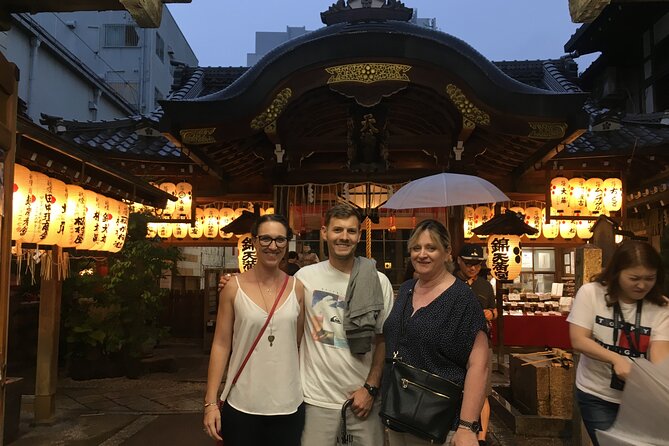
The route includes Yasaka Shrine, a major Shinto landmark between Gion and Higashiyama. Its history reaches back more than 1,300 years, and it plays an important role in Kyoto’s festivals.
This stop keeps the tour from becoming only an introduction to restaurants and teahouses. Your guide can explain how shrine rituals fit into daily life and why Yasaka matters to the city. Several guests also enjoyed seeing temples, gardens, and smaller cultural sites along the way, though the exact route can change based on your requests.
Yasaka Shrine is a good place to ask questions about Shinto practice, local festivals, offerings, and the difference between a shrine and a Buddhist temple. The tour does not include admission tickets to attractions, but Yasaka Shrine is part of the walk described here.
Because this is a public religious site, the pace may be less predictable than a paid attraction. You may pause for photos, listen to an explanation, or move on quickly if the group prefers more time in Gion. Tell your guide what balance suits you.
More Private Tours in Kyoto
- Kyoto 6hr Private Tour with Government-Licensed Guide
★ 5.0 · 1,369 reviews - 10 Must-see Spots in Kyoto One Day Private Tour (up to 7 people)
★ 5.0 · 1,108 reviews - Kyoto 4hr Private Tour with Government-Licensed Guide
★ 5.0 · 629 reviews - Kyoto: Private Tour with Local Licensed Guide
★ 4.8 · 463 reviews
Hanamikoji and the details most people miss
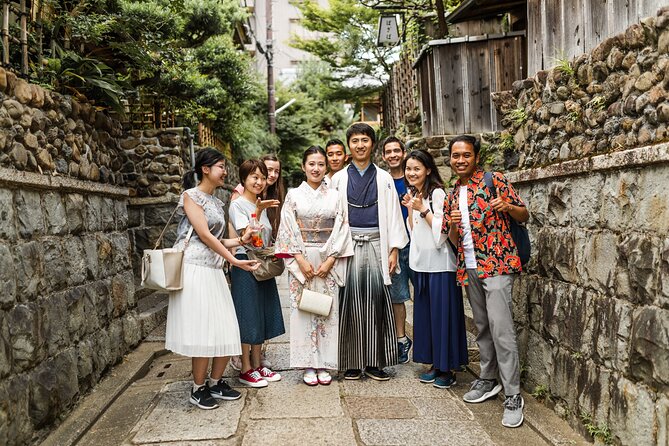
One of Gion’s best-known streets is included in the route. It is known for historic ochaya and well-preserved Edo-period architecture. Your host points out small cultural markers and offers advice on finding a more genuine experience in the district.
The street is attractive, but it is also one of the places where crowds gather. That makes the guide’s commentary more valuable than the street view alone. Anyone can see the facades. Fewer people understand how the district developed, why access to some teahouses is restricted, or how the entertainment world operates behind closed doors.
The tour is a better fit for curiosity than for a checklist. If you want only the famous buildings, you can walk this street without paying for a guide. If you want to ask why the buildings look as they do, how the district serves local culture, or what behavior is appropriate, the private format earns its keep.
A guide may also suggest places to eat afterward. This can be useful, but treat restaurant advice as one person’s opinion rather than a guarantee. One guest disliked a recommended restaurant, while other guides helped guests find restaurants that suited their plans.
Shinbashi Dori and Tatsumi Bridge
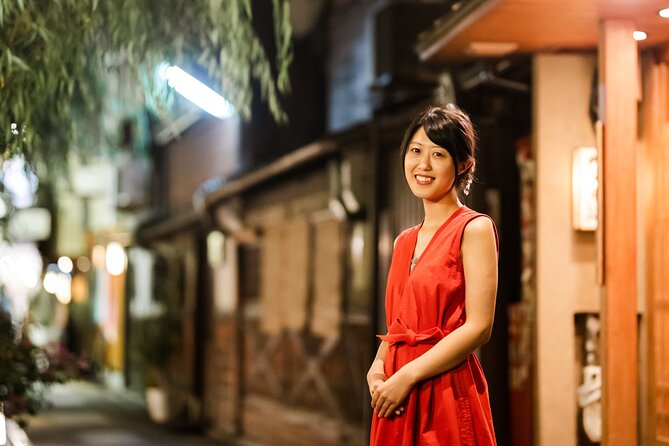
Shinbashi Dori is one of the most scenic parts of the walk. Willow trees and traditional facades frame the street, creating a softer, quieter feel than some of Gion’s busier lanes.
The route pauses at Tatsumi Bridge, a popular photo spot with local meaning. This is a natural place to slow down and let the guide explain why the area is valued, rather than simply taking another hurried picture.
I would pay attention to the timing here. A daytime walk gives you a clearer look at the buildings and greenery. An evening route offers lantern light and a more atmospheric mood, but less detail and possibly more people. The tour’s flexible start times let you choose, although your preferred slot may not always be available.
Guests praised guides for photography help, too. Alexis was singled out for taking good photographs, and other hosts adjusted routes around specific interests. If you want photos of your group, say so before the walk begins.
Pontocho Alley after dark
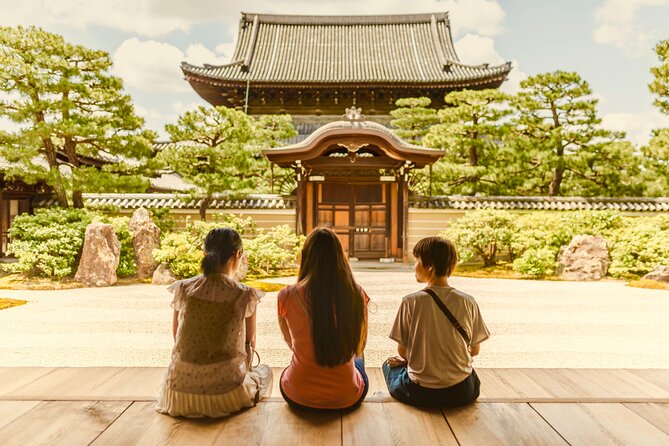
The tour finishes in Pontocho Alley, one of Kyoto’s oldest nightlife areas. This narrow passage is packed with traditional charm, intimate bars, and restaurants. Its mood differs from Gion, so ending here gives you a useful comparison between two historic entertainment districts.
Pontocho is especially handy for dinner planning. Your guide can explain the character of the lane and point out places to consider, but food and drinks are not included. You also should not assume that every restaurant will suit your budget or taste.
The alley can feel tight, and the dining rooms are often small. That is part of its appeal, but it also means you may prefer to make a reservation separately. If you have dinner, a show, or a hotel return time, tell your host at the start. Kenta successfully finished one tour at a geisha performance, showing how the route can work around existing plans.
The walk officially returns to the starting point, so confirm the final arrangement if you want to remain in Pontocho. Public transportation or a local taxi may be used between sites if needed, with those costs paid separately.
How much value does $101.57 offer?
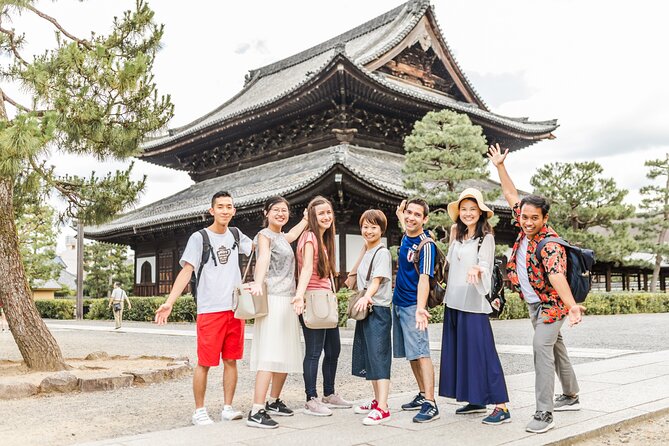
At $101.57 per person, this tour is not a cheap orientation walk. The price makes most sense for a private group that wants a custom route and an unhurried chance to ask questions.
For a family, a couple, or friends sharing the booking, the cost buys more than directions. You get a host who can adjust the pace, explain unfamiliar customs, help with photography, and connect Gion with the rest of your Kyoto plans. Families especially may appreciate that the guide can keep everyone involved, as Milo did with a group of five.
The value drops if your goal is a guaranteed geisha encounter. No private walking tour can promise that. It also drops if you already understand Gion’s history and mainly want to wander independently.
You should budget separately for food, drinks, attraction tickets, public transit, taxis, and gratuities. The walk is primarily on foot, so wear comfortable shoes and be ready for two to three hours outside. Most people can take part, and service animals are allowed.
The guide makes or breaks the experience
The strongest praise goes to the hosts who combine facts with warmth. Emi was praised for her impressive explanations. Alexis used humor and storytelling to help one guest change a poor first impression of Kyoto. Olan made the walk relaxed and interesting, while Nisa kept an entire family engaged.
Ada was praised for careful preparation, clear English, and adapting the route to personal interests. Michael explained Old Gion, New Gion, Japanese culture, shrines, temples, shops, restaurants, and gardens in a way that made the morning feel useful beyond the tour itself. Brenda received repeated praise for being friendly, flexible, and helpful with local plans.
But there were also serious service failures. Two guests reported that their guides did not appear, with one person waiting for an hour and another losing valuable vacation time. A separate guest felt the guide lacked the cultural information promised and left after one hour.
That makes communication essential. Confirm the meeting point, keep your phone available, and contact the provider promptly if anything seems unclear. Free cancellation is available up to 24 hours before the start time, but changes or cancellations inside that window are not accepted.
Who should book this Gion experience?
I would choose this tour if you want a gentle first look at Kyoto’s traditional districts and prefer conversation over a fixed script. It suits first-time visitors, families, couples, and small groups with different interests.
It is also a good choice if you want help combining Gion with Yasaka Shrine, Shinbashi Dori, Tatsumi Bridge, and Pontocho without working out the route yourself. The questionnaire is useful for shaping the focus around history, food, photography, or local customs.
I would be cautious if you expect a formal geisha show, guaranteed sightings, entry into teahouses, or a highly regulated historical tour. I would also ask detailed questions before booking if cultural depth is your main reason for paying the private-tour price.
Should you book this private Gion walk?
Book it if you value a flexible route and a guide who can explain the meaning behind Kyoto’s most photographed streets. The best hosts, including Ada, Michael, Brenda, Alexis, Emi, and others, turn a simple walk into a useful introduction to local culture.
Skip it if you only want photographs or if your budget is tight. You can walk Gion and Pontocho on your own, and the price does not include food, attractions, transportation, or a geisha encounter.
My practical advice is to book at least several weeks ahead, use the questionnaire to state your priorities plainly, and request the guide’s strongest background in Gion and geiko culture. With the right match, this is a worthwhile way to get your bearings in Kyoto. With the wrong match, it can feel like an expensive conversation on pretty streets.
FAQ
How long does the Kyoto Gion private tour last?
The experience lasts approximately two to three hours. Some guests have completed a shorter tour, but the stated duration is two to three hours.
What is the price of the tour?
The listed price is $101.57 per person. The total value depends on your group size and how much you use the private customization.
Is the tour private?
Yes. Only your group participates, so you receive the guide’s attention without joining a larger group.
Where does the tour start?
The stated meeting point is Matsumoto Kiyoshi Kyoto Shijo Kawaramachi, 103-2 Hashimotocho, Shimogyo Ward, Kyoto, 600-8011, Japan.
Where does the tour end?
The activity is scheduled to end back at the meeting point. Your host may help coordinate an ending near another booking if arranged during the tour.
Does the tour guarantee a geisha or maiko sighting?
No. Seeing a geiko or maiko is possible but not guaranteed. Even local guides cannot promise that someone will appear during your walk.
Are food and drinks included?
No. Food, drinks, attraction tickets, transportation, and gratuities are not included in the price.
Is transportation included?
The experience is mainly a walking tour. Public transportation or local taxis may be used between sites, but any transportation costs are additional.
Can I cancel for a refund?
You can cancel at least 24 hours before the start time for a full refund. Cancellations or changes made less than 24 hours before the experience are not accepted for a refund.
Just added in Kyoto
- The “Golden Route” and Ancient Japan by DIAMIR Erlebnisreisen – 14-Day Tour★ 2.0 · 2 reviews
- Japan: Castles & Cuisine by G Adventures – 6-Day Kyoto to Osaka Tour★ 4.5 · 4 reviews
- Cycle Japan by Explore! – 13-Day Kyoto to Tokyo Tour★ 4.7 · 12 reviews
- Cycle Japan by Intrepid Travel – 11-Day Kyoto to Tokyo Tour★ 4.8 · 2 reviews
- Classic Japan by Intrepid Travel – 11-Day Kyoto to Tokyo Tour★ 4.4 · 14 reviews
- Ancient & Modern Japan 14-Day Tour by Exodus Adventure Travels★ 4.4 · 40 reviews
- 5 Day Cultural Adventure of Kyoto, Nara & Osaka by Tourist Journey★ 2.5 · 2 reviews
- 12 Days Kinosaki Onsen Escape: A Journey Through Japan’s Timeless Towns by UME Travel★ 4.8 · 5 reviews
Kimono and Cultural Dress, compared.
![[Kyoto & Nara Day Tour] Sagano Scenic Railway & Nara Park & Fushimi Inari Taisha Thousand Torii Gates & Togetsukyo Bridge & Bamboo Grove & Kimono Forest (Departing from Osaka)](https://media.japanvisits.com/wp-content/uploads/kyoto-nara-day-tour-sagano-scenic-railway-nara-park-fushimi-inari-taisha-thousand-torii-gates-togetsukyo-bridge-bamboo-grove-kimono-forest-departing-from-osaka-k110001-400x257.jpg)

Tokyo Asakusa Kimono&Yukata Rental at Kimono Miyabi Asakusa Station
Read our review →
Kyoto Geisha Walking Tour: Gion District & Hidden Gems
Read our review →
Gion Magical Night Walking Tour with Geisha Trivia
Read our review →
Gion Geisha District Walking Tour – Stories of Geisha
Read our review →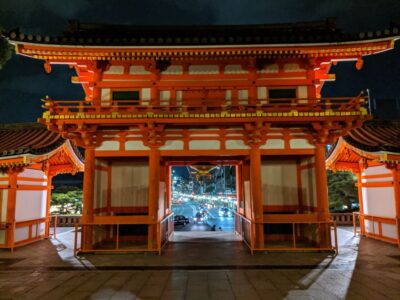
Best of Kyoto: Gion, Geisha, Pagodas & Cobblestones
Read our review →
Kyoto Kimono Rental Experience (Optional Exquisite Hair Styling/Japanese Makeup/Photography) (Ookini Kiyomizu-dera Main Store)
Read our review →Browse the lists this tour appears in