
Reviewed · KIMONO AND CULTURAL DRESS
Kyoto: Gion World of the Geisha Guided Walking Tour
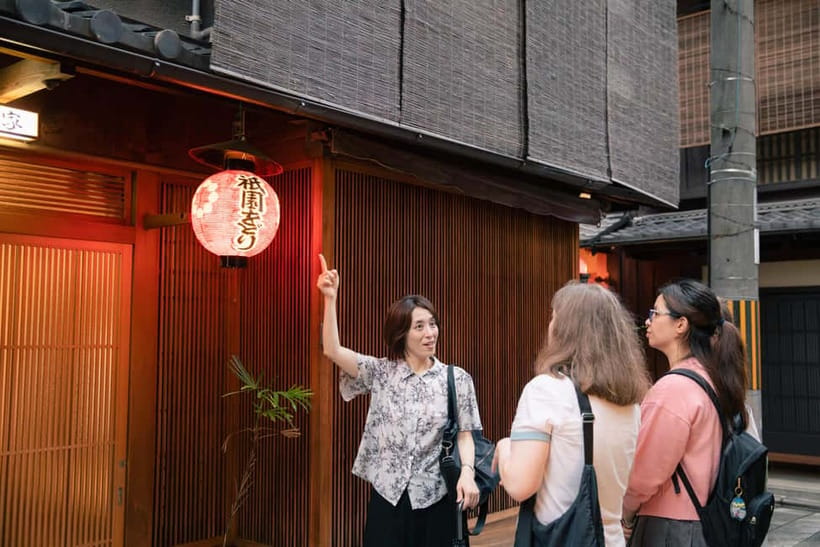
Gion rewards a slow look. This walking tour makes Kyoto’s famous geisha district easier to understand, with local stories, old lanes, Yasaka Shrine, the Shirakawa Canal, and two traditional entertainment areas along the way. I like the small-group format and the chance to learn the difference between maiko and geiko from a guide who knows Gion well. I also like that the route includes places you might miss while wandering alone.
The main catch is that this is a walking tour on uneven streets and stairs, and it is not suitable for wheelchair users or people with mobility limits. The duration also varies by booking option, from about two hours to 270 minutes, so check the exact start time and length before you pay.
In This Review
- Key points to know before you book
- Why Gion is worth seeing with a guide
- Starting near Izumo-no-Okuni or the Kanji Museum
- Yasaka Shrine gives the walk a wider context
- Two sides of Gion in one extended walk
- Shirakawa Canal is the prettiest photo stop
- Gion Corner and the final stretch
- What the geisha explanation adds
- Is $29 a fair price?
- Who should book this Gion walking tour?
- Practical advice for a smoother walk
- Should you book it?
- FAQ
- How long does the Gion walking tour last?
- What language is the tour conducted in?
- How much does the tour cost?
- What sights are included?
- Does the tour visit two geisha districts?
- Will I definitely see a maiko or geiko?
- Where does the tour start?
- What happens if I book the kimono rental option?
- Is the tour suitable for wheelchair users?
- Can I cancel for a full refund?
Key points to know before you book
- Learn Gion from a local guide: Guide Ito has earned special praise for clear, friendly explanations of the district.
- See two geisha districts: The route gives you more than a quick walk along Gion’s best-known street.
- Visit Yasaka Shrine: About 40 minutes here adds religious and cultural context to the neighborhood.
- Walk beside Shirakawa Canal: This is one of the prettiest parts of the route and a good place for photographs.
- Expect a real walking tour: Comfortable shoes matter, and the tour runs in rain or shine.
- Pay $29 for local context: That is a reasonable price if you want a focused introduction instead of wandering without background.
Why Gion is worth seeing with a guide
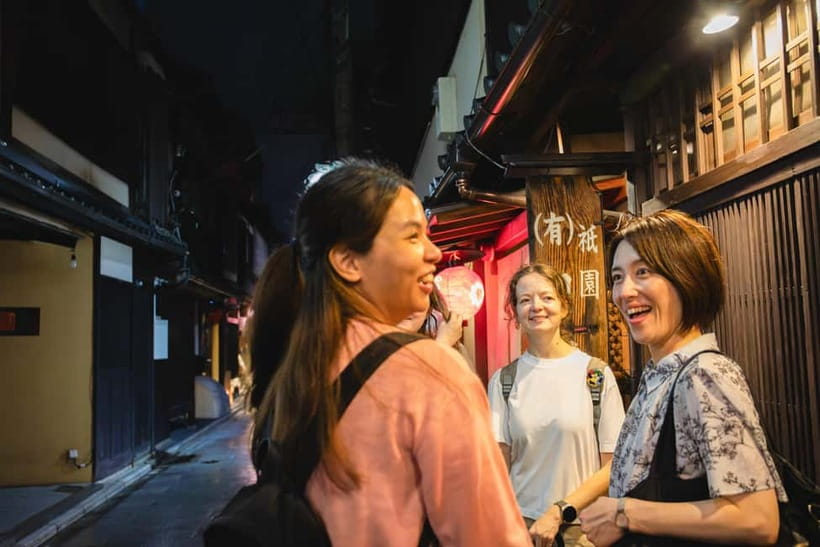
Gion is easy to photograph and surprisingly easy to misunderstand. You can walk past a quiet wooden entrance, a narrow lane, or a shuttered teahouse without knowing what role it plays in Kyoto’s traditional entertainment world.
A guide gives those streets meaning. On this tour, you learn about the kagai, the traditional geisha districts, and the people who work within them. In Kyoto, a geisha is called a geiko, while a maiko is an apprentice geiko. That distinction is small but useful, since the clothing, age, training, and role of each are not identical.
I especially like the focus on everyday cultural context. The tour is not only about spotting someone in makeup and formal dress. It explains the world around maiko and geiko, including the district’s customs and the way this traditional culture fits into modern Kyoto.
You may see a maiko or geiko during the walk, but that is luck, not a promise. Treat any possible sighting as an extra, not the purpose of the booking. Your guide also gives advice on where you may have a better chance of seeing maiko in action.
That approach is important. Gion is a working neighborhood, not a stage set. A good walking tour should help you look with respect, and this experience is designed around cultural understanding rather than a guaranteed photo opportunity.
More Kimono Experiences in Kyoto
- [Kyoto & Nara Day Tour] Sagano Scenic Railway & Nara Park & Fushimi Inari Taisha Thousand Torii Gates & Togetsukyo Bridge & Bamboo Grove & Kimono Forest (Departing from Osaka)
★ 4.9 · 10,942 reviews - Kyoto Geisha Walking Tour: Gion District & Hidden Gems
★ 4.7 · 3,273 reviews - Kyoto: Gion Magical Night Walking Tour with Geisha Trivia
★ 4.9 · 2,393 reviews
Starting near Izumo-no-Okuni or the Kanji Museum
There are three possible starting points, depending on the option you select:
- The statue of Izumo-no-Okuni
- Wargo Kyoto Kimono Rental Kyoto Gion Store
- The Japan Kanji Museum and Library, also called the Kanji Museum
The meeting place matters, so read your confirmation carefully. You do not want to begin the tour at the wrong end of Gion, especially if you have reserved a kimono-related option.
If you choose the kimono rental option, you change into your kimono first and then make your own way to the Japan Kanji Museum and Library. The guide waits for you there. This is a useful detail, because the guide does not accompany you from the rental shop to the museum.
The statue of Izumo-no-Okuni is a practical reference point for the central Gion area. The Kanji Museum gives the walk a clear meeting location, while the kimono rental option adds a more visual connection to Kyoto’s traditional culture. Still, a kimono can make a long walk less comfortable, so consider your footwear and the length of your selected tour.
Yasaka Shrine gives the walk a wider context
The tour spends about 40 minutes at Yasaka Shrine. This is one of Kyoto’s best-known shrines, and it provides a useful opening chapter before the group enters the smaller lanes of Gion.
Here, you get more than a quick photo stop. Your guide explains the shrine as part of the cultural setting around Gion, helping you connect religious tradition with the district’s old entertainment culture. That matters because Gion is not an isolated collection of pretty buildings. It developed within a much larger part of Kyoto’s social and spiritual life.
The shrine is also a good place to get your bearings. After the introduction, the walk moves into the historic streets, where the scale becomes more intimate. You go from a major public site to narrow lanes and traditional architecture.
Forty minutes is enough for guided explanation without making the shrine the whole tour. If you have already visited Yasaka Shrine, this portion may feel familiar, but the guide’s local background can still add useful detail.
Two sides of Gion in one extended walk
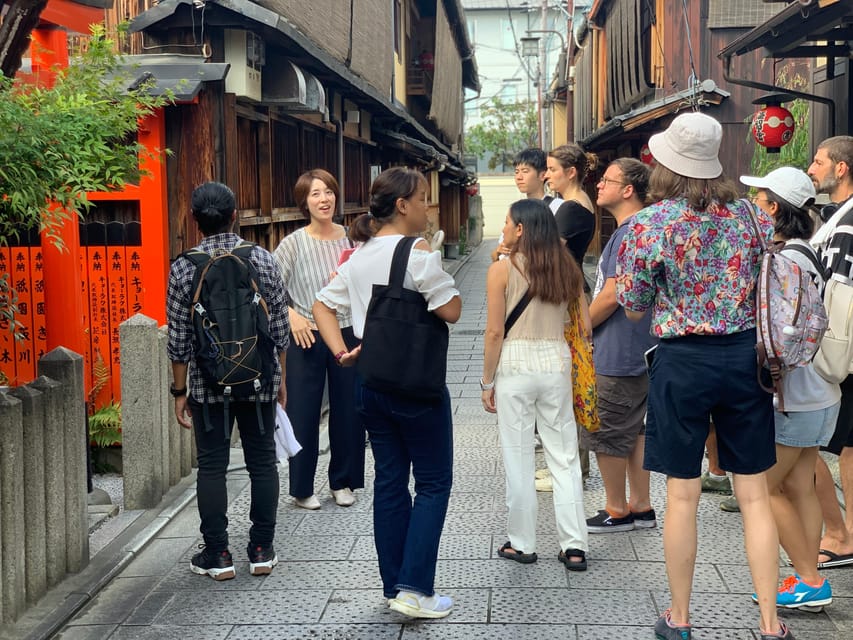
The main Gion portion lasts about 80 minutes. This is the heart of the experience, and it is where the tour earns its price.
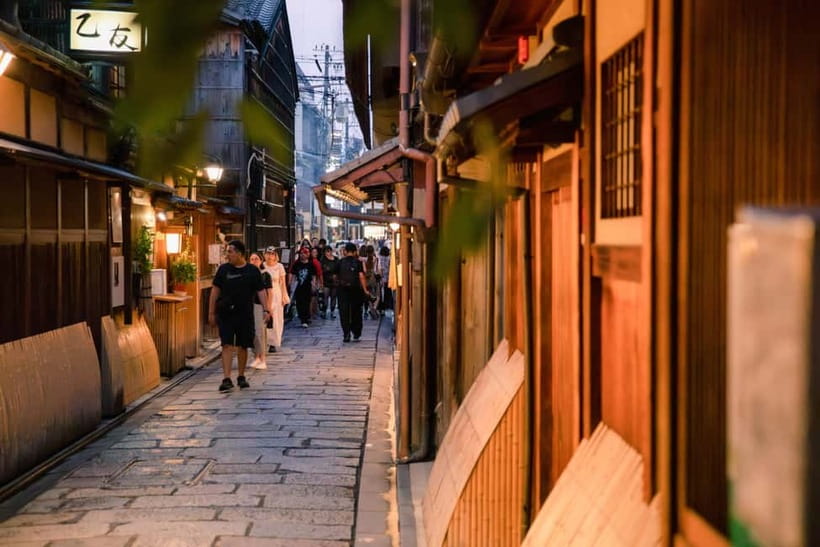
You walk through picturesque lanes, look at traditional buildings, and hear stories about the geisha district from a local English-speaking guide. The route covers two geisha districts in Gion, giving you a broader view than a short stroll through one famous lane.
That wider route is one of the strongest features. Gion can feel crowded in its most photographed spots, yet quieter streets are often more revealing. They show how the district is arranged and how its traditional character is woven into ordinary city streets.
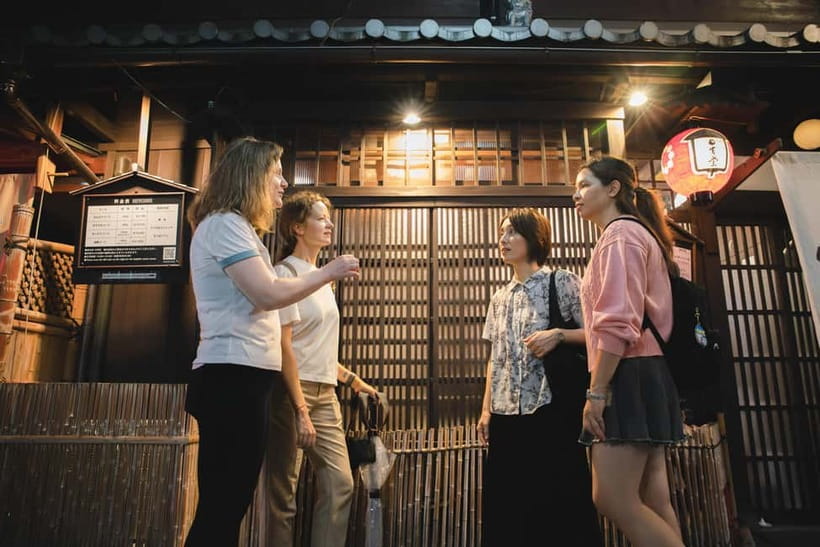
Your guide points out details you might otherwise pass without noticing. The supplied information does not name every street or building, which is actually a reason to value the live guide. The route can be explained as you walk, rather than reduced to a fixed list of stops.
The pace should suit most people who are comfortable walking for several hours with breaks at shrines and photo points. It is not a bus tour, and there is no vehicle to carry you between locations. Wear shoes you can trust and be ready for stairs.
A small group is available. That usually makes it easier to hear stories and ask questions than on a large group walk. The exact group size is not stated, so do not assume every departure will be intimate, but the small-group option is worth choosing if you prefer a more personal experience.
More Walking Tours in Kyoto
- Kyoto: Gion Geisha District Walking Tour – Stories of Geisha
★ 4.7 · 2,187 reviews - Night Walk in Gion: Kyoto’s Geisha District
★ 4.5 · 2,003 reviews - Kyoto Gion Geisha District Walking Tour – The Stories of Geisha
★ 5.0 · 1,441 reviews - Nishiki Market Brunch Walking Tour (7 Tastings + Brunch)
★ 5.0 · 1,355 reviews
Shirakawa Canal is the prettiest photo stop
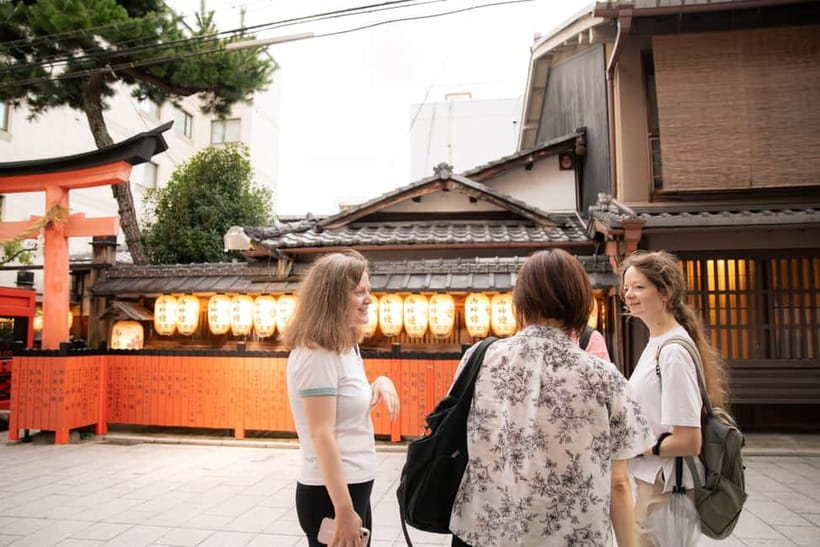
The route includes the Shirakawa Canal, one of the most attractive settings in the Gion area. Water, traditional streets, and old-style architecture give this part of the walk a calmer feel.
You get time for sightseeing and photographs here. It is a welcome change after the denser streets around the main district, and it gives you a chance to pause while the guide continues explaining the area.
This is also the kind of place where timing affects the mood. The tour takes place in rain or shine, so a wet day may change the feel of the canal and make the footing slick. Bring suitable clothing and protect your camera or phone if rain is forecast.
Do not expect a long independent photography session. The stop is part of a guided route, so you will need to keep pace with the group. If photography is your main goal, ask the guide how much time is available before wandering far from the meeting point.
Gion Corner and the final stretch
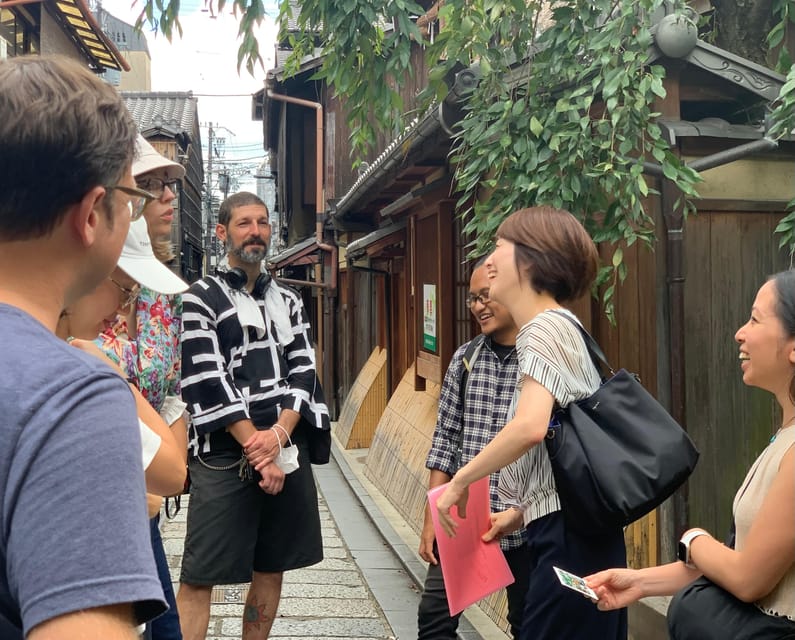
The itinerary also includes Gion Corner, another useful stop for understanding Kyoto’s traditional performing arts. The guide provides sightseeing and explanation here, adding a cultural finish to the walk.
Gion Corner helps connect the streets you have seen with the formal arts associated with Kyoto. The tour does not promise a performance, ticket, or show at the venue, so think of this as a guided visit to an important cultural point rather than a theater booking.
The final section includes short guided and sightseeing stops, plus a brief photo opportunity. These smaller pauses break up the walk and give you time to take in the architecture without rushing from one major sight to the next.
The listed drop-off options include Gion Kobu Kaburenjo, also written as Gion Kōbu Kabur enjō. Exact drop-off arrangements depend on the option you book. This is helpful if you plan to continue exploring Gion afterward, but you should not treat the tour as a hotel transfer.
What the geisha explanation adds
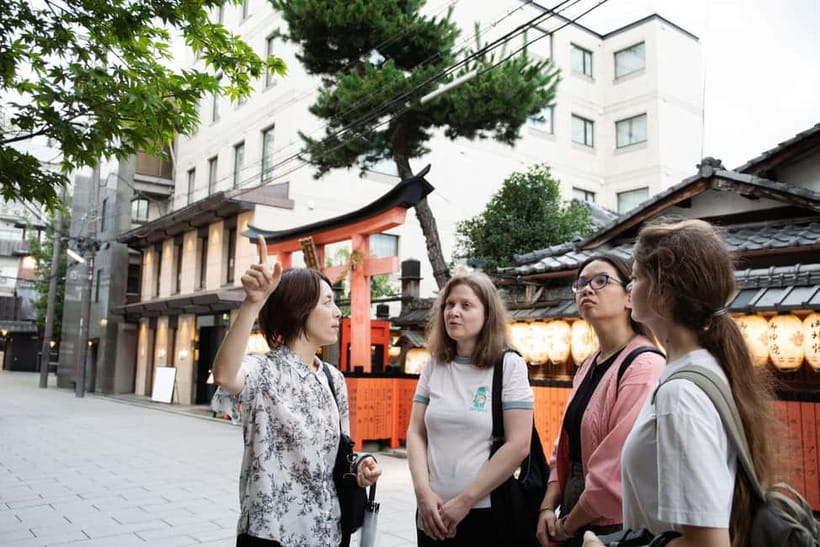
The best reason to book is the explanation of geiko and maiko life. Without that context, it is easy to reduce the district to costumes, makeup, and old wooden facades.
The guide discusses the lifestyle of maiko, who are apprentices, and geiko, the Kyoto term for geisha. You also hear about the history of the kagai, the district system that supports this traditional culture.
The experience is strongest for someone who wants an introduction rather than a specialist lecture. You get stories while moving through the actual streets where the culture developed. That combination makes the information easier to remember.
Guide Ito receives especially strong praise for being friendly and exceptionally well informed about Gion. The most repeated positive points are the guide’s local understanding, the small group, and the route. Those qualities matter more here than flashy extras. Gion is best explained by someone who can connect a building, a lane, and a custom as you see them.
At the same time, the tour cannot show you every side of geiko culture in a few hours. If you want a full performance, a meal at a teahouse, or an extended workshop, this is not that product. It is a guided introduction on foot.
Is $29 a fair price?
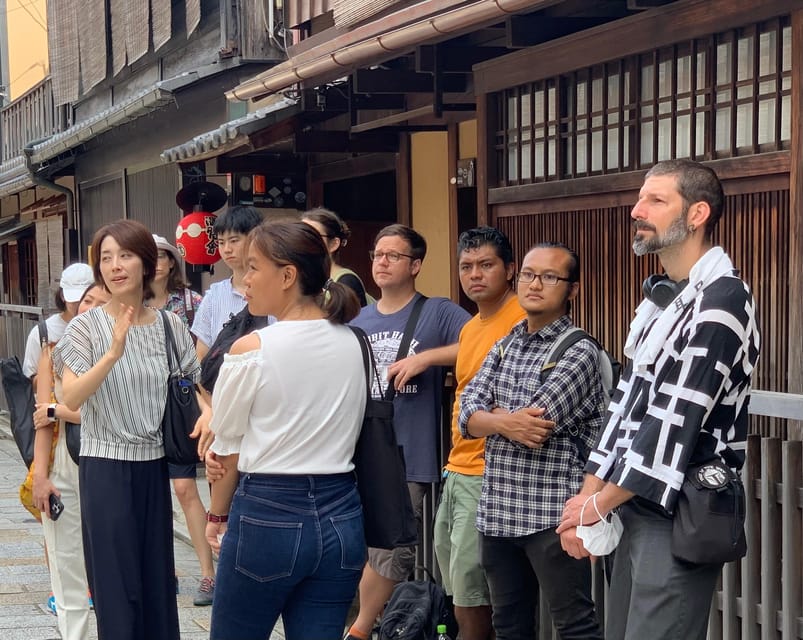
At $29 per person, this is fairly priced for a two-hour cultural walk with a guide fee included. The value comes from local explanation and route planning, not admission tickets or transport.
You are paying to avoid spending your first hour wondering which lanes matter and what you are looking at. You also get a coherent route linking Yasaka Shrine, Gion, Shirakawa Canal, and Gion Corner.
The value improves if you are new to Kyoto, short on time, or uneasy about entering a traditional district without context. It is less compelling if you already know Gion well and prefer to walk independently.
The duration needs attention. The activity is described as lasting from two hours to 270 minutes, or four and a half hours, depending on availability and the option selected. That is a wide range. Check the exact departure and duration before booking, especially if you have dinner reservations or a same-day train.
Three starting choices and varying drop-off points add flexibility, but they also create room for confusion. Save the exact meeting point on your phone and allow time to reach it.
Free cancellation up to 24 hours before the tour and reserve-now, pay-later booking make it easier to fit into a changing Kyoto schedule. Those terms are useful, but they do not remove the need to check your selected option carefully.
Who should book this Gion walking tour?
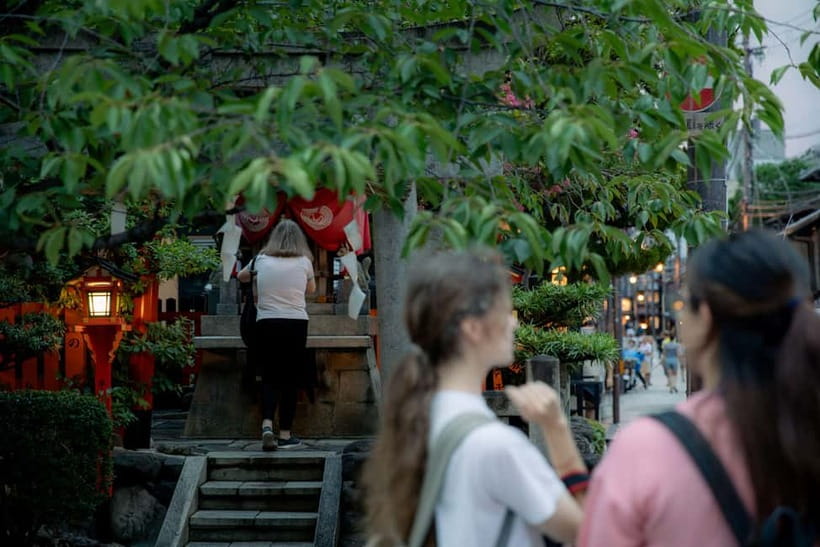
I would recommend it to:
- First-time Kyoto visitors who want Gion explained clearly
- People curious about geiko and maiko culture
- Visitors who prefer local stories to a self-guided walk
- Photographers who want the Shirakawa Canal and historic streets included
- Families with children who can manage a walking route with adult supervision
- Anyone looking for a short cultural activity at a moderate price
I would be more cautious if you have trouble with stairs, long walks, or uneven surfaces. The tour is not suitable for wheelchair users or people with mobility impairments.
It also may not suit you if you expect a guaranteed geiko or maiko sighting. The chance exists, and the guide offers tips on where to look, but Gion is a living district and sightings cannot be scheduled.
Children must be accompanied by an adult. Because the group moves through public streets and includes cultural explanation, younger children may enjoy the atmosphere more than the historical detail, though the tour data does not set a minimum age.
Practical advice for a smoother walk
Wear comfortable walking shoes. This is the most important preparation, especially if your option lasts closer to the longer duration.
Bring weather protection because the tour runs in rain or shine. A rainy day does not cancel the walk, but it can make stairs and pavement less pleasant.
Respect the district as you would any residential neighborhood. Listen to the guide about appropriate behavior around maiko, geiko, teahouses, shrines, and private streets. The point is to understand Gion, not to treat people as scenery.
If you book the kimono option, plan for the independent walk from the rental location to the Kanji Museum. Give yourself enough time to change and reach the meeting point without hurrying in unfamiliar clothing.
Finally, check the language before booking. The live tour guide is English-speaking, and no other language is listed.
Should you book it?
Book this tour if you want a clear, friendly introduction to Gion, with Yasaka Shrine, two geisha districts, Shirakawa Canal, and Gion Corner tied together by local explanation. At $29, it offers good value for a focused cultural walk, and Guide Ito’s praised approach is a strong reason to expect useful detail rather than a simple photo stroll.
Skip it if you need step-free access, dislike walking in bad weather, or want a guaranteed performance or maiko sighting. For most first-time visitors who want to see Gion with more understanding, this is a practical way to begin.
FAQ
How long does the Gion walking tour last?
The duration varies by option. It is listed as starting at two hours and extending to 270 minutes. Check availability for the exact length and starting time.
What language is the tour conducted in?
The live tour guide speaks English.
How much does the tour cost?
The listed price is $29 per person.
What sights are included?
The route includes Yasaka Shrine, Gion, the Shirakawa Canal, and Gion Corner, along with historic streets, guided sightseeing, and photo stops.
Does the tour visit two geisha districts?
Yes. The walk covers two geisha districts within Gion.
Will I definitely see a maiko or geiko?
No. You might encounter geiko or maiko during the walk, but sightings are not guaranteed. The guide also shares tips on where you may see maiko in action.
Where does the tour start?
The meeting point depends on the option booked. Possible starting locations include the statue of Izumo-no-Okuni, Wargo Kyoto Kimono Rental Kyoto Gion Store, and the Japan Kanji Museum and Library.
What happens if I book the kimono rental option?
After changing into a kimono, you must travel to the Japan Kanji Museum and Library by yourself. The guide waits for you there.
Is the tour suitable for wheelchair users?
No. The tour is not suitable for wheelchair users or people with mobility impairments because the route includes walking and stairs.
Can I cancel for a full refund?
Yes. You can cancel up to 24 hours in advance for a full refund. The activity also offers reserve-now, pay-later booking.
Just added in Kyoto
- The “Golden Route” and Ancient Japan by DIAMIR Erlebnisreisen – 14-Day Tour★ 2.0 · 2 reviews
- Japan: Castles & Cuisine by G Adventures – 6-Day Kyoto to Osaka Tour★ 4.5 · 4 reviews
- Cycle Japan by Explore! – 13-Day Kyoto to Tokyo Tour★ 4.7 · 12 reviews
- Cycle Japan by Intrepid Travel – 11-Day Kyoto to Tokyo Tour★ 4.8 · 2 reviews
- Classic Japan by Intrepid Travel – 11-Day Kyoto to Tokyo Tour★ 4.4 · 14 reviews
- Ancient & Modern Japan 14-Day Tour by Exodus Adventure Travels★ 4.4 · 40 reviews
- 5 Day Cultural Adventure of Kyoto, Nara & Osaka by Tourist Journey★ 2.5 · 2 reviews
- 12 Days Kinosaki Onsen Escape: A Journey Through Japan’s Timeless Towns by UME Travel★ 4.8 · 5 reviews
Kimono and Cultural Dress, compared.
![[Kyoto & Nara Day Tour] Sagano Scenic Railway & Nara Park & Fushimi Inari Taisha Thousand Torii Gates & Togetsukyo Bridge & Bamboo Grove & Kimono Forest (Departing from Osaka)](https://media.japanvisits.com/wp-content/uploads/kyoto-nara-day-tour-sagano-scenic-railway-nara-park-fushimi-inari-taisha-thousand-torii-gates-togetsukyo-bridge-bamboo-grove-kimono-forest-departing-from-osaka-k110001-400x257.jpg)

Tokyo Asakusa Kimono&Yukata Rental at Kimono Miyabi Asakusa Station
Read our review →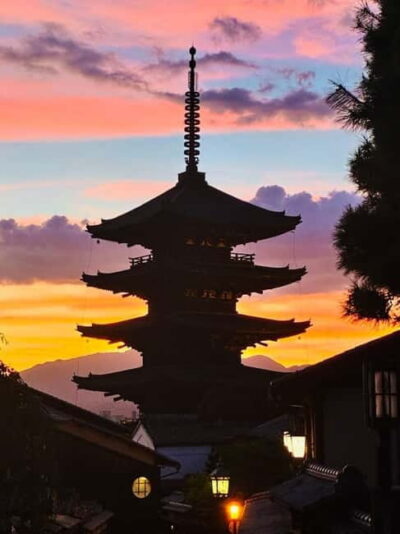
Kyoto Geisha Walking Tour: Gion District & Hidden Gems
Read our review →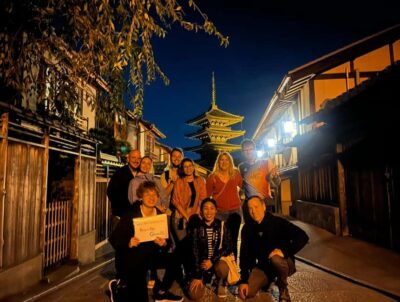
Gion Magical Night Walking Tour with Geisha Trivia
Read our review →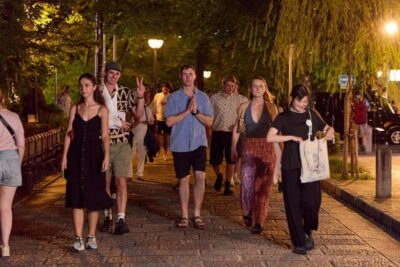
Gion Geisha District Walking Tour – Stories of Geisha
Read our review →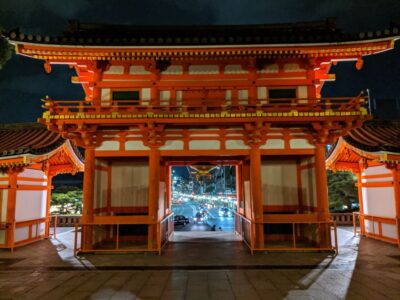
Best of Kyoto: Gion, Geisha, Pagodas & Cobblestones
Read our review →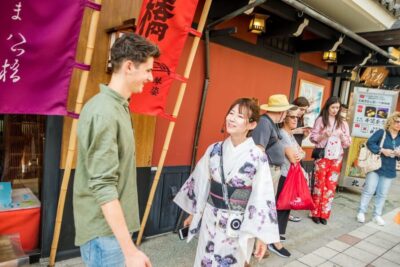

Kyoto Kimono Rental Experience (Optional Exquisite Hair Styling/Japanese Makeup/Photography) (Ookini Kiyomizu-dera Main Store)
Read our review →Browse the lists this tour appears in