
Reviewed · KIMONO AND CULTURAL DRESS
Kyoto: Meet the Geisha Maiko with Gion Walking Tour
Gion reveals its secrets slowly. This Kyoto experience pairs a guided walk through the city’s historic entertainment district with rare access to a private ochaya, or traditional teahouse venue. I especially like the chance to speak directly with a maiko and former geiko, and I like that the walk gives you useful context before the performance. The main consideration is timing: the dance may last only a few minutes, while the full activity can run longer than expected.
The tour costs $106 per person and lasts roughly three to five hours. That is a serious price for a short Kyoto activity, but you are paying for access that is normally restricted by membership and personal connections. Bring socks, expect stairs, and leave room in your schedule for a cultural exchange that may not end exactly on time.
In This Review
- Key Points Before You Book
- Why This Gion Experience Is Different
- Starting at the Izumo-no-Okuni Statue or Kimono Shop
- Shirakawa Canal: A Quiet Introduction to Gion
- Tatsumi-jinja Shrine and Hanamikoji Street
- Gion Corner and the Route Toward Kenninji
- Miyagawasuji: Entering the Private Venue
- The Maiko Performance: Beautiful, Focused, and Short
- Asking Questions About the Geiko and Maiko Life
- Photo Time With the Maiko
- Is $106 Good Value?
- Who Will Enjoy This Most?
- Should You Book the Gion Maiko Experience?
- FAQ
- How long does the Kyoto maiko and Gion tour last?
- What does the walking portion include?
- Can I take photos or videos?
- Do I need to wear socks?
- Is the tour suitable for wheelchair users?
- Where does the tour meet?
Key Points Before You Book
- A rare private-house visit: You enter a traditional venue that most independent visitors cannot access.
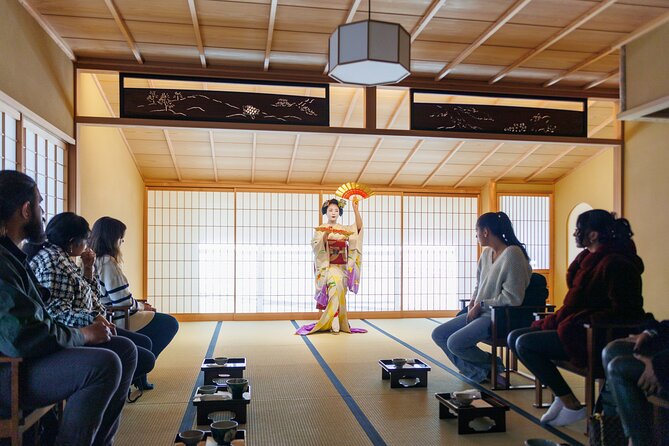
- The performance is brief but memorable: A maiko and former geiko present one or two dances, often the emotional high point of the afternoon.
- The conversation matters as much as the dance: You can ask about training, daily life, customs, and the changing role of geiko and maiko.
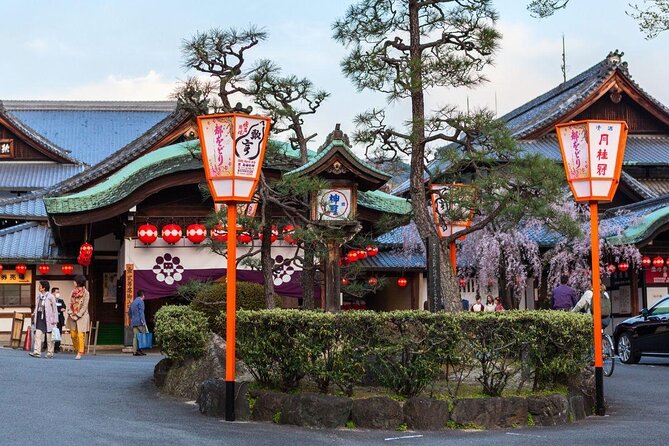
- The Gion walk sets the scene: Shirakawa Canal, Tatsumi-jinja Shrine, Hanamikoji Street, Gion Corner, Kenninji Temple, and Miyagawasuji provide a useful introduction.
- Kimono rental may be available: With that option, you change at the wargo Kyoto Kimono Rental Gionshijo Store and walk about three minutes to the Izumo-no-Okuni statue.
- Plan for stairs and respectful photography: The performance room is on the second floor, and photos or videos are limited to specific parts of the visit.
Why This Gion Experience Is Different
Kyoto has plenty of geisha-themed entertainment, but this outing is not simply a staged photo opportunity. It gives you time with people who work within the geiko and maiko tradition, along with an English-speaking guide who explains what you are seeing.
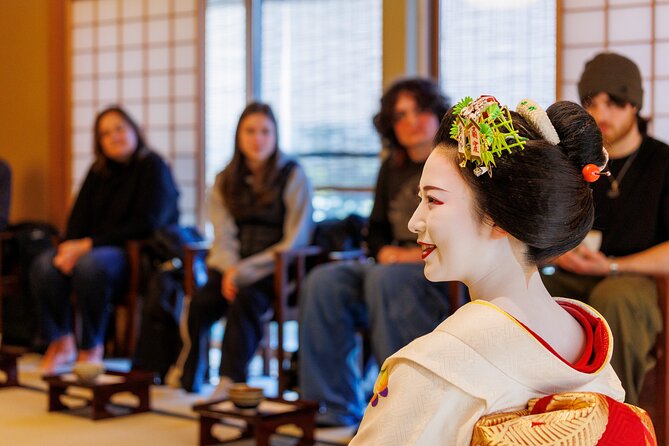
In Kyoto, geiko is the local term for a professional geisha. A maiko is an apprentice geiko, still in training and usually recognizable by her more elaborate hairstyle, colorful kimono, and decorative hair ornaments. The distinction is easy to miss if you only see a quick glimpse of someone walking through Gion.
That context is one of the tour’s strengths. Guides such as Mika, Naomi, Takuma, Tom, Chiko, Ayako, Eric, and Yuko have been praised for explaining the district clearly and helping with translation. The exact guide depends on the date, but the experience appears to rely heavily on that person to connect the walking tour with the private meeting.
The most valuable part for you is the conversation. The dance is beautiful, but it is short. The questions and answers help explain the years of training, the work behind the costumes and makeup, and the difference between the public image of geisha and their actual professional lives.
More Kimono Experiences in Kyoto
- [Kyoto & Nara Day Tour] Sagano Scenic Railway & Nara Park & Fushimi Inari Taisha Thousand Torii Gates & Togetsukyo Bridge & Bamboo Grove & Kimono Forest (Departing from Osaka)
★ 4.9 · 10,942 reviews - Kyoto Geisha Walking Tour: Gion District & Hidden Gems
★ 4.7 · 3,273 reviews - Kyoto: Gion Magical Night Walking Tour with Geisha Trivia
★ 4.9 · 2,393 reviews
Starting at the Izumo-no-Okuni Statue or Kimono Shop
There are two possible starting points. One begins at the Izumo-no-Okuni statue near Gion-Shijo. The other begins at the wargo Kyoto Kimono Rental Gionshijo Store if you select the kimono rental option.
If you rent a kimono, you change at the shop first and then walk to the statue on your own. The walk takes about three minutes, and the guide waits for you there. This is a simple transfer, but do not assume the guide will meet you inside the rental store.
Wearing a kimono can make the walk and photographs more memorable, and several people particularly enjoyed combining the traditional clothing with the maiko encounter. It also adds practical concerns. Gion has paved streets, and a kimono can make walking slower, especially in hot weather. One July visit was enjoyable but physically uncomfortable because of the heat.
The meeting point can vary according to the option you book, so check your confirmation carefully. Arrive with socks, not bare feet. You must wear socks inside the performance venue.
Shirakawa Canal: A Quiet Introduction to Gion
The first major stop is the Shirakawa Canal, where the guide spends about 30 minutes explaining the area. This is a good place to begin because the narrow waterway, traditional buildings, and small lanes help you understand the setting before you hear about the people who work here.
The guide points out how Gion functions as a district of restaurants, teahouses, shrines, and residences. You are not just looking at attractive streets. You are learning how the neighborhood connects to the geiko and maiko community.
The walk is not strenuous in itself, but the amount of standing and walking depends on the group and guide. On hot days, you may want water and a hat. In rain, the tour continues, so carry an umbrella and keep wet clothes and socks away from the venue.
Tatsumi-jinja Shrine and Hanamikoji Street
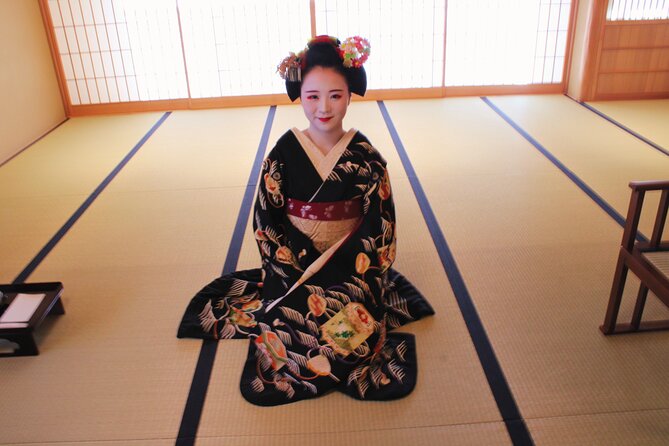
The stop at Tatsumi-jinja Shrine is brief, about five minutes. It is a small pause rather than a full shrine visit, so set your expectations accordingly. The guide uses the stop to add another piece of Gion’s cultural setting.
Hanamikoji Street receives about ten minutes of guided attention. This is one of the district’s best-known streets, with traditional facades and a strong connection to the image many people have of old Kyoto.
The street can feel crowded, particularly at popular times. You should listen carefully to the guide and avoid blocking entrances or photographing private activity. The point is not to hunt for a maiko in the street. It is to learn why the district looks and operates as it does.
This part of the route may repeat information if you have already taken another Gion walking tour. One person who had done a nighttime walk found some material familiar. Still, the daytime route provides useful preparation for the meeting later.
More Walking Tours in Kyoto
- Kyoto: Gion Geisha District Walking Tour – Stories of Geisha
★ 4.7 · 2,187 reviews - Night Walk in Gion: Kyoto’s Geisha District
★ 4.5 · 2,003 reviews - Kyoto Gion Geisha District Walking Tour – The Stories of Geisha
★ 5.0 · 1,441 reviews - Nishiki Market Brunch Walking Tour (7 Tastings + Brunch)
★ 5.0 · 1,355 reviews
Gion Corner and the Route Toward Kenninji
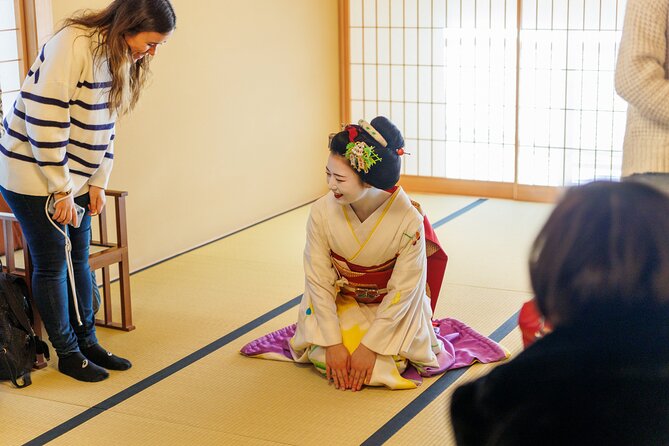
Gion Corner appears as another guided sightseeing point rather than a long performance stop. Your guide continues to explain the arts and customs associated with Kyoto’s traditional entertainment world.
The route then reaches Kenninji Temple, where you have about 15 minutes for sightseeing, a photo stop, and more explanation. The temple is an attractive change of pace from the narrow Gion streets, but do not mistake this for an in-depth temple tour.
The schedule gives you a glimpse of Kenninji rather than a detailed visit inside every part of the complex. If the temple is important to you, return later on your own with more time. One practical complaint about the stop was that it felt too brief, especially for anyone who had expected a fuller temple visit.
That limitation is worth knowing before you book. The walking segment exists mainly to explain Gion and prepare you for the maiko encounter. It is not designed as a complete tour of every landmark along the route.
Miyagawasuji: Entering the Private Venue
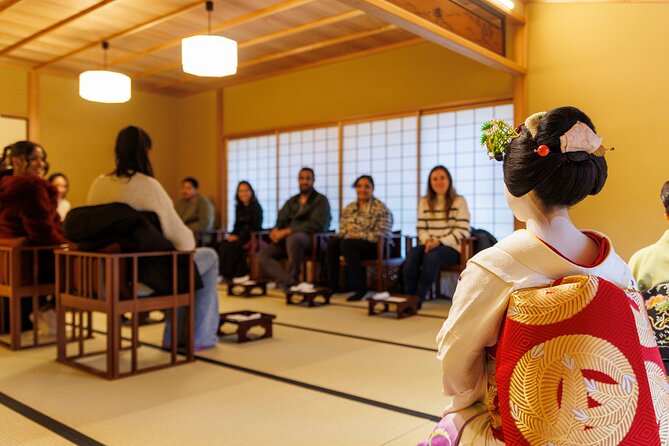
The walk finishes in Miyagawasuji, another flower district associated with Kyoto’s traditional entertainment culture. This is where the experience changes character. Instead of looking at the outside of teahouses, you enter a private residence and venue called an ochaya.
Access to traditional teahouses is normally limited. That makes this section the real reason to consider the price. You are not simply watching a professional perform on a public stage. You are entering a setting connected to the working world of geiko and maiko.
The meeting portion lasts about 90 minutes. A maiko performs one or two dances, and a former geiko and venue owner take part in the conversation. Depending on the day, the activity can run longer than the posted estimate, so do not schedule a tight train connection immediately afterward.
The performance room is on the second floor, and you can reach it only by stairs. This makes the activity unsuitable for wheelchair users and people with mobility impairments. Children under 10 are also not permitted.
The Maiko Performance: Beautiful, Focused, and Short
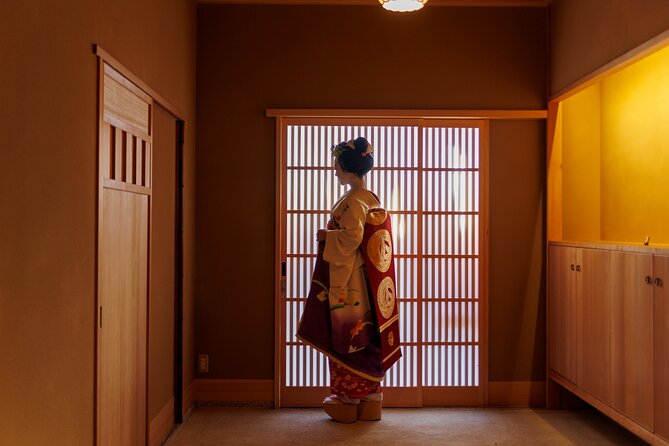
The maiko performance is usually the most striking moment. The colorful kimono, makeup, hair ornaments, posture, and controlled movement create an immediate visual impact when she enters the room.
The dance itself may last less than five minutes. That can surprise you if you imagine a long theatrical show. The value comes from seeing the precision up close and understanding what the movements mean within the wider tradition.
One or two dances are included. Music and movement are presented in a small room rather than a large theater, so the setting feels personal. You are close enough to notice details of the costume and the careful gestures.
Photography and video are allowed during the performance, but only then and during the later photo session. Do not take pictures during the conversation unless the guide or performers clearly allow it. If you want to post a photo of the maiko online, ask her directly for permission first. Videos cannot be uploaded online.
These rules are not minor formalities. They protect the performers and the private nature of the venue. Follow them carefully, and you will help keep this kind of access possible.
Asking Questions About the Geiko and Maiko Life
After the dance, the conversation becomes the heart of the visit. You can ask questions about training, work, customs, clothing, and daily life. The former geiko offers a different perspective from the maiko, since she has already completed that demanding professional path.
The guide translates the exchange into English. Guides such as Tom have been praised for handling questions in several languages, while Yuko and Naomi have been noted for clear interpretation and patient explanations. Translation quality matters here because the best details often come from follow-up questions.
The venue owner also joins the discussion. Her role helps place the performers within the wider ochaya system and gives you a sense of how these establishments operate.
This is where the tour moves beyond the familiar movie version of geisha culture. You can ask direct questions, hear personal stories, and compare the former geiko’s experience with the maiko’s current training. The tone is often warm and conversational, with room for humor as well as serious cultural explanation.
The conversation may repeat some information from the walk. That is a fair criticism if you have limited time, but the repetition can also help clarify terms and customs after you have seen the performer in person.
Photo Time With the Maiko
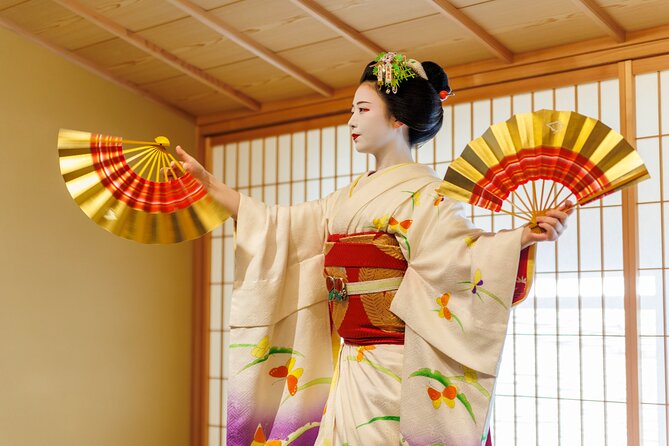
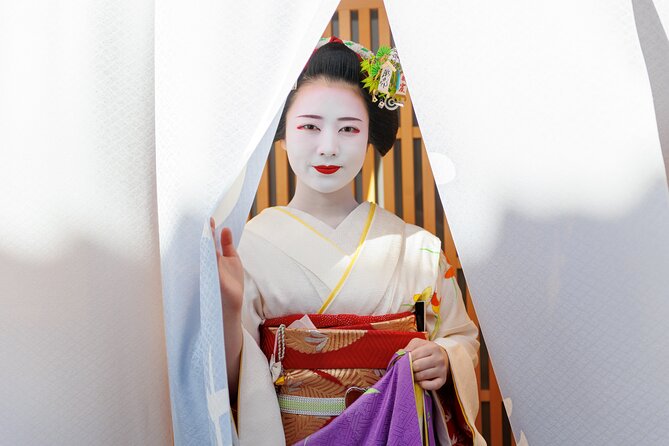
A photo session follows the performance and questions. This gives you a chance to take a personal picture with the maiko, subject to the venue’s rules and her permission.
If you are wearing a rented kimono, this is a particularly appealing part of the activity. The guide may help position you for a better photograph, as Ayako did for one participant. Still, treat the photo session as a cultural courtesy, not a rushed celebrity meet-and-greet.
Ask before posting images online. The supplied rules specifically require direct permission for internet publication, and online video uploads are not allowed.
Is $106 Good Value?
At $106, this is not a budget walk. A standard neighborhood tour would cost much less, and the sightseeing portion alone would not justify the price.
The value comes from the private access and the 90-minute meeting. You receive a live performance, direct conversation with a maiko and former geiko, translation, a photo session, and a guided introduction to Gion. For someone seriously interested in traditional Japanese arts, that combination is unusual.
I would not book it mainly for the walking route. Shirakawa Canal, Hanamikoji Street, Kenninji, and Miyagawasuji can be explored independently. I would book it for the ochaya visit and the chance to ask questions.
The rating of 4.8 from 371 reviews reflects strong satisfaction, and the praise focuses on the same points: the maiko performance, the personal stories, and guides who explain the experience with care. A few practical complaints concern groups that felt large, repeated information, the short temple stop, and a tour that lasted longer than expected.
Small groups are available, and one group of seven was especially comfortable for the intimate venue. If group size matters to you, select the small-group option when possible.
Who Will Enjoy This Most?
This tour suits you if you have a real interest in Japanese history, performance, clothing, or traditional arts. It is also a strong choice if you want a cultural experience that goes beyond temples and food tours.
You will get the most from it if you prepare a few questions in advance. Ask about the distinction between maiko and geiko, the training process, the meaning of the dances, or the role of the ochaya. The conversation is more rewarding when you take part rather than simply watch.
It may not suit you if you want a long dance performance, a full Kenninji Temple visit, or a tightly timed activity before a train. It is also a poor fit if stairs are difficult, if you use a wheelchair, or if you are traveling with children under 10.
The tour runs rain or shine. In bad weather, bring an umbrella and make sure your socks and clothing are dry before entering the private venue.
Should You Book the Gion Maiko Experience?
Book it if the private meeting is your priority. The walk is helpful, but the performance and conversation in Miyagawasuji are what make this experience worth the $106 price.
I would especially recommend it for a first visit to Kyoto when you want local explanation alongside a rare cultural encounter. Choose the kimono option if dressing up appeals to you, select a small group if available, wear socks, and leave extra time afterward.
Skip it if you mainly want a long stage show or a broad sightseeing tour. For everyone else, this offers a respectful, carefully guided look at a part of Kyoto that you normally cannot enter on your own.
FAQ
How long does the Kyoto maiko and Gion tour last?
The activity is listed as lasting three to five hours. The Gion walking portion takes about 70 to 80 minutes, and the maiko meeting takes about 90 minutes. The schedule can run longer on some days.
What does the walking portion include?
The route includes Shirakawa Canal, Tatsumi-jinja Shrine, Hanamikoji Street, Gion Corner, Kenninji Temple, and Miyagawasuji. The guide provides sightseeing, explanations, and photo stops along the way.
Can I take photos or videos?
Photography and video recording are allowed during the maiko performance and the designated photo session only. You must ask the maiko directly before uploading photos online, and videos cannot be uploaded to the internet.
Do I need to wear socks?
Yes. Socks are required at the performance venue. On rainy days, wet socks and wet clothing are not allowed inside.
Is the tour suitable for wheelchair users?
No. The performance takes place on the second floor of a private house, accessible only by stairs. The activity is also not suitable for people with mobility impairments or children under 10.
Where does the tour meet?
The meeting point depends on the option you book. You may meet at the Izumo-no-Okuni statue or at the wargo Kyoto Kimono Rental Gionshijo Store. With the kimono option, you walk from the rental shop to the statue, about three minutes away, where the guide waits.
Just added in Kyoto
- The “Golden Route” and Ancient Japan by DIAMIR Erlebnisreisen – 14-Day Tour★ 2.0 · 2 reviews
- Japan: Castles & Cuisine by G Adventures – 6-Day Kyoto to Osaka Tour★ 4.5 · 4 reviews
- Cycle Japan by Explore! – 13-Day Kyoto to Tokyo Tour★ 4.7 · 12 reviews
- Cycle Japan by Intrepid Travel – 11-Day Kyoto to Tokyo Tour★ 4.8 · 2 reviews
- Classic Japan by Intrepid Travel – 11-Day Kyoto to Tokyo Tour★ 4.4 · 14 reviews
- Ancient & Modern Japan 14-Day Tour by Exodus Adventure Travels★ 4.4 · 40 reviews
- 5 Day Cultural Adventure of Kyoto, Nara & Osaka by Tourist Journey★ 2.5 · 2 reviews
- 12 Days Kinosaki Onsen Escape: A Journey Through Japan’s Timeless Towns by UME Travel★ 4.8 · 5 reviews
Kimono and Cultural Dress, compared.
![[Kyoto & Nara Day Tour] Sagano Scenic Railway & Nara Park & Fushimi Inari Taisha Thousand Torii Gates & Togetsukyo Bridge & Bamboo Grove & Kimono Forest (Departing from Osaka)](https://media.japanvisits.com/wp-content/uploads/kyoto-nara-day-tour-sagano-scenic-railway-nara-park-fushimi-inari-taisha-thousand-torii-gates-togetsukyo-bridge-bamboo-grove-kimono-forest-departing-from-osaka-k110001-400x257.jpg)

Tokyo Asakusa Kimono&Yukata Rental at Kimono Miyabi Asakusa Station
Read our review →
Kyoto Geisha Walking Tour: Gion District & Hidden Gems
Read our review →
Gion Magical Night Walking Tour with Geisha Trivia
Read our review →
Gion Geisha District Walking Tour – Stories of Geisha
Read our review →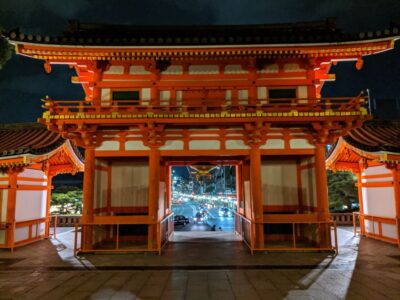
Best of Kyoto: Gion, Geisha, Pagodas & Cobblestones
Read our review →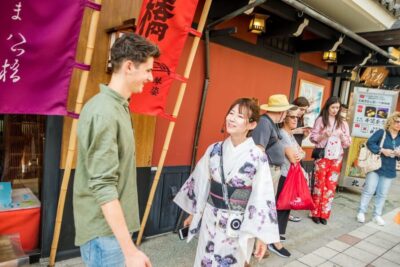
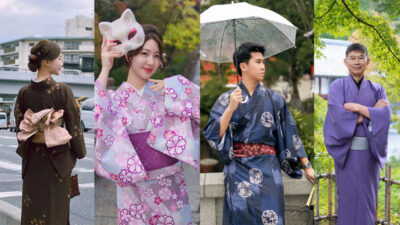
Kyoto Kimono Rental Experience (Optional Exquisite Hair Styling/Japanese Makeup/Photography) (Ookini Kiyomizu-dera Main Store)
Read our review →Browse the lists this tour appears in