
Reviewed · ENTRY TICKETS
Nidec Kyoto Tower Ticket
Kyoto’s temples and tiled rooftops make more sense when you see how the city fits together. From 100 meters up, Nidec Kyoto Tower gives you a broad view of the old capital, from the mountain edges to landmarks such as Kiyomizu-dera and Toji. I like the free binoculars and touch panels, which turn a skyline glance into a simple spot-the-temple exercise.
I also like the tower’s location across from Kyoto Station: it’s easy to add when you have an hour to spare, or to save for your last stop before catching a train. The trade-off is that the observation deck is compact, and if you’ve already visited several Japanese towers, the view alone may feel familiar.
In This Review
- At a glance: Kyoto from above
- Start with the city’s wide-angle view
- What the visit feels like, from station to deck
- The best time to go is when the light changes
- Binoculars, touch panels and photo stops
- Beyond the observation deck
- Is the ticket worth the price?
- Who should make time for the tower?
- Should you book Nidec Kyoto Tower?
- FAQ
- How tall is Nidec Kyoto Tower?
- Where is the tower?
- How do I get there from Kyoto Station?
- What are the opening hours?
- How long should I plan for a visit?
- What can I see from the observation deck?
- Are binoculars available?
- What does the admission ticket include?
- Do children aged 0 to 3 need a ticket?
- Can I use the ticket on any date?
At a glance: Kyoto from above
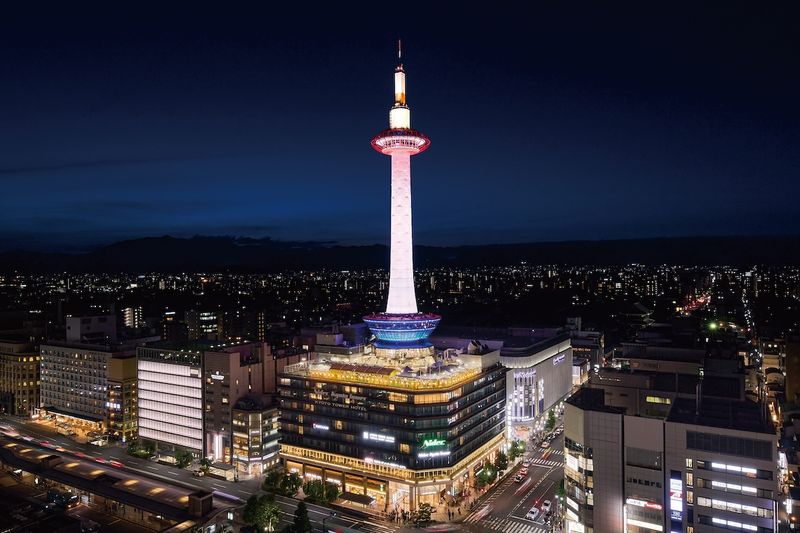
- The viewing deck sits 100 meters high. The tower’s full height is 131 meters, but the observation level is where you’ll take in the city.
- You get a 360-degree view. On clear days, sights may include Kiyomizu-dera, Toji, Fushimi Inari Shrine, Chion-in, Mount Hiei and, in the distance, Osaka.
- Free binoculars help you pick out landmarks. Touch panels add context, while designated photo spots make it easier to frame the view.
- It’s steps from Kyoto Station. The tower is a two-minute walk from the station’s Central Exit, with an underground passage also available.
- Plan for about an hour, or up to two. The deck is a short visit; shops and other facilities in the building can extend your stop.
- The ticket starts at $6.35. It covers admission to the tower, not personal purchases or other activities in the building.
Start with the city’s wide-angle view
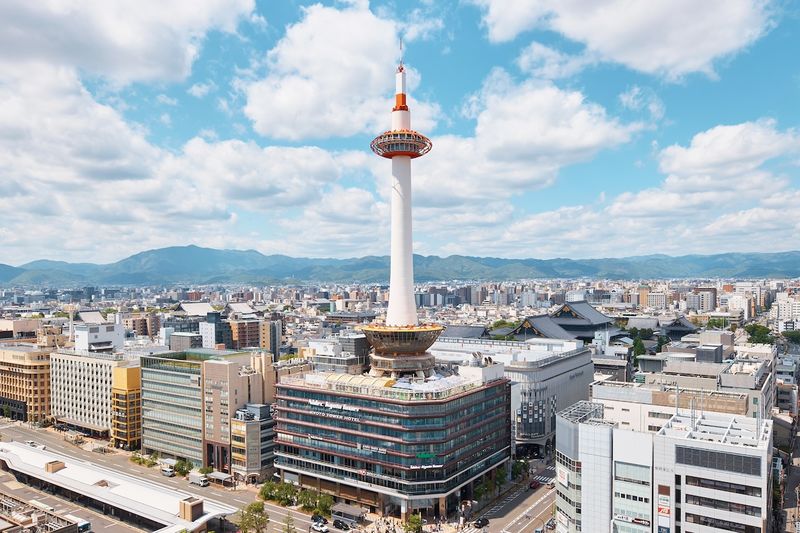
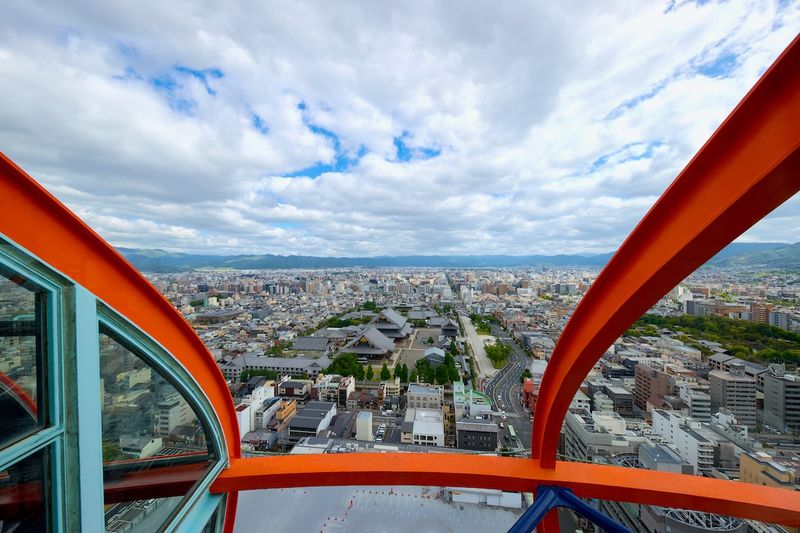
Kyoto Tower is a useful counterpoint to the temples, gardens and narrow lanes that fill most sightseeing days. From the deck, you can see the city’s broad layout, with dense neighborhoods and major landmarks stretching toward the surrounding mountains. That overview can help you understand the geography of places you’ve already visited, and spot some destinations you may want to see next.
The observation deck sits 100 meters above the ground. The tower itself reaches 131 meters, making it Kyoto’s tallest structure. It opened in 1964, an interesting bit of modern history in a city more often associated with centuries-old buildings.
The view is panoramic, but it isn’t a live guided tour. You’ll look out through the windows, use the free binoculars and consult the touch panels to identify sights. That makes the experience flexible: you can spend a few minutes scanning the skyline or linger over landmarks that matter to your itinerary.
On a clear day, you may see Kiyomizu-dera, Toji Temple, Fushimi Inari Shrine, Chion-in Temple and Mount Hiei. Osaka is also said to be visible in the distance when conditions cooperate. Treat that farthest view as a bonus, not a promise. Haze and weather can soften the horizon, while a clear day gives you the best chance of picking out the city’s outer edges.
More Entry Tickets in Kyoto:
- teamLab Biovortex Kyoto ticket
★ 4.8 · 3,186 reviews - Kyoto Aquarium Admission Ticket
★ 4.6 · 771 reviews - UZUMASA KYOTO VILLAGE Ticket
★ 4.4 · 763 reviews
What the visit feels like, from station to deck
The tower is directly across from Kyoto Station, so getting there is unusually simple for a city attraction. From the station’s Central Exit, expect about a two-minute walk. You can also use an underground passage that leads into the tower building.
Once inside, present your mobile voucher and enter with it. The ticket is for admission to Nidec Kyoto Tower’s observation deck. It does not cover personal spending, and activities or services elsewhere in the building may require separate payment.
The main event is the climb to the observation level and the circuit around the view. This is not a long, structured itinerary with several timed stops. You choose where to look and how long to stay. If you’re making a quick visit, an hour is a sensible allowance. If you want to study the views, take photos and explore the building’s other facilities, set aside closer to two hours.
The deck’s smaller scale is part of its appeal if you’re short on time: there’s little need to devote half a day to it. It can also be a limitation. If you expect a large entertainment complex or a sprawling observatory, you may find the viewing area modest. Some people find the interior dated or short on places to sit, so it’s best to think of the tower as a concise viewpoint rather than a destination built around hours of activities.
The best time to go is when the light changes
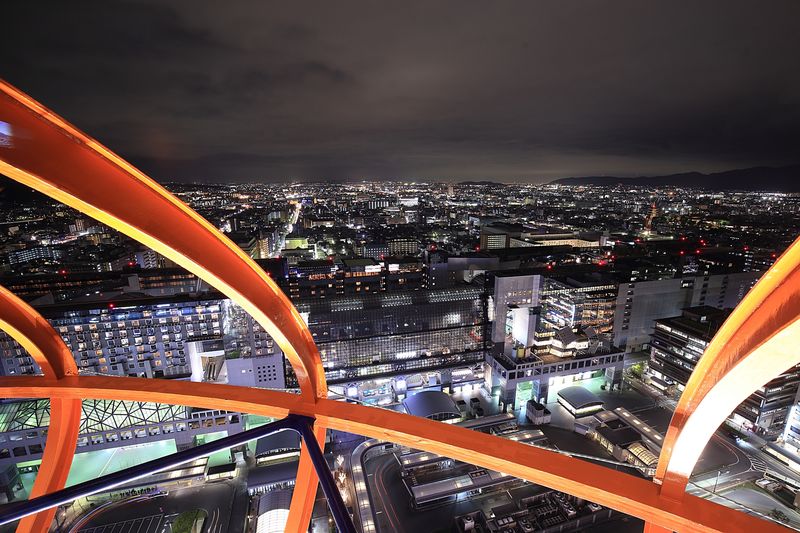
For the most rewarding visit, aim for a clear day and consider timing your entry around sunset. The suggested sunset window is about 7 p.m. in summer and 5 p.m. in winter, though actual sunset shifts with the date. Arriving before the sun drops gives you a chance to see the city in daylight, watch the sky change and stay for the evening lights.
That change of light is the main reason to linger. A daytime visit is better for identifying temples and reading the city’s layout. Evening gives Kyoto a different mood, with illuminated streets and a skyline that feels less like a map and more like a city settling into night. If photography matters to you, decide which view you want most before choosing a time.
The supplied opening schedule lists daily hours of 11 a.m. to 9 p.m., with last admission 30 minutes before closing. Hours can change, so check the official schedule close to your visit. Arriving at opening on a weekday may mean fewer people, while sunset is naturally a popular time. If you want both a calmer deck and sunset light, a weekday visit may be your best compromise.
Binoculars, touch panels and photo stops
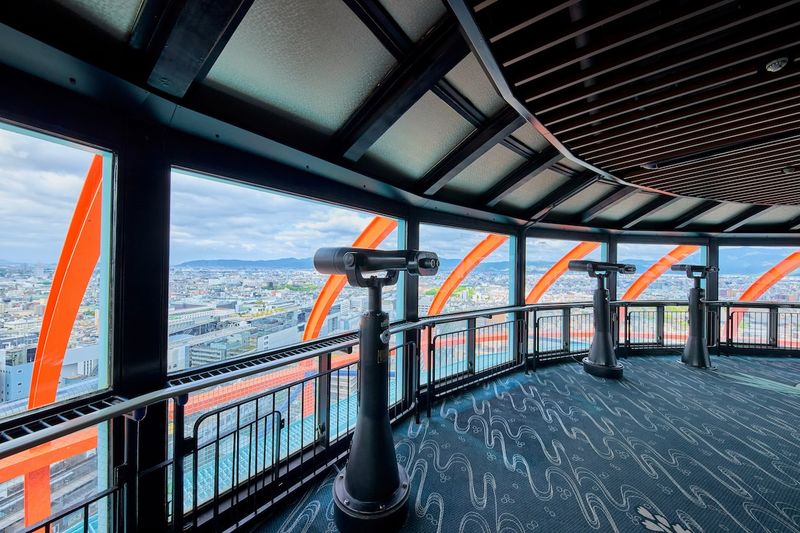
The free binoculars are a practical plus. They let you inspect distant landmarks rather than simply admire a broad sweep of rooftops. The viewing field can feel narrow, so don’t expect a telescope to replace a guided explanation, but it helps when you’re trying to locate a temple or mountain ridge.
Touch panels provide information about sights visible from the deck. They’re especially useful if you don’t know Kyoto’s landmarks by name. Use them to orient yourself, then look back through the windows and compare the city below with the map-like view on the screen. It’s a small feature, but it adds purpose to what could otherwise be a quick lap around the room.
Photo spots offer a chance to frame the skyline, and some visits may include a complimentary commemorative picture. Don’t make that a condition of booking, since it may not be available every time. The view itself is the reliable photo opportunity: take a few wide shots, then use the binoculars or camera zoom for details.
A few more options to weigh up in Kyoto
- PERFECT KYOTO 1-Day Bus Tour
★ 5.0 · 13,518 reviews - [Kyoto & Nara Day Tour] Sagano Scenic Railway & Nara Park & Fushimi Inari Taisha Thousand Torii Gates & Togetsukyo Bridge & Bamboo Grove & Kimono Forest (Departing from Osaka)
★ 4.9 · 10,942 reviews - Kyoto: Fushimi Inari, Kinkakuji, Bamboo Grove 1 Day Bus Tour
★ 4.8 · 4,316 reviews - Kyoto: Tea Ceremony in a Traditional Tea House in Kiyomizu
★ 4.9 · 3,519 reviews
Beyond the observation deck
The tower building has more than the viewing level. You’ll find souvenir shops, restaurants, a sky lounge, a photo studio and a public bath house among the facilities associated with the complex. Shops carry Kyoto Tower souvenirs, local crafts and treats, while the dining options include traditional and contemporary dishes.
There are also cultural activities in the building or nearby, such as making food replicas, preparing sushi and visiting a kimono rental shop. These are not included in the tower admission ticket, so check their availability and pricing separately if they interest you. The same goes for a drink at the Sky Lounge Bar: it can extend the outing, but it is not part of the basic entry.
This range of facilities makes the tower easier to fit into a stop near the station. You can come just for the view, then decide whether you want a meal or a browse afterward. I wouldn’t book the ticket on the assumption that every activity will be available or included. Treat the observation deck as the core visit, with the rest as optional extras.
Is the ticket worth the price?
At a starting price of $6.35, the ticket is a relatively modest way to get a high view of Kyoto. Its value depends on what you want from an observation deck. If you enjoy seeing a city from above, want help locating landmarks, or have a spare hour near Kyoto Station, the combination of panoramic views, free binoculars and easy access makes a reasonable case.
The tower may be less compelling if you’ve already visited several observation decks and are mainly looking for a novel attraction. The deck is not large, and the experience is focused on looking out over the city. You can be finished in a short visit, which is convenient when time is tight but may feel brief if you expect a full-length attraction.
The ticket is sold with instant confirmation and is valid for 90 days from booking. It has no cancellation or refund option, so check your plans before purchasing. Do not click the voucher link before your visit, since doing so redeems it. Children aged 0 to 3 enter free. The ticket cannot be used for the August 16 Gozan no Okuribi Appreciation Party or the January 1 New Year’s Day Hatsunobori.
If you’re driving, check parking costs before setting out. Parking is not included, and it can cost more than admission, so the train is the simpler choice for most people. Elevators serve the floors, and the facilities are described as accessible for visitors with disabilities.
Who should make time for the tower?
This is a good fit if you’re arriving in Kyoto by train, have a gap in your schedule, or want a visual overview after a day among temples and streets. It also works well as a final stop before departure: the station is right there, and the visit can be brief.
Families may appreciate the short format and the chance to use binoculars together. Photographers may prefer the changing evening light, while history-minded visitors can appreciate the contrast between a 1964 tower and Kyoto’s older buildings. If you’re traveling with someone who tires of long sightseeing days, the lift-accessed viewpoint offers a different perspective without requiring a major time commitment.
I’d skip it if your schedule is packed with temples you care more about, or if you’re comparing it with much larger observatories and expect a similar scale. Kyoto’s appeal is often strongest at street level, and the tower won’t replace that. It does give you a useful pause above it all, and a clear sense of how the city’s districts sit together.
Should you book Nidec Kyoto Tower?
Book if you want an easy, affordable city view, especially around sunset or on a clear day. Its location by Kyoto Station makes it an efficient add-on, and the free binoculars and landmark panels give the short visit a little more substance than a simple photo stop.
Skip it if you’ve already had your fill of observation decks or would rather spend every available hour at Kyoto’s temples and gardens. For a modest ticket price and roughly an hour of your time, Nidec Kyoto Tower is a practical choice, not an essential one.
FAQ
How tall is Nidec Kyoto Tower?
The tower is 131 meters tall, and its observation deck is 100 meters above the ground.
Where is the tower?
It is at Shichijo-sagaru Karasuma-dori in Kyoto’s Shimogyo-ku district, across from Kyoto Station.
How do I get there from Kyoto Station?
The tower is about a two-minute walk from the station’s Central Exit. An underground passage also leads into the building.
What are the opening hours?
The supplied schedule lists daily hours from 11 a.m. to 9 p.m., with last admission 30 minutes before closing. Hours may vary, so check the official website before you go.
How long should I plan for a visit?
Plan on about one to two hours, depending on how long you spend at the observation deck and whether you explore other facilities in the building.
What can I see from the observation deck?
The 360-degree view may include Kiyomizu-dera, Toji Temple, Fushimi Inari Shrine, Chion-in Temple and Mount Hiei. On a clear day, you may also see as far as Osaka.
Are binoculars available?
Yes. Free binoculars are available at the observation deck, and touch panels provide information about visible sights.
What does the admission ticket include?
The ticket includes admission to Nidec Kyoto Tower. Personal expenses and other activities are not included.
Do children aged 0 to 3 need a ticket?
No. Admission is free for children aged 0 to 3.
Can I use the ticket on any date?
The voucher is valid for 90 days from the booking confirmation date, expiring at 8:30 p.m. on its final day. It cannot be used for the August 16 Gozan no Okuribi Appreciation Party or the January 1 New Year’s Day Hatsunobori.
Just added in Kyoto
- Kyoto Nara Day Trip │ Kiyomizu-dera Temple + Fushimi Inari-taisha Shrine + Nara Park (Departing from Osaka/Kyoto)★ 4.7 · 3,408 reviews
- Kyoto Kimono Rental Experience (Optional Elegant Hairstyle/Japanese Makeup/Photography) (Ookini Kimono Rental Yasaka Shrine Gion Store)★ 4.8 · 1,091 reviews
- Kyoto Sumo Show with Experience & Photo, 2 Drinks Included★ 5.0 · 941 reviews
- Kyoto Kimono Rental Experience (Optional Exquisite Hair Styling/Japanese Makeup/Photography) (Ookini Kiyomizu-dera Main Store)★ 4.7 · 1,700 reviews
- Kyoto Arashiyama Scenic Train & Hozugawa River Boat Ride Day Trip (From Osaka / Kyoto)★ 4.8 · 604 reviews
- Kyoto Aquarium Admission Ticket★ 4.6 · 771 reviews
- Kyoto: Ring Making Workshop : Vintage Japanese Coin Ring★ 5.0 · 1,900 reviews
- Kyoto: Sumo Experience (with Live Show & Audience Challenge)★ 5.0 · 519 reviews
Entry Tickets, compared.
Tokyo Disney Resort – Tokyo Disneyland & Tokyo DisneySea Park Tickets
Read our review →




teamLab Borderless Tickets: MORI Building DIGITAL ART MUSEUM
Read our review →
Browse the lists this tour appears in