
Reviewed · CYCLING AND E-BIKE TOURS
Tokyo: Hidden Gems Guided Bike Tour with Lunch
Tokyo reveals itself best at street level. This five-hour bike tour links famous Asakusa sights with quieter neighborhoods, riverside views, a Sumo district, a Buddhist temple, and an Edo-era museum. I like the way it moves beyond the usual Tokyo checklist, and I especially like that lunch, bikes, museum admission, and insurance are included.
I also like the small group limit of five people. Guide Shogun has earned praise for keeping a good pace, explaining local history, and pointing out interesting places beyond the main tourist route. The main drawback is simple: you need to be comfortable cycling for several hours, and vegetarian lunch choices may be limited.
In This Review
- At a glance: what makes this ride worthwhile
- Why this tour offers a different Tokyo
- Meeting at Asakusabashi Station
- BANDAI figures and Asakusa’s famous gate
- Crossing the Sumida River toward Ryogoku
- Lunch in Tokyo’s Sumo district
- Fukagawa Fudo-son and everyday Buddhist practice
- The Fukagawa Edo Museum brings old Tokyo to life
- A café break before returning to Asakusabashi
- The pace, group size, and guide
- What to bring and what not to bring
- Who will get the most from this experience?
- Is the $96 price fair?
- Should you book the Tokyo bike tour?
- FAQ
- Where does the Tokyo bike tour begin?
- Where does the tour finish?
- How long does the tour last?
- What is included in the price?
- Is the tour suitable for beginners?
- Can children join the tour?
- Are vegetarian meals available?
- What happens if the weather is bad?
At a glance: what makes this ride worthwhile
- See Tokyo from a bicycle seat: You cover more ground than on foot while still moving slowly enough to notice bridges, shrines, side streets, and local districts.
- Start with Asakusa icons: BANDAI figures, Kaminarimon Gate, and Sensō-ji give you a clear introduction to old Tokyo and modern Japanese pop culture.
- Cross the Sumida River: The bridge ride offers views toward Tokyo Skytree and connects Asakusa with Ryogoku, the city’s famous Sumo area.
- Eat lunch in Ryogoku: The meal is included, giving the tour a useful pause in the middle of the five-hour route.
- Compare religion and daily life: Fukagawa Fudo-son shows living Buddhist practice, while the Fukagawa Edo Museum explains how ordinary people lived in the Edo period.
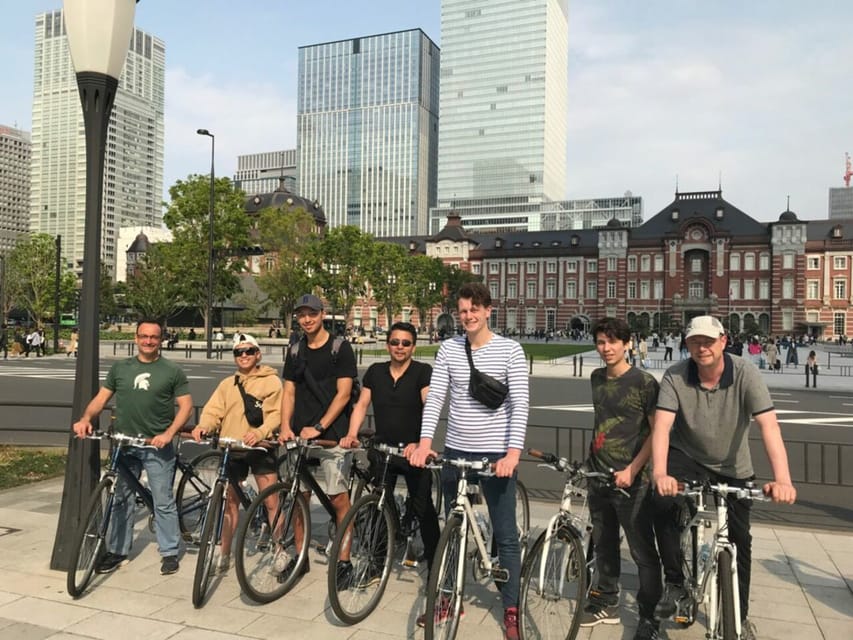
- Keep the group personal: With no more than five participants, you can ask questions and stay close to the guide.
Why this tour offers a different Tokyo
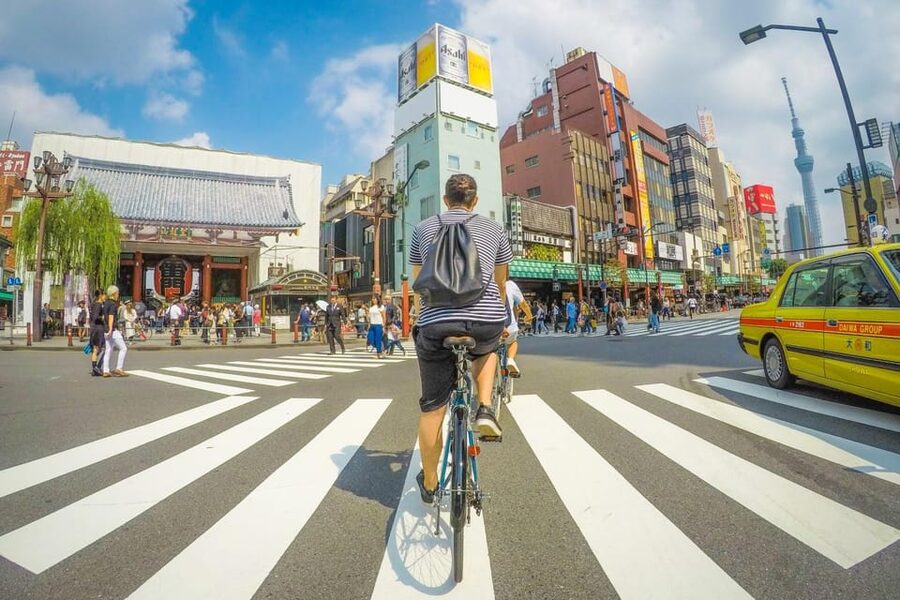
Tokyo’s major sights can be rewarding, but they often come with crowds, queues, and a steady stream of tour groups. This ride takes a different approach. It uses well-known places as anchors, then connects them by bicycle through eastern Tokyo.
That matters because the neighborhoods around Asakusa, Ryogoku, and Fukagawa have a strong link to the city’s earlier life. You are not only looking at old buildings. You are seeing how modern Tokyo grew around temples, rivers, entertainment districts, Sumo, and ordinary homes.
I like the balance. You get the photo stops that first-time visitors expect, but the tour does not end at Kaminarimon Gate. The later stops give you more context, especially the museum and temple in Fukagawa.
The tour costs $96 per person. That is not the cheapest way to see Asakusa, but the price includes a rental bike, an English-speaking guide, lunch, entry to the Fukagawa Edo Museum, and insurance. For a five-hour experience with a maximum of five participants, the value is reasonable if you want guidance and local context rather than simply renting a bicycle on your own.
More Bike Tours in Tokyo
- Tokyo Great Cycling Tour
★ 5.0 · 811 reviews - Tokyo Top Highlights 3h Guided E-bike Tour
★ 5.0 · 714 reviews - 3h Tokyo E-Bike Tour: Hidden Gems, and Local Life with guide
★ 5.0 · 670 reviews
Meeting at Asakusabashi Station
The tour begins outside Exit A3 of Asakusabashi Station on the Toei Asakusa Line. A guide waits outside the exit, so you should arrive early and make sure you are standing at the correct station entrance.
The tour starts on time. If you arrive late and miss the group, you cannot join later, reschedule, or receive a refund. That policy makes sense for a bicycle tour, since the group cannot easily stop and reset the route for one delayed person.
Before riding, the guide gives a short talk about traffic rules in Japan. This is useful, especially if you are not used to cycling in Tokyo. The tour welcomes all cycling levels, but the route still lasts around five hours, so comfortable shoes and a basic level of stamina matter.
Anyone taller than 150 centimeters can join. The tour is not suitable for children under 15, and you cannot leave luggage at the bike rental office. Use station lockers before meeting the guide and bring only what you need for the ride.
BANDAI figures and Asakusa’s famous gate
The first stop is the headquarters of BANDAI, where large figures of popular characters such as Dragon Ball and Doraemon provide an easy photo opportunity. This is a fun early stop because it shows a very modern side of Japan before the route turns toward older Tokyo.
The visit lasts about 20 minutes. Do not expect a long museum visit or an extended company tour. Think of it as a quick pop culture stop that adds some variety to the morning.
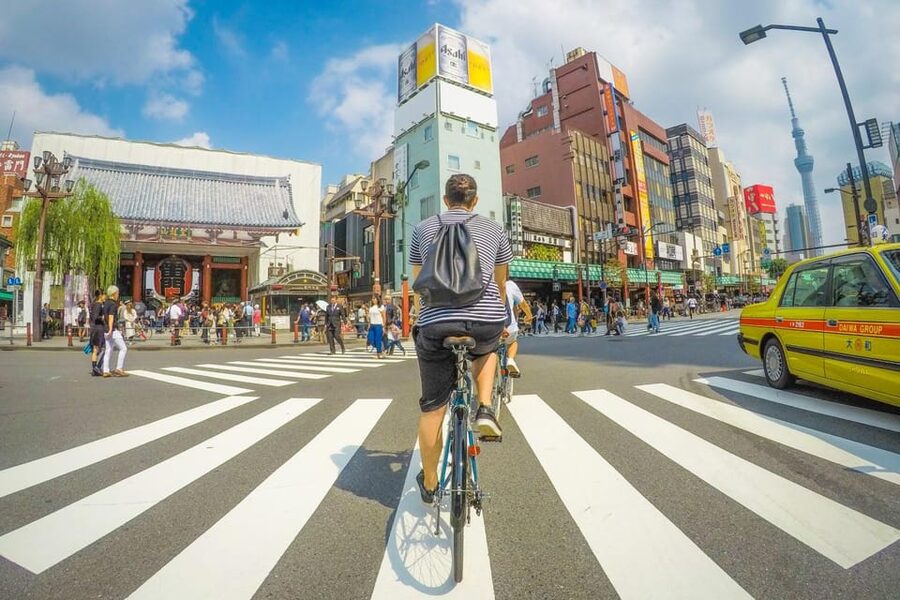
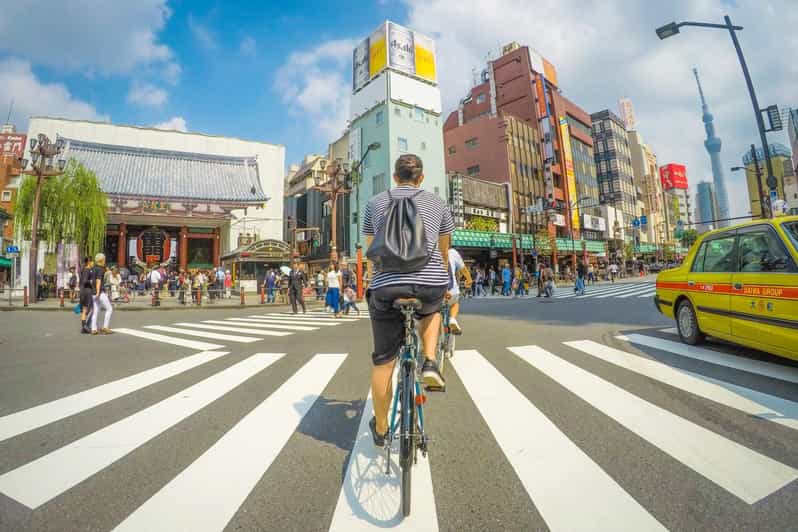
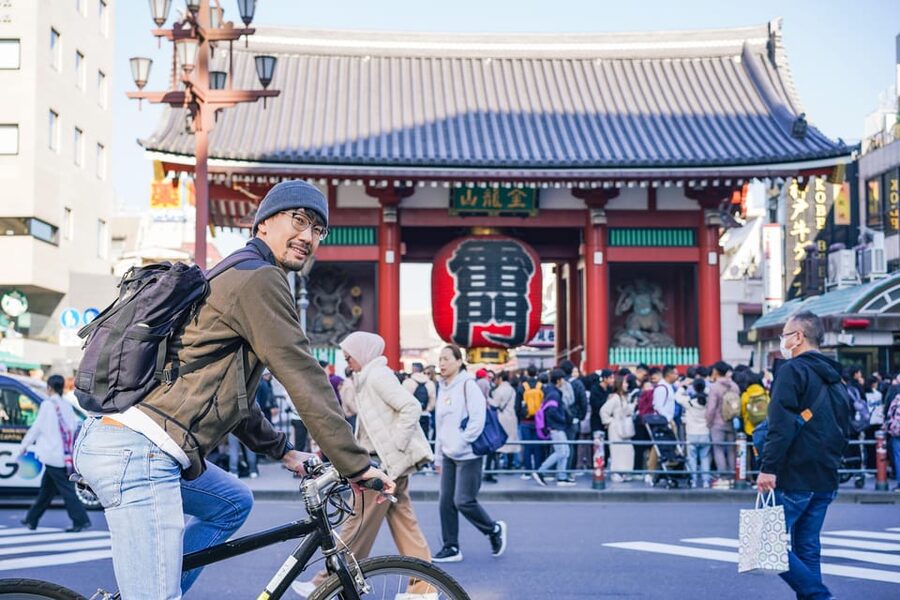
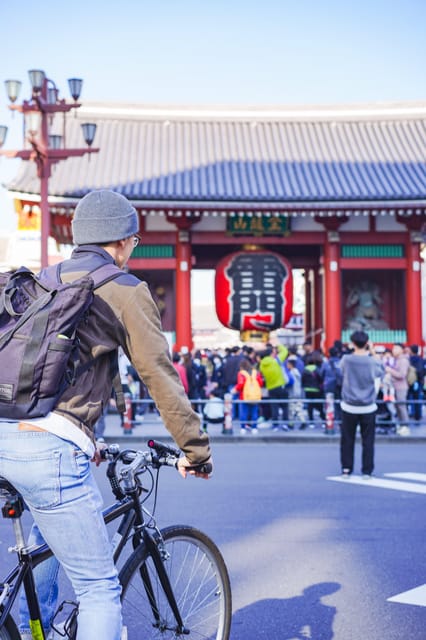
From there, you ride toward Kaminarimon, the huge entrance gate associated with Asakusa. The visit lasts about 10 minutes, which is enough for photos and a short explanation. Kaminarimon is one of the most recognizable sights in Tokyo, and seeing it early gives you a useful sense of place.
The tour then continues to Sensō-ji Temple for about 30 minutes. Sensō-ji is the major Buddhist temple in Asakusa and one of Tokyo’s essential stops. With a guide, you can learn more about the setting rather than simply passing through, though half an hour is fairly brief if you want to explore every corner.
This section is likely to be the busiest part of the ride. The advantage of arriving by bicycle is that you can move on once you have seen the main sights instead of spending the rest of your morning walking through crowded streets.
Crossing the Sumida River toward Ryogoku
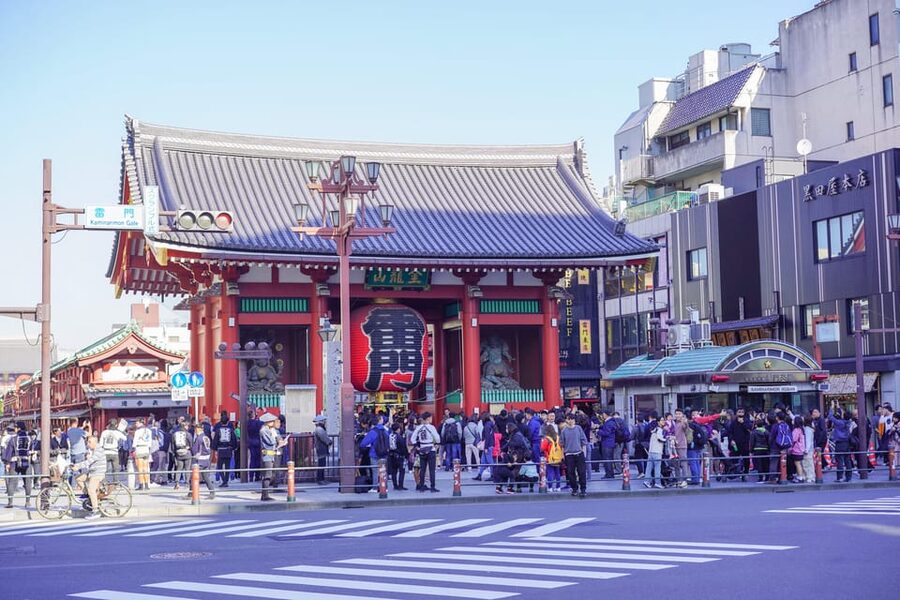
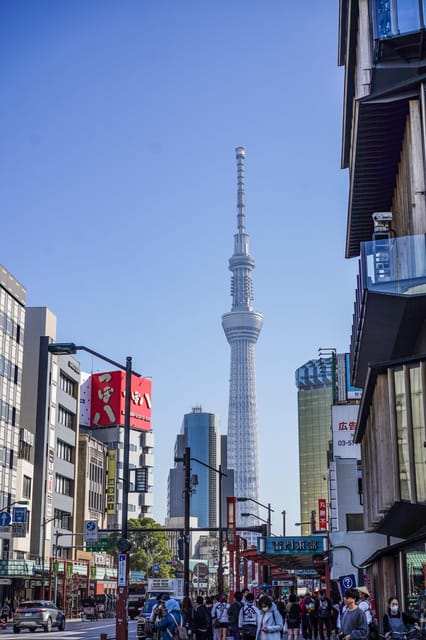
After Asakusa, the tour follows a bridge route with views of the Sumida River and Tokyo Skytree. At 634 meters, Skytree is a major feature of the eastern Tokyo skyline, and the river crossing gives you a good chance to see it from outside the usual observation-deck setting.
This is one of the most appealing parts of the route for me. You are moving between districts rather than being carried from attraction to attraction. The bike makes the distance part of the experience.
The route leads to Ryogoku, known as Tokyo’s Sumo town. You walk around the area for a short time, learning about its connection with Sumo before stopping for lunch at a local restaurant.
A completely different kind of day out:
- Tokyo Disney Resort – Tokyo Disneyland & Tokyo DisneySea Park Tickets
★ 4.8 · 99,488 reviews - SHIBUYA SKY Ticket
★ 4.7 · 46,509 reviews - JR Whole Japan Rail Pass
★ 4.8 · 29,150 reviews - Mt Fuji and Hakone 1-Day Bus Tour Return by Bullet Train
★ 5.0 · 26,383 reviews
Lunch in Tokyo’s Sumo district
Lunch lasts about 45 minutes and is included in the price. That makes the middle of the tour more convenient, since you do not need to choose a restaurant or pay separately while trying to keep up with a small group.
The meal also fits the route. Ryogoku is not just a convenient food stop. It gives the tour a chance to connect local dining with the district’s Sumo identity.
Vegetarian visitors should plan carefully. Japanese restaurants are not always prepared with full vegetarian menus, and the available choices on this tour are limited. If you follow a vegetarian diet, contact the provider before booking and do not assume the standard lunch can be changed easily.
Additional food and drinks are not included, though they can be purchased. Since the tour includes a café stop later, you will have another chance to buy something during the afternoon.
Fukagawa Fudo-son and everyday Buddhist practice
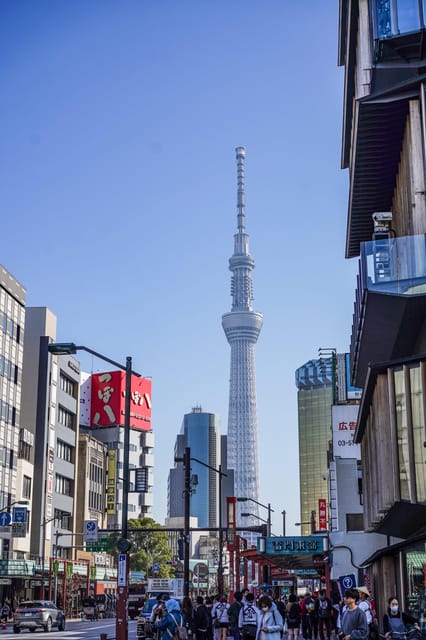
After lunch, you cycle toward Fukagawa and visit Naritasan Fukagawa Fudo-do, also called Fukagawa Fudo-son. The visit takes about 35 minutes.
This stop gives the tour a different kind of cultural experience from Sensō-ji. Sensō-ji is a major landmark with a strong public profile. Fukagawa Fudo-son is presented as a place to see how Japanese people worship in daily life.
That distinction is useful. You are not only hearing about Buddhism as a historical subject. You get a closer look at a living religious setting and the role a temple can play in local routines.
As with any active place of worship, behave respectfully. Listen to the guide, follow local customs, and avoid treating the site as only a backdrop for photographs.
The Fukagawa Edo Museum brings old Tokyo to life
The Fukagawa Edo Museum is the tour’s strongest history stop. Admission is included, and you spend about 45 minutes inside.
The museum shows what streets and homes looked like during the Edo period, roughly 1603 to 1868. The experience focuses on how ordinary people lived, rather than only on rulers and major political events. That makes it a useful counterpoint to Tokyo’s enormous modern buildings and crowded train stations.
I find this kind of museum especially valuable after visiting Asakusa and Ryogoku. You have already seen districts connected to older Tokyo, and the museum helps explain the daily life behind them. Instead of treating the Edo period as a distant date, you can connect it to neighborhoods and customs encountered during the ride.
The visit is still fairly short. If historical museums are a major interest for you, 45 minutes may feel too brief for every display. The benefit is that the museum fits into a wider day rather than taking over the entire itinerary.
A café break before returning to Asakusabashi
The route includes a 15-minute stop at a local café. This is a short pause, not a long meal or free afternoon.
It gives you a chance to rest after several hours on the bike and purchase an additional drink or snack if needed. The stop is also practical because the ride has a steady pace. A brief break can make the final stretch back to Asakusabashi more comfortable.
The tour then returns to the original meeting point. Since the experience begins and ends at Asakusabashi Station, you do not need to arrange a separate return transfer.
The pace, group size, and guide
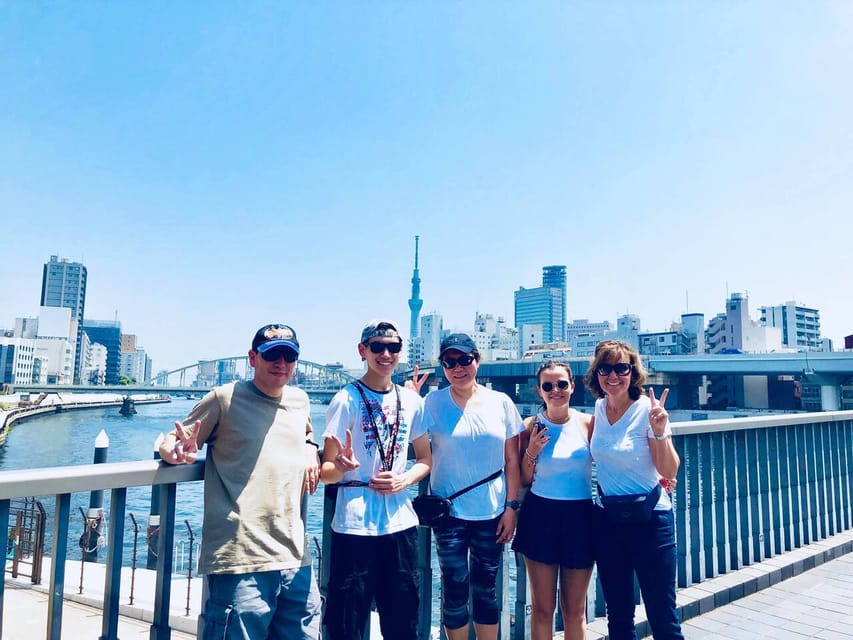
The tour lasts five hours and is limited to five participants, although there may be other participants in your departure group. The small-group format is one of its strongest features. You can ask questions without speaking over a large crowd, and the guide can keep an eye on the group during city riding.
Guide Shogun receives especially strong praise for combining a fast enough pace with historical explanation. That balance matters. A bike tour can become either a rushed transport exercise or a slow lecture with too many stops. The available feedback suggests Shogun keeps the route moving while still making time for interesting details.
You should not expect a private tour unless your booking confirms that arrangement. The group is small, but other participants may join. Also, the route order can change because of traffic, weather, or operating conditions. If a stop closes, the provider may use an alternate location.
Bad weather can cancel the tour for safety reasons. The cancellation policy allows a full refund when you cancel at least 24 hours in advance. You can also reserve and pay later, which helps if your Tokyo schedule is still changing.
What to bring and what not to bring
Wear comfortable shoes. The tour involves cycling, getting on and off the bike, and walking around several sights.
You do not need cycling clothing, and cycling clothing is not included. The tour provides the rental bikes, but you should dress for the weather and choose clothes that allow easy movement.
Leave luggage in a station locker before meeting the guide. The bike office cannot store it, and carrying a suitcase through a five-hour ride would be uncomfortable and impractical.
The tour is open to all cycling levels, but that does not mean it requires no effort. You should be comfortable riding for several hours in an urban setting. If you rarely cycle, consider how you feel about traffic, bridges, and a steady route before booking.
Who will get the most from this experience?
I would recommend this tour to first-time visitors who want an introduction to eastern Tokyo without spending the whole day underground on trains. It works well for people who enjoy a mix of landmarks, local neighborhoods, religion, food, and history.
It is also a good choice if you have already seen Tokyo’s central districts and want a more local-feeling route. The combination of Asakusa, Ryogoku, and Fukagawa gives you a clear look at different sides of the city.
History fans will appreciate the Fukagawa Edo Museum and the Edo-period focus. Pop culture fans get the BANDAI stop. Food-focused visitors get an included local lunch, though vegetarians should take care with the menu limitations.
I would be more cautious about booking if you dislike cycling, need a flexible start time, travel with children under 15, or want a long visit at each attraction. The route covers several stops, so none receives an entire afternoon.
Is the $96 price fair?
At $96, this is best judged as a guided day experience, not simply a bike rental. A bicycle alone would cost less, but it would not provide the route planning, English guidance, lunch, museum entry, insurance, or local explanations.
The small group improves the value. You are paying for a more personal experience than a large coach tour, with the chance to ask about places as you pass them.
The price is less compelling if you plan to visit only Asakusa. You could see Kaminarimon and Sensō-ji independently at little cost. The tour earns its price by joining those sights to the river ride, Ryogoku, Fukagawa Fudo-son, the Edo museum, and lunch.
Should you book the Tokyo bike tour?
Book it if you want to see Tokyo through several connected neighborhoods rather than collect isolated sights. The route has a sensible arc: modern pop culture, famous Asakusa, the Sumida River, Sumo country, Buddhist practice, and Edo daily life.
I especially recommend it for active visitors who value a local guide and prefer small groups. Shogun’s praised pacing and historical explanations add real value, and the included lunch and museum entry keep the day simple.
Skip it if cycling for five hours sounds tiring, if you need a vegetarian meal with many choices, or if you prefer unhurried museum visits. For the right person, though, this is a well-balanced way to meet eastern Tokyo at street level.
FAQ
Where does the Tokyo bike tour begin?
It begins outside Exit A3 of Asakusabashi Station on the Toei Asakusa Line. A guide waits outside the exit.
Where does the tour finish?
The tour returns to Asakusabashi Station, the same meeting point used at the start.
How long does the tour last?
The tour lasts five hours. Starting times vary, so check availability when booking.
What is included in the price?
The price includes bike rental, an English-speaking guide, lunch, entry to the Fukagawa Edo Museum, and insurance.
Is the tour suitable for beginners?
All cycling levels are welcome. Anyone joining must be taller than 150 centimeters, or about 4 feet 11 inches.
Can children join the tour?
The tour is not suitable for children under 15 years old.
Are vegetarian meals available?
Vegetarian choices are limited because many Japanese restaurants are not fully prepared to provide vegetarian menus. Ask about meal options before booking if this is important to you.
What happens if the weather is bad?
The tour may be canceled if weather conditions are unsuitable for safe cycling. The itinerary order can also change because of traffic, weather, or operating conditions.
More Lunch Experiences in Tokyo
- Tokyo: Mt.Fuji & Lake Kawaguchiko 1-Day Bus Tour w/Optional Lunch
★ 4.5 · 839 reviews - Tokyo: Sumo Experience and Chanko Nabe Lunch
★ 4.8 · 257 reviews - Tokyo: 1 Day Bus Tour with Meiji-Jingu,Odaiba,lunch&Skytree
★ 4.6 · 156 reviews - Nagano Snow Monkey 1 Day Tour with Beef Sukiyaki Lunch from Tokyo
★ 4.5 · 123 reviews
Just added in Tokyo
- Tokyo Cute Bento Cooking Class – Make a Kawaii Character Lunchbox★ 5.0 · 126 reviews
- Japanese Home Cooking Class & Walk in Todoroki Temple Tokyo★ 5.0 · 88 reviews
- A One-of-a-Kind Sushi Experience in a Special Place of Japan★ 5.0 · 15 reviews
- Japan Tokyo Tower Observatory Deck E-Ticket★ 4.0 · 34 reviews
- Catch a Baseball Game in Tokyo with a Local – Tickets Included★ 5.0 · 24 reviews
- JDM Experience with Fast&Furious RX-7 (English speaking Driver)★ 5.0 · 57 reviews
- Tokyo Private Day Tour by Car with English speaking Driver Guide★ 4.0 · 29 reviews
- Japan Classic 10 Day – One Life Adventures★ 5.0 · 129 reviews
Cycling and E-Bike Tours, compared.
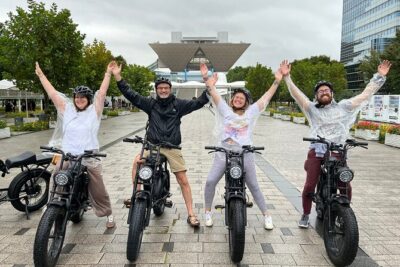
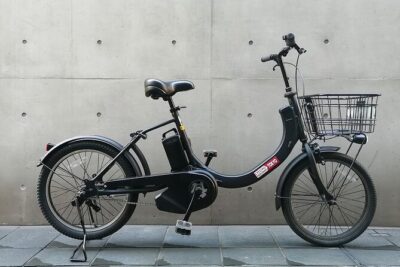
3h Tokyo E-Bike Tour: Hidden Gems, and Local Life with guide
Read our review →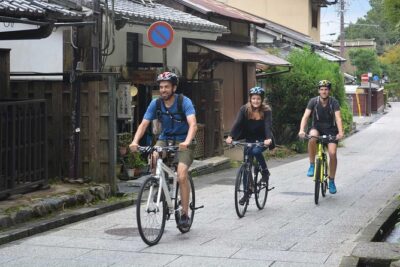
Arashiyama Bamboo Forest & Hidden Gems Bike Tour (Early Bird)
Read our review →
5 Top Highlights of Kyoto Full Day Bike Tour (E-bike option)
Read our review →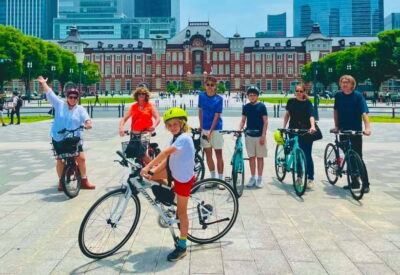
Hiroshima 2hr Peace Cycling Tour with Local Guide
Read our review →Browse the lists this tour appears in